Adhyaya 2
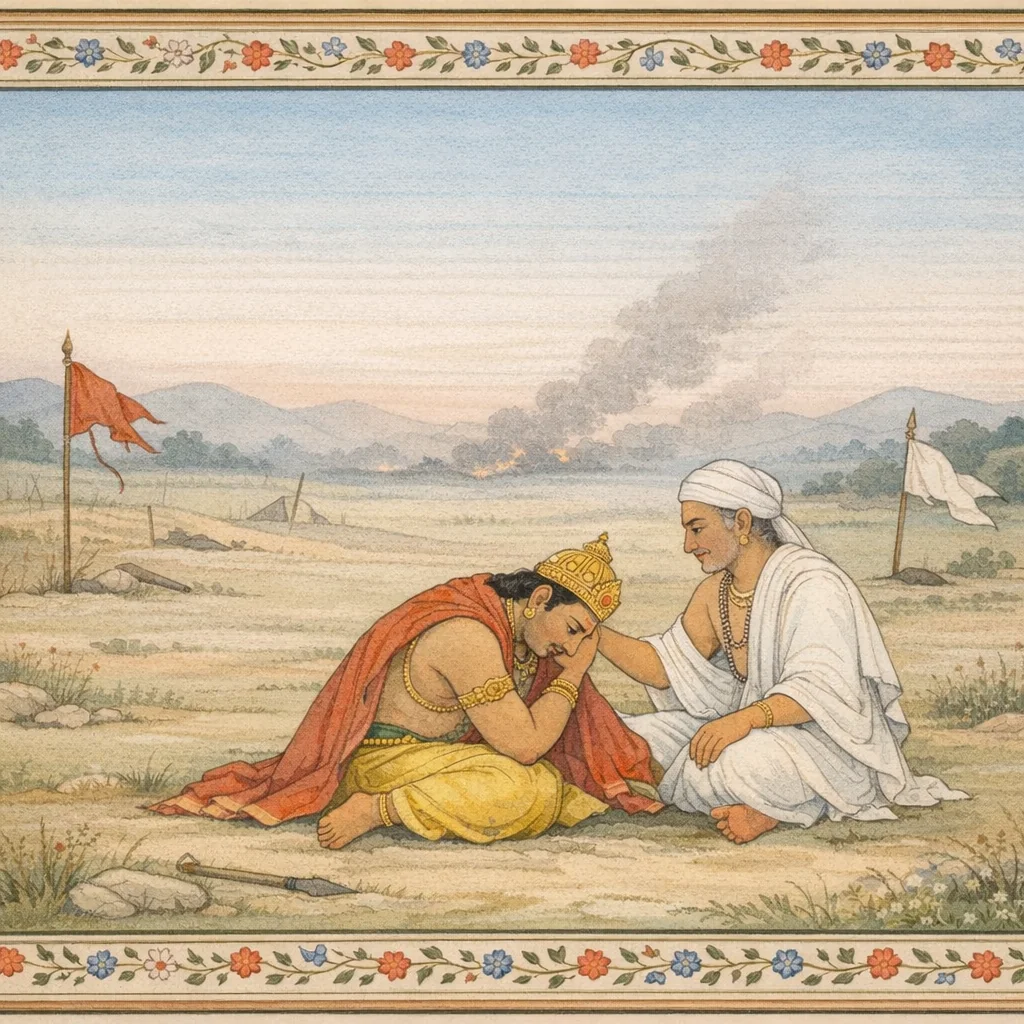
Strī Parva, Adhyāya 2 — Vidura’s Consolation on Kāla, Karma, and the Limits of Lamentation (विदुरोपदेशः)
Upa-parva: Vidura-upadeśa (Counsel to Vaicitravīrya’s heir / Dhṛtarāṣṭra) — Strī Parva, early consolatory discourse
Vaiśaṃpāyana introduces Vidura’s speech addressed to the Kuru ruler (Vaicitravīrya’s heir, Dhṛtarāṣṭra). Vidura urges the king to rise from grief and asserts a general law of impermanence: accumulations end in loss, elevations end in fall, unions end in separation, and life ends in death (anityatā). He argues that when death draws both the courageous and the fearful alike, excessive lamentation does not alter outcomes; time (kāla) cannot be overstepped. He reframes battlefield death as culturally valorized for kṣatriyas, presenting it as non-futile in terms of reputation and posthumous reward, while also grounding counsel in śāstric authority. The discourse then widens into a philosophical anthropology: across saṃsāra, relationships recur in countless forms, so possessiveness and exclusive claims are unstable. Vidura distinguishes the unwise, who are repeatedly seized by daily grief and fear, from the wise, who practice restraint and satisfaction (saṃtoṣa). He offers a practical cognitive ethic: do not ruminate on sorrow; acting without grief is presented as a remedy, because brooding amplifies distress. Finally, he emphasizes karmic continuity: prior action follows a person in every posture and circumstance, and each deed yields fruit in the corresponding condition—reasserting moral causality amid collective loss.
Chapter Arc: कुरुक्षेत्र के धूमिल श्मशान-सम वातावरण में धृतराष्ट्र शोक से भूमि पर पड़े हैं; राज्य, वंश और विजय—सब राख-सा प्रतीत होता है। → विदुर धृतराष्ट्र को उठाकर धैर्य देने लगते हैं—जीवन-मरण, संयोग-वियोग, संग्रह-क्षय की अनिवार्यता बताते हुए शोक की निरर्थकता पर कठोर, पर हितकारी वाणी रखते हैं। धृतराष्ट्र का मन बार-बार पुत्र-हानि की ओर लौटता है, और विदुर उसे तर्क, नीति और आत्मसंयम से रोकते हैं। → विदुर का निर्णायक उपदेश: ‘संयोग का अंत वियोग है, जीवन का अंत मरण; शोक न अर्थ साधता है, न धर्म, न सुख—यह कर्तव्य-शक्ति को ही क्षीण करता है।’ वे धृतराष्ट्र से कहते हैं कि शोक में डूबने के बजाय कारण-निवारण और आत्म-स्थैर्य का पुरुषार्थ करो। → धृतराष्ट्र को शोक-वेग से बाहर निकालने हेतु विदुर संतोष, विवेक और त्रिवर्ग (धर्म-अर्थ-काम) की मर्यादा का स्मरण कराते हैं; शोक को ‘अग्नि’ मानकर उसे बुझाने का उपाय—धैर्य, विचार और कर्तव्य—स्थापित करते हैं। → धृतराष्ट्र का शोक कुछ थमता है, पर भीतर का ज्वार बना रहता है—अब प्रश्न यह है कि वे इस उपदेश को कर्म में बदल पाएँगे या शोक पुनः उन्हें गिरा देगा।
Shlokas
Verse 1
इस प्रकार श्रीमह्या भारत स्त्रीपर्वके अन्तर्गत जलप्रदानिकपर्वमें धृतराष्ट्रके शीकका निवारणविषयक पहला जध्याय पूरा हुआ,ऑपन-माज बक। डे द्वितीयो&्ध्याय: विदुरजीका राजा धृतराष्ट्रको समझाकर उनको शोकका त्याग करनेके लिये कहना वैशम्पायन उवाच ततो<मृतसमीैर्वाक्यैह्लादयन् पुरुषर्षभम् । वैचित्रवीर्य विदुरो यदुवाच निबोध तत् वैशम्पायनजी कहते हैं--जनमेजय! तदनन्तर विदुरजीने पुरुषप्रवर धृतराष्ट्रको अपने अमृतसमान मधुर वचनोंद्वारा आह्वाद प्रदान करते हुए वहाँ जो कुछ कहा, उसे सुनो
Vaiśampāyana said: Then Vidura, delighting the bull among men—Dhṛtarāṣṭra—by words as sweet and life-giving as nectar, spoke to the son of Vicitravīrya. Listen to what he said. The scene turns from raw grief after the war toward counsel grounded in dharma: speech meant not to flatter sorrow, but to steady the king’s mind and guide him toward restraint and right understanding.
Verse 2
विदुर उवाच उत्तिष्ठ राजन् कि शेषे धारयात्मानमात्मना । एषा वै सर्वसत्त्वानां लोकेश्वर परा गति:,विदुरजी बोले--राजन्! आप धरतीपर क्यों पड़े हैं? उठकर बैठ जाइये और बुद्धिके द्वारा अपने मनको स्थिर कीजिये। लोकेश्वर! समस्त प्राणियोंकी यही अन्तिम गति है इति श्रीमहाभारते स्त्रीपर्वणि जलप्रदानिकपर्वणि धृतराष्ट्रविशोककरणे द्वितीयोड5ध्याय:
Vidura said: “Rise, O King—why do you lie thus? Get up and steady your mind by your own understanding. O Lord of the people, this indeed is the final course appointed for all living beings.”
Verse 3
सर्वे क्षयान्ता निचया: पतनान्ता: समुच्छुया: । संयोगा विप्रयोगान्ता मरणान्तं च जीवितम्,सारे संग्रहोंका अन्त उनके क्षयमें ही है। भौतिक उन्नतियोंका अन्त पतनमें ही है। सारे संयोगोंका अन्त वियोगमें ही है। इसी प्रकार सम्पूर्ण जीवनका अन्त मृत्युमें ही होनेवाला है
Verse 4
यदा शूरं च भीरुं च यम: कर्षति भारत । तत् कि न योत्स्यन्ति हि ते क्षत्रिया: क्षत्रियर्षभ,भरतनन्दन! क्षत्रियशिरोमणे! जब शूरवीर और डरपोक दोनोंको ही यमराज खींच ले जाते हैं, तब वे क्षत्रियलोग युद्ध क्यों न करते!
Vidura says: “O Bhārata, when Yama drags away both the brave and the fearful alike, why should those Kṣatriyas not fight? O bull among Kṣatriyas—since death comes to all, a warrior’s duty is to meet it through righteous battle rather than through cowardice.”
Verse 5
अयुध्यमानो ग्रियते युध्यमानश्न जीवति । काल प्राप्प महाराज न कश्चिदतिवर्तते,महाराज! जो युद्ध नहीं करता, वह भी मर जाता है और जो संग्राममें जूझता है, वह भी जीवित बच जाता है। कालको पाकर कोई भी उसका उल्लंघन नहीं कर सकता
Vidura says: “O great king, one who does not fight still meets death, and one who fights may yet remain alive. When the appointed time arrives, no one can overstep it.” The saying shifts the focus from fear-driven avoidance to clear-sighted acceptance of destiny (kāla) and the limits of human control, urging steadiness and discernment in the face of war and loss.
Verse 6
अभावादीनि भूतानि भावमध्यानि भारत । अभावनिधनान्येव तत्र का परिदेवना,जितने प्राणी हैं, वे जन्मसे पहले यहाँ व्यक्त नहीं थे। वे बीचमें ही व्यक्त होकर दिखायी देते हैं और अन्तमें पुनः उनका अभाव (अव्यक्तरूपसे अवस्थान) हो जायगा। ऐसी अवस्थामें उनके लिये रोने-धोनेकी क्या आवश्यकता है?
Vidura says: “O Bhārata, beings begin in non-manifestation, appear only for a while in the middle as manifest, and end again in non-manifestation. When this is the nature of life, what purpose is served by lamentation?”
Verse 7
न शोचन् मृतमन्वेति न शोचन् प्रियते नर: । एवं सांसिद्धिके लोके किमर्थमनुशोचसि,शोक करनेवाला मनुष्य न तो मरनेवालेके साथ जा सकता है और न मर ही सकता है। जब लोककी ऐसी ही स्वाभाविक स्थिति है, तब आप किसलिये शोक कर रहे हैं?
Vidura says: A man who grieves does not follow the dead, nor does he himself die by grieving. Since this is the natural order of the world as it stands, why do you continue to lament?
Verse 8
काल: कर्षति भूतानि सर्वाणि विविधान्युत । न कालस्य प्रिय: वक्रिन्न द्वेष्प: कुरुसत्तम,कुरुश्रेष्ठ! काल नाना प्रकारके समस्त प्राणियोंको खींच लेता है। कालको न तो कोई प्रिय है और न उसके द्वेषका ही पात्र है
Vidura says: Time draws all beings along—of every kind, without exception. For Time has no favorites and no enemies, O best of the Kurus. In the wake of war and bereavement, this teaching urges steadiness: do not mistake personal loss or victory for a private vendetta of fate; the same impartial Time carries all toward change, decay, and death, and thus one should respond with discernment rather than hatred.
Verse 9
यथा वायुस्तृणाग्राणि संवर्तयति सर्वश: । तथा कालवशं यान्ति भूतानि भरतर्षभ,भरतश्रेष्ठ जैसे हवा तिनकोंको सब ओर उड़ाती और डालती रहती है, उसी प्रकार समस्त प्राणी कालके अधीन होकर आते-जाते हैं
Vidura says: “Just as the wind whirls and scatters the tips of grass in every direction, so too all living beings, overpowered by Time, are driven to come and go. O bull among the Bharatas, none can stand independent of Time’s force.”
Verse 10
एक्सरार्थप्रयातानां सर्वेषां तत्र गमिनाम् | यस्य काल: प्रयात्यग्रे तत्र का परिदेवना,जो एक साथ संसारकी यात्रामें आये हैं, उन सबको एक दिन वहीं (परलोकमें) जाना है। उनमेंसे जिसका काल पहले उपस्थित हो गया, वह आगे चला जाता है। ऐसी दशामें किसीके लिये शोक क्या करना है?
Verse 11
न चाप्येतान् हतान् युद्धे राजन् शोचितुमर्हसि । प्रमाणं यदि शास्त्राणि गतास्ते परमां गतिम्,राजन! युद्धमें मारे गये इन वीरोंके लिये तो आपको शोक करना ही नहीं चाहिये। यदि आप शास्त्रोंका प्रमाण मानते हैं तो वे निश्चय ही परम गतिको प्राप्त हुए हैं
Vidura tells the king that he should not grieve for these warriors who have fallen in battle. If the king accepts the authority of the sacred teachings, then he must also accept their conclusion: those who died in righteous combat have attained the highest state, and lamentation over them is not fitting.
Verse 12
सर्वे स्वाध्यायवन्तो हि सर्वे च चरितव्रता: । सर्वे चाभिमुखा: क्षीणास्तत्र का परिदेवना,वे सभी वीर वेदोंका स्वाध्याय करनेवाले थे। सबने ब्रह्मचर्यव्रतका पालन किया था तथा वे सभी युद्धमें शत्रुका सामना करते हुए वीरगतिको प्राप्त हुए हैं; अतः उनके लिये शोक करनेकी क्या बात है?
Vidura said: “All of them were devoted to the recitation and study of the Veda; all of them lived by disciplined vows. And all of them met their end facing the foe in battle. In such a case, what ground is there for lamentation?”
Verse 13
अदर्शनादापतिताः: पुनश्चादर्शनं गता: । नैते तव न तेषां त्वं तत्र का परिदेवना,ये अदृश्य जगत्से आये थे और पुन: अदृश्य जगतमें ही चले गये हैं। ये न तो आपके थे और न आप ही इनके हैं। फिर यहाँ शोक करनेका क्या कारण है?
Vidura said: “They have come forth from the unseen and have again gone back into the unseen. They were not truly yours, nor are you truly theirs. In that case, what reason is there here for lamentation?”
Verse 14
हतो5पि लभते स्वर्ग हत्वा च लभते यश: । उभयं नो बहुगुणं नास्ति निष्फलता रणे,युद्धमें जो मारा जाता है, वह स्वर्गलोक प्राप्त कर लेता है और जो शत्रुको मारता है, उसे यशकी प्राप्ति होती है। ये दोनों ही अवस्थाएँ हमलोगोंके लिये बहुत लाभदायक हैं। युद्धमें निष्फलता तो है ही नहीं
Verse 15
तेषां कामदु्घाल्लोकानिन्द्र: संकल्पयिष्यति । इन्द्रस्यातिथयो होते भवन्ति भरतर्षभ,भरतश्रेष्ठ! इन्द्र उन वीरोंके लिये इच्छानुसार भोग प्रदान करनेवाले लोकोंकी व्यवस्था करेंगे। वे सब-के-सब इन्द्रके अतिथि होंगे
Vidura says: “Indra will arrange for those heroes worlds that yield every desired enjoyment. O bull among the Bharatas, they will all become guests of Indra.” The statement consoles the bereaved by framing the warriors’ death within a moral cosmos: valor and duty fulfilled in battle lead not to loss alone, but to honored reception and fitting recompense in the divine realm.
Verse 16
न यज्ञैर्दक्षिणावद्धिर्न तपोभिरन विद्यया । स्वर्ग यान्ति तथा मर्त्या यथा शूरा रणे हता:,युद्धमें मारे गये शूरवीर जितनी सुगमतासे स्वर्गलोकमें जाते हैं, उतनी सुविधासे मनुष्य प्रचुर दक्षिणावाले यज्ञ, तपस्या और विद्याद्वारा भी नहीं जा सकते
Vidura declares that ordinary mortals do not reach heaven as readily through richly endowed sacrifices, austerities, or learning as do the brave who fall slain on the battlefield. In the wake of the war’s devastation, the statement frames a stark ethic of kṣatriya-duty: death faced with courage in righteous combat is portrayed as a direct, swift passage to heavenly reward—surpassing even the merit of ritual, ascetic discipline, and scholarship.
Verse 17
शरीराग्निषु शूराणां जुह॒वुस्ते शराहुती: । हूयमानान् शरांश्वैव सेहुस्तेजस्विनो मिथ:,शूरवीरोंके शरीररूपी अग्नियोंमें उन्होंने बाणोंकी आहुतियाँ दी हैं और उन तेजस्वी वीरोंने एक-दूसरेकी शरीराग्नियोंमें होम किये जानेवाले बाणोंको सहन किया है
Vidura says: In the very bodies of the heroes—likened to sacrificial fires—they poured oblations of arrows. And those radiant warriors, in turn, endured the arrows being offered into one another’s bodily fires. The verse frames battle as a grim yajña: courage becomes the ritual discipline, and endurance the costly offering, revealing both the valor and the terrible moral weight of war.
Verse 18
एवं राजंस्तवाचक्षे स्वर्ग्य पन्थानमुत्तमम् । न युद्धादधिकं किंचित् क्षत्रियस्येह विद्यते,राजन! इसलिये मैं आपसे कहता हूँ कि क्षत्रियके लिये इस जगत्में धर्मयुद्धसे बढ़कर दूसरा कोई स्वर्ग-प्राप्तिका उत्तम मार्ग नहीं है
Thus, O King, I declare to you the highest path that leads to heaven: for a kṣatriya in this world, nothing surpasses righteous warfare. When war is undertaken as a duty for the protection of order and justice, it becomes the noblest means to merit and the welfare of the realm.
Verse 19
क्षत्रियास्ते महात्मान: शूरा: समितिशो भना: । आशिष: परमा: प्राप्ता न शोच्या: सर्व एव हि,वे महामनस्वी वीर क्षत्रिय युद्धमें शोभा पानेवाले थे, अतः उन्होंने अपनी कामनाओंके अनुरूप उत्तम लोक प्राप्त किये हैं। उन सबके लिये शोक करना तो किसी प्रकार उचित ही नहीं है
Vidura says: “Those men were kṣatriyas of great spirit—heroes who shone in the clash of battle. Having attained the highest fulfillment they sought, they have reached the excellent worlds allotted to such warriors. Therefore, none of them are truly fit to be mourned.”
Verse 20
आत्मानमात्मना55श्वास्य मा शुचः पुरुषर्षभ । नाद्य शोकाभि भूतस्त्वं कायमुत्स्रष्टमहसि
Vidura said: “Steady your own self by your own inner strength; do not grieve, O best of men. Overwhelmed by sorrow today, you ought not to abandon your body (give way to self-destruction).”
Verse 21
पुरुषप्रवर! आप स्वयं ही अपने मनको सान्त्वना देकर शोकका परित्याग कीजिये। आज शोकसे व्याकुल होकर आपको अपने शरीरका त्याग नहीं करना चाहिये ।। मातापितृसहस्राणि पुत्रदारशतानि च । संसारेष्वनुभूतानि कस्य ते कस्य वा वयम्,हमलोगोंने बारंबार संसारमें जन्म लेकर सहस्रों माता-पिता तथा सैकड़ों स्त्री-पुत्रोंके सुखका अनुभव किया है; परंतु आज वे किसके हैं अथवा हम उनमेंसे किसके हैं?
Vidura said: “O best of men, console your own mind and abandon grief. Overwhelmed by sorrow today, you should not think of giving up your body. In the course of worldly existence we have again and again been born and have experienced thousands of mothers and fathers and hundreds of sons and wives—yet today, whose are they, and whose are we?”
Verse 22
शोकस्थानसहस्राणि भयस्थानशतानि च । दिवसे दिवसे मूढमाविशन्ति न पण्डितम्,शोकके हजारों स्थान हैं और भयके भी सैकड़ों स्थान हैं। वे प्रतिदिन मूढ़ मनुष्यपर ही अपना प्रभाव डालते हैं, विद्वान् पुरुषपर नहीं
There are thousands of occasions for grief and hundreds of occasions for fear. Day after day they seize only the deluded person; they do not overpower the wise. In Vidura’s ethical counsel, the point is that suffering multiplies for one who lacks discernment, while the steady-minded person meets life’s shocks without being ruled by sorrow or anxiety.
Verse 23
न कालस्य प्रिय: वक्षरिन्न द्वेष्प: कुरुसत्तम । न मध्यस्थ: क्वचित्काल: सर्व काल: प्रकर्षति,कुरुश्रेष्ठ॒ कालका न किसीसे प्रेम है और न किसीसे द्वेष, उसका कहीं उदासीनभाव भी नहीं है। काल सभीको अपने पास खींच लेता है
O best of the Kurus, Time has no one it favors and no one it hates. Time is never truly neutral at any moment; it draws all beings onward and carries everything to its appointed end. Vidura’s counsel underscores the ethical sobriety needed amid grief: do not mistake calamity for personal malice or partiality—recognize the inexorable law of change and act with steadiness in dharma.
Verse 24
काल: पचति भूतानि काल: संहरते प्रजा: । काल: सुप्तेषु जागर्ति कालो हि दुरतिक्रम:,काल ही प्राणियोंको पकाता है, काल ही प्रजाओंका संहार करता है और काल ही सबके सो जानेपर भी जागता रहता है। कालका उल्लंघन करना बहुत ही कठिन है
Vidura declares that Time is the unseen power that ripens all beings, and Time alone brings peoples to their end. Even when everyone lies asleep, Time remains awake and at work. Therefore, to overstep or evade Time is exceedingly difficult—an ethical reminder to accept inevitability, restrain pride, and act with sobriety amid grief and ruin.
Verse 25
अनित्यं यौवन रूप॑ं जीवित द्रव्यसंचय: । आरोग्यं प्रियसंवासो गृद्धयेदेषु न पण्डित:,रूप, जवानी, जीवन, धनका संग्रह, आरोग्य तथा प्रियजनोंका एक साथ निवास--ये सभी अनित्य हैं, अतः विद्वान् पुरुष इनमें कभी आसक्त न हो
Youth and beauty are impermanent; so too are life itself and the accumulation of wealth. Health and the comfort of living together with one’s loved ones are also transient. Therefore, a wise person does not cling to or crave these things, but keeps discernment and detachment amid inevitable change.
Verse 26
न जानपदिकं दुःखमेक: शोचितुमहसि । अप्यभावेन युज्येत तच्चास्य न निवर्तते,जो दुःख सारे देशपर पड़ा है, उसके लिये अकेले आपको ही शोक करना उचित नहीं है। शोक करते-करते कोई मर जाय तो भी उसका वह शोक दूर नहीं होता है
Vidura said: “This sorrow that has fallen upon the whole realm is not something you alone should grieve for. Even if a person were to waste away and perish from grieving, that grief would still not be undone.”
Verse 27
अशोचन् प्रतिकुर्वीत यदि पश्येत् पराक्रमम् । भैषज्यमेतदू् दुःखस्य यदेतन्नानुचिन्तयेत्
Vidura advises that one who is not overwhelmed by grief should respond appropriately when he sees the opponent’s strength and initiative. The true remedy for sorrow, he says, is this: not to keep brooding over it—meeting the situation with clear-sighted action rather than endless lamentation.
Verse 28
अनिष्टसम्प्रयोगाच्च विप्रयोगात् प्रियस्य च
Vidura points to a fundamental source of human sorrow: the pain that arises from being forced into association with what is unwanted, and from separation from what is dear. In the aftermath of catastrophe, he frames grief not as random fate but as a predictable consequence of attachment and circumstance, urging a steadier, dharmic endurance amid loss.
Verse 29
नार्थों न धर्मो न सुखं यदेतदनुशोचसि
Vidura said: “This grief of yours serves no purpose—neither worldly gain, nor righteousness, nor happiness comes from lamenting in this way.”
Verse 30
अन्यामन्यां धनावस्थां प्राप्प वैशेषिकीं नरा:
Men, having attained differing conditions of wealth and fortune, each come to a distinct and particular state—showing how worldly circumstances vary from person to person and are not stable grounds for pride or despair.
Verse 31
प्रज्ञया मानसं दु:खं हन्याच्छारीरमौषधै: । एतद् विज्ञानसामर्थ्य न बालै: समतामियात्,मनुष्यको चाहिये कि वह मानसिक दुः:खको बुद्धि एवं विचारद्वारा और शारीरिक कष्टको ओषधियोंद्वारा दूर करे, यही विज्ञानकी शक्ति है। उसे बालकोंके समान अविवेकपूर्ण बर्ताव नहीं करना चाहिये
Verse 32
शयानं चानुशेते हि तिष्ठन्तं चानुतिष्ठति । अनुधावति धावन्तं कर्म पूर्वकृतं नरम्,मनुष्यका पूर्वकृत कर्म उसके सोनेपर साथ ही सोता है, उठनेपर साथ ही उठता है और दौड़नेपर भी साथ-ही-साथ दौड़ता है
Vidura says: A man’s previously performed karma clings to him unfailingly—lying down when he lies down, rising when he rises, and running alongside him when he runs. In the wake of the war’s devastation, the verse underscores an ethical certainty: deeds do not vanish with time or circumstance; they accompany the doer and bear their consequences.
Verse 33
यस्यां यस्यामवस्थायां यत् करोति शुभाशुभम् | तस्यां तस्यथामवस्थायां तत्फलं समुपाश्चुते,मनुष्य जिस-जिस अवस्थामें जो-जो शुभ या अशुभ कर्म करता है, उसी-उसी अवस्थामें उसका फल भी पा लेता है
Vidura teaches that whatever good or harmful deed a person performs in any particular condition or stage of life, in that very condition he comes to experience its corresponding result. The verse underscores moral causality: actions are not abstract—they ripen into consequences that meet the doer in the concrete circumstances in which he lives.
Verse 34
येन येन शरीरेण यद्यत् कर्म करोति यः । तेन तेन शरीरेण तत्फलं समुपाश्चुते,जो जिस-जिस शरीरसे जो-जो कर्म करता है, दूसरे जन्ममें वह उसी-उसी शरीरसे उसका फल भोगता है
Vidura teaches that whatever action a person performs through a particular body, the fruit of that action is inevitably experienced through a corresponding embodiment in a later birth. In this way, moral causality is not escaped by death: deeds mature into results, and the soul meets them in the very condition suited to their enjoyment or suffering.
Verse 35
आत्मैव ह्ात्मनो बन्धुरात्मैव रिपुरात्मन: । आत्मैव हात्मन: साक्षी कृतस्यापकृतस्य च,मनुष्य आप ही अपना बन्धु है, आप ही अपना शत्रु है और आप ही अपने शुभ या अशुभ कर्मका साक्षी है
Vidura declares that a person’s own self is truly their closest ally, and the same self can become their fiercest enemy. The self alone stands as the witness to one’s deeds—both the good that upholds dharma and the harmful that violates it—so one must take responsibility for one’s conduct rather than seeking external blame or validation.
Verse 36
शुभेन कर्मणा सौख्यं दु:ःखं पापेन कर्मणा । कृतं भवति सर्वत्र नाकृतं विद्यते क्वचित्,शुभकर्मसे सुख मिलता है और पापकर्मसे दुःख, सर्वत्र किये हुए कर्मका ही फल प्राप्त होता है, कहीं भी बिना कियेका नहीं
Vidura teaches that happiness arises from virtuous action and suffering from sinful action. Everywhere, the results that come are those of deeds actually performed; nowhere does an unperformed act yield a consequence. In the aftermath of devastation, he frames grief and fortune alike within the moral law of karma and responsibility.
Verse 37
न हि ज्ञानविरुद्धेषु बह्नपायेषु कर्मसु । मूलघातिषु सज्जन्ते बुद्धिमन्तो भवद्विधा:,आप-जैसे बुद्धिमान् पुरुष अनेक विनाशकारी दोषोंसे युक्त तथा मूलभूत शरीरका भी नाश करनेवाले बुद्धिविरुद्ध कर्मोंमें नहीं आसक्त होते हैं
For men of discernment like you do not become attached to actions that run counter to true understanding—actions fraught with many dangers and capable of striking at the very root (of one’s well-being and embodied life).
Verse 273
चिन्त्यमानं हि न व्येति भूयश्चापि प्रवर्धते । यदि अपनेमें पराक्रम देखे तो शोक न करते हुए शोकके कारणका निवारण करनेकी चेष्टा करे। दुःखको दूर करनेके लिये सबसे अच्छी दवा यही है कि उसका चिन्तन छोड़ दिया जाय, चिन्तन करनेसे दुःख कम नहीं होता बल्कि और भी बढ़ जाता है
Vidura said: “Sorrow does not pass away by being brooded over; rather, it grows all the more. Therefore, if one finds strength within oneself, one should not sink into grief, but strive to remove the very cause of grief. The best remedy for distress is to abandon obsessive rumination, for by thinking on it repeatedly, suffering does not diminish—it increases.”
Verse 283
मानुषा मानसैर्दु:खैर्दहान्ते चाल्पबुद्धय: । मन्दबुद्धि मनुष्य ही अप्रिय वस्तुका संयोग और प्रिय वस्तुका वियोग होनेपर मानसिक दुःखोंसे दग्ध होने लगते हैं
Vidura says that people of little understanding are consumed by mental suffering. When they come into contact with what they dislike, or are separated from what they love, the dull-witted are scorched within by grief—showing how attachment and aversion, rather than events alone, kindle inner torment.
Verse 296
न च नापैति कार्यार्थात्र्त्रिवर्गाच्चैव हीयते । जो आप यह शोक कर रहे हैं, यह न अर्थका साधक है, न धर्मका और न सुखका ही। इसके द्वारा मनुष्य अपने कर्तव्यपथसे तो भ्रष्ट होता ही है, धर्म, अर्थ और कामरूप त्रिवर्गसे भी वंचित हो जाता है
Vidura says that grieving in this way does not accomplish any practical duty or purpose; rather, it causes one to fall away from the three human aims—dharma, artha, and kāma. Such sorrow not only diverts a person from the path of rightful action, but also deprives him of righteousness, prosperity, and legitimate enjoyment.
Verse 306
असंतुष्टा: प्रमुहान्ति संतोष॑ यान्ति पण्डिता: । धनकी भिन्न-भिन्न अवस्थाविशेषको पाकर असंतोषी मनुष्य तो मोहित हो जाते हैं; परंतु विद्वान् पुरुष सदा संतुष्ट ही रहते हैं
Vidura teaches that those who remain dissatisfied become deluded and lose clarity of judgment, whereas the wise cultivate contentment. In the aftermath of the war’s devastation, this counsel frames inner restraint as a moral safeguard: greed and perpetual wanting cloud discernment, but contentment steadies the mind and supports dharma even amid grief and upheaval.
Frequently Asked Questions
The dilemma is whether a ruler should remain absorbed in personal grief after mass loss or reassert disciplined agency; Vidura argues that lamentation cannot reverse kāla and that duty requires composure and action.
Recognize impermanence and the neutrality of time; reduce suffering by limiting rumination; cultivate discernment and contentment; and accept karmic continuity—actions yield results and must be met with responsible conduct.
No explicit phalaśruti is stated; the chapter’s meta-function is instructional, positioning grief-management and karmic realism as prerequisites for ethical governance and for progressing toward later, more formal dharma discourses.