Adhyaya 2
भीष्मपर्व — अध्याय २: संजयस्य दिव्यदृष्टिप्रदानम् तथा निमित्तवर्णनम् (Granting Sañjaya Divine Sight and the Description of Omens)
Upa-parva: Sañjaya-divya-dṛṣṭi-pradāna (Granting of Divine Sight to Sañjaya) — Omens of Kṣaya
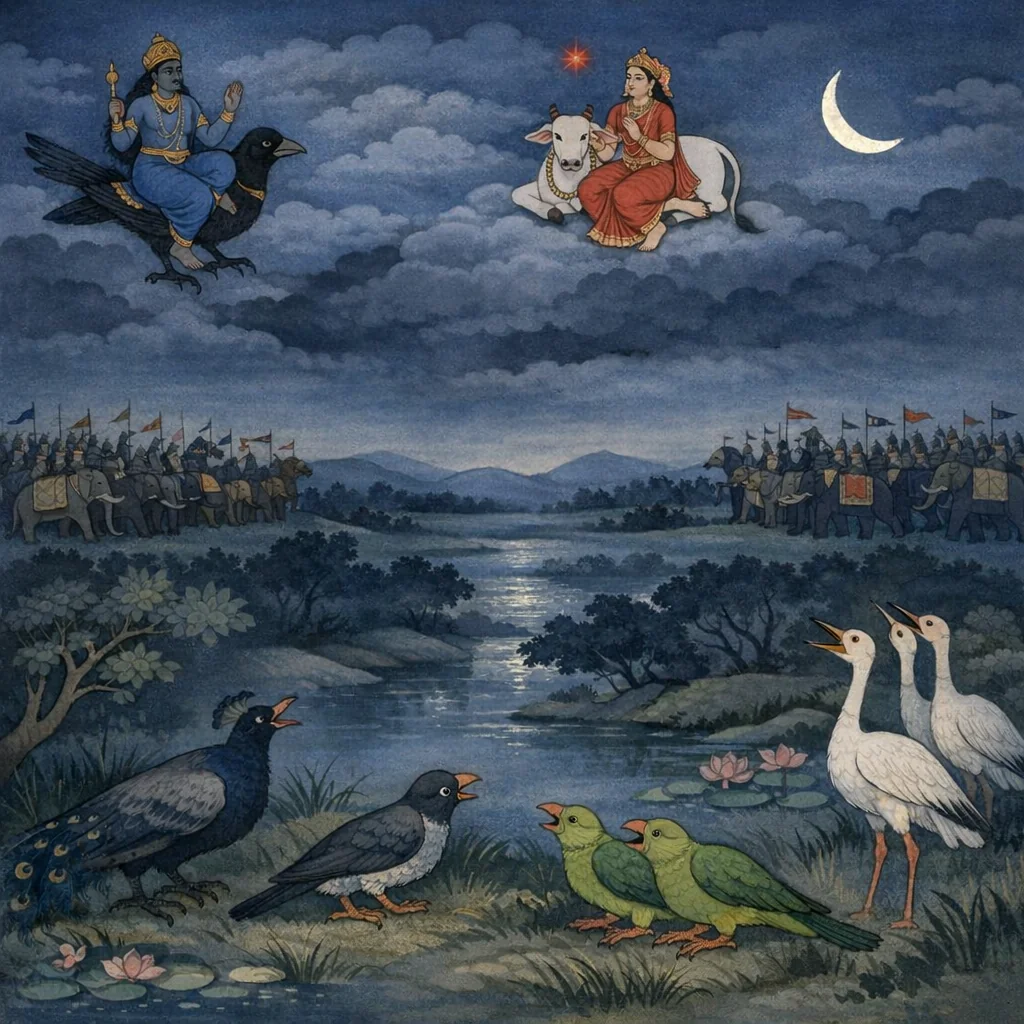
Vaiśaṃpāyana reports that Vyāsa, after observing the twilights, foresees severe destruction in the forthcoming battle and privately counsels Dhṛtarāṣṭra (here referenced through the Vaicitravīrya lineage). Vyāsa urges emotional steadiness by invoking the inevitability of time’s cycle (kāla-paryāya) and offers the king the ability to see the war directly; Dhṛtarāṣṭra refuses direct viewing of kin-death but requests complete auditory narration. Vyāsa grants Sañjaya divine sight and expanded cognition: he will perceive events openly or secretly, by day or night, even those mentally conceived; he will remain unharmed by weapons and fatigue and will survive the conflict. Vyāsa then enumerates alarming nimittas—assemblies of predatory birds, abnormal atmospheric and celestial appearances (sun and moon distortions, unusual halos and lightning, indistinct day-night), ominous sounds, trembling or bleeding images, unstruck drums, and other disturbances—interpreting them as signs of imminent large-scale kṣaya. The chapter closes with continued foreboding phenomena, reinforcing the war’s inevitability and the narrative necessity of Sañjaya’s reportage.
Chapter Arc: वैशम्पायन जनमेजय को बताते हैं कि अब पूर्व-पश्चिम दिशाओं में आमने-सामने खड़ी सेनाओं के बीच एक रहस्यमय, अनिवार्य-सा संकेत-काल आरम्भ होता है—मानो युद्ध से पहले स्वयं प्रकृति बोल उठी हो। → धृतराष्ट्र (वैचित्रवीर्य-वंशज राजा) पुत्रों के भविष्य को सोचकर शोकाकुल हैं; उसी समय ‘भूत-भव्य-भविष्यवित्’ प्रत्यक्षदर्शी-से ज्ञानी द्वारा कालचक्र का बोध कराया जाता है—और फिर एक-एक करके अपशकुन उभरते हैं: रात्रि में आकाशीय पशुओं का रौद्र प्रणाद, पक्षियों की दारुण वाणी, ग्रहों की विकृति, बिना बादल के गर्जना, रथ-वाहनों का रुदन। → रोहिणी को पीड़ित करता शनैश्वर और सोम-लक्ष्म का व्यावर्तन ‘महद् भय’ का उद्घोष करता है; उसी के साथ अनभ्र-गर्जना और अश्रुबिन्दु-से गिरते संकेत युद्ध की निकटता को चरम पर पहुँचा देते हैं—यह केवल भय नहीं, नियति का दस्तक है। → वक्ता धृतराष्ट्र को समझाता है: जब सब काल के अधीन होकर विनाश की ओर बढ़ें, तब इसे ‘कालपर्याय’ जानकर शोक में मन न डुबो—यह उपदेश शोक को दर्शन में रूपान्तरित करता है, यद्यपि संकट टलता नहीं। → अपशकुनों की श्रृंखला यह संकेत देती है कि शीघ्र ही ‘घोर रण’ में राजाओं और राजपुत्रों की देहें पृथ्वी ढँकेंगी—अगला चरण युद्ध के वास्तविक उद्घाटन की ओर बढ़ता है।
Shlokas
Verse 1
इस प्रकार श्रीमह्मा भारत भीष्मपर्वके अन्तर्गत जम्बूण्डविनिर्माणपर्वमें सैन्यशिक्षणविषयक पहला अध्याय पूरा हुआ,ऑपनआक्रात बछ। अकाल द्वितीयो<्ध्याय: वेदव्यासजीके द्वारा संजयको दिव्य दृष्टिका दान तथा भयसूचक उत्पातोंका वर्णन वैशम्पायन उवाच ततः पूर्वापरे सैन्ये समीक्ष्य भगवानृषि: । सर्ववेदविदां श्रेष्ठो व्यास: सत्यवतीसुत: वैशम्पायनजी कहते हैं--जनमेजय! तदनन्तर पूर्व और पश्चिम दिशामें आमने-सामने खड़ी हुई दोनों ओरकी सेनाओंको देखकर भूत, भविष्य और वर्तमानका ज्ञान रखनेवाले, सम्पूर्ण वेदवेत्ताओंमें श्रेष्ठ, भरतवंशियोंके पितामह सत्यवतीनन्दन महर्षि भगवान् व्यास, जो होनेवाले भयंकर संग्रामके भावी परिणामको प्रत्यक्ष देख रहे थे, विचित्रवीर्यनन्दन राजा धृतराष्ट्रके पास आये। वे उस समय अपने पुत्रोंके अन्यायका चिन्तन करते हुए शोकमग्न एवं आर्त हो रहे थे। व्यासजीने उनसे एकान्तमें कहा
Vaiśampāyana said: Then the blessed sage—Vyāsa, son of Satyavatī, foremost among all knowers of the Vedas—having surveyed the armies drawn up facing one another on the eastern and western sides, (prepared to act in view of what was to come).
Verse 2
भविष्यति रणे घोरे भरतानां पितामह: । प्रत्यक्षदर्शी भगवान् भूतभव्यभविष्यवित्,वैशम्पायनजी कहते हैं--जनमेजय! तदनन्तर पूर्व और पश्चिम दिशामें आमने-सामने खड़ी हुई दोनों ओरकी सेनाओंको देखकर भूत, भविष्य और वर्तमानका ज्ञान रखनेवाले, सम्पूर्ण वेदवेत्ताओंमें श्रेष्ठ, भरतवंशियोंके पितामह सत्यवतीनन्दन महर्षि भगवान् व्यास, जो होनेवाले भयंकर संग्रामके भावी परिणामको प्रत्यक्ष देख रहे थे, विचित्रवीर्यनन्दन राजा धृतराष्ट्रके पास आये। वे उस समय अपने पुत्रोंके अन्यायका चिन्तन करते हुए शोकमग्न एवं आर्त हो रहे थे। व्यासजीने उनसे एकान्तमें कहा इति श्रीमहाभारते भीष्मपर्वणि जम्बूखण्डविनिर्माणपर्वणि श्रीवेदव्यासदर्शने द्वितीयो5ध्याय:
Vaiśampāyana said: In the dreadful battle that was about to occur, the revered grandsire of the Bharatas—Bhagavān Vyāsa, the son of Satyavatī—who directly beheld what was to come and who knew past, present, and future, came to King Dhṛtarāṣṭra, the son of Vicitravīrya. Dhṛtarāṣṭra, brooding over the injustice of his sons, was sinking into grief and anguish; and Vyāsa spoke to him in private. The passage frames the war not as mere fate but as the ethical consequence of adharma, with the seer’s foreknowledge highlighting moral responsibility rather than excusing it.
Verse 3
वैचित्रवीर्य राजानं स रहस्यब्रवीदिदम् । शोचन्तमार्त ध्यायन्तं पुत्राणामनयं तदा,वैशम्पायनजी कहते हैं--जनमेजय! तदनन्तर पूर्व और पश्चिम दिशामें आमने-सामने खड़ी हुई दोनों ओरकी सेनाओंको देखकर भूत, भविष्य और वर्तमानका ज्ञान रखनेवाले, सम्पूर्ण वेदवेत्ताओंमें श्रेष्ठ, भरतवंशियोंके पितामह सत्यवतीनन्दन महर्षि भगवान् व्यास, जो होनेवाले भयंकर संग्रामके भावी परिणामको प्रत्यक्ष देख रहे थे, विचित्रवीर्यनन्दन राजा धृतराष्ट्रके पास आये। वे उस समय अपने पुत्रोंके अन्यायका चिन्तन करते हुए शोकमग्न एवं आर्त हो रहे थे। व्यासजीने उनसे एकान्तमें कहा
Vaiśampāyana said: Then he (Vyāsa) spoke these words in private to King Dhṛtarāṣṭra, the son of Vicitravīrya—who at that time was grieving and anxiously brooding over the wrongdoing of his sons. The verse frames Dhṛtarāṣṭra’s inner turmoil as a moral crisis: sorrow is inseparable from the awareness that one’s own side has strayed from dharma, and the seer’s confidential counsel signals an attempt to recall the king to ethical responsibility on the eve of war.
Verse 4
व्यास उवाच राजन् परीतकालास्ते पुत्राश्चान्ये च पार्थिवा: । ते हिंसन्तीव संग्रामे समासाद्येतरेतरम्,व्यासजी बोले--राजन! तुम्हारे पुत्रों तथा अन्य राजाओंका मृत्युकाल आ पहुँचा है। वे संग्राममें एक-दूसरेसे भिड़कर मरने-मारनेको तैयार खड़े हैं
Vyāsa said: O King, the appointed time of death has come upon your sons and upon the other rulers as well. Having met one another on the battlefield, they stand ready to strike and be struck—intent on mutual destruction. The verse frames the war not merely as strategy, but as a grim convergence of fate, choice, and the moral weight of violence.
Verse 5
तेषु कालपरीतेषु विनश्यत्स्वेव भारत । कालपर्यायमाज्ञाय मा सम शोके मन: कृथा:,भारत! वे कालके अधीन होकर जब नष्ट होने लगें, तब इसे कालका चक्कर समझकर मनमें शोक न करना
O Bhārata, when those men, overtaken by Time, begin to perish of themselves, understand it as the turning of Time’s cycle and do not let your mind fall into grief. The verse frames destruction in war as governed by kāla (Time), urging steadiness and discernment rather than paralyzing sorrow.
Verse 6
यदि चेच्छसि संग्रामे द्रष्टमेतान् विशाम्पते । चक्षुर्ददानि ते पुत्र युद्ध तत्र निशामय,राजन! यदि संग्रामभूमिमें इन सबकी अवस्था तुम देखना चाहो तो मैं तुम्हें दिव्य नेत्र प्रदान करूँ। वत्स! फिर तुम (यहाँ बैठे-बैठे ही) वहाँ होनेवाले युद्धका सारा दृश्य अपनी आँखों देखो
Verse 7
धृतराष्ट्र रवाच न रोचये ज्ञातिवध॑ द्रष्टूं ब्रह्मर्षिसत्तम । युद्धमेतत् त्वशेषेण शृणुयां तव तेजसा,धृतराष्ट्रने कहा--ब्रह्मर्षिप्रवर! मुझे अपने कुटुम्बीजनोंका वध देखना अच्छा नहीं लगता; परंतु आपके प्रभावसे इस युद्धका सारा वृत्तान्त सुन सकूँ, ऐसी कृपा आप अवश्य कीजिये
Dhṛtarāṣṭra said: “O best of Brahmarṣis, I do not wish to witness the slaughter of my own kinsmen. Yet, by the power of your spiritual radiance, grant me the ability to hear—completely and in full detail—the entire account of this war.”
Verse 8
वैशम्पायन उवाच एतस्मिन् नेच्छति द्रष्टूं संग्रामं श्रोतुमिच्छति । वराणामीश्वरो व्यास: संजयाय वरं ददौ,वैशम्पायनजी कहते हैं--जनमेजय! व्यासजीने देखा, धृतराष्ट्र युद्धका दृश्य देखना तो नहीं चाहता, परंतु उसका पूरा समाचार सुनना चाहता है। तब वर देनेमें समर्थ उन महर्षिने संजयको वर देते हुए कहा--
Verse 9
एष ते संजयो राजन् युद्धमेतद् वदिष्यति । एतस्य सर्वसंग्रामे न परोक्षं भविष्यति,“राजन! यह संजय आपको इस युद्धका सब समाचार बताया करेगा। सम्पूर्ण संग्रामभूमिमें कोई ऐसी बात नहीं होगी, जो इसके प्रत्यक्ष न हो
Vaiśampāyana said: “O King, this Sañjaya will recount to you the course of this war. In the entire conflict, nothing will remain hidden from his direct awareness.”
Verse 10
चक्षुषा संजयो राजन् दिव्येनैव समन्वित: । कथयिष्यति ते युद्ध सर्वज्ञश्न भविष्यति,“राजन! संजय दिव्य दृष्टिसे सम्पन्न होकर सर्वज्ञ हो जायगा और तुम्हें युद्धकी बात बतायेगा
Vaiśampāyana said: “O King, Sañjaya—endowed with divine sight—will recount the battle to you, and he will become as one who knows all (that occurs on the field).”
Verse 11
प्रकाशं वाप्रकाशं वा दिवा वा यदि वा निशि | मनसा चिन्तितमपि सर्व वेत्स्यति संजय:,“कोई भी बात प्रकट हो या अप्रकट, दिनमें हो या रातमें अथवा वह मनमें ही क्यों न सोची गयी हो, संजय सब कुछ जान लेगा
Vaiśampāyana said: Whether something is done openly or in secret, whether by day or by night—even if it is only conceived within the mind—Sañjaya will come to know it all. The statement underscores the extraordinary reach of Sañjaya’s divinely granted perception, ensuring that the king will receive an unbroken and truthful account of events, beyond concealment or private intent.
Verse 12
नैनं शस्त्राणि छेत्स्यन्ति नैनं बाधिष्यते श्रम: । गावल्गणिरयं जीवन युद्धादस्माद् विमोक्ष्यते,“इसे कोई हथियार नहीं काट सकता। इसे परिश्रम या थकावटकी बाधा भी नहीं होगी। गवल्गणका पुत्र यह संजय इस युद्धसे जीवित बच जायगा
He will not be cut down by weapons, nor will exhaustion or toil overpower him. This Sañjaya, the son of Gāvalgaṇa, will be released alive from this war—preserved amid the violence by a higher protection that overrides ordinary mortal vulnerability.
Verse 13
अहं तु कीर्तिमितेषां कुरूणां भरतर्षभ । पाण्डवानां च सर्वेषां प्रथयिष्यामि मा शुच:,“भरतश्रेष्ठ! मैं इन समस्त कौरवों और पाण्डवोंकी कीर्तिका तीनों लोकोंमें विस्तार करूँगा। तुम शोक न करो
Vaiśampāyana said: “O bull among the Bharatas, I shall proclaim and spread the fame of these Kurus and of all the Pāṇḍavas throughout the worlds. Do not grieve.”
Verse 14
दिष्टमेतन्नरव्याप्र नाभिशोचितुमहसि । न चैव शक्यं संयन्तुं यतो धर्मस्ततो जय:,“नरश्रेष्ठ। यह दैवका विधान है। इसे कोई मेट नहीं सकता। अतः इसके लिये तुम्हें शोक नहीं करना चाहिये। जहाँ धर्म है, उसी पक्षकी विजय होगी”
O tiger among men, this has been ordained by destiny; you should not grieve over it. Nor can it truly be restrained or averted—for where dharma stands, there victory follows.
Verse 15
वैशम्पायन उवाच एवमुक्त्वा स भगवान् कुरूणां प्रपितामह: । पुनरेव महाभागो धृतराष्ट्रमुवाच ह,वैशम्पायनजी कहते हैं--जनमेजय! ऐसा कहकर कुरुकुलके पितामह महाभाग भगवान् व्यास पुनः धृतराष्ट्रसे बोले--
Vaiśampāyana said: Having spoken thus, the blessed Vyāsa—great-grandfather of the Kurus—again addressed Dhṛtarāṣṭra. The narration underscores Vyāsa’s role as a moral elder returning to counsel the blind king, whose choices bear ethical weight for the coming conflict.
Verse 16
इह युद्धे महाराज भविष्यति महान् क्षय: । तथेह च निमित्तानि भयदान्युपलक्षये,“महाराज! इस युद्धमें महान् नर-संहार होगा; क्योंकि मुझे इस समय ऐसे ही भयदायक अपशकुन दिखायी देते हैं
Vaiśampāyana said: “O great king, in this battle there will be immense destruction of men; for even now I observe ominous portents here that foretell fear and calamity.”
Verse 17
श्येना गृथ्राश्न काकाश्न कड़काश्न सहिता बकै: । सम्पतन्ति नगाग्रेषु समवायां श्व॒ कुर्वते,“बाज, गीध, कौवे, कंक और बबगुले वृक्षोंके अग्रभागपर आकर बैठते तथा अपना समूह एकत्र करते हैं
Vaiśampāyana said: “Hawks, vultures, crows, kites, and herons gather together and swoop down to the treetops, perching on the highest branches and forming a flock.” In the war-foreboding atmosphere of the Bhīṣma Parva, such ominous congregations of scavenging and predatory birds function as portents—nature itself seeming to anticipate violence and the aftermath of battle, thereby heightening the ethical gravity of the coming slaughter.
Verse 18
अभ्यग्र॑ च प्रपश्यन्ति युद्धमानन्दिनो द्विजा: । क्रव्यादा भक्षयिष्यन्ति मांसानि गजवाजिनाम्,'ये पक्षी अत्यन्त आनन्दित होकर युद्धस्थलको बहुत निकटसे आकर देखते हैं। इससे सूचित होता है कि मांसभक्षी पशु-पक्षी आदि प्राणी हाथियों और घोड़ोंके मांस खायेंगे। भयकी सूचना देनेवाले कंक पक्षी कठोर स्वरमें बोलते हुए सेनाके बीचसे होकर दक्षिण दिशाकी ओर जाते हैं
Vaiśampāyana said: “Birds, delighted by the prospect of battle, are seen coming very near and watching the fighting. This portends that flesh-eating creatures will soon feed on the bodies of elephants and horses.” The scene functions as an ominous ethical warning: war, driven by human ambition, inevitably becomes a feast for scavengers and a field of suffering for all beings.
Verse 19
निर्दयं चाभिवाशन्तो भैरवा भयवेदिन: । कड्का: प्रयान्ति मध्येन दक्षिणामभितो दिशम्,'ये पक्षी अत्यन्त आनन्दित होकर युद्धस्थलको बहुत निकटसे आकर देखते हैं। इससे सूचित होता है कि मांसभक्षी पशु-पक्षी आदि प्राणी हाथियों और घोड़ोंके मांस खायेंगे। भयकी सूचना देनेवाले कंक पक्षी कठोर स्वरमें बोलते हुए सेनाके बीचसे होकर दक्षिण दिशाकी ओर जाते हैं
Vaishampayana said: “Uttering harsh cries, the dreadful kaṅka birds—portents that foretell fear—pass through the midst of the army and move toward the southern quarter.” In the epic’s omen-language, such carrion birds near the battlefield signal impending slaughter and the feeding of flesh-eating creatures upon the fallen, including horses and elephants.
Verse 20
उभे पूर्वापरे संध्ये नित्यं पश्यामि भारत । उदयास्तमने सूर्य कबन्धै: परिवारितम्,'भारत! मैं प्रातः और सायं दोनों संध्याओंके समय उदय और अस्तकी वेलामें सूर्यदेवको प्रतिदिन कबन्धोंसे घिरा हुआ देखता हूँ
Vaiśampāyana said: “O Bhārata, at both junctions of day—morning and evening—I continually behold the Sun at the moments of rising and setting, hemmed in by headless trunks (kabandhas).” The sight is presented as an ominous portent, suggesting a world-order disturbed and foretelling the mass slaughter and moral upheaval that war brings.
Verse 21
श्वेतलोहितपर्यन्ता: कृष्णग्रीवा: सविद्युत: । विवर्णा: परिघा: संधौ भानुमन्तमवारयन्,'संध्याके समय सूर्यदेवको तिरंगे घेरोंने सब ओरसे घेर रखा था। उनमें श्वेत और लाल रंगके घेरे दोनों किनारोंपर थे और मध्यमें काले रंगका घेरा दिखायी देता था। इन घेरोंके साथ बिजलियाँ भी चमक रही थीं
Vaiśampāyana said: At twilight, multicolored circular bands—edged with white and red, with a dark middle like a black neck—flashed with lightning and seemed to encircle and obstruct the radiant Sun. The omen-like sky signaled an atmosphere of impending conflict and moral strain as the war approached.
Verse 22
ज्वलितार्केन्दुनक्षत्र निर्विशेषदिनक्षपम् | अहोरात्र मया दृष्टं तद् भयाय भविष्यति,“मुझे दिन और रातका समय ऐसा दिखायी दिया है जिसमें सूर्य, चन्द्रमा और तारे जलते-से जान पड़ते थे। दिन और रातमें कोई विशेष अन्तर नहीं दिखायी देता था। यह लक्षण भय लानेवाला होगा
Verse 23
अलक्ष्य: प्रभयाहीन: पौर्णमासीं च कार्तिकीम् । चन्द्रो5भूदग्निवर्णश्र॒ पद्मवर्णनभस्तले,“कार्तिककी पूर्णिमाको कमलके समान नीलवर्णके आकाशमें चन्द्रमा प्रभाहीन होनेके कारण दृष्टिगोचर नहीं हो पाता था तथा उसकी कान्ति भी अग्निके समान प्रतीत होती थी
Vaiśampāyana said: On the full-moon night of Kārttika, the moon became hard to discern, bereft of its radiance. In the lotus-hued expanse of the sky, it appeared with a fiery coloration—an ominous sign in the narrative, suggesting a disturbance in the natural order as the war’s unrighteousness and impending destruction cast their shadow even upon the heavens.
Verse 24
स्वप्स्यन्ति निहता वीरा भूमिमावृत्य पार्थिवा: । राजानो राजतपूुत्रा श्च शूरा: परिघबाहव:,“इसका फल यह है कि परिघके समान मोटी बाहुओंवाले बहुत-से शूरवीर नरेश तथा राजकुमार मारे जाकर पृथ्वीको आच्छादित करके रणभूमिमें शयन करेंगे
Vaiśampāyana said: ‘Many heroic kings and princes—mighty warriors with arms thick and powerful like iron clubs—will be struck down. Covering the earth with their fallen bodies, they will lie upon the battlefield as if in sleep.’ The line underscores the grave moral cost of war: royal power and valor culminate not in glory but in widespread death that blankets the land.
Verse 25
अन्तरिक्षे वराहस्य वृषदंशस्य चो भयो: । प्रणादं युद्धयतो रात्रौ रौद्रं नित्यं प्रलक्षये,“सूअर और बिलाव दोनों आकाशमें उछल-उछलकर रातमें लड़ते और भयानक गर्जना करते हैं। यह बात मुझे प्रतिदिन दिखायी देती है
Vaiśampāyana said: “In the sky I continually behold, night after night, the fierce roaring of a boar and a vṛṣadaṃśa as they fight.” The line functions as an ominous portent: unnatural combat and terrifying sounds in the heavens signal a world slipping from order toward the violence of war, warning that adharma and destruction are drawing near.
Verse 26
देवताप्रतिमाश्चैव कम्पन्ति च हसन्ति च । वमन्ति रुधिरं चास्यै: खिद्यन्ति प्रपतन्ति च,“देवताओंकी मूर्तियाँ काँपती, हँसती, मुँहसे खून उगलती, खिन्न होती और गिर पड़ती हैं
Vaiśampāyana said: “Even the images of the gods show ominous signs—they tremble and even seem to laugh; they vomit blood, grow distressed, and fall down.” In the ethical atmosphere of the Mahābhārata, such portents signal a rupture of dharma and the approach of catastrophic violence, warning that the coming war will be marked by grave moral and cosmic disorder.
Verse 27
अनाहता दुन्दुभय: प्रणदन्ति विशाम्पते । असुक्ताश्ष प्रवर्तन्ते क्षत्रियाणां महारथा:,“राजन! दुन्दुभियाँ बिना बजाये बज उठती हैं और क्षत्रियोंके बड़े-बड़े रथ बिना जोते ही चल पड़ते हैं
Vaiśampāyana said: “O lord of the people, the war-drums resound though none has struck them; and the great chariots of the kṣatriyas begin to move though not yet yoked. Such portents proclaim that the hour of battle has ripened—an ominous summons in which human will seems overtaken by the momentum of destiny and the grave demands of kṣatriya-dharma.”
Verse 28
कोकिला: शतपत्राश्न चाषा भासा: शुकास्तथा । सारसाश्ष मयूराश्न वाचो मुज्चन्ति दारुणा:,“कोयल, शतपत्र, नीलकण्ठ, भास (चील्ह), शुक, सारस तथा मयूर भयंकर बोली बोलते हैं
Vaiśampāyana said: “Cuckoos, śatapatra-birds, cāṣas, bhāsas, parrots, as well as cranes and peacocks, are all letting out harsh and dreadful cries.” In the war-setting, these ominous sounds function as portents, heightening the sense that adharma and destruction are imminent on the battlefield.
Verse 29
गृहीतशस्त्रा: क्रोशन्ति चर्मिणो वाजिपृष्ठगा: । अरुणोदये प्रदृश्यन्ते शतश: शलभव्रजा:,'घोड़ेकी पीठपर बैठे हुए सवार हाथोंमें ढाल-तलवार लिये चीत्कार कर रहे हैं। अरुणोदयके समय टिड्डियोंके सैकड़ों दल सब ओर फैले दिखायी देते हैं
Vaiśampāyana said: Armed with their weapons, the shield-bearing riders mounted on horses cry out loudly. At the time of dawn’s reddening, they appear spread everywhere in hundreds—like swarms of locusts—evoking the vast, impersonal surge of war that overwhelms individual restraint and tests dharma amid collective frenzy.
Verse 30
उभे संध्ये प्रकाशेते दिशां दाहसमन्विते । पर्जन्य: पांसुवर्षी च मांसवर्षी च भारत,"दोनों संध्याएँ दिग्दाहसे युक्त दिखायी देती हैं। भारत! बादल धूल और मांसकी वर्षा करता है
Vaiśampāyana said: Both twilights appear ominously aflame, as though the quarters themselves are burning. O Bhārata, the clouds rain down dust—and even flesh—portents that the moral order has been grievously disturbed and that the coming battle will be marked by widespread destruction.
Verse 31
या चैषा विश्रुता राजंस्त्रैलोक्ये साधुसम्मता । अरुन्धती तयाप्येष वसिष्ठ: पृष्ठत: कृत:,“राजन! जो अरुन्धती तीनों लोकोंमें पतिव्रताओंकी मुकुटमणिके रूपमें प्रसिद्ध हैं, उन्होंने वसिष्ठको अपने पीछे कर दिया है
Vaiśampāyana said: “O King, even Arundhatī—renowned throughout the three worlds and honored by the virtuous—has, by her own excellence, placed Vasiṣṭha behind her.” The statement highlights the moral authority of steadfast wifely devotion: true virtue can elevate one’s standing so greatly that even the most revered are seen as following in its wake.
Verse 32
रोहिणीं पीडयन्नेष स्थितो राजज्शनैश्षर: । व्यावृत्तं लक्ष्म सोमस्य भविष्यति महद् भयम्,“महाराज! यह शनैश्वर नामक ग्रह रोहिणीको पीड़ा देता हुआ खड़ा है। चन्द्रमाका चिह्न मिट-सा गया है। इससे सूचित होता है कि भविष्यमें महान् भय प्राप्त होगा
Vaiśampāyana said: “O King, the planet Śanaiścara (Saturn) stands afflicting Rohiṇī. The mark (luster/sign) of Soma (the Moon) appears disturbed and obscured. This portends a great fear and calamity to come.”
Verse 33
अनभ्रे च महाघोर: स्तनित: श्रूयते स्वनः । वाहनानां च रुदतां निपतन्त्यश्रुबिन्दव:,“बिना बादलके ही आकाशमें अत्यन्त भयंकर गर्जना सुनायी देती है। रोते हुए वाहनोंकी आँखोंसे आँसुओंकी बूँदें गिर रही हैं"
Vaiśampāyana said: Even though the sky is cloudless, a terribly ominous thunder-like roar is heard. And from the eyes of the weeping mounts, drops of tears fall—portents that the coming battle is charged with dread and moral gravity.
Frequently Asked Questions
He rejects direct witnessing of kin-destruction while still seeking exhaustive knowledge of the war, revealing a conflict between familial attachment, moral discomfort, and the ruler’s need for situational awareness.
Vyāsa emphasizes kāla-paryāya (the turning of time) and the limits of control over unfolding events, advising composure and interpretive clarity rather than paralytic grief.
Yes: the boon specifies comprehensive, uninterrupted perception (including secret and mental matters) and physical immunity, establishing Sañjaya as a reliable witnessing instrument within the epic’s narrative transmission system.