Adhyaya 77
ययातिः शर्मिष्ठायाः ऋतुप्रार्थनां धर्मसंवादं च शृणोति (Yayāti and Śarmiṣṭhā: request in ṛtu and discourse on truth and dharma)
Upa-parva: Yayāti–Devayānī–Śarmiṣṭhā Episode (Ādi Parva: Yayātopākhyāna)
Vaiśaṃpāyana recounts Yayāti’s return to a city likened to Indra’s and his placement of Devayānī within the palace precincts near an Aśoka grove. Śarmiṣṭhā, attended and maintained within the household order, observes Devayānī’s successful motherhood and reflects on her own arrival at youth and the seasonal moment of fertility (ṛtu) without a chosen husband. Encountering Yayāti privately near the grove, she petitions him with deferential rhetoric, asserting her worth and requesting that he grant her ṛtu. Yayāti acknowledges her qualities but cites Uśanā Kāvyā’s restriction that Śarmiṣṭhā should not be summoned to Devayānī’s bed. Śarmiṣṭhā responds with an ethical argument about speech and exceptions, contrasting harmful falsehood with permitted untruth in limited contexts, and frames her request as a means to avert adharma and secure rightful progeny. Yayāti articulates the king’s obligation to truthfulness, stating that a ruler who speaks falsely is morally diminished, yet also affirms a vow to give what is asked by supplicants. He then accepts the claim as “true” in his judgment, honors Śarmiṣṭhā, and the encounter results in her conception and the birth of a son—linking private negotiation to dynastic outcome.
Chapter Arc: गुरु-सेवा का व्रत पूर्ण कर कच को विदा मिलती है; उसी क्षण देवयानी अपने उपकारों और स्मृतियों का अधिकार लेकर उसे रोकती है—‘जिसे मैंने बार-बार मृत्यु से छुड़ाया, वह मुझे छोड़ कैसे सकता है?’ → देवयानी कच के कुल, तप, विद्या और ब्राह्मण-तेज का स्मरण कर विवाह का आग्रह करती है; कच धर्म-सीमा का संकेत देता है—वह गुरु-पुत्र के पुत्र के रूप में उसके लिए ‘भ्राता’ तुल्य है, अतः यह नियोग ‘अनियोज्य’ है। → कच का निर्णायक वचन: ‘धर्मतः तुम मेरी भगिनी हो’—वह देवयानी के प्रेम को स्वीकारते हुए भी विवाह को अधर्म मानकर अस्वीकार करता है, और उसे गुरु-आराधना तथा सावधानी का उपदेश देकर विदा लेता है। → कच देव-लोक (त्रिदशेशालय) की ओर प्रस्थान करता है; देवता उसके अद्भुत उपकार (संजीवनी-विद्या का लाभ) की प्रशंसा करते हैं—कथा का केंद्र प्रेम-निरसन से विद्या-फल की ओर मुड़ता है। → देवयानी के अपमानित प्रेम और अस्वीकार का परिणाम आगे किस पर गिरेगा—उसकी प्रतिज्ञा/क्रोध किस वंश-गति को मोड़ेगा?
Shlokas
Verse 1
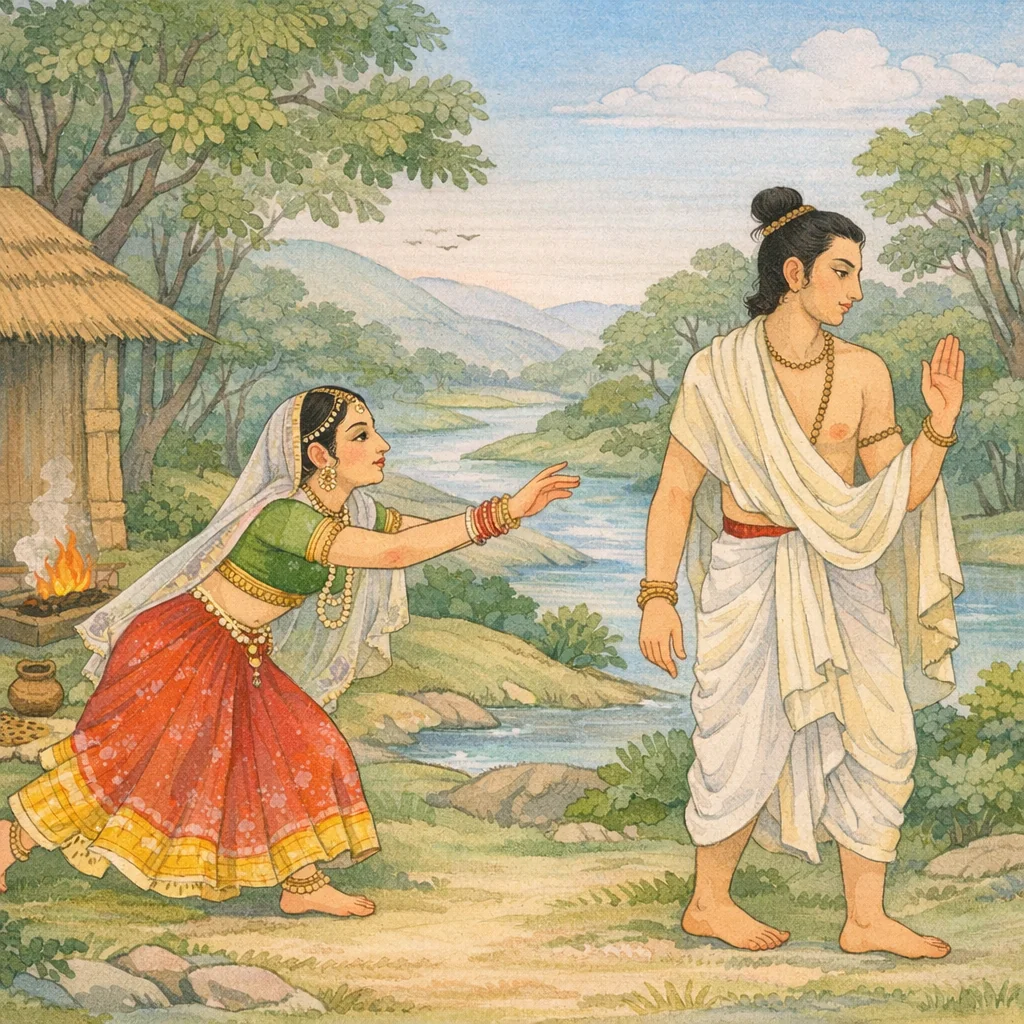
(दाक्षिणात्य अधिक पाठके २ श्लोक मिलाकर कुल ७४ श्लोक हैं) ऑपन--माज बछ। अकाल सप्तसप्ततितमो<ध्याय: देवयानीका कचसे पाणिग्रहणके लिये अनुरोध, कचकी अस्वीकृति तथा दोनोंका एक-दूसरेको शाप देना वैशम्पायन उवाच समावृतद्रतं तं तु विसृष्टं गुरुणा तदा । प्रस्थितं त्रिदशावासं देवयान्यब्रवीदिदम्,वैशम्पायनजी कहते हैं--जब कचका व्रत समाप्त हो गया और गुरुने उन्हें जानेकी आज्ञा दे दी, तब वे देवलोकको प्रस्थित हुए। उस समय देवयानीने उनसे इस प्रकार कहा --“महर्षि अंगिराके पौत्र! आप सदाचार, उत्तम कुल, विद्या, तपस्या तथा इन्द्रियसंयम आदिसे बड़ी शोभा पा रहे हैं
Vaiśampāyana said: When Kaca had completed his vowed observance and was then dismissed by his teacher, he set out for the abode of the gods. At that moment Devayānī spoke to him as follows—thus beginning her appeal in the context of gratitude, propriety, and the limits of teacher–student bonds.
Verse 2
ऋषेरड्लिरस: पौत्र वृत्तेनाभिजनेन च । भ्राजसे विद्यया चैव तपसा च दमेन च,वैशम्पायनजी कहते हैं--जब कचका व्रत समाप्त हो गया और गुरुने उन्हें जानेकी आज्ञा दे दी, तब वे देवलोकको प्रस्थित हुए। उस समय देवयानीने उनसे इस प्रकार कहा --“महर्षि अंगिराके पौत्र! आप सदाचार, उत्तम कुल, विद्या, तपस्या तथा इन्द्रियसंयम आदिसे बड़ी शोभा पा रहे हैं
Vaiśampāyana said: (Devayānī addressed Kaca thus:) “O grandson of the sage Aṅgiras! You shine with noble conduct and high birth; and also with learning, austerity, and self-restraint.”
Verse 3
ऋषिर्य थाड्रिरा मान्य: पितुर्मम महायशा: । तथा मान्यश्न पूज्यश्चन मम भूयो बृहस्पति:,“महायशस्वी महर्षि अंगिरा जिस प्रकार मेरे पिताजीके लिये माननीय हैं, उसी प्रकार आपके पिता बृहस्पतिजी मेरे लिये आदरणीय तथा पूज्य हैं
Vaiśaṃpāyana said: “Just as the illustrious sage Aṅgirā is revered by my father, so too is your father Bṛhaspati even more revered and worthy of worship in my eyes.”
Verse 4
एवं ज्ञात्वा विजानीहि यद् ब्रवीमि तपोधन । व्रतस्थे नियमोपेते यथा वर्ताम्यहं त्वयि,“तपोधन! ऐसा जानकर मैं जो कहती हूँ उसपर विचार करें। आप जब व्रत और नियमोंके पालनमें लगे थे, उन दिनों मैंने आपके साथ जो बर्ताव किया है, उसे आप भूले नहीं होंगे
“Knowing this, understand well what I am about to say, O rich in austerity. When you were steadfast in your vows and disciplined observances, you will not have forgotten how I conducted myself toward you.”
Verse 5
स समावृतविद्यो मां भक्तां भजितुम्सि । गृहाण पार्णिं विधिवन्मम मन्त्रपुरस्कृतम्,“अब आप व्रत समाप्त करके अपनी अभीष्ट विद्या प्राप्त कर चुके हैं। मैं आपसे प्रेम करती हूँ, आप मुझे स्वीकार करें; वैदिक मन्त्रोंके उच्चारणपूर्वक विधिवत् मेरा पाणिग्रहण कीजिये”
Verse 6
कच उवाच पूज्यो मान्यश्न भगवान् यथा तव पिता मम । तथा त्वमनवद्याड़ि पूजनीयतरा मम,कचने कहा--निर्दोष अंगोंवाली देवयानी! जैसे तुम्हारे पिता भगवान् शुक्राचार्य मेरे लिये पूजनीय और माननीय हैं, वैसे ही तुम हो; बल्कि उनसे भी बढ़कर मेरी पूजनीया हो
Kacha said: “Just as your father—revered and venerable—Śukrācārya is worthy of my worship and honor, so too are you, O Devayānī of flawless limbs. Indeed, you are even more worthy of my reverence than he.”
Verse 7
प्राणेभ्यो5पि प्रियतरा भार्गवस्य महात्मन: । त्वं भद्रे धर्मतः पूज्या गुरुपुत्री सदा मम,भद्रे! महात्मा भार्गवको तुम प्राणोंसे भी अधिक प्यारी हो, गुरुपुत्री होनेके कारण धर्मकी दृष्टिसे सदा मेरी पूजनीया हो
Kaca said: “O gentle lady, you are dearer to me even than my own life—yet, because you are the daughter of my guru, the great Bhārgava, you are always to be honored by me according to dharma.”
Verse 8
यथा मम गुरुर्नित्यं मान्य: शुक्र: पिता तव । देवयानि तथैव त्वं नैवं मां वक्तुमहसि,देवयानी! जैसे मेरे गुरुदेव तुम्हारे पिता शुक्राचार्य सदा मेरे माननीय हैं, उसी प्रकार तुम हो; अतः तुम्हें मुझसे ऐसी बात नहीं कहनी चाहिये
Kacha said: “Just as your father Śukra—my teacher—is always worthy of my honor, so too are you. Therefore, Devayānī, you ought not to speak to me in this manner.”
Verse 9
देवयान्युवाच गुरुपुत्रस्य पुत्रो वै न त्वं पुत्रश्न मे पितु: । तस्मात् पूज्यश्च मान्यश्न ममापि त्वं द्विजोत्तम,देवयानी बोली--द्विजोत्तम! आप मेरे पिताके गुरुपुत्रके पुत्र हैं, मेरे पिताके नहीं; अतः मेरे लिये भी आप पूजनीय और माननीय हैं। कच! जब असुर आपको बार-बार मार डालते थे, तबसे लेकर आजतक आपके प्रति मेरा जो प्रेम रहा है, उसे आज याद कीजिये
Devayānī said: “O best of Brahmins, you are the son of my father’s teacher’s son—you are not my father’s son. Therefore, for me too you are worthy of reverence and honor.” (She implies that Kaca stands to her in a respected, quasi-elder relation, and thus should be treated with due regard, even as she appeals to his sense of propriety and gratitude in the unfolding relationship.)
Verse 10
असुरेहन्यमाने च कच त्वयि पुन: पुनः । तदा प्रभृति या प्रीतिस्तां त्वमद्य स्मरस्व मे,देवयानी बोली--द्विजोत्तम! आप मेरे पिताके गुरुपुत्रके पुत्र हैं, मेरे पिताके नहीं; अतः मेरे लिये भी आप पूजनीय और माननीय हैं। कच! जब असुर आपको बार-बार मार डालते थे, तबसे लेकर आजतक आपके प्रति मेरा जो प्रेम रहा है, उसे आज याद कीजिये
Kaca said: “When you, Kaca, were being slain again and again by the Asuras, from that time onward the affection I have held—remember that love of mine today.”
Verse 11
सौहारदे चानुरागे च वेत्थ मे भक्तिमुत्तमाम् । न मामहसि धर्मज्ञ त्यक्तुं भक्तामनागसम्,सौहार्द और अनुरागके अवसरपर मेरी उत्तम भक्तिका परिचय आपको मिल चुका है। आप धर्मके ज्ञाता हैं। मैं आपके प्रति भक्ति रखनेवाली निरपराध अबला हूँ। आपको मेरा त्याग करना उचित नहीं है
Verse 12
कच उवाच अनियोज्ये नियोगे मां नियुनड्क्षि शुभव्रते । प्रसीद सुभ्रु त्वं महां गुरोर्गुरुतरा शुभे,कचने कहा--उत्तम व्रतका आचरण करनेवाली सुन्दरी! तुम मुझे ऐसे कार्यमें लगा रही हो, जिसमें लगाना कदापि उचित नहीं है। शुभे! तुम मेरे ऊपर प्रसन्न होओ। तुम मेरे लिये गुरुसे भी बढ़कर गुरुतर हो। विशाल नेत्र तथा चन्द्रमाके समान मुखवाली भागमिनि! शुक्राचार्यके जिस उदरमें तुम रह चुकी हो, उसीमें मैं भी रहा हूँ। इसलिये भटद्रे! धर्मकी दृष्टिसे तुम मेरी बहिन हो। अतः सुमध्यमे! मुझसे ऐसी बात न कहो। कल्याणी। मैं तुम्हारे यहाँ बड़े सुखसे रहा हूँ। तुम्हारे प्रति मेरे मनमें तनिक भी रोष नहीं है
Kaca said: “O fair-browed maiden of noble vows, you are urging me into an appointment that is not fit to be undertaken. Be gracious to me, O auspicious one. For me you are weightier in reverence even than my teacher. Therefore, do not press me toward this improper course.”
Verse 13
यत्रोषितं विशालाक्षि त्वया चन्द्रनिभानने । तत्राहमुषितो भद्रे कुक्षौ काव्यस्थ भामिनि,कचने कहा--उत्तम व्रतका आचरण करनेवाली सुन्दरी! तुम मुझे ऐसे कार्यमें लगा रही हो, जिसमें लगाना कदापि उचित नहीं है। शुभे! तुम मेरे ऊपर प्रसन्न होओ। तुम मेरे लिये गुरुसे भी बढ़कर गुरुतर हो। विशाल नेत्र तथा चन्द्रमाके समान मुखवाली भागमिनि! शुक्राचार्यके जिस उदरमें तुम रह चुकी हो, उसीमें मैं भी रहा हूँ। इसलिये भटद्रे! धर्मकी दृष्टिसे तुम मेरी बहिन हो। अतः सुमध्यमे! मुझसे ऐसी बात न कहो। कल्याणी। मैं तुम्हारे यहाँ बड़े सुखसे रहा हूँ। तुम्हारे प्रति मेरे मनमें तनिक भी रोष नहीं है
Kacha said: “O large-eyed lady, O moon-faced one—where you once dwelt, there I too have dwelt, O auspicious one: in the very womb of Kāvya (Śukrācārya). Therefore, by the standard of dharma, you are my sister. Do not ask me for such a relationship. I lived in your household with comfort, and I bear you no resentment at all.”
Verse 14
भगिनी धर्मतो मे त्वं मैवं वोच: सुमध्यमे | सुखमस्म्युषितो भद्रे न मन्युर्विद्यते मम,कचने कहा--उत्तम व्रतका आचरण करनेवाली सुन्दरी! तुम मुझे ऐसे कार्यमें लगा रही हो, जिसमें लगाना कदापि उचित नहीं है। शुभे! तुम मेरे ऊपर प्रसन्न होओ। तुम मेरे लिये गुरुसे भी बढ़कर गुरुतर हो। विशाल नेत्र तथा चन्द्रमाके समान मुखवाली भागमिनि! शुक्राचार्यके जिस उदरमें तुम रह चुकी हो, उसीमें मैं भी रहा हूँ। इसलिये भटद्रे! धर्मकी दृष्टिसे तुम मेरी बहिन हो। अतः सुमध्यमे! मुझसे ऐसी बात न कहो। कल्याणी। मैं तुम्हारे यहाँ बड़े सुखसे रहा हूँ। तुम्हारे प्रति मेरे मनमें तनिक भी रोष नहीं है
Kaca said: “O sister—by the rule of dharma you are so to me—do not speak to me in this way, O slender-waisted one. O auspicious lady, I have lived here in comfort; there is no anger at all in my heart.”
Verse 15
आपूृच्छे त्वां गमिष्यामि शिवमाशंस मे पथि । अविरोधेन धर्मस्य स्मर्तव्यो5स्मि कथान्तरे । अप्रमत्तोत्थिता नित्यमाराधय गुरुं मम,अब मैं जाऊँगा, इसलिये तुमसे पूछता हूँ--तुम्हारी आज्ञा चाहता हूँ, आशीर्वाद दो कि मार्गमें मेरा मंगल हो। धर्मकी अनुकूलता रखते हुए बातचीतके प्रसंगमें कभी मेरा भी स्मरण कर लेना और सदा सावधान एवं सजग रहकर मेरे गुरुदेवकी सेवामें लगी रहना
Kaca said: “I take leave of you; I am about to depart. Bless me that my journey may be auspicious. Without ever straying from dharma, remember me at fitting moments in your conversations. And remain ever vigilant and steadfast, continually serving and honoring my teacher.”
Verse 16
देवयान्युवाच यदि मां धर्मकामार्थे प्रत्याख्यास्यसि याचित: । ततः कच न ते विद्या सिद्धिमेषा गमिष्यति,देवयानी बोली--कच! मैंने धर्मानुकूल कामके लिये आपसे प्रार्थना की है। यदि आप मुझे ठुकरा देंगे, तो आपकी यह संजीवनी विद्या सिद्ध नहीं हो सकेगी
Devayānī said: “Kaca, I have asked you for a union that I claim to be in accordance with dharma and desire. If, when thus requested, you reject me, then this very knowledge of yours will not attain success.” In the ethical tension of the episode, Devayānī attempts to bind Kaca’s personal vow and conduct to the fate of his hard-won learning, using a conditional threat to compel compliance.
Verse 17
कच उवाच गुरुपुत्रीति कृत्वाहं प्रत्याचक्षे न दोषत: । गुरुणा चाननुज्ञात: काममेवं शपस्व माम्,कचने कहा--देवयानी! गुरुपुत्री समझकर ही मैंने तुम्हारे अनुरोधको टाल दिया है; तुममें कोई दोष देखकर नहीं। गुरुजीने भी इसके विषयमें मुझे कोई आज्ञा नहीं दी है। तुम्हारी जैसी इच्छा हो, मुझे शाप दे दो
Kacha said: “I refused your request only because I regarded you as my teacher’s daughter—not because I found any fault in you. Nor have I been given permission by my guru in this matter. Therefore, if you so desire, curse me as you wish.”
Verse 18
आर्ष धर्म ब्रुवाणो5हं देवयानि यथा त्वया । शप्तो नाहोंडस्मि शापस्य कामतोडद्य न धर्मत:,बहिन! मैं आर्ष धर्मकी बात बता रहा था। इस दशामें तुम्हारे द्वारा शाप पानेके योग्य नहीं था। तुमने मुझे धर्मके अनुसार नहीं, कामके वशीभूत होकर आज शाप दिया है, इसलिये तुम्हारे मनमें जो कामना है, वह पूरी नहीं होगी। कोई भी ऋषिपुत्र (ब्राह्मणकुमार) कभी तुम्हारा पाणिग्रहण नहीं करेगा
Kacha said: “Devayānī, I was speaking the ancient, rishi-sanctioned law of dharma. I was not in a condition deserving a curse from you. Today you have cursed me not in accordance with dharma, but under the sway of desire; therefore the wish that is in your heart will not be fulfilled—no son of a ṛṣi, no Brahmin youth, will ever take your hand in marriage.”
Verse 19
तस्माद् भवत्या यः: कामो न तथा स भविष्यति | ऋषिपुत्रो न ते कश्चिज्जातु पार्णिं ग्रहीष्यति,बहिन! मैं आर्ष धर्मकी बात बता रहा था। इस दशामें तुम्हारे द्वारा शाप पानेके योग्य नहीं था। तुमने मुझे धर्मके अनुसार नहीं, कामके वशीभूत होकर आज शाप दिया है, इसलिये तुम्हारे मनमें जो कामना है, वह पूरी नहीं होगी। कोई भी ऋषिपुत्र (ब्राह्मणकुमार) कभी तुम्हारा पाणिग्रहण नहीं करेगा
Kaca said: “Therefore, the desire you cherish will not come to pass as you wish. Never will any son of a ṛṣi take your hand in marriage, O sister. I was speaking of the dharma of the seers; in this condition I was not fit to be cursed by you. Yet today you have cursed me not in accordance with dharma, but under the sway of passion—hence your longing will remain unfulfilled.”
Verse 20
फलिष्यति न ते विद्या यत् त्वं मामात्थ तत् तथा | अध्यापयिष्यामि तु यं तस्य विद्या फलिष्यति,तुमने जो मुझे यह कहा कि तुम्हारी विद्या सफल नहीं होगी, सो ठीक है; किंतु मैं जिसे यह विद्या पढ़ा दूँगा, उसकी विद्या तो सफल होगी ही
Kacha said: “Your knowledge will not bear fruit—what you have said to me is indeed so. Yet the one whom I shall teach this knowledge—his knowledge will surely bear fruit.” In the ethical tension between a teacher’s curse and a student’s resolve, Kacha accepts the consequence upon his teacher while safeguarding the usefulness of the learning by passing it onward.
Verse 21
वैशम्पायनजी कहते हैं--जनमेजय! द्विजश्रेष्ठ कच देवयानीसे ऐसा कहकर तत्काल बड़ी उतावलीके साथ इन्द्रलोकको चले गये
Vaiśampāyana said: “O Janamejaya, after speaking thus to Devayānī, the best of the twice-born, Kaca, at once—driven by great urgency—departed for Indra’s world.”
Verse 22
तमागतमभिप्रेक्ष्य देवा इन्द्रपुरोगमा: । बृहस्पतिं सभाज्येदं कचं वचनमन्रुवन्,उन्हें आया देख इन्द्रादि देवता बृहस्पतिजीकी सेवामें उपस्थित हो कचसे यह वचन बोले
Vaiśampāyana said: Seeing Kaca arrive, the gods—led by Indra—first honored Bṛhaspati with due reverence, and then addressed Kaca with these words. The scene underscores proper hierarchy and gratitude: even in urgency, one begins by honoring the teacher and the source of sacred counsel before speaking of one’s request or purpose.
Verse 23
वैशम्पायन उवाच एवमुक्त्वा द्विजश्रेष्ठो देवयानीं कचस्तदा । त्रिदशेशालयं शीघ्र॑ं जगाम द्विजसत्तम:,देवा ऊचु: यत् त्वयास्मद्धितं कर्म कृतं वै परमाद्भुतम् । न ते यश: प्रणशिता भागभाक् च भविष्यसि देवता बोले--ब्रह्मन! तुमने हमारे हितके लिये यह बड़ा अदभुत कार्य किया है, अतः तुम्हारा यशका कभी लोप नहीं होगा और तुम यज्ञमें भाग पानेके अधिकारी होओगे
Vaiśampāyana said: Having spoken thus, Kaca—the best of twice-born men—then quickly went to the abode of the lord of the gods, after addressing Devayānī. The gods said: “The deed you have done for our welfare is truly most wondrous. Your fame will never perish, and you shall be entitled to a share in sacrificial offerings.”
Verse 76
इस प्रकार श्रीमहाभारत आदिपर्वके अन्तर्गत सम्भवपर्वमें ययात्युपाख्यानविषयक छिह्तत्तरवाँ अध्याय पूरा हुआ
Thus ends the seventy-seventh chapter of the Sambhava Parva within the Ādi Parva of the revered Mahābhārata, the chapter whose subject is the episode concerning King Yayāti. The narrator marks the completion of this section, signaling a transition in the genealogy-and-origins narrative that frames the epic’s moral world.
Verse 77
इति श्रीमहाभारते आदिपर्वणि सम्भवपर्वणि ययात्युपाख्याने सप्तसप्ततितमो<ध्याय:
Thus ends the seventy-seventh chapter in the Yayāti episode, within the Sambhava section of the Ādi Parva of the sacred Mahābhārata.
Frequently Asked Questions
Yayāti must reconcile competing obligations: adherence to truthfulness and prior constraints associated with Devayānī’s household order versus responsiveness to a petitioner’s request framed as preventing adharma and enabling legitimate progeny.
The chapter models rāja-dharma as accountability: a ruler’s credibility depends on disciplined speech and principled action, while ethical decisions often require balancing vows, social norms, and situational duties rather than applying a single rule mechanically.
No explicit phalaśruti is stated here; the narrative instead provides an implicit meta-commentary through consequence—ethical negotiation in the royal household directly produces genealogical results, reinforcing the epic’s causal linkage between conduct and lineage history.