Sukta 15
Sukta 10.15
As RV 10.15 (Pitṛ hymn); specific rishi attribution uncertain without Anukramaṇī citation
Pitṛs (Fathers/ancestors)
Triṣṭubh
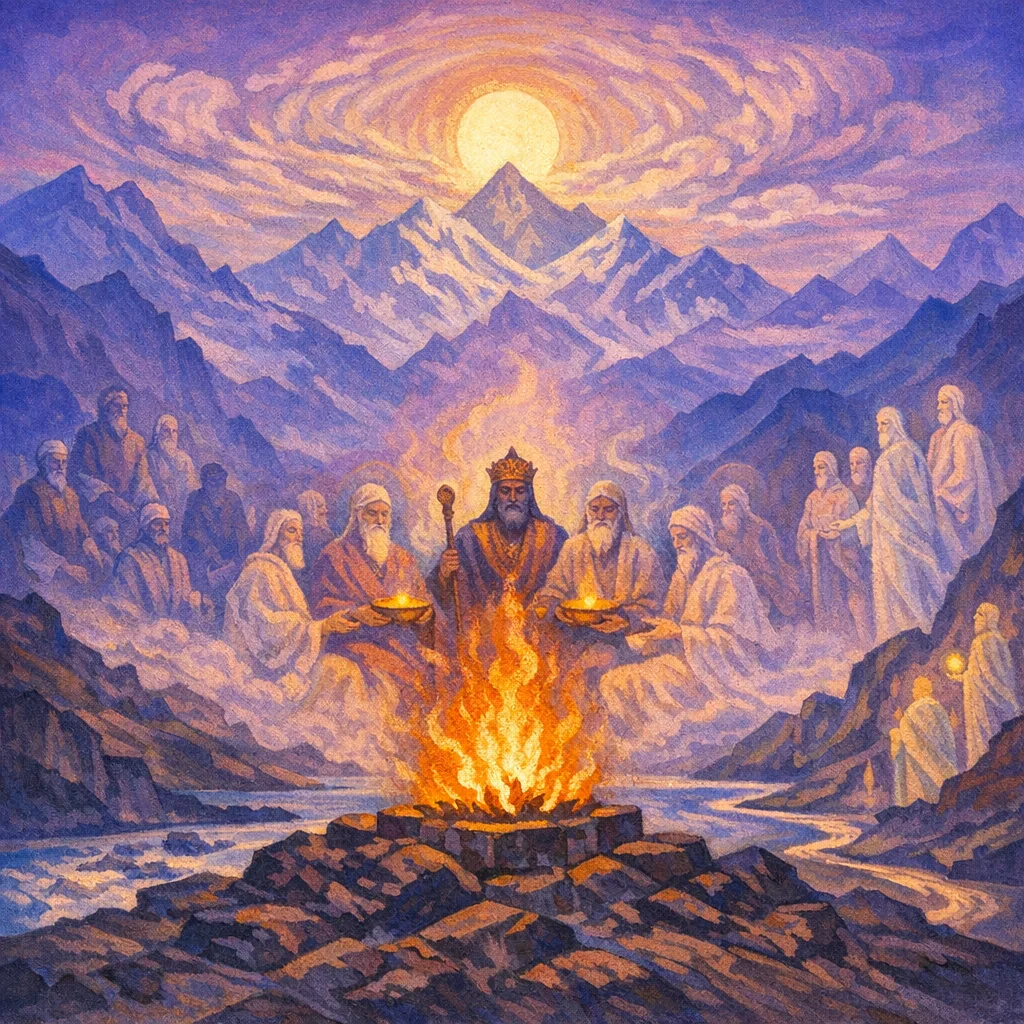
RV 10.15 is a Pitṛ (ancestor) hymn that ritually summons the Fathers—lower, middle, and higher—to rise and attend the living, hearing their calls and accepting offerings. It links the Pitṛ-world with Soma, ṛta (cosmic order), and Yama’s governance, asking for protection, blessing, and a well-guided “path of life-breath” for the embodied being.
Mantras
Mantra 1
उदीरतामवर उत्परास उन्मध्यमाः पितरः सोम्यासः । असुं य ईयुरवृका ऋतज्ञास्ते नोऽवन्तु पितरो हवेषु ॥
Let the lower Fathers rise, let the higher rise, let the middle Fathers rise—those who are of the Soma-delight. They who have gone with the breath of life, harm-less, knowers of ṛta—may those Fathers help us in our calls.
Mantra 2
इदं पितृभ्यो नमो अस्त्वद्य ये पूर्वासो य उपरास ईयुः । ये पार्थिवे रजस्या निषत्ता ये वा नूनं सुवृजनासु विक्षु ॥
This reverence to the Fathers be today: those who are the earliest and those who have gone to the higher. Those seated in the earthly realm, and those who now are among the fair-ordered peoples—may all be met by our bowing.
Mantra 3
आहं पितॄन्त्सुविदत्राँ अवित्सि नपातं च विक्रमणं च विष्णोः । बर्हिषदो ये स्वधया सुतस्य भजन्त पित्वस्त इहागमिष्ठाः ॥
I have found the Fathers, the well-finding ones; and the Descendant, and the wide-striding power of Viṣṇu. Those who sit upon the sacred grass and partake, by their own right, of the pressed draught—let them come here most readily.
Mantra 4
बर्हिषदः पितर ऊत्यर्वागिमा वो हव्या चकृमा जुषध्वम् । त आ गतावसा शंतमेनाथा नः शं योररपो दधात ॥
O Fathers who sit upon the sacred seat, come near with your protecting help; these offerings we have prepared for you—take joy in them. Arrive with the most peace-giving aid; then establish in us well-being and a wide, uninjured wholeness.
Mantra 5
उपहूताः पितरः सोम्यासो बर्हिष्येषु निधिषु प्रियेषु । त आ गमन्तु त इह श्रुवन्त्वधि ब्रुवन्तु तेऽवन्त्वस्मान् ॥
The Fathers, called near—those who delight in Soma—(come) to these dear treasuries laid on the sacred seat. Let them arrive; let them here listen; let them speak their overseeing word; let them protect us.
Mantra 6
आच्या जानु दक्षिणतो निषद्येमं यज्ञमभि गृणीत विश्वे । मा हिंसिष्ट पितरः केन चिन्नो यद्व आगः पुरुषता कराम ॥
Bending the knee, sit to the right and chant over this sacrifice, all you Fathers. Do not wound us in any way, O Fathers, for whatever offence we may have made through human limitation.
Mantra 7
आसीनासो अरुणीनामुपस्थे रयिं धत्त दाशुषे मर्त्याय । पुत्रेभ्यः पितरस्तस्य वस्वः प्र यच्छत त इहोर्जं दधात ॥
Seated in the lap of the Dawn-lights, place the rayi—fullness of being—into the giver, the mortal. O Fathers, extend that wealth to his children; and here establish in them the nourishing strength.
Mantra 8
ये नः पूर्वे पितरः सोम्यासोऽनूहिरे सोमपीथं वसिष्ठाः । तेभिर्यमः संरराणो हवींष्युशन्नुशद्भिः प्रतिकाममत्तु ॥
Those former Fathers of ours who followed the Soma-drinking, O Vasiṣṭhas—together with them may Yama, rejoicing, partake of the offerings, desiring with the desirers, according to each true need.
Mantra 9
ये तातृषुर्देवत्रा जेहमाना होत्राविदः स्तोमतष्टासो अर्कैः । आग्ने याहि सुविदत्रेभिरर्वाङ्सत्यैः कव्यैः पितृभिर्घर्मसद्भिः ॥
Those who have grown strong toward the gods, ardent in movement, knowers of the offering-word, who have fashioned hymns with inspired chants—O Agni, come hither with the well-finding, true, seer-ancestors who sit by the glowing heat.
Mantra 10
ये सत्यासो हविरदो हविष्पा इन्द्रेण देवैः सरथं दधानाः । आग्ने याहि सहस्रं देववन्दैः परैः पूर्वैः पितृभिर्घर्मसद्भिः ॥
Those true ones who eat the offering and drink the oblation, who with Indra and the gods hold one chariot—O Agni, come with the thousand, the god-praising, the far and ancient Fathers who sit in the glowing heat.
Mantra 11
अग्निष्वात्ताः पितर एह गच्छत सदःसदः सदत सुप्रणीतयः । अत्ता हवींषि प्रयतानि बर्हिष्यथा रयिं सर्ववीरं दधातन ॥
O Fathers whom Agni has made fit for the offering, come here; sit in seat after seat, O well-led ones. Eat the offerings that are set forth upon the sacred seat; then establish in us a rayi complete in heroic powers.
Mantra 12
त्वमग्न ईळितो जातवेदोऽवाड्ढव्यानि सुरभीणि कृत्वी । प्रादाः पितृभ्यः स्वधया ते अक्षन्नद्धि त्वं देव प्रयता हवींषि ॥
You, O Agni, praised as Jātavedas, have carried the offerings down, making them fragrant and fit. You have given them to the Fathers by the power of svadhā; they have eaten—now you too, O god, consume the offerings that are set forth.
Mantra 13
ये चेह पितरो ये च नेह याँश्च विद्म याँ उ च न प्रविद्म । त्वं वेत्थ यति ते जातवेदः स्वधाभिर्यज्ञं सुकृतं जुषस्व ॥
Whether the Fathers are here or not here—those whom we know and those whom we do not clearly know—you know them, O Jātavedas, as they truly are. With the powers of svadhā, accept and take joy in this well-accomplished sacrifice.
Mantra 14
ये अग्निदग्धा ये अनग्निदग्धा मध्ये दिवः स्वधया मादयन्ते । तेभिः स्वराळसुनीतिमेतां यथावशं तन्वं कल्पयस्व ॥
Those who have been purified by the Fire and those who have not been purified by the Fire, who rejoice in the mid-world of heaven by the power of their own true substance (svadhā)—with them, O self-ruling One, shape for this being the onward-leading path of life-breath, and form the embodiment according to its own law of becoming.
Frequently Asked Questions
It is a hymn inviting the ancestors (Pitṛs) to come, receive offerings, and protect the living. It also connects the ancestor-world with Soma, ṛta (cosmic order), and Yama.
It poetically organizes the departed into levels or groups, implying a complete ancestral host across realms. The point is to invite all ancestors—near and far, recent and ancient—without omission.
It refers to those who were cremated (“burned by fire”) and those who were not. The verse widens the prayer so that all departed ancestors, regardless of funerary circumstance, are included in the rite and blessing.