Sukta 161
Sukta 1.161
Rbhus (collective seers/artisans) traditionally associated with this sukta; specific attribution not provided in input
Agni as dūta; narrative frame concerns the Rbhus and the transformation of the cup (camasá)
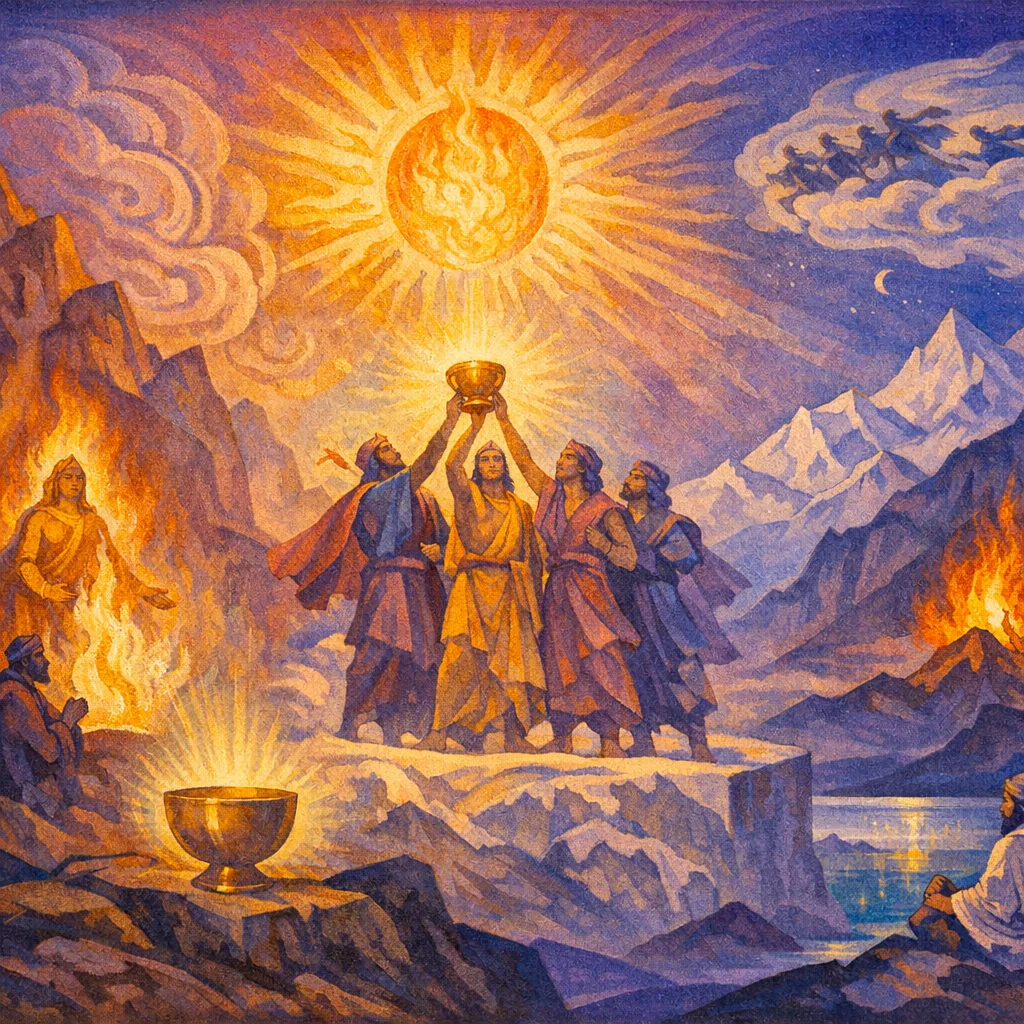
This hymn narrates the testing and glorification of the Ṛbhus—divine artisans—framed through Agni’s role as dūta (messenger) and the famed transformation of a single wooden cup (camasá) into multiple perfected forms. Through riddling questions, ritual dialogue, and references to the Soma pressings, it celebrates skill that becomes sacred power: workmanship aligned with ṛta (cosmic order) wins immortality and divine recognition.
Mantras
Mantra 1
किमु श्रेष्ठः किं यविष्ठो न आजगन्किमीयते दूत्यं कद्यदूचिम । न निन्दिम चमसं यो महाकुलोऽग्ने भ्रातर्द्रुण इद्भूतिमूदिम ॥
What indeed has come to us as the best, what as the youngest? What mission is moving, and what have we spoken? We do not blame the cup: O Agni, brother, the great-natured one—(from) the wooden vessel itself we seek the increase of being.
Mantra 2
एकं चमसं चतुरः कृणोतन तद्वो देवा अब्रुवन्तद्व आगमम् । सौधन्वना यद्येवा करिष्यथ साकं देवैर्यज्ञियासो भविष्यथ ॥
Make the one cup into four—so the gods spoke to you, and so has it come to you. O sons of Sudhanvan, if you accomplish this, you will become worthy of the sacrifice together with the gods.
Mantra 3
अग्निं दूतं प्रति यदब्रवीतनाश्वः कर्त्वो रथ उतेह कर्त्वः । धेनुः कर्त्वा युवशा कर्त्वा द्वा तानि भ्रातरनु वः कृत्व्येमसि ॥
When you spoke in response to Agni the messenger: ‘A horse is to be made, a chariot too is to be made here; a cow is to be made, and the two youth (powers) are to be made.’ Those works, O brothers, we pursue after you, having fashioned (our will) toward them we enter upon them.
Mantra 4
चकृवांस ऋभवस्तदपृच्छत क्वेदभूद्यः स्य दूतो न आजगन् । यदावाख्यच्चमसाञ्चतुरः कृतानादित्त्वष्टा ग्नास्वन्तर्न्यानजे ॥
Having accomplished it, the Rbhus asked: ‘Where indeed is he who was to be our messenger and came to us?’ When he showed the four cups made, then Tvaṣṭṛ withdrew and hid himself within the women (the forms of nature).
Mantra 5
हनामैनाँ इति त्वष्टा यदब्रवीच्चमसं ये देवपानमनिन्दिषुः । अन्या नामानि कृण्वते सुते सचाँ अन्यैरेनान्कन्या नामभिः स्परत् ॥
‘I will strike them down,’ said Tvaṣṭṛ, when he spoke of the cup which they had made blameless for the gods’ drinking. They make other names while the Soma is pressed; by other maiden-names she touches them and wins them over.
Mantra 6
इन्द्रो हरी युयुजे अश्विना रथं बृहस्पतिर्विश्वरूपामुपाजत । ऋभुर्विभ्वा वाजो देवाँ अगच्छत स्वपसो यज्ञियं भागमैतन ॥
Indra yoked his two powers of force; the Aśvins yoked their chariot; Bṛhaspati approached the all-formed (power). Ṛbhu, Vibhvan, Vāja went to the gods—perfect in works—and they won their share that is worthy in the sacrifice.
Mantra 7
निश्चर्मणो गामरिणीत धीतिभिर्या जरन्ता युवशा ताकृणोतन । सौधन्वना अश्वादश्वमतक्षत युक्त्वा रथमुप देवाँ अयातन ॥
Out of the hide you shaped the Cow by inspired thoughts; the aging ones you made into youth again. O sons of Sudhanvan, from a horse you fashioned another horse; yoking the chariot you came near to the gods.
Mantra 8
इदमुदकं पिबतेत्यब्रवीतनेदं वा घा पिबता मुञ्जनेजनम् । सौधन्वना यदि तन्नेव हर्यथ तृतीये घा सवने मादयाध्वै ॥
“Drink this water,” so they said; “yes, drink this indeed, the cleanser made of muñja.” O Saudhanvanas (Rbhus), if you do not delight in that, then in the third pressing you shall become intoxicated—entering the rapture that ripens the work.
Mantra 9
आपो भूयिष्ठा इत्येको अब्रवीदग्निर्भूयिष्ठ इत्यन्यो अब्रवीत् । वधर्यन्तीं बहुभ्यः प्रैको अब्रवीदृता वदन्तश्चमसाँ अपिंशत ॥
“Let the Waters be abundant,” said one; “let Agni be abundant,” said another. One proclaimed the advancing (power) for the many; speaking the truths of Rita, they fashioned the cups—forms fit to hold the delight.
Mantra 10
श्रोणामेक उदकं गामवाजति मांसमेकः पिंशति सूनयाभृतम् । आ निम्रुचः शकृदेको अपाभरत्किं स्वित्पुत्रेभ्यः पितरा उपावतुः ॥
One drives the cow toward the water; one shapes the flesh brought by the guiding hand. One carries away the dung from the dark corners. What indeed did the two Parents bring near to their sons—what help of origin stood behind these works?
Mantra 11
उद्वत्स्वस्मा अकृणोतना तृणं निवत्स्वपः स्वपस्यया नरः । अगोह्यस्य यदसस्तना गृहे तदद्येदमृभवो नानु गच्छथ ॥
On the higher ground you made grass for him; in the lower you made waters—O men of good workmanship. What you have set in the house of the Hidden Cow (the concealed Light), that today, O Rbhus, you do not follow up—do not abandon the continuation of the work.
Mantra 12
सम्मील्य यद्भुवना पर्यसर्पत क्व स्वित्तात्या पितरा व आसतुः । अशपत यः करस्नं व आददे यः प्राब्रवीत्प्रो तस्मा अब्रवीतन ॥
When, closing (yourselves), you moved around the worlds—where indeed then were your two Parents? You cursed the one who took away your ‘karasna’; but to him who spoke the forward word “pro!”, to that one you responded—affirming the impulse that carries the work onward.
Mantra 13
सुषुप्वांस ऋभवस्तदपृच्छतागोह्य क इदं नो अबूबुधत् । श्वानं बस्तो बोधयितारमब्रवीत्संवत्सर इदमद्या व्यख्यत ॥
The Rbhus, fallen into deep sleep, asked: “O Hidden One, who has awakened this for us?” Basta spoke of the dog as the awakener; but it was the Year that today disclosed it—Time itself opening the knowledge at its ripened hour.
Mantra 14
दिवा यान्ति मरुतो भूम्याग्निरयं वातो अन्तरिक्षेण याति । अद्भिर्याति वरुणः समुद्रैर्युष्माँ इच्छन्तः शवसो नपातः ॥
By day the Maruts go; by earth goes Agni; this Wind goes through the mid-space. By the waters, by the oceans goes Varuna—seeking you, O children of Power: all the cosmic energies converge upon the perfected workers.
Frequently Asked Questions
The Ṛbhus are a group of inspired artisan-seers celebrated for extraordinary skill. In Vedic thought, their flawless work becomes a spiritual achievement that wins them divine status.
Agni carries offerings and words of praise from humans to the gods. In this hymn he also mediates the recognition of the Ṛbhus’ perfected work, acting like a bridge between worlds.
The third savana is the third Soma pressing in the day’s Soma ritual. The hymn uses it as an image of ripening and fulfillment—where the workers’ effort culminates in ritual joy and divine approval.