Sukta 140
Sukta 1.140
Traditionally attributed to Kaṇva lineage for RV 1.140 (verify in anukramaṇī); hymn is Agni-centered
Agni
Jagatī or Triṣṭubh (uncertain from provided text alone; verify in critical edition)
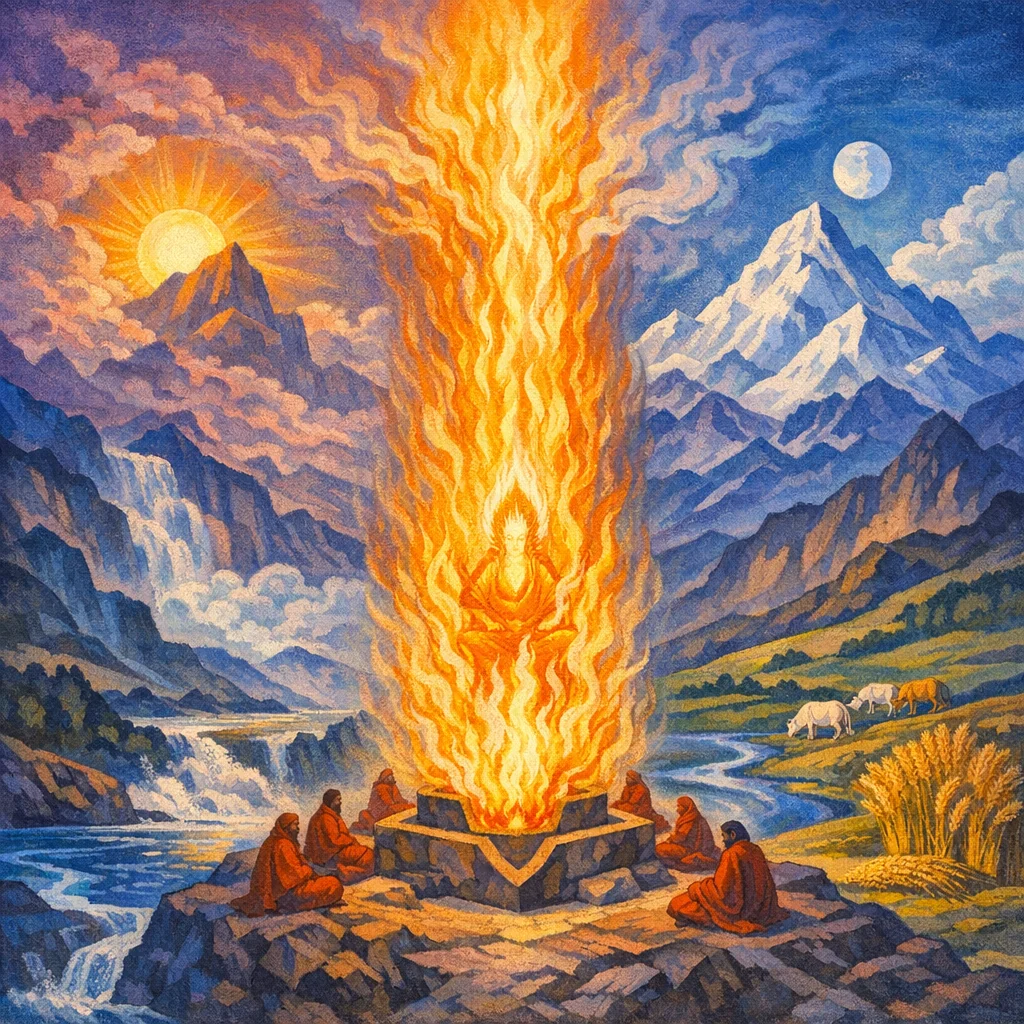
RV 1.140 is an Agni-hymn that invites the altar-fire to take his seat in a well-prepared “womb” (yoni) and to shine as a pure, darkness-dispelling chariot of light. It weaves ritual imagery (kindling, clothing, offering) with cosmic regeneration, portraying Agni as the knower who gathers powers, renews forms, and links the divine Parents (Heaven and Earth) with the flowing Rivers to awaken the hymn and secure nourishment and boons.
Mantras
Mantra 1
वेदिषदे प्रियधामाय सुद्युते धासिमिव प्र भरा योनिमग्नये । वस्त्रेणेव वासया मन्मना शुचिं ज्योतीरथं शुक्रवर्णं तमोहनम् ॥
O Fire who sits upon the altar, for the beloved home and the bright shining, bring forward as if a rich portion the womb-place for Agni. Clothe with the mind’s inspired thought the pure one, the chariot of light, white in hue, the slayer of darkness.
Mantra 2
अभि द्विजन्मा त्रिवृदन्नमृज्यते संवत्सरे वावृधे जग्धमी पुनः । अन्यस्यासा जिह्वया जेन्यो वृषा न्यन्येन वनिनो मृष्ट वारणः ॥
The twice-born is pressed and set in order for the triple food; through the year he grows again after what was consumed. With one mouth and tongue the conquering Bull tastes, and with another he cleanses the seekers—an elephant of force made pure.
Mantra 3
कृष्णप्रुतौ वेविजे अस्य सक्षिता उभा तरेते अभि मातरा शिशुम् । प्राचाजिह्वं ध्वसयन्तं तृषुच्युतमा साच्यं कुपयं वर्धनं पितुः ॥
In the dark floods his two dwelling-mothers tremble; both bear and carry the child. With tongue thrust forward he drives away and scatters, slipping through the thirsts; he comes to the right side, a swelling growth of the Father.
Mantra 4
मुमुक्ष्वो मनवे मानवस्यते रघुद्रुवः कृष्णसीतास ऊ जुवः । असमना अजिरासो रघुष्यदो वातजूता उप युज्यन्त आशवः ॥
Release for Manu, for the human who aspires: swift-fixed, dark-harnessed, impetuous. Unchecked, moving fast, swift-gliding, wind-driven, the rapid ones yoke themselves near—powers ready for the journey.
Mantra 5
आदस्य ते ध्वसयन्तो वृथेरते कृष्णमभ्वं महि वर्पः करिक्रतः । यत्सीं महीमवनिं प्राभि मर्मृशदभिश्वसन्त्स्तनयन्नेति नानदत् ॥
Then his scatterers rush without hindrance—his vast form in the black vastness makes its working. When he touches and presses forward upon the great earth-foundation, breathing hard, thundering as he goes, he roars aloud.
Mantra 6
भूषन्न योऽधि बभ्रूषु नम्नते वृषेव पत्नीरभ्येति रोरुवत् । ओजायमानस्तन्वश्च शुम्भते भीमो न शृङ्गा दविधाव दुर्गृभिः ॥
Adorning, he bends over the tawny forms; like a bull he approaches the wives, roaring. Growing in strength he beautifies his bodies; formidable, like horns, he drives on with hard graspings.
Mantra 7
स संस्तिरो विष्टिरः सं गृभायति जानन्नेव जानतीर्नित्य आ शये । पुनर्वर्धन्ते अपि यन्ति देव्यमन्यद्वर्पः पित्रोः कृण्वते सचा ॥
He, firmly spread and widely extended, gathers them together; knowing, he lies with the knowing ones, ever. Again they grow, they return to the divine; together they fashion another form of the two Parents.
Mantra 8
तमग्रुवः केशिनीः सं हि रेभिर ऊर्ध्वास्तस्थुर्मम्रुषीः प्रायवे पुनः । तासां जरां प्रमुञ्चन्नेति नानददसुं परं जनयञ्जीवमस्तृतम् ॥
Those radiant, long-haired forces of the Light, gathering with their hymning powers, stand upright; though they had fallen into exhaustion, they move forward again toward the coming of Life. Casting off their ageing limitation, he advances with a cry of victory, bringing to birth the supreme Breath and establishing an uninjured, deathless livingness.
Mantra 9
अधीवासं परि मातू रिहन्नह तुविग्रेभिः सत्वभिर्याति वि ज्रयः । वयो दधत्पद्वते रेरिहत्सदानु श्येनी सचते वर्तनीरह ॥
He moves, licking around the enveloping robe of the Mother, driven by mighty graspings and strong impulsions; the swift one goes forth in widening courses. He puts on wings for the flyer; ever licking upward, the falcon-power follows the paths.
Mantra 10
अस्माकमग्ने मघवत्सु दीदिह्यध श्वसीवान्वृषभो दमूनाः । अवास्या शिशुमतीरदीदेर्वर्मेव युत्सु परिजर्भुराणः ॥
Shine for us, O Agni, among the powers of plenitude; then, breathing mightily, bull of the home, blaze forth. Kindle below the child-bearing energies; like armour in battles you encompass and protect, pressing forward on every side.
Mantra 11
इदमग्ने सुधितं दुर्धितादधि प्रियादु चिन्मन्मनः प्रेयो अस्तु ते । यत्ते शुक्रं तन्वो रोचते शुचि तेनास्मभ्यं वनसे रत्नमा त्वम् ॥
This, O Agni, well-ordered rises beyond the ill-ordered; even from what is dear, let there be for you a more beloved delight of the mind. For the pure bright splendour that shines from your body—by that do you win for us the treasure, you yourself bringing it near.
Mantra 12
रथाय नावमुत नो गृहाय नित्यारित्रां पद्वतीं रास्यग्ने । अस्माकं वीराँ उत नो मघोनो जनाँश्च या पारयाच्छर्म या च ॥
For our journey and for our crossing, and also for our home, grant us, O Agni, the ever-oared, winged vessel. Carry across our heroes and our plenitude-bearers, and our people too—by whatever sheltering power can ferry us beyond.
Mantra 13
अभी नो अग्न उक्थमिज्जुगुर्या द्यावाक्षामा सिन्धवश्च स्वगूर्ताः । गव्यं यव्यं यन्तो दीर्घाहेषं वरमरुण्यो वरन्त ॥
O Agni, may Heaven-and-Earth and the Rivers, well-guided, awaken our hymn in full intensity. Bringing the cattle-light and the barley-nourishment, they choose the far-reaching delight of the boon; the ruddy powers choose it.
Frequently Asked Questions
It establishes Agni in the altar-seat as a pure, radiant power that dispels darkness and makes the sacrifice effective, while also showing Agni as a cosmic intelligence that renews life and order.
Because the altar and fire-pan are treated as the stable ‘birthplace’ where Agni is generated and sustained; ritually, placing Agni in the yoni means properly founding the rite so offerings can reach the gods.
They act as cosmic supports and witnesses: Heaven–Earth provide the great framework of order, and the Rivers symbolize flowing vitality and purification—together they ‘awaken’ the hymn and help bring nourishment and boons.