Adhyaya 60
धनंजय-दुर्योधन-संग्रामः (Arjuna–Duryodhana Engagement and Admonition)
Upa-parva: Gograhaṇa (Matsya-Kuru Encounter) Upa-Parva
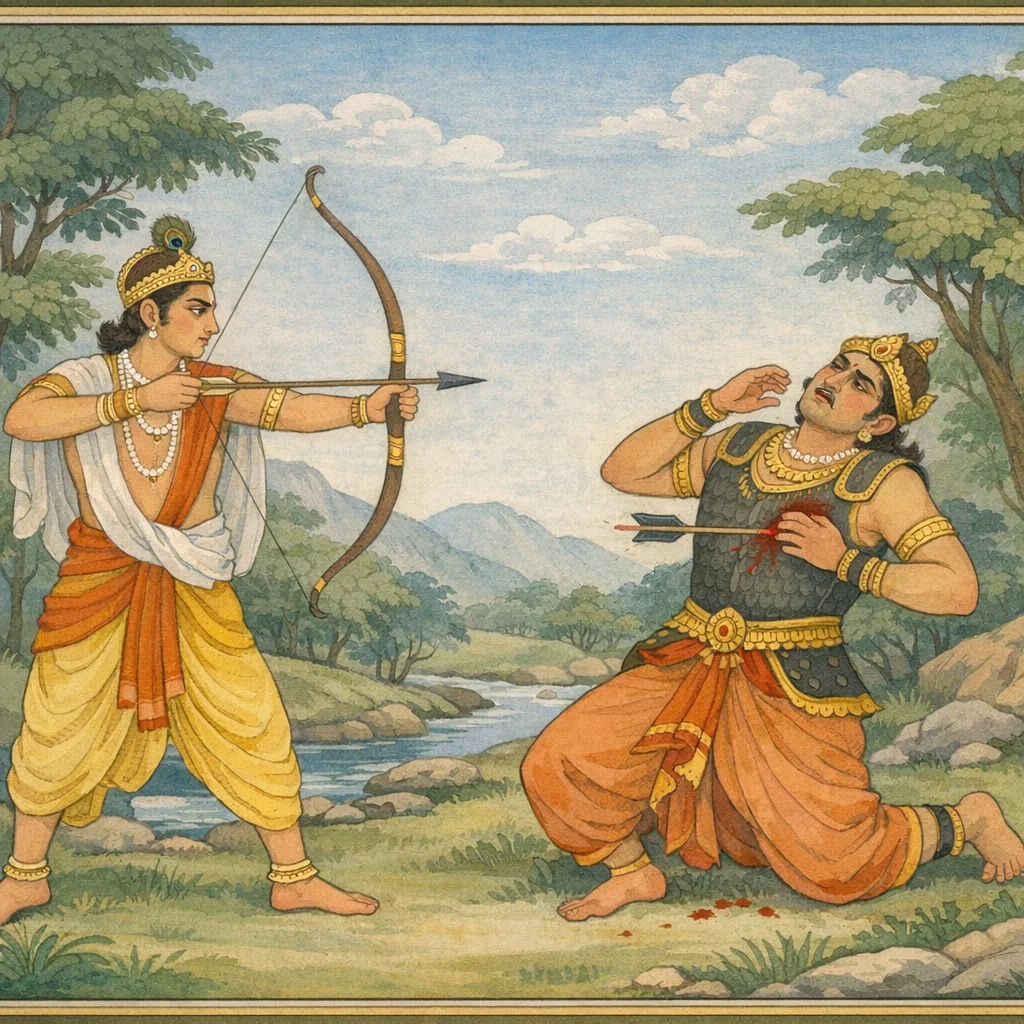
Vaishampāyana reports a tightly sequenced combat vignette. Duryodhana advances with raised standard and confronts Arjuna, striking him in the forehead with a well-drawn arrow; Arjuna remains composed and responds with powerful shafts. The exchange escalates as Vikarṇa advances supported by an elephant; Arjuna pierces the elephant decisively, causing it to collapse, prompting Vikarṇa to flee and mount another chariot. Arjuna then wounds Duryodhana in the chest and forces a broader Kuru withdrawal. Observing Duryodhana’s retreat while bleeding, Arjuna issues a pointed rebuke: abandoning battle forfeits fame; the epithet “Duryodhana” becomes rhetorically questioned if one turns away from combat. Arjuna frames his own steadiness as duty-bound (aligned with Yudhiṣṭhira’s directives) and challenges Duryodhana to face him, invoking norms of royal conduct and accountability in a public contest.
Chapter Arc: गोग्रहण के रण में, सभा-मध्य की पुरानी डींगों को स्मरण कराते हुए अर्जुन कर्ण को ललकारता है—आज वाणी नहीं, बाण उत्तर देंगे। → अर्जुन कर्ण की कठोर वाणी और धर्म-उपेक्षा का उल्लेख कर उसे प्रत्यक्ष युद्ध में अपना बल जानने की चुनौती देता है; कर्ण भी प्रत्युत्तर में अर्जुन पर भाई-हत्या और रण-नीति को लेकर कटाक्ष करता हुआ द्वंद्व को तीखा बनाता है। → अर्जुन का ज्वलित, तीक्ष्ण बाण कर्ण के कवच को भेदकर वक्ष में धँसता है; कर्ण तमसा-सा आविष्ट होकर क्षण भर विवेक खो देता है और असह्य वेदना से रण छोड़ देता है। → कर्ण उत्तर दिशा की ओर हटता/भागता है; अर्जुन गर्जना कर अपनी विजय-घोष करता है और कौरव-पक्ष की धुरी को क्षणिक रूप से तोड़ देता है। → कर्ण का अपमान और पलायन आगे के वैर को और प्रज्वलित करता है—यह पराजय भविष्य के महायुद्ध में किस रूप में प्रतिशोध बनेगी?
Shlokas
Verse 1
#:2:8 #:23:.7 () हि २ 7 षष्टितमो< ध्याय: अर्जुन और कर्णका संवाद तथा कर्णका अर्जुनसे हारकर भागना अर्जुन उवाच कर्ण यत् ते सभामध्ये बहु वाचा विकत्थितम् । न मे युधि समो<स्तीति तदिदं समुपस्थितम्,अर्जुन बोले--कर्ण! पहले कौरवोंकी सभामें तूने जो अपनी बहुत प्रशंसा करते हुए यह बात कही थी कि युद्धमें मेरे समान दूसरा कोई योद्धा नहीं है। (उसकी सचाईकी परीक्षाके लिये) यह युद्धका अवसर उपस्थित हो गया है
Arjuna said: “Karṇa, once in the Kauravas’ assembly you boasted at length, declaring, ‘In battle there is none equal to me.’ Now that very moment has arrived—this battlefield stands before us to test that claim.”
Verse 2
सोउ्द्य कर्ण मया सार्ध व्यवहृत्य महामृधे । ज्ञास्यस्यबलमात्मानं न चान्यानवमंस्यसे,कर्ण! आज इस महासंग्राममें मेरे साथ भिड़कर तू अपनेको भलीभाँति निर्बल समझ लेगा और फिर कभी दूसरोंका अपमान नहीं करेगा
Arjuna said: “O Karṇa, come—engage with me in this great clash of arms. When you have fought with me in this mighty battle, you will truly recognize your own lack of strength, and you will no longer demean others.”
Verse 3
अवोच: परुषा वाचो धर्ममुत्सूज्य केवलम् | इदं तु दुष्करं मन्ये यदिदं ते चिकीर्षितम्,पहले तूने केवल धर्मकी अवहेलना करके बड़ी कठोर बातें कही हैं, परंतु तू जो कुछ करना चाहता है, वह तेरे लिये मैं अत्यन्त दुष्कर समझता हूँ
Arjuna said: “You spoke harsh words, casting aside dharma altogether. But what you now intend to do—I consider that exceedingly difficult for you to accomplish.”
Verse 4
यत् त्वया कथितं पूर्व मामनासाद्य किंचन । तदद्य कुरु राधेय कुरुमध्ये मया सह,राधानन्दन! मेरे साथ भिड़न्त होनेके पहले कौरवोंकी सभामें तूने जो कुछ कहा है, आज मेरे साथ युद्ध करके वह सब सत्य कर दिखा
Arjuna said: “Whatever you once proclaimed in the Kuru assembly without even facing me—make all of that true today, O son of Rādhā, by fighting with me here in the midst of the Kurus.”
Verse 5
यत् सभायां स पाउ्चालीं क्लिश्यमानां दुरात्मभि: | दृष्टवानसि तस्याद्य फलमाप्नुहि केवलम्,अरे! भरी सभामें दुरात्मा कौरव पांचालराजकुमारी द्रौपदीको क्लेश दे रहे थे और तू मौजसे यह सब देखता रहा। आज केवल उस अत्याचारका फल भोग ले
Arjuna said: “When that Pāñcālī was being tormented in the royal assembly by wicked men, you stood by and watched. Now, O foe, suffer today the fruit of that outrage—fully and without respite.”
Verse 6
धर्मपाशनिबद्धेन यन्मया मर्षितं पुरा । तस्य राधेय कोपस्य विजयं पश्य मे मृथे,पहले मैं धर्मके बन्धनमें बँधा हुआ था। इसलिये मैंने सब कुछ (चुपचाप) सह लिया। परंतु राधापुत्र! आजके युद्धमें मेरे उस क्रोधका फल मेरी विजयके रूपमें अभी देख ले
Formerly, bound fast by the noose of dharma, I endured what I had to endure in silence. But now, O Rādheya, in this battle behold the outcome of that restrained wrath—my victory, here on the field.
Verse 7
वने द्वादश वर्षाणि यानि सोढानि दुर्मते । तस्याद्य प्रतिकोपस्य फल प्राप्तुहि सम्प्रति,ओ दुर्मते! हमने बारह वर्षोतक वनमें रहकर जो क्लेश सहन किये हैं, उनका बदला चुकानेके लिये आज मेरे बढ़े हुए क्रोधका फल तू अभी चख ले
Arjuna said: “O fool! For twelve years in the forest we endured hardships. Now, at this very moment, you shall receive the fruit of that retaliatory wrath—taste it today.”
Verse 8
एहि कर्ण मया सार्ध प्रतियुध्यस्व सड़रे । प्रेक्षका: कुरव: सर्वे भवन्तु तव सैनिका:
Arjuna said: “Come, Karṇa—fight with me here in the thick of battle. Let all the Kurus stand as spectators; let them be your supporting host.”
Verse 9
कर्ण! आ, रणभूमिमें मेरा सामना कर। समस्त कौरव और तेरे सैनिक सब दर्शक होकर हमारे युद्धको देखें ।। कर्ण उवाच ब्रवीषि वाचा यत् पार्थ कर्मणा तत् समाचर । अतिगशेते हि ते वाक््यं कर्मतत् प्रथितं भुवि,कर्णने कहा--ठुन्तीपुत्र! तू मुझसे जो कुछ कहता है, उसे क्रियाद्वारा करके दिखा। तेरी बातें कार्य करनेकी अपेक्षा बहुत बढ़-चढ़कर होती हैं। यह बात भूमण्डलमें प्रसिद्ध है
Karna said: “O Partha, whatever you proclaim with words—demonstrate that through action. Your speech, indeed, runs far ahead of your deeds; this disparity between your talk and performance is well known throughout the world.”
Verse 10
यत् त्वया मर्षितं पूर्व तदशक्तेन मर्षितम् । इतो गृह्नीमहे पार्थ तव दृष्टवा पराक्रमम्,पार्थ! तेरा यह जबानी पराक्रम देखकर तो हम इसी परिणामपर पहुँचते हैं कि तूने पहले जो कुछ सहन किया है, वह अपनी असमर्थताके ही कारण किया है
Karna said: “Whatever you endured earlier, you endured only because you lacked the power to respond. Now, O Partha, having witnessed your prowess, we conclude this: your former forbearance was not chosen restraint, but helplessness.”
Verse 11
धर्मपाशनिबद्धेन यत् त्वया मर्षितं पुरा । तथैव बद्धमात्मानमबद्धमिव मन्यसे,यदि तूने पहले धर्मके बन्धनमें बँधकर कष्ट सहन किया है, तो आज भी तू उसी प्रकार बँधा हुआ है; तो भी तू अपने-आपको उस बन्धनसे मुक्त-सा मान रहा है
Karna said: “If earlier you endured suffering while bound by the noose of dharma, then even today you remain bound in the very same way. Yet you imagine yourself to be free—as though that bond did not exist.”
Verse 12
यदि तावद् वने वासो यथोक्तश्चरितस्त्वया | तत् त्वं धर्मार्थवित् क्लिष्ट: स मया योद्धुमिच्छसि,यदि तूने वनवासके पूर्वोक्त नियमका भलीभाँति पालन कर लिया है, तो तू धर्म और अर्थका ज्ञाता ठहरा। इसलिये तूने कष्ट सहा है और उसीको याद करके इस समय मेरे साथ लड़ना चाहता है
Karna said: “If you truly carried out the forest-dwelling as prescribed, then you are one who knows dharma and artha. Therefore you endured hardship; and remembering that hardship, you now wish to fight with me.”
Verse 13
यदि शक्रः स्वयं पार्थ युध्यते तव कारणात् । तथापि न व्यथा काचिन्मम स्याद्ू विक्रमिष्यत:,पार्थ! यदि इस समय साक्षात् इन्द्र भी तेरे लिये युद्ध करने आयें, तो भी युद्धमें पराक्रम दिखाते हुए मुझको किसी प्रकारकी व्यथा न होगी
Karna said: “O Partha, even if Śakra himself were to fight for your sake, still no distress would arise in me as I display my valor in battle.”
Verse 14
अयं कौन्तेय कामस्ते नचिरात् समुपस्थित: । योत्स्यसे हि मया सार्धमद्य द्रक्ष्य्सि मे बलम्,कुन्तीकुमार! मेरे साथ युद्धका जो तेरा हौसला है, वह अभी-अभी प्रकट हुआ है। अतः अब मेरे साथ तेरा युद्ध होगा और आज तू मेरा बल स्वयं देख लेगा
Karna taunted: “O son of Kunti, this desire of yours—to face me in battle—has only just arisen. Now you shall indeed fight with me; today you will witness my strength for yourself.”
Verse 15
अजुन उवाच इदानीमेव तावत् त्वमपयातो रणान्मम । तेन जीवसि राधेय निहतस्त्वनुजस्तव,अर्जुन बोले-राधापुत्र! अभी कुछ ही देर पहलेकी बात है, मेरे सामने युद्धसे पीठ दिखाकर तू भाग गया था, इसीलिये अबतक जी रहा है; किंतु तेरा छोटा भाई मारा गया
Arjuna said: “Only a short while ago you turned away and withdrew from the battle before me. For that reason you are still alive, O son of Rādhā; but your younger brother has been slain.”
Verse 16
भ्रातरं घातयित्वा कस्त्यक्त्वा रणशिरक्ष कः । त्वदन्य: कः पुमान् सत्सु ब्रूयादेवं व्यवस्थित:,तेरे सिवा दूसरा कौन ऐसा पुरुष होगा, जो अपने भाईको मरवाकर और युद्धका मुहाना छोड़कर (भाग जानेके बाद भी) भलेमानसोंके बीचमें खड़ा हो ऐसी डींग मारेगा?
Arjuna said: “Who, after having caused his own brother to be slain, and then abandoning the very forefront of battle, would still stand among the virtuous and boast in this manner? Other than you, what man could speak so, so brazenly and so fixed in shameless resolve?”
Verse 17
वैशम्पायन उवाच इति कर्ण ब्रुवन्नेव बीभत्सुरपराजित: । अभ्ययाद् विसृजन् बाणान् कायावरणभेदिन:,वैशम्पायनजी कहते हैं--जनमेजय! अर्जुन किसीसे भी परास्त होनेवाले नहीं थे। वे कर्णसे उपर्युक्त बातें कहकर कवचको भी विदीर्ण कर देनेवाले बाण छोड़ते हुए उसकी ओर बढ़े
Vaiśampāyana said: “Having spoken thus to Karna, Bhībhatsu (Arjuna), who was not easily overcome, advanced toward him while releasing arrows that could pierce armor and rend the body.”
Verse 18
प्रतिजग्राह तं॑ कर्ण: प्रीयमाणो महारथ: । महता शरवर्षेण वर्षमाणमिवाम्बुदम्,महारथी कर्णने बड़ी प्रसन्नताके साथ मेघके सदृश बाणोंकी दृष्टि करनेवाले अर्जुनको अपने सायकोंकी भारी बौछार करके रोका
Vaiśampāyana said: Karṇa, the great chariot-warrior, gladly met him; and with a mighty shower of arrows he checked Arjuna, who was raining shafts like a cloud.
Verse 19
उत्पेतु: शरजालानि घोररूपाणि सर्वश: । अविध्यदश्चवान् बाद्दोश्व हस्तावापं पृथक् पृथक्,फिर तो आकाशमें सब ओर भयंकर बाणोंके समूह उड़ने लगे। अर्जुनसे यह सहन न हो सका; अतः उन्होंने झुकी हुई गाँठ एवं तीखी नोकवाले बाणसे कर्णके घोड़ोंको बींध डाला। भुजाओंमें भी गहरी चोट पहुँचायी और हाथोंके दस्तानोंको भी पृथक्-पृथक् विदीर्ण कर दिया। इतना ही नहीं, कर्णके भाथा लटकानेकी रस्सीको भी काट गिराया
Vaiśaṃpāyana said: On every side, dreadful volleys of arrows rose and spread through the sky. Arjuna could not endure it; with a sharp, well-knotted arrow he pierced Karṇa’s horses, struck deep wounds upon his arms, and tore apart his hand-guards one by one. He also cut down the strap by which Karṇa’s quiver hung.
Verse 20
सो<मृष्यमाण: कर्णस्य निषड्रस्यावलम्बनम् | चिच्छेद निशिताग्रेण शरेण नतपर्वणा,फिर तो आकाशमें सब ओर भयंकर बाणोंके समूह उड़ने लगे। अर्जुनसे यह सहन न हो सका; अतः उन्होंने झुकी हुई गाँठ एवं तीखी नोकवाले बाणसे कर्णके घोड़ोंको बींध डाला। भुजाओंमें भी गहरी चोट पहुँचायी और हाथोंके दस्तानोंको भी पृथक्-पृथक् विदीर्ण कर दिया। इतना ही नहीं, कर्णके भाथा लटकानेकी रस्सीको भी काट गिराया
Vaiśampāyana said: Unable to endure Karṇa’s display, he severed the strap by which Karṇa’s quiver was slung, cutting it with a sharp-pointed arrow whose joints were bent.
Verse 21
उपासज्रादुपादाय कर्णो बाणानथापरान् | विव्याध पाण्डवं हस्ते तस्य मुष्टिरशीर्यत,तब कर्णने (अलग रखे हुए) छोटे तरकससे दूसरे बाण लेकर पाण्डुनन्दन अर्जुनके हाथमें चोट पहुँचायी। इससे उनकी मुट्ठी ढीली पड़ गयी
Vaiśampāyana said: Karṇa, drawing near, took up other arrows and struck the Pāṇḍava on the hand. From that blow his grip loosened.
Verse 22
ततः पार्थो महाबाहु: कर्णस्य धनुरच्छिनत् । स शक्ति प्राहिणोत् तस्मै तां पार्थो व्यधमच्छरै:,तब महाबाहु पार्थने कर्णका धनुष काट दिया। यह देख कर्णने अर्जुनपर शक्ति चलायी; किंतु पार्थने उसे बाणोंसे नष्ट कर दिया
Then Arjuna, the mighty-armed son of Pṛthā, cut down Karṇa’s bow. Seeing this, Karṇa hurled his śakti-weapon at Arjuna; but Arjuna shattered it with a volley of arrows.
Verse 23
ततोअनुपेतुर्बहवो राधेयस्य पदानुगा: । तांश्व गाण्डीवनिर्मुक्ति: प्राहिणोद यमसादनम्,इतनेमें ही राधापुत्र कर्णके बहुत-से सैनिक वहाँ आ पहुँचे, किंतु अर्जुनने गाण्डीवद्वारा छोड़े हुए बाणोंसे मारकर उन सबको यमलोक भेज दिया
Then many followers who marched in the wake of Rādheya (Karna) arrived there. But the arrows released from the Gāṇḍīva sent them all to Yama’s abode.
Verse 24
ततोअस्याश्वाञ्छरैस्ती&णैर्बी भत्सुर्भारसा धनै: । आकर्णममुक्तैरवधीत् ते हता: प्रापतन् भुवि,तत्पश्चात् बीभत्सुने भार (शत्रुओंके आघात) सहनेमें समर्थ तीखे बाणोंद्वारा, जो धनुषको कानतक खींचकर छोड़े गये थे, कर्णके घोड़ोंको घायल कर दिया। वे घोड़े मरकर पृथ्वीपर गिर पड़े
Vaiśampāyana said: Then Bībhatsu (Arjuna), drawing his bow to the ear and releasing keen, heavy shafts, struck down Karṇa’s horses. Slain, they fell upon the earth.
Verse 25
अथापरेण बाणेन ज्वलितेन महौजसा । विव्याध कर्ण कौन्तेयस्तीक्ष्णेनोरसि वीर्यवान्,तत्पश्चात् पराक्रमी कुन्तीकुमारने महान् तेजस्वी तथा अग्निके समान प्रज्वलित दूसरे बाणद्वारा कर्णकी छातीमें आघात किया
Then, with another arrow—blazing and driven by great force—the valiant son of Kuntī struck Karṇa with a sharp shaft in the chest.
Verse 26
तस्य भिन्त्वा तनुत्राणं कायम भ्यगमच्छर: । ततः स तमसा<<विष्टो न सम किंचित् प्रजज्ञिवान्,यह बाण कर्णका कवच काटकर उसके वक्षःस्थलके भीतर घुस गया। इससे कर्णको मूर्च्छा आ गयी और उसे किसी भी बातकी सुध-बुध न रही
Vaiśampāyana said: The arrow, having pierced his protective armour, entered his body. Then, overcome by darkness (a swoon), he could no longer clearly recognize anything.
Verse 27
स गाढवेदनो हित्वा रणं प्रायादुदडमुख: । ततोअर्जुन उदक्रोशदुत्तरश्चन महारथ:,कर्णको उस चोटसे बड़ी भारी वेदना हुई और वह युद्धभूमिको छोड़कर उत्तर दिशाकी ओर भागा। यह देख अर्जुन और उत्तर दोनों महारथी जोर-जोरसे सिंहनाद करने लगे
Suffering intense pain, he abandoned the battlefield and fled with his face turned north. Seeing this, Arjuna and Uttara—both great chariot-warriors—raised loud cries of triumph, roaring like lions.
Verse 60
इति श्रीमहाभारते विराटपर्वणि गोहरणपर्वणि कर्णापयाने षष्टितमो5ध्याय:
Thus ends the sixtieth chapter of the Virāṭa Parva of the Śrī Mahābhārata, within the section on the cattle-raid, in the episode concerning Karṇa’s march. This closing colophon marks the completion of a narrative unit, reminding the listener that the tale is framed as a moral history, where deeds—such as raids and military expeditions—bear ethical consequence and prepare the way for later reckonings.
Frequently Asked Questions
The dilemma concerns whether retreat from a losing engagement can be ethically justified for a ruler, or whether it constitutes a breach of kṣatriya expectations and undermines the legitimacy conferred by public honor.
The passage emphasizes that names, titles, and reputation must correspond to conduct; courage and accountability are presented as performative-social obligations that stabilize political order and personal integrity.
No explicit phalaśruti appears in the supplied chapter segment; its significance is primarily narrative-ethical, reinforcing the epic’s broader linkage between dharma, reputation, and the consequences of public action.