Adhyaya 54
Virāṭa-parva Adhyāya 54 — Missile-Exchange and Tactical Redirection (Arjuna, Aśvatthāman, Karṇa)
Upa-parva: Gograhaṇa (Cattle-Raid) Episode within Virāṭa-parva
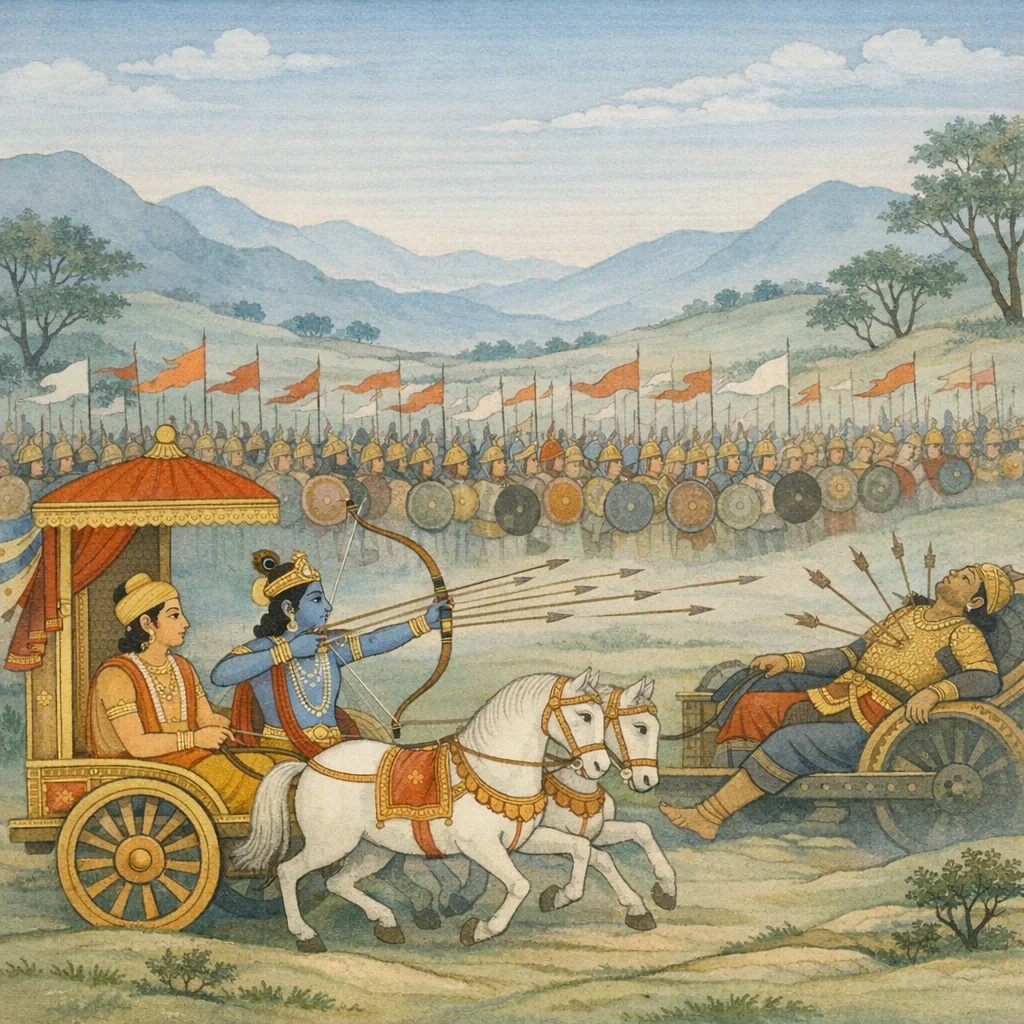
Vaiśaṃpāyana describes an escalating missile exchange in which Arjuna counters an opponent’s force like a storm-cloud met by a dense net of arrows. The encounter is framed as an extraordinary clash, likened to cosmic-scale combat, with the sky visually and audibly saturated by projectiles. As the exchange intensifies, Arjuna’s chariot horses are endangered and battlefield orientation becomes difficult amid the arrow-darkened space. Aśvatthāman (Drauṇi) identifies a minute opening and severs the bowstring with a razor-headed arrow—an act praised as exceptional by observing deities—then continues striking with specialized shafts. Arjuna, composed, re-strings Gāṇḍīva with a new cord and resumes pressure, standing firm with inexhaustible quivers while Aśvatthāman’s arrows diminish. A new disturbance arises as Karṇa draws and releases a powerful bowshot, producing widespread alarm; Arjuna locates Karṇa, anger intensifies, and his gaze fixes on him with intent to neutralize the threat. The chapter segment concludes with logistical support bringing Aśvatthāman fresh arrows, but Arjuna abruptly disengages from Drauṇi and rushes toward Karṇa, verbally signaling a preference for direct chariot-to-chariot engagement.
Chapter Arc: गौहरण के उपरान्त कुरु-सेना की घनी, ध्वजों से भरी व्यूह-रचना सामने है; अर्जुन (बृहन्नला) विजित गौओं को सुरक्षित कर लौटते हुए भी युद्ध-इच्छा से दुर्योधन की ओर पलटते हैं। → अर्जुन विराट-पुत्र उत्तर को संबोधित कर शत्रु-सेना की बहुलता और व्यूहों का संकेत देते हैं, और रथ-चालन/स्थिति-निर्धारण कराते हैं। कौरव-पक्ष में कर्ण का गर्व और उत्साह बढ़ता है; शंख-भेरी-नगाड़ों के साथ प्रत्यंचा की टंकार युद्धभूमि को भर देती है। → कर्ण और अर्जुन का तीव्र रथ-युद्ध: कर्ण अर्जुन पर बाण-वर्षा करता है, घोड़ों/अंगों को बेधता है; प्रत्युत्तर में अर्जुन के तीक्ष्ण बाण कर्ण को तिलमिला देते हैं—वह पराजित हाथी-सा डगमगाता हुआ अर्जुन के बाणों से संतप्त होता है। → अर्जुन अतिरथ की भाँति रणभूमि में दिशाओं-दिशाओं में विचरते हुए शत्रु-पंक्तियों को तितर-बितर करते हैं; कौरव-सेना का उत्साह दबता है और गौओं की विजय/सुरक्षा का पलड़ा पाण्डव-पक्ष की ओर झुकता है। → कौरवों की शेष शक्तियाँ और दुर्योधन का अगला प्रत्युत्तर अभी शेष है—क्या कर्ण पुनः संभलकर निर्णायक प्रहार करेगा या कौरव-सेना पीछे हटेगी?
Shlokas
Verse 1
इस प्रकार श्रीमह्याभारत विराटपर्वके अन्तर्गत गोहरणपर्वमें उत्तरयोग्रहके समय यौओके लौटनेसे सम्बन्ध रखनेवाला तिरपनवाँ अध्याय पूरा हुआ ॥/ ५३ ॥। (दाक्षिणात्य अधिक पाठका १३ शलोक मिलाकर कुल २६३ श्लोक हैं।) #-+- “5 (9) &:..... +--:..& चतुष्पठ्चाशत्तमोडध्याय: अर्जुनका कर्णपर आक्रमण, विकर्णकी पराजय, शत्रुंतप और संग्रामजित्॒का वध, कर्ण और अर्जुनका युद्ध तथा कर्णका पलायन वैशम्पायन उवाच स शत्रुसेनां तरसा प्रणुद्य गास्ता विजित्याथ धनुर्धराग्रय: । दुर्योधनायाभिमुखं प्रयातो भूयो रणं सोडभिचिकीर्षमाण:
Vaiśampāyana said: Having swiftly driven back the enemy host and then recovered the cattle, the foremost of archers set out facing Duryodhana, intent on engaging once more in battle. The verse highlights disciplined valor: victory is not treated as license for cruelty, but as a duty-bound response to aggression, followed by readiness to confront the principal instigator.
Verse 2
वैशम्पायनजी कहते हैं--जनमेजय! धनुषधारियोंमें श्रेष्ठ अर्जुनने शत्रुसेनाको बड़े वेगसे दबाकर उन गौओंको जीत लिया और वे युद्धकी इच्छासे फिर दुर्योधनकी ओर चले ।। गोषु प्रयातासु जवेन मत्स्यान् किरीटिनं कृतकार्य च मत्वा । दुर्योधनायाभिमुखं प्रयात॑ कुरुप्रवीरा: सहसा निपेतु:,जब गौएँ तीव्र गतिसे मत्स्यदेशकी राजधानीकी ओर भाग गयीं और अर्जुन अपने कार्यमें सफल होकर दुर्योधनकी ओर बढ़ चले, तब यह सब जानकर कौरव वीर सहसा वहाँ आ पहुँचे
When the cattle, driven at great speed, were already on their way toward the Matsya realm, and when they understood that the diademed Arjuna had accomplished his purpose and was advancing to confront Duryodhana, the foremost Kuru warriors suddenly rushed in and fell upon the scene—eager for battle and intent on meeting him head-on.
Verse 3
तेषामनीकानि बहूनि गाढं व्यूढानि दृष्टवा बहुलध्वजानि । मत्स्यस्य पुत्र द्विषतां निहन्ता वैराटिमामन्त्रय ततो5भ्युवाच,उनकी अनेक सेनाएँ थीं और उन सबकी अच्छी तरह व्यूह-रचना की गयी थी। उन सेनाओंमें बहुत-सी ध्वजा-पताकाएँ फहरा रही थीं। शत्रुओंका नाश करनेवाले अर्जुनने उन सबको देखकर विराट॒पुत्र उत्तरको सम्बोधित करके कहा--
Vaiśampāyana said: Seeing the many battle-formations of the enemy—densely arrayed and bristling with numerous banners—Arjuna, the slayer of foes, addressed the son of the Matsya king (Uttara) and then spoke, setting the stage for counsel on courage and right conduct amid imminent battle.
Verse 4
एतेन तूर्ण प्रतिपादयेमान् श्वेतान् हयान् काज्चनरश्मियोक्त्रान् जवेन सर्वेण कुरु प्रयत्न- मासादये<हं कुरुसिंहवृन्दम्,“राजकुमार! सुनहरी रस्सियोंसे जुते हुए मेरे इन सफेद घोड़ोंकों तुम शीघ्र ही इस मार्गसे ले चलो और सम्पूर्ण वेगसे ऐसा प्रयत्न करो कि मैं कुरुश्रेष्ठ दुर्योधनकी सेनाके पास पहुँच जाऊँ। यह देखो, जैसे हाथी हाथीके साथ भिड़ना चाहता हो, उसी प्रकार यह दुरात्मा सूतपुत्र कर्ण मेरे साथ युद्ध करना चाहता है। पहले इसीके पास मुझे ले चलो। यह दुर्योधनका सहारा पाकर बड़ा घमंडी हो गया है
Vaiśampāyana said: “Drive these white horses swiftly along this path—harnessed with golden reins—and exert every ounce of speed, so that I may reach the host of the Kuru-lions. Look: just as an elephant longs to clash with another elephant, so does that wicked charioteer’s son, Karṇa, seek battle with me. Take me first to him. Propped up by Duryodhana, he has grown swollen with pride.”
Verse 5
गजो गजेनेव मया दुरात्मा योद्धुं समाकाड्क्षति सूतपुत्र: । तमेव मां प्रापय राजपुत्र दुर्योधनापाश्रयजातदर्पम्,“राजकुमार! सुनहरी रस्सियोंसे जुते हुए मेरे इन सफेद घोड़ोंकों तुम शीघ्र ही इस मार्गसे ले चलो और सम्पूर्ण वेगसे ऐसा प्रयत्न करो कि मैं कुरुश्रेष्ठ दुर्योधनकी सेनाके पास पहुँच जाऊँ। यह देखो, जैसे हाथी हाथीके साथ भिड़ना चाहता हो, उसी प्रकार यह दुरात्मा सूतपुत्र कर्ण मेरे साथ युद्ध करना चाहता है। पहले इसीके पास मुझे ले चलो। यह दुर्योधनका सहारा पाकर बड़ा घमंडी हो गया है
Vaiśampāyana said: “Like an elephant seeking to clash with an elephant, that wicked charioteer’s son longs to fight with me. O prince, take me straight to him—Karna, swollen with pride born of Duryodhana’s patronage.”
Verse 6
स तैहयैर्वातजवैर्बृहदूभि: पुत्रो विराटस्य सुवर्णकक्षै: व्यध्वंसयत् तद् रथिनामनीकं ततो5वहत् पाण्डवमाजिमध्ये,अर्जुनके विशाल घोड़े वायुके समान वेगशाली थे। उनकी जीनके नीचे लगे हुए कपड़ेके दोनों पिछले छोर सुनहरे थे। विराटपुत्र उत्तरने तेजीसे हाँककर उन घोड़ोंके द्वारा कौरव रथियोंकी सेनाको कुचलवाते हुए पाण्डुनन्दन अर्जुनको सेनाके मध्यभागमें पहुँचा दिया
Vaiśampāyana said: With those great horses—swift as the wind—Virāṭa’s son, whose harness-cloths had golden rear-ends, drove at speed and had them trample and shatter the array of the Kaurava chariot-warriors; then he carried the Pāṇḍava (Arjuna) into the very midst of the battle.
Verse 7
त॑ चित्रसेनो विशिखेर्विपाठै: संग्रामजिच्छत्रुसहो जयश्न । प्रत्युद्ययुर्भारतमापतलन्तं महारथा: कर्णमभीप्समाना:,इतनेमें ही चित्रसेन, संग्रामजित, शत्रुसह तथा जय आदि महारथी विपाठ नामक बाणोंकी वर्षा करते हुए कर्णकी रक्षा करनेके उद्देश्यसे वहाँ आक्रमण करनेवाले अर्जुनके सामने आ डटे
Vaiśaṃpāyana said: Just then Citrāsena, Saṅgrāmajit, Śatrusaha, Jaya, and other great chariot-warriors, showering Arjuna with volleys of sharp arrows, advanced to confront the onrushing son of Bharata. Their purpose was to shield Karṇa.
Verse 8
ततः स तेषां पुरुषप्रवीर: शरासनार्चि: शरवेगताप: । व्रातं रथानामदहत् समन्यु- वन यथाग्नि: कुरुपुज्ननाम्,तब पुरुषश्रेष्ठ वीरवर अर्जुन क्रोधसे युक्त हो आग-बबूले हो गये। धनुष मानो उस आगकी ज्वाला थी और बाणोंका वेग ही आँच बन गया था। जैसे आग वनको जला डालती है, उसी प्रकार वे उन कुरुश्रेष्ठ महारथियोंके रथसमूहोंको भस्म करने लगे
Vaiśampāyana said: Then that foremost of men—his bow like a tongue of flame and the speed of his arrows like scorching heat—burned up the massed chariots of those Kuru champions. Enraged, he blazed forth like fire consuming a forest, reducing their war-cars to ruin.
Verse 9
तस्मिंस्तु युद्धे तुमुले प्रवृत्ते पार्थ विकर्णोडतिरथं रथेन । विपाठवर्षेण कुरुप्रवीरो भीमेन भीमानुजमाससाद,इस प्रकार घोर युद्ध छिड़ जानेपर कुरुकुलके श्रेष्ठ वीर विकर्णने रथपर सवार हो विपाठ नामक बाणोंकी भयंकर वर्षा करते हुए भीमके छोटे भाई अतिरथी वीर अर्जुनपर आक्रमण किया
When that tumultuous battle began, Vikarna—the foremost hero of the Kuru line—mounted his chariot and, showering a fierce rain of vipāṭha arrows, charged at Arjuna, Bhīma’s younger brother, the great chariot-warrior (atiratha).
Verse 10
ततो विकर्णस्य धरनुर्विकृष्य जाम्बूनदाग्रयोपचितं दृढज्यम् | अपातयत् तं ध्वजमस्य मथ्य च्छिन्नध्वज: सो5प्यपयाज्जवेन,तब अर्जुनने अपने बाणोंसे जाम्बूनद नामक उत्तम सुवर्ण मढ़े हुए सुदृढ़ प्रत्यज्जावाले विकर्णके धनुषको काटकर उसके ध्वजको भी टुकड़े-टुकड़े करके गिरा दिया। रथकी ध्वजा कट जानेपर विकर्ण बड़े वेगसे भाग निकला
Then Arjuna drew his bow and struck down Vikarna’s bow—adorned with the finest Jāmbūnada gold and strung with a taut, sturdy bowstring—cutting it apart. He also shattered and brought down Vikarna’s banner. With his standard severed, Vikarna withdrew swiftly from the field.
Verse 11
तं शात्रवाणां गणबाधितारं कर्माणि कुर्वन्तममानुषाणि । शतन्रुंतपः पार्थममृष्यमाण: समार्दयच्छरवर्षेण पार्थम्,शत्रुदलके वीरोंका वध करनेवाले कुन्तीनन्दन अर्जुनको इस प्रकार अमानुषिक पराक्रम करते देख शत्रुंतप नामक वीर उनके सामने आया। वह अर्जुनका पराक्रम न सह अपनी बाणवर्षसे पार्थको पीड़ा देने लगा
Vaiśampāyana said: Seeing Pārtha (Arjuna)—the crusher of hostile troops—performing deeds of seemingly superhuman prowess, the warrior Śatruṃtapa could not endure it. Unable to bear Arjuna’s might, he pressed him hard, tormenting Pārtha with a dense rain of arrows.
Verse 12
स तेन राज्ञातिरथेन विद्धो विगाहमानो ध्वजिनीं कुरूणाम् | शत्रुंतपं पञ्यभिराशु विद्धा ततो<स्य सूतं दशभिर्जघान,कौरवसेनामें विचरनेवाले अर्जुनने अतिरथी राजा शत्रुंतपके बाणोंसे घायल होकर उसे भी तुरंत ही पाँच बाणोंसे बींध डाला। फिर उसके सारथिको दस बाण मारकर यमलोक पहुँचा दिया
Vaiśampāyana said: As Arjuna moved through the Kuru host, he was struck by the king—an atiratha. Though wounded, he swiftly pierced Śatruntapa with five arrows; then he struck down that warrior’s charioteer with ten arrows, sending him to the realm of Yama.
Verse 13
ततः स विद्धों भरतर्षभेण बाणेन गात्रावरणातिगेन । गतासुराजौ निपपात भूमौ नगो नगाग्रादिव वातरुग्ण:,भरतश्रेष्ठ अर्जुनके बाण कवच छेदकर शरीरके भीतर घुस जाते थे। उनके द्वारा घायल होकर राजा शत्रुंतपके प्राणपखेरू उड़ गये और जैसे आँधीसे उखड़ा हुआ वृक्ष पर्वतशिखरसे नीचे गिरे, उसी प्रकार वह रथसे रणभूमिमें गिर पड़ा
Vaiśampāyana said: Then that king, struck by the bull among the Bharatas (Arjuna) with an arrow that pierced through his bodily armor, lost his life-breath and fell to the ground. Like a mountain tree shattered by a storm and crashing down from a peak, so he toppled from his chariot onto the battlefield.
Verse 14
नरर्षभास्तेन नरर्षभेण वीरा रणे वीरतरेण भग्ना: । चकम्पिरे वातवशेन काले प्रकम्पितानीव महावनानि,नरश्रेष्ठ वीरवर धनंजयके बाणोंकी मार खाकर कौरवसेनाके कितने ही श्रेष्ठ वीर घायल हो इस प्रकार काँपने लगे, जैसे समयानुसार प्रचण्ड आँधीके वेगसे बड़े-बड़े जंगलोंके वृक्ष हिलने लगते हैं
Vaiśampāyana said: Struck in battle by Dhanañjaya—the bull among men, most heroic of warriors—many valiant champions of the Kaurava host, though not yet slain, were shattered and began to tremble. They quivered like great forests whose trees sway and shudder when, in its season, a fierce wind drives through them.
Verse 15
हतास्तु पार्थेन नरप्रवीरा गतासवोर्व्या सुषुपु: सुवेषा: | वसुप्रदा वासवतुल्यवीर्या: पराजिता वासवजेन संख्ये,कुन्तीपुत्र अर्जुनके द्वारा मारे गये बहुतेरे उत्कृष्ट नरवीर जो सुन्दर वेश-भूषासे सुशोभित थे, प्राणशून्य होकर पृथ्वीपर सो गये। जो वीर दूसरोंको वसु (धन) देनेवाले और वासव (इन्द्र) के तुल्य पराक्रमी थे, वे भी वासवनन्दन अर्जुनके द्वारा उस युद्धमें पराजित हो गये
Vaiśampāyana said: Struck down by Pārtha (Arjuna), many foremost heroes—adorned in splendid attire—lay upon the earth as if asleep, their lives departed. Those warriors famed as givers of wealth and whose prowess rivaled that of Vāsava (Indra) were nonetheless defeated in battle by Vāsava’s son, Arjuna.
Verse 16
सुवर्णकार्ष्णायसवर्मनद्धा नागा यथा हैमवता: प्रवृद्धा: तथा स शत्रून् समरे विनिध्नन् गाण्डीवधन्वा पुरुषप्रवीर:
Vaiśampāyana said: Armoured in mail of gold and dark iron, like mighty nāga-serpents grown strong in the Himālaya, Arjuna—the foremost of men, bearer of the Gāṇḍīva—struck down his enemies in the press of battle.
Verse 17
प्रकीर्णपर्णानि यथा वसन्ते विशातयित्वा पवनोअथ्बुदांश्ष
Vaiśampāyana said: “Just as, in spring, the wind scatters and shreds fallen leaves, so too here are things driven about and broken apart by a powerful force.”
Verse 18
शोणाश्ववाहस्य हयान् निहत्य वैकर्तनभ्रातुरदीनसत्त्व: । एकेन संग्रामजित: शरेण शिरो जहाराथ किरीटमाली,उनके हृदयमें दीनताका लेश भी नहीं था। वे सुन्दर किरीट और मालाओंसे अलंकृत थे। उन्होंने लाल घोड़ेवाले रथपर बैठकर अपने सामने आये हुए कर्णके भाई संग्रामजित्के घोड़ोंको मार डाला और एक बाणसे उसके मस्तकको भी धड़से अलग कर दिया
Vaiśampāyana said: With unwavering courage and no trace of dejection in his heart, the diademed warrior, adorned with garlands, struck down the horses of Saṅgrāmajit—brother of Karṇa—who had come before him in a chariot drawn by red horses; and with a single arrow he severed Saṅgrāmajit’s head from his body.
Verse 19
तस्मिन् हते भ्रातरि सूतपुत्रो वैकर्तनो वीर्यमथाददान: । प्रगृह् दन्ताविव नागराजो महर्षभं व्यात्र इवा भ्यधावत्,अपने भाई संग्रामजित्के मारे जानेपर सूतपुत्र कर्णने कुपित हो पराक्रम दिखानेकी इच्छासे अर्जुन और उत्तरपर इस प्रकार हठपूर्वक धावा किया, मानो कोई गजराज दो पर्ववशिखरोंसे भिड़ने चला हो अथवा कोई व्याप्र किसी महाबली साँड़पर टूट पड़ा हो
Vaiśaṃpāyana said: When his brother had been slain, Karṇa—the charioteer’s son, Vaikartana—burning with wrath and eager to display his prowess, charged headlong at Arjuna and Uttara. He rushed like a lordly elephant lifting its tusks to clash with mountain-peaks, or like a tiger springing upon a mighty bull—an image of war’s fierce momentum, where grief and loyalty harden into violent resolve.
Verse 20
स पाण्डवं द्वादशभि: पृषत्कै- वैंकर्तन: शीघ्रमथो जघान । विव्याध गात्रेषु हयांश्व सर्वान् विराटपुत्रं च करे निजघ्ने,सूर्यपुत्र कर्णने बड़ी शीघ्रताके साथ पाण्डुनन्दन अर्जुनको बारह बाणोंसे घायल किया, उनके घोड़ोंके शरीर छेदकर छलनी कर दिये और विराटपुत्र उत्तरके हाथमें भी भारी चोट पहुँचायी
Vaiśaṃpāyana said: Vaikarṭana (Karna), acting with swift martial resolve, struck the Pāṇḍava Arjuna with twelve arrows. He then pierced all the horses in their limbs, and he also dealt a heavy blow to Virāṭa’s son Uttara on the hand. The scene underscores the harsh ethics of battlefield skill—where prowess and speed decide outcomes, even as the larger conflict tests restraint, duty, and the protection of allies.
Verse 21
तमापतन्तं सहसा किरीटी वैकर्तनं वै तरसाभिपत्य । प्रगृह्य वेग न््यपतज्जवेन नागं गरुत्मानिव चित्रपक्ष:,कर्णको सहसा आते देख किरीटधारी अर्जुन भी तीव्र गतिसे आगे बढ़कर जैसे विचित्र पंखवाले गरुड़ किसी नागपर जोरसे आक्रमण करते हों, उसी प्रकार बड़े वेगसे उसपर टूट पड़े
Vaiśaṃpāyana said: Seeing Karṇa (the son of Sūrya) rushing in suddenly, the diademed Arjuna sprang forward with force. Seizing the momentum, he struck down upon him with swift speed—like Garuḍa of variegated wings swooping upon a serpent. The scene underscores the warrior’s duty to meet an oncoming assault without hesitation, matching aggression with controlled prowess rather than fear.
Verse 22
तावुत्तमौ सर्वधनुर्धराणां महाबलौ सर्वसपत्नसाहौ । कर्णस्य पार्थस्य निशम्य युद्ध दिदृक्षमाणा: कुरवो5भितस्थु:,वे दोनों ही सम्पूर्ण धनुर्धर वीरोंमें श्रेष्ठ महान् बलवान् तथा समस्त शत्रुओंका वेग सहन करनेवाले थे। कर्ण और अर्जुनका युद्ध सुनकर समस्त कौरववीर उसे देखनेके लिये दर्शकोंकी भाँति खड़े हो गये
Vaiśaṃpāyana said: Those two were the foremost among all bowmen—mighty in strength and able to withstand the onrush of every rival. Hearing that Karṇa and Pārtha (Arjuna) were engaged in battle, the Kuru warriors gathered and stood around, eager to witness the combat like spectators.
Verse 23
स पाण्डवस्तूर्णमुदीर्णकोप: कृतागसं कर्णमुदीक्ष्य हर्षात् । क्षणेन साक्षं सरथं ससारथि- मन्तर्दधे घोरशरौघवृष्ट्या,अपने अपराधी कर्णको सामने देखकर पाण्डुनन्दन अर्जुनकी क्रोधाग्नि भड़क उठी। वे तुरंत ही हर्ष एवं उत्साहसे भर गये और भयंकर बाणोंकी वर्षा करके उन्होंने क्षणभरमें घोड़े, रथ और सारथिसहित कर्णको ढँक दिया
Vaiśaṃpāyana said: Seeing Karṇa—who had committed an offense—Arjuna, the son of Pāṇḍu, was instantly inflamed with wrath. Yet, stirred also by fierce exhilaration, he at once unleashed a dreadful torrent of arrows and, in a moment, shrouded Karṇa completely—together with his horses, chariot, and charioteer. The scene underscores how righteous indignation in battle can surge alongside martial zeal, and how a warrior’s response is framed as retribution for wrongdoing rather than mere personal hatred.
Verse 24
ततः सुविद्धा: सरथा: सनागा योधा विनेदुर्भरतर्षभाणाम् । अन्तर्हिता भीष्ममुखा: सहा श्वाः किरीटिना कीर्णरथा: पृषत्कै:,तदनन्तर कौरवसेनाके रथियों और हाथीसवारों-सहित सम्पूर्ण योद्धा अत्यन्त घायल होकर चीखने-चिल्लाने लगे। किरीटधारी पार्थके बाणोंसे रथ आच्छादित हो जानेके कारण भीष्म आदि सभी महारथी घोड़ोंसहित अदृश्य हो गये
Vaiśampāyana said: Then the warriors of the Kuru host—charioteers with their chariots and elephant-riders with their elephants—pierced through and through, began to cry out in anguish. And as the Kirīṭin (Arjuna) covered their chariots with a dense shower of arrows, Bhīṣma and the other foremost champions, together with their horses, seemed to vanish from sight—overwhelmed and obscured by the missile-storm.
Verse 25
स चापि तानर्जुनबाहुमुक्ता- ज्छराज्छरौचै: प्रतिहत्य वीर: । तस्थौ महात्मा सधनु: सबाण: सविस्फुलिज्रोडग्निरिवाशु कर्ण:,तब महामना वीर कर्ण भी बाणसमूहोंद्वारा अर्जुनकी भुजाओंसे छोड़े गये सम्पूर्ण बाणोंको शीघ्र ही काटकर अपने धनुष और बाणोंके साथ चिनगारियोंसे युक्त अग्निकी भाँति सुशोभित होने लगा
And that hero Karṇa, swiftly striking down those arrows released from Arjuna’s arms—arrow after arrow—stood firm, great-souled, bow in hand and quiver supplied, blazing like a fire that throws off sparks.
Verse 26
ततस्त्वभूद् वै तलतालशब्द: सशड्रभेरीपणवप्रणाद: । प्रक्षेडितज्यातलनि:स्वनं तं वैकर्तनं पूजयतां कुरूणाम्,फिर तो वहाँ कर्ण बार-बार प्रत्यंचा खींचकर धनुषकी टंकार फैलाने लगा और उसकी प्रशंसा करनेवाले कौरवोंके दलमें हथेलियों और तालियोंकी गड़गड़ाहट होने लगी। शंख बज उठे, नगाड़े पीटे जाने लगे और ढोलोंका गम्भीर शब्द सब ओर गूँजने लगा
Vaiśampāyana said: Then there arose a thunder of clapping and applause, together with the blare of conches, the booming of kettledrums, and the deep roar of paṇava-drums. As Karṇa (Vaikartana) repeatedly drew and released his bowstring, its resonant twang spread through the ranks of the Kauravas who were honoring and acclaiming him.
Verse 27
उद्धृूतलाडूलमहापताक- ध्वजोत्तमांसाकुलभीषणान्तम् । गाण्डीवनिर्हादकृतप्रणाद॑ किरीडिनं प्रेक्ष्य ननाद कर्ण:,अर्जुनके रथकी ध्वजापर बैठे वानरवीरकी पूँछ बहुत बड़ी पताकाके समान हिल रही थी और उसके अग्रभागपर भयंकर भूतोंका भैरवनाद हो रहा था। इसके साथ ही वज्रकी गड़गड़ाहटके समान गाण्डीव धनुषकी टंकार फैल रही थी। ऐसे किरीटधारी अर्जुनकी ओर देखकर कर्ण बार-बार सिंहनाद करने लगा
Vaiśampāyana said: Seeing the diademed Arjuna—whose chariot bore the foremost banner with the great standard of the uplifted monkey-tail, whose front appeared terrifying with tumult and dread, and whose presence resounded with the thunder-like reverberation of the Gāṇḍīva—Karna roared again and again like a lion.
Verse 28
स चापि वैकर्तनमर्दयित्वा साश्व॑ं ससूतं सरथं पृषत्कै: । तमाववर्ष प्रसभं किरीटी पितामहं द्रोणकृपौ च दृष्टवा,तब अर्जुनने भी घोड़े, सारथि एवं रथसहित कर्णको बाणोंद्वारा पीड़ित करके पितामह भीष्म, द्रोणाचार्य और कृपाचार्यकी ओर देखते हुए कर्णपर हठपूर्वक बाणोंकी वर्षा प्रारम्भ की
Vaiśampāyana said: Having also harried Karṇa (Vaikartana) with arrows—together with his horse, charioteer, and chariot—Arjuna, the diademed warrior, then began to shower him relentlessly with shafts, even as he cast his glance toward the grandsire Bhīṣma and toward Droṇa and Kṛpa.
Verse 29
स चापि पार्थ बहुभि: पृषत्कै- वैंकर्तनो मेघ इवाभ्यवर्षत् । तथैव कर्ण च किरीटमाली संछादयामास शितै: पृषत्कैः
Vaiśampāyana said: Vaikarṇana (Karna) too showered Pārtha (Arjuna) with many arrows, like a cloud pouring rain. In the same way, the diadem-wearing hero (Arjuna) covered Karna with sharp shafts.
Verse 30
यह देख कर्णने भी अर्जुनपर मेघकी भाँति बहुत-से बाणोंकी झड़ी लगा दी। इसी प्रकार किरीटमाली अर्जुनने भी अपने तीखे सायकोंसे कर्णको ढँक दिया ।। तयो: सुतीक्षणान् सृजतो: शरौघान् महाशरीौघास्त्रविवर्धने रणे । रथे विलग्नाविव चन्द्रसूर्योी घनान्तरेणानुददर्श लोक:,इस प्रकार जहाँ राशि-राशि बाणोंद्वारा भीषण मार-काट मची हुई थी, उस रफणक्षेत्रमें वे दोनों वीर अत्यन्त तीक्ष्ण शरसमूहोंकी बौछार कर रहे थे। लोगोंने देखा, वे रथपर बैठे हुए बाणसमूहके भीतरसे इस प्रकार प्रकाशित हो रहे हैं, मानो बादलोंके भीतरसे सूर्य और चन्द्रमा चमक रहे हों
Vaiśampāyana said: As Karṇa and the diademed Arjuna rained down torrents of razor-sharp arrows upon one another, the battle swelled into a great contest of missile-weapons and dense volleys. In that dreadful field, people beheld the two heroes on their chariots shining from within the mass of arrows—like the sun and the moon gleaming through a bank of clouds.
Verse 31
अथाशुकारी चतुरो हयांश्न विव्याध कर्णो निशितै: किरीटिन: । त्रिभिश्व यन्तारममृष्यमाणो विव्याध तूर्ण त्रिभिरस्य केतुम्,कर्णको अर्जुनका पराक्रम असहा हो उठा। उसने अपनी आशुकारिता (शीघ्र बाण छोड़नेकी कला) का परिचय देते हुए तीखे बाणोंसे अर्जुनके चारों घोड़ोंको बींध डाला; फिर तीन बाणोंसे उनके सारथिको घायल किया और तुरंत ही तीन बाण मारकर ध्वजको भी छेद डाला
Vaiśampāyana said: Then Karṇa, displaying swift mastery in rapid archery, pierced the four horses of the diademed Arjuna with sharp arrows. Unable to endure this contest, he struck the charioteer with three arrows, and at once with three more he pierced Arjuna’s banner as well.
Verse 32
ततो5भिविद्ध: समरावमर्दी प्रबोधित: सिंह इव प्रसुप्त: । गाण्डीवधन्चा ऋषभ: कुरूणा- मजिद्दवागैः कर्णमियाय जिष्णु:,कुरुकुलके श्रेष्ठ पुरुष गाण्डीवधारी अर्जुन समर-भूमिमें शत्रुओंको रौंद डालनेवाले थे। वे सूतपुत्रके बाणोंसे घायल होकर सोये हुए सिंहके समान जाग उठे और विपक्षियोंपर सीधे आघात करनेवाले बाणोंद्वारा कर्णका सामना करनेके लिये आगे बढ़े
Then Arjuna—crusher of foes in battle—was struck by the charioteer’s son’s arrows and roused like a lion awakened from sleep. Bearing the Gāṇḍīva, that bull among the Kurus, the unconquered Jishnu advanced to meet Karṇa, launching straight-driving shafts against the opposing side.
Verse 33
शरास्त्रवृष्ट्या निहतो महात्मा प्रादुश्षकारातिमनुष्यकर्म । प्राच्छादयत् कर्णरथं पृषत्कै- लॉकानिमान् सूर्य इवांशुजालै:
Vaiśampāyana said: Struck by a shower of arrows, that great-souled warrior—whose deeds were beyond ordinary human measure—covered Karṇa’s chariot with his shafts, just as the sun veils these worlds with its net of rays.
Verse 34
कर्णकी बाणवर्षासे आहत हुए महात्मा अर्जुनने अतिमानुष पराक्रम प्रकट किया। जैसे सूर्य अपनी किरणोंके समूहसे समस्त संसारको आच्छादित कर देते हैं, उसी प्रकार उन्होंने बाणसमुदायसे कर्णके रथको ढक दिया ।। स हस्तिनेवाभिहतो गजेन्द्र: प्रगृह्ा भललान् निशितान् निषज्भात् । आकर्णपूर्ण च धर्नुर्विकृष्य विव्याध गात्रेष्वथ सूतपुत्रम्,उस समय अर्जुनकी दशा उस गजराजकी भाँति हो रही थी, जो अपने प्रतिद्वन्द्दी गजका प्रहार सहकर स्वयं भी उसपर चोट करनेके लिये उद्यत हो। उन्होंने तरकससे भल्ल नामक तीखे बाण निकाले और धनुषको कानतक खींचकर सूतपुत्रके अंगोंको बींध डाला
Vaiśampāyana said: Then Arjuna—like a lordly elephant that, though struck by a rival, gathers itself to strike back—drew razor-sharp bhalla arrows from his quiver. Drawing his bow to the ear in a full pull, he pierced the charioteer’s son, Karṇa, in his limbs.
Verse 35
अथास्य बाहूरुशिरोललार्टं ग्रीवां वराड़्ानि परावमर्दी । शितैश्न बाणैर्युधि निर्बिभेद गाण्डीवमुक्तैरशनिप्रकाशै:,शत्रुओंका मान-मर्दन करनेवाले वीर धनंजयने गाण्डीव धनुषसे छूटकर वज्रके समान प्रकाशित होनेवाले तीखे सायकोंद्वारा उस युद्धमें कर्णकी दोनों भुजाओं, जाँघों, मस्तक, ललाट तथा ग्रीवा आदि उत्तम अंगोंको छेद डाला
Vaiśampāyana said: Then the mighty subduer of foes, Arjuna, in the thick of battle, pierced Karṇa’s arms, thighs, head, forehead, neck, and other noble limbs with sharp arrows loosed from the Gāṇḍīva, flashing like thunderbolts, and thus crushed the enemy’s pride.
Verse 36
स पार्थमुक्तैरिषुभि: प्रणुन्नो गजो गजेनेव जितस्तरस्वी । विहाय संग्रामशिर: प्रयातो वैकर्तन: पाण्डवबाणतप्त:
Struck hard by the arrows released by Pārtha, the mighty warrior—like an elephant overcome by another elephant—abandoned the forefront of the battle and withdrew. Thus Vaikartana (Karṇa), scorched by the Pāṇḍavas’ shafts, turned away from the combat.
Verse 54
अर्जुनके छोड़े हुए बाणोंकी चोट खाकर सूर्यपुत्र कर्ण तिलमिला उठा और एक हाथीसे पराजित हुए दूसरे वेगशाली हाथीकी भाँति वह पाण्डुनन्दन अर्जुनके बाणोंसे संतप्त हो युद्धका मुहाना छोड़कर भाग निकला ।। इति श्रीमहा भारते विराटपर्वणि गोहरणपर्वणि उत्तरगोग्रहे कर्णापयाने चतुष्पञ्चाशत्तमो<ध्याय:
Vaiśampāyana said: Struck by the arrows released by Arjuna, Karṇa—the son of the Sun—was shaken and enraged. Scorched by the shafts of Pāṇḍu’s son, he fled the very face of battle, like a powerful elephant that, once defeated by another elephant, turns away and runs.
Verse 163
चचार संख्ये विदिशो दिशश्व दहन्निवाग्निर्वनमातपान्ते | उनमेंसे कुछ तो सोनेके कवच पहने थे और कुछ लोगोंने काले लोहेके बख्तर बाँध रखे थे। वे उस युद्धभूमिमें पड़े हुए हिमालयप्रदेशके विशालकाय गजराजोंके समान जान पड़ते थे। इस प्रकार संग्राममें शत्रुओंका संहार करनेवाले गाण्डीव-धारी वीरशिरोमणि नररत्न अर्जुन वहाँ सब दिशाओंमें इस प्रकार विचरने लगे, मानो ग्रीष्म-ऋतुमें दावानल सम्पूर्ण वनको दग्ध करता हुआ चारों ओर फैल रहा हो
Vaiśampāyana said: In that battle Arjuna ranged across the field—toward the intermediate quarters and the cardinal directions alike—like a blazing fire that, at the end of the hot season, spreads through a forest and consumes it.
Verse 176
तथा सपत्नान् विकिरन् किरीटी चचार संख्येडतिरथो रथेन । जैसे वसन्तऋतुमें (तेज चलनेवाली) हवा पतझड़के बिखरे पत्तोंको उड़ाती और बादलोंको छिन्न-भिन्न कर देती है, उसी प्रकार उस रणभूमिमें रथपर बैठे हुए अतिरथी वीर किरीटधारी अर्जुन शत्रुओंका संहार करते हुए विचरने लगे
Arjuna, the diademed Kiriṭī, an atiratha among warriors, ranged over the battlefield in his chariot, scattering his foes. As the swift wind of spring whirls up the fallen leaves of autumn and tears the clouds to tatters, so did the crowned hero, seated on his car, move about that field of war, dealing destruction to the enemy.
Frequently Asked Questions
The implicit dilemma is duty under concealment: Arjuna must act decisively to protect allies while managing the constraints of ajñātavāsa, balancing immediate martial necessity with longer-term vow compliance and reputational risk.
Competence and composure are ethical assets: when a critical capability is disrupted (the bowstring cut), disciplined recovery and clear reprioritization prevent panic and preserve the larger protective aim.
No explicit phalaśruti appears in the provided verses; the meta-signal is indirect—divine observers commend the superhuman skill—functioning as narrative validation of exemplary martial and mental discipline.