Adhyaya 37
Omens in the Kuru Host and Droṇa’s Recognition of Arjuna (क्लीबवेषधारी पार्थ-परिज्ञानम्)
Upa-parva: Gograhaṇa (Cattle-Raid) Episode — Omens and Identification of Arjuna in Disguise
Vaishampayana describes a disguised Arjuna riding toward the śamī tree, with Uttarā placed upon the chariot, as Kuru chariot-warriors observe with apprehension. A sequence of adverse portents is cataloged—harsh winds, ash-colored darkness, uncanny clouds, weapons slipping from sheaths, ominous cries, horses shedding tears, and standards trembling—functioning as narrative signals of impending engagement. Droṇa (Bhāradvāja), reading the collective loss of morale and the visible omens, instructs the Kauravas to hold position, arrange battle formation, protect themselves and the army, and safeguard the cattle wealth. He then identifies the disguised warrior as Pārtha (Arjuna), emphasizing Arjuna’s training, resolve, and near-unmatched battlefield capacity. Karṇa disputes Droṇa’s praise and asserts comparative inadequacy in Arjuna’s “completeness,” while Duryodhana articulates the strategic consequence: if it is truly Arjuna, the Pandavas’ concealment would be broken and exile terms renewed; if not, he proposes to neutralize the unknown fighter. The chapter closes with senior Kuru figures (Bhīṣma, Droṇa, Kṛpa, Aśvatthāman) acknowledging Duryodhana’s displayed resolve.
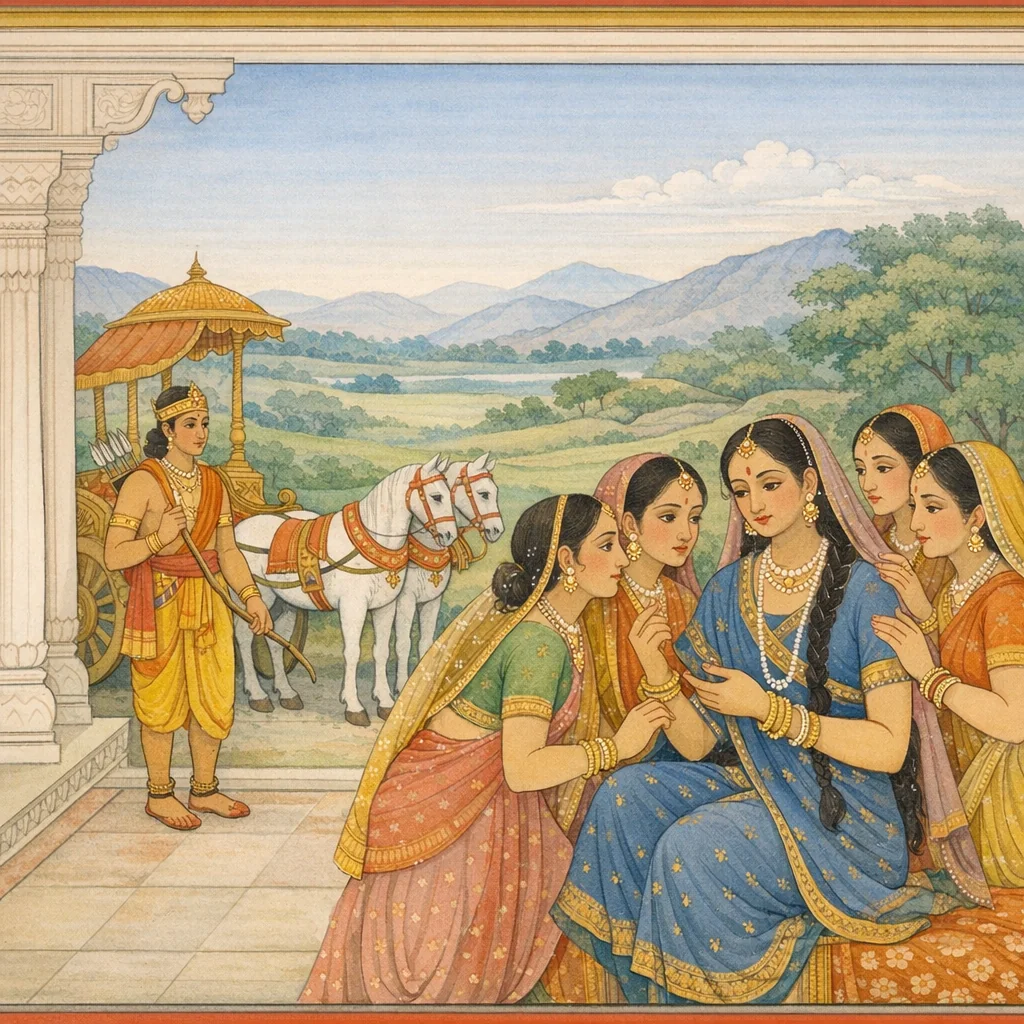
Chapter Arc: गौ-हरण का संकट मस्त्य-राज्य पर छा जाता है; राजकुमार उत्तर रणभूमि की ओर निकलने को उद्यत है, पर रथ-सारथि का अभाव उसे भीतर से डगमगाता है। → उत्तरा (राजा विराट की पुत्री) राजकुमार को स्मरण कराती है कि कौरव गौओं को बहुत दूर ले जाने से पहले शीघ्र प्रस्थान आवश्यक है; वह बृहन्नला से विनयपूर्वक आग्रह करती है कि वह उत्तर का सारथ्य करे। बृहन्नला (अर्जुन) अपने नपुंसक-वेष की मर्यादा निभाते हुए कहता है कि वह गीत-नृत्य-वाद्य जानता है, सारथ्य नहीं—पर कन्याओं के आग्रह और समय की तात्कालिकता से दबाव बढ़ता जाता है। → कन्याओं के बीच पाण्डुनन्दन अर्जुन (बृहन्नला) हँसते हुए—मेघ-दुन्दुभि-सा गंभीर स्वर लिए—सारथ्य-कार्य स्वीकार करने की ओर झुकता है; उत्तर के ‘रण-प्रस्थान’ का निर्णायक क्षण बनता है, जहाँ छिपा हुआ वीरत्व पुनः युद्ध-भूमि की ओर मुड़ता है। → बृहन्नला उत्तर के रथ का सारथि बनने को तैयार होता है; उत्तर का प्रस्थान सुनिश्चित होता है और गौ-रक्षा हेतु अभियान को गति मिलती है। → रथ चल पड़ा—पर आगे कौरव-सेना का सामना, उत्तर का भय, और बृहन्नला के भीतर छिपे गांडीवधारी अर्जुन का प्रकट होना अभी शेष है।
Shlokas
Verse 1
#::73:.8 #::3:.:7 () हि 2 7 सप्तत्रिशो5्ध्याय: बृहन्नलाको सारथि बनाकर राजकुमार उत्तरका रणभूमिकी ओर प्रस्थान वैशम्पायन उवाच सा प्राद्रवत् काउ्चनमाल्यधारिणी ज्येष्ेन क्रात्रा प्रहिता यशस्विनी । सुदक्षिणा वेदिविलग्नमध्या सा पद्मपत्राभनिभा शिखण्डिनी,वैशम्पायनजी कहते हैं--जनमेजय! कुमारी उत्तरा सोनेकी माला और मोरपंखका शृंगार धारण किये हुए थी। उसकी अंगकान्ति कमलदलकी-सी आभावाली लक्ष्मीको भी लज्जित कर रही थी। उसकी कमर यज्ञकी वेदीके समान सूक्ष्म थी। शरीरसे भी वह पतली ही थी। उसके सभी अंग शुभ लक्षणोंसे युक्त थे। उसने कटिप्रदेशमें मणियोंकी बनी हुई विचित्र करधनी पहन रखी थी। मत्स्यराजकी वह यशस्विनी कन्या अनुपम शोभासे प्रकाशित हो रही थी। बड़ोंकी आज्ञा माननेवाली कुमारी उत्तरा बड़े भाईके भेजनेसे बड़ी उतावलीके साथ नृत्यशालामें गयी; मानो चपला मेघ-मालामें विलीन हो गयी हो। उसके नेत्रोंकी टेढ़ी-टेढी बरौनियाँ बड़ी भली मालूम होती थीं
Vaiśampāyana said: O Janamejaya, sent by her elder brother, the illustrious maiden Uttarā hurried forth wearing a golden garland. Auspicious in every feature, slender-waisted as though her middle were fastened to a sacrificial altar, and radiant like a lotus petal, she moved swiftly—hair and ornaments in place—toward the hall of dance, her modest obedience befitting a princess even as war drew near.
Verse 2
तन्वी शुभाज़ी मणिचित्रमेखला मत्स्यस्य राज्ञो दुहिता श्रिया वृता तन्नर्तनागारमरालपक्ष्मा शतह्ददा मेघमिवान्वपद्यत,वैशम्पायनजी कहते हैं--जनमेजय! कुमारी उत्तरा सोनेकी माला और मोरपंखका शृंगार धारण किये हुए थी। उसकी अंगकान्ति कमलदलकी-सी आभावाली लक्ष्मीको भी लज्जित कर रही थी। उसकी कमर यज्ञकी वेदीके समान सूक्ष्म थी। शरीरसे भी वह पतली ही थी। उसके सभी अंग शुभ लक्षणोंसे युक्त थे। उसने कटिप्रदेशमें मणियोंकी बनी हुई विचित्र करधनी पहन रखी थी। मत्स्यराजकी वह यशस्विनी कन्या अनुपम शोभासे प्रकाशित हो रही थी। बड़ोंकी आज्ञा माननेवाली कुमारी उत्तरा बड़े भाईके भेजनेसे बड़ी उतावलीके साथ नृत्यशालामें गयी; मानो चपला मेघ-मालामें विलीन हो गयी हो। उसके नेत्रोंकी टेढ़ी-टेढी बरौनियाँ बड़ी भली मालूम होती थीं
Vaiśampāyana said: Janamejaya, the slender, auspicious-limbed princess Uttarā—daughter of the king of Matsya—adorned with a wondrous jeweled girdle and radiant with beauty, went swiftly into that dancing-hall. With curling eyelashes and graceful presence, she seemed like lightning slipping into a bank of clouds, eager to obey the elders’ direction and the summons sent through her elder brother.
Verse 3
सा हस्तिहस्तोपमसंहितोरू: स्वनिन्दिता चारुदती सुमध्यमा । आसाद्य तं वै वरमाल्यधारिणी पार्थ शुभा नागवधूरिव द्विपम्,उसकी परस्पर सटी हुई जाँघें हाथीकी सूँड़के समान सुशोभित होती थीं, दाँत चमकीले और मनोहर थे। शरीरका मध्यभाग बड़ा सुहावना था। वह अनिन््द्य-सुन्दरी सुन्दर हार धारण किये उन कुन्तीनन्दन अर्जुनके पास पहुँचकर गजराजके समीप गयी हुई हथिनीके समान शोभा पा रही थी
Vaiśampāyana said: With thighs held close together, lovely like an elephant’s trunk, flawless and sweet-voiced, slender-waisted and beyond reproach, she—wearing an excellent garland—approached Pārtha (Arjuna). In her auspicious beauty she shone, like a young she-elephant drawing near a mighty tusker.
Verse 4
सा रत्नभूता मनस: प्रियार्चिता सुता विराटस्य यथेन्द्रलक्ष्मी: । सुदर्शनीया प्रमुखे यशस्विनी प्रीत्याब्रवीदर्जुनमायतेक्षणा,विराटकुमारी उत्तरा स्त्रियोंमें रत्नस्वरूपा और मनको प्रिय लगनेवाली थी। वह उस राजभवनमें इन्द्रकी साम्राज्यलक्ष्मीके समान सम्मानित थी। उसके नेत्र बड़े-बड़े थे। वह यशस्विनी बाला सामनेसे देखने ही योग्य थी। वह अर्जुनसे प्रेमपूर्वक बोली--
Vaiśampāyana said: Uttarā, the daughter of King Virāṭa, was like a jewel among women—dear to the heart and honored with affection. In that royal household she was revered like Indra’s own sovereign fortune (Indralakṣmī). With large, expressive eyes and a radiant reputation, she was a maiden worthy to behold face to face. With warmth and fondness, she spoke to Arjuna.
Verse 5
सुसंहतोरुं कनकोज्ज्वलत्वचं पार्थ: कुमारी स तदाभ्यभाषत । किमागम: काउ्चनमाल्यधारिणि मृगाक्षि किं त्वं त्वरितेव भामिनि ।। कि ते मुखं सुन्दरि न प्रसन्न- माचक्ष्व तत्त्व मम शीघ्रमड़ने,सुवर्णके समान सुन्दर एवं गौर त्वचा तथा सटी जाँघोंवाली कुमारी उत्तराको देखकर अर्जुनने पूछा--'सुवर्णकी माला धारण करनेवाली मृगलोचने! भामिनि! तुम क्यों उतावली- सी चली आ रही हो? सुन्दरि! आज तुम्हारा मुख प्रसन्न क्यों नहीं है? अंगने! मुझे शीघ्र सब बातें ठीक-ठीक बताओ'
Vaiśampāyana said: Then Pārtha (Arjuna), seeing the maiden Uttarā—her thighs well-formed and her complexion shining like gold—addressed her: “Why have you come, O wearer of a golden garland? O doe-eyed one, why do you hurry as if distressed? Fair lady, why is your face not serene today? Tell me at once, dear one, the truth of what has happened.”
Verse 6
वैशम्पायन उवाच सतां दृष्टवा विशालाक्षीं राजपुत्रीं सखी तथा । प्रहसन्नब्रवीद् राजन् किमागमनमित्युत,वैशम्पायनजी कहते हैं--जनमेजय! विशाल नेत्रोंवाली अपनी सखी राजकुमारी उत्तराकी ओर देखकर अर्जुनने हँसते हुए जब उससे अपने पास आनेका कारण पूछा, तब वह राजपुत्री नरश्रेष्ठ अर्जुनके समीप जा अपना प्रेम प्रकट करती हुई सखियोंके बीचमें इस प्रकार बोली--
Vaiśampāyana said: O King (Janamejaya), seeing that wide-eyed princess—his companion—Arjuna, smiling, asked her, “What brings you here?” The scene underscores a courteous, non-threatening exchange in which speech is restrained and respectful, fitting the concealed life of the Pāṇḍavas in Virāṭa’s court and the ethical need to avoid suspicion while maintaining propriety.
Verse 7
तमब्रवीद् राजपुत्री समुपेत्य नरर्षभम् | प्रणयं भावयन्ती सा सखीमध्य इदं वच:,वैशम्पायनजी कहते हैं--जनमेजय! विशाल नेत्रोंवाली अपनी सखी राजकुमारी उत्तराकी ओर देखकर अर्जुनने हँसते हुए जब उससे अपने पास आनेका कारण पूछा, तब वह राजपुत्री नरश्रेष्ठ अर्जुनके समीप जा अपना प्रेम प्रकट करती हुई सखियोंके बीचमें इस प्रकार बोली--
Vaiśampāyana said: Then the princess approached the bull among men and spoke to him. Standing in the midst of her companions, she voiced these words while expressing her affectionate regard.
Verse 8
गावो राष्ट्रस्य कुरुभि: काल्यन्ते नो बृहन्नले । ता विजेतुं मम भ्राता प्रयास्यति धनुर्धर:,“बृहन्नले! हमारे राष्ट्रकी गौओंको कौरव हाँककर लिये जाते हैं; अतः उन्हें जीतनेके लिये मेरे भैया धनुष धारण करके जानेवाले हैं
Vaiśampāyana said: “O Bṛhannalā, the Kuru warriors are driving away the cattle of our kingdom. Therefore my brother, a bearer of the bow, is setting out to win them back.”
Verse 9
नाचिरं निहतस्तस्य संग्रामे रथसारथि: । तेन नास्ति सम: सूतो यो5स्य सारथ्यमाचरेत्,'थोड़े ही दिन हुए, उनके रथका सारथि एक युद्धमें मारा गया। इस कारण कोई ऐसा योग्य सूत नहीं है, जो उनके सारथिका काम सँभाल सके
Vaiśampāyana said: “Not long ago, his charioteer was slain in battle. Therefore there is no charioteer of equal skill available who could properly take up the duty of driving his chariot.”
Verse 10
तस्मै प्रयतमानाय सारथ्यर्थ बृहन्नले । आचचक्षे हयज्ञाने सैरन्ध्री कौशलं तव,“बृहन्नले! वे सारथि ढूँढ़नेका प्रयत्न कर रहे थे, इतनेमें ही सैरन्ध्रीने पहुँचकर यह बताया कि तुम अश्वविद्यामें कुशल हो
Vaiśampāyana said: As he was striving to find a charioteer, Sairandhrī approached and informed him, “O Bṛhannalā, you are skilled in the knowledge of horses.”
Verse 11
अर्जुनस्य किलासीस्त्वं सारथिर्दयित: पुरा । त्वयाजयत् सहायेन पृथिवीं पाण्डवर्षभ:,“पहले तुम अर्जुनका प्रिय सारथि रह चुकी हो। तुम्हारी सहायतासे उन पाण्डवशिरोमणिने समूची पृथ्वीपर विजय पायी है
Vaiśampāyana said: “Indeed, in former times you were Arjuna’s beloved charioteer. With your assistance, that bull among the Pāṇḍavas won victory over the whole earth.”
Verse 12
सा सारथ्यं मम भ्रातु: कुरु साधु बृहन्नले । पुरा दूरतरं गावो हियन्त कुरुभिर्हि न:,“अतः बृहन्नले! इसके पहले कि कौरवलोग हमारी गौओंको बहुत दूर लेकर चले जायूँ, तुम मेरे भाईके सारथिका कार्य अच्छी तरह कर दो
Vaiśampāyana said: “O Bṛhannalā, perform well the duty of charioteer for my brother—before the Kurus drive our cattle far away.”
Verse 13
अथैतद् वचन मेडद्य नियुक्ता न करिष्यसि । प्रणयादुच्यमाना त्वं परित्यक्ष्यामि जीवितम्,“सखी! मैं बड़े प्रेमसे यह बात कहती हूँ। यदि आज इतना अनुरोध करनेपर भी तुम मेरी बात नहीं मानोगी, तो मैं प्राण त्याग दूँगी'
Vaiśampāyana said: “Now, if you will not carry out this request of mine, even after being urged, then—though I speak out of affection—I shall renounce my life.”
Verse 14
एवमुक्तस्तु सुश्रोण्या तया सख्या परंतप: । जगाम राजपुत्रस्य सकाशममितौजस:,सुन्दर कटिप्रदेशवाली सखी उत्तराके ऐसा कहनेपर शत्रुओंको संताप देनेवाले अर्जुन अमितपराक्रमी राजकुमार उत्तरके समीप गये। मद टपकानेवाले गजराजकी भाँति शीघ्रतापूर्वक आते हुए अर्जुनके पीछे-पीछे विशाल नेत्रोंवाली उत्तरा भी आयी; ठीक उसी तरह, जैसे हथिनी हाथीके पीछे-पीछे जाती है
Vaiśampāyana said: Thus addressed by that fair-hipped companion, Arjuna—the scorcher of foes—went to the presence of the mighty prince Uttara. The scene underscores disciplined action: Arjuna responds without agitation, moving forward with purpose and restraint, guided by circumstance and duty rather than impulse.
Verse 15
तमाव्रजन्तं त्वरितं प्रभिन्नमिव कुड्जरम् । अन्वगच्छद् विशालाक्षी गजं गजवधूरिव,सुन्दर कटिप्रदेशवाली सखी उत्तराके ऐसा कहनेपर शत्रुओंको संताप देनेवाले अर्जुन अमितपराक्रमी राजकुमार उत्तरके समीप गये। मद टपकानेवाले गजराजकी भाँति शीघ्रतापूर्वक आते हुए अर्जुनके पीछे-पीछे विशाल नेत्रोंवाली उत्तरा भी आयी; ठीक उसी तरह, जैसे हथिनी हाथीके पीछे-पीछे जाती है
Vaiśampāyana said: As Arjuna came swiftly—like a rutting elephant in full charge—the large-eyed Uttarā followed close behind him, just as an elephant-cow follows her bull. The scene underscores disciplined urgency in the face of danger: the warrior moves with decisive purpose, while the princess, trusting his protection, keeps pace without hesitation.
Verse 16
दूरादेव तु तां प्रेक्ष्य राजपुत्रो5भ्य भाषत । त्वया सारथिना पार्थ: खाण्डवेडग्निमतर्पयत्,राजकुमार उत्तरने बृहन्नलाको दूरसे ही देखकर इस प्रकार कहा--“बृहन्नले! अर्जुनने तुम्हें सारथि बनाकर खाण्डववनमें अग्निको तृप्त किया था। इतना ही नहीं, कुन्तीपुत्र धनंजयने तुम-जैसे सारथिके सहयोगसे ही समूची पृथ्वीपर विजय पायी है।' तुम्हारे विषयमें यह बात सैरन्ध्री कह रही थी, क्योंकि वह पाण्डवोंको अच्छी तरह जानती है
Seeing her from a distance, the prince addressed her: “O Bṛhannalā, with you as his charioteer, Pārtha (Arjuna) once satisfied the Fire-god in the Khāṇḍava forest.” The statement underscores the prince’s recognition of Bṛhannalā’s proven competence and the moral weight of past deeds: true capability is known by tested service and by association with righteous, world-protecting action.
Verse 17
पृथिवीमजयत् कृत्स्नां कुन्तीपुत्रो धनंजय: । ध्री त्वां समाचष्टे सा हि जानाति पाण्डवान्,राजकुमार उत्तरने बृहन्नलाको दूरसे ही देखकर इस प्रकार कहा--“बृहन्नले! अर्जुनने तुम्हें सारथि बनाकर खाण्डववनमें अग्निको तृप्त किया था। इतना ही नहीं, कुन्तीपुत्र धनंजयने तुम-जैसे सारथिके सहयोगसे ही समूची पृथ्वीपर विजय पायी है।' तुम्हारे विषयमें यह बात सैरन्ध्री कह रही थी, क्योंकि वह पाण्डवोंको अच्छी तरह जानती है
Vaiśampāyana said: “Kuntī’s son Dhanañjaya (Arjuna) conquered the entire earth. It is Dhṛtā who speaks of you in this way, for she truly knows the Pāṇḍavas.” In context, Uttara, having seen Bṛhannalā from a distance, recalls Arjuna’s famed exploits—such as satisfying Agni in the Khāṇḍava forest with the help of a charioteer—and uses that reputation to persuade and steady himself amid fear, grounding his appeal in credible testimony from one who knows the Pāṇḍavas well.
Verse 18
संयच्छ मामकान श्रांस्तथैव त्वं बृहन्नले । कुरुभिर्योत्स्यमानस्य गोधनानि परीप्सत:,“बृहन्नले! तुम अर्जुनकी ही भाँति मेरे घोड़ोंको भी काबूमें रखना, क्योंकि मैं अपना गोधन वापस लेनेके लिये कौरवोंके साथ युद्ध करनेवाला हूँ
Vaiśampāyana said: “O Bṛhannalā, restrain my weary horses as well—just as you do Arjuna’s—for I am about to fight the Kurus in order to recover my cattle.”
Verse 19
अर्जुनस्य किलासीस्त्वं सारथिर्दयित: पुरा । त्वयाजयत् सहायेन पृथिवीं पाण्डवर्षभ:,“पहले तुम अर्जुनका प्रिय सारथि रह चुकी हो और तुम्हारी ही सहायतासे उन पाण्डवशिरोमणिने समूची पृथ्वीपर विजय पायी है”
Vaiśampāyana said: “Indeed, you were once Arjuna’s beloved charioteer; and with your aid that bull among the Pāṇḍavas won victory over the whole earth.”
Verse 20
एवमुक्ता प्रत्युवाच राजपुत्र बृहन्नला । का शक्तिर्मम सारथ्यं कर्तु संग्राममूर्धथनि,उसके ऐसा कहनेपर बृहन्नला राजकुमारसे बोली--“भला, मेरी क्या शक्ति है कि मैं युद्धके मुहानेपर सारथिका काम सँभाल सकूँ?
Vaiśampāyana said: Thus addressed, Bṛhannalā replied to the prince, “What power or competence do I have to take up the role of charioteer at the very forefront of battle?”
Verse 21
गीत॑ वा यदि वा नृत्यं वादित्रं वा पृथग्विधम् तत् करिष्यामि भद्र ते सारथ्यं तु कुतो मम,“राजकुमार! आपका कल्याण हो। यदि गाना हो, नृत्य करना हो अथवा विभिन्न प्रकारके बाजे बजाने हों, तो वह कर लूँगी। सारथिका काम मुझसे कैसे हो सकता है?
“O prince, may you be well. If it is singing, or dancing, or playing instruments of various kinds—those I can do. But how could the work of a charioteer possibly be mine?”
Verse 22
उत्तर उवाच बृहन्नले गायनो वा नर्तनो वा पुनर्भव | क्षिप्रं मे रथमास्थाय निगृह्लीष्व हयोत्तमान्,उत्तर बोला--बृहन्नले! तुम पुन: लौटकर गायक या नर्तक जो चाहो, बन जाना। इस समय तो शीघ्र ही मेरे रथपर बैठकर श्रेष्ठ घोड़ोंको काबूमें करो
Uttara said: “O Bṛhannalā, you may become again whatever you wish—a singer or a dancer. But now, quickly mount my chariot and take firm control of these excellent horses.”
Verse 23
वैशम्पायन उवाच स तत्र नर्मसंयुक्तमकरोत् पाण्डवो बहु | उत्तराया: प्रमुखत: सर्व जानन्नरिंदम:,वैशम्पायनजी कहते हैं--जनमेजय! शत्रुओंका दमन करनेवाले पाण्डुनन्दन अर्जुनने सब कुछ जानते हुए भी उत्तराके सामने हँसीके लिये बहुत-से अनभिज्ञतासूचक कार्य किये
Vaiśampāyana said: “O Janamejaya, Arjuna, Pāṇḍu’s son and tamer of foes, though he knew everything, performed many acts before Uttarā as if unaware, merely in jest.”
Verse 24
ऊर्ध्वमुत्क्षिप्प कवचं शरीरे प्रत्यमुजजत । कुमार्यस्तत्र तं दृष्टवा प्राहसन् पृुथुलोचना:,वे कवचको ऊपर उठाकर शरीरमें डालने लगे। यह देखकर वहाँ खड़ी हुई बड़े-बड़े नेत्रोंवाली राजकुमारियाँ हँसने लगीं
Vaiśampāyana said: Lifting the cuirass upward, he began fastening it onto his body. Seeing him do this, the wide-eyed princesses standing there burst into laughter—an episode that underscores the tension between outward appearance and inner capability, and how the virtuous may endure mockery while remaining focused on their duty.
Verse 25
सतु दृष्टवा विमुहार॒न्तं स्वयमेवोत्तरस्तत: । कवचेन महाहेण समनहाद् बृहन्नलाम्,बृहत्नलाको (कवच धारणके समय) भूल करती देख राजकुमार उत्तरने स्वयं ही उसे बहुमूल्य कवच धारण कराया
Vaiśampāyana said: Seeing Bṛhannalā confused and making mistakes, Prince Uttara himself then equipped her with a highly valuable coat of mail. The episode underscores the urgency of right preparation before danger and the duty of a kṣatriya to ensure proper readiness for battle, even when the one being armed appears outwardly unfit or hesitant.
Verse 26
स बिभ्रत् कवचं चाग्रयं स्वयमप्यंशुमत्प्रभम् । ध्वजं च सिंहमुच्छित्य सारथ्ये समकल्पयत्,फिर उसने स्वयं भी सूर्यके समान कान्तिमान् सुन्दर कवच धारण किया और रथपर सिंहध्वज फहराकर बृहन्नलाको सारथिके कार्यमें नियुक्त कर दिया
Vaiśampāyana said: He himself donned an excellent coat of mail, radiant like the Sun, and, raising the lion-banner upon the chariot, appointed Bṛhannalā to the duty of charioteer—thus preparing with resolve and propriety for the coming encounter.
Verse 27
धनूंषि च महाहाणि बाणांश्व रुचिरान् बहून् । आदाय प्रययौ वीर: स बृहन्नलसारथि:,तदनन्तर बहुत-से बहुमूल्य धनुष और सुन्दर बाण लेकर वीर उत्तर बृहन्नला सारथिके साथ युद्धके लिये प्रस्थित हुआ
Vaiśampāyana said: Taking up many splendid arrows and great, costly bows, the hero set out for battle, with Bṛhannalā as his charioteer—thus moving from preparation to righteous action in the face of imminent war.
Verse 28
अथोत्तरा च कनन््याश्व सख्यस्तामन्रुवंस्तदा । बृहन्नले आनयेथा वासांसि रुचिराणि च,उस समय उत्तरा और उसकी सखीरूपा दूसरी राजकन्याओंने कहा--“बृहन्नले! तुम युद्धभूमिमें आये हुए भीष्म, द्रोण आदि प्रमुख कौरववीरोंको जीतकर हमारी गुड़ियोंके लिये उनके महीन, कोमल और विचित्र रंगके सुन्दर-सुन्दर वस्त्र ले आना”
Vaiśampāyana said: Then Uttarā, along with the other princesses who were her companions, spoke at that time: “O Bṛhannalā, having gone to the battlefield and defeating the foremost Kaurava heroes such as Bhīṣma and Droṇa, bring back for our dolls fine, soft, beautifully patterned garments of varied colors.” The scene underscores youthful play and desire set against the gravity of war, highlighting how the realities of dharma and conflict can be perceived differently by those sheltered from its consequences.
Verse 29
पाज्चालिकार्थ चित्राणि सूक्ष्माणि च मृदूनि च । विजित्य संग्रामगतान् भीष्मद्रोणमुखान् कुरून्,उस समय उत्तरा और उसकी सखीरूपा दूसरी राजकन्याओंने कहा--“बृहन्नले! तुम युद्धभूमिमें आये हुए भीष्म, द्रोण आदि प्रमुख कौरववीरोंको जीतकर हमारी गुड़ियोंके लिये उनके महीन, कोमल और विचित्र रंगके सुन्दर-सुन्दर वस्त्र ले आना”
Vaiśampāyana said: For the sake of the Pāñcāla princess Uttarā, the young royal maidens said: “O Bṛhannalā, having conquered in battle those Kuru warriors who have come to the battlefield—led by Bhīṣma and Droṇa—bring back for our dolls garments that are fine, soft, and beautifully variegated.”
Verse 30
एवं ता ब्रुवती: कन्या: सहिता: पाण्डुनन्दन: । प्रत्युवाच हसन् पार्थो मेघदुन्दुभिनि:स्वन:,ऐसा कहती हुई उन सब कन्याओंसे पाण्डुनन्दन अर्जुनने हँसते हुए मेघ और दुन्दुभिके समान गम्भीर वाणीमें कहा
As the maidens spoke thus all together, Arjuna, Pāṇḍu’s son—smiling—replied in a voice deep and resonant like thunderclouds and a war-drum.
Verse 31
बुह्न्नलोवाच यद्युत्तरो<यं संग्रामे विजेष्पति महारथान् । अथाहरिष्ये वासांसि दिव्यानि रुचिराणि च,बृहन्नला बोली--यदि ये राजकुमार उत्तर रणभूमिमें उन महारथियोंको परास्त कर देंगे, तो मैं अवश्य उनके दिव्य और सुन्दर वस्त्र ले आऊँगी
Bṛhannalā said: “If this prince Uttara is able to defeat those great chariot-warriors in battle, then I shall certainly bring back splendid, divine garments as well.”
Verse 32
वैशम्पायन उवाच एवमुकक््त्वा तु बीभत्सुस्तत: प्राचोदयद्धयान् । कुरूनभिमुख: शूरो नानाध्वजपताकिन:,वैशम्पायनजी कहते हैं-जनमेजय! ऐसा कहकर शूरवीर अर्जुनने भाँति-भाँतिकी ध्वजा-पताकाओंसे सुशोभित कौरवोंकी ओर जानेके लिये घोड़ोंको हाँक दिया
Vaiśampāyana said: Having spoken thus, the formidable Arjuna then urged on the horses. The heroic warrior drove the chariot straight toward the Kurus, whose ranks were adorned with many kinds of banners and pennants.
Verse 33
तमुत्तरं वीक्ष्य रथोत्तमे स्थितं बृहन्नलाया: सहितं महाभुजम् | स्त्रियश्न कन्याश्र द्विजाश्व सुव्रता: प्रदक्षिणं चक्रुरथोचुरज्ञना:,बृहन्नलाके साथ उत्तम रथपर बैठे हुए महाबाहु उत्तरको जाते देख स्त्रियों, कन्याओं तथा उत्तम व्रतका पालन करनेवाले ब्राह्मणोंने उसकी दक्षिणावर्त परिक्रमा की। तत्पश्चात् स्त्रियाँ और कन्याएँ बोलीं---
Seeing the mighty-armed Uttara seated upon an excellent chariot together with Bṛhannalā, the women, the maidens, and the well-vowed Brahmins circumambulated him to the right in reverence. Thereafter, the women and maidens spoke—
Verse 34
यदर्जुनस्यर्षभतुल्यगामिन: पुराभवत् खाण्डवदाहमड़लम् । कुरून् समासाद्य रणे बृहन्नले सहोत्तरेणाद्य तदस्तु मड़लम्,“बृहन्नले! वृषभके समान गतिवाले अर्जुनको पहले खाण्डववनदाहके समय जैसा मंगल प्राप्त हुआ था, आज युद्धमें कौरवोंके पास पहुँचनेपर राजकुमार उत्तरके साथ तुम्हें वैसा ही मंगल प्राप्त हो”
Vaiśampāyana said: “O Bṛhannalā, may the same auspicious fortune that once attended Arjuna—swift as a bull—at the time of the burning of the Khāṇḍava forest, now attend you as well, today, when you confront the Kauravas in battle together with Prince Uttara.”
Verse 36
इस प्रकार श्रीमहाभारत विराटपर्वके अन्तर्गत योहरणपर्वमें उत्तर दिशाकी ओरसे गौओंके अपहरणके प्रसंगमें ब॒हन्नलाका सारथ्यकथनसम्बन्धी छत्तीसवाँ अध्याय पूरा हुआ
Thus ends the thirty-sixth chapter of the Goharaṇa episode within the Virāṭa Parva of the Śrī Mahābhārata, concerning the incident of cattle being driven away from the northern side and the account of Bṛhannalā serving as charioteer. The closing note frames the episode as a test of duty and courage: in the face of aggression and theft, rightful protection of the kingdom’s wealth (the cattle) and the proper conduct of warriors are brought into focus, while Bṛhannalā’s charioteering becomes the decisive means by which dharma is upheld in action.
Verse 37
इति श्रीमहाभारते विराटपर्वणि गोहरणपर्वणि उत्तरगोग्रहे उत्तरनिर्याणं नाम सप्तत्रिंशो5ध्याय:
Thus, in the Śrī Mahābhārata, within the Virāṭa Parva—specifically in the section concerning the cattle-raid—this concludes the thirty-seventh chapter, entitled “Uttara’s Setting Forth,” in the episode of Uttara’s seizure of the cattle. The narrative frame signals a transition: the text marks the close of a chapter that centers on the mobilization and moral testing that precede open confrontation, where courage, duty, and right counsel begin to shape the outcome.
Frequently Asked Questions
The dilemma centers on acting decisively in defense of state assets while uncertainty persists about the opponent’s identity, and on whether political advantage should be pursued through premature “discovery” versus cautious verification.
Competent counsel integrates observation, risk assessment, and duty: leaders should stabilize morale, protect critical resources, and plan for worst-case capability when credible indicators suggest a superior adversary.
No explicit phalaśruti occurs here; the chapter functions as situational meta-commentary by using omens and expert speech to foreshadow the imminent confrontation and to contextualize dharma as disciplined preparedness.