Adhyaya 290
Adhyāya 290: Kuntī’s Mantra-Parīkṣā and the Appearance of Sūrya (कुन्ती–सूर्यसंवादः)
Upa-parva: Kuntī–Sūrya Saṃvāda (Mantra-parīkṣā episode: the testing of the Sun-invocation)
Vaiśaṃpāyana narrates that, after the brāhmaṇa departs, the young Kuntī repeatedly contemplates the mantra’s strength and decides to verify its power. As she reaches puberty, she notices the rising sun and gains a divine mode of sight by which she perceives the deity in a luminous, ornamented form (kavaca-kuṇḍala imagery). Motivated by curiosity, she performs the invocation, and Sūrya arrives swiftly, describing himself as compelled by the mantra’s force and asking what service is required. Kuntī requests that he return, explaining that she called him only to test the mantra and that she will not violate social-ethical norms of maidenhood and bodily protection. Sūrya refuses a merely experimental summons as improper, states that her intention was to obtain a son from him, and warns of reputational exposure among the devas; he also threatens punitive consequences if dismissed. Kuntī pleads for forgiveness on account of youth and frames her action as childish inquiry. Sūrya concedes partial accommodation to her plea yet reiterates the demand for self-giving, promising an exceptional son and social distinction. The chapter’s thematic center is the binding nature of sacred speech, the asymmetry of divine-human power, and the ethical costs of testing ritual efficacy without foreseeing outcomes.
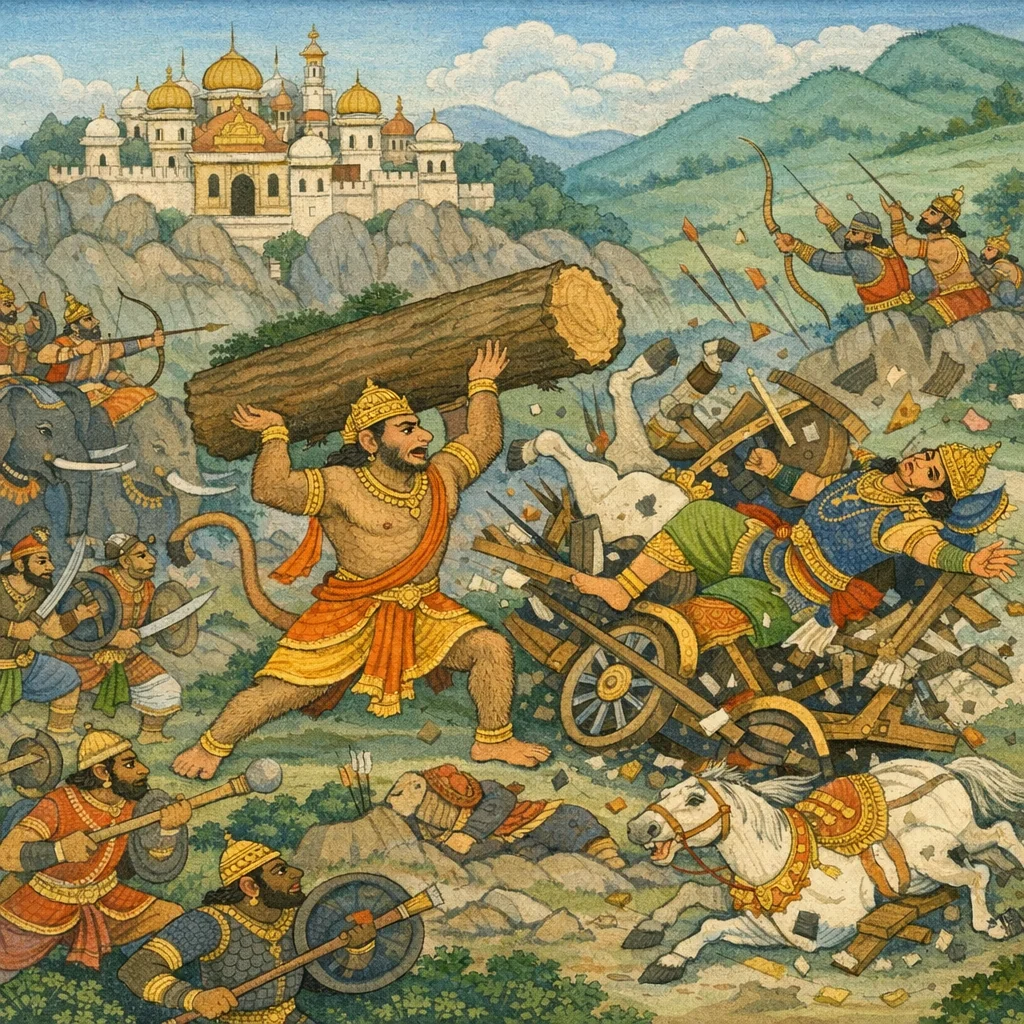
Chapter Arc: मार्कण्डेय युधिष्ठिर को रावण के गर्व-भरे आदेश सुनाते हैं—विजयी इन्द्रजित् को पुकारकर वह कहता है: ‘राम, सुग्रीव और लक्ष्मण—इन तीनों को मार डाल।’ → रावण इन्द्रजित् की पूर्व-विजयों की प्रशंसा करता है—उसने सहस्राक्ष इन्द्र को भी रण में जीतकर यश कमाया है; अब दिव्य वर-प्रदत्त अस्त्रों से ‘अन्तर्हित’ होकर शत्रुओं को छलने का संकेत मिलता है। उधर वानर-सेना और लक्ष्मण पर तीव्र तोमर-वर्षा होती है, जिसे लक्ष्मण अपने तीक्ष्ण बाणों से काटते हैं। → इन्द्रजित् की मायामय/अदृश्य युद्ध-नीति के बीच अंगद क्रोध में शाल-स्कन्ध (वृक्ष-तना) उठाकर प्रचण्ड प्रहार करता है—और इन्द्रजित् का रथ घोड़ों व सारथि सहित चूर हो जाता है; रणभूमि में क्षणभर के लिए रावण-पक्ष का तेज डगमगा उठता है। → रथ-विनाश के बाद भी इन्द्रजित् का ‘दत्तवर’ और मायावी कौशल युद्ध को समाप्त नहीं होने देता; लक्ष्मण की रक्षा-क्षमता और वानरों का पराक्रम स्पष्ट होता है, पर निर्णायक वध अभी दूर है। → रथ टूट चुका है, पर इन्द्रजित् अभी जीवित और छल-युद्ध में समर्थ है—अब वह किस दिव्य अस्त्र या माया से पलटवार करेगा?
Shlokas
Verse 1
(दाक्षिणात्य अधिक पाठका ३ “लोक मिलाकर कुल २९३ “लोक हैं) अपना स२ (0 अवज असल अष्टाशीरत्याधिकद्विशततमो< ध्याय: इन्द्रजित्का मायामय युद्ध तथा श्रीराम और लक्ष्मणकी मूर्च्छा मार्कण्डेय उदाच ततः श्रुत्वा हतं संख्ये कुम्भकर्ण सहानुगम् | प्रहस्तं च महेष्वासं धूम्राक्षं चातितेजसम्,मार्कण्डेयजी कहते हैं--युधिष्ठिर! तदनन्तर सेवकोंसहित कुम्भकर्ण, महाधनुर्धर प्रहस्त तथा अत्यन्त तेजस्वी धूम्राक्षको संग्राममें मारा गया सुनकर रावणने अपने वीर पुत्र इन्द्रजित्से कहा--'शत्रुसूदन! तुम राम, लक्ष्मण तथा सुग्रीवका वध करो इस प्रकार श्रीमह्या भारत वनपववके अन्तर्गत रामोपाख्यानपर्वमें इन्द्रजित्-युद्धाविषयक दो सी अद्वासीवाँ अध्याय पूरा हुआ ॥/ २८८ ॥ ८०५३ # ५० (0) चल अप एकोननवर्त्याधेकद्विशततमो< ध्याय: श्रीराम-लक्ष्मणका सचेत होकर कुबेरके भेजे हुए अभिमन्त्रित जलसे प्रमुख वानरोंसहित अपने नेत्र धोना, लक्ष्मणद्वारा इन्द्रजित्का वध एवं सीताको मारनेके लिये उद्यत हुए रावणका अविन्ध्यके द्वारा निवारण करना मार्कण्डेय उवाच तावुभौ पतितौ दृष्टवा भ्रातरौ रामलक्ष्मणौ । बबन्ध रावणिभर्भूय: शरैर्दत्तवरैस्तदा
Mārkaṇḍeya said: Seeing both brothers—Rāma and Lakṣmaṇa—fallen, Rāvaṇa’s son (Indrajit) once again bound them then with arrows empowered by boons. The episode shows that extraordinary power, when yoked to adharma, may overwhelm the righteous for a time, yet it is no true victory.
Verse 2
पुत्रमिन्द्रजितं वीर॑ रावण: प्रत्यभाषत । जहि रामममित्रघ्न सुग्रीवं च सलक्ष्मणम्,मार्कण्डेयजी कहते हैं--युधिष्ठिर! तदनन्तर सेवकोंसहित कुम्भकर्ण, महाधनुर्धर प्रहस्त तथा अत्यन्त तेजस्वी धूम्राक्षको संग्राममें मारा गया सुनकर रावणने अपने वीर पुत्र इन्द्रजित्से कहा--'शत्रुसूदन! तुम राम, लक्ष्मण तथा सुग्रीवका वध करो
Mārkaṇḍeya said: “O hero, Rāvaṇa addressed his son Indrajit: ‘O slayer of foes, strike down Rāma—and Sugrīva as well—together with Lakṣmaṇa.’”
Verse 3
त्वया हि मम सत्पुत्र यशो दीप्तमुपार्जितम् । जित्वा वज्धरं संख्ये सहस्राक्षं शचीपतिम्,'सुपुत्र! तुमने युद्धमें सहस्र नेत्रोंवाले वज्धारी शचीपति इन्द्रको जीतकर उज्ज्वल यशका उपार्जन किया है
Mārkaṇḍeya said: “Indeed, my noble son, you have won for me a radiant fame—having defeated in battle the thunderbolt-bearing Indra, the thousand-eyed lord of Śacī.”
Verse 4
अन्तर्हित: प्रकाशो वा दिव्यैर्दत्तवरै: शरै: | जहि शत्रूनमित्रघ्न मम शस्त्रभृतां वर,शस्त्रधारियोंमें श्रेष्ठ शत्रुनाशन वीर! जिनके लिये देवताओंने तुम्हें वरदान दिया है, ऐसे दिव्यास्त्रों-द्वारा प्रकटरूपमें या अदृश्य होकर मेरे शत्रुओंका नाश करो
Mārkaṇḍeya said: “Whether concealed or openly manifest, with those divine arrows that were granted to you as boons by the gods—slay the enemies. O destroyer of foes, best among weapon-bearers, use your heaven-given missiles to bring my adversaries to ruin.”
Verse 5
रामलक्ष्मणसुग्रीवा: शरस्पर्श न तेडनघ । समर्था: प्रतिसोढुुं च कुतस्तदनुयायिन:,“अनघ! स्वयं राम, लक्ष्मण और सुग्रीव भी तुम्हारे बाणोंका आघात सहन करनेमें समर्थ नहीं हैं, फिर उनके अनुयायी तो हो ही कैसे सकते हैं?
Mārkaṇḍeya said: “O sinless one, even Rāma, Lakṣmaṇa, and Sugrīva themselves are not capable of enduring the touch of your arrows; how then could their followers possibly withstand it?”
Verse 6
अकृता या प्रहस्तेन कुम्भकर्णेन चानघ । खरस्यापचिति: संख्ये तां गच्छ त्वं महाभुज,“निष्पाप महाबाहो! प्रहस्त और कुम्भकर्णने भी खरके वधका जो बदला नहीं चुकाया, उसे युद्धमें तुम चुकाओ
Mārkaṇḍeya said: “O blameless one, the retribution that has not yet been paid to Khara—by Prahasta and by Kumbhakarṇa—must now be paid in battle. Go forth, O mighty-armed one, and discharge that debt.”
Verse 7
त्वमद्य निशितैर्बाणैहत्वा शत्रून्ू ससैनिकान् । प्रतिनन्दय मां पुत्र पुरा जित्वेव वासवम्,“बेटा! तुमने पूर्वकालमें इन्द्रको जीतकर जिस प्रकार मुझे आनन्दित किया था, उसी प्रकार आज तुम तीखे बाणोंसे सैनिकोंसहित शत्रुओंका संहार करके मेरा आनन्द बढ़ाओ'
Mārkaṇḍeya said: “My son, today, having slain the enemies together with their troops by means of sharp arrows, gladden me—just as you once delighted me in former times by conquering Vāsava (Indra).”
Verse 8
इत्युक्त: स तथेत्युक्त्वा रथमास्थाय दंशित: । प्रययाविन्द्रजिद् राजंस्तूर्णमायोधनं प्रति,राजन! रावणके द्वारा ऐसी आज्ञा देनेपर इन्द्रजितने “बहुत अच्छा” कहकर पिताकी आज्ञा स्वीकार की और वह कवच बाँध रथपर बैठकर तुरंत ही संग्रामभूमिकी ओर चल दिया
Markandeya said: Thus addressed, he replied, “So be it,” accepted the command, donned his armor, mounted his chariot, and—O king—Indrajit swiftly set out toward the battlefield.
Verse 9
ततो विश्राव्य विस्पष्टं नाम राक्षसपुड्रव: । आह्वियामास समरे लक्ष्मणं शुभलक्षणम्,तत्पश्चात् उस राक्षसराजने स्पष्टरूपसे अपने नामकी घोषणा करके शुभलक्षण लक्ष्मणको युद्धके लिये ललकारा
Then the foremost of the rākṣasas, having clearly proclaimed his name aloud, challenged Lakṣmaṇa—whose marks were auspicious—to combat.
Verse 10
त॑ लक्ष्मणो5 भ्यधावच्च प्रगृह्म सशरं धनु: । त्रासयंस्तलघोषेण सिंह: क्षुद्रमूगान् यथा,तब लक्ष्मण भी धनुषपर बाण चढ़ाये हुए उसकी ओर बड़े वेगसे दौड़े और सिंह जैसे छोटे मृगोंको डरा देता है, उसी प्रकार वे अपने धनुषकी टंकारसे सब राक्षसोंको त्रास देने लगे
Then Lakṣmaṇa rushed straight toward him, taking up his bow already fitted with arrows. With the sharp twang of the bowstring he struck terror into the rākṣasas—just as a lion frightens timid, lesser beasts.
Verse 11
तयो: समभवद् युद्ध सुमहज्जयगृद्धिनो: । दिव्यास्त्रविदुषोस्तीव्रमन्योन्यस्पर्धिनोस्तदा,वे दोनों ही विजयकी अभिलाषा रखनेवाले, दिव्यास्त्रोंके ज्ञाता तथा परस्पर बड़ी स्पर्धा रखनेवाले थे। उन दोनोंमें उस समय बड़ा भारी युद्ध हुआ
Mārkaṇḍeya said: “Between those two—both consumed by the desire for victory, both skilled in the knowledge of divine missiles, and both fiercely competitive with one another—there then arose a very great and intense battle.”
Verse 12
रावणिस्तु यदा नैनं विशेषयति सायकै: । ततो गुरुतरं यत्नमातिष्ठद् बलिनां वर:,बलवानोंमें श्रेष्ठ रावणकुमार इन्द्रजित् जब बाण-वर्षा करनेमें लक्ष्मणसे आगे न बढ़ सका, तब उसने गुरुतर प्रयत्न आरम्भ किया
Mārkaṇḍeya said: When Rāvaṇa’s son could win no advantage over him even with showers of arrows, that foremost among the mighty undertook an even more strenuous effort—intensifying the battle with firmer resolve and sharper strategy when mere force proved insufficient.
Verse 13
तत एन महावेगैरर्दयामास तोमरै: । तानागतान् स चिच्छेद सौमित्रिर्निशितै: शरै:,उसने अत्यन्त वेगशाली तोमरोंकी वर्षा करके लक्ष्मणको पीड़ा पहुँचानेकी चेष्टा की, परंतु लक्ष्मणने तीखे बाणोंसे उन सब तोमरोंको पास आते ही काट गिराया
Mārkaṇḍeya said: Then he sought to harass Lakṣmaṇa by showering him with javelins hurled at tremendous speed. But Saumitrī (Lakṣmaṇa), with razor-sharp arrows, cut down every one of those javelins as they came near.
Verse 14
ते निकृत्ता: शरैस्ती3णै्न्यपतन् धरणीतले । तमड़दो वालिसुत: श्रीमानुद्यम्प पादपम्,प्रहर्तुमैच्छत् त॑ं चास्य प्रासं चिच्छेद लक्ष्मण: । लक्ष्मणके तीखे बाणोंसे टूक-टूक होकर वे तोमर पृथ्वीपर बिखर गये। तब महावेगशाली वालिपुत्र श्रीमान् अंगदने एक वृक्ष उठा लिया और दौड़कर इन्द्रजित॒के मस्तकपर उसे दे मारा; परंतु इन्द्रजित् इससे तनिक भी विचलित न हुआ। उस पराक्रमी वीरने प्रासद्वारा अंगदकी छातीमें प्रहार करनेका विचार किया, किंतु लक्ष्मणने उसे पहले ही काट गिराया
Markandeya said: “Shattered into pieces by sharp arrows, the javelins fell scattered upon the ground. Then the illustrious Angada, son of Vāli, seized a tree and rushed forward, intending to strike. But Lakṣmaṇa cut down both the tree and the spear meant for Angada, thwarting the attack before it could land.”
Verse 15
अभिद्रुत्य महावेगस्ताडयामास मूर्थनि । तस्येन्द्रजिदसम्भ्रान्त: प्रासेनोरसि वीर्यवान्
Markandeya said: Rushing forward with tremendous speed, he struck him on the head. Yet Indrajit, unshaken and composed, the mighty warrior, pierced him in the chest with a spear.
Verse 16
तमभ्याशगतं वीरमड़॒दं रावणात्मज:
Mārkaṇḍeya said: Seeing that heroic warrior come within close range, Rāvaṇa’s son moved to seize him—signaling how the combat tightened and peril drew near.
Verse 17
तमचिन्त्य प्रहारं स बलवान् वालिन: सुत:
Mārkaṇḍeya said: The mighty son of Vāli, having pondered that unimaginable blow, steadied himself—recognizing the weight of the strike and the peril it foretold.
Verse 18
सोडड्देन रुषोत्सृष्टो वधायेन्द्रजितस्तरु:
Mārkaṇḍeya said: “In wrath, he hurled the tree with great force, intending it for the slaying of Indrajit.”
Verse 19
ततो हताश्चात् प्रस्कन्द्य रथात् स हतसारथि:
Then, utterly disheartened, he sprang down from the chariot—his charioteer having been slain—signaling a sudden collapse of martial advantage.
Verse 20
अन्तर्हितं विदित्वा तं बहुमायं च राक्षसम्
Having realized that he had vanished from sight, and recognizing him as a rākṣasa skilled in many deceptive arts, Mārkaṇḍeya frames the moment as one requiring alert discernment: when evil hides itself through illusion, one must first see through the concealment before acting rightly.
Verse 21
स राममुद्दिश्य शरैस्ततो दत्तवरैस्तदा
Then, fixing his aim upon Rāma, he discharged arrows—at that time empowered by the boons he had received—signaling a divinely sanctioned yet morally charged escalation of the conflict.
Verse 22
तमदृश्यं शरै: शूरौ माययान्तर्हितं तदा
Then, by the power of māyā, the two heroic warriors became invisible, hidden from sight even as arrows were being shot—showing that in battle, mere valor can be confounded when deception and supernatural stratagems intervene.
Verse 23
स रुषा सर्वगात्रेषु तयो: पुरुषसिंहयो:
Mārkaṇḍeya said: Then, seized by anger, it spread through every limb of those two lion-like men—an outward sign that wrath had taken hold of their whole being and was about to drive their next action.
Verse 24
तमदृश्यं विचिन्वन्त: सृजन्तमनिशं शरान्
Searching for the unseen one, they kept watching him as he ceaselessly discharged arrows—an image of relentless combat where perception fails, yet effort and vigilance do not slacken.
Verse 25
तांश्व तौ चाप्यदृश्य: स शरैरविव्याथ राक्षस:
Then that rākṣasa, himself unseen, struck those two again with a shower of arrows—an act of stealth and aggression that heightens the moral contrast between concealed violence and open, righteous combat.
Verse 26
तौ शरैराचितौ वीरौ भ्रातरौ रामलक्ष्मणौ | पेततुर्गगनाद् भूमिं सूर्याचन्द्रमसाविव,वे दोनों बन्धु श्रीराम और लक्ष्मण ऊपरसे नीचेतक बाणोंसे व्याप्त हो गये थे; अतः आकाशसे गिरे हुए सूर्य और चन्द्रमाकी भाँति इस पृथ्वीपर गिर पड़े
Mārkaṇḍeya said: The two heroic brothers, Rāma and Lakṣmaṇa, were completely covered with arrows from head to foot; and so, like the sun and the moon fallen from the sky, they collapsed upon the earth. The image underscores how even the righteous may be brought low in battle, yet their fall is portrayed with cosmic dignity rather than disgrace.
Verse 153
प्रहर्तुमैच्छत् त॑ं चास्य प्रासं चिच्छेद लक्ष्मण: । लक्ष्मणके तीखे बाणोंसे टूक-टूक होकर वे तोमर पृथ्वीपर बिखर गये। तब महावेगशाली वालिपुत्र श्रीमान् अंगदने एक वृक्ष उठा लिया और दौड़कर इन्द्रजित॒के मस्तकपर उसे दे मारा; परंतु इन्द्रजित् इससे तनिक भी विचलित न हुआ। उस पराक्रमी वीरने प्रासद्वारा अंगदकी छातीमें प्रहार करनेका विचार किया, किंतु लक्ष्मणने उसे पहले ही काट गिराया
Mārkaṇḍeya said: Lakṣmaṇa, eager to strike, cut down the spear aimed at him. Shattered into fragments by Lakṣmaṇa’s keen arrows, the javelins scattered upon the earth. Then the illustrious Aṅgada, son of Vāli and swift as the wind, uprooted a tree and ran to smash it upon Indrajit’s head; yet Indrajit was not shaken in the least. That valiant warrior then resolved to pierce Aṅgada’s chest with his spear, but Lakṣmaṇa, foreseeing the danger, severed it first and brought it down.
Verse 163
गदयाताडयत् सत्ये पाश्वे वानरपुज्भवम् । तब रावणकुमारने अपने निकट आये हुए उस वानरश्रेष्ठ वीर अंगदकी बायीं पसलीमें गदासे आघात किया
Mārkaṇḍeya said: With his mace he struck Aṅgada, foremost of the monkeys, on the left side. The blow, delivered at close quarters, revealed the battle’s harsh turn, where sheer strength is used to subdue a worthy foe.
Verse 186
जघानेन्द्रजित: पार्थ रथं साश्वं ससारथिम् । युधिष्ठिर! अंगदके द्वारा इन्द्रजित॒के वधके लिये रोषपूर्वक चलाये हुए उस वृक्षने उसके सारथि और घोड़ोंसहित रथको नष्ट कर दिया
Mārkaṇḍeya said: “O Pārtha, the tree that Aṅgada hurled in wrath to slay Indrajit destroyed his chariot, together with its horses and charioteer.”
Verse 196
तत्रैवान्तर्दधे राजन् मायया रावणात्मज: । राजन! सारथिके मारे जानेपर रावणकुमार इन्द्रजित् उस अश्वहीन रथसे कूद पड़ा और मायाका आश्रय ले वहीं अन्तर्धान हो गया
Markandeya said: “Right there, O King, Ravana’s son vanished from sight by resorting to māyā. Realizing that his charioteer had been slain, Indrajit leapt down from his now horse-less chariot and, taking refuge in illusion, disappeared on the spot.”
Verse 206
रामस्तं देशमागम्य तत् सैन्यं पर्यरक्षत । अनेक प्रकारकी माया जाननेवाले उस राक्षसको अदृश्य हुआ जान भगवान् श्रीराम उस स्थानपर आकर सब ओरसे अपनी सेनाकी रक्षा करने लगे
Markandeya said: Having reached that region, Rama set about guarding the army. Realizing that the rākṣasa—skilled in many kinds of māyā—had become invisible, Lord Śrī Rāma came to that spot and began protecting his forces on all sides.
Verse 216
विव्याध सर्वगात्रेषु लक्ष्मणं च महाबलम् | तब इन्द्रजितने भगवान् श्रीराम तथा महाबली लक्ष्मणके सम्पूर्ण अंगोंको देवताओंसे वरदानके रूपमें प्राप्त हुए बाणोंद्वारा क्षत-विक्षत कर दिया
Mārkaṇḍeya said: Indrajit pierced the mighty Lakṣmaṇa in all his limbs. Then, with arrows obtained as boons from the gods, he grievously wounded and mangled both the revered Śrī Rāma and the powerful Lakṣmaṇa. The episode shows that even the righteous may be struck by divinely empowered force, and are tested to remain steadfast in courage and dharma amid adversity.
Verse 223
योधयामासतुरुभौ रावर्णिं रामलक्ष्मणौ | यद्यपि रावणका पुत्र मायासे तिरोहित हो जानेके कारण दिखायी नहीं देता था, तो भी शूरवीर श्रीराम और लक्ष्मण दोनों भाई उसके साथ युद्ध करते ही रहे
Mārkaṇḍeya said: Rāma and Lakṣmaṇa, both of them, engaged in battle with Rāvaṇa’s son. Even though the rākṣasa prince, through magical concealment, could not be seen, the two heroic brothers did not abandon the fight and continued to meet him in combat—steadfast in courage and duty despite uncertainty and deception.
Verse 236
व्यसृूजत् सायकान् भूय: शतशो5थ सहस्रश: । इन्द्रजितने पुरुषोंमें सिंहके समान पराक्रमी उन दोनों भाइयोंके समस्त अंगोंमें रोषपूर्वक सैकड़ों और हजारों बाणोंकी बारंबार वृष्टि की
Mārkaṇḍeya said: Again and again he discharged volleys of arrows—by the hundreds and then by the thousands—pouring them down in wrath upon the limbs of those two brothers, a lion-like warrior among men. The scene underscores how anger in battle multiplies violence, testing the steadiness and dharma of those who must endure and respond without losing moral restraint.
Verse 243
हरयो विविशुर्व्योम प्रगृह्ा महती: शिला: । वानरोंने देखा कि वह राक्षस छिपकर निरन्तर बाणोंकी झड़ी लगा रहा है, तब वे हाथोंमें बड़ी-बड़ी शिलाएँ लिये आकाशमें उड़ गये और उसकी खोज करने लगे
Mārkaṇḍeya said: The monkeys, seizing great rocks in their hands, sprang up into the sky. Seeing the rākṣasa hidden and continuously showering arrows, they took to the air to search him out—meeting stealth and aggression with alertness, collective effort, and decisive action.
Verse 256
स भृशं ताडयामास रावणिर्मायया5<वृत: । रावणकुमार अपनी मायासे आवृत होनेके कारण स्वयं किसीकी दृष्टिमें नहीं आता था; परंतु वह उन दोनों भाइयोंको तथा सम्पूर्ण वानरोंको भी निरन्तर अपने बाणोंद्वारा घायल कर रहा था
Markandeya said: Shrouded by his sorcery, Rāvaṇa’s son struck them fiercely again and again. Though he could not be seen, he kept wounding the two brothers and the entire host of vānaras with a relentless shower of arrows—an image of warfare where deceit and concealment amplify violence and test the warriors’ steadiness and discernment.
Verse 287
इस प्रकार श्रीमह्याभारत वनपवके अन्तर्गत रामोपाख्यानपर्वमें कुम्भकर्ण आदिका वधविषयक दो सौ सत्तासीवाँ अध्याय पूरा हुआ
Thus ends the 287th chapter of the Ramopākhyāna section within the Vana Parva of the Śrī Mahābhārata, concerning the slaying of Kumbhakarṇa and others. This closing formula marks the completion of the narrative unit, affirming righteous resistance to destructive power and the restoration of order through disciplined action.
Verse 288
इति श्रीमहाभारते वनपर्वणि रामोपाख्यानपर्वणि इन्द्रजिद्युद्धे अष्टाशीत्यधिकद्विशततमो 5 ध्याय:
Thus, in the Śrī Mahābhārata, within the Vana Parva—specifically in the Rāmopākhyāna section—ends the 288th chapter, themed around the battle with Indrajit. (This is a colophon-style closing statement marking the conclusion of the chapter.)
Verse 1736
ससर्जुन्द्रजित: क्रोधाच्छालस्कन्धं तथाड्रद: । बलवान् वालिनन्दन अंगदने इन्द्रजितके उस गदाप्रहारकी कोई परवा न करके ऊपर क्रोधपूर्वक साखूका तना उठाकर दे मारा
Mārkaṇḍeya said: Enraged, Indrajit hurled a stout trunk of a śāla tree. Yet the mighty Aṅgada, son of Vāli, paying no heed to that blow of the mace, lifted a sākhū trunk in wrath and struck back. The episode reveals the warrior’s resolve—and the peril of anger, which only drives violence higher in battle.
Frequently Asked Questions
The dilemma concerns whether an experimental invocation (motivated by curiosity) can be ethically reversed once a binding mantra compels a divine arrival, especially when social norms and personal safety are at stake.
Speech-acts in ritual contexts are treated as causally potent and socially accountable; the chapter cautions against testing power without foresight, emphasizing restraint (saṃyama) and responsibility (uttaradāyitva).
No explicit phalaśruti appears in the provided verses; the meta-level function is etiological and ethical—explaining lineage causality while illustrating the irreversible force attributed to mantra and public witness (deva-sākṣitva).