Adhyaya 288
कुन्ती द्वारा ब्राह्मण-सेवा (Kuntī’s Regulated Hospitality to a Brāhmaṇa Guest)
Upa-parva: Kuntī–Kuntibhoja Episode (Brāhmaṇa-sevā and Atithi-dharma)
Kuntī addresses King Kuntibhoja, affirming that honoring brāhmaṇas aligns with her disposition and with the king’s welfare. She emphasizes reliability and restraint: regardless of when the guest arrives (evening, morning, night, or midnight), she will not respond with anger, and she will serve according to the king’s instructions. She frames brāhmaṇa-veneration as beneficial to rulers, noting that honored brāhmaṇas can be protective, while offense can be ruinous; an illustrative allusion is made to earlier precedent (Cyavana and Sukanyā) to underscore the risk of royal impropriety. Kuntibhoja consents, stating it is to be done without suspicion for his benefit, the family’s benefit, and her own. Vaiśaṃpāyana then narrates that Kuntibhoja entrusts Pṛthā to the brāhmaṇa, requesting forbearance for any youthful mistake. The brāhmaṇa accepts the arrangement; the king provides suitable lodging, seating near the fire, and provisions. Pṛthā sets aside fatigue and pride, maintains purity and proper procedure, and diligently satisfies the brāhmaṇa with attentive service likened to reverence for a deity.
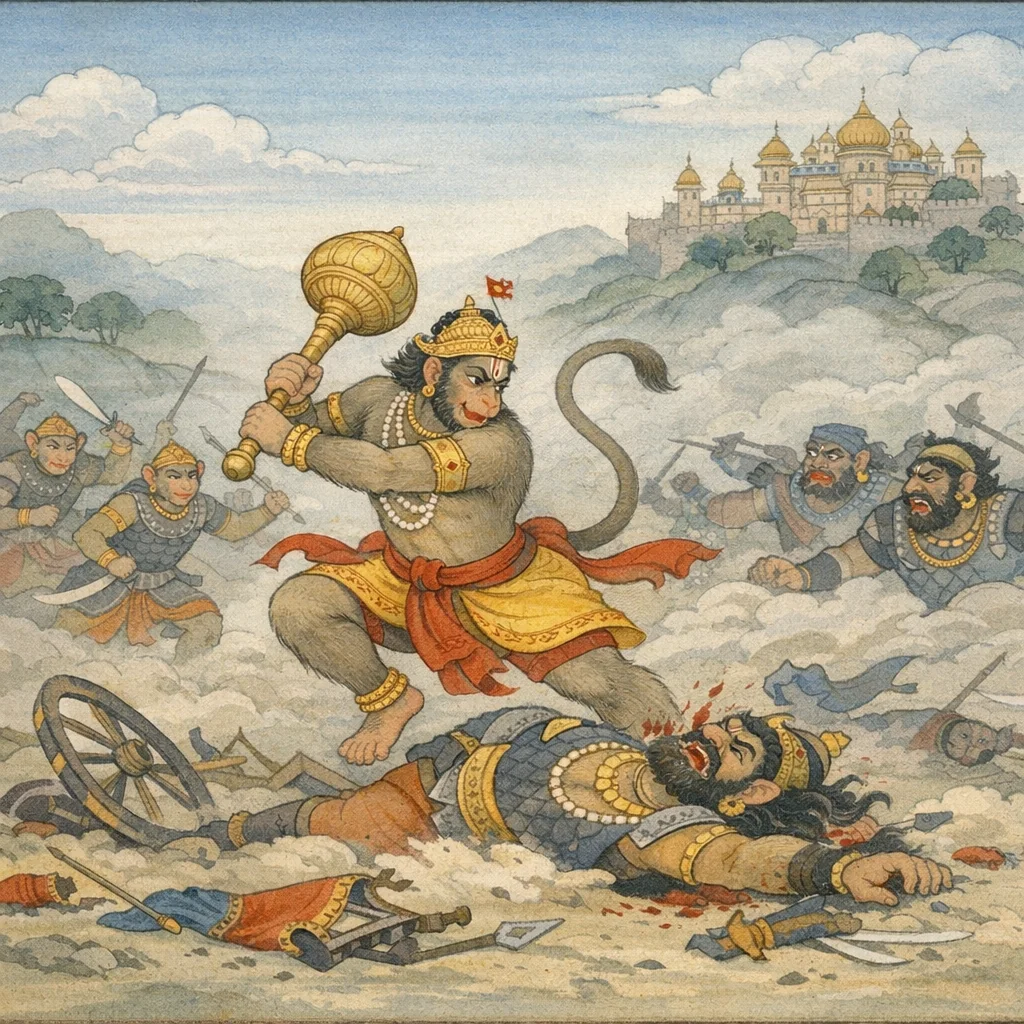
Chapter Arc: लंकायुद्ध की धधकती भूमि पर धूम्राक्ष और प्रहस्त जैसे राक्षस-वीरों के वध का समाचार रावण तक पहुँचता है; विजय-उन्माद नहीं, बल्कि अपमान और शोक से उसका अंतःपुर काँप उठता है। → रावण समझता है कि राम केवल सीता-हरण का प्रतिशोध नहीं, बल्कि समुद्र पर सेतु बाँधकर लंका के अभेद्य गर्व को तोड़ने आया है। वह सभा में स्वीकार करता है कि उसके प्रमुख स्वजन मारे जा चुके हैं और अब साधारण सेनापति नहीं, कोई ‘अपराजेय’ बल चाहिए। इसी दबाव में वह कुम्भकर्ण को जगाने और युद्ध में भेजने का निश्चय करता है; साथ ही अन्य राक्षस-वीरों (वज्रवेग, प्रमाथी आदि) को भी साथ लगाने की योजना बनती है। → रणभूमि में भीषण टकराव का वर्णन—राम और रावण की सेनाएँ एक-दूसरे पर टूट पड़ती हैं; लोमहर्षक तुमुल शब्द उठता है। इसी बीच धूम्राक्ष का हनुमान द्वारा घोड़े-रथ-सारथिसहित संहार निर्णायक संकेत बनता है कि वानर-बल अब राक्षस-रणनीति को लगातार काट रहा है। → रावण को स्पष्ट हो जाता है कि वर्तमान क्षति-श्रृंखला को रोकने हेतु उसे कुम्भकर्ण जैसे महाबली को ही अग्रिम पंक्ति में उतारना होगा; आदेश-प्रणाली पुनर्गठित होती है और ‘कुम्भकर्ण-निर्गमन’ की तैयारी आरम्भ होती है। → कुम्भकर्ण को जगाकर जब रण के लिए भेजा जाएगा, तब लंका के पक्ष में युद्ध का पलड़ा क्या फिर से झुकेगा—या यह अंतिम, सबसे भारी दाँव भी धर्म-बल के आगे टूट जाएगा?
Shlokas
Verse 1
#::73:.8 #::3:..7 (0) हि २ 7 षडशीर्त्याधिकद्विशततमो< ध्याय: ५ अप :88 और धूम्राक्षके वधसे दुःखी हुए रावणका कुम जगाना और उसे युद्धमें भेजना मार्कण्डेय उवाच ततः प्रहस्त: सहसा समभ्येत्य विभीषणम् । गदया ताडयामास विनद्य रणकर्कश:,मार्कण्डेयजी कहते हैं-युधिष्ठि!! तदनन्तर युद्धमें निलछ्ठुर पराक्रम दिखानेवाले प्रहस्तने सहसा विभीषणके पास पहुँचकर गर्जना करते हुए उनपर गदासे आघात किया
Mārkaṇḍeya said: Then Prahasta, fierce in the harshness of battle, suddenly rushed up to Vibhīṣaṇa and, roaring aloud, struck him with a mace. The episode underscores how, in war, raw force and intimidation are deployed against even those who stand by conscience—testing steadiness, loyalty, and the resolve to uphold what one believes to be right amid violence.
Verse 2
स तयाभिहतो धीमान् गदया भीमवेगया । नाकम्पत महाबाहुर्हिमवानिव सुस्थिर:,भयानक वेगवाली उस गदासे आहत होकर भी बुद्धिमान् महाबाहु विभीषण विचलित नहीं हुए। वे हिमालयके समान सुस्थिरभावसे खड़े रहे
Struck by the mace, swift with terrifying force, the wise and mighty-armed one did not waver. Like Himavān (the Himalaya), he stood firm and unshaken—an image of steadfast courage and self-mastery in the face of violence.
Verse 3
ततः प्रगृह् विपुलां शतघण्टां विभीषण: । अनुमन्त्रय महाशक्तिं चिक्षेपास्य शिर: प्रति,तत्पश्चात् विभीषणने एक विशाल महाशक्ति हाथमें ली, जिसमें शोभाके लिये सौ घंटियाँ लगी हुई थीं। उसे अभिमन्त्रित करके उन्होंने प्रहस्तके मस्तकपर दे मारा
Mārkaṇḍeya said: Then Vibhīṣaṇa, taking up a huge great spear adorned with a hundred bells, consecrated it with a mantra and hurled it straight at Prahasta’s head. The scene underscores the grim ethics of battle: once combat is joined, skill and resolve are joined to ritual discipline, and violence is directed with deliberate intent rather than reckless rage.
Verse 4
पतन्त्या स तया वेगाद् राक्षसो5शनिवेगया । ह्वतोत्तमाज़ी ददृशे वातरुग्ण इव द्रुम:,विद्युतके समान वेगवाली उस महाशक्तिका वेगपूर्वक आघात होते ही राक्षस प्रहस्तका मस्तक धड़से अलग हो गया और वह आँधीके द्वारा उखाड़े हुए वृक्षकी भाँति धराशायी दिखायी देने लगा
As that great spear, swift as lightning, struck with full force, the rākṣasa Prahasta’s head was severed from his body, and he fell like a tree uprooted by a storm.
Verse 5
त॑ दृष्टवा निहतं संख्ये प्रहस्तं क्षणदाचरम् । अभिद॒द्राव धूम्राक्षो वेगेन महता कपीन्,निशाचर प्रहस्तको युद्धमें मारा गया देख धूम्राक्ष बड़े वेगसे वानरोंकी ओर दौड़ा
Mārkaṇḍeya said: Seeing Prahasta—the night-roaming rākṣasa—slain in the press of battle, Dhūmrākṣa, driven by great speed and fury, rushed straight toward the vānaras. The scene underscores how the fall of a leader ignites retaliatory violence, tightening the cycle of wrath and warfare.
Verse 6
तस्य मेघोपमं सैन्यमापतद् भीमदर्शनम् । दृष्टवैव सहसा दीर्णा रणे वानरपुड्भवा:,मेघोंकी काली घटाके समान भयानक दिखायी देनेवाली उसकी सेनाको आते देख सभी श्रेष्ठ वानर सहसा भयभीत होकर युद्धसे भाग चले
Mārkaṇḍeya said: “Seeing his army—dark and massed like storm-clouds, and terrifying to behold—rushing upon them, the foremost of the monkeys at once broke ranks and fled from the battlefield in sudden fear.”
Verse 7
ततस्तान् सहसा दीर्णान् दृष्टवा वानरपुड्भवान् | निर्ययौ कपिशार्दूलो हनूमान् मारुतात्मज:,उन भयभीत प्रमुख वानरोंको सहसा पलायन करते देख कपिकेसरी मारुतनन्दन हनुमानजी धूम्राक्षका सामना करनेके लिये आगे बढ़े
Mārkaṇḍeya said: “Then, seeing those foremost of the monkeys suddenly scattered and fleeing in disarray, Hanūmān—the tiger among monkeys, son of the Wind-god—came forth to confront Dhūmrākṣa.”
Verse 8
त॑ दृष्टवावस्थितं संख्ये हरय: पवनात्मजम् । महत्या त्वरया राजनू् संन्यवर्तन्त सर्वश:,राजन! पवनकुमारको युद्धके लिये उपस्थित देख सभी वानर सब ओरसे बड़ी उतावलीके साथ लौट आये
Mārkaṇḍeya said: “Seeing the son of the Wind-god standing ready in the battle-line, the monkeys—O king—turned back from every side in great haste, eager to rally around him.”
Verse 9
ततः शब्दो महानासीत् तुमुलो लोमहर्षण: । रामरावणसैन्यानामन्योन्यमभिधावताम्,फिर तो एक-दूसरेपर धावा बोलती हुई श्रीराम तथा रावणकी सेनाओंका अत्यन्त भयंकर रोमाज्चकारी कोलाहल आरम्भ हो गया
Then there arose a great sound—tumultuous and hair-raising—as the armies of Rāma and Rāvaṇa charged against one another.
Verse 10
तस्मिन् प्रवत्ते संग्रामे घोरे रुधिरकर्दमे । धूम्राक्ष; कपिसैन्यं तद् द्रावयामास पत्रिभि:,उस घोर संग्राममें धरतीपर रक्तकी कीच जम गयी थी। इसी समय धूम्राक्ष अपने बाणोंसे उस वानरसेनाको खदेड़ने लगा
When that dreadful battle had begun and the ground had turned into a mire of blood, Dhūmrākṣa, showering arrows, drove the monkey-host into flight.
Verse 11
तं स रक्षोमहामात्रमापतन्तं सपत्नजित् । प्रतिजग्राह हनुमांस्तरसा पवनात्मज:,तब शत्रुविजयी पवननन्दन हनुमानने अपनी ओर आते हुए उस विशालकाय राक्षसको बड़े वेगसे धर दबाया
Mārkaṇḍeya said: As that gigantic rākṣasa officer came rushing in, Hanumān—the son of the Wind, famed as a conqueror of foes—swiftly seized and checked him with overwhelming force.
Verse 12
तयोर्युद्धमभूद् घोरं हरिराक्षसवीरयो: । जिगीषतोर्युधान्योन्यमिन्द्रप्रह्मलादयोरिव,उन दोनों वानर तथा राक्षसवीरोंमें भयंकर युद्ध छिड़ गया। वे इन्द्र और प्रह्नादकी भाँति युद्ध करके एक-दूसरेको जीतना चाहते थे
Mārkaṇḍeya said: A dreadful battle broke out between those two heroes—the monkey and the rākṣasa. Each fought intent on overcoming the other, like Indra and Prahlāda of old.
Verse 13
गदाभि: परिघैश्वैव राक्षसों जध्निवान् कपिम् | कपिश्न जध्निवान् रक्ष: सस्कन्धविटपैट्रुमै:
Mārkaṇḍeya said: The rākṣasa struck down the monkey with maces and iron clubs; and the monkey, in turn, struck down the rākṣasa with trees—trunks still bearing their branches and boughs.
Verse 14
निशाचर धूम्राक्षने गदाओं तथा परिघोंद्वारा कपिवर हनुमानूजीको चोट पहुँचायी और हनुमानजीने उस राक्षसपर तने और डालियोंसहित वृक्षोंसे प्रहार किया ।। ततस्तमतिकोपेन साश्चं सरथसारथिम् । धूम्राक्षमवधीत् क्रुद्धो हनूमान् मारुतात्मज:
Mārkaṇḍeya said: Dhūmrākṣa, the night-roaming rākṣasa, wounded the great Hanumān with maces and iron clubs; and Hanumān struck him with trees, trunks still bearing their branches. Then, in a surge of fierce wrath, Hanumān—son of the Wind—slew Dhūmrākṣa together with his horses, chariot, and charioteer.
Verse 15
तदनन्तर मारुतनन्दन हनुमानजीने अत्यन्त कुपित हो घोड़े, रथ और सारथिसहित धूम्राक्षको मार डाला ।। ततस्तं निहतं दृष्टवा धूम्राक्ष॑ राक्षसोत्तमम् । हरयो जातविस्रम्भा जध्नुरन्ये च सैनिकान्,राक्षसप्रवर धूम्राक्षको मारा गया देख अन्य वानर तथा भालुओंको अपनी शक्तिपर विश्वास हुआ और वे उत्साहपूर्वक राक्षसोंको मारने लगे
Mārkaṇḍeya said: Seeing Dhūmrākṣa—the foremost among the rākṣasas—lying slain, the monkeys, now filled with renewed confidence, surged forward and began striking down the remaining enemy soldiers.
Verse 16
ते वध्यमाना हरिभि्बलिभिर्जितकाशिभि: । राक्षसा भग्नसंकल्पा लड़कामभ्यपतन् भयात्,विजयसे उललसित हुए बलवान् वानर वीरोंकी मार खाकर राक्षस हताश हो गये और भयके मारे लंकाकी ओर भाग चले
Mārkaṇḍeya said: Struck down by the mighty Vānara warriors—whose prowess had already proven victorious—the rākṣasas lost heart and resolve. Overcome by fear, they fled in disorder toward Laṅkā.
Verse 17
तेडभिपत्य पुरं भग्ना हतशेषा निशाचरा: । सर्व राज्ञे यथावृत्तं रावणाय न्यवेदयन्,मरनेसे बचे हुए उन निशाचरोंने भग्नमनोरथ होकर लड्कापुरीमें प्रवेश किया तथा रावणके समीप जाकर युद्धका सब समाचार ज्यों-का-त्यों निवेदन कर दिया
Then the night-roaming rākṣasas—broken in spirit and only a remnant left alive—rushed back into the city. Approaching Rāvaṇa, they reported to the king, exactly as it had occurred, the full account of the battle.
Verse 18
श्रुत्वा तु रावणस्तेभ्य: प्रहस्तं निहतं युधि | धूम्राक्षं च महेष्वासं ससैन्यं वानरषभै:,उनके मुखसे श्रेष्ठ वानर वीरोंद्वारा युद्धमें सेनासहित प्रहस्त तथा महाधनुर्धर धूम्राक्षके मारे जानेका वृत्तान्त सुनकर रावण बड़ी देरतक शोकभरे उच्छवास लेता रहा। फिर वह अपने श्रेष्ठ सिंहासनसे उछलकर खड़ा हो गया और बोला--“अब यह कुम्भकर्णके पराक्रम दिखलानेका समय आ गया है”
Mārkaṇḍeya said: Hearing from them that Prahasta had been slain in battle, and that the great archer Dhūmrākṣa too had been killed along with his troops by the bull-like heroes among the Vānaras, Rāvaṇa remained for a long while heaving sorrowful sighs. Then, springing up from his splendid throne, he declared that the time had now come to display the might of Kumbhakarṇa.
Verse 19
सुदीर्घमिव नि:श्वस्य समुत्पत्य वरासनात् । उवाच कुम्भकर्णस्य कर्मकालोडयमागत:,उनके मुखसे श्रेष्ठ वानर वीरोंद्वारा युद्धमें सेनासहित प्रहस्त तथा महाधनुर्धर धूम्राक्षके मारे जानेका वृत्तान्त सुनकर रावण बड़ी देरतक शोकभरे उच्छवास लेता रहा। फिर वह अपने श्रेष्ठ सिंहासनसे उछलकर खड़ा हो गया और बोला--“अब यह कुम्भकर्णके पराक्रम दिखलानेका समय आ गया है”
Markandeya said: Having heaved a long, grief-laden sigh, he sprang up from his splendid throne and declared, “Now the time has come for Kumbhakarna to act.”
Verse 20
इत्येवमुक्त्वा विविधैर्वादित्रै: सुमहास्वनै: । शयानमतिनिद्रालुं कुम्भकर्णमबोधयत्,ऐसा कहकर रावणने अत्यन्त उच्च स्वरसे बजनेवाले भाँति-भाँतिके बाजे बजवाकर अधिक नींद लेनेवाले सोये हुए कुम्भकर्णको जगाया
Thus having spoken, Rāvaṇa had many kinds of loud-sounding instruments played, and by that great din he roused Kumbhakarṇa, who lay asleep, overwhelmed by excessive slumber.
Verse 21
प्रबोध्य महता चैनं यत्नेनागतसाध्वस: । स्वस्थमासीनमव्यग्रं विनिद्रं राक्षमाधिप:,महान् प्रयत्नद्वारा उसे जगाकर भयभीत हुए राक्षसराज रावणने, जब महाबली कुम्भकर्ण स्वस्थ, शान्त तथा निद्रारहित होकर बैठ गया, तब उससे इस प्रकार कहा --'भैया कुम्भकर्ण! तुम धन्य हो जिसे ऐसी नींद आती है
After rousing him with great effort, the lord of the Rākṣasas—now seized by anxious fear—saw the mighty one seated in composure: healthy, calm, untroubled, and fully awake. Then he addressed him, setting the stage for counsel and action amid looming danger.
Verse 22
ततोअब्रवीद् दशग्रीव: कुम्भकर्ण महाबलम् | धन्यो5सि यस्य ते निद्रा कुम्भकर्णेयमीदृशी,महान् प्रयत्नद्वारा उसे जगाकर भयभीत हुए राक्षसराज रावणने, जब महाबली कुम्भकर्ण स्वस्थ, शान्त तथा निद्रारहित होकर बैठ गया, तब उससे इस प्रकार कहा --'भैया कुम्भकर्ण! तुम धन्य हो जिसे ऐसी नींद आती है
Then Daśagrīva (Rāvaṇa) spoke to the mighty Kumbhakarṇa: “Blessed are you, brother Kumbhakarṇa, for such sleep comes to you.” The remark underscores Rāvaṇa’s agitation and fear in crisis, contrasted with Kumbhakarṇa’s heavy, untroubled slumber—hinting at how negligence and indulgence can dull timely moral and strategic judgment.
Verse 23
य इदं दारुणाकारं न जानीषे महा भयम् । एष तीरत्त्वार्णवं राम: सेतुना हरिभि: सह,“हमलोगोंपर जो यह अत्यन्त दारुण एवं महान् भय उपस्थित हुआ है, इसका तुम्हें पता ही नहीं है। यह राम सेतुद्वारा समुद्रको लाँधघकर हमलोगोंकी अवहेलना करके वानरोंके साथ यहाँ आ पहुँचा है और राक्षसोंका महासंहार कर रहा है। मैंने इसकी पत्नी जनककुमारी सीताका अपहरण किया था
Mārkaṇḍeya said: “You do not yet understand this dreadful and overwhelming peril. Rāma has crossed the ocean by means of a bridge, and—together with the Vānara hosts—has come here, disregarding us, and is carrying out a great destruction of the Rākṣasas.”
Verse 24
अवमन्येह न: सर्वान् करोति कदनं महत् । मया त्वपह्ता भार्या सीता नामास्य जानकी,“हमलोगोंपर जो यह अत्यन्त दारुण एवं महान् भय उपस्थित हुआ है, इसका तुम्हें पता ही नहीं है। यह राम सेतुद्वारा समुद्रको लाँधघकर हमलोगोंकी अवहेलना करके वानरोंके साथ यहाँ आ पहुँचा है और राक्षसोंका महासंहार कर रहा है। मैंने इसकी पत्नी जनककुमारी सीताका अपहरण किया था
Mārkaṇḍeya said: “He is disregarding all of us here and is causing immense destruction. Indeed, it was I who abducted his wife—Jānakī, named Sītā.”
Verse 25
तां नेतुं स इहायातो बद्ध्वा सेतुं महार्णवे । तेन चैव प्रहस्तादिर्महान् न: स्वजनो हत:,“उसे वापस लेनेके लिये ही राम महासागरपर पुल बाँधकर यहाँ आया है। उसने हमारे प्रहस्त आदि प्रमुख स्वजनोंको मार डाला है
“He has come here precisely to take her back, after building a bridge across the great ocean. And by him, our great kinsmen—beginning with Prahasta—have been slain.”
Verse 26
तस्य नान्यो निहन्तास्ति त्वामृते शत्रुकर्शन । स दंशितो$भिनिर्याय त्वमद्य बलिनां वर
Mārkaṇḍeya said: “For him there is no other slayer except you, O crusher of foes. Now, having been stung, he is coming forth in fury—today you, best among the strong, must face him.”
Verse 27
दूषणावरजौ चैव वज्रवेगप्रमाथिनौ
Mārkaṇḍeya said: “And also the two younger brothers of Dūṣaṇa—Vajravega and Pramāthin—appeared.”
Verse 28
इत्युक्त्वा राक्षसपति: कुम्भकर्ण तरस्विनम् | संदिदेशेतिकर्तव्यं वज्रवेगप्रमाथिनौ,वेगशाली वीर कुम्भकर्णसे ऐसा कहकर राक्षसराज रावणने वज्रवेग और प्रमाथीको, युद्धमें क्या-क्या करना है, इन सब बातोंको समझाया और उनके पालनका आदेश दिया
Mārkaṇḍeya said: “Having spoken thus, the lord of the Rākṣasas instructed the mighty Kumbhakarṇa. He then issued detailed orders to Vajravega and Pramāthinī, laying out what was to be done in the coming battle and directing them to carry out those commands.”
Verse 29
तथेत्युक्त्वा तु तौ वीरौ रावणं दूषणानुजौ । कुम्भकर्ण पुरस्कृत्य तूर्ण निर्ययतु: पुरात्,दूषणके वे दोनों वीर भाई रावणसे “तथास्तु” कहकर कुम्भकर्णको आगे करके तुरंत नगरसे बाहर निकले
Mārkaṇḍeya said: “Having replied ‘So be it’ to Rāvaṇa, the two heroic brothers—the younger brothers of Dūṣaṇa—set out at once from the city, placing Kumbhakarṇa at their head.”
Verse 263
रामादीन् समरे सर्वाज्चहि शत्रूनरिंदम । 'शत्रुसूदन! तुम्हारे सिवा दूसरा कोई ऐसा नहीं है, जो उसको मार सके। बलवानोंमें श्रेष्ठ वीर! तुम शत्रुओंका दमन करनेवाले हो। आज कवच धारण करके निकलो तथा राम आदि समस्त शत्रुओंका समरभूमिमें संहार कर डालो
Mārkaṇḍeya said: “O subduer of foes, slay all the enemies in battle—Rāma and the rest. O destroyer of enemies, none but you can strike him down. Best among the mighty, heroic one, you are the tamer of adversaries. Therefore, put on your armor today, march forth, and on the field of war bring about the destruction of Rāma and all the hostile forces.”
Verse 273
तौ त्वां बलेन महता सहितावनुयास्यत: । “दूषणके छोटे भाई वज्रवेग और प्रमाथी अपनी विशाल सेनाके साथ तुम्हारा अनुसरण करेंगे!
Mārkaṇḍeya said: “Those two, accompanied by a great force, will pursue you.”
Verse 286
इति श्रीमहाभारते वनपर्वणि रामोपाख्यानपर्वणि कुम्भकर्णनिर्गमने षडशीत्यधिकद्धिशततमो<ध्याय:
Thus, in the Śrī Mahābhārata, within the Vana Parva, in the sub-narrative called the Rāmopākhyāna, in the episode of Kumbhakarṇa’s coming forth, ends the two-hundred-and-eighty-sixth chapter.
Frequently Asked Questions
How a royal household should prevent offense toward a powerful guest while preserving dignity and order: the text resolves this through disciplined service, humility, and time-independent restraint.
Ethical reliability is demonstrated through regulated conduct (niyama), non-reactivity (akrodha), and consistent hospitality; social authority is portrayed as bounded by moral obligations toward guests and learned persons.
No explicit phalaśruti is stated; the meta-lesson is conveyed narratively by linking proper hospitality to welfare and improper conduct to adverse consequences, reinforced by precedent and the king’s formal provisioning.