Adhyaya 170
हिरण्यपुरवर्णन–रौद्रास्त्रप्रयोगः (Hiraṇyapura Described and the Deployment of the Raudra Weapon)
Upa-parva: Arjuna–Mātali Dialogue and the Fall of Hiraṇyapura (Hiraṇyapura-saṃgrāma episode)
Arjuna narrates to a royal listener that, while returning, he saw a radiant, wish-moving, heavily fortified aerial city resembling Amarāvatī, ornamented with jewel-trees and guarded by luminous beings. On questioning Mātali, he learns the city is Hiraṇyapura, inhabited by Paulomas and Kālakeyas whose mothers Pulomā and Kālakā performed prolonged austerities and received boons from Svayambhū: their offspring would be difficult to afflict and not readily vulnerable to gods, rākṣasas, or serpents, with ‘human agency’ indicated as their appointed end. Arjuna resolves to proceed and engages the defenders in a large-scale chariot conflict marked by dense missile exchanges and the city’s evasive mobility (rising, sinking, moving laterally, and submerging). After conventional weapons fail to fully suppress the opposing formations, Arjuna invokes Rudra and employs the fearsome, ancient Raudra weapon. A multi-formed apparition manifests—countless animal, spectral, and hybrid shapes—filling the field and rapidly overwhelming the assembled dānavas. The city is broken and falls; lamentation follows among the inhabitants. Mātali praises Arjuna’s accomplishment as beyond what even the gods could easily perform, then escorts him to Indra’s residence, where the deed is reported and commended as strategically decisive.
Chapter Arc: अर्जुन इन्द्रलोक-यात्रा के क्रम में एक अद्भुत, रहस्यमय समुद्र-प्रदेश का वर्णन करता है—जहाँ फेनवती तरंगें पर्वतों-सी उछलती हैं और रत्नों से भरी सहस्रों नौकाएँ आकाश के विमानों-सी चमकती फिरती हैं। → इस अलौकिक वैभव के बीच भय का संकेत उभरता है: निवातकवच दानवों के नगर में आतंक फैलता है, वे द्वार बंद कर रक्षा-व्यवस्था कसते हैं। वातावरण में ‘अदृश्य शत्रु’ की आशंका और ‘आगामी युद्ध’ की गंध घुल जाती है। → शंखनाद का महाशब्द—जो स्वर्ग से टकराकर प्रतिध्वनि रचता है—सृष्टि के स्थूल-स्थावर तक को कंपा देता है; उसी क्षण निवातकवच दानव पूर्ण अलंकरण, विविध कवचों और विचित्र आयुधों सहित युद्ध के लिए निकल पड़ते हैं। → देवर्षि, महर्षि, ब्रह्मर्षि और सिद्धगण अर्जुन की विजय-कामना से स्तुति करते हैं—यह अध्याय युद्ध के ‘आरम्भ’ को विधिवत स्थापित करता है: दानवों की तैयारी, देवपक्ष का समर्थन, और अर्जुन का ध्येय स्पष्ट। → निवातकवचों की सुसज्जित सेना सामने है—अब वास्तविक टकराव और अस्त्र-प्रयोग का निर्णायक अध्याय आरम्भ होने को है।
Shlokas
Verse 1
हि >> मो न () हि 7 आम ३. निर्दोष प्राणीका वध हो जाय, तो उसे पुन: संजीवित करनेकी विद्याको प्रायश्ित्त कहते हैं। २. शत्रुके अस्त्रसे पराभवको प्राप्त हुए अपने अस्त्रको पुन: शक्तिशाली बनाना प्रतिघात कहलाता है। एकोनसप्तत्याधिकशततमो< ध्याय: अर्जुनका पातालमें प्रवेश और निवातकवचोंके साथ युद्धारम्भ अजुन उवाच ततोऊहं स्तूयमानस्तु तत्र तत्र महर्षिभि: । अपश्यमुदर्धि भीममपां पतिमथाव्ययम्,अर्जुन बोले--राजन्! तदनन्तर मार्गमें जहाँ-तहाँ महर्षियोंके मुखसे अपनी स्तुति सुनते हुए मैंने जलके स्वामी समुद्रके पास पहुँचकर उसका निरीक्षण किया। वह देखनेमें अत्यन्त भयंकर था। उसका पानी कभी घटता-बढ़ता नहीं है। उसमें फेनसे मिली हुई पहाड़ोंके समान ऊँची-ऊँची लहरें उठकर नृत्य करती-सी दिखायी दे रही थीं। वे कभी इधर-उधर फैल जाती और कभी आपसमें टकरा जाती थीं
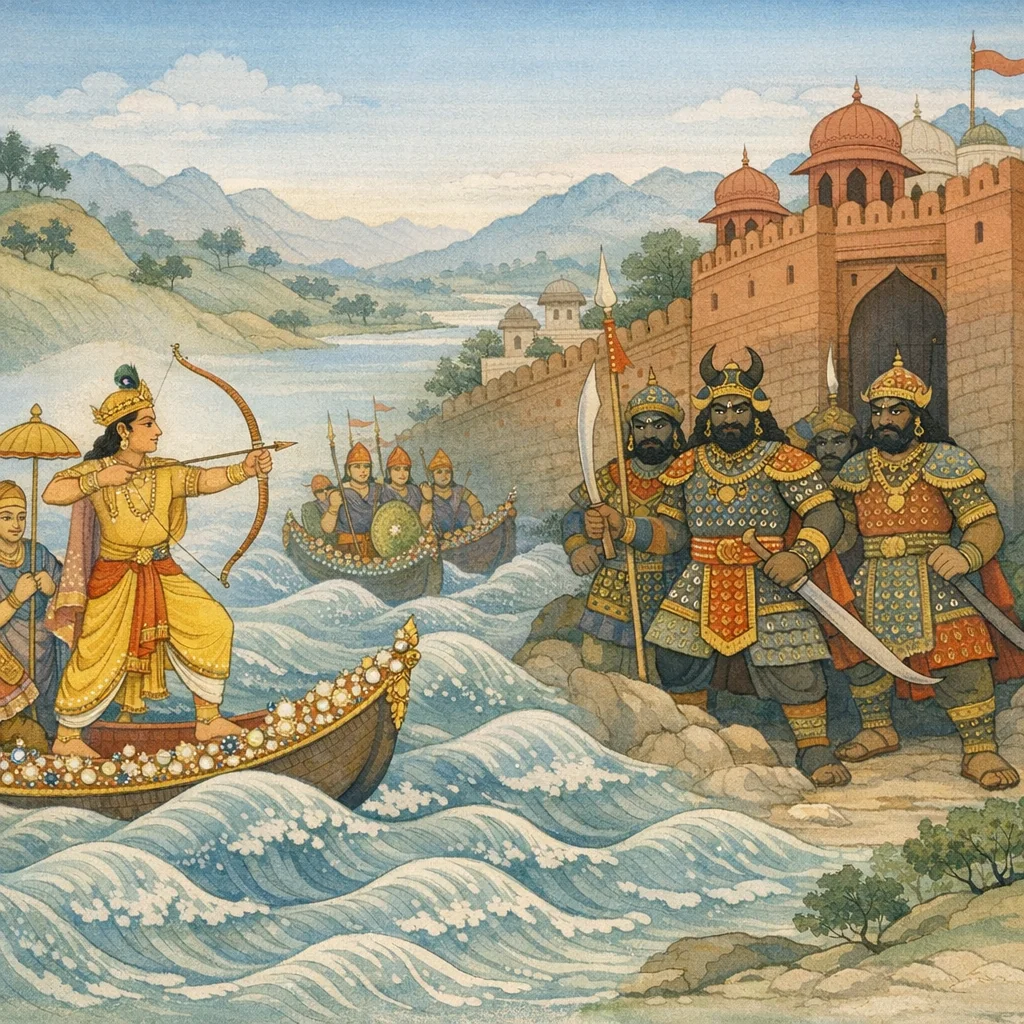
Arjuna said: “O King, then, as I proceeded on my way—praised here and there by great seers—I beheld the mighty ocean, lord of the waters, inexhaustible and unchanging. I drew near and observed its awe-inspiring expanse.”
Verse 2
फेनवत्य: प्रकीर्णाश्व संहताश्न समुत्थिता: । ऊर्मयश्नात्र दृश्यन्ते वल्गन्त इव पर्वता:,अर्जुन बोले--राजन्! तदनन्तर मार्गमें जहाँ-तहाँ महर्षियोंके मुखसे अपनी स्तुति सुनते हुए मैंने जलके स्वामी समुद्रके पास पहुँचकर उसका निरीक्षण किया। वह देखनेमें अत्यन्त भयंकर था। उसका पानी कभी घटता-बढ़ता नहीं है। उसमें फेनसे मिली हुई पहाड़ोंके समान ऊँची-ऊँची लहरें उठकर नृत्य करती-सी दिखायी दे रही थीं। वे कभी इधर-उधर फैल जाती और कभी आपसमें टकरा जाती थीं
Arjuna said: “O King, thereafter, as I proceeded along the way—hearing my praises spoken here and there by the great seers—I reached the ocean, lord of waters, and surveyed it. It appeared exceedingly formidable. Its waters did not seem to ebb or swell; and there, foam-crested waves rose up, scattering and then surging together, visible like mountains leaping in motion.”
Verse 3
नाव: सहस््रशस्तत्र रत्नपूर्णा: समन्ततः । नभसीव विमानानि विचरन्त्यो विरेजिरे । तिमिड्लिला: कच्छपाक्ष तथा तिमितिमिड्लिला:,वहाँ सब ओर रत्नोंसे भरी हुई हजारों नावें चल रही थीं, जो आकाशगमें विचरते हुए विमानोंकी-सी शोभा पाती थीं तथा तिमिंगिलः, तिमितिमिंगिलठे, कछुए और मगर पानीमें डूबे हुए पर्वतोंके समान दृष्टिगोचर होते थे। सहस्नों शंख सब ओर जलमें निमग्न थे
Arjuna said: “There, on every side, thousands of boats filled with jewels were moving about, shining like aerial chariots roaming in the sky. And there were timiṅgila sea-monsters, turtles, and even the mighty timitimiṅgila creatures—appearing like submerged mountains within the waters.”
Verse 4
मकराश्नात्र दृश्यन्ते जले मग्ना इवाद्रय: । शड्खानां च सहस््राणि मग्नान्यप्सु समन््तत:,वहाँ सब ओर रत्नोंसे भरी हुई हजारों नावें चल रही थीं, जो आकाशगमें विचरते हुए विमानोंकी-सी शोभा पाती थीं तथा तिमिंगिलः, तिमितिमिंगिलठे, कछुए और मगर पानीमें डूबे हुए पर्वतोंके समान दृष्टिगोचर होते थे। सहस्नों शंख सब ओर जलमें निमग्न थे
Arjuna said: “Here, crocodiles are seen, submerged in the water like mountains. And thousands of conch-shells lie sunk in the waters on every side.”
Verse 5
दृश्यन्ते सम यथा रात्रौ तारास्तन्वभ्रसंवृता: । तथा सहस्रशस्तत्र रत्नसड्घा: प्लवन्त्युत,जैसे रातमें झीने बादलोंके आवरणसे सहस्रों तारे चमकते दिखायी देते हैं, उसी प्रकार समुद्रके जलमें स्थित हजारों रत्नसमूह तैरते हुए-से प्रतीत हो रहे थे
Arjuna said: “Just as, at night, stars are seen shining through a thin veil of clouds, so too, in that place, countless clusters of gems in the ocean’s waters appeared as though they were floating.”
Verse 6
वायुश्व घूर्णते भीमस्तदद्भुतमिवाभवत् | तमुदीक्ष्य महावेगं सर्वाम्भोनिधिमुत्तमम्,औरोंकी तो बात ही क्या है, वहाँ भयानक वायु भी पथ-भ्रान्तकी भाँति भटकने लगती है। वायुका वह चक्कर काटना अद्धुत-सा प्रतीत हो रहा था। इस प्रकार अत्यन्त वेगशाली जलराशि महासागरको देखकर उसके पास ही मैंने दानवोंसे भरा हुआ वह दैत्यनगर भी देखा। रथ-संचालनमें कुशल सारथि मातलि तुरंत वहाँ पहुँचकर पातालमें उतरे तथा रथपर सावधानीसे बैठकर आगे बढ़े। उन्होंने रथकी घर्घराहटसे सबको भयभीत करते हुए उस दैत्यपुरकी ओर धावा किया
Arjuna said: “Even the wind, fierce and whirling, seemed to lose its course there—an astonishing sight. Beholding that supreme ocean, whose waters rushed with tremendous force, I also saw nearby that city of the Daityas, crowded with Dānavas. Then Mātali, the expert charioteer, quickly reached the place and descended toward the nether regions; seated carefully upon the chariot, he drove onward, and with the chariot’s thunderous rumble striking fear into all, he charged toward that demon-city.”
Verse 7
अपश्यं दानवाकीर्ण तद् दैत्यपुरमन्तिकात् । तत्रैव मातलिस्तूर्ण निपत्य पृथिवीतले,औरोंकी तो बात ही क्या है, वहाँ भयानक वायु भी पथ-भ्रान्तकी भाँति भटकने लगती है। वायुका वह चक्कर काटना अद्धुत-सा प्रतीत हो रहा था। इस प्रकार अत्यन्त वेगशाली जलराशि महासागरको देखकर उसके पास ही मैंने दानवोंसे भरा हुआ वह दैत्यनगर भी देखा। रथ-संचालनमें कुशल सारथि मातलि तुरंत वहाँ पहुँचकर पातालमें उतरे तथा रथपर सावधानीसे बैठकर आगे बढ़े। उन्होंने रथकी घर्घराहटसे सबको भयभीत करते हुए उस दैत्यपुरकी ओर धावा किया
Arjuna said: “From nearby I beheld that city of the Daityas, crowded with Dānavas. Thereupon Mātali, acting swiftly, descended at once to the surface of the earth, and—steady in his charioteer’s craft—pressed onward toward the demon-city.”
Verse 8
रथं तं तु समाश्शलिष्यः प्राद्रवद् रथयोगवित् | त्रासयन् रथघोषेण तत् पुरं समुपाद्रवत्,औरोंकी तो बात ही क्या है, वहाँ भयानक वायु भी पथ-भ्रान्तकी भाँति भटकने लगती है। वायुका वह चक्कर काटना अद्धुत-सा प्रतीत हो रहा था। इस प्रकार अत्यन्त वेगशाली जलराशि महासागरको देखकर उसके पास ही मैंने दानवोंसे भरा हुआ वह दैत्यनगर भी देखा। रथ-संचालनमें कुशल सारथि मातलि तुरंत वहाँ पहुँचकर पातालमें उतरे तथा रथपर सावधानीसे बैठकर आगे बढ़े। उन्होंने रथकी घर्घराहटसे सबको भयभीत करते हुए उस दैत्यपुरकी ओर धावा किया
Clasping hold of that chariot, the expert in chariot-driving surged forward. With the thunder of the chariot’s rumble he struck terror, and he charged straight toward that city.
Verse 9
रथघोष॑ तु त॑ श्रुत्वा स्तनयित्नोरिवाम्बरे | मन्वाना देवराजं मामाविग्ना दानवाभवन्,आकाशमें होनेवाली मेघ-गर्जनाके समान उस रथका शब्द सुनकर दानवलोग मुझे देवराज इन्द्र समझकर भयसे अत्यन्त व्याकुल हो उठे
Hearing that roar of the chariot—like the thunder of storm-clouds in the sky—the Dānavas, taking me to be Indra, the king of the gods, were seized with fear and became greatly agitated.
Verse 10
सर्वे सम्भ्रान्तमनस: शरचापधरा: स्थिता: । तथासिशूलपरशुगदामुसलपाणय:,सभी मन-ही-मन घबरा गये। सभी अपने हाथोंमें धनुष-बाण, तलवार, शूल, फरसा, गदा और मुसल आदि अस्त्र-शस्त्र लेकर खड़े हो गये
Arjuna said: “All of them, their minds thrown into alarm, stood ready—bearing bows and arrows. Likewise, with swords, spears, axes, maces, and clubs in their hands, they took their positions.”
Verse 11
ततो द्वाराणि पिदधुर्दानवास्त्रस्तचेतस: । संविधाय पुरे रक्षां न सम कश्नन दृश्यते,दानवोंके मनमें आतंक छा गया था। इसलिये उन्होंने नगरकी रक्षाका प्रबन्ध करके सारे दरवाजे बंद कर लिये। नगरके बाहर कोई भी दिखायी नहीं देता था
Then the Dānavas, their minds shaken with fear, shut the gates. Having arranged the city’s defenses, they kept watch so tightly that no one at all was seen outside.
Verse 12
तत: शड्खमुपादाय देवदत्तं महास्वनम् | परमां मुदमाश्रित्य प्राधमं तं शनैरहम्,तब मैंने बड़ी भयंकर ध्वनि करनेवाले देवदत्त नामक शंखको हाथमें लेकर अत्यन्त प्रसन्न हो धीरे-धीरे उसे बजाया
Then, taking up the conch named Devadatta, whose sound was mighty and awe-inspiring, I—filled with supreme joy—blew it slowly, letting its first reverberation rise as a deliberate signal of resolve and righteous readiness.
Verse 13
स तु शब्दो दिवं स्तब्ध्वा प्रतिशब्दमजीजनत् | वित्रेसुश्न निलिल्युश्व भूतानि सुमहान्त्यपि,वह शंखनाद स्वर्गलोकसे टकराकर प्रतिध्वनि उत्पन्न करने लगा। उसकी आवाज सुनकर बड़े-बड़े प्राणी भी भयभीत हो इधर-उधर छिप गये
That sound, as though arresting the very heavens, generated a resounding echo. Hearing it, even mighty beings were struck with fear and hid themselves here and there.
Verse 14
ततो निवातकवचा: सर्व एव स्वलंकृता: । दंशिता विविधैस्त्राणैविचित्रायुधपाणय:,भारत! तदनन्तर निवातकवचनामक सभी दैत्य आभूषणोंसे विभूषित हो भाँति- भाँतिके कवच धारण किये, हाथोंमें विचित्र आयुध लिये, लोहेके बने हुए बड़े-बड़े शूल, गदा, मुसल, पट्टिश, करवाल, रथ-चक्र, शतघ्नी (तोप), भुशुण्डि (बंदूक) तथा रत्नजटित विचित्र खड़ग आदि लेकर सहस्रोंकी संख्यामें नगरसे बाहर आये
Arjuna said: “Then all the Nivātakavaca demons, fully adorned, having strapped on varied armours and bearing diverse weapons in their hands, came forth.”
Verse 15
आयसैश्व महाशूलैर्गदाभिमुसलैरपि । पट्टिशै: करवालैश्व रथचक्रैश्न भारत,भारत! तदनन्तर निवातकवचनामक सभी दैत्य आभूषणोंसे विभूषित हो भाँति- भाँतिके कवच धारण किये, हाथोंमें विचित्र आयुध लिये, लोहेके बने हुए बड़े-बड़े शूल, गदा, मुसल, पट्टिश, करवाल, रथ-चक्र, शतघ्नी (तोप), भुशुण्डि (बंदूक) तथा रत्नजटित विचित्र खड़ग आदि लेकर सहस्रोंकी संख्यामें नगरसे बाहर आये
Arjuna said: “O Bhārata, they came forth bearing iron great spears, maces and clubs as well; with battle-axes and swords, and even chariot-wheels.”
Verse 16
शतघ्नीभिर्भुशुण्डीमि: खड्गैश्षित्रै: स्वलंकृतै: । प्रगृहीतैर्दिते: पुत्रा: प्रादुरासन् सहस्रशः:,भारत! तदनन्तर निवातकवचनामक सभी दैत्य आभूषणोंसे विभूषित हो भाँति- भाँतिके कवच धारण किये, हाथोंमें विचित्र आयुध लिये, लोहेके बने हुए बड़े-बड़े शूल, गदा, मुसल, पट्टिश, करवाल, रथ-चक्र, शतघ्नी (तोप), भुशुण्डि (बंदूक) तथा रत्नजटित विचित्र खड़ग आदि लेकर सहस्रोंकी संख्यामें नगरसे बाहर आये
Arjuna said: “O Bhārata, thereafter the sons of Diti appeared in their thousands, holding in their hands śataghnīs, bhuśuṇḍīs, and brilliantly ornamented, variegated swords—fully armed and ready for battle.”
Verse 17
ततो विचार्य बहुशो रथमार्गेषु तान् हयान् । प्राचोदयत् समे देशो मातलिभर्भरतर्षभ
Then, after repeatedly considering the proper course along the chariot-tracks, Mātali urged those horses forward across the level ground—O bull among the Bharatas.
Verse 18
तेन तेषां प्रणुन्नानामाशुत्वाच्छीघ्रगामिनाम् । नान्वपश्यं तदा किंचित् तन्मे5द्भुतमिवा भवत्
Arjuna said: “Because they were thus driven onward, and because of their swiftness as they sped rapidly, at that time I could not perceive anything at all. That struck me as something wondrous.”
Verse 19
भरतश्रेष्ठ] उस समय मातलिने बहुत सोच-विचारकर समतल प्रदेशमें रथ जानेयोग्य मार्गोपर अपने उन घोड़ोंको हाँका। उसके हाँकनेपर उन शीघ्रगामी अश्वोंकी चाल इतनी तेज हो गयी कि मुझे उस समय कुछ भी दिखायी नहीं देता था। यह एक अद्भुत बात थी ।। ततस्ते दानवास्तत्र वादित्राणि सहस्रश: | विकृतस्वररूपाणि भृशं सर्वाण्यनादयन्,तदनन्तर उन दानवोंने वहाँ भीषण स्वर और विकराल आकृतिवाले विभिन्न प्रकारके सहस्रों बाजे जोर-जोरसे बजाने आरम्भ किये
Then those Dānavas, right there, began to sound—loudly and in great profusion—thousands of instruments whose tones were distorted and terrifying. The sudden, harsh uproar signaled an atmosphere of menace and intimidation, where noise itself became a weapon meant to unsettle the righteous and cloud clear judgment.
Verse 20
तेन शब्देन सहसा समुद्रे पर्वतोपमा: । आप्लवन्त गतै: सच्त्वैर्मत्स्या:शतसहस्रश:,वाद्योंकी उस तुमुल-ध्वनिसे सहसा समुद्रके लाखों बड़े-बड़े पर्वताकार मत्स्य मर गये और उनकी लाशें पानीके ऊपर तैरने लगीं
Arjuna said: “At that sound, suddenly, in the sea, hundreds of thousands of fish—huge like mountains—lost their life-breath; and their bodies rose and floated upon the waters.” The verse underscores how a single violent disturbance can bring indiscriminate destruction upon innocent creatures, hinting at the ethical weight of power and noise when unleashed without restraint.
Verse 21
ततो वेगेन महता दानवा मामुपाद्रवन् । विमुज्चन्त: शितान् बाणान् शतशो5थ सहस्रश:,तत्पश्चात् उन सब दानवोंने सैकड़ों और हजारों तीखे बाणोंकी वर्षा करते हुए बड़े वेगसे मुझपर आक्रमण किया
Then, with tremendous speed, the Dānavas surged against me, assailing me by releasing sharp arrows—by the hundreds and even by the thousands. The scene underscores how a warrior is tested not only by force but by steadiness of mind and resolve when faced with overwhelming, collective aggression.
Verse 22
स सम्प्रहारस्तुमुलस्तेषां च मम भारत | अवर्तत महाघोरो निवातकवचान्तक:ः,भारत! तब उन दानवोंका और मेरा महाभयंकर तुमुल संग्राम आरम्भ हो गया, जो निवातकवचोंके लिये विनाशकारी सिद्ध हुआ
Arjuna said: O Bhārata, then a fierce and tumultuous clash arose between those Dānavas and me—a battle of dreadful intensity, which proved to be the destroyer of the Nivātakavacas. In this moment the narrative underscores the warrior’s duty to confront adharma without hesitation, and the inevitability that violent arrogance meets its end when opposed by steadfast resolve and rightful purpose.
Verse 23
ततो देवर्षयश्नैव तथान्ये च महर्षय: । ब्रद्मर्षयश्न सिद्धाश्न समाजम्मुर्महामृथे,उस समय बहुत-से देवर्षि तथा अन्य महर्षि एवं ब्रह्मर्षि और सिद्धगण उस महायुद्धमें (देखनेके लिये) आये। वे सब-के-सब मेरी विजय चाहते थे। अतः उन्होंने जैसे तारकामय संग्रामके अवसरपर इन्द्रकी स्तुति की थी, उसी प्रकार अनुकूल एवं मधुर वचनोंद्वारा मेरा भी स्तवन किया
Then many divine seers, along with other great sages—Brahmarṣis and Siddhas as well—assembled at that great battle to witness it. All of them desired my victory; and just as they once praised Indra at the time of the starry (Tārakāmayā) war, so too they lauded me with favorable and sweet words, strengthening my resolve and affirming the righteousness of my cause.
Verse 24
ते वै मामनुरूपाभिर्मधुराभिर्जयैषिण: । अस्तुवन् मुनयो वाम्भियथ्थेन्द्रे तारकामये,उस समय बहुत-से देवर्षि तथा अन्य महर्षि एवं ब्रह्मर्षि और सिद्धगण उस महायुद्धमें (देखनेके लिये) आये। वे सब-के-सब मेरी विजय चाहते थे। अतः उन्होंने जैसे तारकामय संग्रामके अवसरपर इन्द्रकी स्तुति की थी, उसी प्रकार अनुकूल एवं मधुर वचनोंद्वारा मेरा भी स्तवन किया
Arjuna said: “Indeed, sages who longed for my victory praised me with fitting and sweet words—just as, during the Tārakāmaya war, they had once extolled Indra. In that great conflict, many divine seers and other great ṛṣis, brahmarṣis, and siddhas had come to witness the battle; all of them desired my triumph, and therefore they offered me laudatory speech.”
Verse 168
इस प्रकार श्रीमह्याभारत वनपर्वके अन्तर्गत अर्जुनवाक्यविषयक एक सौ अड़सठवाँ अध्याय पूरा हुआ
Thus ends the one hundred and sixty-eighth chapter of the Vana Parva of the Śrī Mahābhārata, a chapter centered on Arjuna’s words.
Verse 169
इति श्रीमहा भारते वनपर्वणि निवातकवचयुद्धपर्वणि युद्धारम्भे एकोनसप्तत्यधिकशततमो< ध्याय:,इस प्रकार श्रीमह्ाभारत वनपर्वके अन्तर्गत निवातकवचयुद्धपर्वमें युद्धारम्भविषयक एक सौ उनहत्तरवाँ अध्याय पूरा हुआ
Thus ends, in the revered Mahābhārata, within the Vana Parva, in the section concerning the battle with the Nivātakavacas, the one-hundred-and-sixty-ninth chapter describing the commencement of the war.
Frequently Asked Questions
The tension lies in acting against boon-protected opponents: Arjuna must decide whether decisive force is justified when ordinary agents are constrained by the boon’s protections, and whether escalation to a supreme weapon is proportionate to the threat posed.
Power is portrayed as legitimate when disciplined by procedure: the text emphasizes informed assessment, staged application of means, and invocation aligned with recognized authority (Rudra) when confronting exceptional, rule-protected dangers.
A formal phalaśruti is not presented in these verses; instead, meta-evaluation appears as testimonial validation—Mātali’s praise and Indra’s commendation—functioning as narrative certification of the act’s exceptional status within the epic’s moral and strategic economy.