Adhyaya 87
अध्याय ८७: कृष्णस्य हस्तिनापुरप्रवेशः (Krishna’s Entry into Hastināpura and Court Reception)
Upa-parva: Kṛṣṇāgamana (Hastināpura-praveśa) Episode
Vaiśaṃpāyana narrates Kṛṣṇa’s morning rites and departure toward the city after receiving brahminical leave. As he approaches Hastināpura, the Dhārtarāṣṭra elders—Bhīṣma, Droṇa, Kṛpa, and others—come out adorned to receive him, with Duryodhana conspicuously absent. The populace gathers in great numbers, crowding the royal road; houses appear filled with onlookers, and even Kṛṣṇa’s swift horses are slowed by the dense reception. Kṛṣṇa enters Dhṛtarāṣṭra’s palace, passes through successive inner enclosures, and is formally greeted by the king, who rises with Bhīṣma and Droṇa; other nobles also stand in honor. Kṛṣṇa offers appropriate salutations in age-graded order, is seated on a golden throne by royal command, and receives customary guest-offerings (madhuparka, water) from the king’s priests. After completing hospitality and formalities, Kṛṣṇa takes leave and proceeds, with due protocol, to Vidura’s residence, where Vidura honors him and inquires about the welfare and activities of the Pāṇḍavas; Kṛṣṇa reports their circumstances in detail.
Chapter Arc: कौरव-सभा में दुर्योधन श्रीकृष्ण के विषय में अपनी नीति-भरी पर भीतर से कपटपूर्ण धारणा प्रकट करता है—उन्हें सत्कार-धन देकर ‘वश’ करने की कल्पना और साथ ही उनके प्रभाव से भय। → सभा में यह तर्क उभरता है कि केशव न तो उपहारों से खरीदे जा सकते हैं, न अवमान से विचलित; वे त्रैलोक्य-पूज्य हैं और जो संकल्प कर लें, उसे कोई उपाय बदल नहीं सकता। दुर्योधन की कुमन्त्रणा और हठ के सामने यह सत्य और तीखा हो उठता है। → भीष्म पितामह दुर्योधन को ‘धर्मत्यागी, नृशंस, दुर्मति’ कहकर उसकी अनर्थयुक्त वाणी सुनने से इंकार करते हैं और क्रोध से भरकर सभा से उठ खड़े होते हैं। → भीष्म का उठकर चले जाना सभा पर नैतिक धिक्कार की मुहर लगा देता है—कौरव-पक्ष के भीतर ही धर्म-समर्थन और अधर्म-हठ का विभाजन स्पष्ट हो जाता है। → भीष्म के प्रस्थान के बाद दुर्योधन की हठधर्मिता के सामने अब कौन टिकेगा, और श्रीकृष्ण के आगामी वचन-प्रयास को कौरव-सभा कैसे झेलेगी—यह तनाव अगले प्रसंग में खिंचता है।
Shlokas
Verse 1
ऑपन-आ का बछ। आर: 2 अष्टाशीतितमो<् ध्याय: दुर्योधनका श्रीकृष्णके विषयमें अपने विचार कहना एवं उसकी कुमन्त्रणासे कुपित हो भीष्मजीका सभासे उठ जाना दुर्योधन उवाच यदाह विदुर: कृष्णे सर्व तत् सत्यमच्युते । अनुरक्तो हासंहार्य: पार्थान् प्रति जनार्दन:,दुर्योधन बोला--पिताजी! अपनी मर्यादासे कभी च्युत न होनेवाले श्रीकृष्णके सम्बन्धमें विदुरजी जो कुछ कहते हैं, वह सब कुछ ठीक है। जनार्दन श्रीकृष्णका कुन्तीके पुत्रोंके प्रति अटूट अनुराग है; अतः उन्हें उनकी ओरसे फोड़ा नहीं जा सकता
Duryodhana said: “Father, whatever Vidura has said about Kṛṣṇa is entirely true—about Acyuta, who never falls from propriety. Janārdana’s affection for the sons of Pṛthā is steadfast and unbreakable; therefore he cannot be detached from their side.”
Verse 2
यत् तत् सत्कारसंयुक्त देयं वसु जनार्दने | अनेकरूपं राजेन्द्र न तद् देयं कदाचन,राजेन्द्र! आप जो जनार्दनको सत्कारपूर्वक बहुत-सा धन-रत्न भेंट करना चाहते हैं, वह कदापि उन्हें न दें
Duryodhana said: “O best of kings, that wealth—offered with honor and meant as a gift to Janārdana in many forms—should never be given to him at any time.”
Verse 3
देश: कालस्तथायुक्तो न हि नाहति केशव: । मंस्यत्यधोक्षजो राजन् भयादर्चति मामिति,मैं इसलिये नहीं कहता कि श्रीकृष्ण उन वस्तुओंके अधिकारी नहीं हैं; अपितु इस दृष्टिसे मना कर रहा हूँ कि वर्तमान देश-काल इस योग्य नहीं है कि उनका विशेष सत्कार किया जाय। राजन्! इस समय तो श्रीकृष्ण यही समझेंगे कि यह डरके मारे मेरी पूजा कर रहा है
Duryodhana said: “The place and the time are not suitably aligned; it is not that Keśava is unworthy. But I refuse from this standpoint—that the present circumstances are not fit for offering him exceptional honors. O King, Adhokṣaja (Kṛṣṇa) will think, ‘He is worshipping me out of fear of me.’”
Verse 4
अवमान श्र यत्र स्यात् क्षत्रियस्य विशाम्पते | न तत् कुर्याद् बुध: कार्यमिति मे निश्चिता मति:,प्रजानाथ! जहाँ क्षत्रियका अपमान होता हो, वहाँ समझदार क्षत्रियको वैसा कार्य नहीं करना चाहिये। यह मेरा निश्चित विचार है
Duryodhana said: “O lord of the people, wherever a kṣatriya would incur humiliation, a wise kṣatriya should not undertake such a course of action. This is my settled conviction.”
Verse 5
स हि पूज्यतमो लोके कृष्ण: पृुथुललोचन: । त्रयाणामपि लोकानां विदितं मम सर्वथा,विशाल नेत्रोंवाले श्रीकृष्ण इस लोकमें ही नहीं, तीनों लोकोंमें सबसे श्रेष्ठ होनेके कारण परम पूजनीय पुरुष हैं, यह बात मुझे सब प्रकारसे विदित है
For Kṛṣṇa, the wide-eyed one, is indeed the most worthy of honor in this world; and that he is revered as foremost even across the three worlds—this is fully known to me in every way.
Verse 6
न तु तस्मै प्रदेयं स्यात् तथा कार्यगतिः प्रभो | विग्रह: समुपारब्धो न हि शाम्यत्यविग्रहात्,प्रभो! तथापि मेरा मत है कि इस समय उन्हें कुछ नहीं देना चाहिये; क्योंकि ऐसी ही कार्यप्रणाली प्राप्त है। जब कलह आरम्भ हो गया है, तब अतिथिसत्कारद्वारा प्रेम दिखानेमात्रसे उसकी शान्ति नहीं हो सकती
Duryodhana said: “But nothing should be given to him; such, my lord, is the course that best serves our purpose. Once hostility has been set in motion, it cannot be pacified merely by outward gestures of friendliness or by honoring him as a guest.”
Verse 7
वैशम्पायन उवाच तस्य तद् वचन श्रुत्वा भीष्म: कुरुपितामह: । वैचित्रवीर्य राजानमिदं वचनमब्रवीत्,वैशम्पायनजी कहते हैं--जनमेजय! दुर्योधनकी यह बात सुनकर कुरुकुलके वृद्ध पितामह भीष्म विचित्र-वीर्यकुमार राजा धृतराष्ट्रसे इस प्रकार बोले--
Vaiśampāyana said: Hearing those words of his, Bhīṣma—the grandsire of the Kuru line—addressed King Dhṛtarāṣṭra, the son of Vicitravīrya, and spoke as follows.
Verse 8
सत्कृतो5सत्कृतो वापि न क्रुद्धयेत जनार्दन: । नालमेनमवज्ञातुं नावज्ञेयो हि केशव:,“राजन! श्रीकृष्णका कोई सत्कार करे या न करे, इससे वे कुपित नहीं होंगे, परंतु वे अवहेलनाके योग्य कदापि नहीं हैं; अतः कोई भी उनका अपमान या अवहेलना नहीं कर सकता
Vaiśampāyana said: “O King, whether Śrī Kṛṣṇa is honored or left without honor, Janārdana will not become angry. Yet he is never fit to be slighted; for Keśava is not one who can rightly be despised.”
Verse 9
यत् तु कार्य महाबाहो मनसा कार्यतां गतम् | सर्वोपायैर्न तच्छक्यं केनचित् कर्तुमन्यथा,“महाबाहो! श्रीकृष्ण जिस कार्यको करनेकी बात अपने मनमें ठान लेते हैं, उसे कोई सारे उपाय करके भी उलट नहीं सकता
Vaiśaṃpāyana said: “O mighty-armed one, when Kṛṣṇa has resolved upon an action in his mind and set it firmly as the course to be done, no one—though employing every possible stratagem—can make that purpose turn out otherwise.”
Verse 10
स यद् ब्रूयान्महाबाहुस्तत् कार्यमविशड्धकया । वासुदेवेन तीर्थेन क्षिप्रं संशाम्य पाण्डवै:,“अतः महाबाहु श्रीकृष्ण जो कुछ कहें, उसे निःशंक होकर करना चाहिये। वसुदेवनन्दन श्रीकृष्णको मध्यस्थ बनाकर तुम शीघ्र ही पाण्डवोंके साथ संधि कर लो
Vaiśampāyana said: “Whatever that mighty-armed one (Śrī Kṛṣṇa) may advise, it should be carried out without suspicion. Taking Vāsudeva as the sacred mediator and sure refuge, quickly make peace and settle the conflict with the Pāṇḍavas.”
Verse 11
धर्म्यमर्थ्य च धर्मात्मा ध्रुवं वक्ता जनार्दन: । तस्मिन् वाच्या: प्रिया वाचो भवता बान्धवै: सह,“धर्मात्मा भगवान् श्रीकृष्ण जो कुछ कहेंगे, वह निश्चय ही धर्म और अर्थके अनुकूल होगा। अतः तुम्हें अपने बन्धु-बान्धवोंके साथ उनसे प्रिय वचन ही बोलना चाहिये”
Vaiśaṃpāyana said: “Janārdana (Śrī Kṛṣṇa), being righteous at heart, will certainly speak words that accord with both dharma and practical welfare. Therefore, you should address him—together with your kinsmen—only with agreeable, respectful speech.”
Verse 12
दुर्योधन उवाच न पर्यायो$स्ति यद् राजन् श्रियं निष्केवलामहम् | तैः सहेमामुपाश्नीयां यावज्जीवं पितामह,दुर्योधन बोला--पितामह! नरेश्वर! अब इस बातकी कोई सम्भावना नहीं है कि मैं जीवनभर पाण्डवोंके साथ मिलकर इस सारी सम्पत्तिका उपभोग करूँ
Duryodhana said: “O King, O Grandsire, there is no possibility that I should share and enjoy this undivided prosperity together with them for as long as I live.”
Verse 13
इदं तु सुमहत् कार्य शृणु मे यत् समर्थितम् । परायणं पाण्डवानां नियच्छामि जनार्दनम्,इस समय मैंने जो यह महान् कार्य करनेका निश्चय किया है, उसे सुनिये। पाण्डवोंके सबसे बड़े सहारे श्रीकृष्णको यहाँ आनेपर मैं कैद कर लूँगा
“Now listen to this very great undertaking I have resolved upon. When Janārdana—Krishna, the Pandavas’ chief refuge—comes here, I will restrain him and take him into custody.”
Verse 14
तस्मिन् बद्धे भविष्यन्ति वृष्णय: पृथिवी तथा । पाण्डवाश्ष विधेया मे स च प्रातरिहैष्पति
Duryodhana said: “Once he is bound, the Vṛṣṇis and the whole earth will fall under my control; the Pāṇḍavas too will be made obedient to me. And he will come here tomorrow morning.”
Verse 15
उनके कैद हो जानेपर समस्त यदुवंशी, इस भूमण्डलका राज्य तथा पाण्डव भी मेरी आज्ञाके अधीन हो जायूँगे। श्रीकृष्ण कल सबेरे यहाँ आ ही जायँगे ।। अत्रोपायान् यथा सम्यड् न बुद्धयेत जनार्दन: । न चापायो भवेत् कक्ित् तद् भवान् प्रब्रवीतु मे
“Once he is taken into custody, the entire Yadu line, sovereignty over this earth, and the Pāṇḍavas too will come under my command. Kṛṣṇa will surely arrive here tomorrow morning. Tell me the means by which Janārdana will not clearly perceive our stratagem here, and by which no danger at all will arise for us.”
Verse 16
अतः इस विषयमें जो अच्छे उपाय हों, जिनसे श्रीकृष्णको इन बातोंका पता न लगे और मेरे इस मन्तव्यमें कोई विघ्न न पड़ सके, उन्हें आप मुझे बताइये ।। वैशम्पायन उवाच तस्य तद् वचन श्रुत्वा घोरं कृष्णाभिसंहितम् । धृतराष्ट्र: सहामात्यो व्यथितो विमनाभवत्,वैशम्पायनजी कहते हैं--राजन्! श्रीकृष्णसे छल करनेके विषयमें दुर्योधनकी वह भयंकर बात सुनकर धुृतराष्ट्र अपने मन्त्रियोंक साथ बहुत दुःखी और उदास हो गये
“Therefore, tell me the best means in this matter—so that Kṛṣṇa will not learn of these things, and so that no obstacle may arise against my intent.” Vaiśampāyana said: “O king! Hearing that dreadful proposal of Duryodhana, aimed at deceiving Kṛṣṇa, Dhṛtarāṣṭra, together with his ministers, was shaken with distress and sank into dejection.”
Verse 17
ततो दुर्योधनमिदं धृतराष्ट्रोडब्रवीद् वच: । मैवं वोच: प्रजापाल नैष धर्म: सनातन:,तदनन्तर धृतराष्ट्रने दुर्योधनसे कहा--'प्रजापालक दुर्योधन! तुम ऐसी बात मुँहसे न निकालो। यह सनातन धर्म नहीं है
Then Dhṛtarāṣṭra addressed Duryodhana with these words: “O protector of the people, do not speak in this way. This is not the eternal (sanātana) dharma.”
Verse 18
दूतश्न हि हृषीकेश: सम्बन्धी च प्रियश्न नः । अपाप: कौरवेयेषु स कथं बन्धमर्हति,“श्रीकृष्ण इस समय दूत बनकर आ रहे हैं। वे हमारे प्रिय और सम्बन्धी भी हैं तथा उन्होंने कौरवोंका कोई अपराध भी नहीं किया है। ऐसी दशामें वे कैद करनेके योग्य कैसे हो सकते हैं?”
Vaiśampāyana said: “Hṛṣīkeśa (Kṛṣṇa) is indeed coming now as an envoy. He is our beloved kinsman as well, and he has committed no offense against the sons of Kuru. In such a situation, how could he possibly deserve to be seized and imprisoned?”
Verse 19
भीष्म उवाच परीतस्तव पुत्रो5यं धृतराष्ट्र सुमन्दधी: । वृणोत्यनर्थ नैवार्थ याच्यमान: सुहज्जनै:,यह सुनकर भीष्मजीने कहा--धृतराष्ट्र! तुम्हारा यह मन्दबुद्धि पुत्र कालके वशमें हो गया है। यह अपने हितैषी सुहृदोंके कहने-समझानेपर भी अनर्थको ही अपना रहा है; अर्थको नहीं
Bhīṣma said: “Dhṛtarāṣṭra, this son of yours is dull-witted and has fallen under the sway of Kāla (Time/Fate). Even when urged and entreated by well-wishing friends, he chooses ruin and not advantage.”
Verse 20
इममुत्पथि वर्तन्तं पापं पापानुबन्धिनम् । वाक्यानि सुद्ददां हित्वा त्वमप्यस्थानुवर्तसे,तुम भी सगे-सम्बन्धियोंकी बातें न मानकर कुमार्गपर चलनेवाले इस पापासक्त पापात्माका ही अनुसरण करते हो
Bhishma said: “Abandoning the firm and wholesome counsel offered to you, you too choose to follow this sinful man who has strayed onto a wrong path—one whose sin only breeds further sin.”
Verse 21
््च्खच्-ञॉ्-आऑखचखि ्ज््ज््स्य््ििः कि 2 ् कृष्णमक्लिष्टकर्माणमासाद्यायं सुदुर्मति: । तव पुत्र: सहामात्य: क्षणेन न भविष्यति,अनायास ही महान् कर्म करनेवाले श्रीकृष्णसे भिड़कर तुम्हारा यह दुर्बुद्धि पुत्र अपने मन्त्रियोंसहित क्षणभरमें नष्ट हो जायगा
Bhishma said: “If this wicked-minded one—your son—were to confront Krishna, whose deeds are accomplished without strain, he would, along with his ministers, be destroyed in a moment. For Krishna’s greatness is effortless.”
Verse 22
पापस्यास्य नृशंसस्य त्यक्तथधर्मस्य दुर्मते: । नोत्सहेडनर्थसंयुक्ता: श्रोतुं वाच: कथंचन,इसने धर्मका सर्वथा त्याग कर दिया है। अब मैं इस दुर्बुद्धि, पापी एवं क्रूर दुर्योधनकी अनर्थभरी बातें किसी प्रकार भी नहीं सुनना चाहता
Bhīṣma said: “I cannot, in any way, bring myself to listen to the words of this sinful, cruel man of perverted judgment—one who has utterly abandoned dharma—since his speech is bound up with ruin and mischief.”
Verse 23
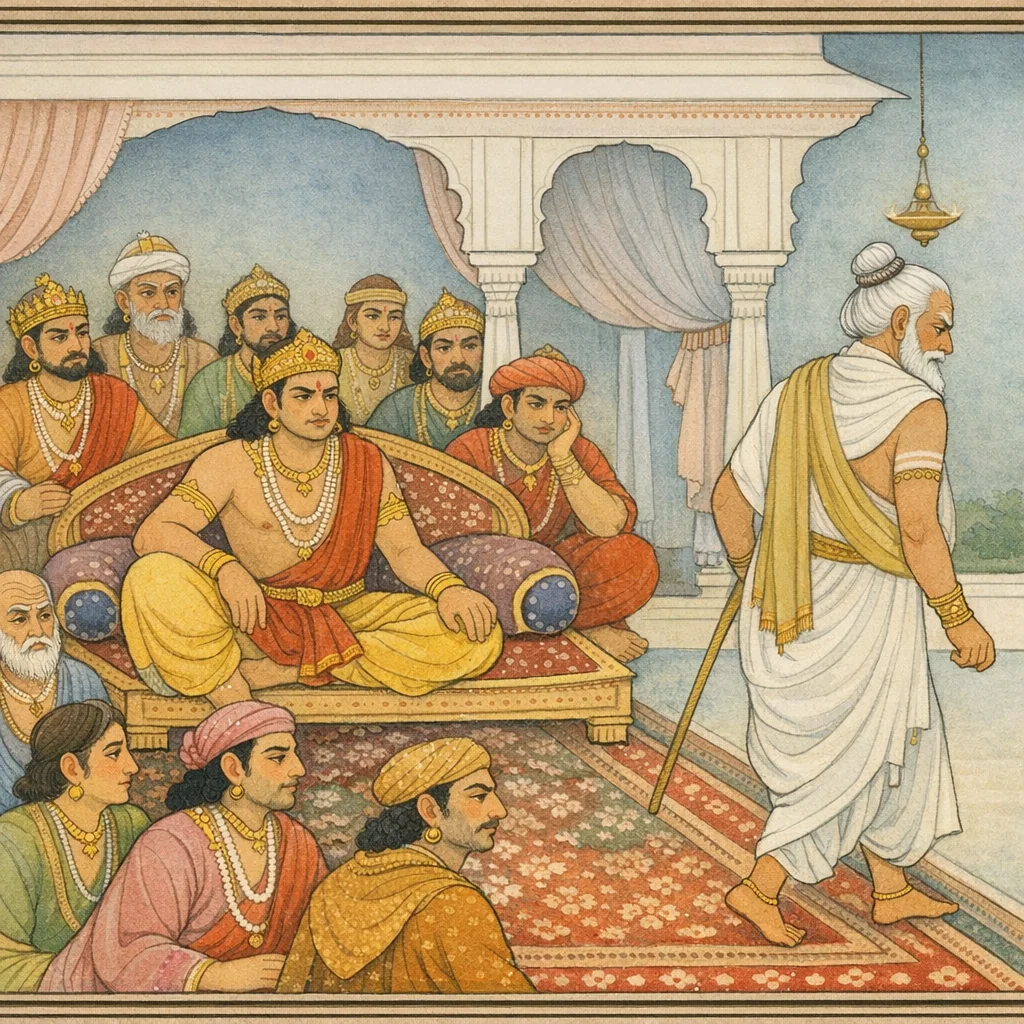
इत्युक्त्वा भरतश्रेष्ठो वृद्ध: परममन्युमान् । उत्थाय तस्मात् प्रातिष्ठद् भीष्म: सत्यपराक्रम:,ऐसा कहकर भरतश्रेष्ठ सत्यपराक्रमी वृद्ध पितामह भीष्म अत्यन्त कुपित हो उस सभाभवनसे उठकर चले गये
Having spoken thus, the aged Bhīṣma—foremost among the Bharatas, renowned for truthful valor—was seized by intense anger. Rising from that assembly hall, he departed; his indignation marked a grave moral rupture in the council’s conduct and the deepening crisis of dharma that was driving the realm toward conflict.
Verse 88
इति श्रीमहाभारते उद्योगपर्वणि भगवद्यानपर्वणि दुर्योधनवाक्ये अष्टाशीतितमो<ध्याय:
Thus, in the Śrī Mahābhārata, within the Udyoga Parva—specifically the section concerning the divine mission (Bhagavad-yāna)—in the episode of Duryodhana’s speech, ends the eighty-eighth chapter. This colophon marks the close of a narrative unit, situating the reader within the ethical and political tension of failed conciliation that moves the story toward war.
Frequently Asked Questions
The chapter presents a legitimacy dilemma: whether outward adherence to dharmic hospitality and diplomatic protocol can coexist with internal political resistance to reconciliation, indicated by the mixed court posture and Duryodhana’s absence.
It emphasizes that dharma is enacted through procedures—ritual, etiquette, and truthful inquiry—yet the ethical value of such procedures depends on intent; public honor without corresponding policy sincerity remains an unstable foundation for peace.
No explicit phalaśruti is stated here; the chapter functions as narrative documentation of diplomatic protocol and social response, supplying contextual evidence for subsequent counsel and negotiations.