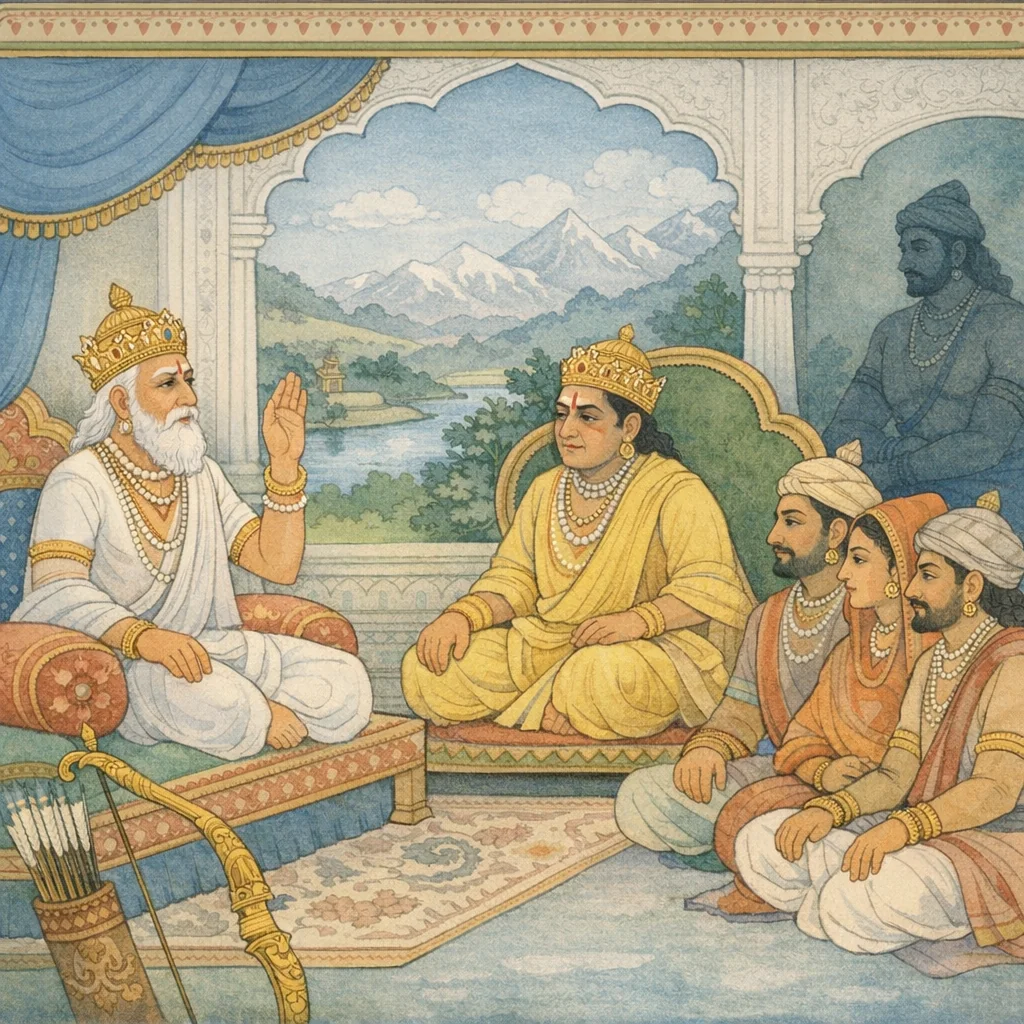
Adhyaya 137
Udyoga-parva Adhyāya 137 — Bhīṣma–Droṇa Counsel and the Ethics of Restraint
Upa-parva: Udyoga Parva — Kuru-Sabhā Counsel on War and Restraint (Duryodhana Advised by Bhīṣma and Droṇa)
Vaiśaṃpāyana reports a tense council moment: the addressed ruler remains downcast and silent, avoiding direct reply. Observing this, Bhīṣma and Droṇa speak again, framing the situation as ethically and strategically grave. Bhīṣma laments the prospect of opposing Arjuna—portrayed as disciplined, respectful, and committed to truth—implying that fighting such a person is itself a sorrowful reversal of proper relations. Droṇa adds a personal-professional testimony: his esteem for Arjuna exceeds even paternal attachment, yet kṣatriya duty compels participation; he simultaneously acknowledges Arjuna’s unmatched archery, attributing his excellence to instruction and favor. The discourse broadens into a diagnostic of character and consequence: harmful dispositions yield social disrepute; inner nature gravitates toward vice or virtue despite external restraint; flattery and indulgence can become defects that produce ruin. The speakers cite that multiple authorities have advised the ruler toward welfare, but counsel has not been adopted. Analogies warn against reckless overconfidence—like attempting to cross a dangerous river-current by mere bravado—and against covetously wearing another’s prosperity as if it were one’s own. Strategic assessment follows: the Pāṇḍavas’ solidarity, Draupadī’s vowed moral force, Kṛṣṇa’s counsel, and disciplined allies make victory improbable. The chapter culminates in a final policy recommendation: desist from war for the Kuru line’s welfare and avoid comprehensive defeat involving sons, ministers, and forces.
Chapter Arc: कुन्ती का धर्मयुक्त, अर्थपूर्ण और तीक्ष्ण वचन श्रीकृष्ण के सान्निध्य में सुनकर सभा में एक नई हलचल उठती है—अब निर्णय टालना असंभव है। → भीष्म (और द्रोण की सम्मति सहित) धृतराष्ट्र/कौरव-पक्ष को स्मरण कराते हैं कि पाण्डव वासुदेव की सम्मति के अनुसार ही चलेंगे और राज्य के बिना शांत नहीं होंगे; वे अर्जुन की प्रत्यक्ष सिद्ध वीरता (विराट-नगर प्रसंग) और पाण्डवों की सामर्थ्य का उदाहरण देकर कौरवों के आत्म-भ्रम को तोड़ते हैं। → भीष्म का निर्णायक उपदेश—‘पृथ्वी को मृत्यु के दाँतों में जाने से बचाओ’—और साथ ही पाण्डव-बल का भयावह संकेत: भीम का सिंहनाद और गाण्डीव का निःस्वन, जिनकी स्मृति कौरवों को युद्ध में भी विचलित करेगी। → समाधान का मार्ग स्पष्ट किया जाता है: पाण्डवों के साथ भ्रातृभाव से शांति करो, उन्हें उनका अधिकार देकर समस्त पृथ्वी का शासन धर्मपूर्वक बाँटो; आलिंगन, हर्ष और मेल-मिलाप से राजधर्म की प्रतिष्ठा हो। → यदि यह ‘उचित’ वचन उलटा पड़ा और कौरव हठ पर अड़े रहे, तो वही भीम-नाद और गाण्डीव-ध्वनि निकट भविष्य के अनिवार्य संग्राम का उद्घोष बनेंगे।
Shlokas
Verse 1
इस प्रकार श्रीमह्या भारत उद्योगपर्वके अन्तर्गत भगवद्यानपर्वनें कुन्तीवाक्यविषयक एक सौ सैंतीसवाँ अध्याय पूरा हुआ ॥/ १३७ ॥। ऑपन--माजल बछ। अकाल अष्टात्रिशरदाधिकशततमो< ध्याय: भीष्म और द्रोणका दुर्योधनको समझाना वैशम्पायन उवाच कुन्त्यास्तु वचन श्रुत्वा भीष्मद्रोणी महारथौ । दुर्योधनमिदं वाक्यमूचतु: शासनातिगम्,वैशम्पायनजी कहते हैं--जनमेजय! कुन्तीका कथन सुनकर महारथी भीष्म और द्रोणने अपनी आज्ञाका उल्लंघन करनेवाले दुर्योधनसे इस प्रकार कहा--
Vaiśampāyana said: Having heard Kuntī’s words, the great chariot-warriors Bhīṣma and Droṇa addressed Duryodhana—who was overstepping rightful authority—with the following counsel. The scene turns from Kuntī’s appeal to the elders’ ethical responsibility to restrain a wayward prince and uphold dharma before war becomes inevitable.
Verse 2
श्रुतं ते पुरुषव्याप्र कुन्त्या: कृष्णस्य संनिधौ । वाक्यमर्थवदत्युग्रमुक्तं धर्म्यमनुत्तमम्,'पुरुषसिंह! कुन्तीने श्रीकृष्णके समीप जो अर्थयुक्त, धर्मसंगत, परम उत्तम एवं अत्यन्त भयंकर बात कही है, उसे तुमने भी सुना ही होगा
Vaiśampāyana said: “O tiger among men, you have surely heard the meaningful words that Kuntī spoke in Kṛṣṇa’s presence—words supremely righteous and excellent, yet exceedingly stern in their force.”
Verse 3
तत् करिष्यन्ति कौन्तेया वासुदेवस्य सम्मतम् | नहि ते जातु शाम्येरन्रृते राज्येन कौरव,“कुरुनन्दन! कुन्तीके पुत्र श्रीकृष्णकी सम्मतिके अनुसार वह सब कार्य करेंगे। अब राज्य लिये बिना वे कदापि शान्त नहीं रह सकते
Vaiśampāyana said: “The sons of Kuntī will act in accordance with Vāsudeva’s counsel. For those Kaurava princes will never truly be appeased unless the matter is settled with the granting of the kingdom.”
Verse 4
क्लेशिता हि त्वया पार्था धर्मपाशसितास्तदा । सभायां द्रौपदी चैव तैश्न तन्मर्षितं तव,“तुमने द्यूतक्रीड़ाके समय धर्मके बन्धनमें बँधे हुए पाण्डवोंको तथा कौरवसभामें द्रौपदीको भी भारी क्लेश पहुँचाया था; किंतु उन्होंने तुम्हारा वह सब अपराध चुपचाप सह लिया
“For you tormented the Pārthas—bound then by the constraints of dharma—during the game of dice; and you caused Draupadī grievous suffering in the Kaurava assembly as well. Yet they endured all those offenses of yours in silence.”
Verse 5
कृतास्त्रं हार्जुनं प्राप्प भीम॑ं च कृतनिश्चयम् । गाण्डीवं चेषुधी चैव रथं च ध्वजमेव च,“अब अस्त्रविद्यामें पारंगत अर्जुन और युद्धका दृढ़ निश्चय रखनेवाले भीमसेनको पाकर गाण्डीव धनुष, अक्षय बाणोंसे भरे हुए दो तरकस, दिव्य रथ और ध्वजको हस्तगत करके, बल और पराक्रमसे सम्पन्न नकुल और सहदेवको युद्धके लिये उद्यत देखकर तथा भगवान् श्रीकृष्णको भी अपनी सहायताके रूपमें पाकर युधिष्ठिर तुम्हारे पूर्व अपराधोंको क्षमा नहीं करेंगे
Vaiśampāyana said: Having obtained Arjuna, perfected in the science of weapons, and Bhīma, firm in his resolve for battle—and having in hand the Gāṇḍīva bow, the quivers, the chariot, and the banner—the Pāṇḍavas stand fully equipped. In this frame of dharma, the verse underscores that when righteous warriors are prepared and supported, past wrongdoing is not easily excused; accountability follows when dharma is defended with strength and readiness.
Verse 6
नकुलं सहदेवं च बलवीर्यसमन्वितौ | सहायं वासुदेवं च न क्षंस्पति युधिष्ठिर:,“अब अस्त्रविद्यामें पारंगत अर्जुन और युद्धका दृढ़ निश्चय रखनेवाले भीमसेनको पाकर गाण्डीव धनुष, अक्षय बाणोंसे भरे हुए दो तरकस, दिव्य रथ और ध्वजको हस्तगत करके, बल और पराक्रमसे सम्पन्न नकुल और सहदेवको युद्धके लिये उद्यत देखकर तथा भगवान् श्रीकृष्णको भी अपनी सहायताके रूपमें पाकर युधिष्ठिर तुम्हारे पूर्व अपराधोंको क्षमा नहीं करेंगे
Vaiśaṃpāyana said: “Yudhiṣṭhira will not forgive your former offenses, now that he has Nakula and Sahadeva—endowed with strength and valor—and Vāsudeva himself as an ally.”
Verse 7
प्रत्यक्ष ते महाबाहो यथा पार्थेन धीमता । विराटनगरे पूर्व सर्वे सम युधि निर्जिता:,“महाबाहो! थोड़े ही दिनों पहलेकी बात है; परम बुद्धिमान् अर्जुनने विराटनगरके युद्धमें हम सब लोगोंको परास्त कर दिया था और वह सब घटना तुम्हारी आँखोंके सामने घटित हुई थी
O mighty-armed one, you saw it plainly: not long ago, in the battle at Virāṭa’s city, the wise Arjuna defeated us all upon the field.
Verse 8
दानवा घोरकर्माणो निवातकवचा युधि । रौद्रमस्त्रं समादाय दग्धा वानरकेतुना,“कपिथध्वज अर्जुनने युद्धमें भयंकर कर्म करनेवाले निवातकवच नामक दानवोंको रुद्रदेवतासम्बन्धी पाशुपत अस्त्र लेकर दग्ध कर डाला था
Vaiśaṃpāyana said: In battle, the Dānavas called the Nivātakavacas—men of dreadful deeds—were burned down by Arjuna, whose banner bore the monkey, when he took up the fierce, Rudra-related weapon.
Verse 9
कर्णप्रभृतयश्चेमे त्वं चापि कवची रथी । मोक्षितो घोषयात्रायां पर्याप्तं तन्निदर्शनम्
Vaiśampāyana said: “Karna and the others here—and you as well, armored and a chariot-warrior—were once released during the cattle-raid expedition. That alone is sufficient proof.”
Verse 10
रक्षेमां पृथिवीं सर्वा मृत्योर्दष्टान्तरं गताम्
Vaiśampāyana said: “Let us protect this entire earth, which has slipped into the jaws of Death—bitten and brought under its peril.”
Verse 11
ज्येष्ठो भ्राता धर्मशीलो वत्सल: शलक्ष्णवाक् कवि: । तं॑ गच्छ पुरुषव्याप्रं व्यपनीयेह किल्बिषम्
“Your eldest brother is righteous in conduct, affectionate, gentle in speech, and discerning like a poet. Go to that tiger among men; by doing so, remove the fault that has arisen here.”
Verse 12
“यह सारी पृथ्वी मौतकी दाढ़ोंके बीचमें जा पहुँची है। तुम संधिके द्वारा इसकी रक्षा करो। तुम्हारे बड़े भाई युधिष्ठिर धर्मात्मा, दयालु, मधुरभाषी और दिद्वान् हैं। तुम अपने मनका सारा कलुष यहीं धो-बहाकर उन पुरुषसिंह युधिष्ठिरकी शरणमें जाओ ।। दृष्टश्न त्वं पाण्डवेन व्यपनीतशरासन: । प्रशान्तभृकुटि: श्रीमान् कृता शान्ति: कुलस्य न:,“जब पाण्बुपुत्र युधिष्ठिर यह देख लेंगे कि तुमने धनुष उतार दिया है और तुम्हारी टेढ़ी भौंहें शान्त एवं सीधी हो गयी हैं तथा तुम क्रोध त्यागकर अपनी सहज शोभासे सम्पन्न हो रहे हो, तब हमें विश्वास हो जायगा कि तुमने हमारे कुलमें शान्ति स्थापित कर दी
Vaiśampāyana said: “When the son of Pāṇḍu (Yudhiṣṭhira) sees you with your bow laid aside, your knitted brows calmed and straightened, and your anger relinquished—radiant again in your natural dignity—then we shall be assured that you have established peace within our lineage.”
Verse 13
तमभ्येत्य सहामात्य: परिष्वज्य नृपात्मजम् | अभिवादय राजानं यथापूर्वमरिंदम,'शत्रुदमन! तुम अपने मन्त्रियोंके साथ पाण्डुकुमार राजा युधिष्ठिके पास जाओ और पहलेहीकी भाँति उनके हृदयसे लगकर उन्हें प्रणाम करो
Vaiśaṃpāyana said: “Approach the king’s son together with your ministers; embrace him, and then salute King Yudhiṣṭhira just as you did before, O subduer of foes.”
Verse 14
अभिवादयमान त्वां पाणिभ्यां भीमपूर्वज: । प्रतिगृह्नातु सौहार्दात् कुन्तीपुत्रो युधिष्ठिर:,'भीमके बड़े भाई कुन्तीपुत्र युधिष्छिर तुम्हें प्रणाम करते देख सौहार्दवश अपने दोनों हाथोंसे पकड़कर हृदयसे लगा लें
Vaiśaṃpāyana said: Seeing you offer respectful salutations, Yudhiṣṭhira—the son of Kuntī and elder brother of Bhīma—may, out of heartfelt goodwill, take you by both hands and draw you close in an embrace.
Verse 15
सिंहस्कन्धोरुबाहुस्त्वां वृत्तायतमहाभुज: । परिष्वजतु बाहुभ्यां भीम: प्रहरतां वर:
Vaiśaṃpāyana said: “Let Bhīma—broad-shouldered like a lion, with mighty arms long and well-rounded, the foremost among those who strike—embrace you with his arms.”
Verse 16
“जिनके कंधे सिंहके समान और भुजाएँ बड़ी, गोलाकार तथा अधिक मोटी हैं, वे योद्धाओंमें श्रेष्ठ भीमसेन भी तुम्हें अपनी दोनों भुजाओंमें भरकर छातीसे चिपका लें ।। कम्बुग्रीवो गुडाकेशस्ततत्त्वां पुष्करेक्षण: । अभिवादयतां पार्थ: कुन्तीपुत्रो धनंजय:,'शंखके समान ग्रीवा और कमलसदृश नेत्रोंवाले निद्राविजयी कुन्तीपुत्र धनंजय तुम्हें हाथ जोड़कर प्रणाम करें
Vaiśaṃpāyana said: “Even Bhīmasena—broad-shouldered like a lion, with long, rounded, powerful arms, and foremost among warriors—may clasp you in both his arms and press you to his chest. And Arjuna too, the son of Kuntī—Guḍākeśa, with a conch-like neck and lotus-like eyes—may bow to you with joined hands.”
Verse 17
आश्रिनेयौ नरव्याप्रौ रूपेणाप्रतिमौ भुवि । तौच त्वां गुरुवत् प्रेमणा पूजया प्रत्युदीयताम्,“इस भूतलपर जिनके रूपकी कहीं तुलना नहीं है, वे अश्विनीकुमारोंके पुत्र नरश्रेष्ठ नकुल-सहदेव तुम्हारे प्रति गुरुजनोचित प्रेम और आदरका भाव लेकर तुम्हारी सेवामें उपस्थित हों
Vaiśampāyana said: “Let Nakula and Sahadeva—those tiger-like men, the Aśvinī twins’ sons, whose beauty is unrivalled on earth—come forward to you, approaching in service with the affectionate reverence and honor due to a teacher.”
Verse 18
मुज्चन्त्वानन्दजाश्रूणि दाशार्हप्रमुखा नृपा: । संगच्छ भ्रातृभि: सार्ध मान संत्यज्य पार्थिव,'भूपाल! तुम अभिमान छोड़कर अपने उन बिछुड़े हुए भाइयोंसे मिल जाओ और यह अपूर्व मिलन देखकर श्रीकृष्ण आदि सब नरेश अपने नेत्रोंसे आनन्दके आँसू बहावें
Vaiśampāyana said: “Let the kings, led by the Dāśārha (Śrī Kṛṣṇa), shed tears born of joy. O king, abandon pride and go to meet your brothers together—so that, witnessing this rare reunion, all may be moved to glad tears.”
Verse 19
प्रशाधि पृथिवीं कृत्स्नां ततस्त्वं भ्रातृभि: सह । समालिड्ग्य च हर्षेण नृपा यान्तु परस्परम्,“तदनन्तर तुम अपने भाइयोंके साथ इस सारी पृथ्वीका शासन करो और ये राजा लोग एक-दूसरेसे मिल-जुलकर हर्षपूर्वक यहाँसे पधारें
Vaiśampāyana said: “Rule the entire earth; then you, together with your brothers, should govern. And let the kings, embracing one another in joy and reconciliation, depart from here in mutual goodwill.”
Verse 20
अलं युद्धेन राजेन्द्र सुह्ददां शूणु वारणम् । ध्रुवं विनाशो युद्धे हि क्षत्रियाणां प्रदृश्यते,'राजेन्द्र! इस युद्धसे तुम्हें कोई लाभ नहीं होगा। तुम्हारे हितैषी सुहृद् जो तुम्हें युद्धसे रोकते हैं, उनकी वह बात सुनो और मानो; क्योंकि युद्ध छिड़ जानेपर क्षत्रियोंका निश्चय ही विनाश दिखायी दे रहा है
Vaiśaṃpāyana said: “Enough of this war, O best of kings. Listen to the restraint urged by your well-wishers. For once war is joined, the destruction of kṣatriyas is seen to be certain.”
Verse 21
ज्योतींषि प्रतिकूलानि दारुणा मृगपक्षिण: । उत्पाता विविधा वीर दृश्यन्ते क्षत्रनाशना:,“वीर! ग्रह और नक्षत्र प्रतिकूल हो रहे हैं। पशु और पक्षी भयंकर शब्द कर रहे हैं तथा नाना प्रकारके ऐसे उत्पात (अपशकुन) दिखायी देते हैं, जो क्षत्रियोंक विनाशकी सूचना देते हैं
“O hero, the planets and stars have turned adverse. Beasts and birds cry out with dreadful sounds, and many kinds of strange portents are seen—harbingers of kṣatriya destruction.”
Verse 22
विशेषत इहास्माकं निमित्तानि निवेशने । उल्काभि हि प्रदीप्ताभिबाध्यते पृतता तव,“विशेषत: यहाँ हमारे घरमें बुरे निमित्त दृष्टिगोचर होते हैं। जलती हुई उल्काएँ गिरकर तुम्हारी सेनाको पीड़ित कर रही हैं
Vaiśaṃpāyana said: “Here in our own dwelling, ominous portents are appearing with particular force. Indeed, blazing meteors are falling and afflicting your army.”
Verse 23
वाहनान्यप्रहृष्टानि रुदन्तीव विशाम्पते । गृध्रास्ते पर्युपासन्ते सैन्यानि च समन्तत:,'प्रजानाथ! हमारे सारे वाहन अप्रसन्न एवं रोते-से दिखायी देते हैं। गीध तुम्हारी सेनाओंको चारों ओरसे घेरकर बैठते हैं
Vaiśaṃpāyana said: “O lord of the people, our conveyances appear joyless, as though weeping; and vultures sit all around, encircling your armies.”
Verse 24
नगरं न यथापूर्व तथा राजनिवेशनम् | शिवाश्वाशिवनिर्घोषा दीप्तां सेवन्ति वै दिशम्,“इस नगर तथा राजभवनकी शोभा अब पहले-जैसी नहीं रही। सारी दिशाएँ जलती-सी प्रतीत होती हैं और उनमें अमंगलसूचक शब्द करती हुई गीदड़ियाँ फिर रही हैं
Vaiśaṃpāyana said: “O King, the city and the royal residence no longer appear as they once did. The quarters seem as though aflame, and jackals—uttering ominous, inauspicious cries—prowl through the directions.”
Verse 25
कुरु वाक्यं पितुर्मातुरस्माकं च हितैषिणाम् । त्वय्यायत्तो महाबाहो शमो व्यायाम एव च,“महाबाहो! तुम पिता, माता तथा हम हितैषियों-का कहना मानो। अब शान्तिस्थापन और युद्ध दोनों तुम्हारे ही अधीन हैं
Vaiśampāyana said: “Follow the counsel of your father and mother, and of us who seek your welfare. O mighty-armed one, both the making of peace and the undertaking of war now rest upon you.”
Verse 26
न चेत् करिष्यसि वच: सुहृदामरिकर्शन । तप्स्यसे वाहिनीं दृष्टवा पार्थबाणप्रपीडिताम्,'शत्रुसूदन! यदि तुम सुहृदोंकी बातें नहीं मानोगे तो अपनी सेनाको अर्जुनके बाणोंसे अत्यन्त पीड़ित होती देखकर पछताओगे
Vaiśampāyana said: “O subduer of foes, if you do not act in accordance with the counsel of your well-wishers, you will later burn with remorse when you see your army grievously tormented by the arrows of Pārtha (Arjuna).”
Verse 27
भीमस्य च महानादं नदत: शुष्मिणो रणे । श्र॒त्वा स्मर्तासि मे वाक््यं गाण्डीवस्य च नि:स्वनम् | यद्येतदपसव्यं ते वचो मम भविष्यति,“यदि हमारी ये बातें तुम्हें विपरीत जान पड़ती हैं तो जिस समय युद्धमें गर्जना करनेवाले महाबली भीमसेनका विकट सिंहनाद और अर्जुनके गाण्डीव धनुषकी टंकार सुनोगे, उस समय तुम्हें ये बातें याद आयेंगी”
Vaiśaṃpāyana said: “When you hear, on the battlefield, the mighty roar of Bhīma as he bellows in his fierce ardor, and the sharp twang of Arjuna’s Gāṇḍīva, then you will remember my words—if what I have said now seems to you ‘contrary’ or unacceptable.”
Verse 96
प्रशाम्य भरतश्रेष्ठ भ्रातृभि: सह पाण्डवै: | “घोषयात्राके समय ये कर्ण आदि योद्धा तुम्हारे साथ थे। तुम स्वयं भी रथ और कवच आदिसे सम्पन्न थे, तथापि अर्जुनने ही तुम्हें गन्धवोके हाथसे छुड़ाया था। उनकी शक्तिको समझनेके लिये यही उदाहरण पर्याप्त होगा। अतः भरतश्रेष्ठ! तुम अपने ही भाई पाण्डवोंके साथ संधि कर लो
Vaiśampāyana said: “Be appeased, O best of the Bharatas, and make peace with your own brothers, the Pāṇḍavas. At the time of the cattle-raid excursion, warriors such as Karṇa were with you, and you yourself were equipped with chariot, armor, and the rest; yet it was Arjuna alone who rescued you from the hands of the Gandharvas. This single example is sufficient to understand his power. Therefore, O best of the Bharatas, conclude a settlement with the Pāṇḍavas, your brothers.”
Verse 138
इति श्रीमहाभारते उद्योगपर्वणि भगवद्यानपर्वणि भीष्मद्रोणवाक्ये अष्टात्रिंशयेधिकशततमो<ध्याय:
Thus, in the Śrī Mahābhārata, within the Udyoga Parva, in the section known as the Bhagavad-yāna Parva, in the discourse of Bhīṣma and Droṇa, ends the one-hundred-and-thirty-eighth chapter.
Frequently Asked Questions
The dilemma is the conflict between role-based obligation (kṣatriya duty to stand with one’s polity) and ethical prudence (avoiding preventable harm), especially when elders recognize the adversary’s moral and strategic strength.
The chapter teaches that authority without receptivity to counsel becomes self-endangering: inner disposition drives action, flattery can function as a defect, and realistic appraisal joined to restraint is a higher form of leadership than impulsive confidence.
No explicit phalaśruti appears here; the meta-function is advisory and diagnostic—positioning this counsel as a normative lens for interpreting subsequent outcomes in terms of ignored guidance and foreseeable consequence.