Adhyaya 111
Śāṇḍilī–Suparṇa Saṃvāda (Conduct, Intention, and Restoration)
Upa-parva: Galava–Suparna–Shandili Episode (Upākhyāna within Udyoga Parva)
Nārada narrates how Suparṇa and Gālava arrive at Ṛṣabha’s peak and meet the ascetic brāhmaṇī Śāṇḍilī. After respectful greeting, she offers them prepared food accompanied by ritual formulae; they eat, become satisfied, and sleep. On waking, Suparṇa—intending to depart—finds his body altered and diminished, prompting Gālava to question what mental act or ethical fault caused this result and how long they must remain. Suparṇa explains that he had contemplated taking the accomplished Śāṇḍilī to the realm where Prajāpati, Mahādeva, Viṣṇu, dharma, and yajña abide, and he asks her forgiveness for the unintended impropriety. Śāṇḍilī responds with reassurance yet states that she does not tolerate disparagement; she frames her attainment as grounded in ācāra, articulating that conduct yields dharma, wealth, and prosperity, and removes misfortune. She permits Suparṇa to go, instructing that women are not to be censured, and Suparṇa’s strength and wings are restored. They proceed, and Viśvāmitra later addresses Gālava about the timing and completion of Gālava’s pledged obligation, leading Suparṇa to propose further counsel so the vow may be fulfilled.
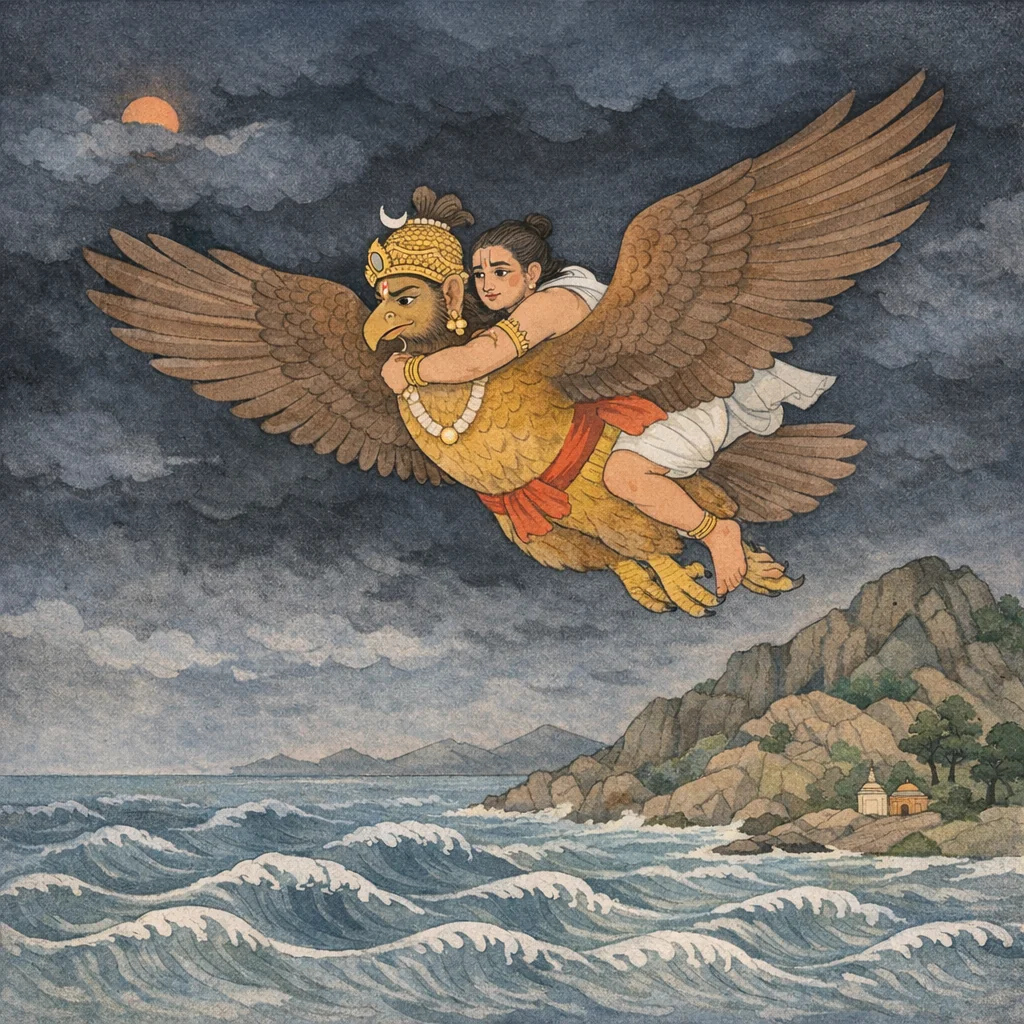
Chapter Arc: गरुड़ की पीठ पर आरूढ़ गालव पूर्व दिशा की ओर तीव्र वेग से उड़ते हुए देव-सान्निध्य और धर्म-सत्य के दर्शन की आकांक्षा करता है। → गरुड़ का वेग असह्य होता जाता है; दिशाएँ, आकाश और सूर्य तक दृष्टि से ओझल पड़ते हैं—गालव को केवल अन्धकार दिखता है और वह भय व व्याकुलता में गरुड़ से वेग घटाने का आग्रह करता है। → गालव स्पष्ट कह देता है कि इस यात्रा से उसका कोई प्रयोजन नहीं; वह गरुड़ के वेग को सह नहीं सकता और लौट चलने की प्रार्थना करता है—साथ ही ‘ब्रह्महत्या’ जैसे पाप-भय का स्मरण कर सावधानी की चेतावनी देता है। → गरुड़ समुद्र-समीप ‘ऋषभ’ पर्वत का संकेत करता है—वहीं विश्राम और भोजन कर दोनों लौटने का निश्चय करते हैं, जिससे गालव की व्याकुलता शांत होती है।
Shlokas
Verse 1
न२्च्स्स्न्तािस्सि हु ल्डड्जन्प्ट् द्वादर्शाधिकशततमो< ध्याय: गरुड़की पीठपर बैठकर पूर्व दिशाकी ओर जाते हुए गालवका उनके वेगसे व्याकुल होना गालव उवाच गरुत्मन् भुजगेन्द्रारे सुपर्ण विनतात्मज । नय मां तार्क्ष्य पूर्वेण यत्र धर्मस्य चक्षुषी,गालवने कहा--गरुत्मन्! भुजगराजशत्रो! सुपर्ण! विनतानन्दन! तार्क्ष्य! तुम मुझे पूर्व दिशाकी ओर ले चलो, जहाँ धर्मके नेत्रस्वरूप सूर्य और चन्द्रमा प्रकाशित होते हैं
Gālava said: “O Garutmān—foe of the serpent-lords, O Suparṇa, son of Vinatā, O Tārkṣya—carry me eastward, to the region where the Sun and the Moon, the two eyes of Dharma, shine forth.”
Verse 2
पूर्वमेतां दिशं गच्छ या पूर्व परिकीर्तिता । देवतानां हि सांनिध्यमत्र कीर्तितवानसि
Gālava said: “Go first to that quarter which is called the East. For you have yourself declared that in this direction there is the special nearness and presence of the gods.”
Verse 3
अत्र सत्यं च धर्मश्न त्वया सम्यक् प्रकीर्तित: । इच्छेयं तु समागन्तुं समस्तैर्देवतैरहम् । भूयश्व तान् सुरान् द्रष्टमिच्छेयमरुणानुज
Here you have rightly proclaimed the truth, O knower of dharma. Yet I wish to come together with all the gods in assembly; and again, O younger brother of Aruṇa, I desire to behold those deities.
Verse 4
जिस दिशाका तुमने सबसे पहले वर्णन किया है, उसी दिशाकी ओर पहले चलो; क्योंकि उस दिशामें तुमने देवताओंका सांनिध्य बताया है तथा वहीं सत्य और धर्मकी स्थितिका भी भलीभाँति प्रतिपादन किया है। अरुणके छोटे भाई गरुड़! मैं सम्पूर्ण देवताओंसे मिलना और पुन: उन सबका दर्शन करना चाहता हूँ ।। नारद उवाच तमाह विनतासूनुरारोहस्वेति वै द्विजम् । आरुरोहाथ स मुनिर्गरुडं गालवस्तदा,नारदजी कहते हैं--तब विनतानन्दन गरुड़ने विप्रवर गालवसे कहा--“तुम मेरे ऊपर चढ़ जाओ।” तब गालव मुनि गरुड़की पीठपर जा बैठे
Narada said: Then Garuḍa, the son of Vinatā, addressed the eminent brahmin (Gālava): “Mount upon me.” Thereupon the sage Gālava climbed onto Garuḍa’s back.
Verse 5
गालव उवाच क्रममाणस्य ते रूप॑ दृश्यते पन्नगाशन । भास्करस्थेव पूर्वाह्ने सहस्रांशोर्विवस्वत:,गालवने कहा--सर्वभोजी गरुड़! पूर्वह्लकालमें सहस्र किरणोंसे सुशोभित भुवनभास्कर सूर्यका स्वरूप जैसा दिखायी देता है, आकाशमें उड़ते समय तुम्हारा स्वरूप भी वैसा ही दृष्टिगोचर होता है
Gālava said: “O serpent-eater (Garuḍa), as you move through the sky, your form becomes visible like the Sun—Vivasvān of a thousand rays—seen in the forenoon, radiant as though stationed in the firmament.”
Verse 6
पक्षवातप्रणुन्नानां वृक्षाणामनुगामिनाम् | प्रस्थितानामिव सम॑ पश्यामीह गतिं खग,खेचर! तुम्हारे पंखोंकी हवासे उखड़कर ये वृक्ष पीछे-पीछे चले आ रहे हैं। मैं इनकी भी ऐसी तीव्र गति देख रहा हूँ, मानो ये भी हमलोगोंके साथ चलनेके लिये प्रस्थित हुए हों
Gālava said: “Driven onward by the force of your wing-wind, these trees—torn from their places—seem to be following behind. Here I behold their speed as equal to ours, as though they too had set out to journey along with us.”
Verse 7
ससागरवनामुर्वी सशैलवनकाननाम् | आकर्षन्निव चाभासि पक्षवातेन खेचर,आकाशचारी गरुड़! तुम अपने पंखोंके वेगसे उठी हुई वायुद्वारा समुद्रकी जलराशि, पर्वत, वन और काननोंसहित सम्पूर्ण पृथ्वीको अपनी ओर खींचते-से जान पड़ते हो
Gālava said: “O sky-ranging one—O Garuḍa who moves through the heavens! By the wind driven up by the force of your wings, you appear as though you are drawing the whole earth toward yourself—earth together with its oceans, mountains, forests, and groves.”
Verse 8
समीननागनक्रं च खमिवारोप्यते जलम् | वायुना चैव महता पक्षवातेन चानिशम्,पाँखोंके हिलानेसे निरन्तर उठती हुई प्रचण्ड वायुके वेगसे मत्स्य, जलहस्ती तथा मगरोंसहित समुद्रका जल तुम्हारे द्वारा मानो आकाशमें उछाल दिया जाता है
Gālava said: “By the mighty, unceasing rush of wind generated by the constant beating of your wings, the ocean’s waters—together with fish, water-elephants, and crocodiles—seem to be flung up into the sky.”
Verse 9
तुल्यरूपाननान् मत्स्यांस्तथा तिमितिमिंगिलान | नागाश्वनरवक्त्रांश्व॒ पश्याम्युन्मथितानिव,जिनके आकार और मुख एक-से हैं ऐसे मत्स्योंको, तिमि और तिमिंगिलोंको तथा हाथी, घोड़े और मनुष्योंके समान मुखवाले जल-जन्तुओंको मैं उन््मथित हुए-से देखता हूँ
Gālava said: “I behold fish whose forms and faces are alike, and also the great sea-creatures—timi and timiṅgila—along with aquatic beings whose mouths resemble those of elephants, horses, and men, as though they have been violently churned up and thrown into turmoil.”
Verse 10
महार्णवस्य च रवै: श्रोत्रे मे बधिरे कृते । न शृणोमि न पश्यामि नात्मनो वेझि कारणम्,महासागरकी इन भीषण गर्जनाओंने मेरे कान बहरे कर दिये हैं। मैं न तो सुन पाता हूँ, न देख पाता हूँ और न अपने बचावका कोई उपाय ही समझ पाता हूँ
Gālava said: “By the dreadful roars of the great ocean my ears have been made deaf. I can neither hear nor see, and I cannot even discern for myself any means or cause of escape.”
Verse 11
शनै: स तु भवान् यातु ब्रह्म॒वध्यामनुस्मरन् । न दृश्यते रविस्तात न दिशो न च खं खग,तात गरुड़! तुमसे कहीं ब्रह्महत्या न हो जाय, इसका ध्यान रखते हुए धीरे-धीरे चलो। मुझे इस समय न तो सूर्य दिखायी देते हैं, न दिशाएँ सूझती हैं और न आकाश ही दृष्टिगोचर होता है
Gālava said: “Go slowly, keeping in mind the danger of incurring brahma-hatyā (the sin of slaying a brāhmaṇa). For now, dear one, the sun is not visible; neither the directions are discernible, nor even the sky can be seen, O bird.”
Verse 12
तम एव तु पश्यामि शरीर ते न लक्षये । मणीव जात्यौ पश्यामि चक्षुषी तेडहमण्डज,मुझे केवल अन्धकार ही दिखायी देता है। मैं तुम्हारे शरीरको नहीं देख पाता हूँ। अण्डज! तुम्हारी दोनों आँखें मुझे उत्तम जातिकी दो मणियोंके समान चमकती दिखायी देती हैं
Gālava said: “I see only that (darkness) indeed; I cannot make out your body. O egg-born one, I can only discern your two eyes—shining like two gems of the finest kind.”
Verse 13
शरीरं तु न पश्यामि तव चैवात्मनश्व ह । पदे पदे तु पश्यामि शरीरादग्निमुत्थितम्,मैं न तो तुम्हारे शरीरको देखता हूँ और न अपने शरीरको। मुझे पग-पगपर तुम्हारे अंगोंसे आगकी लपटें उठती दिखायी देती हैं
Gālava said: “I do not perceive your body—nor even my own. At every step I see flames rising up from your limbs, as though fire has sprung forth from your very frame.”
Verse 14
स मे निर्वाप्प सहसा चक्षुषी शाम्य ते पुनः । तन्नियच्छ महावेगं गमने विनतात्मज,विनतानन्दन! तुम उस आगको सहसा बुझाकर पुनः अपने दोनों नेत्रोंको भी शान्त करो और तुम्हारी गतिमें जो इतना महान् वेग है, इसे रोको
Gālava said: “Quench that fire for my sake at once, and calm your two eyes again. And, O son of Vinatā—delight of Vinatā—restrain this tremendous speed in your flight.”
Verse 15
न मे प्रयोजनं किंचिद् गमने पन्नगाशन । संनिवर्त महाभाग न वेग॑ं विषहामि ते,गरुड़ इस यात्रासे मेरा कोई प्रयोजन नहीं है, अत: लौट चलो। महाभाग! मैं तुम्हारे वेगको नहीं सह सकता
Gālava said: “I have no purpose to be served by continuing this journey, O devourer of serpents. Turn back, noble one; I cannot endure the force of your speed.”
Verse 16
गुरवे संश्रुतानीह शतान्यष्टौ हि वाजिनाम् | एकत: श्यामकर्णानां शुभ्राणां चन्द्रवर्चसाम्,मैंने गुरुको ऐसे आठ सौ घोड़े देनेकी प्रतिज्ञा की है, जो चन्द्रमाके समान उज्ज्वल कान्तिसे युक्त हों और जिनके कान एक ओरसे श्याम रंगके हों
Gālava said: “Here I have pledged to my teacher eight hundred horses—brilliant white, radiant like the moon, and marked by dark coloration on one side of their ears.”
Verse 17
तेषां चैवापवर्गाय मार्ग पश्यामि नाण्डज | ततो<यं जीवितत्यागे दृष्टो मार्गो मया55त्मन:,किंतु अण्डज! उन घोड़ोंके दिये जानेका कोई मार्ग मुझे नहीं दिखायी देता है। इसीलिये मैंने अपने जीवनके परित्यागका ही मार्ग चुना है
Galava said: “O son of a bird, I see no way by which those horses can be obtained and thereby my obligation be brought to release and completion. Therefore, I have discerned for myself only one course: to abandon my life.”
Verse 18
नैव मे5स्ति धनं किंचिन्न धनेनान्वित: सुह्ृत् । न चार्थेनापि महता शक््यमेतदू व्यपोहितुम्,मेरे पास थोड़ा भी धन नहीं है, कोई धनी मित्र भी नहीं है और यह कार्य ऐसा है कि प्रचुर धनराशिका व्यय करनेसे भी सिद्ध नहीं हो सकता
Gālava said: “I have no wealth at all, nor do I have any friend endowed with riches. And this task is such that it cannot be set aside or averted even by spending a great fortune.”
Verse 19
नारद उवाच एवं बहु च दीनं च ब्रुवाणं गालवं तदा । प्रत्युवाच व्रजन्नेव प्रहसन् विनतात्मज:,नारदजी कहते हैं--इस प्रकार बहुत दीन वचन बोलते हुए महर्षि गालवसे विनतानन्दन गरुड़ने चलते हुए ही हँसकर कहा--
Narada said: As the sage Galava spoke many words in a pitiable, humbled manner, Vinata’s son Garuda, even while continuing on his way, replied with a smile.
Verse 20
नातिप्रज्ञोडसि विप्रर्षे यो55त्मान॑ त्यक्तुमिच्छसि । न चापि कृत्रिम: काल: कालो हि परमेश्वर:,“ब्रह्मर्ष! यदि तुम अपने प्राणोंका परित्याग करना चाहते हो तो विशेष बुद्धिमान् नहीं हो; क्योंकि मृत्यु कृत्रिम नहीं होती (उसका अपनी इच्छासे निर्माण नहीं किया जा सकता)। वह तो परमेश्वरका ही स्वरूप है
Narada said: “O brahmarṣi, you are not truly wise if you wish to abandon your own life. Death is not something artificial that can be manufactured by personal will; Time itself is the Supreme Lord.”
Verse 21
किमहं पूर्वमेवेह भवता नाभिचोदित: । उपायोअत्र महानस्ति येनैतदुपपद्यते,“तुमने पहले ही मुझसे यह बात क्यों नहीं कह दी? मेरी दृष्टिमें एक महान् उपाय है, जिससे यह कार्य सिद्ध हो सकता है
“Why were you not prompted to tell me this earlier? In my view there is a great expedient here, by which this matter can be successfully brought about.”
Verse 22
तदेष ऋषभो नाम पर्वत: सागरान्तिके । अत्र विश्रम्य भुक््त्वा च निवर्तिष्याव गालव,“गालव! समुद्रके निकट यह ऋषभ नामक पर्वत है, जहाँ विश्राम और भोजन करके हम दोनों लौट चलेंगे”
Nārada said: “Here, near the shore of the ocean, is the mountain called Ṛṣabha. Let us rest here and take food; then, O Gālava, we shall return.”
Verse 111
इस प्रकार श्रीमहाभारत उद्योगपर्वके अन्तर्गत भगवद्यानपर्वमें गालवचरित्रविषयक एक सौ ग्यारहवाँ अध्याय पूरा हुआ
Thus ends the one hundred and eleventh chapter of the Udyoga Parva of the Śrī Mahābhārata, within the section known as the Bhagavad-yāna Parva, dealing with the narrative of Gālava.
Verse 112
इति श्रीमहाभारते उद्योगपर्वणि भगवद्यानपर्वणि गालवचरिते दादशाधिकशततमो<ध्याय:
Thus ends the one-hundred-and-twelfth chapter of the Udyoga Parva of the Śrī Mahābhārata, within the section concerning the Lord’s mission as envoy, in the episode narrating Gālava’s story.
Frequently Asked Questions
The chapter frames a dharma-sankat around whether a powerful agent may “elevate” an accomplished ascetic by relocating her without consent—showing how even well-meant intention can become ethically improper when it overrides autonomy and social regard.
Śāṇḍilī asserts the primacy of ācāra: disciplined conduct generates dharma, material stability, and social flourishing, while also counteracting misfortune; ethical speech and non-disparagement function as practical safeguards of order.
No explicit phalaśruti is stated; the meta-commentary is implicit in the narrative causality—moral intention, speech, and respect produce immediate worldly consequences, reinforcing the epic’s instructional method through exemplified outcomes.