Adhyaya 38
शान्ति पर्व (अध्याय 38): युधिष्ठिरस्य राजधर्म-जिज्ञासा तथा भीष्मोपसर्पण-प्रस्तावना | Shanti Parva Chapter 38: Yudhishthira’s Inquiry into Rajadharma and the Prelude to Approaching Bhishma
Upa-parva: Rājadharmānuśāsana (राजधर्मानुशासन) — Introductory Movement toward Bhīṣma’s Instruction
Chapter 38 opens with Yudhiṣṭhira’s formal request for detailed instruction on rājadharma, the complete duty-structure associated with the four social orders (cāturvarṇya), crisis-governance (āpatsu nīti), and expiatory reasoning that troubles his conscience. He explicitly names the friction between dharma-practice and the necessities of rule as a persistent cognitive burden. Vaiśaṃpāyana reports Vyāsa’s response: the sage identifies Bhīṣma as the decisive authority capable of resolving Yudhiṣṭhira’s doubts, praising Bhīṣma’s learning from divine and human teachers and his mastery of subtle dharma and statecraft. The chapter then transitions to Yudhiṣṭhira’s reluctance and guilt, followed by encouragement from Kṛṣṇa and others who emphasize the expectations of Brahmins, surviving rulers, and the assembled populace. The narrative concludes with Yudhiṣṭhira’s composure returning and a ceremonially described movement into the capital, including offerings, a public procession with companions, and civic decoration—marking the epic’s shift from war’s aftermath to the institutional rebuilding of kingship through instruction.
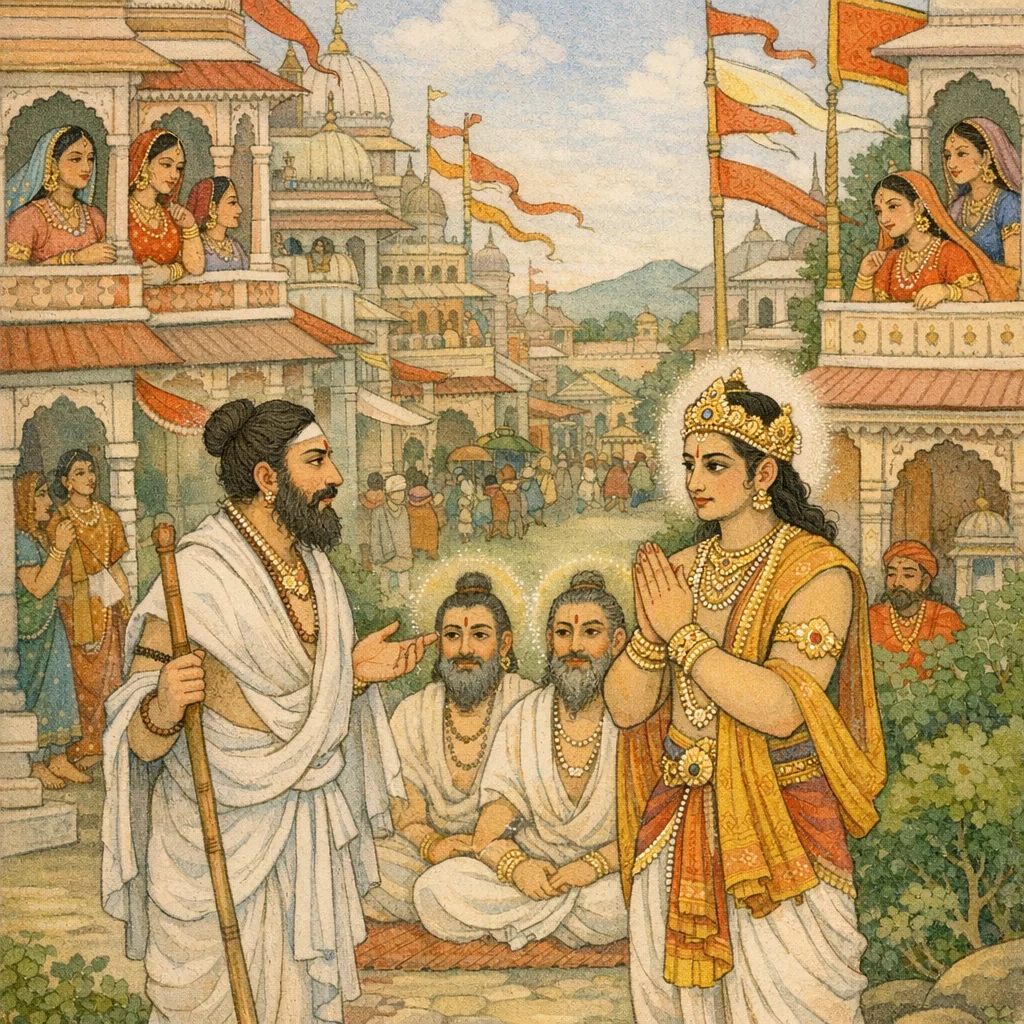
Chapter Arc: युधिष्ठिर का नगर-प्रवेश—सजा हुआ राजमार्ग, चौराहों की शोभा और जनसमुदाय का उमड़ता सागर, मानो चन्द्रोदय पर महासागर का ज्वार। → नगरवासी, जनपदवासी और ‘प्रकृतिवर्ग’ (मंत्री, सेनापति आदि) मधुर वचनों से राजा का स्वागत करते हैं; तपोनियम-सम्पन्न ब्राह्मण आशीर्वाद देने को घेर लेते हैं—पर इसी पवित्र घड़ी में एक असंगत स्वर भीतर से विष घोलने आता है। → चार्वाक ब्राह्मण-वेष में सभा/समूह के बीच खड़ा होकर युधिष्ठिर को ‘ज्ञातिघाती’ कहकर धिक्कारता है और ब्राह्मणों पर आरोप मढ़ता है; तब वेदवेत्ता, तपसा-निर्मल ब्राह्मण ‘ज्ञानचक्षु’ से उसकी असलियत पहचान लेते हैं और शाप/तेज से उसका विनाश होता है। → चार्वाक का वध होते ही अपवाद का बादल छँटता है; ब्राह्मण सम्मानित होकर विदा होते हैं और युधिष्ठिर अपने सुहृदों सहित हर्ष/आश्वस्ति पाते हैं—राज्य में पुनः मर्यादा और विश्वास की स्थापना होती है। → युद्धोत्तर शासन में ‘राजधर्म’ का वास्तविक भार अब आरम्भ होता है—युधिष्ठिर के भीतर शोक और धर्मचिन्ता का समाधान आगे के उपदेशों में खोजा जाएगा।
Shlokas
Verse 1
इस प्रकार श्रीमह्याभारत शान्तिपर्वके अन्तर्गत राजधर्मानुशासनपर्वनें युधिष्ठिरका नगरप्रवेशविषयक सैतीसवाँ अध्याय पूरा हुआ ॥/ ३७ ॥ ऑपन-- मा बछ। अप ऋाल जा अष्टात्रिशो5 ध्याय: नगर-प्रवेशके समय पुरवासियों तथा ब्राह्मणोंद्वारा राजा युधिष्ठिरका सत्कार और उनपर आक्षेप करनेवाले चार्वाकका ब्राह्माणोंद्वारा वध वैशम्पायन उवाच प्रवेशने तु पार्थानां जनानां पुरवासिनाम् । दिदृक्षूणां सहस्रनाणि समाजग्मु: सहस्रश:,वैशम्पायनजी कहते हैं--जनमेजय! कुन्ती-पुत्रोंके हस्तिनापुरमें प्रवेश करते समय उन्हें देखनेके लिये दस लाख नगरनिवासी सड़कोंपर एकत्र हो गये
Vaiśampāyana said: As the Pārthas entered the city, thousands upon thousands of the city’s inhabitants—eager to behold them—gathered together in great numbers. The scene underscores the public recognition of rightful kingship and the moral weight of a ruler’s return to civic life after catastrophe.
Verse 2
स राजमार्ग: शुशुभे समलंकृतचत्वर: । यथा चन्द्रोदये राजन् वर्धमानो महोदधि:,राजन! जैसे चन्द्रोदय होनेपर महासागर उमड़ने लगता है, उसी प्रकार जिसके चौराहे खूब सजाये गये थे, वह राजमार्ग मनुष्योंकी उमड़ती हुई भीड़से बड़ी शोभा पा रहा था
Vaiśampāyana said: “That royal highway, with its crossroads richly adorned, shone brilliantly. O King, just as the great ocean swells at the rise of the moon, so too did that road gain splendor as the surging multitude of people poured along it.”
Verse 3
गृहाणि राजमार्गेषु रत्नवन्ति महान्ति च । प्राकम्पन्तेव भारेण स्त्रीणां पूर्णानि भारत,भरतनन्दन! सड़कोंके आस-पास जो रत्नविभूषित विशाल भवन थे, वे स्त्रियोंसे भरे होने के कारण उनके भारी भारसे काँपते हुए-से जान पड़ते थे
Vaiśampāyana said: “Along the royal roads, the great mansions adorned with jewels seemed to tremble, O Bhārata, O delight of the Bharatas, as they were filled with women and swayed under the weight of the crowd.”
Verse 4
ता: शनैरिव सव्रीडं प्रशशंसुर्युधिष्ठिरम् । भीमसेनार्जुनौ चैव माद्रीपुत्रो च पाण्डवौ,वे नारियाँ लजाती हुई-सी धीरे-धीरे युधिष्ठिर, भीमसेन, अर्जुन तथा पाए्डुपुत्र माद्रीकुमार नकुल सहदेवकी प्रशंसा करने लगीं
Then those women, as if slowly and with modest reserve, began to praise Yudhiṣṭhira—along with Bhīmasena and Arjuna—and also the Pāṇḍava son of Mādrī.
Verse 5
धन्या त्वमसि पाज्चालि या त्वं पुरुषसत्तमान् | उपतिष्ठसि कल्याणि महर्षीनिव गौतमी
Vaiśampāyana said: “Blessed are you, O Pāñcālī, for you—auspicious lady—stand in reverent attendance upon the noblest of men, as Gautamī once attended upon the great seers.”
Verse 6
इति कृष्णां महाराज प्रशशंसुस्तदा स्त्रिय:,महाराज! इस प्रकार उस समय सारी स्त्रियाँ ट्रपदकुमारी कृष्णाकी प्रशंसा करती थीं। भारत! एक दूसरीके प्रति कहे जानेवाले उनके प्रशंसा-वचनों और प्रीतिजनित शब्दोंसे उस समय सारा नगर व्याप्त हो रहा था
Vaiśaṃpāyana said: “O King, thus at that time the women were praising Kṛṣṇā (Draupadī). O great ruler of the Bhāratas, the city was filled with their affectionate, admiring words as they spoke to one another, celebrating her virtues.”
Verse 7
प्रशंसावचनैस्तासां मिथ:शब्दैश्व॒ भारत । प्रीतिजैश्न तदा शब्दै: पुरमासीत् समाकुलम्,महाराज! इस प्रकार उस समय सारी स्त्रियाँ ट्रपदकुमारी कृष्णाकी प्रशंसा करती थीं। भारत! एक दूसरीके प्रति कहे जानेवाले उनके प्रशंसा-वचनों और प्रीतिजनित शब्दोंसे उस समय सारा नगर व्याप्त हो रहा था
Vaiśampāyana said: O Bhārata, at that time the city was filled with a joyful bustle, as the women exchanged words of praise among themselves—utterances born of affection—so that the whole town seemed crowded with their delighted voices.
Verse 8
तमतीत्य यथायुक्तं राजमार्ग युधिष्ठिर: । अलंकृतं शोभमानमुपायाद् राजवेश्म ह,राजन! उस सजे सजाये शोभासम्पन्न राजमार्गको यथोचित रूपसे लाँधकर राजा युधिष्ठिर राजभवनके समीप जा पहुँचे
Vaiśampāyana said: Having duly passed along the royal highway in the proper manner, King Yudhiṣṭhira approached the royal palace—its approach adorned and resplendent.
Verse 9
ततः प्रकृतय: सर्वा: पौरा जानपदास्तदा । ऊचु: कर्णसुखा वाच: समुपेत्य ततस्ततः,तदनन्तर मन्त्री-सेनापति आदि प्रकृतिवर्गके सभी लोग, नगरवासी और जनपदनिवासी मनुष्य इधर-उधरसे आकर कानोंको सुख देनेवाली बातें कहने लगे--
Vaiśampāyana said: Then all the leading constituents of the realm—townsmen and people from the countryside—came from various places and spoke words that were pleasing to hear.
Verse 10
दिष्ट्या जयसि राजेन्द्र शत्रून् शत्रुनिष्दन | दिष्ट्या राज्यं पुनः प्राप्त धर्मेण च बलेन च,'शत्रुओंका संहार करनेवाले राजेन्द्र! बड़े सौभाग्यकी बात है कि आप विजयी हो रहे हैं, आपने धर्मके प्रभाव तथा बलसे अपना राज्य पुनः प्राप्त कर लिया--यह बड़े हर्षका विषय है
“Auspicious indeed, O lord of kings, slayer of foes! It is a great good fortune that you are victorious; by the power of dharma and by strength as well, you have regained your kingdom.”
Verse 11
भव नस्त्वं महाराज राजेह शरदां शतम् | प्रजा: पालय धर्मेण यथेन्द्रस्त्रेदिवं तथा,“महाराज! आप सैकड़ों वर्षोतक हमारे राजा बने रहें। जैसे इन्द्र स्वर्गलोकका पालन करते हैं, उसी प्रकार आप भी धर्मपूर्वक अपनी प्रजाकी रक्षा करें'
Vaiśampāyana said: “O great king, O lord of kings, may you remain our ruler for a hundred autumns. Protect your subjects in accordance with dharma, just as Indra safeguards the heavenly realm.”
Verse 12
एवं राजकुलद्वारि मड़लैरभिपूजित: । आशीरव॑दान् द्विजैरुक्तान् प्रतिगृह्दा समन््ततः
Thus, at the gateway of the royal household, he was duly honored by the assembled circles of people; and, receiving on all sides the blessings spoken by the twice-born Brahmins, he proceeded onward.
Verse 13
प्रविश्य भवनं राजा देवराजगृहोपमम् । श्रद्धाविजयसंयुक्त रथात् पश्चादवातरत्
Vaiśampāyana said: Having entered the palace—splendid like the dwelling of the king of the gods—the king, endowed with faith and a sense of triumph, then dismounted from his chariot afterward.
Verse 14
इस प्रकार राजकुलके द्वारपर माड्लिक द्रव्योंद्वारा पूजित हो ब्राह्मणोंके दिये हुए आशीर्वाद सब ओरसे ग्रहण करके राजा युधिष्छिर देवराज इन्द्रके महलके समान राजभवनमें प्रविष्ट हुए, जो श्रद्धा और विजयसे सम्पन्न था। वहाँ पहुँचकर वे रथसे नीचे उतरे ।। प्रविश्याभ्यन्तरं श्रीमान् दैवतान्यभिगम्य च । पूजयामास रत्नैश्व गन्धमाल्यैश्न सर्वश:,राजमहलके भीतर प्रवेश करके श्रीमान् नरेशने कुलदेवताओंका दर्शन किया और रत्न, चन्दन तथा माला आदिसे सर्वथा उनकी पूजा की
Vaiśampāyana said: Yudhiṣṭhira, endowed with faith and victory, entered the royal palace, like the mansion of Indra; and upon arriving there he dismounted from his chariot. Then, entering the inner chambers, the illustrious king approached the family deities and worshipped them in every way with jewels, fragrant unguents such as sandal, and garlands.
Verse 15
निश्चक्राम ततः श्रीमान् पुनरेव महायशा: । ददर्श ब्राह्मणांश्वैव सो5भिरूपानवस्थितान्,इसके बाद महायशस्वी श्रीमान् राजा युधिष्ठिर महलसे बाहर निकले। वहाँ उन्हें बहुत- से ब्राह्मण खड़े दिखायी दिये, जो हाथमें मड्लद्रव्य लिये खड़े थे
Vaiśampāyana said: Then the illustrious, greatly renowned king (Yudhiṣṭhira) went out once again. There he saw many Brahmins standing nearby—handsome and dignified—waiting in attendance, bearing ritual offerings.
Verse 16
स संवृतस्तदा विप्रैराशीर्वादविवक्षुभि: । शुशुभे विमलश्नन्द्रस्तारागणवृतो यथा,जैसे तारोंसे घिरे हुए निर्मल चन्द्रमाकी शोभा होती है, उसी प्रकार आशीर्वाद देनेकी इच्छावाले ब्राह्मणोंसे घिरे हुए राजा युधिष्ठिरकी उस समय बड़ी शोभा हो रही थी
Then, surrounded by brāhmaṇas who wished to bestow blessings, he shone with special splendor—like the spotless moon encircled by a host of stars.
Verse 17
तांस्तु वै पूजयामास कौन्तेयो विधिवद् द्विजान् | धौम्यं गुरु पुरस्कृत्य ज्येष्ठं पितरमेव च,कुन्तीकुमार युधिष्ठिरने गुरु धौम्य तथा ताऊ धृतराष्ट्रको आगे करके उन सभी ब्राह्मणोंका विधिपूर्वक पूजन किया
Vaiśaṃpāyana said: Then the son of Kuntī (Yudhiṣṭhira) duly honored those twice-born brāhmaṇas according to proper rite and custom, placing his preceptor Dhaumya in the foremost position, and also giving precedence to the eldest father-figure as well. The scene underscores the ethic of dharma: reverence to teachers, elders, and the learned is not mere formality but a deliberate act of righteous governance and self-discipline.
Verse 18
सुमनोमोदके रल्नैर्हिरण्येन च भूरिणा । गोभिव्ंस्त्रिश्ष राजेन्द्र विविधैशज्ष किमिच्छकै:,राजेन्द्र! इन्होंने फूल, मिठाई, रत्न, बहुत-से सुवर्ण, गौओं, वस्त्रों तथा उनकी इच्छा पूछ-पूछ कर मँगाये हुए नाना प्रकारके मनोवाञ्छित पदार्थोद्वारा उन सबका यथोचित सत्कार किया
O lord of kings! They honored them fittingly with flowers and sweetmeats, with gems and abundant gold, with cattle and garments, and with many kinds of desired gifts brought after repeatedly asking what each one wished.
Verse 19
ततः पुण्याहघोषो<भूद् दिवं स्तब्ध्वेव भारत । सुहृदां प्रीतिजनन: पुण्य: श्रुतिसुखावह:,भारत! इसके बाद पुण्याहवाचनका गम्भीर घोष होने लगा, जो आकाशको स्तब्ध-सा किये देता था। वह पवित्र शब्द कानोंको सुख देनेवाला तथा सुहृदोंको प्रसन्नता प्रदान करनेवाला था
O Bhārata! Thereafter the solemn proclamation of “puṇyāha” arose, as though it stunned the very sky. That sacred utterance was pure, pleasing to the ear, and gladdening to the hearts of friends.
Verse 20
हंसवद् विदुषां राजन् द्विजानां तत्र भारती । शुश्रुवे वेदविदुषां पुष्कलार्थपदाक्षरा,राजन्! उस समय वेदवेत्ता दिद्वान् ब्राह्मणोंने हंसके समान हर्ष-गद्गद स्वरसे जो प्रचुर अर्थ, पद एवं अक्षरोंसे युक्त वाणी कही थी, वह वहाँ सबको स्पष्ट सुनायी दे रही थी
O king! At that time the Bhāratī utterance of the learned twice-born brāhmaṇas was heard there, like the call of swans, in voices trembling with joy. The speech of those versed in the Vedas—abounding in meaning, words, and syllables—rang out clearly to all present.
Verse 21
ततो दुन्दुभिनिर्घोष: शंखानां च मनोरम: । जयं प्रवदतां तत्र स्वनः प्रादुरभून्नप,नरेश्वर! तदनन्तर दुन्दुभियों और शंखोंकी मनोरम ध्वनि होने लगी, जय-जयकार करनेवालोंका गम्भीर घोष वहाँ प्रकट होने लगा
Then there arose the deep booming of kettle-drums and the pleasing sound of conches; and there, O king, the resonant clamour of those proclaiming “Victory!” became manifest. The scene conveys a public affirmation of righteous resolve and collective morale, where auspicious instruments and acclamations mark a moment of sanctioned celebration rather than mere noise.
Verse 22
निःशब्दे च स्थिते तत्र ततो विप्रजने पुन: । राजानं ब्राह्मणच्छय््या चार्वाको राक्षसो<ब्रवीत्,जब सब ब्राह्मण चुपचाप खड़े हो गये, तब ब्राह्मणका वेष बनाकर आया हुआ चार्वाक नामक राक्षस राजा युधिष्ठिरसे कुछ कहनेको उद्यत हुआ
When all there had fallen silent and the assembly of brāhmaṇas again stood quiet, the rākṣasa named Cārvāka—having assumed the appearance of a brāhmaṇa—prepared to address King Yudhiṣṭhira.
Verse 23
तत्र दुर्योधनसखा भिक्षुरूपेण संवृत:ः । साक्ष: शिखी त्रिदण्डी च धृष्टो विगतसाध्वस:,वह दुर्योधनका मित्र था। उसने संन्यासी ब्राह्मणके वेषमें अपने असली रूपको छिपा रखा था। उसके हाथमें अक्षमाला थी और मस्तकपर शिखा। उसने त्रिदण्ड धारण कर रखा था। वह बड़ा ढीठ और निर्भय था
There, a companion of Duryodhana, disguising himself in the guise of a mendicant, concealed his true identity. He bore a rosary, wore the tuft of hair, and carried the triple staff; brazen and utterly fearless, he moved about without any hesitation.
Verse 24
वृतः सर्वैस्तथा विप्रैराशीर्वादविवक्षुभि: । पर:सहसे राजेन्द्र तपोनियमसंवृतै:,राजेन्द्र! तपस्या और नियममें लगे रहनेवाले और आशीर्वाद देनेके इच्छुक उन समस्त ब्राह्मणोंसे, जिनकी संख्या हजारसे भी अधिक थी, घिरा हुआ वह दुष्ट राक्षस महात्मा पाण्डवोंका विनाश चाहता था। उसने उन सब ब्राह्मणोंसे अनुमति लिये बिना ही राजा युधिष्ठिरसे कहा
Vaiśampāyana said: Surrounded on all sides by brāhmaṇas who wished to bestow blessings—men restrained by austerity and sacred observances, and numbering more than a thousand—O best of kings, that wicked rākṣasa, intent on the destruction of the great-souled Pāṇḍavas, spoke to King Yudhiṣṭhira without first seeking the permission of those brāhmaṇas.
Verse 25
स दुष्ट: पापमाशंसु: पाण्डवानां महात्मनाम् | अनामन्त्र्यैव तान् विप्रांस्तमुवाच महीपतिम्,राजेन्द्र! तपस्या और नियममें लगे रहनेवाले और आशीर्वाद देनेके इच्छुक उन समस्त ब्राह्मणोंसे, जिनकी संख्या हजारसे भी अधिक थी, घिरा हुआ वह दुष्ट राक्षस महात्मा पाण्डवोंका विनाश चाहता था। उसने उन सब ब्राह्मणोंसे अनुमति लिये बिना ही राजा युधिष्ठिरसे कहा
Vaiśampāyana said: That wicked one, intent on sin and longing for the downfall of the noble Pāṇḍavas, stood surrounded by more than a thousand brāhmaṇas—ascetics devoted to austerity and discipline, disposed to bestow blessings. Yet, without even seeking their consent, he addressed King Yudhiṣṭhira.
Verse 26
चारवक उवाच इमे प्राहुर्द्धिजा: सर्वे समारोप्य वचो मयि । धिग् भवन्तं कुनृपतिं ज्ञातिघातिनमस्तु वै,चार्वाक बोला--राजन्! ये सब ब्राह्मण मुझपर अपनी बात कहनेका भार रखकर मेरेद्वारा ही तुमसे कह रहे हैं--“कुन्तीनन्दन! तुम अपने भाई-बन्धुओंका वध करनेवाले एक दुष्ट राजा हो। तुम्हें धिक्कार है! ऐसे पुरुषके जीवनसे क्या लाभ? इस प्रकार यह बन्धु- बान्धवोंका विनाश करके गुरुजनोंकी हत्या करवाकर तो तुम्हारा मर जाना ही अच्छा है, जीवित रहना नहीं”
Cārvāka said: “O King! All these twice-born brāhmaṇas, placing their words upon me, declare this: ‘Fie upon you, O base king—one who has slain his own kinsmen! Shame on you indeed.’”
Verse 27
कि तेन स्याद्धि कौन्तेय कृत्वेमं ज्ञातिसंक्षयम् । घातयित्वा गुरूंश्वैव मृतं श्रेयो न जीवितम्,चार्वाक बोला--राजन्! ये सब ब्राह्मण मुझपर अपनी बात कहनेका भार रखकर मेरेद्वारा ही तुमसे कह रहे हैं--“कुन्तीनन्दन! तुम अपने भाई-बन्धुओंका वध करनेवाले एक दुष्ट राजा हो। तुम्हें धिक्कार है! ऐसे पुरुषके जीवनसे क्या लाभ? इस प्रकार यह बन्धु- बान्धवोंका विनाश करके गुरुजनोंकी हत्या करवाकर तो तुम्हारा मर जाना ही अच्छा है, जीवित रहना नहीं”
Cārvāka said: “O son of Kuntī, what good can come of this? Having brought about the destruction of your own kinsmen, and having caused even your elders and teachers to be slain, it would be better for you to be dead than to go on living.”
Verse 28
इति ते वै द्विजा: श्रुत्वा तस्य दुष्टस्य रक्षस: । विव्यथुश्रुक्रुशुश्वेव तस्य वाक्यप्रधर्षिता:,वे ब्राह्मण उस दुष्ट राक्षणषकी यह बात सुनकर उसके वचनोंसे तिरस्कृत हो व्यथित हो उठे और मन-ही-मन उसके कथनकी निन्दा करने लगे
Hearing these words of that wicked rākṣasa, the brāhmaṇas were shaken with distress; stung and insulted by his speech, they cried out and inwardly condemned his utterance.
Verse 29
ततस्ते ब्राह्मणा: सर्वे स च राजा युधिष्ठिर: । व्रीडिता: परमोद्विग्नास्तृष्णीमासन् विशाम्पते,प्रजानाथ! इसके बाद वे सभी ब्राह्मण तथा राजा युधिष्ठिर अत्यन्त उद्विग्न और लज्जित हो गये। प्रतिवादके रूपमें उनके मुँहसे एक शब्द भी नहीं निकला। वे सभी कुछ देरतक चुप रहे
Then all the brāhmaṇas and King Yudhiṣṭhira were overwhelmed with shame and deep agitation; they sat in silence, and not a single word of reply arose from them.
Verse 30
युधिछिर उवाच प्रसीदन्तु भवन्तो मे प्रणतस्याभियाचत: । प्रत्यासन्नव्यसनिनं न मां धिक्कर्तुमर्हथ,तत्पश्चात् राजा युधिष्ठिरने कहा--ब्राह्मणो! मैं आपके चरणोंमें प्रणाम करके विनीतभावसे यह प्रार्थना करता हूँ कि आपलोग मुझपर प्रसन्न हों। इस समय मुझपर सब ओरसे बड़ी भारी विपत्ति आ गयी है; अत: आपलोग मुझे थिक्कार न दें
Yudhiṣṭhira said: “May you venerable ones be gracious to me, as I bow down and plead with folded humility. A calamity has drawn very near and presses upon me from all sides; therefore you should not condemn me with reproach.”
Verse 31
वैशम्पायन उवाच ततो राजन ब्राह्मणास्ते सर्व एव विशाम्पते । ऊचुर्नैतद् वचो<स्माकं श्रीरस्तु तव पार्थिव,वैशम्पायनजी कहते हैं--राजन्! प्रजानाथ! उनकी यह बात सुनकर सब ब्राह्मण बोल उठे--“महाराज! यह हमारी बात नहीं कह रहा है। हम तो यह आशीर्वाद देते हैं कि “आपकी राजलक्ष्मी सदा बनी रहे”
Vaiśampāyana said: Then, O King, O lord of the people, all those brāhmaṇas spoke up: “This statement is not ours. Rather, O ruler of the earth, we offer you this blessing—may royal prosperity ever abide with you.”
Verse 32
जज्ञुश्वैव महात्मानस्ततस्तं ज्ञानचक्षुषा । ब्राह्मणा वेदविद्वांसस्तपोभिविमलीकृता:,उन वेदवेत्ता ब्राह्मणोंका अन्त:ःकरण तपस्यासे निर्मल हो गया था। उन महात्माओंने ज्ञानदृष्टिसे उस राक्षसको पहचान लिया
Then those great-souled Brahmins—learned in the Vedas and purified by austerity—recognized him with the eye of spiritual knowledge. Their inner clarity, refined through tapas, enabled them to discern the true nature of the being before them.
Verse 33
ब्राह्मणा ऊचु एष दुर्योधनसखा चार्वाको नाम राक्षस: | परिव्राजकरूपेण हित॑ तस्य चिकीर्षति,ब्राह्मण बोले--धर्मात्मन्! यह दुर्योधनका मित्र चार्वाक नामक राक्षस है, जो संन्यासीके रूपमें यहाँ आकर उसका हित करना चाहता है। हमलोग आपसे कुछ नहीं कहते हैं। आपका इस तरहका भय दूर हो जाना चाहिये। हम आशीर्वाद देते हैं कि 'भाइयोंसहित आपको कल्याणकी प्राप्ति हो”
The brāhmaṇas said: “This is Cārvāka, a rākṣasa, a companion of Duryodhana. Having assumed the guise of a wandering renunciant, he has come here intending to promote Duryodhana’s interest. Therefore we say nothing against you; your fear should be dispelled. We bestow our blessing that you, together with your brothers, attain well-being.”
Verse 34
वयं ब्रूमो न धर्मात्मन् व्येतु ते भयमीदृशम् । उपतिष्ठतु कल्याणं भवन्तं भ्रातृभि: सह,ब्राह्मण बोले--धर्मात्मन्! यह दुर्योधनका मित्र चार्वाक नामक राक्षस है, जो संन्यासीके रूपमें यहाँ आकर उसका हित करना चाहता है। हमलोग आपसे कुछ नहीं कहते हैं। आपका इस तरहका भय दूर हो जाना चाहिये। हम आशीर्वाद देते हैं कि 'भाइयोंसहित आपको कल्याणकी प्राप्ति हो”
We say to you, O righteous one: let this kind of fear depart from you. May well-being attend you, together with your brothers.
Verse 35
वैशम्पायन उवाच ततस्ते ब्राह्मणा: सर्वे हुंकारै: क्रोधमूर्च्छिता: । निर्भ्त्सयन्त: शुचयो निजघ्नु: पापराक्षसम्,वैशम्पायनजी कहते हैं--जनमेजय! तदनन्तर क्रोधसे आतुर हुए उन सभी शुद्धात्मा ब्राह्मणोंने उस पापात्मा राक्षसको बहुत फटकारा और अपने हुड्कारोंसे उसे नष्ट कर दिया
Vaiśampāyana said: Then all those brāhmaṇas, overcome by a surge of wrath, assailed the sinful rākṣasa with stern reproaches; and, though pure in conduct, they destroyed him by their thunderous cries.
Verse 36
स पपात विनिर्दग्धस्तेजसा ब्रह्म॒वादिनाम् महेन्द्राशनिनिर्दग्ध: पादपो5ड्कुरवानिव,ब्रह्मवादी महात्माओंके तेजसे दग्ध होकर वह राक्षस गिर पड़ा, मानो इन्द्रके वज्ञसे जलकर कोई अंकुरयुक्त वृक्ष धराशायी हो गया हो
Scorched by the spiritual radiance of those Brahman-sages, the rākṣasa collapsed to the ground—like a tree still bearing fresh shoots, struck down after being burned by Mahendra’s thunderbolt.
Verse 37
पूजिताश्च ययुर्विप्रा राजानमभिनन्द्य तम् । राजा च हर्षमापेदे पाण्डव: ससुहृज्जन:,तत्पश्चात् राजाद्वारा पूजित हुए वे ब्राह्मण उनका अभिनन्दन करके चले गये और पाण्डुपुत्र राजा युधिष्ठिर अपने सुहृदोंसहित बड़े हर्षको प्राप्त हुए
Having been duly honored, the brahmin sages departed after offering their felicitations to the king. And the Pāṇḍava king (Yudhiṣṭhira), together with his well-wishers and friends, was filled with joy—signaling the ethical fruit of respectful hospitality and the restoring of harmony after counsel and blessing.
Verse 38
इति श्रीमहाभारते शान्तिपर्वणि राजधर्मानुशासनपर्वणि चार्वाकवधेडष्टात्रिंशो 5 ध्याय:,इस प्रकार श्रीमह्या भारत शान्तिपर्वके अन्तर्गत राजधमानुशासनपर्वमें चार्वाकका वधविषयक अड़तीसवाँ अध्याय पूरा हुआ
Thus, in the Śrī Mahābhārata, within the Śānti Parvan—specifically in the section on the instruction of royal duty—ends the thirty-eighth chapter, concerning the slaying of Cārvāka. This closing formula marks the completion of the chapter and frames its ethical emphasis: the safeguarding of righteous kingship and social order against deceitful, disruptive speech.
Verse 56
तव कर्माण्यमोघानि व्रतचर्या च भाविनि । वे बोलीं--“कल्याणि! पाञज्चालराजकुमारी! तुम धन्य हो, जो इन पाँच महान् पुरुषोंकी सेवामें उसी प्रकार उपस्थित रहती हो, जैसे गौतमवंशमें उत्पन्न हुई जटिला अनेक महर्षियोंकी सेवा करती हैं। भाविनि! तुम्हारे सभी पुण्यकर्म अमोघ हैं और समस्त व्रतचर्या सफल है'
Vaiśampāyana said: “O noble lady, your deeds are never fruitless; and your disciplined observances and vows, too, will surely bear their intended result.”
Frequently Asked Questions
Yudhiṣṭhira’s dilemma is the apparent incompatibility between ethical self-cultivation (dharma-caryā) and the coercive, consequence-laden obligations of kingship, intensified by guilt over large-scale harm and the need for legitimate rule.
The chapter establishes an epistemic discipline: when dharma appears conflicted, one should seek instruction from a recognized authority (here, Bhīṣma) and approach governance as a contextual science balancing ideals, emergency ethics, and social obligations.
No explicit phalaśruti is stated here; the meta-commentary is structural—this chapter functions as a narrative hinge that legitimizes Bhīṣma’s forthcoming teachings as the authoritative resolution-path for Yudhiṣṭhira’s doubts.