Adhyaya 343
Atithi’s Direction to the Nāga-sage Padma at Naimiṣa (अतिथ्युपदेशः—नैमिषे पद्मनागोपाख्यानप्रस्तावः)
Upa-parva: Rājadharmānuśāsana (राजधर्मानुशासन) — Ethical Instruction on Kingship
This chapter opens with Atithi addressing a brāhmaṇa and promising instruction “according to tradition” (yathāgamaṃ), explicitly grounding the teaching in prior guru-transmission. The discourse then identifies a sanctified geography: Naimiṣa on the bank of the Gomati, associated with the ancient turning of the dharma-wheel and with exemplary royal precedent (Māndhātṛ’s famed transgression against Indra). The chapter introduces an eminent nāga figure—Cakṣuḥśravā, also known as Padma/Padmanābha—portrayed as dharmic in residence and universally conciliatory through the three channels of speech, action, and mind. A governance-analytic motif appears via the fourfold instruments (sāman, dāna, bheda, daṇḍa), presented as methods for managing imbalance and protecting one’s people through vigilant discernment. The listener is instructed to approach this nāga-sage with proper procedure and inquiry, because he is depicted as a reliable revealer of “supreme dharma,” equipped with learning, austerity, self-control, truthful speech, non-envy, social beneficence, and reputable lineage linked to sacred waters (Gaṅgā pools).
Chapter Arc: युधिष्ठिर के प्रश्नों के बीच श्रीकृष्ण (श्रीभगवान) धर्म-लक्षणों की उजली माला गिनाते हैं—प्रीति, प्रकाश, संतोष, क्षमा, धृति, अहिंसा, शौच, सत्य, समता—मानो शोक-ग्रस्त राजा के भीतर फिर से राज्य-धर्म का दीप जलाने को। → फिर वे ‘पुराण’ का आरम्भ करते हैं: प्रलय-काल का वर्णन—न रात, न दिन; न सत्, न असत्; न व्यक्त, न अव्यक्त—केवल जल-एकार्णव और घना तम। इस शून्य-सी सृष्टि-स्थिति में युधिष्ठिर के लिए प्रश्न तीखा हो उठता है: जब सब कुछ लय हो जाता है, तब धर्म और कर्म का आधार कहाँ टिकता है? → कथा दधीचि-ऋषि पर आ टिकती है: इन्द्र द्वारा अप्सराओं से व्रत-भंग का प्रयत्न, पर महायोगी का मन अचल; ब्रह्मा की योजना के अनुसार दधीचि का समाधि में शरीर-त्याग; और उन्हीं अस्थियों से वज्र का निर्माण—जिस वज्र से इन्द्र विश्वरूप का वध करता है। तप, त्याग और देव-राजनीति एक ही क्षण में टकराते हैं। → विश्वरूप-वध से ‘ब्रह्मवध्या’ (ब्रह्महत्या का भय/पाप) द्विधा होकर इन्द्र को घेर लेती है; भयभीत इन्द्र देवराज्य छोड़ जल-आश्रय में छिपता है, मानस-सरोवर की नलिनी में अणु-रूप होकर। अध्याय यह बिठा देता है कि विजय भी पाप-छाया से मुक्त नहीं, और त्याग का फल देवताओं के हाथों में भी भय बनकर लौट सकता है। → इन्द्र के लुप्त होने से देव-व्यवस्था डगमगाती है—अब देवलोक का शासन कौन संभालेगा, और ब्रह्मवध्या का भार कैसे उतरेगा?
Shlokas
Verse 1
- प्रीति, प्रकाश, उत्कर्ष, हलकापन, सुख, कृपणताका अभाव, रोषका अभाव, संतोष, श्रद्धा, क्षमा, धृति, अहिंसा, शौच, अक्रोध, सरलता, समता, सत्य तथा दोषदृष्टिका अभाव--ये सत्त्वके अठारह गुण हैं। - “विच्छ गतौ” (तुदादि), 'विच्छ दीप्तौ' (चुरादि), “विषु सेचने' (भ्वादि), “विष्लू व्याप्तौ' (जुहोत्यादि), “विश प्रवेशने' (तुदादि), “ष्णु प्रख्वणे' (अदादि)--इन सभी धातुओंसे “विष्णु” शब्दकी सिद्धि होती है, अत: गति, दीप्ति, सेचन, व्याप्ति, प्रवेश तथा प्रख्रवण--ये सभी अर्थ “विष्णु” शब्दमें निहित हैं। द्विचत्वारिशर्दाधिकत्रिशततमो< ध्याय: सृष्टिकी प्रारम्भिक अवस्थाका वर्णन, ब्राह्मणोंकी महिमा बतानेवाली अनेक प्रकारकी संक्षिप्त कथाओंका उल्लेख, भगवतन्नामोंके हेतु तथा रुद्रके साथ होनेवाले युद्धमें नारायणकी विजय अजुन उवाच अग्नीषोमौ कथं पूर्वमेकयोनी प्रवर्तितौ । एष मे संशयो जातस्तं छिन्धि मधुसूदन,अर्जुनने पूछा--मधुसूदन! अग्नि और सोम पूर्वकालमें एकयोनि कैसे हो गये? मेरे मनमें यह संदेह उत्पन्न हुआ है। आप इसका निवारण कीजिये
Arjuna said: “Madhusūdana, how did Agni and Soma in ancient times come to proceed from a single source (become of one origin)? This doubt has arisen in my mind—please cut it away.”
Verse 2
श्रीभगवानुवाच हन्त ते वर्तयिष्यामि पुराणं पाण्डुनन्दन । आत्मतेजोद्धवं पार्थ शृणुष्वैकमना मम,श्रीभगवान् बोले--पाण्डुनन्दन! कुन्तीकुमार! अपने तेजके उद्धवका प्राचीन वृत्तान्त मैं तुम्हें हर्षपूर्वक बताऊँगा। तुम एकचित्त होकर मुझसे सुनो
The Blessed Lord said: “Come, O joy of the Pāṇḍus, I shall recount to you an ancient account—how one’s own inner radiance arises and manifests. O Pārtha, listen to me with a single, undistracted mind.”
Verse 3
सम्प्रक्षालनकाले>तिक्रान्ते चतुर्युगसहस्रान्ते अव्यक्ते सर्वभूते प्रलये सर्वभूतस्था वरजडूमे ज्योतिर्धरणिवायुरहिते5न्धे तमसि जलैकार्णवे लोके,एक सहस्र चतुर्युग बीत जानेपर सम्पूर्ण लोकोंके लिये प्रलयकाल आ पहुँचा था। समस्त भूतोंका अव्यक्तमें लय हो गया था। स्थावर-जंगम सभी प्राणी विलीन हो गये थे। पृथ्वी, तेज और वायुका कहीं पता नहीं था। चारों ओर घोर अन्धकार छा रहा था तथा समस्त संसार एकार्णवके जलमें निमग्न हो चुका था
Arjuna said: “When the time of cosmic dissolution had arrived—after the passing of a thousand cycles of the four ages—everything that exists had merged into the Unmanifest. All beings, whether immobile or moving, were dissolved. Earth, light (fire), and wind were nowhere to be found. A dense darkness spread everywhere, and the entire world lay submerged in the single, all-encompassing ocean of waters.”
Verse 4
आप इत्येवं ब्रह्मभूतसंज्ञकेउद्धितीये प्रतिछिते,सब ओर केवल जल-ही-जल स्थित था। दूसरा कोई तत्त्व नहीं दिखायी देता था, मानो एकमात्र उद्वितीय ब्रह्म अपनी ही महिमामें प्रतिष्ठित हो
Arjuna said: “When that state known as ‘Brahman-being’—the non-dual reality—stood established, there was everywhere nothing but water alone. No second principle could be perceived at all, as though the one, unrivalled Brahman rested solely in its own majesty.”
Verse 5
न वै रात्र्यां न दिवसे न सति नासति न व्यक्ते न चाप्यव्यक्ते व्यवस्थिते,उस समय न रात थी, न दिन। न सत् था, न असत। न व्यक्त था और न अव्यक्तकी ही स्थिति थी
Arjuna said: “At that time there was neither night nor day; neither being nor non-being. There was no manifest state, and even the unmanifest was not established as a distinct condition.”
Verse 6
एवमस्यां व्यवस्थायां नारायणगुणाश्रयादजराम-रादनिन्द्रियादग्राह्मादसम्भवात् सत्यादहिंस्राल््ललामाद् विविधप्रवृत्तिविशेषादवैरादक्षयादमरादजरादमूर्तित सर्वव्यापिन: सर्वकर्तु: शाश्वतस्तस्मात् पुरुष: प्रादुर्भूतो हरिर्व्यय:,इस अवस्थामें नारायणके गुणोंका आश्रय लेकर रहनेवाले उस अजर, अमर, इन्द्रियरहित, अग्राह्य, असम्भव, सत्यस्वरूप, हिंसारहित, सुन्दर, नाना प्रकारकी विशेष प्रवृत्तियोंके हेतुभूत, वैररहित, अक्षय, अमर, जरारहित, निराकार, सर्वव्यापी तथा सर्वकर्ता सत्त्वसे अविनाशी सनातन पुरुष हरिका प्रादुर्भाव हुआ
Arjuna said: “In that established order, sustained by the qualities of Nārāyaṇa, there manifested the eternal Person—Hari, the imperishable—who is free from aging and death, beyond the senses and grasp, unoriginated, truth itself, non-violent, auspicious and beautiful, the source of diverse and distinctive modes of activity, without enmity, inexhaustible, formless, all-pervading, and the universal agent. The verse frames divine manifestation not as a product of conflict or desire, but as the ethical ground of reality: truth, non-harm, and freedom from hostility.”
Verse 7
निदर्शनमपि हात्र भवति,इस विषयमें श्रुतिका यह दृष्टान्त भी है
“There is an illustration here as well; on this point, the Śruti (Vedic revelation) itself provides an example.”
Verse 8
नासीदहो न रात्रिरासीन्न सदासीन्नासदासीत् तम एव पुरस्तादभवद् विश्वरूपम् । सा विश्वरूपस्य रजनी हि एवमस्यार्थोडनुभाष्य:,उस प्रलयकालमें न दिन था न रात थी, न सत् था न असत् था, केवल तम ही सामने था। वही सर्वरूप हो रहा था। वही विश्वात्माकी रात्रि है। इस प्रकार इस श्रुतिका अर्थ कहना और समझना चाहिये
Arjuna said: “At the time of dissolution there was neither day nor night; neither ‘being’ nor ‘non-being’ could be spoken of. Only darkness stood in the forefront. From that, the One became manifest as the all-formed (universal) reality. That state is called the ‘night’ of the Cosmic Form (the Universal Self). Thus should the meaning of this Vedic utterance be stated and understood.”
Verse 9
तस्येदानीं तमस: सम्भवस्य पुरुषस्य ब्रह्मयोने-ब्रह्मण: प्रादुर्भावे स पुरुष: प्रजा: सिसृक्षमाणो नेत्राभ्यामग्नीषोमौ ससर्ज । ततो भूतसर्गेषु सृष्टेषु प्रजाक्रमवशाद् ब्रह्मक्षत्रमुपातिषछठत् | यः सोमस्तद् ब्रह्म यद् ब्रद्यम ते ब्राह्मणा यो<ग्निस्तत् क्षत्रं क्षत्राद् ब्रह्म बलवत्तरम् । कस्मादिति लोकप्रत्यक्षगुणमेतत्तद्यथा ।॥ ब्राह्मणेभ्य: परं भूत॑ नोत्पन्नपूर्व दीप्यमानेडग्नौ जुहोति । यो ब्राह्मणमुखे जुहोतीति कृत्वा ब्रवीमि भूतसर्ग: कृतो ब्रह्मणा भूतानि च प्रतिष्ठाप्य त्रैलोक्यं धार्यत इति मन्त्रवादोडपि हि भवति,उस समय उस मायाविशिष्ट ईश्वरसे प्रकट हुए उस ब्रह्मययोनि पुरुषसे जब ब्रह्माजीका प्रादर्भाव हुआ, तब उस पुरुषने प्रजासृष्टिकी इच्छासे अपने नेत्रोंद्वारा अग्नि और सोमको उत्पन्न किया। इस प्रकार भौतिक सर्गकी सृष्टि हो जानेपर प्रजाकी उत्पत्तिके समय क्रमशः ब्रह्म और क्षत्रका प्रादुर्भाव हुआ। जो सोम है, वही ब्रह्म है और जो ब्रह्म है, वही ब्राह्मण। जो अनिे है, वही क्षत्र या क्षत्रिय जाति है। क्षत्रियसे ब्राह्मण जाति अधिक प्रबल है। यदि कहो, कैसे? तो इसका उत्तर यह है कि ब्राह्मणकी यह प्रबलताका गुण सब लोगोंको प्रत्यक्ष है। यथा ब्राह्मणसे बढ़कर कोई प्राणी पहले कभी उत्पन्न नहीं हुआ। जो ब्राह्मणके मुखमें भोजन देता है, वह मानो प्रज्वलित अग्निमें आहुति प्रदान करता है। यही सोचकर मैं ऐसा कहता हूँ। ब्रह्माने भूतोंकी सृष्टि की और सम्पूर्ण भूतोंको यथास्थान स्थापित करके वे तीनों लोकोंको धारण करते हैं। यह मन्त्रवाक्य भी इसी बातका समर्थक है
Arjuna said: “When Brahmā manifested from that primeval Person—born from the womb of Brahman and arising from the source of darkness—desiring to create beings, that Person brought forth Agni and Soma from his two eyes. Then, after the elemental creation had been set in motion, in the orderly sequence of progeny there arose the two orders: Brahman (the priestly principle) and Kṣatra (the royal power). Soma is Brahman, and Brahman is the Brāhmaṇa; Agni is Kṣatra, the Kṣatriya order. Yet Brahman is stronger than Kṣatra. If one asks ‘why?’, the quality is evident to the world: no being has ever been born superior to the Brāhmaṇa. One who offers into the mouth of a Brāhmaṇa is as though offering into a blazing fire. With this understanding I speak. Brahmā created the beings and, having established them in their proper stations, the three worlds are upheld—so too declares the language of mantra.”
Verse 10
त्वमग्ने यज्ञानां होता विश्वेषां हितो देवानां मानुषाणां च जगत इति,अग्ने! तुम यज्ञोंके होता तथा सम्पूर्ण देवताओं, मनुष्यों और सारे जगत्के हितैषी हो
Arjuna said: “O Agni, you are the Hotṛ, the officiating priest of all sacrifices, and you are the well-wisher of all—of the gods, of human beings, and indeed of the whole world.”
Verse 11
निदर्शनं चात्र भवति विश्वेषामग्ने यज्ञानां त्वं होतेति । त्वं हितो देवैर्मनुष्यैर्जगत इति,इस विषयमें यह दृष्टान्त भी है--हे अग्निदेव! तुम सम्पूर्ण यज्ञोंक होता हो। समस्त देवताओं तथा मनुष्योंसहित जगत्के हितैषी हो
Arjuna said: “Here, too, a traditional illustration is cited: ‘O Agni, you are the Hotṛ of all sacrifices.’ You are declared to be the well-wisher of the whole world—of gods and of human beings alike.”
Verse 12
अनिनिर्हि यज्ञानां होता कर्ता स चानिनित्रह्य,अग्निदेव यज्ञोंके होता और कर्ता हैं। वे अग्निदेव ब्राह्मण हैं
Arjuna said: “Indeed, the one who invokes and accomplishes sacrifices is beyond ordinary limitation. Agni himself is the Hotṛ and the effective agent of the sacrifice. Therefore Agni is to be regarded as ‘Brāhmaṇa’—the sacred, priestly principle—because he embodies the ritual knowledge and power by which offerings become efficacious.”
Verse 13
न हांते मन्त्राणां हवनमस्ति न विना पुरुषं तपः सम्भवति | हविर्मन्त्राणां सम्पूजा विद्यते देवमानुष-ऋषीणामनेन त्वं होतेति नियुक्त: | ये च मानुष-होत्राधिकारास्ते च ब्राह्मणस्य हि याजनं विधीयते न क्षत्रवैश्ययोर्दधिजात्योस्तस्माद् ब्राह्मणा हाग्निभूता यज्ञानुद्तन्ति । यज्ञास्ते देवांस्तर्पयन्ति देवा: पृथिवीं भावयन्ति शतपथेडपि हि ब्राह्मणमुखे भवति,क्योंकि मन्त्रोंके बिना हवन नहीं होता और पुरुषके बिना तपस्या सम्भव नहीं होती। हविष्ययुक्त मन्त्रोंके सम्बन्धसे देवताओं, मनुष्यों और ऋषियोंकी पूजा होती है; इसलिये हे अग्निदेव! तुम होता नियुक्त किये गये हो। मनुष्योंमें जो होताके अधिकारी हैं, वे ब्राह्मणके ही हैं; क्योंकि उसीके लिये यज्ञ करानेका विधान है। द्विजातियोंमें जो क्षत्रिय और वैश्य हैं, उन्हें यज्ञ करानेका अधिकार नहीं है; इसलिये अग्निस्वरूप ब्राह्मण ही यज्ञोंका भार वहन करते हैं। वे यज्ञ देवताओंको तृप्त करते हैं और देवता भूमण्डलको धन-धान्यसे सम्पन्न बनाते हैं। शतपथब्राह्मणमें भी ब्राह्मणके मुखमें आहुति देनेकी बात कही गयी है
Arjuna said: “Without mantras there can be no oblation, and without a human agent austerity cannot be accomplished. Through mantras joined with offerings, the gods, humans, and seers are duly worshipped; therefore, O Fire, you are appointed as the Hotṛ. Among men, the right to act as Hotṛ belongs to the Brāhmaṇa alone, for the ordinance of officiating at sacrifices is laid down for him. The Kṣatriya and Vaiśya, though twice-born, are not authorized to perform priestly officiation; hence the Brāhmaṇas—who are as it were embodied fire—bear the burden of sacrifices. Those sacrifices satisfy the gods, and the gods in turn cause the earth to flourish with prosperity. Even the Śatapatha Brāhmaṇa speaks of the offering being placed in the mouth of the Brāhmaṇa.”
Verse 14
अग्नौ समिद्धे स जुहोति यो विद्वान् ब्राह्मण-मुखेनाहुतिं जुहोति,जो दिद्वान् ब्राह्मणके मुखरूपी अग्निमें अन्नकी आहुति देता है, वह मानो प्रज्वलित अग्निमें होम करता है
Arjuna said: “That wise man truly performs an offering into a well-kindled fire who offers oblations through the mouth of a Brāhmaṇa. Whoever, with understanding, gives food as an oblation into the ‘fire’ that is the Brāhmaṇa’s mouth is to be regarded as one who has poured offerings into a blazing sacrificial flame.”
Verse 15
एवमप्यग्निभूता ब्राह्मणा दिद्वांसोडग्निं भावयन्ति । अन्निर्विष्णु: सर्वभूतान्यनुप्रविश्य प्राणान् धारयति,इस प्रकार ब्राह्मण अग्निस्वरूप हैं। विद्वान् ब्राह्मण अग्निकी आराधना करते हैं। अग्निदेव विष्णु हैं। वे समस्त प्राणियोंके भीतर प्रवेश करके उनके प्राणोंको धारण करते हैं
Arjuna said: “Even so, Brahmins are of the nature of fire; therefore the learned Brahmins cultivate and honor the sacred fire. Fire is indeed Viṣṇu: entering into all beings, he upholds their vital breaths.”
Verse 16
अपि चात्र सनत्कुमारगीता: श्लोका भवन्ति-- ब्रह्मा विश्व सृजत् पूर्व सर्वादिर्निरिवस्कृतम् । ब्रह्मघोषैर्दिवं गच्छन्त्यमरा ब्रह्मययोनय:,इसके सिवा इस विषयमें सनत्कुमारजीके द्वारा गाये हुए श्लोक भी उपलब्ध होते हैं। सबके आदिकारण ब्रह्माजीने (जो ब्राह्मण ही हैं) पहले निर्मल विश्वकी सृष्टि की थी। ब्रह्म ही जिनकी उत्पत्तिके स्थान हैं, वे अमर देवता ब्राह्मणोंकी वेदध्वनिसे ही स्वर्गलोकको जाते हैं
Arjuna said: “Moreover, in this connection there are verses from the ‘Song of Sanatkumāra’. In the beginning Brahmā—the primal source of all—created the stainless universe. And the immortal gods, whose very origin is in Brahman, attain heaven through the sacred Vedic sound—the brahma-chant—of the Brāhmaṇas.”
Verse 17
ब्राह्मणानां मतिर्वाक्यं कर्म श्रद्धां तपांसि च | धारयन्ति महीं द्यां च शैक्यो वागमृतं तथा
Arjuna said: “The Brahmins’ discerning intellect, their truthful speech, their righteous conduct, their faith, and their austerities—these uphold the earth and even the heavens. In the same way, the Śaikya (the Buddha) sustains the world through nectar-like speech.”
Verse 18
जैसे छींका दूध, दही आदिको धारण करता है, उसी प्रकार ब्राह्मणोंकी बुद्धि, वाक्य, कर्म, श्रद्धा, तप और वचनामृत पृथ्वी और स्वर्गको धारण करते हैं ।। नास्ति सत्यात् परो धर्मो नास्ति मातृसमो गुरु: । ब्राह्मणेभ्य: परं नास्ति प्रेत्य चेह च भूतये,सत्यसे बढ़कर दूसरा धर्म नहीं है। माताके समान दूसरा कोई गुरु नहीं है तथा ब्राह्मणोंसे बढ़कर इहलोक और परलोकमें कल्याण करनेवाला और कोई नहीं है
Arjuna said: “Just as a vessel holds milk, curd, and the like, so do the intellect, speech, conduct, faith, austerity, and nectar-like words of the Brahmins uphold both the earth and heaven. There is no dharma higher than truth; there is no teacher equal to one’s mother; and there is none superior to the Brahmins for bringing welfare—here in this world and after death in the next.”
Verse 19
नैषामुक्षा वहति नोत वाहा न गर्गरो मथ्यति सम्प्रदाने । अपध्वस्ता दस्युभूता भवन्ति येषां राष्ट्रे ब्राह्मणा वृत्तिहीना:,जिनके राज्यमें ब्राह्मणोंक लिये कोई आजीविका न हो उन राजाओंकी सवारी, बैल और घोड़े नहीं रहते; दूसरोंको देनेके लिये उनके यहाँ दही-दूधके मटके नहीं मथे जाते हैं तथा वे अपनी मर्यादासे भ्रष्ट होकर लुटेरे हो जाते हैं
In those kingdoms where Brahmins have no means of livelihood, prosperity does not move in their favor: there are no proper mounts or draught animals, and no churning of curds and milk is done for the sake of giving. Such rulers, having fallen from their rightful bounds, become degraded and turn into plunderers.
Verse 20
वेदपुराणेतिहासप्रामाण्यान्नारायणमुखोद्गता: सर्वात्मान: सर्वकर्तार: सर्वभावाश्न ब्राह्मणाश्व,वेद, पुराण और इतिहासके प्रमाणसे यह सिद्ध है कि ब्राह्मणोंकी उत्पत्ति भगवान् नारायणके मुखसे हुई है; अतः वे ब्राह्मण सर्वात्मा, सर्वकर्ता और सर्वभावस्वरूप हैं
Arjuna said: On the authority of the Vedas, the Purāṇas, and the Itihāsas, it is established that the Brāhmaṇas have arisen from the mouth of Nārāyaṇa. Therefore they are to be regarded as embodying the universal Self, as agents of sacred action, and as representing the full range of auspicious qualities—worthy of reverence and ethical restraint in conduct toward them.
Verse 21
वाक्संयमकाले हितस्य वरप्रदस्य देवदेवस्य ब्राह्मणा: प्रथम प्रादुर्भूता ब्राह्मणेभ्यश्व शेषा वर्णा: प्रादुर्भूता:,वाणीके संयमकालमें सबके हितैषी, वरदाता, देवाधिदेव ब्रह्माजीके द्वारा सबसे पहले ब्राह्मण उत्पन्न हुए। फिर ब्राह्मणोंसे शेष वर्णोका प्रादुर्भाव हुआ
At the time when speech was held in restraint, by Brahmā—the god of gods, the well-wisher of all, the bestower of boons—the Brāhmaṇas first came forth. Thereafter, from the Brāhmaṇas the remaining varṇas manifested.
Verse 22
इत्थं च सुरासुरविशिष्टा ब्राह्मणा य एव मया ब्रह्मभूतेन पुरा स्वयमेवोत्पादिता: सुरासुरमहर्षयो भूतविशेषा: स्थापिता निगृहीताश्च,इस प्रकार ब्राह्मण देवताओं और असुरोंसे भी श्रेष्ठ हैं। पूर्वकालमें मैंने स्वयं ही ब्रह्मारूप होकर उन ब्राह्मणोंको उत्पन्न किया था। देवता, असुर और महर्षि आदि जो भूतविशेष हैं, उन्हें ब्राह्मणोंने ही उनके अधिकारपर स्थापित किया और उनके द्वारा अपराध होनेपर उन्हें दण्ड भी दिया
Thus it is said that the Brāhmaṇas are superior even to the gods and the asuras. In former times, I myself—having assumed the state of Brahmā—brought those Brāhmaṇas forth. The various orders of beings—gods, asuras, and great seers—were established in their respective jurisdictions by the Brāhmaṇas, and when they transgressed, they were also restrained and punished by them.
Verse 23
अहल्याधर्षणनिमित्तं हि गौतमाद्धरिश्मश्रुतामिन्द्र: प्राप्त: कौशिकनिमित्तं चेन्द्रो मुष्कवियोगं मेषवृषणत्वं चावाप,अहल्यापर बलात्कार करनेके कारण गौतमके शापसे इन्द्रको हरिश्मश्रु (हरी दाढ़ी- मूछोंसे युक्त) होना पड़ा तथा विश्वामित्रके शापसे इन्द्रको अपना अण्डकोष खो देना पड़ा और उनके भेंड़ेके अण्डकोष जोड़े गये
Because he violated Ahalyā, Indra, by Gautama’s curse, was made to bear green beard and moustache (hari-śmaśru). And by Viśvāmitra’s curse, Indra lost his testicles, and those of a ram were affixed to him in their place.
Verse 24
अश्विनोग्रहप्रतिषेधोद्यतवजस्य पुरन्दरस्य च्यवनेन स्तम्भितौ बाहू,अश्विनीकुमारोंके लिये नियत यज्ञभागका निषेध करनेके लिये वज्र उठाये हुए इन्द्रकी दोनों भुजाओंको महर्षि च्यवनने स्तम्भित कर दिया था
When Indra (Purandara) raised his thunderbolt to prevent the Aśvinī twins from receiving their allotted share in the sacrifice, the sage Cyavana immobilized Indra’s two arms.
Verse 25
क्रतुवधप्राप्तमन्युना च दक्षेण भूयस्तपसा चात्मानं संयोज्य नेत्राकृतिरन्या ललाटे रुद्रस्योत्पादिता,इसी प्रकार दक्ष प्रजापतिने रुद्रद्वारा किये गये अपने यज्ञके विध्वंससे कुपित हो बड़ी भारी तपस्या की और रुद्रदेवके ललाटमें एक तीसरा नेत्र-चिह्न प्रकट कर दिया था
Through the wrath born of the destruction of the sacrifice, and because Dakṣa, by yet greater austerity, gathered himself anew, another form—an eye-like mark—was brought forth upon Rudra’s brow. Thus Dakṣa Prajāpati, angered that Rudra had ruined his yajña, performed a mighty tapas and caused the sign of a third eye to appear upon the forehead of Rudradeva.
Verse 26
त्रिपुरवधार्थ दीक्षामुपगतस्य रुद्रस्य उशनसा जटा: शिरस उत्तृत्य प्रयुक्तास्ततः प्रादुर्भूता भुजगास्तैरस्य भुजगैः पीड्यमान: कण्ठो नीलतामुपगत: पूर्वे च मन्वन्तरे स्वायम्भुवे नारायणहस्तग्रहणान्नीलकण्ठत्वमेव च,जिस समय रुद्रने त्रिपुरनिवासी दैत्योंके वधके लिये दीक्षा ली थी, उस समय शुक्राचार्यने अपने मस्तकसे जटाएँ उखाड़कर उन्हींका महादेवजीपर प्रयोग किया। फिर तो उन जटाओंसे बहुतेरे सर्प उत्पन्न हुए, जिन्होंने रुद्रदेवके कण्ठमें डँसना आरम्भ किया। इससे उनका कण्ठ नीला हो गया तथा पहले स्वायम्भुव मन्वन्तरमें नारायणने अपने हाथसे उनका कण्ठ पकड़ा था, इसलिये भी कण्ठका रंग नीला हो जानेसे वे रुद्रदेव नीलकण्ठ हो गये
Arjuna said: “When Rudra undertook the consecratory vow (dīkṣā) to slay the demons dwelling in Tripura, Uśanas (Śukra) tore the matted locks (jaṭā) from his own head and hurled them against Mahādeva. From those locks many serpents arose; and as they bit and constricted Rudra’s throat, his neck turned blue. Moreover, in the earlier Svāyambhuva Manvantara, Nārāyaṇa had grasped his throat with his hand; for that reason too, when his throat took on a blue hue, Rudra came to be known as Nīlakaṇṭha.”
Verse 27
अमृतोत्पादने पुरश्षरणतामुपगतस्याड्रिससो बृहस्यतेरुपस्पृशतो न ॒प्रसादं गतवत्य: किलाप:, अथ बृहस्पतिरपां चुक्रोध यस्मान्ममोपस्पृशत: कलुषीभूता न च प्रसादमुपगतास्तस्मादद्यप्रभति झषमकरकच्छप-जन्तुभि:कलुषीभवतेति, तदा प्रभृत्यापो यादोभि: संकीर्णा: सम्प्रवृत्ता:,अंगिराके पुत्र बृहस्पतिने अमृत उत्पन्न करनेके समय पुरश्षरण आरम्भ किया। उस समय जब वे आचमन करने लगे, तब जल स्वच्छ नहीं हुआ। इससे बृहस्पति जलके प्रति कुपित हो उठे और बोले--“मेरे आचमन करते समय भी तुम स्वच्छ न हुए, मैले ही बने रह गये; इसलिये आजसे मत्स्य, मकर और कछुए आदि जन्तुओंद्वारा तुम कलुषित होते रहो।' तभीसे सारे जलाशय जल-जन्तुओंसे भरे रहने लगे
Arjuna said: “When the nectar (amṛta) was being produced, Bṛhaspati—the son of Aṅgiras—had taken up the office of foremost officiant. As he went to sip water for purification (ācamana), the waters, it is said, did not become clear. Then Bṛhaspati grew angry with the waters and declared: ‘Since even when I touch you for sipping you remain turbid and do not attain purity, therefore from this day onward you shall be made impure by aquatic creatures—fish, makaras, turtles, and the like.’ From that time, waters everywhere came to be filled and mingled with water-dwelling beings.”
Verse 28
विश्वरूपो हि वै त्वाष्ट्र: पुरोहितो देवानामासीत्, स्वस््रीयोडसुराणां स प्रत्यक्ष॑ देवेभ्यो भागमदात् परोक्षमसुरेभ्य:,त्वष्टाके पुत्र विश्वरूप देवताओंके पुरोहित थे। वे असुरोंके भानजे लगते थे; अतः देवताओंको प्रत्यक्ष और असुरोंको परोक्षरूपसे यज्ञोंका भाग दिया करते थे
Arjuna said: “Viśvarūpa, the son of Tvaṣṭṛ, served as the priest (purohita) of the gods. Being related to the Asuras through his maternal line, he allotted the sacrificial shares openly to the gods, but to the Asuras he gave their portion only indirectly and in secret.”
Verse 29
अथ हिरण्यकशिपुं पुरस्कृत्य विश्वरूपमातरं स्वसारमसुरा वरमयाचन्त हे स्वसरयं ते पुत्रस्त्वाष्टो विश्वरूपस्त्रिशिरा देवानां पुरोहित: प्रत्यक्ष देवेभ्यो भागमदात् परोक्षमस्माकं ततो देवा वर्धन्ते वयं क्षीयामस्तदेनं त्वं वारयितुमहसि तथा यथास्मान् भजेदिति,कुछ कालके अनन्तर हिरण्यकशिपुको आगे करके सब असुर विश्वरूपकी माताके पास गये और उनसे वर माँगने लगे--“बहिन! यह तुम्हारा पुत्र विश्वरूप, जिसके तीन सिर हैं, देवताओंका पुरोहित बना हुआ है। यह देवताओंको तो प्रत्यक्ष भाग देता है और हमलोगोंको परोक्षरूपसे भाग समर्पित करता है। इससे देवता तो बढ़ते हैं और हमलोग निरन्तर क्षीण होते चले जा रहे हैं। तुम इसे मना कर दो, जिससे यह देवताओंको छोड़कर हमारा पक्ष ग्रहण करे”
After some time, the Asuras, placing Hiraṇyakaśipu at their head, approached their sister—the mother of Viśvarūpa—and begged a boon: “Sister, your son Viśvarūpa, born of Tvaṣṭṛ and possessed of three heads, has become the priest of the gods. He gives the gods their sacrificial share openly, but assigns our share only in a concealed manner. Because of this the gods prosper while we steadily decline. Therefore restrain him, so that he abandons the gods and takes our side.”
Verse 30
अथ विश्वरूपं नन्दनवनमुपगतं मातोवाच पुत्र कि परपक्षवर्धनस्त्वं मातुलपक्षं नाशयसि नार्हस्येवं कर्तुमिति स विश्वरूपो मातुर्वाक्यमनतिक्रमणीयमिति मत्वा सम्पूज्य हिरण्यकशिपुमगात्,तब एक दिन माताने नन्दनवनमें गये हुए विश्वरूपसे कहा--“बेटा! क्यों तुम दूसरे पक्षकी वृद्धि करते हुए मामाके पक्षका नाश कर रहे हो? तुम्हें ऐसा नहीं करना चाहिये।' विश्वरूपने माताकी आज्ञाको अलंघनीय मानकर उसका सम्मान करके विदा कर दिया और वे स्वयं हिरण्यकशिपुके पास चले गये
Then, when Viśvarūpa had gone to the Nandana grove, his mother said to him: “My son, why do you strengthen the opposing side and destroy your maternal uncle’s party? You ought not to act in this way.” Taking his mother’s words as not to be transgressed, Viśvarūpa honored her with reverence, took leave, and went to Hiraṇyakaśipu.
Verse 31
हैरण्यगर्भाच्च वसिष्ठाद्धिरण्यकशिपु: शापं प्राप्तवान् यस्मात् त्वयान्यो वृतो होता तस्मादसमाप्त-यज्ञस्त्वमपूर्वात् सत्त्वजातादू वर्धं प्राप्स्यसीति तच्छापदानाद्धिरण्यकशिपु: प्राप्तवान् वधम्,(हिरण्यकशिपुने उन्हें अपना होता बना लिया) इधर ब्रह्माजीके पुत्र वसिष्ठकी ओरसे हिरण्यकशिपुको शाप प्राप्त हुआ--“तुमने मेरी अवहेलना करके दूसरा होता चुन लिया है; इसलिये इस यज्ञकी समाप्ति होनेसे पहले ही किसी अभूतपूर्व प्राणीके हाथसे तुम्हारा वध हो जायगा।” वसिष्ठजीके वैसा शाप देनेसे हिरण्यकशिपु वधको प्राप्त हुआ
Arjuna said: Hiraṇyakaśipu incurred a curse from Vasiṣṭha, the son of Brahmā (Hiraṇyagarbha), because he disregarded Vasiṣṭha and chose another priest to serve as hotṛ. Therefore Vasiṣṭha declared: “Since you have selected a different hotṛ, before this sacrifice is completed you will meet death at the hands of an unprecedented being.” By the force of that curse, Hiraṇyakaśipu came to his destined slaying.
Verse 32
अथ विश्वरूपो मातृपक्षवर्धनो>त्यर्थ तपस्य भवत् तस्य व्रतभड्जार्थमिन्द्रो बह्दीः श्रीमत्यो5प्सरसो नियुयोज ताश्च दृष्टवा मन: क्षुभितं तस्याभवत् तासु चाप्सर:सु नचिरादेव सक्तोड$भवत् सक्त चैनं ज्ञात्वा अप्सरस ऊचुर्गच्छामहे वयं यथागतमिति,तदनन्तर विश्वरूप मातृपक्षकी वृद्धि करनेके लिये बड़ी भारी तपस्यामें संलग्न हो गये। यह देख उनके व्रतको भंग करनेके लिये इन्द्रने बहुत-सी सुन्दरी अप्सराओंको नियुक्त कर दिया। उन अप्सराओंको देखते ही विश्वरूपका मन चंचल हो गया और वे तुरंत ही उनमें आसक्त हो गये। उन्हें आसक्त जानकर अप्सराओंने कहा--“अब हमलोग जहाँसे आयी हैं, वहीं जा रही हैं!
Then Viśvarūpa, intent on increasing the strength of his mother’s side, undertook exceedingly severe austerities. Seeing this, Indra—seeking to break his vow—dispatched many splendid Apsarases. The moment Viśvarūpa beheld them, his mind became agitated, and before long he grew attached to those celestial nymphs. Noticing his attachment, the Apsarases said, “We shall now depart, returning to the place from which we came.”
Verse 33
तास्त्वाष्ट उवाच क्व गमिष्यथास्यतां तावन्मया सह श्रेयो भविष्यन्तीति तास्तमब्लुवन् वयं देवस्त्रियोडप्सरस इन्द्र देव॑ वरदं पुरा प्रभविष्णुं वृणीमह इति,तब त्वष्टाके पुत्र विश्वरूपने उनसे कहा--“कहाँ जाओगी? अभी यहीं मेरे साथ रहो। इससे तुम्हारा भला होगा।” यह सुनकर वे अप्सराएँ बोलीं--“हम सब देवांगना--अप्सराएँ हैं। हमने पहलेसे ही वरदायक देवता प्रभावशाली इन्द्रका वरण कर लिया है”
Tvaṣṭṛ’s son Viśvarūpa said to them, “Where are you going? Stay here with me for a while; it will be for your welfare.” Hearing this, the Apsarases replied, “We are celestial women, Apsarases. Long ago we chose Indra—the mighty, boon-giving god—as our lord.”
Verse 34
अथ ता विश्वरूपो<ब्रवीदद्यैव सेन्द्रा देवा न भविष्यन्तीति ततो मन्त्रान् जजाप तैर्मन्त्रैरवर्धत त्रिशिरा एकेनास्थेन सर्वलोकेषु यथावद् द्विजै: क्रियावद्धियज्ञेषु सुहुतं सोम॑ पपावेकेनान्नमेकेन सेन्द्रान् देवानथेन्द्रस्तं विवर्धभानं सोमपानाप्यायितसर्वगात्रं दृष्टवा चिन्तामापेदे सह देवै:,तब विश्वरूपने उनसे कहा--“आज ही इन्द्र आदि सम्पूर्ण देवताओंका अभाव हो जायगा।” ऐसा कहकर वे मन्त्रोंका जप करने लगे। उन मन्त्रोंसे उनकी शक्ति बहुत बढ़ गयी। तीन सिरोंवाले विश्वरूप अपने एक मुखसे सारे संसारके क्रियानिष्ठ ब्राह्मणोंद्वारा विधिपूर्वक यज्ञोंमें होमे गये सोमरसको पी लेते थे, दूसरेसे अन्न खाते थे और तीसरेसे इन्द्र आदि देवताओंके तेजको पी लेते थे। इन्द्रने देखा, विश्वरूपका सारा शरीर सोमपानसे परिपुष्ट हो रहा है। यह देखकर देवताओंसहित इन्द्रको बड़ी चिन्ता हुई
Then Viśvarūpa declared, “Today itself the gods, Indra included, shall cease to be.” Having said this, he began to recite mantras; by those mantras the three-headed one grew greatly in power. With one mouth he drank the Soma that had been duly offered in sacrifices by ritual-expert Brahmins throughout the worlds; with another he ate food; and with the third he drank up the very splendor of the gods, Indra at their head. Seeing him swelling in might—his whole body nourished and filled out by Soma-drinking—Indra, together with the gods, fell into deep anxiety.
Verse 35
ते देवा: सेन्द्रा ब्रह्माणमभिजग्मुस्त ऊचुर्विश्वरूपेण सर्वयज्ञेषु सुहुत: सोम: पीयते वयमभागा: संवृत्ता असुरपक्षो वर्धते वयं क्षीयामस्तदर्हसि नो विधातुं श्रेयोडनन्तरमिति,तदनन्तर इन्द्रसहित सम्पूर्ण देवता ब्रह्माजीक पास गये और इस प्रकार बोले --'भगवन्! विश्वरूप सम्पूर्ण यज्ञोंमें विधिपूर्वक होमे गये सोमरसको पी लेते हैं। हम यज्ञभागसे वंचित हो गये। असुरपक्ष बढ़ रहा है और हमलोग क्षीण होते जा रहे हैं; अतः आपको अब हमलोगोंका कल्याण-साधन करना चाहिये”
Then the gods, with Indra at their head, approached Brahmā and said: “In every sacrifice, the Soma-juice duly offered is being drunk by Viśvarūpa. We have been deprived of our rightful share. The side of the Asuras is growing, while we are diminishing. Therefore, you ought to arrange for our immediate welfare and restoration.”
Verse 36
तान् ब्रह्मोवाच ऋषिर्भार्गवस्तपस्तप्यते दधीच: स याच्यतां वरं स यथा कलेवरं जह्यात् तथा विधीयतां तस्यास्थिभिर्वज्ज॑ क्रियतामिति
Brahmā said to them: “The Bhārgava sage is performing austerities, and so too is Dadhīci. Approach Dadhīci and ask for a boon—arrange matters so that he may relinquish his body; and from his bones let a vajra, the thunderbolt weapon, be fashioned.”
Verse 37
तब ब्रह्माजीने उन देवताओंसे कहा--“भृगुवंशी दधीचि ऋषि तपस्या करते हैं। उनके पास जाकर ऐसा वर माँगो, जिससे वे अपने शरीरको त्याग दें। फिर उन्हींकी हड्डियोंसे वज्र नामक अस्त्रका निर्माण करो! ।। ततो देवास्तत्रागच्छन् यत्र दधीचो भगवानृषिस्तपस्तेपे सेन्द्रा देवास्तं तथाभिगम्यो-चुर्भगवंस्तप: सुकुशलमभिन्न॑ं चेति,तब देवता वहाँ गये, जहाँ भगवान् दधीचि ऋषि तपस्या करते थे। इन्द्रसहित सम्पूर्ण देवता उनके निकट जाकर इस प्रकार बोले--“"भगवन्! आपकी तपस्या सकुशल चल रही है न? उसमें कोई बाधा तो नहीं आती है?”
Then the gods went to the place where the venerable sage Dadhīci of the Bhṛgu lineage was engaged in austerities. Approaching him with Indra at their head, they addressed him respectfully: “Blessed one, is your penance proceeding well and without interruption?”
Verse 38
तान् दधीच उवाच स्वागतं भवद्धय उच्यतां कि क्रियतामिति यद् वक्ष्यथ तत् करिष्यामि,दधीचिने इन देवताओंसे कहा--“आपलोगोंका स्वागत है। बताइये, मैं आपकी क्या सेवा करूँ? आप जो कहेंगे, वही करूँगा”
Dadhīci said to them, “Welcome to you all. Tell me—what shall I do for you? Whatever you ask, that I will do.”
Verse 39
ते तमब्रुवन् शरीरपरित्यागं लोकहितार्थ भगवान् कर्तुमरहतीति,देवता बोले--'भगवन्! आप लोकहितके लिये अपने शरीरका परित्याग कर दें!
They said to him: “O Blessed One, for the welfare of the world you ought to relinquish your body.”
Verse 40
अथ दधीचस्तथैवाविमना: सुखदुःखसमो महायोगी आत्मानं समाधाय शरीरपरित्यागं चकार,यह सुनकर दधीचिके मनमें पूर्ववत् सोत्साह बना रहा, तनिक भी उदासी नहीं हुई। वे सुख और दु:खमें समान भाव रखनेवाले महान् योगी थे। उन्होंने आत्माको परमात्मामें लगाकर अपने शरीरका परित्याग कर दिया
Then Dadhīca, remaining as he had been—untroubled and undepressed—performed the final act of renunciation. Equal-minded in pleasure and pain, that great yogin gathered his self into deep samādhi and, fixing his inner being in the Supreme Self, relinquished his body. The passage highlights steadfastness, inner freedom, and the ethical ideal of self-mastery even at the moment of death.
Verse 41
तस्य परमात्मन्यपसृते तान्यस्थीनि थधाता संगृहा वज़मकरोत् तेन वज्जेणाभेट्येनाप्रधृष्येण ब्रह्मास्थिसम्भूतेन विष्णुप्रविष्टेनेन्द्रो विश्वरूपं जघान शिरसां चास्य च्छेदनमकरोत् तस्मादनन्तरं विश्वरूपगात्रमथनसम्भवं त्वष्टोत्पादितमेवारिं वृत्रमिन्द्रो जघान,उनके परमात्मामें लीन हो जानेपर उनकी उन अस्थियोंका संग्रह करके धाताने वज्ञास्त्रका निर्माण किया। ब्राह्मणकी हड्डीसे बने हुए उस अभेद्य एवं दुर्जय वज्रसे, जिसमें भगवान् विष्णु प्रविष्ट हुए थे, इन्द्रने विश्वरूपका वध कर डाला और उनके तीनों सिरोंको काट दिया। तदनन्तर त्वष्टा प्रजापतिने विश्वरूपके शरीरका मन््थन करके जिसे उत्पन्न किया था, उस अपने वैरी वृत्रासुरका भी इन्द्रने उसी वज़्से संहार कर डाला
When he had merged into the Supreme Self, the Creator (Dhātṛ) gathered up his bones and fashioned from them the thunderbolt. With that thunderbolt—unbreakable and irresistible, born of a brahmin’s bones and entered by Lord Viṣṇu—Indra slew Viśvarūpa and cut off his heads. Thereafter, Indra also struck down Vṛtra, his enemy—whom Tvaṣṭṛ had produced by churning Viśvarūpa’s body—using that very same thunderbolt. The passage frames divine power as effective only when aligned with higher sanctity, while also hinting at the grave moral cost of violence against a brahmin-like figure.
Verse 42
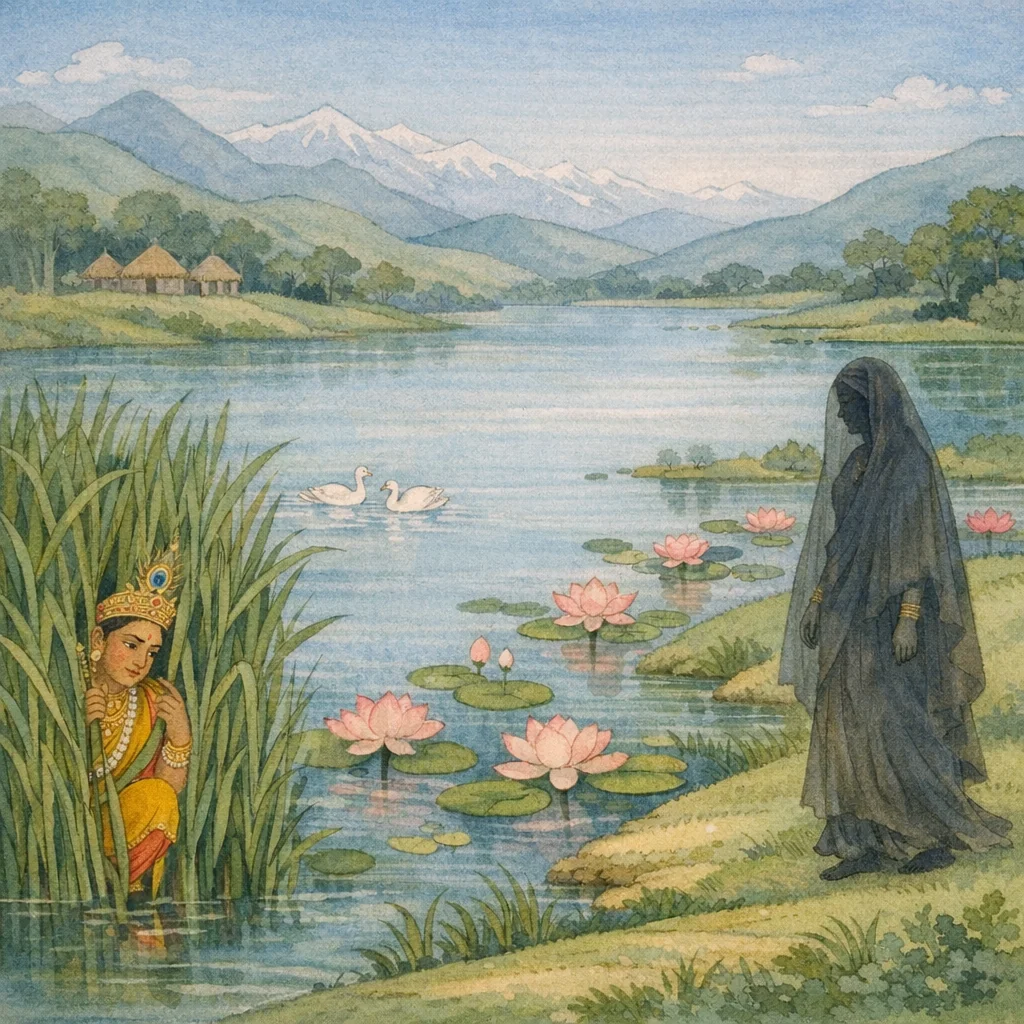
तस्यां द्वैधीभूतायां ब्रह्मवध्यायां भयादिन्द्रो देवराज्यं पर्यत्यजदप्सु सम्भवां च शीतलां मानससरोगतां नलिनीं प्रतिपेदे तत्र चैश्वर्ययोगादणुमात्रो भूत्वा बिसग्रन्थिं प्रविवेश
When that dreadful burden of brahma-slaughter had split into two, Indra—terrified—abandoned his sovereignty over the gods. He sought refuge in the cool lotus-pond born of the waters, situated in Lake Mānasa. There, by the power of his lordly yogic mastery, he became as minute as an atom and entered into the knot of a lotus-stalk, hiding himself away.
Frequently Asked Questions
The chapter frames the problem of how one should obtain reliable dharma-guidance: instruction must be rooted in transmitted learning and sought from a qualified authority approached through proper procedure, rather than assumed or improvised.
Seek counsel from a demonstrably disciplined and learned teacher; stabilize conduct through purity of speech, action, and mind; and apply policy instruments (conciliation, giving, division, and sanction) with discernment to protect social order.
No explicit phalaśruti is stated in the provided verses; instead, the chapter functions as a framing device that authorizes the forthcoming instruction by establishing the teacher’s credentials, the sanctity of place, and the reliability of the dharma to be taught.