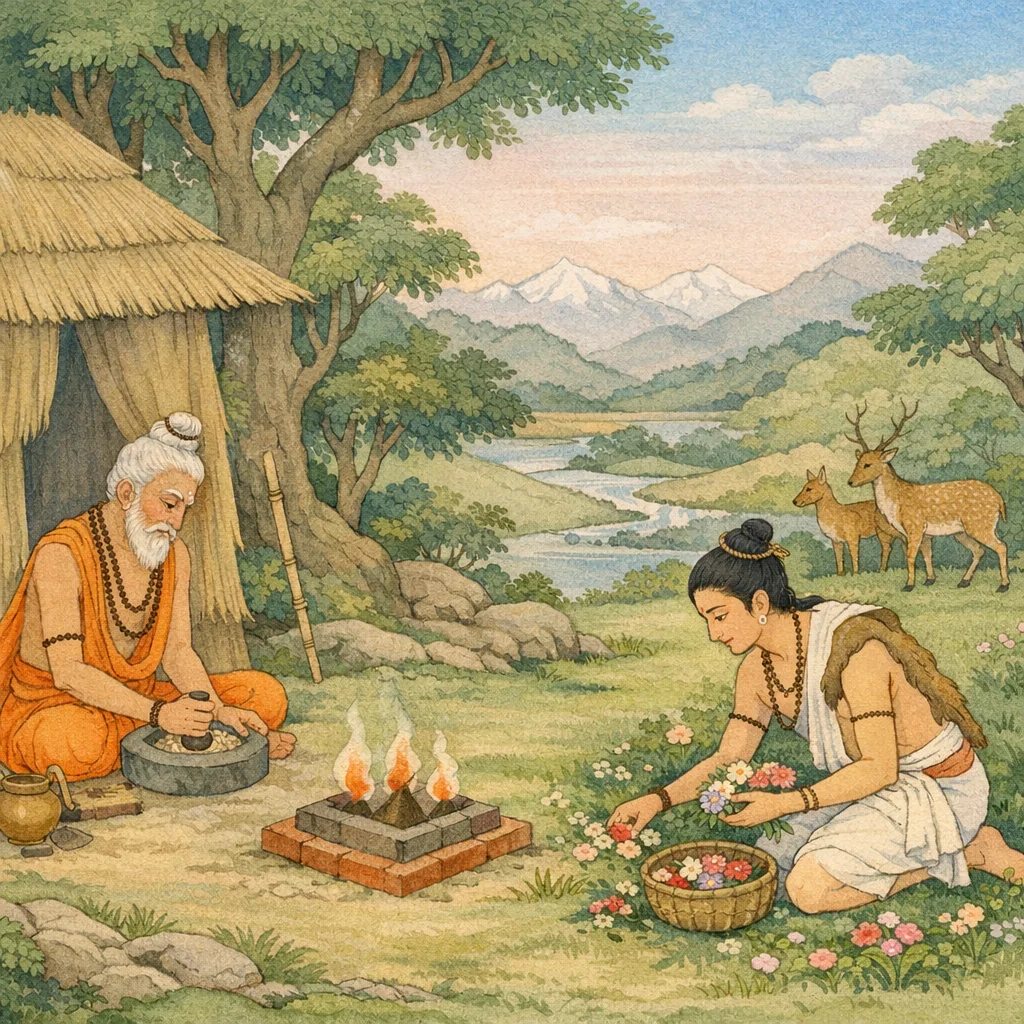
Adhyaya 244
महाभूत–इन्द्रिय–मनस्–बुद्धि–अन्तरात्मा विवेकः | Discrimination of Elements, Senses, Mind, Intellect, and Inner Self
Upa-parva: Mokṣa-dharma (Liberation Teachings) — Element–Sense–Mind Schema Unit
Vyāsa outlines a structured ontology for a liberation-seeking student: the five elements—ākāśa, vāyu, tejas, āpas, pṛthvī—are presented along with paired attributes and functional correlates in embodied life. Each element is linked to a corresponding sensory faculty and its object-quality: ākāśa with hearing and sound (śabda), vāyu with touch and tactile contact (sparśa), tejas with sight and form (rūpa), āpas with taste and flavor (rasa), and pṛthvī with smell and odor (gandha). The account also notes compositional continuity across the elements (later elements include qualities of earlier ones). The schema then ascends to manas as the ninth principle, buddhi as the tenth, and antarātman as the eleventh and superior principle. Buddhi is characterized as decisional/teleological (vyavasāyātmikā), while manas is described as classificatory/discursive (vyākaraṇātmakam). The embodied self (jīva) is inferred through action and its traces, described with the field/body idiom (kṣetra). The concluding claim is epistemic and ethical: the wise person who sees the entirety as constituted by these time-structured conditions does not follow delusion (moha).
Chapter Arc: भीष्म युधिष्ठिर को गृहस्थ-धर्म के बाद की ‘उत्तम तृतीय वृत्ति’ का संकेत देकर वनप्रस्थ और संन्यास की महिमा का द्वार खोलते हैं—जीवन के उत्तरार्ध में धर्म का रूप कैसे बदलता है? → वह क्रमशः गृहस्थ-आसक्ति को ‘अवधूय’ कर वनप्रस्थ-आश्रम में प्रवेश की कठिन साधना बताते हैं: पुण्य-देश में निवास, अग्नि-परिचर्या, नियम, अल्पाहार, कन्द-मूल-फल-फूल पर जीवन, और विविध कठोर व्रत—जहाँ शरीर की मांग और आत्मा की मुक्ति-लालसा आमने-सामने खड़ी होती है। → ‘आत्मयज्ञ’ का उद्घोष: बाह्य यज्ञ की अग्नियों से आगे बढ़कर अपने भीतर ही यजन—प्राणों, इन्द्रियों और मन को यज्ञ-आहुति बनाकर आत्ममोक्षण की ओर बढ़ना; यही वनप्रस्थ-धर्म का शिखर-तत्त्व बनकर प्रकट होता है। → भीष्म वैखानस-गति, यायावर-परंपरा और प्राचीन ऋषियों के उदाहरणों से सिद्ध करते हैं कि इस मार्ग का पालन करने वाले—कठोर तप, संयम और सत्य-आचरण द्वारा—स्वर्ग/उच्च गति को प्राप्त होते हैं; वनप्रस्थ-धर्म लोक-आश्रयों का कल्याणकारी आधार है।
Shlokas
Verse 1
अफ्--कू- चतुश्नत्वारिशर्दाधिकद्विशततमो< ध्याय: वानप्रस्थ और संन्यास-आश्रमके धर्म और महिमाका वर्णन भीष्म उवाच प्रोक्ता गृहस्थवृत्तिस्ते विहिता या मनीषिभि: । तदनन्तरमुक्तं यत् तन्निबोध युधिषछ्िर,(व्यासेन कथितं पूर्व सुताय सुमहात्मने ।) भीष्मजी कहते हैं--बेटा युधिष्ठिर! मनीषी पुरुषोंद्वारा जिसका विधान एवं आचरण किया गया है, उस गृहस्थ वृत्तिका मैंने तुमसे वर्णन किया। तदनन्तर व्यासजीने अपने महात्मा पुत्र शुकदेवसे जो कुछ कहा था, वह सब बताता हूँ, सुनो
Bhishma said: “I have explained to you, Yudhishthira, the way of life of the householder—established and practiced by wise men. Now listen attentively to what was taught next: I shall relate what Vyasa formerly spoke to his great-souled son.”
Verse 2
क्रमशस्त्ववधूयैनां तृतीयां वृत्तिमुत्तमाम् । संयोगव्रतखिन्नानां वानप्रस्थाश्रमौकसाम्,वत्स! तुम्हारा कल्याण हो। गृहस्थकी इस उत्तम तृतीय वृत्तिकी भी उपेक्षा करके सहधर्मिणीके संयोगसे किये जानेवाले व्रत-नियमोंद्वारा जो खिन्न हो चुके हैं तथा वानप्रस्थ- आश्रमको जिन्होंने अपना आश्रय बना लिया है, सम्पूर्ण लोक और आश्रम जिनके अपने ही स्वरूप हैं, जो विचारपूर्वक व्रत और नियमोंमें प्रवृत्त हैं तथा पवित्र स्थानोंमें निवास करते हैं, ऐसे वनवासी मुनियोंका जो धर्म है, उसे बताता हूँ, सुनो
Bhishma said: “Step by step, having set aside even this excellent ‘third mode of life’ (the householder’s discipline), O dear one, I shall now describe the dharma of those forest-dwelling sages—those who, wearied by vows and restraints undertaken in conjunction with a spouse, have taken refuge in the Vanaprastha stage of life.”
Verse 3
श्रूयतां पुत्र भद्रं ते सर्वलोकाश्रमात्मनाम् | प्रेक्षापूर्व प्रवृत्तानां पुण्यदेशनिवासिनाम्,वत्स! तुम्हारा कल्याण हो। गृहस्थकी इस उत्तम तृतीय वृत्तिकी भी उपेक्षा करके सहधर्मिणीके संयोगसे किये जानेवाले व्रत-नियमोंद्वारा जो खिन्न हो चुके हैं तथा वानप्रस्थ- आश्रमको जिन्होंने अपना आश्रय बना लिया है, सम्पूर्ण लोक और आश्रम जिनके अपने ही स्वरूप हैं, जो विचारपूर्वक व्रत और नियमोंमें प्रवृत्त हैं तथा पवित्र स्थानोंमें निवास करते हैं, ऐसे वनवासी मुनियोंका जो धर्म है, उसे बताता हूँ, सुनो
Bhīṣma said: “Listen, my son; may welfare be yours. I shall describe the dharma of those forest-dwelling sages whose very being is identified with all worlds and all stages of life—men who act only after careful reflection, who are devoted to vows and disciplines, and who dwell in holy regions.”
Verse 4
व्यास उवाच गृहस्थस्तु यदा पश्येद् वलीपलितमात्मन: । अपत्यस्यैव चापत्यं वनमेव तदा श्रयेत्,व्यासजी बोले--बेटा! गृहस्थ पुरुष जब अपने सिरके बाल सफेद दिखायी दें, शरीरमें झुर्रियाँ पड़ जायूँ और पुत्रको भी पुत्रकी प्राप्ति हो जाय तो अपनी आयुका तीसरा भाग व्यतीत करनेके लिये वनमें जाय और वानप्रस्थ-आश्रममें रहे। वह वानप्रस्थ-आश्रममें भी उन्हीं अग्नियोंका सेवन करे, जिनकी गृहस्थाश्रममें उपासना करता था। साथ ही वह प्रतिदिन देवाराधन भी करता रहे
Vyāsa said: “When a householder sees in himself the signs of age—wrinkles and grey hair—and when his child has in turn obtained a child, then he should take refuge in the forest and enter the life of a forest-dweller (vānaprastha). This teaching frames renunciation not as abandonment of dharma, but as a timely transition: once family continuity is secured, one turns toward austerity, worship, and inner steadiness.”
Verse 5
तृतीयमायुषो भागं वानप्रस्थाश्रमे वसेत् । तानेवाग्नीन् परिचरेद् यजमानो दिवौकस:,व्यासजी बोले--बेटा! गृहस्थ पुरुष जब अपने सिरके बाल सफेद दिखायी दें, शरीरमें झुर्रियाँ पड़ जायूँ और पुत्रको भी पुत्रकी प्राप्ति हो जाय तो अपनी आयुका तीसरा भाग व्यतीत करनेके लिये वनमें जाय और वानप्रस्थ-आश्रममें रहे। वह वानप्रस्थ-आश्रममें भी उन्हीं अग्नियोंका सेवन करे, जिनकी गृहस्थाश्रममें उपासना करता था। साथ ही वह प्रतिदिन देवाराधन भी करता रहे
Vyāsa said: “One should spend the third portion of one’s life in the stage of the forest-dweller (vānaprastha). Having withdrawn to that discipline, he should continue to tend the very same sacred fires he maintained as a householder, living as a sacrificer and offering worship to the divine.”
Verse 6
नियतो नियताहार: षष्ठ भुक्तो5प्रमत्तवान् | तदग्निहोत्रं ता गावो यज्ञाज़नि च सर्वश:,वानप्रस्थी पुरुष नियमके साथ रहे, नियमानुकूल भोजन करे। दिनके छठे भाग अर्थात् तीसरे पहरमें एक बार अन्न ग्रहण करे और प्रमादसे बचा रहे। गृहस्थाश्रमकी ही भाँति अन्निहोत्र, वैसी ही गो-सेवा तथा उसी प्रकार यज्ञके सम्पूर्ण अंगोंका सम्पादन करना वानप्रस्थका धर्म है
Vyāsa said: “Let the forest-dweller (vānaprastha) be disciplined and eat only what is permitted by rule. Let him take food once in the sixth part of the day (i.e., once daily at the prescribed time), remaining vigilant and free from negligence. As in the householder’s life, so too for him: the tending of the sacred fires (agnihotra), the care of cows, and the complete performance of all the limbs of sacrifice—these constitute the dharma of the vānaprastha.”
Verse 7
अफालकुष् व्रीहियवं नीवारं विघसानि च । हवींषि सम्प्रयच्छेत मखेष्वत्रापि पजचसु,वनवासी मुनि बिना जोती हुई पृथ्वीसे पैदा हुआ धान, जौ, नीवार तथा विघस (अतिथियोंको देनेसे बचे हुए) अन्नसे जीवन-निर्वाह करे। वानप्रस्थमें भी पंचमहायज्ञोंमें हविष्य वितरण करे
Vyāsa said: “Let the forest-dwelling sage sustain himself on rice and barley that have not been ploughed, on wild grains (nīvāra), and on the remnants left after feeding guests. Even while living in the forest-stage, he should duly offer and distribute the prescribed oblations (havis) in the five daily sacrifices. Thus, renunciation is not neglect: simplicity of livelihood is joined to continual duty toward gods, ancestors, beings, and guests.”
Verse 8
वानप्रस्थाश्रमेडप्येता श्वतस््रो वृत्तय: स्मृता: । सद्य:प्रक्षालका: केचित् केचिन्मासिकसंचया:,वानप्रस्थ-आश्रममें भी चार प्रकारकी वृत्तियाँ मानी गयी हैं। कोई उतने ही अन्नका संग्रह करते हैं कि तुरंत बना-खाकर बर्तनको धो-माँजकर साफ कर लें अर्थात् वे दूसरे दिनके लिये कुछ नहीं बचाते। कुछ दूसरे लोग वे हैं, जो एक महीनेके लिये अनाजका संग्रह करते हैं
Vyāsa said: Even in the forest-dweller’s stage of life (vānaprastha) four modes of subsistence are recognized. Some are “immediate-cleaners”—they gather only so much grain as can be cooked and eaten at once, washing the vessels right away and keeping nothing for the next day. Others, by contrast, store provisions sufficient for a month.
Verse 9
वार्षिक संचयं केचित् केचिद् द्वादशवार्षिकम् । कुर्वन्त्यतिथिपूजार्थ यज्ञतन्त्रार्थमेव वा,कोई वर्षभरके लिये और कोई बारह वर्षोंके लिये अन्नका संग्रह करते हैं। उनका यह संग्रह अतिथि-सेवा तथा यज्ञकर्मके लिये होता है
Vyāsa said: Some people store provisions for a single year, while others store enough for twelve years. Yet this accumulation is undertaken not for greed, but for righteous purposes—so that guests may be honored and the duties of sacrificial rites (yajña) may be properly carried out.
Verse 10
अभ्रावकाशा वर्षासु हेमन्ते जलसंश्रया: । ग्रीष्मे च पजच तपस: शश्वच्च मितभोजना:,वे वर्षकि समय खुले आकाशके नीचे और सर्दीमें पानीके भीतर खड़े रहते हैं। जब गर्मी आती है, तब पंचाग्निसे शरीरको तपाते हैं और सदा स्वल्प भोजन करनेवाले होते हैं
Vyāsa said: “In the rainy season they remain exposed beneath the open sky; in winter they take refuge in water, standing immersed. When the heat of summer comes, they subject their bodies to the austerity (tapas) of the five fires, and they continually live on scant food.”
Verse 11
भूमौ विपरिवर्तन्ते तिष्ठन्ति प्रपदैरपि । स्थानासनैवरवर्तयन्ति सवनेष्वभिषिज्चते,वानप्रस्थी महात्मा जमीनपर लोट-पोट करते, पंजोंके बल खड़े होते, एक स्थानपर आसन लगाकर बैठते तथा तीनों काल स्नान और संध्या करते हैं
Vyāsa describes the austere discipline of a great-souled forest-dweller (vānaprasthin): he rolls upon the bare earth, stands even on the strength of his forefeet, lives by remaining in fixed postures—standing or seated—and performs the prescribed ablutions at the three daily rites. The passage highlights tapas (self-restraint) as a means of purifying conduct and steadying the mind in accordance with dharma.
Verse 12
दन्तोलूखलिका: केचिदश्मकुट्टास्तथा परे | शुक्लपक्षे पिबन्त्येके यवागूं क्वथितां सकृत्
Vyāsa said: Some live with only their teeth as a mortar, while others pound with stones. In the bright fortnight (śukla-pakṣa), some drink just once a day a single portion of boiled gruel (yavāgū)—showing the many austere disciplines by which seekers restrain appetite and cultivate self-control.
Verse 13
मूलैरेके फलैरेके पुष्पैरेके दृढव्रता:
Vyāsa said: “Some, steadfast in their vows, live on roots; some on fruits; and some on flowers.”
Verse 14
एताश्षान्याश्व विविधा दीक्षास्तेषां मनीषिणाम्,उन मनीषी पुरुषोंके लिये ये तथा और भी बहुत-से नाना प्रकारके नियम शास्त्रोंमें बताये गये हैं। चौथे संन्यास-आश्रममें विहित जो उपनिषद्-प्रतिपादित शाम, दम, उपरति, तितिक्षा और समाधानरूप धर्म है, वह सभी आश्रमोंके लिये साधारण माना गया है, उसका पालन सभी आश्रमवालोंको करना चाहिये; किंतु चौथे आश्रम संन्यासका जो विशेष धर्म है, वह वानप्रस्थ और गृहस्थसे भिन्न है
Vyāsa said: “For reflective sages, the scriptures describe these and many other diverse disciplines and observances. Yet the Upaniṣads enjoin, especially for the fourth stage of life—renunciation (saṃnyāsa)—a dharma consisting of tranquility of mind (śama), self-restraint (dama), withdrawal (uparati), forbearance (titikṣā), and steady concentration (samādhāna). These virtues are held to be common to all the āśramas and therefore should be practiced in every stage of life; but the distinctive dharma of the fourth āśrama differs from that of the householder and the forest-dweller (vānaprastha).”
Verse 15
चतुर्थश्नौपनिषदो धर्म: साधारण: स्मृत: । वानप्रस्थाद् गृहस्थाच्च ततो<न्य: सम्प्रवर्तते,उन मनीषी पुरुषोंके लिये ये तथा और भी बहुत-से नाना प्रकारके नियम शास्त्रोंमें बताये गये हैं। चौथे संन्यास-आश्रममें विहित जो उपनिषद्-प्रतिपादित शाम, दम, उपरति, तितिक्षा और समाधानरूप धर्म है, वह सभी आश्रमोंके लिये साधारण माना गया है, उसका पालन सभी आश्रमवालोंको करना चाहिये; किंतु चौथे आश्रम संन्यासका जो विशेष धर्म है, वह वानप्रस्थ और गृहस्थसे भिन्न है
Vyāsa said: “The dharma taught in the Upaniṣads—especially associated with the fourth āśrama (saṃnyāsa)—is remembered as ‘common’ (sādhāraṇa), to be cultivated by people in all stages of life. Yet the distinctive discipline of the fourth āśrama itself proceeds differently from that of the householder and the forest-dweller (vānaprastha).”
Verse 16
अस्मिन्नेव युगे तात विप्रैः सर्वार्थदर्शिभि: । अगस्त्य: सप्त ऋषयो मधुच्छन्दो5घमर्षण:,तात! इस युगमें भी सर्वार्थदर्शी ब्राह्मणोंने इस वानप्रस्थ-धर्मका पालन एवं प्रसार किया। अगस्त्य, सप्तर्षिगण, मधुच्छन्द, अघमर्षण, सांकृति, सुदिवा, तण्डि, यथावास, अकृतश्रम, अहोवीर्य, काव्य (शुक्राचार्य), ताण्ड्य, मेधातिथि, बुध, शक्तिशाली कर्ण निर्वाक, शून्यपाल और कृतश्रम--इन सबने इस धर्मका पालन किया, जिससे ये सभी स्वर्गलोकको प्राप्त हुए
Vyāsa said: “Even in this very age, dear one, far-seeing brāhmaṇas—those who discern the true purport of all aims—have upheld and propagated the dharma of the forest-dweller (vānaprastha). Among them are Agastya, the Seven Ṛṣis, Madhucchandas, and Aghamarṣaṇa.”
Verse 17
सांकृति: सुदिवा तण्डियथावासो5कृतश्रम: । अहोवीर्यस्तथा काव्यस्ताण्ड्यो मेधातिथिबुध:,तात! इस युगमें भी सर्वार्थदर्शी ब्राह्मणोंने इस वानप्रस्थ-धर्मका पालन एवं प्रसार किया। अगस्त्य, सप्तर्षिगण, मधुच्छन्द, अघमर्षण, सांकृति, सुदिवा, तण्डि, यथावास, अकृतश्रम, अहोवीर्य, काव्य (शुक्राचार्य), ताण्ड्य, मेधातिथि, बुध, शक्तिशाली कर्ण निर्वाक, शून्यपाल और कृतश्रम--इन सबने इस धर्मका पालन किया, जिससे ये सभी स्वर्गलोकको प्राप्त हुए
Vyāsa said: “Sāṅkṛti, Sudivā, Taṇḍi, Yathāvāsa, Akṛtaśrama, Aho-vīrya, Kāvyā (Śukrācārya), Tāṇḍya, Medhātithi, and Budha—these sages too observed the discipline of the forest-dweller (vānaprastha). By upholding and propagating this dharma even in later ages, they attained the heavenly worlds.”
Verse 18
बलवान् कर्णनिर्वाक: शून्यपाल: कृतश्रम: । एनं धर्म कृतवन्तस्तत:ः स्वर्गमुपागमन्,तात! इस युगमें भी सर्वार्थदर्शी ब्राह्मणोंने इस वानप्रस्थ-धर्मका पालन एवं प्रसार किया। अगस्त्य, सप्तर्षिगण, मधुच्छन्द, अघमर्षण, सांकृति, सुदिवा, तण्डि, यथावास, अकृतश्रम, अहोवीर्य, काव्य (शुक्राचार्य), ताण्ड्य, मेधातिथि, बुध, शक्तिशाली कर्ण निर्वाक, शून्यपाल और कृतश्रम--इन सबने इस धर्मका पालन किया, जिससे ये सभी स्वर्गलोकको प्राप्त हुए
Vyāsa said: “Mighty Karṇa-nirvāka, Śūnya-pāla, and Kṛta-śrama—having undertaken and practiced this discipline of dharma, they thereafter attained heaven, dear child.” In context, the passage presents exemplary sages and teachers as witnesses to the validity of the vānaprastha way of life: by adopting restraint, austerity, and duty in the forest-dweller stage, they uphold dharma and gain an auspicious posthumous destiny.
Verse 19
तात प्रत्यक्षधर्माणस्तथा यायावरा गणा: । ऋषीणामुग्रतपसां धर्मनैपुणदर्शिनाम्
Vyāsa said: “Dear one, there were also groups of wandering ascetics—men whose dharma was directly evident in their conduct—sages of fierce austerities, renowned for their refined discernment in matters of righteousness.”
Verse 20
अन्ये चापरिमेयाश्ष ब्राह्म॒णा वनमश्रिता: । वैखानसा वालखिल्या: सैकताक्ष तथा परे
Vyāsa said: “And there were also countless other brāhmaṇas who had taken refuge in the forest—Vaikhānasas, Vālakhilyas, and likewise the Saikatākṣas, along with others besides.”
Verse 21
तात! जिनकी तपस्या उग्र है, जिन्होंने धर्मकी निपुणताको देखा और अनुभव किया है, उन ऋषियोंके यायावर नामक गण भी वानप्रस्थी हैं, जिन्हें धर्मके फलका प्रत्यक्ष अनुभव है। वे तथा और भी असंख्य वनवासी ब्राह्मण, बालखिल्य और सैकत नामवाले दूसरे मुनि भी वैखानस (वानप्रस्थ) धर्मका पालन करनेवाले हैं ।। कर्मभिस्ते निरानन्दा धर्मनित्या जितेन्द्रिया: । गताः: प्रत्यक्षधर्माणस्ते सर्वे वनमाश्रिता:
Vyāsa said: “Dear one, those whose austerities are severe—who have seen and personally realized the subtle skill of dharma—include even the groups of sages called Yāyāvaras among the forest-dwelling vānaprasthas, for they have direct experience of the fruits of dharma. Along with them, countless Brahmins living in the woods, and the Bālakhilyas, and other ascetics known as Saikatas too, all observe the Vaikhānasa discipline of the vānaprastha life. Through their prescribed acts they remain free from worldly delight, ever steadfast in dharma, self-controlled; having made dharma something directly witnessed, they all have taken refuge in the forest.”
Verse 22
अनक्षत्रास्त्वनाधृष्या दृश्यन्ते ज्योतिषां गणा: । ये सब ब्राह्मण प्रायः उपवास आदि क्लेशदायक कर्म करनेके कारण लौकिक सुखसे रहित थे। सदा धर्ममें तत्पर रहते और इन्द्रियोंको वशमें रखते थे। उन्हें धर्मके फलका प्रत्यक्ष अनुभव था। वे सब-के-सब वानप्रस्थी थे। इस लोकसे जानेपर आकाशकमें वे नक्षत्र भिन्न, दुर्धर्ष ज्योतिर्मय तारोंके रूपमें दृष्टिगोचर होते हैं ।। जरया च परिथ्यूनो व्याधिना च प्रपीडित:
Vyāsa said: “There are also hosts of radiant beings seen in the sky who are not counted among the ordinary constellations—unassailable, shining groups of lights. They are, for the most part, Brahmins who, through fasting and other austere disciplines, lived without worldly pleasures, ever devoted to dharma and with their senses under control. Having directly realized the fruits of righteousness, they lived as forest-dwelling ascetics; and after departing this world, they become visible in the heavens as distinct, formidable, luminous stars. (Some were also worn down by old age and afflicted by disease.)”
Verse 23
चतुर्थे चायुष: शेषे वानप्रस्थाश्रमं त्यजेत् । सद्यस्कारां निरूप्येष्टिं सर्ववेदसदक्षिणाम्
Vyāsa said: When the fourth and final portion of one’s lifespan remains, one should relinquish the forest-dweller’s stage (vānaprastha). Having arranged the immediate rites and instituted a sacrificial offering with the gifts (dakṣiṇā) prescribed by all the Vedas, one should proceed onward—marking the ethical transition from household and ritual obligations toward complete renunciation.
Verse 24
इस प्रकार वानप्रस्थकी अवधि पूरी कर लेनेके बाद जब आयुका चौथा भाग शेष रह जाय, वृद्धावस्थासे शरीर दुर्बल हो जाय और रोग सताने लगें तो उस आश्रमका परित्याग कर दे (और संन्यास-आश्रम ग्रहण कर ले)। संन्यासकी दीक्षा लेते समय एक दिनमें पूरा होनेवाला यज्ञ करके अपना सर्वस्व दक्षिणामें दे डाले ।। आत्मयाजी सो<त्मरतिरात्मक्रीडात्मसंश्रय: । आत्मन्यग्नीन् समारोप्य त्यक्त्वा सर्वपरिग्रहान्,फिर आत्माका ही यजन, आत्मामें ही रत होकर आत्मामें ही क्रीडा करे। सब प्रकारसे आत्माका ही आश्रय ले। अग्निहोत्रकी अग्नियोंको आत्मामें ही आरोपित करके सम्पूर्ण संग्रह-परिग्रहको त्याग दे और तुरंत सम्पन्न किये जानेवाले ब्रह्मयज्ञ आदि यज्ञों तथा इष्टियोंका सदा ही मानसिक अनुष्ठान करता रहे। ऐसा तबतक करे, जबतक कि याज्ञिकोंके कर्ममय यज्ञसे हटकर आत्मयज्ञका अभ्यास न हो जाय
Vyāsa explains the inner discipline of renunciation: after completing the term of vānaprastha, when only the fourth part of life remains and the body is weakened by age and disease, one should leave that āśrama and take up saṃnyāsa. At the time of initiation, one should perform a sacrifice completed in a single day and give away everything as dakṣiṇā. The ascetic should become one who “sacrifices to the Self”—delighting and playing in the Self alone, taking refuge in the Self in every way. Having inwardly placed the sacred fires within the Self, he should abandon all possessions and attachments, turn away from outward ritual sacrifice, and continually perform the sacrifices mentally until the practice of self-offering becomes steady and replaces dependence on external rites.
Verse 25
साद्यस्कांश्न॒ यजेद यज्ञानिष्टी श्वैवेह सर्वदा । यदैव याजिनां यज्ञादात्मनीज्या प्रवर्तते,फिर आत्माका ही यजन, आत्मामें ही रत होकर आत्मामें ही क्रीडा करे। सब प्रकारसे आत्माका ही आश्रय ले। अग्निहोत्रकी अग्नियोंको आत्मामें ही आरोपित करके सम्पूर्ण संग्रह-परिग्रहको त्याग दे और तुरंत सम्पन्न किये जानेवाले ब्रह्मयज्ञ आदि यज्ञों तथा इष्टियोंका सदा ही मानसिक अनुष्ठान करता रहे। ऐसा तबतक करे, जबतक कि याज्ञिकोंके कर्ममय यज्ञसे हटकर आत्मयज्ञका अभ्यास न हो जाय
Vyāsa says: One should always perform, in this very life, the promptly accomplishable sacrifices and the various iṣṭi-offerings—until the moment when, for the sacrificers, the worship of the Self begins to arise in place of sacrifice. Then, worshipping only the Self, absorbed in the Self, one should find delight within the Self alone. In every way one should take refuge in the Self. Having placed the fires of the Agnihotra within the Self, one should abandon all hoarding and possessiveness, and continually carry out—mentally—the Brahma-yajña and the other immediate sacrifices and iṣṭis, until one turns away from ritual sacrifice made of action and the inner sacrifice to the Self becomes established.
Verse 26
त्रींश्वैवाग्नीन् यजेत् सम्यगात्मन्येवात्ममोक्षणात् | प्राणेभ्यो यजुष: पञ्च षट् प्राश्नीयादकुत्सयम्,आत्मयज्ञका स्वरूप इस प्रकार है, अपने भीतर ही तीनों अग्नियोंकी विधिपूर्वक स्थापना करके देहपात होनेतक प्राणाग्निहोत्रकी- विधिसे भलीभाँति यजन करता रहे। यजुर्वेदके *प्राणाय स्वाहा” आदि मन्त्रोंका उच्चारण करता हुआ पहले अन्नके पाँच-छ: ग्रास ग्रहण करे (फिर आचमनके पश्चात) शेष अन्नकी निन््दा न करते हुए मौनभावसे भोजन करे
Vyāsa said: “For the sake of one’s own liberation, one should properly worship within oneself by establishing the three sacred fires inwardly. Reciting the Yajurvedic formulas addressed to the vital breaths, one should first take five or six mouthfuls as an offering; then, without disparaging the remaining food, one should eat in silence. Thus the inner sacrifice—the disciplined ‘prāṇa-agnihotra’—is maintained until the body falls.”
Verse 27
केशलोमनखान् वाप्य वानप्रस्थो मुनिस्तत: । आश्रमादाश्रमं पुण्यं पूतो गच्छति कर्मभि:,तदनन्तर वानप्रस्थ मुनि केश, लोम और नख कटाकर कर्मोंसे पवित्र हो वानप्रस्थ- आश्रमसे पुण्यमय संन्यास-आश्रममें प्रवेश करे
Vyāsa said: Thereafter, the forest-dwelling sage (vānaprastha), having cut his hair, body-hair, and nails, becomes purified through his prescribed disciplines and proceeds from one sacred stage of life to the next—entering the meritorious renunciant’s order (saṃnyāsa). The verse underscores that ethical purification and orderly transition, not mere outward change, qualify one for higher renunciation.
Verse 28
अभयं सर्वभूतेभ्यो दत्त्वा यः प्रव्रजेद् द्विज: । लोकास्तेजोमयास्तस्य प्रेत्य चानन्त्यमश्लुते,जो ब्राह्मण सम्पूर्ण प्राणियोंकों अभयदान देकर संन्यासी हो जाता है, वह मरनेके पश्चात् तेजोमय लोकमें जाता है और अन्तमें मोक्ष प्राप्त कर लेता है
Vyāsa said: The twice-born who, having granted fearlessness to all beings, renounces the world as a wandering ascetic—after death attains radiant worlds, and in the end reaches the Infinite, final liberation.
Verse 29
सुशीलवृत्तो व्यपनीतकल्मषो न चेह नामुत्र च कर्तुमीहते । अरोषमोहो गतसंधिविग्रहो भवेदुदासीनवदात्मविन्नर:
Vyāsa said: A person of good conduct, whose impurities have been removed, does not strive to “make” or “secure” anything either in this world or in the next. Free from anger and delusion, having gone beyond the dualities of alliance and hostility, the knower of the Self lives as though indifferent—steady, unattached, and inwardly fulfilled.
Verse 30
आत्मज्ञानी पुरुष सुशील, सदाचारी और पापरहित होता है। वह इहलोक और परलोकके लिये भी कोई कर्म करना नहीं चाहता। क्रोध, मोह, संधि और विग्रहका त्याग करके वह सब ओरसे उदासीन-सा रहता है ।। यमेषु चैवानुगतेषु न व्यथे स्वशास्त्रसूत्राहुतिमन्त्रविक्रम: । भवेद् यथेष्टागतिरात्मवेदिनि न संशयो धर्मपरे जितेन्द्रिये,जो अहिंसा आदि यमों और शौच-संतोष आदि नियमोंका पालन करनेमें कभी कष्टका अनुभव नहीं करता, संन्यास-आश्रमका विधान करनेवाले शास्त्रके सूत्रभूत वचनोंके अनुसार त्यागमयी अग्निमें अपने सर्वस्वकी आहुति दे देनेके लिये निरन्तर उत्साह दिखाता है, उसे इच्छानुसार गति [मुक्ति) प्राप्त होती है। ऐसे जितेन्द्रिय एवं धर्मपरायण आत्मज्ञानीकी मुक्तिके विषयमें तनिक भी संदेहके लिये स्थान नहीं है
Vyāsa said: One who follows the yamas (restraints) feels no distress in practicing them; and, empowered by the mantras and the guiding aphorisms of his own śāstra, he shows steady zeal to offer his entire being as an oblation into the fire of renunciation. For such a knower of the Self—self-controlled and devoted to dharma—there is no doubt that he attains the course he seeks, even liberation itself.
Verse 31
ततः परं श्रेष्ठमतीव सदगुणै- रधिष्तितं त्रीनधिवृत्तिमुत्तमम् । चतुर्थमुक्तं परमाश्रमं शृणु प्रकीर्त्सममानं परमं परायणम्,जो वानप्रस्थ-आश्रमसे उत्कृष्ट तथा अपने सद्गुणोंके कारण अति ही श्रेष्ठ है, जो पूर्वोक्त तीनों आश्रमोंसे ऊपर है, जिसमें शम आदि गुणोंका अधिक विकास होता है, जो सबसे श्रेष्ठ और सबकी परम गति है, उस सर्वोत्तम चतुर्थ आश्रमका यद्यपि वर्णन किया गया है, तथापि पुनः विशेषरूपसे उसका प्रतिपादन करता हूँ; तुम ध्यान देकर सुनो
Vyāsa said: “Now, beyond these, hear of the fourth and highest āśrama—firmly grounded in noble virtues, surpassing the three previously described stages, and marked by a fuller cultivation of inner restraint. Though it has been spoken of, I shall proclaim it again with special clarity. Listen attentively to this supreme refuge and final goal.”
Verse 123
कृष्णपक्षे पिबन्त्यन्ये भुउ्जते वा यथागतम् । कोई दाँतोंसे ही ओखलीका काम लेते हैं, अर्थात् कच्चे अन्नको चबा-चबाकर खाते हैं। दूसरे लोग पत्थरपर कूटकर भोजन करते हैं और कोई-कोई शुक्लपक्ष या कृष्णपक्षमें एक बार जौका औटाया हुआ माँड़ पीकर रह जाते हैं अथवा समयानुसार जो कुछ मिल जाय वही खाकर जीवन-निर्वाह करते हैं
Vyāsa said: Some, during the dark fortnight, live only by drinking; others eat whatever comes to them as it happens. The passage depicts austere modes of subsistence—accepting scant or chance food without insistence—highlighting restraint, endurance, and contentment as ethical disciplines.
Verse 133
वर्तयन्ति यथान्यायं वैखानसगतिं श्रिता: । वानप्रस्थ-धर्मका आश्रय लेकर कोई कन्द-मूलसे और कोई-कोई दृढ़ व्रतका पालन करते हुए फूलोंसे ही धर्मानुकूल जीविका चलाते हैं
Vyāsa said: Those who have taken refuge in the Vaikhānasa path live in a manner consistent with what is right. As followers of the forest-dweller’s discipline (vānaprastha-dharma), some sustain themselves on roots and tubers, while others, steadfast in rigorous vows, maintain a livelihood that accords with dharma by subsisting only on flowers.
Verse 244
इति श्रीमहाभारते शान्तिपर्वणि मोक्षधर्मपर्वणि शुकानुप्रश्ने चतुश्नत्वारिंशदधिकद्विशततमो<ध्याय:
Thus ends the two-hundred and sixty-fourth chapter in the Mokṣadharma section of the Śānti Parva of the revered Mahābhārata, within the episode of Śuka’s inquiry—marking the formal close of this unit of teaching on liberation and renunciation.
Frequently Asked Questions
How to anatomize experience so that identity is not mislocated in sensory reactions: the chapter provides a layered model (elements → senses → mind → intellect → inner self) to support discriminative knowledge and reduce delusion.
Understanding the element–sense structure and the higher ordering roles of manas and buddhi allows the listener to recognize conditioned processes as conditioned; this clarity supports non-entanglement in moha and aligns inquiry toward mokṣa.
Rather than a formal phalaśruti, it ends with a functional claim: the prājña who sees the whole as constituted by these time-structured factors remains unclouded and does not follow delusion, indicating the soteriological utility of the analysis.