Adhyaya 117
Gratitude, Discernment, and the Escalation of Power (Śvā–Dvipī–Vyāghra–Nāga–Siṃha–Śarabha Itihāsa)
Upa-parva: Rājadharmānuśāsana Upa-parvan (Royal Duties and Governance Instructions)
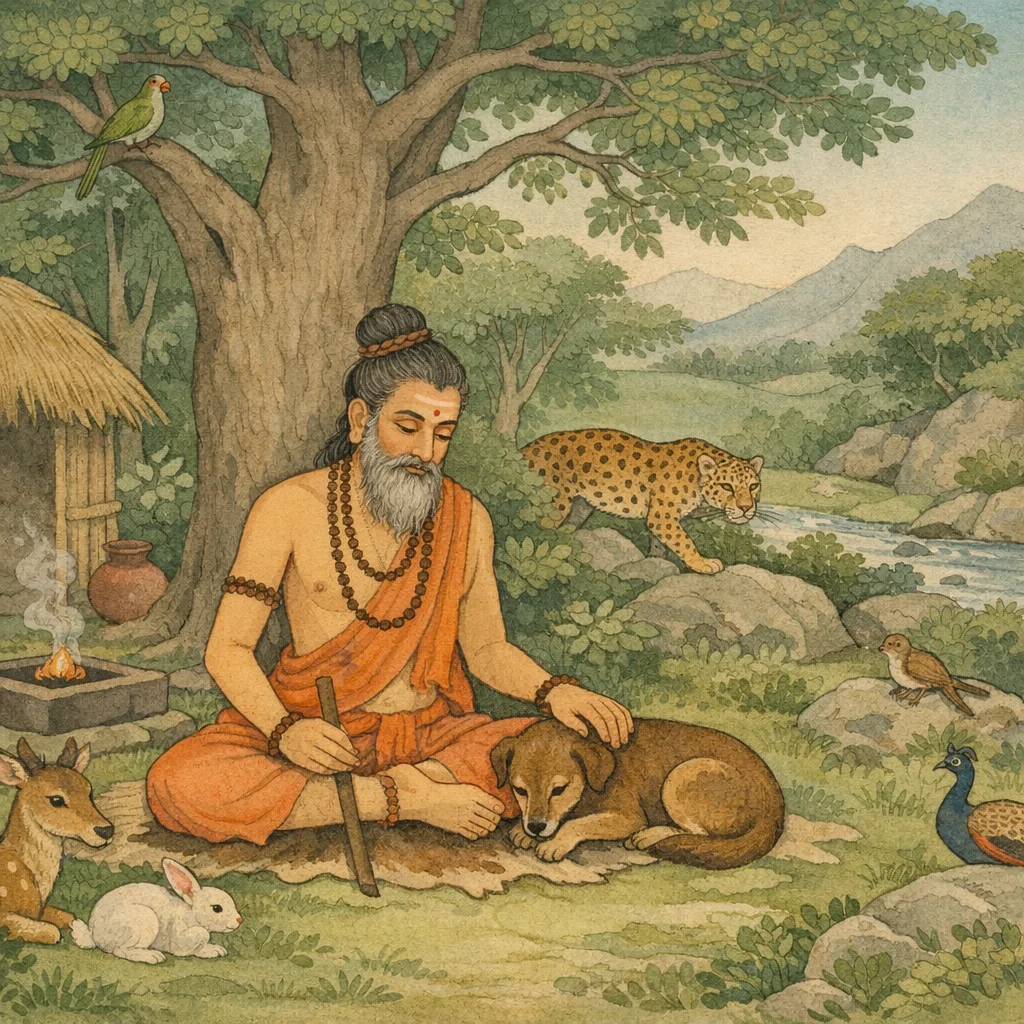
Bhīṣma introduces an ancient exemplum heard in an ascetic grove. A disciplined ṛṣi—root-and-fruit eater, self-controlled, devoted to study and purification—radiates calm such that even formidable forest creatures approach him without hostility. A domesticated dog remains near him in affectionate dependence. When threatened by a leopard (dvipī), the dog seeks refuge; the ṛṣi removes fear by transforming the dog into a leopard. Each subsequent, stronger predator appears (tiger, elephant, lion, and finally the mythical śarabha), and each time the transformed creature seeks the ṛṣi’s protection; the sage repeatedly upgrades its form to a more powerful species. With each empowerment, the creature’s diet and disposition shift toward predation and dominance, until—driven by bloodlust and ingratitude—it contemplates harming the very ascetic who protected it. The ṛṣi, perceiving this through ascetic insight, recounts the sequence of transformations and rebukes the creature’s intent; as a corrective sanction, he curses it back into its original canine birth. The chapter’s technical lesson is the governance logic of calibrated protection: benefaction without assessment of character (kula/anvaya, svabhāva) can produce escalating harm, requiring eventual corrective action to restore equilibrium.
Chapter Arc: युधिष्ठिर राजधर्म के प्रसंग में एक तीखे प्रश्न से बात उठाते हैं—जहाँ राजा के पास कुलज, विश्वसनीय सहायक नहीं होते, वहाँ राज्य-रक्षा और नीति कैसे टिके? इसी शंका को दृष्टान्त से स्पष्ट करने हेतु ‘महर्षि और कुत्ते’ की कथा का सूत्र पड़ता है। → तपोवन के निर्जन, अनमनुष्य-निषेवित महावन में एक नियमपरायण, जितेन्द्रिय ऋषि फल-मूल पर जीवन बिताते हैं। आश्चर्य यह कि हिंसक मांसाहारी वन्य पशु भी उनके आश्रम-परिसर में शिष्यवत् विनीत होकर रहते हैं। इसी शांत व्यवस्था में एक कुत्ता भयभीत होकर शरण लेता है—उसके पीछे चीता/द्वीपी (कुत्तों का शत्रु) मृत्यु बनकर लगा है। → ऋषि कुत्ते के भय का कारण जानकर उसे आश्वस्त करते हैं कि चीते से उसे भय नहीं होना चाहिए; पर भय का मूल केवल बाहरी शत्रु नहीं, भीतर की वासना और असंतोष भी है। कुत्ता सुरक्षा के बदले रूप-परिवर्तन/उन्नति की याचना करता है—और जैसे-जैसे उसे सामर्थ्य मिलता है, उसकी वृत्ति बदलती जाती है; अंततः वह वनौकसों की भाँति ‘मृगपति’ जैसी आकांक्षा करने लगता है और फल-मूल से विरक्ति होकर हिंसा-प्रधान लालसा में फँस जाता है। → ऋषि इस परिवर्तन से दिखाते हैं कि केवल बाहरी संरक्षण या पद-उन्नति से ‘सज्जनता’ नहीं आती; स्वभाव और संस्कार का परिष्कार आवश्यक है। भय से शुरू हुई शरणागति यदि लोभ-हिंसा में बदल जाए तो वह धर्म-रक्षा नहीं, अधर्म-वृद्धि बन जाती है—इससे युधिष्ठिर के प्रश्न का उत्तर निकलता है कि राजा के सहायक केवल कुल-परंपरा से नहीं, गुण-चरित्र से ‘सज्जन’ होने चाहिए। → कुत्ता चीते को अपना शत्रु बताकर ऋषि से ऐसी कृपा माँगता है जिससे वह सुरक्षित रहे—पर वही कृपा आगे चलकर उसके भीतर की हिंसक प्रवृत्ति को उभार देती है; क्या ऋषि उसे उसकी मूल अवस्था में लौटाएँगे या उसे उसके स्वभाव का दंड भोगने देंगे?
Shlokas
Verse 1
षोडशाधिकशततमोब<्ध्याय: सज्जनोंके चरित्रके विषयमें दृष्टान्तरूपसे एक महर्षि और कुत्तेकी कथा युधिछ्िर उवाच (न सन्ति कुलजा यत्र सहाया: पार्थिवस्य तु । अकुलीनाश्न कर्तव्या न वा भरतसत्तम ||) युधिष्ठिरने पूछा--भरतश्रेष्ठ)! जहाँ राजाके पास अच्छे कुलमें उत्पन्न सहायक नहीं हैं, वहाँ वह नीच कुलके मनुष्योंको सहायक बना सकता है या नहीं? ।। भीष्म उवाच अत्राप्युदाहरन्तीममितिहासं पुरातनम् । निदर्शनं परं लोके सज्जानाचरिते सदा,भीष्मजीने कहा--युधिष्ठिर! इस विषयमें जानकार लोग एक प्राचीन इतिहासका उदाहरण दिया करते हैं, जो लोकमें सत्पुरुषोंके आचरणके सम्बन्धमें सदा उत्तम आदर्श माना जाता है
Bhīṣma said: “On this matter too, the learned cite an ancient historical example—an illustration held in the world as a supreme model for the conduct of the virtuous.” Yudhiṣṭhira said: “O best of the Bharatas! If a king has no helpers born in good families, should he appoint men of low or unknown lineage as assistants, or should he not?”
Verse 2
अस्यैवार्थस्य सदृशं यच्छुतं मे तपोवने । जामदग्न्यस्य रामस्य यदुक्तमृषिसत्तमै:,मैंने तपोवनमें इस विषयके अनुरूप बातें सुनी हैं, जिन्हें श्रेष्ठ महर्षियोंने जमदग्निनन्दन परशुरामजीसे कहा था
Bhīṣma said: “On this very matter, I once heard in a forest hermitage words closely matching it—what the foremost sages had spoken to Rāma, the son of Jamadagni (Paraśurāma).”
Verse 3
वने महति कम्मिंश्चिदमनुष्यनिषेविते । ऋषिर्मूलफलाहारो नियतो नियतेन्द्रिय:,किसी महान् निर्जन वनमें फल-मूलका आहार करके रहनेवाले एक नियमपरायण जितेन्द्रिय महर्षि रहते थे
Bhīṣma said: In a vast forest, in some place not frequented by men, there lived a great sage—living on roots and fruits, steadfast in vows, and with his senses firmly restrained.
Verse 4
दीक्षादमपर: शान्तः स्वाध्यायपरम: शुचि: । उपवासविशुद्धात्मा सततं सच्त्वमास्थित:,वे उत्तम व्रतकी दीक्षा लेकर इन्द्रियसंयम और मनोनिग्रह करते हुए प्रतिदिन पवित्रभावसे वेद-शास्त्रोंके स्वाध्यायमें लगे रहते थे। उपवाससे उनका अन्त:करण शुद्ध हो गया था। वे सदा सत्त्वगुणमें स्थित थे
Bhishma said: “He was devoted to consecrated discipline (dīkṣā) and self-restraint, tranquil in mind, and supremely committed to sacred study (svādhyāya), living in purity. Through fasting his inner being became cleansed, and he remained continually established in the quality of sattva.”
Verse 5
तस्य संदृश्य सद्भावमुपविष्टस्यथ धीमत: । सर्वे सत्त्वाः समीपस्था भवन्ति वनचारिण:,एक जगह बैठे हुए उन बुद्धिमान् महर्षिके सदभावको देखकर सभी वनचारी जीव- जन्तु उनके निकट आया करते थे
Seeing the genuine goodness of that wise sage as he sat in one place, all creatures that roam the forest would come and gather near him.
Verse 6
सिंहव्याप्रगणा: क्रूरा मत्ताश्नैव महागजा: । डीपिन: खड्गभल्लूका ये चान्ये भीमदर्शना:,क्रूर स्वभाववाले सिंह और व्याप्र, बड़े-बड़े मतवाले हाथी, चीते, गैंड़े, भालू तथा और भी जो भयानक दिखायी देनेवाले जानवर थे, वे सब उनके पास आते थे
Bhishma said: “Cruel lions and tigers, great rut-maddened elephants, leopards, rhinoceroses, bears, and other creatures of terrifying appearance would all come near him.”
Verse 7
ते सुखप्रश्नदा: सर्वे भवन्ति क्षतजाशना: । तस्यर्षे: शिष्यवच्चैव न्यग्भूता: प्रियकारिण:,यद्यपि वे सारे-के-सारे मांसाहारी हिंसक जानवर थे, तो भी उस ऋषिके शिष्यकी भाँति नीचे सिर किये उनके पास बैठते थे, उनके सुख और स्वास्थ्यकी बात पूछते थे और सदा उनका प्रिय करते थे
Bhishma said: “All of them—though they lived by eating flesh and were creatures of violence—became, in his presence, like disciples of that sage. With heads bowed, they sat near him, asked after his well-being and health, and continually acted in ways that pleased him.”
Verse 8
दत्त्वा च ते सुखप्रश्न॑ सर्वे यान्ति यथागतम् । ग्राम्यस्त्वेक: पशूस्तत्रनाजहात् स महामुनिम्,वे सब जानवर ऋषिसे उनका कुशल-समाचार पूछकर जैसे आते, वैसे लौट जाते थे; परंतु एक ग्रामीण कुत्ता वहाँ उन महामुनिको छोड़कर कहीं नहीं जाता था
Having offered their courteous inquiry after his welfare, all the others would depart just as they had come. But there, one rustic animal—a village dog—did not leave that great sage at all, remaining constantly by his side.
Verse 9
भक्तो<नुरक्त: सततमुपवासकृशोडबल: । फलमूलोदकाहार: शान्त: शिष्टाकृतिर्यथा,वह उन महामुनिका भक्त और उनमें अनुरक्त था; उपवास करनेके कारण दुर्बल एवं निर्बल हो गया था। वह भी फल-मूल और जलका आहार करके रहता, मनको वशमें रखता और साधु-पुरुषोंके समान जीवन बिताता था
Bhishma said: “He was a devoted follower, ever bound by loyal attachment, emaciated and weakened by fasting. Living only on fruits, roots, and water, he remained self-controlled and serene, conducting himself with the decorum of the virtuous.”
Verse 10
तस्यर्षेरुपविष्टस्थ पादमूले महामते । मनुष्यवद्गतो भावो स्नेहबद्धों& भवद् भूशम्,महामते! उन महर्षिके चरणप्रान्तमें बैठे हुए उस कुत्तेके मनमें मनुष्यके समान भाव (स्नेह) हो गया। वह उनके प्रति अत्यन्त स्नेहसे बँध गया
Bhishma said: “O wise one, as the dog sat at the great sage’s feet, a human-like feeling arose within it. Bound tightly by affection, it became deeply attached to the sage.”
Verse 11
ततो<भ्ययान्महावीर्यों द्वीपी क्षजभोजन: । स्वार्थमत्यन्तसंतुष्ट: क्रूरकाल इवान्तक:,तदनन्तर एक दिन कोई महाबली रक्तभोजी चीता अत्यन्त प्रसन्न होकर उस कुत्तेको पकड़नेके लिये क्रूर काल एवं यमराजके समान उधर आ निकला
Then, charging forward, a very powerful leopard—one that fed on flesh—came out in that direction, exceedingly pleased with its own gain, like ruthless Time itself, like Death, intent on seizing the dog.
Verse 12
लेलिहा[मानस्तृषित: पुच्छास्फोटनतत्पर: । व्यादितास्य: क्षुधाभुग्न: प्रार्थयानस्तदामिषम्
Bhishma said: “Licking his lips in thirst, intent on wagging his tail, his mouth gaping open and weakened by hunger, he kept begging then for that morsel of flesh.”
Verse 13
वह बारंबार अपने दोनों जबड़े चाटता और पूँछ फटकारता था, उसे प्यास सता रही थी। उसने मुँह फैला रखा था। भूखसे उसकी व्याकुलता बढ़ गयी थी और वह उस कुत्तेका मांस प्राप्त करना चाहता था ।। दृष्टवा तं क्रूरमायान्तं जीवितार्थी नराधिप । प्रोवाच इवा मुनि तत्र तच्छुणुष्व विशाम्पते,प्रजानाथ! नरेश्वर! उस क्रूर चीतेको आते देख अपनी प्राणरक्षा चाहते हुए वहाँ कुत्तेने मुनिसे जो कुछ कहा, वह सुनो--
The fierce beast kept licking its jaws again and again and lashing its tail; thirst tormented it, and it stood with its mouth stretched wide. Hunger only increased its agitation, and it longed to obtain the dog’s flesh. Seeing that cruel tiger approaching, the dog—desperate to save its life—spoke there to the sage. O king, listen to what the dog said in that moment.
Verse 14
श्वशत्रुर्भगवन्नेष द्वीपी मां हन्तुमिच्छति । त्वत्प्रसादाद् भयं न स्यादस्मान्मम महामुने
Bhīṣma said: “O Blessed one, this tiger—my natural enemy—wishes to kill me. Yet, O great sage, by your grace may there be no fear for me from him.”
Verse 15
स मुनिस्तस्य विज्ञाय भावज्ञों भयकारणम् | रुतज्ञ: सर्वसत्त्वानां तमैश्वर्यसमन्वित:,वे सिद्धिके ऐश्वर्यसे सम्पन्न मुनि सबके मनोभावको जाननेवाले और समस्त प्राणियोंकी बोली समझनेवाले थे। उन्होंने उस कुत्तेके भयका कारण जानकर उससे कहा
Bhīṣma said: That sage, discerning the cause of the dog’s fear—one who knew inner dispositions and could comprehend the sounds and speech of all living beings—endowed with ascetic power, addressed it after recognizing what had frightened it.
Verse 16
मुनिर्वाच न भयं द्वीपिन: कार्य मृत्युतस्ते कथंचन । एष श्वरूपरहितो द्वीपी भवसि पुत्रक,मुनिने कहा--बेटा! अपने लिये मृत्युस्वरूप इस चीतेसे तुम्हें किसी प्रकार भय नहीं करना चाहिये। यह लो, तुम अभी कुत्तेके रूपसे रहित चीता हुए जाते हो
The sage said, “My child, you need not fear this leopard at all, even though it is a cause of death. Look—by my power you are now freed from your former form and become a leopard.”
Verse 17
ततः श्वा द्वीपितां नीतो जाम्बूनदनिभाकृति: । चित्राड़ो विस्फुरदंष्टो वने वसति निर्भय:,तदनन्तर मुनिने कुत्तेको चीता बना दिया। उसकी आकृति सुवर्णके समान चमकने लगी। उसका सारा शरीर चितकबरा हो गया और बड़ी-बड़ी दाढ़ें चमक उठीं। अब वह निर्भय होकर वनमें रहने लगा
Bhīṣma said: “Then the dog was turned into a leopard. His form took on the sheen of Jāmbūnada-gold; his body became mottled, and his great fangs flashed. Thus transformed, he lived in the forest without fear.”
Verse 18
त॑ दृष्टवा सम्मुखे द्वीपी आत्मन: सदृशं पशुम् । अविरुद्धस्ततस्तस्य क्षणेन समपद्यत,चीतेने अपने सामने जब अपने ही समान एक पशुको देखा, तब उसका विरोधी भाव क्षणभरमें दूर हो गया
Bhīṣma said: Seeing before him an animal of his own kind, the leopard’s hostile impulse subsided at once; within a moment he became non-opposed—his aggression dissolved in recognition of likeness.
Verse 19
ततो<भ्ययान्महारीद्रो व्यादितास्य: क्षुधान्वित: । द्वीपिनं लेलिहद्क्रो व्याप्रो रुधिरलालस:,तदनन्तर एक दिन एक महाभयंकर भूखे बाघने उसका रक्त पीनेकी इच्छासे मुँह फैलाकर दोनों जबड़ोंको चाटते हुए उस चीतेका पीछा किया
Then, driven by fear, a great and dreadful tiger—its mouth gaping wide, tormented by hunger and craving blood—pursued the leopard, licking its jaws as it ran. The scene shows how, when hunger and fear prevail, creatures are driven into relentless violence, a warning against being ruled by base impulses rather than restraint.
Verse 20
व्याप्रं दृष्टवा क्षुधाभुग्नं देष्टिणं वनगोचरम् । दडीपी जीवितरक्षार्थमृषिं शरणमेयिवान्,बड़ी-बड़ी दाढ़ोंसे युक्त वनचारी बाघको भूखसे कुटिल भाव धारण किये देख वह चीता अपने जीवनकी रक्षाके लिये पुन: ऋषिकी शरणमें आया
Bhīṣma said: Seeing a forest-roaming tiger—its body weakened by hunger and its intent turned cruel—the leopard, seeking to safeguard its own life, once again went to the sage for refuge. The episode shows that when danger and predation arise, even the strong abandon pride and return to the shelter of dharma and protection.
Verse 21
संवासजं परं स्नेहमृषिणा कुर्वता तदा । स द्वीपी व्याप्रतां नीतो रिपू्णां बलवत्तर:,तब सहवासजनित उत्तम स्नेहका निर्वाह करते हुए महर्षिने चीतेको बाघ बना दिया। अब वह अपने शत्रुओंके लिये अत्यन्त प्रबल हो उठा
Bhīṣma said: “At that time, as the sage maintained the highest affection born of close companionship, he transformed the leopard into a tiger, and it became exceedingly powerful against its enemies.” The verse teaches that sustained intimacy and care can reshape disposition and strength, redirecting innate tendencies toward effective action.
Verse 22
ततो दृष्टवा स शार्दूलो नाहनतू् तं विशाम्पते । सतुश्चा व्याप्रतां प्राप्प बलवान् पिशिताशन:,प्रजानाथ! तदनन्तर वह बाघ उसे अपने समान रूपमें देखकर मार न सका। उधर वह कुत्ता बलवान् बाघ होकर मांसका आहार करने लगा
Bhīṣma said: Then, seeing him in a form like his own, the tiger could not strike him down, O lord of the people. But that dog, having attained the state of a tiger, became strong and took to eating flesh. The episode shows how outward transformation can alter conduct, and how power, once gained, can quickly turn toward violence unless restrained by dharma.
Verse 23
न मूलफलभोगेषु स्पृहामप्यकरोत् तदा । यथा मृगपतिर्नित्यं प्रकाड्क्षति वनौकस: । तथैव स महाराज व्याप्र: समभवत् तदा,महाराज! अब तो उसे फल-मूल खानेकी कभी इच्छा ही नहीं होती थी। जैसे वनराज सिंह प्रतिदिन जन्तुओंका मांस खाना चाहता है, उसी प्रकार वह बाघ भी उस समय मांसभोजी हो गया
Bhīṣma said: “At that time he no longer felt even the slightest desire to live on roots and fruits. Just as the lord of beasts—the lion—constantly longs for the flesh of the forest-dwellers, so too, O great king, that tiger then became a flesh-eater.”
Verse 115
इस प्रकार श्रीमह्याभारत शान्तिपर्वके अन्तर्गत राजधर्मानुशासनपर्वमें एक सौ पन्द्रहवाँ अध्याय पूरा हुआ
Thus, in the revered Śrī Mahābhārata, within the Śānti Parva—specifically in the Rājadharmānuśāsana Parva, the instruction on the duties of kings—the one hundred and fifteenth chapter comes to its close. The narrative frame continues to uphold the ethical ordering of kingship and governance as a central pillar of dharma.
Verse 116
इति श्रीमहा भारते शान्तिपर्वणि राजधर्मानुशासनपर्वणि श्रवर्षिसंवादे षोडशाधिकशततमोड<ध्याय:
Thus ends the one hundred and sixteenth chapter (the 116th) in the Śānti Parva of the revered Mahābhārata, within the Rājadharmānuśāsana Parva, in the dialogue involving the sage Śrava. This is the concluding colophon marking the close of the chapter’s teaching on royal dharma.
Verse 143
तथा कुरु महाबाहो सर्वज्ञस्त्वं न संशय: । 'भगवन्! यह चीता कुत्तोंका शत्रु है और मुझे मार डालना चाहता है। महामुने! महाबाहो! आप ऐसा करें, जिससे आपकी कृपासे मुझे इस चीतेसे भय न हो। आप सर्वज्ञ हैं, इसमें संशय नहीं है। (अतः मेरी प्रार्थना सुनकर उसको अवश्य पूर्ण करें)
Bhishma said: “So act accordingly, O mighty-armed one. You are omniscient—of this there is no doubt.” In context, the plea seeks compassionate protection: the speaker appeals to a sage’s all-knowing discernment and asks for a remedy that removes fear of a threatening predator, casting the request as a test of benevolence and right action toward the vulnerable.
Frequently Asked Questions
Whether protective compassion should be unconditional: the ṛṣi’s repeated rescue and empowerment of a dependent eventually produces a threat to the protector himself, forcing a choice between continued indulgence and corrective restraint.
Aid and empowerment must be proportionate and character-sensitive; otherwise, increased capability may amplify harmful tendencies, requiring governance mechanisms (discipline and sanction) to prevent escalation.
Rather than a formal phalaśruti, the chapter functions as a normative caution within Bhīṣma’s instruction: understanding this exemplum supports wise administration of protection and punishment, aligning personal virtue with public order.