Adhyaya 39
Ārṣṭiṣeṇa’s Siddhi and the Tīrtha-Boons; Sindhudvīpa–Devāpi Brāhmaṇya; Viśvāmitra’s Tapas Begins
Upa-parva: Tīrtha–Tapas and Brāhmaṇya Attainment Episode (Ārṣṭiṣeṇa–Sindhudvīpa–Devāpi–Viśvāmitra)
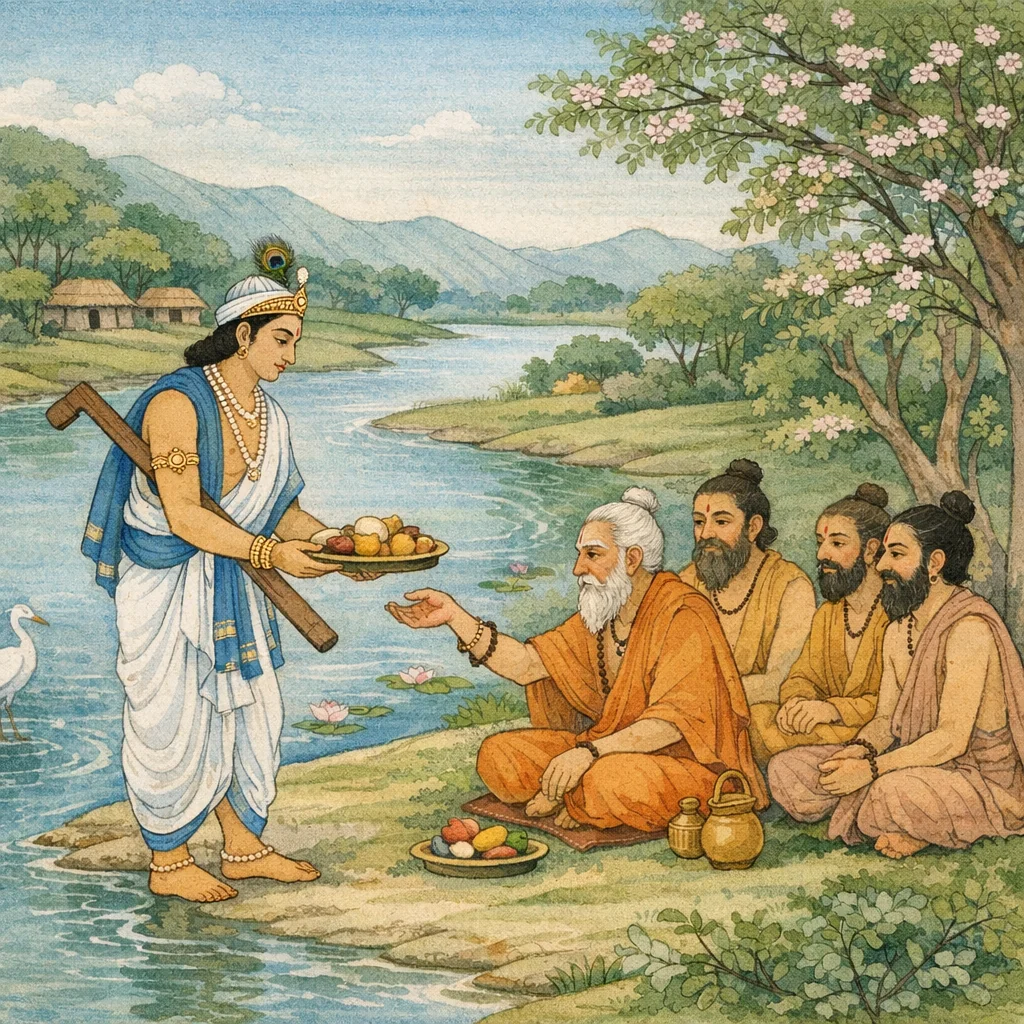
Janamejaya queries the ascetic accomplishments of Ārṣṭiṣeṇa and how Sindhudvīpa, Devāpi, and Viśvāmitra obtained brāhmaṇya. Vaiśaṃpāyana recounts that in Kṛtayuga Ārṣṭiṣeṇa, though dwelling in the guru’s household, does not attain completion of learning; becoming disenchanted, he undertakes intense tapas and thereby gains unsurpassed Vedic attainment and siddhi. At a tīrtha on a great river he proclaims three boons: bathing there yields abundant fruit comparable to an aśvamedha; fear from wild creatures ceases; and even modest effort brings substantial merit. Having declared this, he departs to the celestial realm. In that same tīrtha Sindhudvīpa and Devāpi attain great brāhmaṇya. The narrative then turns to Viśvāmitra: born a kṣatriya as Gādhi’s son, he becomes king but cannot adequately protect the earth, hears of rākṣasa danger, and marches with a fourfold army to Vasiṣṭha’s hermitage, where his troops cause disruption. Vasiṣṭha, angered, commands his cow to manifest fierce Śabara warriors who rout the army. Seeing this, Viśvāmitra concludes tapas is supreme and begins severe ascetic observances at a Sarasvatī tīrtha, enduring attempted divine obstacles; his radiance grows, Brahmā grants his boon request to become a brāhmaṇa, and he then moves through the world fulfilled. The chapter closes by noting Rāma’s gifts to brahmins at the same tīrtha and his journey onward toward Baka’s hermitage, linking tīrtha, gift-economy, and ascetic exempla.
Chapter Arc: सारस्वत-उपाख्यान के पूर्व अध्याय के समापन के बाद कथा तुरंत हलधर बलराम की तीर्थयात्रा पर लौटती है—वे ब्राह्मणों को दान देकर रात्रि-निवास करते हैं और प्रातः तीर्थ-लाभ हेतु शीघ्र प्रस्थान करते हैं। → बलराम औशनस-तीर्थ (कपालमोचन) पहुँचते हैं, जहाँ एक प्राचीन, भयावह स्मृति जुड़ी है—राम द्वारा पूर्वकाल में क्षिप्त राक्षस के कारण ‘कपाल’ और ‘मोचन’ का प्रसंग। जनमेजय जिज्ञासा से पूछते हैं कि यह तीर्थ ‘कपालमोचन’ क्यों कहलाया और यहाँ किस महामुनि का प्रभाव है। → कपालमोचन/औशनस-तीर्थ की महिमा और उसकी सिद्धि-शक्ति का उद्घोष होता है—यह ‘सर्वपापप्रशमन’ और ‘सिद्धिक्षेत्र’ है; साथ ही पृथूदक-तीर्थ का फल भी प्रतिपादित होता है कि सरस्वती के उत्तर तट पर जप करते हुए देहत्याग करने वाले को पुनर्मृत्यु का भय नहीं रहता। → बलराम विधिपूर्वक स्नान करते हैं, महात्मा ब्राह्मणों को विपुल धन-दान देते हैं, मुनियों से पूजित होकर जल-स्पर्श कर अनुमति लेते हैं और अगले तीर्थ की ओर आगे बढ़ते हैं—तीर्थयात्रा का क्रम धर्म-दान से पुष्ट होता है। → तीर्थ-क्रम आगे भी चलता है—कथा संकेत देती है कि अगले पवित्र स्थल पर नई महिमा/पुराकथा और बलराम के अगले दान-स्नान का वर्णन आने वाला है।
Shlokas
Verse 1
इस प्रकार श्रीमहाभारत शल्यपर्वके अन्तर्गत गदापव॑नें बलदेवजीकी तीर्थयात्राके प्रसंगमें सारस्वतोपाख्यानविषयक अड़तीसवाँ अध्याय पूरा हुआ ॥/ ३८ ॥। (दाक्षिणात्य अधिक पाठके ५६ श्लोक मिलाकर कुल ६४ ३ “लोक हैं।) - इन्हीं ऋषियोंकी तपस्यासे कल्पान्तरमें दितिके गर्भले उनचास मरुदगणोंका आविर्भाव हुआ। ये ही दितिके उदरमें एक गर्भके रूपमें प्रकट हुए, फिर इन्द्रके वज़्से कटकर उनचास अमर शरीरोंके रूपमें उत्पन्न हुए--ऐसा समझना चाहिये। एकोनचत्वारिशोड ध्याय: आओऔशनस एवं कपालमोचनतीर्थकी माहात्म्यकथा तथा रुषंगुके आश्रम पृथूदकतीर्थकी महिमा वैशम्पायन उवाच उषित्वा तत्र रामस्तु सम्पूज्याश्रमवासिन: । तथा मड़कणके प्रीति शुभां चक्रे हलायुध:,वैशम्पायनजी कहते हैं--राजन! उस सप्तसारस्वत-तीर्थमें रहकर हलधर बलरामजीने आश्रमवासी ऋषियोंका पूजन किया और मंकणक मुनिपर अपनी उत्तम प्रीतिका परिचय दिया
Vaiśampāyana said: “O King, after staying there at that sacred Sarasvatī-region tīrtha, Rāma (Balarāma), the wielder of the plough, duly honored the sages dwelling in the hermitage and also showed auspicious goodwill and affectionate regard toward the sage Maṅkaṇaka.”
Verse 2
दत्त्वा दानं द्विजातिभ्यो रजनीं तामुपोष्य च । पूजितो मुनिसड्घैश्न प्रातरुत्थाय लाड़ली,भरतनन्दन! वहाँ ब्राह्मणोंको दान दे उस रात्रिमें निवास करनेके पश्चात् प्रातःकाल उठकर मुनिमण्डलीसे सम्मानित हो महाबली लांगलधारी बलरामने पुनः तीर्थके जलमें स्नान किया और सम्पूर्ण ऋषि-मुनियोंकी आज्ञा ले अन्य तीर्थोर्में जानेके लिये वहाँसे शीघ्रतापूर्वक प्रस्थान कर दिया
Vaiśampāyana said: Having given gifts to the twice-born Brahmins and having observed a fast through that night, the plough-bearing Balarāma—honoured by the assemblies of sages—rose at dawn, performed the prescribed rites, and, taking leave with the permission of all the seers, departed swiftly to visit other sacred fords.
Verse 3
अनुज्ञाप्य मुनीन् सर्वान् स्पृष्टवा तोयं च भारत । प्रययौ त्वरितो रामस्तीर्थहेतोर्महाबल:,भरतनन्दन! वहाँ ब्राह्मणोंको दान दे उस रात्रिमें निवास करनेके पश्चात् प्रातःकाल उठकर मुनिमण्डलीसे सम्मानित हो महाबली लांगलधारी बलरामने पुनः तीर्थके जलमें स्नान किया और सम्पूर्ण ऋषि-मुनियोंकी आज्ञा ले अन्य तीर्थोर्में जानेके लिये वहाँसे शीघ्रतापूर्वक प्रस्थान कर दिया
Vaiśampāyana said: Having taken leave of all the sages and having touched the sacred water, O Bhārata, the mighty Rāma (Balarāma) set out in haste, intent on visiting the holy fords.
Verse 4
ततस्त्वौशनसं तीर्थमभाजगाम हलायुध: । कपालमोचन नाम यत्र मुक्तो महामुनि:,तदनन्तर हलधारी बलराम औशनसतीर्थमें आये, जिसका दूसरा नाम कपालमोचनतीर्थ भी है। महाराज! पूर्वकालमें भगवान् श्रीरामने एक राक्षसको मारकर उसे दूर फेंक दिया था। उसका विशाल सिर महामुनि महोदरकी जाँघमें चिपक गया था। वे महामुनि इस तीर्थमें स्नान करनेपर उस कपालसे मुक्त हुए थे
Vaiśampāyana said: Then Halāyudha (Balarāma) proceeded to the sacred ford known as Auśanasa, also called Kapālamocana, the place where a great sage was freed from a clinging skull.
Verse 5
महता शिरसा राजन ग्रस्तजड्घो महोदर: । राक्षसस्य महाराज रामक्षिप्तस्य वै पुरा,तदनन्तर हलधारी बलराम औशनसतीर्थमें आये, जिसका दूसरा नाम कपालमोचनतीर्थ भी है। महाराज! पूर्वकालमें भगवान् श्रीरामने एक राक्षसको मारकर उसे दूर फेंक दिया था। उसका विशाल सिर महामुनि महोदरकी जाँघमें चिपक गया था। वे महामुनि इस तीर्थमें स्नान करनेपर उस कपालसे मुक्त हुए थे
Vaiśampāyana said: O King, the great sage Mahodara once had his thigh seized and weighed down by a massive skull—the skull of a rākṣasa whom, long ago, Lord Rāma had slain and hurled far away. Thereafter, the plough-bearing Balarāma came to Auśanasa-tīrtha, also known as Kapāla-mocana-tīrtha. There, by bathing at that sacred ford, the sage Mahodara was released from that skull.
Verse 6
तत्र पूर्व तपस्तप्तं काव्येन सुमहात्मना । यत्रास्य नीतिरखिला प्रादुर्भूता महात्मन:,महात्मा शुक्राचार्यने वहीं पहले तप किया था, जिससे उनके हृदयमें सम्पूर्ण नीति- विद्या स्फुरित हुई थी
Vaiśampāyana said: There, in earlier times, the great-souled Kāvya (Śukrācārya) performed severe austerities. In that very place, the whole of nīti—the science of polity and right conduct—manifested in its fullness within the heart of that noble sage.
Verse 7
यत्रस्थ श्षिन्तयामास दैत्यदानवविग्रहम् । तत् प्राप्य च बलो राजंस्तीर्थप्रवरमुत्तमम्
Vaiśampāyana said: Standing there, he reflected upon the conflict between the Daityas and the Dānavas. Having reached that place, King Bala came to that supremely excellent pilgrimage-ford, renowned as the foremost among tīrthas.
Verse 8
जनमेजय उवाच कपालमोचन ब्रह्मन् कथं यत्र महामुनि:
Janamejaya said: “O Brāhmaṇa, O Kapālamocana—how did it happen there, O great sage?”
Verse 9
वैशम्पायन उवाच पुरा वै दण्डकारण्ये राघवेण महात्मना,वने विचरतो राजन्नस्थि भिनत्त्वास्फुरत् तदा । वैशम्पायनजीने कहा--नृपश्रेष्ठ! पूर्वकालकी बात है, रघुकुलतिलक महात्मा श्रीरामचन्द्रजीने दण्डकारण्यमें रहते समय जब राक्षसोंके संहारका विचार किया, तब तीखी धारवाले धुरसे जनस्थानमें उस दुरात्मा राक्षसका मस्तक काट दिया। वह कटा हुआ मस्तक उस महान् वनमें ऊपरको उछला और दैवयोगसे वनमें विचरते हुए महोदर मुनिकी जाँधमें जा लगा। नरेश्वर! उस समय उनकी हड्डी छेदकर वह भीतरतक घुस गया
Vaiśampāyana said: Long ago, O best of kings, in the Daṇḍaka forest, while the great-souled scion of Raghu was roaming in the wilderness, a bone was suddenly pierced and struck with force.
Verse 10
वसता राजशार्दूल राक्षसान् शमयिष्यता । जनस्थाने शिरश्कछिन्नं राक्षसस्य दुरात्मन:
Vaiśampāyana said: “O tiger among kings, while dwelling there with the intent to subdue the rākṣasas, in Janasthāna the head of that wicked rākṣasa was severed.”
Verse 11
क्षुरेण शितधारेण उत्पपात महावने । महोदरस्य तल्लग्नं जंघायां वै यदृच्छया
Vaiśampāyana said: In that great forest, a razor with a keen, sharp edge suddenly sprang up; by sheer chance it became lodged in Mahodara’s shin. The episode underscores how, amid violence and disorder, harm can arise unexpectedly and without intention—reminding one of the precariousness of life and the moral weight of actions that unleash chaos.
Verse 12
स तेन लग्नेन तदा द्विजातिर्न शशाक ह
Fastened and held by that attachment at that moment, the twice-born man was unable to act or proceed—his resolve was checked by what had seized him.
Verse 13
स पूतिना विसत्रवता वेदनार्तों महामुनि:
Vaiśampāyana said: The great sage, tormented by pain, was afflicted with a foul, oozing discharge—an image that underscores how bodily corruption and suffering can accompany the gravest moments in the war’s aftermath, reminding the listener of the harsh, ethically sobering cost of violence.
Verse 14
जगाम सर्वतीर्थानि पृथिव्यां चेति नः श्रुतम् । उस मस्तकसे दुर्गन्धयुक्त पीब बहती रहती थी और महामुनि महोदर वेदनासे पीड़ित हो गये थे। हमने सुना है कि मुनिने किसी तरह भूमण्डलके सभी तीर्थोंकी यात्रा की ।। स गत्वा सरित: सर्वा: समुद्रांश्ष महातपा:,उन महातपस्वी महर्षिने सम्पूर्ण सरिताओं और समुद्रोंकी यात्रा करके वहाँ रहनेवाले पवित्रात्मा मुनियोंसे वह सब वृत्तान्त कह सुनाया। सम्पूर्ण तीर्थोमें स्नान करके भी वे उस कपालसे छुटकारा न पा सके
Vaiśaṃpāyana said: “We have heard that he journeyed to all the sacred fords upon the earth. That great ascetic, having visited every river and even the seas, recounted the entire matter to the pure-souled sages dwelling there. Yet, even after bathing at all holy places, he could not be freed from that skull.”
Verse 15
कथयामास तत् सर्वमृषीणां भावितात्मनाम् | आपलुत्य सर्वतीर्थेषु न च मोक्षमवाप्तवान्,उन महातपस्वी महर्षिने सम्पूर्ण सरिताओं और समुद्रोंकी यात्रा करके वहाँ रहनेवाले पवित्रात्मा मुनियोंसे वह सब वृत्तान्त कह सुनाया। सम्पूर्ण तीर्थोमें स्नान करके भी वे उस कपालसे छुटकारा न पा सके
Vaiśampāyana said: He related that entire account to the sages whose selves were purified and disciplined. Yet, even after bathing in every sacred ford, he did not attain release—he could not free himself from the burden of that skull, despite his great austerities and his wandering to rivers and seas.
Verse 16
सतु शुश्राव विप्रेन्द्र मुनीनां वचनं महत् । सरस्वत्यास्तीर्थवरं ख्यातमौशनसं तदा
Vaiśaṃpāyana said: Then he heard, O best of Brahmins, the weighty words of the sages—about that time-honoured, renowned, and most excellent sacred ford on the Sarasvatī, known as Auśanasa.
Verse 17
स तु गत्वा ततस्तत्र तीर्थमौशनसं द्विज:,तदनन्तर वे ब्रह्मर्षि वहाँ औशनसतीर्थमें गये और उसके जलसे आचमन एवं स्नान किया। उसी समय वह कपाल उनके चरण (जाँघ)-को छोड़कर पानीके भीतर गिर पड़ा
Then the brahmin went on from there to the sacred ford known as Auśanasa. After reaching that holy place, the brahmarṣi performed sipping of water (ācamana) and bathed in its waters. At that very moment, the skull that had been clinging to his thigh/foot released its hold and dropped down into the water.
Verse 18
तत औशनसे तीर्थे तस्योपस्पृशतस्तदा । तच्छिरश्नरणं मुक्त्वा पपातान्तर्जले तदा,तदनन्तर वे ब्रह्मर्षि वहाँ औशनसतीर्थमें गये और उसके जलसे आचमन एवं स्नान किया। उसी समय वह कपाल उनके चरण (जाँघ)-को छोड़कर पानीके भीतर गिर पड़ा
Then, at the sacred ford called Auśanasa, as he was performing ācamana and ritual bathing, the skull that had been clinging to his thigh/foot let go and at that very moment fell down into the water.
Verse 19
विमुक्तस्तेन शिरसा परं सुखमवाप ह । स चाप्यन्तर्जले मूर्धा जगामादर्शनं विभो,प्रभो! उस मस्तक या कपालसे मुक्त होनेपर महोदर मुनिको बड़ा सुख मिला। साथ ही वह मस्तक भी (जो उनकी जाँघसे छूटकर गिरा था) पानीके भीतर अदृश्य हो गया
Vaiśampāyana said: Released from that head (or skull), the sage Mahodara attained great relief and happiness. And that head, having slipped away, went beneath the water and vanished from sight—O mighty one.
Verse 20
ततः स विशिरा राजन् पूतात्मा वीतकल्मष: । आजगामाश्रमं प्रीत: कृतकृत्यो महोदर:,राजन! उस कपालसे मुक्त हो निष्पाप एवं पवित्र अन्तःकरणवाले महोदर मुनि कृतकृत्य हो प्रसन्नतापूर्वक अपने आश्रमपर लौट आये
Vaiśampāyana said: Then, O king, Mahodara—freed from the skull that had clung to him, pure in heart and cleansed of sin—returned joyfully to his hermitage, feeling that his purpose had been fulfilled.
Verse 21
सो<थ गत्वा$55श्रमं पुण्यं विप्रमुक्तो महातपा: । कथयामास तत् सर्वमृषीणां भावितात्मनाम्,संकटसे मुक्त हुए उन महातपस्वी मुनिने अपने पवित्र आश्रमपर जाकर वहाँ रहनेवाले पवित्रात्मा ऋषियोंसे अपना सारा वृत्तान्त कह सुनाया
Then, having been freed from that distress, the great ascetic went to his holy hermitage and related the entire account to the self-disciplined sages dwelling there.
Verse 22
ते श्रुत्वा वचनं तस्य ततस्तीर्थस्य मानद । कपालमोचनमिति नाम चक्कुः समागता:,मानद! तदनन्तर वहाँ आये हुए महर्षियोंने महोदर मुनिकी बात सुनकर उस तीर्थका नाम कपालमोचन रख दिया
Hearing his words, O bestower of honor, the sages who had assembled there then gave that sacred ford the name “Kapālamocana” (“the place of release from the skull-bond”).
Verse 23
स चापि तीर्थप्रवरं पुनर्गत्वा महानृषि: । पीत्वा पय: सुविपुलं सिद्धिमायात् तदा मुनि:
And that great seer, having gone once again to the most excellent sacred ford, drank a very abundant measure of milk; then the sage attained spiritual accomplishment (siddhi).
Verse 24
इसके बाद महर्षि महोदर पुनः उस श्रेष्ठ तीर्थमें गये और वहाँका प्रचुर जल पीकर उत्तम सिद्धिको प्राप्त हुए ।। तत्र दत्त्वा बहून् दायान् विप्रान् सम्पूज्य माधव: । जगाम वृष्णिप्रवरो रुषड्रोराश्रमं तदा,वृष्णिवंशावतंस बलरामजीने वहाँ ब्राह्मणोंकी पूजा करके उन्हें बहुत धनका दान किया। इसके बाद वे रुषंगु मुनिके आश्रमपर गये
There, Mādhava—the foremost among the Vṛṣṇis—honoured the brāhmaṇas with due reverence and bestowed abundant gifts. Having thus fulfilled the duty of generosity and respect toward the learned, he then proceeded to the hermitage of the sage Ruṣaṅgu.
Verse 25
यत्र तप्तं तपो घोरमार्टिषिणेन भारत । ब्राह्मण्यं लब्धवांस्तत्र विश्वामित्रो महामुनि:,भरतनन्दन! वहीं आर्रिश्तो मुनिने घोर तपस्या की थी और वहीं महामुनि विश्वामित्रने ब्राह्मणत्व प्राप्त किया थ
Vaiśampāyana said: O Bhārata, in that very place where the sage Ārtiṣi performed fierce austerities, the great seer Viśvāmitra attained the status and spiritual authority of a brāhmaṇa.
Verse 26
सर्वकामसमृद्धं च तदाश्रमपदं॑ महत् | मुनिभिव्रद्यिणैश्वैव सेवितं सर्वदा विभो,प्रभो! वह महान् आश्रम सम्पूर्ण मनोवांछित वस्तुओंसे सम्पन्न है। वहँ बहुत-से मुनि और ब्राह्मण सदा निवास करते हैं
Vaiśaṃpāyana said: That great hermitage-settlement was richly furnished with every desired comfort and necessity. It was continually frequented and served by sages and brāhmaṇas, O mighty lord—O revered one—making it a place where disciplined living and sacred learning were upheld.
Verse 27
ततो हलधर: श्रीमान् ब्राह्मणैः परिवारित: । जगाम तत्र राजेन्द्र रुषड्गुस्तनुमत्यजत्
Then the illustrious Haladhara (Balarāma), surrounded by brāhmaṇas, proceeded from there, O best of kings; and Ruṣaḍgu, abandoning his body, met his end.
Verse 28
राजेन्द्र! तत्पश्चात् श्रीमान् हलधर ब्राह्मणोंसे घिरकर उस स्थानपर गये, जहाँ रुषंगुने अपना शरीर छोड़ा थ ।। रुषड्गुर्ब्राह्मिणो वृद्धस्तपोनित्यश्व॒ भारत । देहन्यासे कृतमना विचिन्त्य बहुधा तदा,भारत! बूढ़े ब्राह्मण रुषंगु सदा तपस्यामें संल्गन रहते थे। एक समय उन महातपस्वी रुषंगु मुनिने शरीर त्याग देनेका विचार करके बहुत कुछ सोचकर अपने सभी पुत्रोंको बुलाया और उनसे कहा--'मुझे पृथूदक तीर्थमें ले चलो"
Vaiśampāyana said: “O best of kings! After that, the illustrious Haladhara, surrounded by brāhmaṇas, went to the place where the aged brāhmaṇa Ṛṣaṅgu had abandoned his body. O Bhārata, Ṛṣaṅgu was ever devoted to austerity. At that time, having resolved upon laying down his body, he reflected in many ways.”
Verse 29
ततः सर्वानुपादाय तनयान् वै महातपा: । रुषड्गुरब्रवीत् तत्र नयध्वं मां पृूधूदकम्,भारत! बूढ़े ब्राह्मण रुषंगु सदा तपस्यामें संल्गन रहते थे। एक समय उन महातपस्वी रुषंगु मुनिने शरीर त्याग देनेका विचार करके बहुत कुछ सोचकर अपने सभी पुत्रोंको बुलाया और उनसे कहा--'मुझे पृथूदक तीर्थमें ले चलो"
Then the great ascetic Ruṣaṅgu, having gathered all his sons, spoke to them there: “O Bhārata, take me to Pṛthūdaka.”
Verse 30
विज्ञायातीतवयसं रुषड्गुं ते तपोधना: । तं च तीर्थमुपानिन्यु: सरस्वत्यास्तपोधनम्,उन तपस्वी पुत्रोंने तपोधन रुषंगुको अत्यन्त वृद्ध जानकर उन्हें सरस्वतीके उस उत्तम तीर्थमें पहुँचा दिया
Vaiśampāyana said: Knowing that Ruṣaḍgu had passed beyond the prime of life, those ascetics—rich in austerity—led him to that sacred ford (tīrtha) of the Sarasvatī, revered by men of penance.
Verse 31
स तैः पुत्रैस्तदा धीमानानीतो वै सरस्वतीम् । पुण्यां तीर्थशतोपेतां विप्रसड्घैर्निषेविताम्
Then that wise man was led by his sons to the Sarasvatī—holy, adorned with hundreds of sacred fords (tīrthas), and frequented by assemblies of brāhmaṇa sages.
Verse 32
स तत्र विधिना राजजन्नाप्लुत्य सुमहातपा: । ज्ञात्वा तीर्थगुणांश्वैव प्राहेदमृषिसत्तम:
There, the mighty ascetic duly bathed at the royal ford. Having understood the merits and special qualities of that tīrtha, the best of sages then spoke these words.
Verse 33
सुप्रीत: पुरुषव्यात्र सर्वान् पुत्रानुपासत: । राजन! नरव्याप्र! वे पुत्र जब उन बुद्धिमान् मुनिको ब्राह्मणसमूहोंसे सेवित तथा सैकड़ों तीर्थोंसे सुशोभित पुण्यसलिला सरस्वतीके तटपर ले आये, तब वे महातपस्वी महर्षि वहाँ विधिपूर्वक स्नान करके तीर्थके गुणोंको जानकर अपने पास बैठे हुए सभी पुत्रोंसे प्रसन्नतापूर्वक बोले-- ।। सरस्वत्युत्तरे तीरे यस्त्यजेदात्मनस्तनुम्
Vaiśampāyana said: Pleased, O tiger among men, and attended by all his sons, the king was brought by them to the sacred bank of the Sarasvatī, served by wise sages and assemblies of brāhmaṇas and adorned with hundreds of tīrthas. There the great ascetics, the maharṣis, bathed according to rule; understanding the excellence of that tīrtha, they spoke with satisfaction to the sons seated nearby: “Whoever gives up his body on the northern bank of the Sarasvatī …”
Verse 34
तत्राप्लुत्य स धर्मात्मा उपस्पृश्य हलायुध:
There, having bathed, that righteous-souled one—Halāyudha (Balarāma)—performed the rite of purification by touching water (ācamana), in accordance with dharma.
Verse 35
ससर्ज यत्र भगवॉल्लोकॉल्लोकपितामह:,कुरुवंशी नरेश! तत्पश्चात् बलवान् एवं प्रतापी बलभद्रजी उस तीर्थमें आ गये, जहाँ लोकपितामह भगवान् ब्रह्माने सृष्टि की थी, जहाँ कठोर व्रतका पालन करनेवाले मुनिश्रेष्ठ आहएिषिणने बड़ी भारी तपस्या करके ब्राह्मणत्व पाया था तथा जहाँ राजर्षि सिन्धुद्वीप, महान् तपस्वी देवापि और महायशस्वी, उमग्रतेजस्वी एवं महातपस्वी भगवान् विश्वामित्र मुनिने भी ब्राह्मणत्व प्राप्त किया था
Vaiśampāyana said: O king of the Kuru line, thereafter the mighty and valorous Balabhadra (Balarāma) came to that sacred ford—where the Lord Brahmā, grandsire of the worlds, brought forth creation; where foremost sages, steadfast in severe vows, attained the status of brāhmaṇas through immense austerity; and where the royal sage Sindhudvīpa, the great ascetic Devāpi, and the renowned, fierce-splendored, highly austere sage Viśvāmitra also obtained brahminhood.
Verse 36
यत्रार्टिषिण: कौरव्य ब्राह्मण्यं संशितव्रत: । तपसा महता राजन प्राप्तवानृषिसत्तम:,कुरुवंशी नरेश! तत्पश्चात् बलवान् एवं प्रतापी बलभद्रजी उस तीर्थमें आ गये, जहाँ लोकपितामह भगवान् ब्रह्माने सृष्टि की थी, जहाँ कठोर व्रतका पालन करनेवाले मुनिश्रेष्ठ आहएिषिणने बड़ी भारी तपस्या करके ब्राह्मणत्व पाया था तथा जहाँ राजर्षि सिन्धुद्वीप, महान् तपस्वी देवापि और महायशस्वी, उमग्रतेजस्वी एवं महातपस्वी भगवान् विश्वामित्र मुनिने भी ब्राह्मणत्व प्राप्त किया था
Vaiśampāyana said: “O Kauravya, O king—this is the sacred place where the foremost sage Ārtiṣiṇa, steadfast in severe vows, attained the status of a brāhmaṇa through great austerity.”
Verse 37
सिन्धुद्वीपश्च राजर्षिदेवापिश्व महातपा: । ब्रह्माण्यं लब्धवान् यत्र विश्वामित्रस्तथा मुनि:,कुरुवंशी नरेश! तत्पश्चात् बलवान् एवं प्रतापी बलभद्रजी उस तीर्थमें आ गये, जहाँ लोकपितामह भगवान् ब्रह्माने सृष्टि की थी, जहाँ कठोर व्रतका पालन करनेवाले मुनिश्रेष्ठ आहएिषिणने बड़ी भारी तपस्या करके ब्राह्मणत्व पाया था तथा जहाँ राजर्षि सिन्धुद्वीप, महान् तपस्वी देवापि और महायशस्वी, उमग्रतेजस्वी एवं महातपस्वी भगवान् विश्वामित्र मुनिने भी ब्राह्मणत्व प्राप्त किया था
Vaiśampāyana said: “This is the sacred place where the royal sage Sindhudvīpa, the great ascetic Devāpi, and likewise the sage Viśvāmitra attained brahminhood.”
Verse 38
महातपस्वी भगवानुग्रतेजा महायशा: । तत्राजगाम बलवान बलभद्र: प्रतापवान्,कुरुवंशी नरेश! तत्पश्चात् बलवान् एवं प्रतापी बलभद्रजी उस तीर्थमें आ गये, जहाँ लोकपितामह भगवान् ब्रह्माने सृष्टि की थी, जहाँ कठोर व्रतका पालन करनेवाले मुनिश्रेष्ठ आहएिषिणने बड़ी भारी तपस्या करके ब्राह्मणत्व पाया था तथा जहाँ राजर्षि सिन्धुद्वीप, महान् तपस्वी देवापि और महायशस्वी, उमग्रतेजस्वी एवं महातपस्वी भगवान् विश्वामित्र मुनिने भी ब्राह्मणत्व प्राप्त किया था
Vaiśampāyana said: The blessed Balarāma—mighty in ascetic power, blazing in spiritual energy, and renowned for his glory—came to that sacred place. O king of the Kuru line, the powerful and valiant Balabhadra arrived there.
Verse 39
इति श्रीमहाभारते शल्यपर्वणि गदापर्वणि बलदेवतीर्थयात्रायां सारस्वतोपाख्यान एकोनचत्वारिंशो5ध्याय:
Thus ends the thirty-ninth chapter, the Sārasvata episode, within the account of Balarāma’s pilgrimage to sacred fords, in the Gada section of the Śalya Parva of the venerable Mahābhārata.
Verse 73
विधिवद् वै ददौ वित्तं ब्राह्मणानां महात्मनाम् | वहीं रहकर उन्होंने दैत्यों अथवा दानवोंके युद्धके विषयमें विचार किया था। राजन! उस श्रेष्ठ तीर्थमें पहुँचकर बलरामजीने महात्मा ब्राह्मणोंको विधिपूर्वक धनका दान दिया था
Vaiśaṃpāyana said: In full accordance with prescribed rites, he bestowed wealth as gifts upon the great-souled Brāhmaṇas. The act underscores the dharmic ideal that even amid the pressures of war and pilgrimage, one should honor sacred duty through proper generosity to worthy recipients.
Verse 86
मुक्त: कथं चास्य शिरो लग्नं केन च हेतुना । जनमेजयने पूछा--ब्रह्मन! उस तीर्थका नाम कपालमोचन कैसे हुआ, जहाँ महामुनि महोदरको छुटकारा मिला था? उनकी जाँघमें वह सिर कैसे और किस कारणसे चिपक गया था?
Janamejaya asked: “O Brahmin, how did that sacred ford come to be called Kapālamocana—the ‘Liberation from the Skull’—where the great sage Mahodara obtained release? And how did that skull become stuck to his thigh, and for what reason did it happen?”
Verse 113
वने विचरतो राजन्नस्थि भिनत्त्वास्फुरत् तदा । वैशम्पायनजीने कहा--नृपश्रेष्ठ! पूर्वकालकी बात है, रघुकुलतिलक महात्मा श्रीरामचन्द्रजीने दण्डकारण्यमें रहते समय जब राक्षसोंके संहारका विचार किया, तब तीखी धारवाले धुरसे जनस्थानमें उस दुरात्मा राक्षसका मस्तक काट दिया। वह कटा हुआ मस्तक उस महान् वनमें ऊपरको उछला और दैवयोगसे वनमें विचरते हुए महोदर मुनिकी जाँधमें जा लगा। नरेश्वर! उस समय उनकी हड्डी छेदकर वह भीतरतक घुस गया
Vaiśampāyana said: “O king, as he was roaming in the forest, it then struck—splitting the bone. (In the remembered tale: when the noble Rāma, dwelling in Daṇḍakāraṇya and intent on destroying the rākṣasas, cut off the head of a wicked rākṣasa at Jana-sthāna with a sharp-edged weapon, that severed head sprang upward in the great forest and, by the turn of fate, hit the thigh of the sage Mahodara who was wandering there, piercing through the bone and driving in.)”
Verse 126
अभिगन्तुं महाप्राज्ञस्तीर्थान्यायतनानि च । उस मस्तकके चिपक जानेसे वे महाबुद्धिमान् ब्राह्मण किसी तीर्थ या देवालयमें सुगमतापूर्वक आ-जा नहीं सकते थे
Vaiśampāyana said: Because it had stuck fast upon his head, that highly intelligent brāhmaṇa could no longer go with ease to sacred fords (tīrthas) or to holy shrines. Thus, a seemingly small physical affliction became an obstacle to religious movement and observance, showing how bodily constraint can impede one’s customary dharmic routines.
Verse 336
पृथूदके जप्यपरो नैनं श्वोमरणं तपेत् । “जो सरस्वतीके उत्तर तटपर पृथूदकतीर्थमें जप करते हुए अपने शरीरका परित्याग करता है, उसे भविष्यमें पुन: मृत्युका कष्ट नहीं भोगना पड़ता”
Vaiśampāyana said: One who, intent on japa, relinquishes the body at the sacred ford called Pṛthūdaka on the northern bank of the Sarasvatī is not thereafter afflicted by the suffering of death again. The passage upholds the Mahābhārata’s ethic that disciplined devotion at a consecrated tīrtha, joined with conscious renunciation, is held to yield liberation from repeated mortality.
Verse 1663
सर्वपापप्रशमन सिद्धिक्षेत्रमनुत्तमम् । विप्रवर! उन्होंने मुनियोंके मुखसे यह महत्त्वपूर्ण बात सुनी कि “सरस्वतीका श्रेष्ठ तीर्थ जो औशनस नामसे विख्यात है, सम्पूर्ण पापोंको नष्ट करनेवाला तथा परम उत्तम सिक्िकक्षेत्र है'
Vaiśampāyana said: “O best of Brahmins, they heard from the mouths of sages this weighty truth: ‘On the Sarasvatī there is a foremost sacred ford, renowned by the name Auśanasa. It destroys all sins and is an unsurpassed field for attaining spiritual accomplishment (siddhi).’”
Verse 3436
दत्त्वा चैव बहून् दायान् विप्राणां विप्रवत्सल: । धर्मात्मा विप्रवत्सल हलधर बलरामजीने उस तीर्थमें स्नान करके ब्राह्मणोंको बहुत धनका दान किया
Vaiśampāyana said: “Affectionate toward the brāhmaṇas and devoted to dharma, Balarāma, the wielder of the plough, bathed at that tīrtha and bestowed abundant wealth as gifts upon the brāhmaṇas.”
Frequently Asked Questions
The chapter frames a conflict between external authority (royal power, inherited status) and internal authority (earned spiritual legitimacy): it asks what truly grounds social-spiritual rank and effective protection—force or disciplined merit.
Sustained self-regulation (niyama), austerity (tapas), and clarity of purpose are portrayed as capable of reconstituting identity and capability, even when conventional routes (formal study or kingship) appear insufficient.
Yes. Ārṣṭiṣeṇa’s proclamations function as an embedded phalaśruti: bathing at the tīrtha is said to yield abundant merit akin to an aśvamedha, reduce fear from wild creatures, and grant large results even with limited effort.