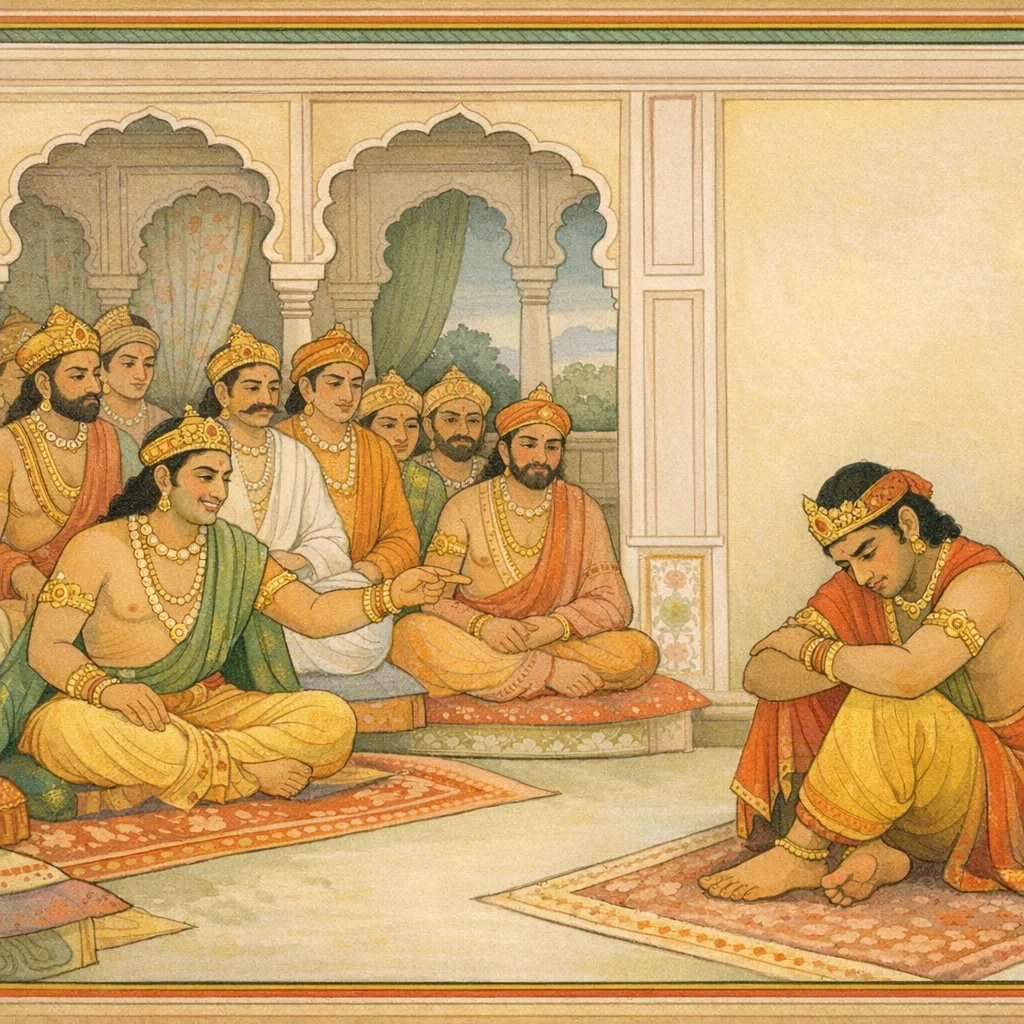
Adhyaya 50
Dhṛtarāṣṭra–Duryodhana Saṃvāda on Restraint and Rājānīti (Chapter 50)
Upa-parva: Sabhā-nīti-saṃvāda (Court Counsel on Kingship and Rivalry)
Chapter 50 presents a structured dialogue in which Dhṛtarāṣṭra admonishes Duryodhana against hostility toward the Pāṇḍavas, arguing that hatred yields suffering and ruin. He recommends an alternative path to royal splendor through sanctioned ritual (yajña), generosity, and inward discipline: contentment, attentiveness to one’s own duties, and steady effort in protecting one’s people. Dhṛtarāṣṭra sketches a model of prosperity grounded in self-restraint, competence in adversity, and orderly enjoyment within the protected inner sphere. Duryodhana responds by questioning Dhṛtarāṣṭra’s strategic clarity and asserting that royal conduct differs from ordinary ethics. He advances a doctrine of kṣatriya vocation centered on victory and expansion, endorsing proactive surveillance of all directions, and treating any method that effectively constrains opponents—covert or overt—as valid statecraft. He argues that dissatisfaction is the root of prosperity, warns against complacency toward a strengthening rival, and frames rival fortune as intolerable. The chapter ends with Duryodhana’s resolve: he must obtain the Pāṇḍavas’ sovereignty or fall in conflict, presenting ambition as existential necessity.
Chapter Arc: Janamejaya, sensing a hidden hinge of fate, asks the seer to name the kings and elders present in the sabhā and to tell—fully and without omission—what counsel was given, for he intuits this to be the very root of Earth’s coming ruin. → Vaiśampāyana resumes the tale: after witnessing the Pandavas’ splendor and the ocean-like heaps of tribute and jewels, Duryodhana’s heart burns. He recounts the sting of Bhīma’s mocking address—“Dhṛtarāṣṭra’s son”—and the humiliation that clings to him like poison. Dhṛtarāṣṭra is warned that faction and enmity destroy kingdoms, and that a father and mother must restrain a son from ruinous courses. → Duryodhana’s envy crystallizes into resolve: the sight of unheard-of treasures, the limitless gifts, and the laughter in the hall become unbearable; the insult becomes a brand. His inner torment turns outward—toward a plan to pull the Pandavas down. → The chapter closes with the court’s awareness that Duryodhana’s distress is not mere wounded pride but a political contagion; counsel is voiced to avoid division, yet the seed of the dice-scheme is now visibly germinating in the Kuru house. → Duryodhana’s smoldering humiliation hangs unresolved, poised to seek an instrument—an invitation, a game, a trap.
Shlokas
Verse 1
(दाक्षिणात्य अधिक पाठके ७ श्लोक मिलाकर कुल ६७ श्लोक हैं) ऑपन--माज बक। अि्--छऋायज पजञ्चाशत्तमो<्ध्याय: दुर्योधनका धृतराष्ट्रको अपने दुःख और चिन्ताका कारण बताना जनमेजय उवाच कथं समभवद् द्ूतं भ्रातृणां तन्महात्ययम् | यत्र तद् व्यसन प्राप्तं पाण्डवैर्मे पितामहै:,जनमेजयने पूछा--मुने! भाइयोंमें वह महाविनाशकारी द्यूत किस प्रकार आरम्भ हुआ; जिसमें मेरे पितामह पाण्डवोंको उस महान् संकटका सामना करना पड़ा?
Janamejaya said: “How did that game of dice arise among the brothers—the great calamity? In that affair, my grandfathers, the Pāṇḍavas, were driven into grievous misfortune. Tell me how it began.”
Verse 2
के च तत्र सभास्तारा राजानो ब्रह्मवित्तम | के चैनमन्वमोदन्त के चैन प्रत्यषेधयन्,ब्रह्मवेत्ताओंमें श्रेष्ठ महर्ष! वहाँ कौन-कौन-से राजा सभासद् थे? किसने द्यूतक्रीड़ाका अनुमोदन किया और किसने निषेध?
Janamejaya said: “O best among the knowers of Brahman, which kings were the leading members of that assembly? Who approved of this gambling, and who sought to restrain it?”
Verse 3
विस्तरेणैतदिच्छामि कथ्यमान त्वया द्विज | मूलं होतद् विनाशस्य पृथिव्या द्विजसत्तम,ब्रह्मन! मैं इस प्रसंगको आपके मुखसे विस्तारपूर्वक सुनना चाहता हूँ। विप्रवर! यह द्यूत ही समस्त भूमण्डलके विनाशका मुख्य कारण है
Janamejaya said: “I wish to hear this from you in full detail, O twice-born. O best of Brahmins, this gambling is indeed the root cause of the ruin of the earth—therefore, narrate it to me clearly and at length.”
Verse 4
सौतिर्वाच एवमुक्तस्ततो राज्ञा व्यासशिष्य: प्रतापवान् । आचचक्षेड्थ यद् वृत्तं तत् सर्व वेदतत्त्ववित्,सौति कहते हैं--राजाके इस प्रकार पूछनेपर व्यासजीके प्रतापी शिष्य वेदतत्त्वज्ञ वैशम्पायनजी वह सब प्रसंग सुनाने लगे
Sauti said: Thus addressed by the king, the illustrious disciple of Vyāsa—knower of the true purport of the Veda—then began to recount in full the events that had occurred.
Verse 5
वैशम्पायन उवाच शृणु मे विस्तरेणेमां कथां भारतसत्तम । भूय एव महाराज यदि ते श्रवणे मति:,वैशम्पायनजीने कहा--भरतवंशशिरोमणे! महाराज जनमेजय! यदि तुम्हारा मन यह सब सुननेमें लगता है तो पुनः विस्तारके साथ इस कथाको सुनो
Vaiśampāyana said: “O best of the Bhāratas! O great king! If your mind is still intent on listening, then hear this very tale once more, now in fuller detail.”
Verse 6
विदुरस्य मति ज्ञात्वा धृतराष्ट्रोडम्बिकासुत: । दुर्योधनमिदं वाक्यमुवाच विजने पुन:,विदुरका विचार जानकर अम्बिकानन्दन राजा धुृतराष्ट्रने एकान्तमें दुर्योधनसे पुनः इस प्रकार कहा--
Vaiśampāyana said: Having understood Vidura’s intention, King Dhṛtarāṣṭra—the son of Ambikā—again spoke these words to Duryodhana in private.
Verse 7
अलं द्यूतेन गान्धारे विदुरो न प्रशंसति । न हासौ सुमहाबुद्धिरहितं नो वदिष्यति,'गान्धारीनन्दन! जूएका खेल नहीं होना चाहिये, विदुर इसे अच्छा नहीं बताते हैं। महाबुद्धिमान् विदुर हमें कोई ऐसी सलाह नहीं देंगे, जिससे हमलोगोंका अहित होनेवाला हो
Vaiśampāyana said: “Enough of this gambling, O son of Gāndhārī. Vidura does not approve of it. That man of great intelligence will never advise us to do anything that would bring us harm.”
Verse 8
हितं हि परम मन्ये विदुरो यत् प्रभाषते । क्रियतां पुत्र तत् सर्वमेतन्मन्ये हितं तव,“विदुर जो कहते हैं, उसीको मैं अपना सर्वोत्तम हित मानता हूँ। बेटा! तुम भी वही सब करो। मेरी समझमें तुम्हारे लिये यही हितकर है
Vaiśampāyana said: “I regard as the highest good whatever Vidura speaks. Therefore, my son, let all of that be carried out. In my judgment, this alone is truly beneficial for you.”
Verse 9
देवर्षिवासवगुरुर्देवराजाय धीमते । यत् प्राह शास्त्र भगवान् बृहस्पतिरुदारधी: । तद् वेद विदुर: सर्व सरहस्यं महाकवि:,“उदार बुद्धिवाले इन्द्रगुरु देवर्षि भगवान् बृहस्पतिने परम बुद्धिमान् देवराज इन्द्रको जिस शास्त्रका उपदेश दिया था, वह सब उसके रहस्यसहित महाज्ञानी विदुर जानते हैं। बेटा! मैं भी सदा विदुरकी बात मानता हूँ। कुरुकुलमें सबसे श्रेष्ठ और मेधावी विदुर माने गये हैं तथा वृष्णिवंशमें पूजित उद्धवको परम बुद्धिमान् बताया गया है। अतः बेटा! जूआ खेलनेसे कोई लाभ नहीं है। जूएमें वैर-विरोधकी सम्भावना दिखायी देती है
Vaiśampāyana said: The divine seer Bṛhaspati—guru of Vāsava (Indra), noble-minded and venerable—taught a treatise to the wise king of the gods. Vidura, the great sage-poet, knows all of that teaching, together with its inner secrets.
Verse 10
स्थितस्तु वचने तस्य सदाहमपि पुत्रक । विदुरो वापि मेधावी कुरूणां प्रवरो मत:,“उदार बुद्धिवाले इन्द्रगुरु देवर्षि भगवान् बृहस्पतिने परम बुद्धिमान् देवराज इन्द्रको जिस शास्त्रका उपदेश दिया था, वह सब उसके रहस्यसहित महाज्ञानी विदुर जानते हैं। बेटा! मैं भी सदा विदुरकी बात मानता हूँ। कुरुकुलमें सबसे श्रेष्ठ और मेधावी विदुर माने गये हैं तथा वृष्णिवंशमें पूजित उद्धवको परम बुद्धिमान् बताया गया है। अतः बेटा! जूआ खेलनेसे कोई लाभ नहीं है। जूएमें वैर-विरोधकी सम्भावना दिखायी देती है
Vaiśampāyana said: “My child, I too always abide by his counsel. Vidura, indeed, is wise and is regarded as the foremost among the Kurus.”
Verse 11
उद्धवो वा महाबुद्धिर्वष्णीनामर्चितो नूप । तदल पुत्र द्यूतेन द्यूते भेदो हि दृश्यते,“उदार बुद्धिवाले इन्द्रगुरु देवर्षि भगवान् बृहस्पतिने परम बुद्धिमान् देवराज इन्द्रको जिस शास्त्रका उपदेश दिया था, वह सब उसके रहस्यसहित महाज्ञानी विदुर जानते हैं। बेटा! मैं भी सदा विदुरकी बात मानता हूँ। कुरुकुलमें सबसे श्रेष्ठ और मेधावी विदुर माने गये हैं तथा वृष्णिवंशमें पूजित उद्धवको परम बुद्धिमान् बताया गया है। अतः बेटा! जूआ खेलनेसे कोई लाभ नहीं है। जूएमें वैर-विरोधकी सम्भावना दिखायी देती है
Vaiśampāyana said: “O king, Uddhava too is renowned as a man of great intelligence and is honored among the Vṛṣṇis. Therefore, my son, there is little to be gained by gambling; for in gambling, division and enmity are plainly seen to arise.”
Verse 12
भेदे विनाशो राज्यस्य तत् पुत्र परिवर्जय । पित्रा मात्रा च पुत्रस्य यद् वै कार्य परं स्मृतम्,“वैर-विरोध होनेसे राज्यका नाश हो जाता है, अतः पुत्र! जूएका आग्रह छोड़ दो। पिता-माताको चाहिये कि वे पुत्रको उत्तम कर्तव्यकी शिक्षा दें; इसीलिये मैंने ऐसा कहा है
“In division lies the ruin of the kingdom; therefore, my son, avoid gambling. A father and mother should instruct their son in the highest duty—this is why I have spoken so.”
Verse 13
प्राप्तस्त्वमसि तन्नाम पितृपैतामहं पदम् । अधीतवान् कृती शास्त्रे लालित: सततं गृहे,“बेटा! तुम अपने बाप-दादोंके पदपर प्रतिष्ठित हो, तुमने वेदोंका स्वाध्याय किया है, शास्त्रोंकी विद्वत्ता प्राप्त की है और घरमें सदा तुम्हारा लालन-पालन हुआ है
“My son, you have attained the honored station of your father and grandfather. You have studied the Vedas, become accomplished in the śāstras, and have been continually nurtured and protected within the home.”
Verse 14
भ्रातृज्येष्ठ: स्थितो राज्ये विन्दसे कि न शोभनम् | पृथग्जनैरलभ्यं यद् भोजनाच्छादनं परम्,“महाबाहो! तुम अपने भाइयोंमें बड़े हो, अतः राजाके पदपर स्थित हो, तुम्हें किस कल्याणमय वस्तुकी प्राप्ति नहीं होती है? दूसरे लोगोंके लिये जो अलभ्य है, वह उत्तम भोजन और वस्त्र तुम्हें प्राप्त हैं। फिर तुम क्यों शोक करते हो? महाबाहो! तुम्हारे बाप- दादोंका यह महान् राष्ट्र धन-धान्यसे सम्पन्न है
Vaiśampāyana said: “You are the eldest among your brothers and are established in kingship; what auspicious good is there that you do not obtain? The finest food and clothing—things unattainable for ordinary people—are available to you. Why, then, do you grieve?”
Verse 15
तत् प्राप्तोड्सि महाबाहो कस्माच्छोचसि पुत्रक । स्फीतं राष्ट्र महाबाहो पितृपैतामहं महत्,“महाबाहो! तुम अपने भाइयोंमें बड़े हो, अतः राजाके पदपर स्थित हो, तुम्हें किस कल्याणमय वस्तुकी प्राप्ति नहीं होती है? दूसरे लोगोंके लिये जो अलभ्य है, वह उत्तम भोजन और वस्त्र तुम्हें प्राप्त हैं। फिर तुम क्यों शोक करते हो? महाबाहो! तुम्हारे बाप- दादोंका यह महान् राष्ट्र धन-धान्यसे सम्पन्न है
Vaiśampāyana said: “O mighty-armed one, you have already attained that station; why do you grieve, my son? This great kingdom—handed down from your father and grandfathers—is prosperous and abundant. Possessing what others can scarcely obtain, you enjoy excellent food and clothing; therefore, what cause remains for sorrow?”
Verse 16
नित्यमाज्ञापयन् भासि दिवि देवेश्वरो यथा । तस्य ते विदितप्रज्ञ शोकमूलमिदं कथम् | समुत्थितं दुःखकरं यन्मे शंसितुमरहसि,'स्वर्गमें देवराज इन्द्रकी भाँति तुम इस लोकमें सदा सबपर शासन करते हुए शोभा पाते हो। तुम्हारी उत्तम बुद्धि प्रसिद्ध है। फिर तुम्हें शोककी कारणभूत यह दुःखदायिनी चिन्ता कैसे प्राप्त हुई है? यह मुझसे बताओ”
Vaiśaṃpāyana said: “You shine here, ever issuing commands, like the lord of the gods in heaven. Your discernment is well known. How, then, has this sorrow-rooted, pain-bringing anxiety arisen in you? Tell me of it, for you ought to explain it to me.”
Verse 17
दुर्योधन उवाच अक्षाम्याच्छादयामीति प्रपश्यन् पापपूरुष: । नामर्ष कुरुते यस्तु पुरुष: सो5धम: स्मृत:,दुर्योधन बोला--मैं अच्छा खाता हूँ और अच्छा पहिनता हूँ, इतना ही देखते हुए जो पापी पुरुष शत्रुओंके प्रति ईर्ष्या नहीं करता, वह अधम बताया गया है
Duryodhana said: “Seeing only that (another) eats well and dresses well, the sinful man who does not feel resentment toward his enemies is regarded as the lowest of men.”
Verse 18
नमां प्रीणाति राजेन्द्र लक्ष्मी: साधारणी विभो । ज्वलितामेव कौन्तेये श्रियं दृष्टवा च विव्यथे,राजेन्द्र! यह साधारण लक्ष्मी मुझे प्रसन्न नहीं कर पाती। मैं तो कुन्तीनन्दन युधिष्ठिरकी उस जगमगाती हुई लक्ष्मीको देखकर व्यथित हो रहा हूँ
Duryodhana said: “O king, O mighty one, this ordinary, common prosperity does not delight me. But when I behold the blazing splendour and royal fortune of the son of Kuntī (Yudhiṣṭhira), I am shaken with anguish.”
Verse 19
सर्वा च पृथिवीं चैव युधिष्ठिरवशानुगाम् । स्थिरो5स्मि यो5हं जीवामि दुःखादेतद् ब्रवीमि ते,सारी पृथ्वी युधिष्ठिरके अधीन हो गयी है; फिर भी मैं पाषाणतुल्य हूँ, जो कि ऐसा दुःख प्राप्त होनेपर भी जीवित हूँ और आपसे बातें करता हूँ
Duryodhana says: “The whole earth has indeed come under Yudhiṣṭhira’s control and follows his will. Yet I remain hard and unshaken—astonishingly still alive—so great is my grief; and even in that sorrow I speak these words to you.”
Verse 20
आवर्जिता इवाभान्ति नीपाश्रित्रककौकुरा: । कारस्कारा लोहजड्घा युधिष्विरनिवेशने,नीप, चित्रक, कुकुर, कारस्कर तथा लोहजंघ आदि क्षत्रियनरेश युधिष्ठिरके घरमें सेवकोंकी भाँति सेवा करते हुए शोभा पा रहे थे
Duryodhana said: “It is as though they have been drawn in and subdued—Nīpa, Citraka, Kukura, Kāraṣkara, and Loha-jaṅgha—now appearing in Yudhiṣṭhira’s residence like attendants.”
Verse 21
हिमवत्सागरानूपा: सर्वे रत्नाकरास्तथा | अन्त्या: सर्वे पर्युदस्ता युधिषछ्िरनिवेशने,हिमालय प्रदेश तथा समुद्री द्वीपोंक रहनेवाले और रत्नोंकी खानोंके सभी अधिपति म्लेच्छजातीय नरेश युधिष्ठिरके घरमें प्रवेश करने नहीं पाते थे, उन्हें महलसे दूर ही ठहराया गया था
Duryodhana said: “All those rulers from the Himalayan regions, from the seacoasts and riverine tracts, and those connected with the mines of jewels—indeed, all the ‘outermost’ kings—were kept at a distance and were not allowed entry into Yudhiṣṭhira’s residence.”
Verse 22
ज्येष्टोडयमिति मां मत्वा श्रेष्ठ क्षेति विशाम्पते । युधिष्ठिरेण सत्कृत्य युक्तो रत्नपरिग्रहे,महाराज! मुझे अन्य सब भाइयोंसे ज्येष्ठ और श्रेष्ठ मानकर युधिष्छिरने सत्कारपूर्वक रत्नोंकी भेंट लेनेके कामपर नियुक्त कर दिया था
Duryodhana said: “O lord of the people, thinking, ‘He is the eldest; he is the most eminent,’ Yudhiṣṭhira honored me and appointed me to the task of receiving the jewels (offered as gifts).”
Verse 23
उपस्थितानां रत्नानां श्रेष्ठानामर्घहारिणाम् । नादृश्यत पर: पारो नापरस्तत्र भारत,भारत! वहाँ भेंट लाये हुए नरेशोंके द्वारा उपस्थित श्रेष्ठ और बहुमूल्य रत्नोंकी जो राशि एकत्र हुई थी, उसका आरपार दिखायी नहीं देता था
Duryodhana said: “So vast was the heap of the finest, most precious jewels brought as tribute by the assembled kings that, O Bhārata, its far end could not be seen—nor even its near end.”
Verse 24
न मे हस्त: समभवद्ू वसु तत् प्रतिगृह्नतः । अतिष्ठन्त मयि श्रान्ते गृह दूराहतं वसु,उस रत्नराशिको ग्रहण करते-करते जब मेरा हाथ थक गया, तब मेरे थक जानेपर राजालोग रत्नराशि लिये बहुत दूरतक खड़े दिखायी देने लगते थे
Duryodhana said: “My hand could not keep pace with receiving that wealth. When I grew weary, people still stood there—far away in the hall—holding heaps of riches, waiting to present them.”
Verse 25
कृतां विन्दुसरोरत्नैर्मयेन स्फाटिकच्छदाम् | अपश्यं नलिनीं पूर्णामुदकस्येव भारत,भारत! बिन्दु-सरोवरसे लाये हुए रत्नोंद्वारा मयासुरने एक कृत्रिम पुष्करिणीका निर्माण किया था, जो स्फटिकमणिकी शिलाओंसे आच्छादित है। वह मुझे जलसे भरी हुई-सी दिखायी दी। भारत! जब मैं उसमें उतरनेके लिये वस्त्र उठाने लगा, तब भीमसेन ठठाकर हँस पड़े। शत्रुकी विशिष्ट समृद्धिसे मैं मूढ़-सा हो रहा था और रत्नोंसे रहित तो था ही
Duryodhana said: “O Bhārata! In the Bindusaras lake, Maya (the Asura) had fashioned an artificial lotus-pond, inlaid with jewels and covered with slabs of crystal. I mistook it for a pool filled with water. As I lifted my garments to step down into it, Bhīmasena burst into loud laughter. Bewildered by the enemy’s extraordinary splendor—and already deprived of my own—my pride was shaken.”
Verse 26
वस्त्रमुत्कर्षति मयि प्राहसत् स वृकोदर: । शत्रोऋद्धिविशेषेण विमूढं रत्नवर्जितम्,भारत! बिन्दु-सरोवरसे लाये हुए रत्नोंद्वारा मयासुरने एक कृत्रिम पुष्करिणीका निर्माण किया था, जो स्फटिकमणिकी शिलाओंसे आच्छादित है। वह मुझे जलसे भरी हुई-सी दिखायी दी। भारत! जब मैं उसमें उतरनेके लिये वस्त्र उठाने लगा, तब भीमसेन ठठाकर हँस पड़े। शत्रुकी विशिष्ट समृद्धिसे मैं मूढ़-सा हो रहा था और रत्नोंसे रहित तो था ही
Duryodhana said: “As I lifted up my garment, Vṛkodara (Bhīma) burst into laughter at me. Bewildered by the enemy’s extraordinary splendor, I stood there—stripped of jewels and dignity alike.”
Verse 27
तत्र सम यदि शक्त: स्यां पातये5हं वृकोदरम् | यदि कुर्या समारम्भं भीम॑ हन्तुं नराधिप,उस समय वहाँ यदि मैं समर्थ होता तो भीमसेनको वहीं मार गिराता। राजन! यदि मैं भीमसेनको मारनेका उद्योग करता तो मेरी भी शिशुपालकी-सी ही दशा हो जाती; इसमें संशय नहीं है। भारत! शत्रुके द्वारा किया हुआ उपहास मुझे दग्ध किये देता है
Duryodhana said: “Right there, if I had been capable, I would have struck down Vṛkodara (Bhīma). But, O king, if I were to undertake the attempt to kill Bhīma, I would meet the very same fate as Śiśupāla—of this there is no doubt. O Bhārata, the enemy’s mockery burns me within.”
Verse 28
शिशुपाल इवास्माकं गति: स्याज्नात्र संशय: । सपत्नेनावहासो मे स मां दहति भारत,उस समय वहाँ यदि मैं समर्थ होता तो भीमसेनको वहीं मार गिराता। राजन! यदि मैं भीमसेनको मारनेका उद्योग करता तो मेरी भी शिशुपालकी-सी ही दशा हो जाती; इसमें संशय नहीं है। भारत! शत्रुके द्वारा किया हुआ उपहास मुझे दग्ध किये देता है
Duryodhana said: “Our fate would be like that of Śiśupāla—know this without doubt. The mockery dealt to me by my rival burns me, O Bhārata.”
Verse 29
पुनश्चन तादृशीमेव वापीं जलजशालिनीम् । मत्वा शिलासमां तोये पतितो5स्मि नराधिप,नरेश्वर! मैंने पुन एक वैसी ही बावलीको देखकर, जो कमलोंसे सुशोभित हो रही थी, समझा कि यह भी पहली पुष्करिणीकी भाँति स्फटिकशिलासे पाटकर बराबर कर दी गयी होगी; परंतु वह वास्तवमें जलसे परिपूर्ण थी, इसीलिये मैं भ्रमसे उसमें गिर पड़ा
Duryodhana said: “Then again, seeing another well just like the earlier one, adorned with lotuses, I assumed it too had been leveled over with crystal-like stone, appearing as solid ground. But it was truly filled with water; and so, through my delusion, I fell into it, O king.”
Verse 30
तत्र मां प्राहसत् कृष्ण: पार्थेन सह सुस्वरम् | द्रौपदी च सह स्त्रीभिव्यथयन्ती मनो मम,वहाँ श्रीकृष्ण अर्जुनके साथ मेरी ओर देखकर जोर-जोरसे हँसने लगे। स्त्रियोंसहित द्रौपदी भी मेरे हृदयमें चोट पहुँचाती हुई हँस रही थी
There, Kṛṣṇa, together with Pārtha (Arjuna), laughed aloud while looking toward me. Draupadī too, along with the other women, laughed in a way that struck at my heart.
Verse 31
क्लिन्नवस्त्रस्य तु जले किंकरा राजनोदिता: । ददुर्वासांसि मेडन्यानि तच्च दुःखं परं मम,मेरे सब कपड़े जलमें भीग गये थे; अतः राजाकी आज्ञासे सेवकोंने मुझे दूसरे वस्त्र दिये। यह मेरे लिये बड़े दुःखकी बात हुई
Duryodhana said: “When my garments were soaked in the water, the attendants—acting on the king’s command—gave me other clothes. Yet even that became a source of intense distress for me.”
Verse 32
प्रलम्भं च शृणुष्वान्यद् वदतो मे नराधिप । अद्वारेण विनिर्गच्छन् द्वारसंस्थानरूपिणा | अभिहत्य शिलां भूयो ललाटेनास्मि विक्षत:,महाराज! एक और वंचना मुझे सहनी पड़ी, जिसे बताता हूँ, सुनिये। एक जगह बिना द्वारके ही द्वारकी आकृति बनी हुई थी, मैं उसीसे निकलने लगा; अत: शिलासे टकरा गया। जिससे मेरे ललाटमें बड़े जोरकी चोट लगी
Duryodhana said: “O king, hear yet another humiliation as I recount it. In that hall there was a place with no real doorway, though it bore the appearance of a door. Mistaking it for an exit, I tried to pass through and struck a stone surface; my forehead was badly injured again. Thus I had to endure another deceitful affront.”
Verse 33
तत्र मां यमजौ दूरादालोक्याभिहततं तदा । बाहुभि: परिगृह्ञीतां शोचन्तौ सहितायुभौ,उस समय नकुल और सहदेवने दूरसे मुझे टकराते देख निकट आकर अपने हाथोंसे मुझे पकड़ लिया और दोनों भाई साथ रहकर मेरे लिये शोक करने लगे
Then the twin brothers, seeing me from afar struck down in the encounter, came near and took hold of me with their arms; and those two, united in purpose, began to lament for me.
Verse 34
उवाच सहदेवस्तु तत्र मां विस्मयन्निव । इदं द्वारमितो गच्छ राजन्निति पुन: पुन:,वहाँ सहदेवने मुझे आश्वर्यमें डालते हुए बार-बार यह कहा--'राजन्! यह दरवाजा है, इधर चलिये”
Duryodhana said: “There, Sahadeva—almost as if to confound me—kept saying again and again, ‘O King, this is the doorway; come this way.’”
Verse 35
भीमसेनेन तत्रोक्तो धृतराष्ट्रात्मजेति च । सम्बोध्य प्रहसित्वा च इतो द्वारं नराधिप,महाराज! वहाँ भीमसेनने मुझे “धृतराष्ट्रपुत्र कहकर सम्बोधित किया और हँसते हुए कहा--'राजन्! इधर दरवाजा है'
Duryodhana said: “There, Bhīmasena addressed me as ‘son of Dhṛtarāṣṭra’; and, after calling out to me and laughing, he said, ‘O king, this is the door—this way.’”
Verse 36
नामधेयानि रत्नानां पुरस्तान्न श्रुतानि मे । यानि दृष्टानि मे तस्यां मनस्तपति तच्च मे,मैंने उस सभामें जो-जो रत्न देखे हैं, उनके पहले कभी नाम नहीं सुने थे; अत: इन सब बातोंके लिये मेरे मनमें बड़ा संताप हो रहा है
Duryodhana said: “Even the very names of the jewels I saw there had never been heard by me before. Having beheld them in that hall, my mind burns with anguish.”
Verse 50
इति श्रीमहा भारते सभापर्वणि द्यूतपर्वणि दुर्योधनसंतापे पञठ्चाशत्तमो5ध्याय: ।। ५० || इस प्रकार श्रीमह्याभारत सभापव॑के अन्तर्गत झ्यूतपर्वमें दुर्योधनसंतापविषयक पचासवाँ अध्याय पूरा हुआ
Thus, in the revered Mahābhārata, within the Sabhā Parva—specifically the Dyūta (dice-game) section—ends the fiftieth chapter, themed around Duryodhana’s anguish.
Frequently Asked Questions
The dilemma is whether a prince should preserve kinship-based stability through restraint and contentment (avoiding dveṣa toward a non-hostile rival) or adopt an ambition-driven policy that treats a relative’s rising prosperity as a strategic threat requiring competitive counteraction.
Dhṛtarāṣṭra’s upadeśa emphasizes that hostility is self-harming, while durable prosperity is supported by self-governance, disciplined effort, and legitimate means (including yajña and protection of one’s own). The counter-position illustrates how redefining duty purely as victory can rationalize ethically hazardous policies.
No explicit phalaśruti appears in this chapter. Its meta-function is diagnostic: it records competing normative frameworks (restraint-based rājadharma vs expansionist rājānīti) that clarify how later institutional decisions become morally and politically conceivable within the epic.