Adhyaya 42
सैन्धवविक्रमवर्णनम् / Description of Jayadratha’s Martial Display
Upa-parva: Saindhava-vikrama (Episode of Jayadratha’s Prowess within Droṇa-parva)
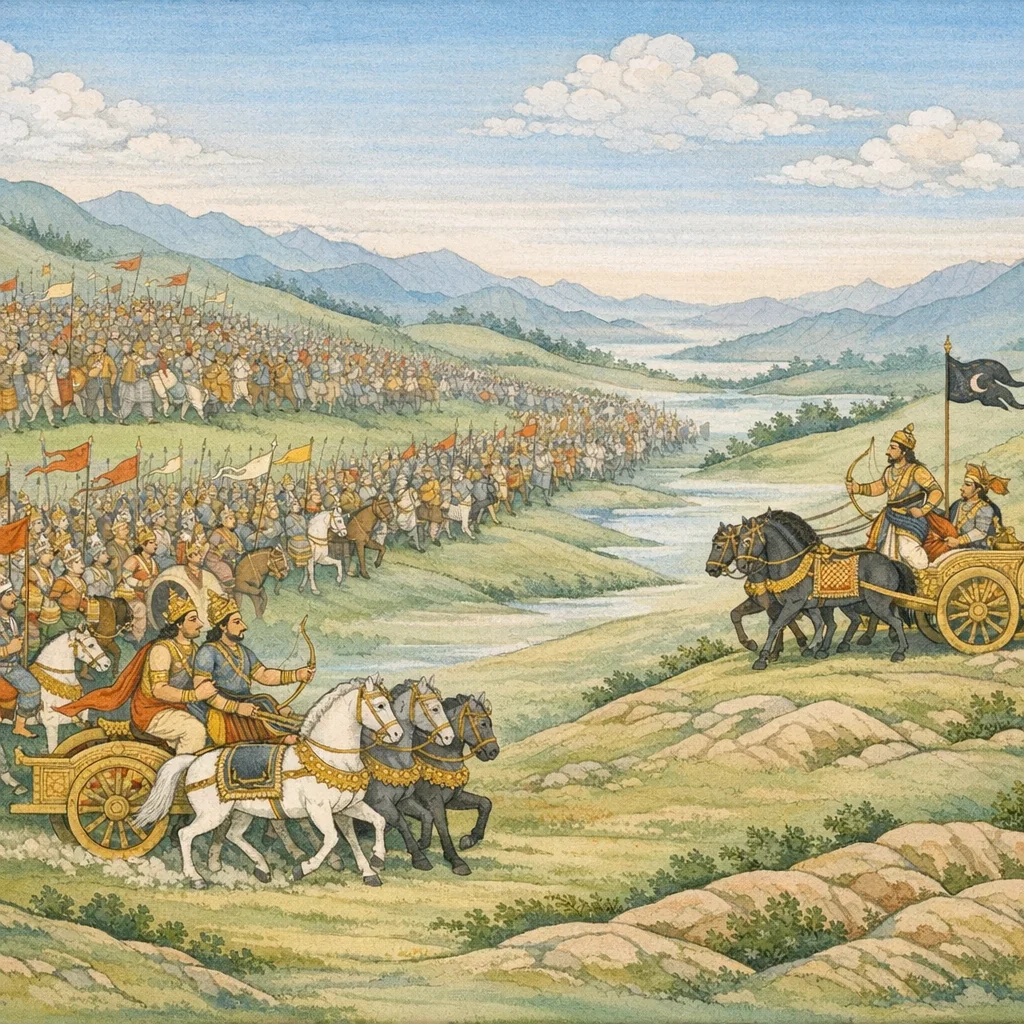
Sañjaya answers Dhṛtarāṣṭra’s inquiry about Sindhurāja Jayadratha’s prowess by detailing his chariot’s splendor and battlefield conduct. The chapter opens with a descriptive inventory of Jayadratha’s ratha: a city-like (gandharva-nagara) construction, crowned by a prominent boar-emblem banner, shaded by white parasols and marked by royal insignia; its fittings shine with pearls, diamonds, gems, and gold. The narrative then shifts from material description to kinetic action: Jayadratha rapidly releases dense volleys of arrows, striking several prominent Pāṇḍava-side warriors in measured counts (e.g., Sātyaki, Bhīma, Dhṛṣṭadyumna, Virāṭa, Drupada, Śikhaṇḍin, Kekayas, Draupadeyas, and Yudhiṣṭhira), creating an ‘arrow-net’ effect that forces withdrawal or delay. Yudhiṣṭhira counters by severing Jayadratha’s bow, but Jayadratha immediately takes up another, demonstrating speed and resilience. Exchanges continue—Bhīma brings down elements of insignia, Jayadratha retaliates—culminating in the report that Jayadratha, empowered by a divine boon, repeatedly checks those attempting to break Droṇa’s array, thereby controlling access and tempo in this sector of the engagement.
Chapter Arc: धृतराष्ट्र के प्रश्नों के बीच संजय युद्धभूमि का दृश्य खोलते हैं—अभिमन्यु के पीछे दौड़ते पाण्डवों की ज्वाला-सी गति, और सामने जयद्रथ का वर-बल से अकड़ता हुआ अवरोध। → पाण्डव-सेना व्यूहबद्ध होकर ‘परीप्सन्तः’—जयद्रथ तक पहुँचने को आतुर—आगे बढ़ती है। युधिष्ठिर, भीम, शिखण्डी, सात्यकि, नकुल-सहदेव, धृष्टद्युम्न, विराट, द्रुपद, केकय-राज आदि एक साथ धावा बोलते हैं; पर जयद्रथ को मिला वर (चार पाण्डवों को रोक सकने का) उसे क्षणिक साहस देता है और कौरव-पंक्तियाँ उसे ढाल बनकर घेरती हैं। → जयद्रथ ‘एवमस्तु’ कहकर वर-गौरव में युद्ध में उतरता है और पाण्डवों की अग्रगामी लहर को रोकने का प्रयत्न करता है—यही क्षण अध्याय का शिखर है: एक अकेला रथी, वर-समर्थित, पाण्डव-आक्रोश के सामने दीवार बनने का दावा करता है। → अध्याय का अंत निर्णायक वध/परिणाम पर नहीं, बल्कि पाण्डवों के संगठित आक्रमण और जयद्रथ के प्रतिरोध की स्थापना पर होता है—युद्ध की दिशा ‘जयद्रथ-युद्ध’ के रूप में स्पष्ट हो जाती है। → पाण्डवों का व्यूहबद्ध धावा जारी है—क्या जयद्रथ सचमुच चारों पाण्डुनन्दनों को रोक पाएगा, और अर्जुन के प्रतिशोध की घड़ी कब टूटेगी?
Shlokas
Verse 1
(दाक्षिणात्य अधिक पाठका $ “लोक मिलाकर कुल २६६ “लोक हैं।) #द-2ल्5 >> | आह ॥ #* द्विचत्वारिशोड ध्याय: अभिमन्युके पीछे जानेवाले पाण्डवोंको जयद्रथका वरके प्रभावसे रोक देना धृतराष्ट उवाच बालमत्यन्तसुखिनं स्वबाहुबलदर्पितम् । युद्धेषु कुशलं वीरं कुलपुत्र॑ तनुत्यजम्
Dhṛtarāṣṭra said: “That young man, supremely happy in life, proud of the strength of his own arms—skilled in wars, a heroic son of noble lineage, ready to lay down his life…”
Verse 2
गाहमानमनीकानि सदश्नैश्न त्रिहायनै: । अपि यौधिष्ठिरात् सैन्यात् कश्चिदन््वपतद् बली
Dhṛtarāṣṭra said: “As the battle-lines were plunged into and pressed through—amid swift horses and three-year-old steeds—did any mighty warrior at all pursue from Yudhiṣṭhira’s army?”
Verse 3
धृतराष्ट्र बोले--संजय! अत्यन्त सुखमें पला हुआ वीर बालक अभिमन्यु युद्धमें कुशल था। उसे अपने बाहुबलपर गर्व था। वह उत्तम कुलमें उत्पन्न होनेके कारण अपने शरीरको निछावर करके युद्ध कर रहा था। जिस समय वह तीन सालकी अवस्थावाले उत्तम घोड़ोंके द्वारा मेरी सेनाओंमें प्रवेश कर रहा था, उस समय युधिष्ठिरकी सेनासे क्या कोई बलवान् वीर उसके पीछे-पीछे व्यूहके भीतर आ सका था? ।। संजय उवाच युधिष्ठिरो भीमसेन: शिखण्डी सात्यकिर्यमौ । धृष्टद्युम्नो विराटश्न द्रपदश्च सकेकय:,अभ्यद्रवन् परीप्सन्तो व्यूढानीका: प्रहारिण: । संजयने कहा--राजन! युधिष्ठिर, भीमसेन, शिखण्डी, सात्यकि, नकुल-सहदेव, धष्टद्युम्न, विराट, द्रपद, केकय-राजकुमार, रोषमें भरा हुआ धृष्टकेतु तथा मत्स्यदेशीय योद्धा --ये सब-के-सब युद्धस्थलमें आगे बढ़े। अभिमन्युके ताऊ, चाचा तथा मामागण अपनी सेनाको व्यूहद्वारा संगठित करके प्रहार करनेके लिये उद्यत हो अभिमन्युकी रक्षाके लिये उसीके बनाये हुए मार्गसे व्यूहमें जानेके उद्देश्यसे एक साथ दौड़ पड़े
Sanjaya said: O King, Yudhishthira, Bhimasena, Shikhandi, Satyaki, the twin brothers (Nakula and Sahadeva), Dhrishtadyumna, Virata, Drupada, and the Kekaya princes—fighters ready to strike, their forces drawn up in battle array—rushed forward together, intent on entering the formation. Driven by urgency to protect Abhimanyu and to follow the path he had opened, these elders and allies pressed into the vyuha, showing how duty to kin and comrades compels action even amid the peril of war.
Verse 4
धृष्टकेतुश्व संरब्धो मत्स्याश्वाभ्यपतन् रणे । तेनैव तु पथा यान्तः पितरो मातुलै: सह,अभ्यद्रवन् परीप्सन्तो व्यूढानीका: प्रहारिण: । संजयने कहा--राजन! युधिष्ठिर, भीमसेन, शिखण्डी, सात्यकि, नकुल-सहदेव, धष्टद्युम्न, विराट, द्रपद, केकय-राजकुमार, रोषमें भरा हुआ धृष्टकेतु तथा मत्स्यदेशीय योद्धा --ये सब-के-सब युद्धस्थलमें आगे बढ़े। अभिमन्युके ताऊ, चाचा तथा मामागण अपनी सेनाको व्यूहद्वारा संगठित करके प्रहार करनेके लिये उद्यत हो अभिमन्युकी रक्षाके लिये उसीके बनाये हुए मार्गसे व्यूहमें जानेके उद्देश्यसे एक साथ दौड़ पड़े
Sanjaya said: Enraged, Dhṛṣṭaketu, along with the Matsya and Aśva warriors, charged into the battle. And following that very path, the fathers and maternal uncles—having arrayed their troops in battle-formation and eager to strike—rushed forward together, intent on entering the formation by the route that had been opened, in order to protect Abhimanyu.
Verse 5
तान् दृष्टवा द्रवत: शूरांस्त्ववीया विमुखा5भवन्,अभ्यद्रवन् परीप्सन्तो व्यूढानीका: प्रहारिण: । संजयने कहा--राजन! युधिष्ठिर, भीमसेन, शिखण्डी, सात्यकि, नकुल-सहदेव, धष्टद्युम्न, विराट, द्रपद, केकय-राजकुमार, रोषमें भरा हुआ धृष्टकेतु तथा मत्स्यदेशीय योद्धा --ये सब-के-सब युद्धस्थलमें आगे बढ़े। अभिमन्युके ताऊ, चाचा तथा मामागण अपनी सेनाको व्यूहद्वारा संगठित करके प्रहार करनेके लिये उद्यत हो अभिमन्युकी रक्षाके लिये उसीके बनाये हुए मार्गसे व्यूहमें जानेके उद्देश्यसे एक साथ दौड़ पड़े उन शूरवीरोंको आक्रमण करते देख आपके सैनिक भाग खड़े हुए। आपके पुत्रकी विशाल सेनाको रणसे विमुख हुई देख उसे स्थिरतापूर्वक स्थापित करनेकी इच्छासे आपका तेजस्वी जामाता जयद्रथ वहाँ दौड़ा हुआ आया
Sañjaya said: Seeing those heroes rushing forward, your troops turned away and fled. Then the assailants—fighters with their forces drawn up in battle-array—charged ahead, intent on entering the formation and striking, seeking to press through along the path that had been made.
Verse 6
ततस्तद् विमुखं दृष्टवा तव सूनोर्महद् बलम् । जामाता तव तेजस्वी संस्तम्भयिषुराद्रवत्,अभ्यद्रवन् परीप्सन्तो व्यूढानीका: प्रहारिण: । संजयने कहा--राजन! युधिष्ठिर, भीमसेन, शिखण्डी, सात्यकि, नकुल-सहदेव, धष्टद्युम्न, विराट, द्रपद, केकय-राजकुमार, रोषमें भरा हुआ धृष्टकेतु तथा मत्स्यदेशीय योद्धा --ये सब-के-सब युद्धस्थलमें आगे बढ़े। अभिमन्युके ताऊ, चाचा तथा मामागण अपनी सेनाको व्यूहद्वारा संगठित करके प्रहार करनेके लिये उद्यत हो अभिमन्युकी रक्षाके लिये उसीके बनाये हुए मार्गसे व्यूहमें जानेके उद्देश्यसे एक साथ दौड़ पड़े उन शूरवीरोंको आक्रमण करते देख आपके सैनिक भाग खड़े हुए। आपके पुत्रकी विशाल सेनाको रणसे विमुख हुई देख उसे स्थिरतापूर्वक स्थापित करनेकी इच्छासे आपका तेजस्वी जामाता जयद्रथ वहाँ दौड़ा हुआ आया
Sañjaya said: Then, seeing your son’s great force turning away from the fight, your radiant son-in-law Jayadratha rushed forward, intent on steadying and rallying it. At the same time, fierce assailants—having arrayed their troops in battle-formation—charged in, seeking to strike and press their advantage.
Verse 7
सैन्धवस्य महाराज पुत्रो राजा जयद्रथ: । स पुत्रगृद्धिन: पार्थान् सहसैन्यानवारयत्,अभ्यद्रवन् परीप्सन्तो व्यूढानीका: प्रहारिण: । संजयने कहा--राजन! युधिष्ठिर, भीमसेन, शिखण्डी, सात्यकि, नकुल-सहदेव, धष्टद्युम्न, विराट, द्रपद, केकय-राजकुमार, रोषमें भरा हुआ धृष्टकेतु तथा मत्स्यदेशीय योद्धा --ये सब-के-सब युद्धस्थलमें आगे बढ़े। अभिमन्युके ताऊ, चाचा तथा मामागण अपनी सेनाको व्यूहद्वारा संगठित करके प्रहार करनेके लिये उद्यत हो अभिमन्युकी रक्षाके लिये उसीके बनाये हुए मार्गसे व्यूहमें जानेके उद्देश्यसे एक साथ दौड़ पड़े महाराज! सिंधुनरेशके पुत्र राजा जयद्रथने अपने पुत्रको बचानेकी इच्छा रखनेवाले कुन्तीकुमारोंकोी सेनासहित आगे बढ़नेसे रोक दिया
Sanjaya said: O great king, Jayadratha, ruler and son of the king of Sindhu, checked the sons of Pṛthā along with their forces. Urgently anxious for Abhimanyu’s safety, the Pāṇḍavas surged forward to break into the enemy formation; yet Jayadratha stood as a blocking barrier, turning the struggle into a test of resolve, duty to kin, and the harsh ethics of war—where guarding one’s own side often means denying another’s righteous aim.
Verse 8
उग्रधन्वा महेष्वासो दिव्यमस्त्रमुदीरयन् । वार्थक्षत्रिरुपासेधत् प्रवणादिव कुज्जर:,अभ्यद्रवन् परीप्सन्तो व्यूढानीका: प्रहारिण: । संजयने कहा--राजन! युधिष्ठिर, भीमसेन, शिखण्डी, सात्यकि, नकुल-सहदेव, धष्टद्युम्न, विराट, द्रपद, केकय-राजकुमार, रोषमें भरा हुआ धृष्टकेतु तथा मत्स्यदेशीय योद्धा --ये सब-के-सब युद्धस्थलमें आगे बढ़े। अभिमन्युके ताऊ, चाचा तथा मामागण अपनी सेनाको व्यूहद्वारा संगठित करके प्रहार करनेके लिये उद्यत हो अभिमन्युकी रक्षाके लिये उसीके बनाये हुए मार्गसे व्यूहमें जानेके उद्देश्यसे एक साथ दौड़ पड़े जैसे हाथी नीची भूमिमें आकर वहींसे शत्रुका निवारण करता है, उसी प्रकार भयंकर एवं महान् धनुष धारण करनेवाले वृद्धक्षत्रकुमार जयद्रथने दिव्यास्त्रोंका प्रयोग करके शत्रुओंकी प्रगति रोक दी
Sañjaya said: The fierce archer, that great bowman Vṛddhakṣatri (Jayadratha), invoking a divine missile, checked their advance—like an elephant holding its ground from a low-lying slope. Yet the striking warriors, their forces arrayed in battle-formation, rushed forward together, intent on breaking through and entering by the very path Abhimanyu had opened, to protect him.
Verse 9
धृतराष्ट्र रवाच अतिभारमहं मन्ये सैन्धवे संजयाहितम् । यदेक: पाण्डवान क्रुद्धान् पुत्रप्रेप्सूनवारयत्,अभ्यद्रवन् परीप्सन्तो व्यूढानीका: प्रहारिण: । संजयने कहा--राजन! युधिष्ठिर, भीमसेन, शिखण्डी, सात्यकि, नकुल-सहदेव, धष्टद्युम्न, विराट, द्रपद, केकय-राजकुमार, रोषमें भरा हुआ धृष्टकेतु तथा मत्स्यदेशीय योद्धा --ये सब-के-सब युद्धस्थलमें आगे बढ़े। अभिमन्युके ताऊ, चाचा तथा मामागण अपनी सेनाको व्यूहद्वारा संगठित करके प्रहार करनेके लिये उद्यत हो अभिमन्युकी रक्षाके लिये उसीके बनाये हुए मार्गसे व्यूहमें जानेके उद्देश्यसे एक साथ दौड़ पड़े धृतराष्ट्रने कहा--संजय! मैं तो समझता हूँ, सिंधुराज जयद्रथपर यह बहुत बड़ा भार आ पड़ा था, जो अकेले होनेपर भी उसने पुत्रकी रक्षाके लिये उत्सुक एवं क्रोधमें भरे हुए पाण्डवोंको रोका
Dhṛtarāṣṭra said: “Sañjaya, I consider that an exceedingly heavy burden fell upon Jayadratha of Sindhu—since, though alone, he held back the enraged Pāṇḍavas who were desperate to reach and protect the boy (Abhimanyu).”
Verse 10
अत्यद्भुतमहं मन्ये बल॑ शौर्य च सैन्धवे । तस्य प्रब्रूहि मे वीर्य कर्म चाग्र्यं महात्मन:,अभ्यद्रवन् परीप्सन्तो व्यूढानीका: प्रहारिण: । संजयने कहा--राजन! युधिष्ठिर, भीमसेन, शिखण्डी, सात्यकि, नकुल-सहदेव, धष्टद्युम्न, विराट, द्रपद, केकय-राजकुमार, रोषमें भरा हुआ धृष्टकेतु तथा मत्स्यदेशीय योद्धा --ये सब-के-सब युद्धस्थलमें आगे बढ़े। अभिमन्युके ताऊ, चाचा तथा मामागण अपनी सेनाको व्यूहद्वारा संगठित करके प्रहार करनेके लिये उद्यत हो अभिमन्युकी रक्षाके लिये उसीके बनाये हुए मार्गसे व्यूहमें जानेके उद्देश्यसे एक साथ दौड़ पड़े
Dhṛtarāṣṭra said: “I deem the strength and valor of the Sindhu prince truly astonishing. Tell me, O great-souled one, of his heroic power and his finest deed.” Then the warriors, their forces drawn up in battle-array and eager to strike, surged forward together, intent on entering the formation by the very path Abhimanyu had made—seeking to protect him.
Verse 11
सिंधुराजमें ऐसे बल और शौर्यका होना मैं अत्यन्त आश्चर्यकी बात मानता हूँ। महामना जयद्रथके बल और श्रेष्ठ पराक्रमका मुझसे विस्तारपूर्वक वर्णन करो ।। किं दत्तं हुतमिष्टं वा कि सुतप्तमथो तप: । सिंधुराजो हि येनैक: पाण्डवान् समवारयत्,अभ्यद्रवन् परीप्सन्तो व्यूढानीका: प्रहारिण: । संजयने कहा--राजन! युधिष्ठिर, भीमसेन, शिखण्डी, सात्यकि, नकुल-सहदेव, धष्टद्युम्न, विराट, द्रपद, केकय-राजकुमार, रोषमें भरा हुआ धृष्टकेतु तथा मत्स्यदेशीय योद्धा --ये सब-के-सब युद्धस्थलमें आगे बढ़े। अभिमन्युके ताऊ, चाचा तथा मामागण अपनी सेनाको व्यूहद्वारा संगठित करके प्रहार करनेके लिये उद्यत हो अभिमन्युकी रक्षाके लिये उसीके बनाये हुए मार्गसे व्यूहमें जानेके उद्देश्यसे एक साथ दौड़ पड़े सिंधुराजने कौन-सा ऐसा दान, होम, यज्ञ अथवा उत्तम तप किया था, जिससे वह अकेला ही समस्त पाण्डवोंको रोकनेमें समर्थ हो सका
Dhṛtarāṣṭra said: “That the king of Sindhu should possess such strength and valor seems to me most astonishing. Describe to me in full, O great-souled one, Jayadratha’s power and his finest feat. What gift did he give, what oblation did he offer, what sacrifice (yajña) did he perform, or what fierce austerity (tapas) did he practice—by which the king of Sindhu, all alone, was able to hold back the Pāṇḍavas?”
Verse 12
(दमो वा ब्रह्मचर्य वा सूत यच्चास्य सत्तम । देवं कतममाराध्य विष्णुमीशानमब्जजम् ।। सिन्धुराट् तनये सक्तान् क्रुद्ध: पार्थानवारयत् | नैवं कृतं महत् कर्म भीष्मेणाज्ञासिषं तथा ।।) साधुशिरोमणे सूत! जयद्रथमें जो इन्द्रियसंयम अथवा ब्रह्मचर्य हो, वह बताओ। विष्णु, शिव अथवा ब्रह्मा किस देवताकी आराधना करके सिन्धुराजने अपने पुत्रकी रक्षामें तत्पर हुए पाण्डवोंको क्रोधपूर्वक रोक दिया? भीष्मने भी ऐसा महान् पराक्रम किया हो, उसका पता मुझे नहीं है। संजय उवाच द्रौपदीहरणे यत् तद् भीमसेनेन निर्जित: । मानात् स तप्तवान् राजा वरार्थी सुमहत् तप:,अभ्यद्रवन् परीप्सन्तो व्यूढानीका: प्रहारिण: । संजयने कहा--राजन! युधिष्ठिर, भीमसेन, शिखण्डी, सात्यकि, नकुल-सहदेव, धष्टद्युम्न, विराट, द्रपद, केकय-राजकुमार, रोषमें भरा हुआ धृष्टकेतु तथा मत्स्यदेशीय योद्धा --ये सब-के-सब युद्धस्थलमें आगे बढ़े। अभिमन्युके ताऊ, चाचा तथा मामागण अपनी सेनाको व्यूहद्वारा संगठित करके प्रहार करनेके लिये उद्यत हो अभिमन्युकी रक्षाके लिये उसीके बनाये हुए मार्गसे व्यूहमें जानेके उद्देश्यसे एक साथ दौड़ पड़े संजयने कहा--महाराज! द्रौपदीहरणके प्रसंगमें जो जयद्रथको भीमसेनसे पराजित होना पड़ा था, उसीसे अभिमानवश अपमानका अनुभव करके राजाने वर प्राप्त करनेकी इच्छा रखकर बड़ी भारी तपस्या की
Sanjaya said: “O Sūta, best among the virtuous, tell me: what was that self-restraint, or what celibate discipline, that he practiced? And which deity did he worship—Viṣṇu, Īśāna (Śiva), or Brahmā, the lotus-born—by whose favor the king of Sindhu, in anger, was able to check the Pāṇḍavas who were intent on protecting the son (Abhimanyu)? I do not know of Bhīṣma having performed so great a feat.” Sanjaya said: “O King, in the episode of Draupadī’s abduction, Jayadratha had been defeated by Bhīmasena. Feeling the sting of humiliation born of pride, that king undertook an immense austerity, desiring a boon.”
Verse 13
इन्द्रियाणीद्धरियार्थेभ्य: प्रियेभ्य: संनिवर्त्य सः । क्षुत्पिपासातपसह: कृशो धमनिसंततः,अभ्यद्रवन् परीप्सन्तो व्यूढानीका: प्रहारिण: । संजयने कहा--राजन! युधिष्ठिर, भीमसेन, शिखण्डी, सात्यकि, नकुल-सहदेव, धष्टद्युम्न, विराट, द्रपद, केकय-राजकुमार, रोषमें भरा हुआ धृष्टकेतु तथा मत्स्यदेशीय योद्धा --ये सब-के-सब युद्धस्थलमें आगे बढ़े। अभिमन्युके ताऊ, चाचा तथा मामागण अपनी सेनाको व्यूहद्वारा संगठित करके प्रहार करनेके लिये उद्यत हो अभिमन्युकी रक्षाके लिये उसीके बनाये हुए मार्गसे व्यूहमें जानेके उद्देश्यसे एक साथ दौड़ पड़े प्रिय लगनेवाले विषयोंकी ओरसे सम्पूर्ण इन्द्रियोंको हटाकर भूख-प्यास और धूपका कष्ट सहन करता हुआ जयद्रथ अत्यन्त दुर्बल हो गया। उसके शरीरकी नस-नाड़ियाँ दिखायी देने लगीं
Sañjaya said: Having withdrawn his senses from the dear and tempting objects of enjoyment, he endured hunger, thirst, and the scorching heat. Wasted and emaciated, with his veins standing out, he pressed on. Meanwhile, the warriors—eager to strike and with their forces arrayed in battle-formation—charged forward, intent on forcing their way into the ordered ranks.
Verse 14
देवमाराधयच्छर्व॑ गृणन् ब्रह्म सनातनम् । भक्तानुकम्पी भगवांस्तस्य चक्रे ततो दयाम्,अभ्यद्रवन् परीप्सन्तो व्यूढानीका: प्रहारिण: । संजयने कहा--राजन! युधिष्ठिर, भीमसेन, शिखण्डी, सात्यकि, नकुल-सहदेव, धष्टद्युम्न, विराट, द्रपद, केकय-राजकुमार, रोषमें भरा हुआ धृष्टकेतु तथा मत्स्यदेशीय योद्धा --ये सब-के-सब युद्धस्थलमें आगे बढ़े। अभिमन्युके ताऊ, चाचा तथा मामागण अपनी सेनाको व्यूहद्वारा संगठित करके प्रहार करनेके लिये उद्यत हो अभिमन्युकी रक्षाके लिये उसीके बनाये हुए मार्गसे व्यूहमें जानेके उद्देश्यसे एक साथ दौड़ पड़े वह सनातन ब्रह्मस्वरूप भगवान् शंकरकी स्तुति करता हुआ उनकी आराधना करने लगा। तब भक्तोंपर दया करनेवाले भगवानने उसपर कृपा की और स्वप्रमें जयद्रथको दर्शन देकर उससे कहा--'जयद्रथ! तुम क्या चाहते हो? वर माँगो। मैं तुमपर बहुत प्रसन्न हूँ”
Sañjaya said: Praising the eternal Brahman and worshipping Śarva (Śiva), he sought the deity’s favor. The Blessed Lord, compassionate to devotees, then showed him mercy. Meanwhile, the warriors—having arrayed their forces in battle formation and intent on striking—charged forward, striving to enter the formation and accomplish their aim.
Verse 15
स्वप्रान्तेडप्यथ चैवाह हर: सिन्धुपते: सुतम् । वरं वृणीष्व प्रीतो5स्मि जयद्रथ किमिच्छसि,अभ्यद्रवन् परीप्सन्तो व्यूढानीका: प्रहारिण: । संजयने कहा--राजन! युधिष्ठिर, भीमसेन, शिखण्डी, सात्यकि, नकुल-सहदेव, धष्टद्युम्न, विराट, द्रपद, केकय-राजकुमार, रोषमें भरा हुआ धृष्टकेतु तथा मत्स्यदेशीय योद्धा --ये सब-के-सब युद्धस्थलमें आगे बढ़े। अभिमन्युके ताऊ, चाचा तथा मामागण अपनी सेनाको व्यूहद्वारा संगठित करके प्रहार करनेके लिये उद्यत हो अभिमन्युकी रक्षाके लिये उसीके बनाये हुए मार्गसे व्यूहमें जानेके उद्देश्यसे एक साथ दौड़ पड़े वह सनातन ब्रह्मस्वरूप भगवान् शंकरकी स्तुति करता हुआ उनकी आराधना करने लगा। तब भक्तोंपर दया करनेवाले भगवानने उसपर कृपा की और स्वप्रमें जयद्रथको दर्शन देकर उससे कहा--'जयद्रथ! तुम क्या चाहते हो? वर माँगो। मैं तुमपर बहुत प्रसन्न हूँ”
Sañjaya said: Even in a dream, Hara (Śiva) spoke to the son of the lord of Sindhu (Jayadratha): “Choose a boon. I am pleased with you, Jayadratha—what do you desire?” Meanwhile, the striking warriors, their forces arrayed in battle-formation, rushed forward together, intent on entering and achieving their aim.
Verse 16
एवमुक्तस्तु शर्वेण सिन्धुराजो जयद्रथ: । उवाच प्रणतो रुद्रं प्राजजलिरनियतात्मवान्,अभ्यद्रवन् परीप्सन्तो व्यूढानीका: प्रहारिण: । संजयने कहा--राजन! युधिष्ठिर, भीमसेन, शिखण्डी, सात्यकि, नकुल-सहदेव, धष्टद्युम्न, विराट, द्रपद, केकय-राजकुमार, रोषमें भरा हुआ धृष्टकेतु तथा मत्स्यदेशीय योद्धा --ये सब-के-सब युद्धस्थलमें आगे बढ़े। अभिमन्युके ताऊ, चाचा तथा मामागण अपनी सेनाको व्यूहद्वारा संगठित करके प्रहार करनेके लिये उद्यत हो अभिमन्युकी रक्षाके लिये उसीके बनाये हुए मार्गसे व्यूहमें जानेके उद्देश्यसे एक साथ दौड़ पड़े भगवान् शंकरके ऐसा कहनेपर सिंधुराज जयद्रथने अपने मन और इन्द्रियोंको संयममें रखकर उन रुद्रदेवको प्रणाम किया और हाथ जोड़कर कहा--
Sañjaya said: Thus addressed by Śarva (Rudra), Jayadratha, the king of Sindhu, bowed down to Rudra. With palms joined in reverence, having brought his mind under restraint, he spoke—
Verse 17
पाण्डवेयानहं संख्ये भीमवीर्यपराक्रमान् | वारयेयं रथेनैक: समस्तानिति भारत,अभ्यद्रवन् परीप्सन्तो व्यूढानीका: प्रहारिण: । संजयने कहा--राजन! युधिष्ठिर, भीमसेन, शिखण्डी, सात्यकि, नकुल-सहदेव, धष्टद्युम्न, विराट, द्रपद, केकय-राजकुमार, रोषमें भरा हुआ धृष्टकेतु तथा मत्स्यदेशीय योद्धा --ये सब-के-सब युद्धस्थलमें आगे बढ़े। अभिमन्युके ताऊ, चाचा तथा मामागण अपनी सेनाको व्यूहद्वारा संगठित करके प्रहार करनेके लिये उद्यत हो अभिमन्युकी रक्षाके लिये उसीके बनाये हुए मार्गसे व्यूहमें जानेके उद्देश्यसे एक साथ दौड़ पड़े 'प्रभो! मैं युद्धमें भयंकर बल-पराक्रमसे सम्पन्न समस्त पाण्डवोंको अकेला ही रथके द्वारा परास्त करके आगे बढ़नेसे रोक दूँ"। भारत! उसके ऐसा कहनेपर देवेश्वर भगवान् शिवने जयद्रथसे कहा--'सौम्य! मैं तुम्हें वर देता हूँ। तुम कुन्तीपुत्र अर्जुनको छोड़कर शेष चार पाण्डवोंको (एक दिन) युद्धमें आगे बढ़नेसे रोक दोगे।” तब देवेश्वर महादेवसे “एवमस्तु' कहकर राजा जयद्रथ जाग उठा
Sañjaya said: “O Bhārata (Dhṛtarāṣṭra), in the midst of battle I would, single-handed in my chariot, hold back all the Pāṇḍava warriors—men of Bhīma’s might and heroic prowess—and prevent their advance.” With that resolve, the striking warriors—having arrayed their forces in battle-formation—rushed forward together, intent on entering the formation by the very path that had been made, to accomplish their purpose. The passage highlights a recurring ethical tension of the war: vows and martial confidence, proclaimed as the kṣatriya’s dharma, can also become instruments for trapping, delaying, or isolating foes within a strategy shadowed by adharma.
Verse 18
एवमुक्तस्तु देवेशो जयद्रथमथाब्रवीत् | ददामि ते वरं सौम्य विना पार्थ धनंजयम्,अभ्यद्रवन् परीप्सन्तो व्यूढानीका: प्रहारिण: । संजयने कहा--राजन! युधिष्ठिर, भीमसेन, शिखण्डी, सात्यकि, नकुल-सहदेव, धष्टद्युम्न, विराट, द्रपद, केकय-राजकुमार, रोषमें भरा हुआ धृष्टकेतु तथा मत्स्यदेशीय योद्धा --ये सब-के-सब युद्धस्थलमें आगे बढ़े। अभिमन्युके ताऊ, चाचा तथा मामागण अपनी सेनाको व्यूहद्वारा संगठित करके प्रहार करनेके लिये उद्यत हो अभिमन्युकी रक्षाके लिये उसीके बनाये हुए मार्गसे व्यूहमें जानेके उद्देश्यसे एक साथ दौड़ पड़े 'प्रभो! मैं युद्धमें भयंकर बल-पराक्रमसे सम्पन्न समस्त पाण्डवोंको अकेला ही रथके द्वारा परास्त करके आगे बढ़नेसे रोक दूँ"। भारत! उसके ऐसा कहनेपर देवेश्वर भगवान् शिवने जयद्रथसे कहा--'सौम्य! मैं तुम्हें वर देता हूँ। तुम कुन्तीपुत्र अर्जुनको छोड़कर शेष चार पाण्डवोंको (एक दिन) युद्धमें आगे बढ़नेसे रोक दोगे।” तब देवेश्वर महादेवसे “एवमस्तु' कहकर राजा जयद्रथ जाग उठा
Sañjaya said: Thus addressed, the Lord of the gods, Śiva, spoke to Jayadratha: “Gentle one, I grant you a boon—except for Pārtha Dhanañjaya (Arjuna), you will be able to check the other Pāṇḍavas from advancing in battle (for a day).” The episode frames a morally charged divine favor: power is granted with a clear limitation, and its use will directly shape the justice and tragedy of the battlefield.
Verse 19
वारयिष्यसि संग्रामे चतुरः पाण्डुनन्दनान् । एवमस्त्विति देवेशमुक्त्वाबुद्धात पार्थिव:,अभ्यद्रवन् परीप्सन्तो व्यूढानीका: प्रहारिण: । संजयने कहा--राजन! युधिष्ठिर, भीमसेन, शिखण्डी, सात्यकि, नकुल-सहदेव, धष्टद्युम्न, विराट, द्रपद, केकय-राजकुमार, रोषमें भरा हुआ धृष्टकेतु तथा मत्स्यदेशीय योद्धा --ये सब-के-सब युद्धस्थलमें आगे बढ़े। अभिमन्युके ताऊ, चाचा तथा मामागण अपनी सेनाको व्यूहद्वारा संगठित करके प्रहार करनेके लिये उद्यत हो अभिमन्युकी रक्षाके लिये उसीके बनाये हुए मार्गसे व्यूहमें जानेके उद्देश्यसे एक साथ दौड़ पड़े 'प्रभो! मैं युद्धमें भयंकर बल-पराक्रमसे सम्पन्न समस्त पाण्डवोंको अकेला ही रथके द्वारा परास्त करके आगे बढ़नेसे रोक दूँ"। भारत! उसके ऐसा कहनेपर देवेश्वर भगवान् शिवने जयद्रथसे कहा--'सौम्य! मैं तुम्हें वर देता हूँ। तुम कुन्तीपुत्र अर्जुनको छोड़कर शेष चार पाण्डवोंको (एक दिन) युद्धमें आगे बढ़नेसे रोक दोगे।” तब देवेश्वर महादेवसे “एवमस्तु' कहकर राजा जयद्रथ जाग उठा
Sañjaya said: “You will hold back the four sons of Pāṇḍu in battle.” Having thus addressed the Lord of the gods, the king awoke and assented, saying, “So be it.” Then the warriors—having arrayed their forces in battle-formation and intent on striking—rushed forward together, seeking to enter the formation by the very path that had been made. The episode frames a moral tension typical of the war: divine boons and tactical prowess are invoked not for peace, but to obstruct and isolate opponents on the battlefield, intensifying the ethical cost of victory.
Verse 20
स तेन वरदानेन दिव्येनास्त्रबलेन च । एक: संवारयामास पाण्डवानामनीकिनीम्,अभ्यद्रवन् परीप्सन्तो व्यूढानीका: प्रहारिण: । संजयने कहा--राजन! युधिष्ठिर, भीमसेन, शिखण्डी, सात्यकि, नकुल-सहदेव, धष्टद्युम्न, विराट, द्रपद, केकय-राजकुमार, रोषमें भरा हुआ धृष्टकेतु तथा मत्स्यदेशीय योद्धा --ये सब-के-सब युद्धस्थलमें आगे बढ़े। अभिमन्युके ताऊ, चाचा तथा मामागण अपनी सेनाको व्यूहद्वारा संगठित करके प्रहार करनेके लिये उद्यत हो अभिमन्युकी रक्षाके लिये उसीके बनाये हुए मार्गसे व्यूहमें जानेके उद्देश्यसे एक साथ दौड़ पड़े उसी वरदानसे अपने दिव्य अस्त्र-बलके द्वारा जयद्रथने अकेले ही पाण्डवोंकी सेनाको रोक दिया
Sañjaya said: O King, empowered by that divine boon and by the might of celestial weapons, he alone held back the Pāṇḍavas’ army, even as the striking warriors—having marshalled their forces in battle-array—charged forward, intent on breaking through. The scene underscores how a single advantage, when joined to martial skill, can obstruct even a righteous cause in the chaos of war.
Verse 21
तस्य ज्यातलघोषेण क्षत्रियान् भयमाविशत् | परांस्तु तव सैन्यस्य हर्ष: परमको5भवत्,अभ्यद्रवन् परीप्सन्तो व्यूढानीका: प्रहारिण: । संजयने कहा--राजन! युधिष्ठिर, भीमसेन, शिखण्डी, सात्यकि, नकुल-सहदेव, धष्टद्युम्न, विराट, द्रपद, केकय-राजकुमार, रोषमें भरा हुआ धृष्टकेतु तथा मत्स्यदेशीय योद्धा --ये सब-के-सब युद्धस्थलमें आगे बढ़े। अभिमन्युके ताऊ, चाचा तथा मामागण अपनी सेनाको व्यूहद्वारा संगठित करके प्रहार करनेके लिये उद्यत हो अभिमन्युकी रक्षाके लिये उसीके बनाये हुए मार्गसे व्यूहमें जानेके उद्देश्यसे एक साथ दौड़ पड़े उसके धनुषकी टंकार सुनकर शत्रुपक्षके क्षत्रियोंके मनमें भय समा गया; परंतु आपके सैनिकोंको बड़ा हर्ष हुआ
Sañjaya said: “At the sharp twang of his bowstring, fear entered the hearts of the opposing kṣatriyas; but in your army, O king, an exceedingly great exhilaration arose. Eager to strike, the warriors—having their battle-lines arrayed—rushed forward, intent on forcing their way in.”
Verse 22
दृष्टवा तु क्षत्रिया भारं सैन्धवे सर्वमाहितम् । उत्क्कुश्याभ्यद्रवन् राजन् येन यौधिष्ठिरं बलम्,अभ्यद्रवन् परीप्सन्तो व्यूढानीका: प्रहारिण: । संजयने कहा--राजन! युधिष्ठिर, भीमसेन, शिखण्डी, सात्यकि, नकुल-सहदेव, धष्टद्युम्न, विराट, द्रपद, केकय-राजकुमार, रोषमें भरा हुआ धृष्टकेतु तथा मत्स्यदेशीय योद्धा --ये सब-के-सब युद्धस्थलमें आगे बढ़े। अभिमन्युके ताऊ, चाचा तथा मामागण अपनी सेनाको व्यूहद्वारा संगठित करके प्रहार करनेके लिये उद्यत हो अभिमन्युकी रक्षाके लिये उसीके बनाये हुए मार्गसे व्यूहमें जानेके उद्देश्यसे एक साथ दौड़ पड़े राजन! उस समय सारा भार जयद्रथके ही ऊपर पड़ा देख आपके क्षत्रियवीर कोलाहल करते हुए जिस ओर युधिष्ठिरकी सेना थी, उसी ओर टूट पड़े
Sañjaya said: O King, seeing that the entire burden of the situation had been placed upon Jayadratha, the Kṣatriya warriors raised a great battle-cry and charged in the direction where Yudhiṣṭhira’s forces stood. Eager to strike, with their troops drawn up in ordered formations, they rushed forward—seeking to break through and reach their objective amid the press of war.
Verse 23
अभ्यद्रवन् परीप्सन्तो व्यूढानीका: प्रहारिण: । संजयने कहा--राजन! युधिष्ठिर, भीमसेन, शिखण्डी, सात्यकि, नकुल-सहदेव, धष्टद्युम्न, विराट, द्रपद, केकय-राजकुमार, रोषमें भरा हुआ धृष्टकेतु तथा मत्स्यदेशीय योद्धा --ये सब-के-सब युद्धस्थलमें आगे बढ़े। अभिमन्युके ताऊ, चाचा तथा मामागण अपनी सेनाको व्यूहद्वारा संगठित करके प्रहार करनेके लिये उद्यत हो अभिमन्युकी रक्षाके लिये उसीके बनाये हुए मार्गसे व्यूहमें जानेके उद्देश्यसे एक साथ दौड़ पड़े
Sañjaya said: O King, eager to accomplish their purpose, the Pandava warriors—whose troops were arrayed in battle formation and who were poised to strike—surged forward together. Driven by resolve and protective duty, they rushed to enter the enemy’s formation along the very path earlier opened, intent on safeguarding Abhimanyu and meeting the demands of kṣatriya-dharma amid the crisis of war.
Verse 24
अभ्यद्रवन् परीप्सन्तो व्यूढानीका: प्रहारिण: । संजयने कहा--राजन! युधिष्ठिर, भीमसेन, शिखण्डी, सात्यकि, नकुल-सहदेव, धष्टद्युम्न, विराट, द्रपद, केकय-राजकुमार, रोषमें भरा हुआ धृष्टकेतु तथा मत्स्यदेशीय योद्धा --ये सब-के-सब युद्धस्थलमें आगे बढ़े। अभिमन्युके ताऊ, चाचा तथा मामागण अपनी सेनाको व्यूहद्वारा संगठित करके प्रहार करनेके लिये उद्यत हो अभिमन्युकी रक्षाके लिये उसीके बनाये हुए मार्गसे व्यूहमें जानेके उद्देश्यसे एक साथ दौड़ पड़े
Sanjaya said: Eager to achieve their aim, the warriors—having their battle-formations arrayed—charged forward, intent on striking. In context, the Pandava leaders surge ahead to protect Abhimanyu by entering the enemy’s formation along the very path he had opened, driven by duty to safeguard a valiant youth and by the urgent ethics of comradeship amid the chaos of war.
Verse 25
अभ्यद्रवन् परीप्सन्तो व्यूढानीका: प्रहारिण: । संजयने कहा--राजन! युधिष्ठिर, भीमसेन, शिखण्डी, सात्यकि, नकुल-सहदेव, धष्टद्युम्न, विराट, द्रपद, केकय-राजकुमार, रोषमें भरा हुआ धृष्टकेतु तथा मत्स्यदेशीय योद्धा --ये सब-के-सब युद्धस्थलमें आगे बढ़े। अभिमन्युके ताऊ, चाचा तथा मामागण अपनी सेनाको व्यूहद्वारा संगठित करके प्रहार करनेके लिये उद्यत हो अभिमन्युकी रक्षाके लिये उसीके बनाये हुए मार्गसे व्यूहमें जानेके उद्देश्यसे एक साथ दौड़ पड़े
Sañjaya said: Eager to achieve their aim, the hard‑striking warriors—having their forces drawn up in battle array—charged forward. In context, the Pandava leaders and their allies surge ahead in disciplined formation, driven by duty to protect their own and to answer violence with necessary force, even as the moral weight of war presses upon every decision.
Verse 26
अभ्यद्रवन् परीप्सन्तो व्यूढानीका: प्रहारिण: । संजयने कहा--राजन! युधिष्ठिर, भीमसेन, शिखण्डी, सात्यकि, नकुल-सहदेव, धष्टद्युम्न, विराट, द्रपद, केकय-राजकुमार, रोषमें भरा हुआ धृष्टकेतु तथा मत्स्यदेशीय योद्धा --ये सब-के-सब युद्धस्थलमें आगे बढ़े। अभिमन्युके ताऊ, चाचा तथा मामागण अपनी सेनाको व्यूहद्वारा संगठित करके प्रहार करनेके लिये उद्यत हो अभिमन्युकी रक्षाके लिये उसीके बनाये हुए मार्गसे व्यूहमें जानेके उद्देश्यसे एक साथ दौड़ पड़े
Sañjaya said: Eager to achieve their aim, the warriors—whose forces were drawn up in battle-array and ready to strike—rushed forward together. In the unfolding crisis of war, their disciplined advance reflects both tactical resolve and the moral urgency to protect their own amid a ruthless battlefield.
Verse 27
अभ्यद्रवन् परीप्सन्तो व्यूढानीका: प्रहारिण: । संजयने कहा--राजन! युधिष्ठिर, भीमसेन, शिखण्डी, सात्यकि, नकुल-सहदेव, धष्टद्युम्न, विराट, द्रपद, केकय-राजकुमार, रोषमें भरा हुआ धृष्टकेतु तथा मत्स्यदेशीय योद्धा --ये सब-के-सब युद्धस्थलमें आगे बढ़े। अभिमन्युके ताऊ, चाचा तथा मामागण अपनी सेनाको व्यूहद्वारा संगठित करके प्रहार करनेके लिये उद्यत हो अभिमन्युकी रक्षाके लिये उसीके बनाये हुए मार्गसे व्यूहमें जानेके उद्देश्यसे एक साथ दौड़ पड़े
Sañjaya said: Eager to accomplish their purpose, the warriors—having their forces drawn up in battle array and ready to strike—rushed forward. In this moment, the Pāṇḍava side, driven by dharma and urgent duty, sought to break into the enemy formation along the very path Abhimanyu had opened, to protect him even at grievous risk.
Verse 28
अभ्यद्रवन् परीप्सन्तो व्यूढानीका: प्रहारिण: । संजयने कहा--राजन! युधिष्ठिर, भीमसेन, शिखण्डी, सात्यकि, नकुल-सहदेव, धष्टद्युम्न, विराट, द्रपद, केकय-राजकुमार, रोषमें भरा हुआ धृष्टकेतु तथा मत्स्यदेशीय योद्धा --ये सब-के-सब युद्धस्थलमें आगे बढ़े। अभिमन्युके ताऊ, चाचा तथा मामागण अपनी सेनाको व्यूहद्वारा संगठित करके प्रहार करनेके लिये उद्यत हो अभिमन्युकी रक्षाके लिये उसीके बनाये हुए मार्गसे व्यूहमें जानेके उद्देश्यसे एक साथ दौड़ पड़े
Sañjaya said: Eager to achieve their aim, the hard‑hitting warriors—having their forces drawn up in battle array—rushed forward. In the epic’s moral frame, this surge is driven by loyalty and protective duty: the Pāṇḍava leaders press into the hostile formation to safeguard Abhimanyu and to uphold their responsibility to their own, even amid the disciplined machinery of war.
Verse 29
अभ्यद्रवन् परीप्सन्तो व्यूढानीका: प्रहारिण: । संजयने कहा--राजन! युधिष्ठिर, भीमसेन, शिखण्डी, सात्यकि, नकुल-सहदेव, धष्टद्युम्न, विराट, द्रपद, केकय-राजकुमार, रोषमें भरा हुआ धृष्टकेतु तथा मत्स्यदेशीय योद्धा --ये सब-के-सब युद्धस्थलमें आगे बढ़े। अभिमन्युके ताऊ, चाचा तथा मामागण अपनी सेनाको व्यूहद्वारा संगठित करके प्रहार करनेके लिये उद्यत हो अभिमन्युकी रक्षाके लिये उसीके बनाये हुए मार्गसे व्यूहमें जानेके उद्देश्यसे एक साथ दौड़ पड़े
Sañjaya said: Eager to achieve their aim, the strike-ready warriors—having their forces arrayed in battle formation—charged forward. As the scene unfolds, the Pāṇḍava leaders and their allies surge ahead, intent on breaking into the enemy’s formation by the very path Abhimanyu had opened, driven by duty to protect him and by the urgent ethics of comradeship amid war.
Verse 30
अभ्यद्रवन् परीप्सन्तो व्यूढानीका: प्रहारिण: । संजयने कहा--राजन! युधिष्ठिर, भीमसेन, शिखण्डी, सात्यकि, नकुल-सहदेव, धष्टद्युम्न, विराट, द्रपद, केकय-राजकुमार, रोषमें भरा हुआ धृष्टकेतु तथा मत्स्यदेशीय योद्धा --ये सब-के-सब युद्धस्थलमें आगे बढ़े। अभिमन्युके ताऊ, चाचा तथा मामागण अपनी सेनाको व्यूहद्वारा संगठित करके प्रहार करनेके लिये उद्यत हो अभिमन्युकी रक्षाके लिये उसीके बनाये हुए मार्गसे व्यूहमें जानेके उद्देश्यसे एक साथ दौड़ पड़े
Sañjaya said: “O King, eager to achieve their aim, the strike-ready warriors—having their forces drawn up in battle-array—rushed forward. Yudhiṣṭhira, Bhīmasena, Śikhaṇḍin, Sātyaki, Nakula and Sahadeva, Dhṛṣṭadyumna, Virāṭa, Drupada, the Kekaya princes, the wrath-filled Dhṛṣṭaketu, and the warriors of the Matsya land all advanced together on the battlefield. Abhimanyu’s uncles—paternal and maternal—organizing their troops into formation, ran as one to enter the array by the very path Abhimanyu had made, intent on striking the enemy and protecting him.”
Verse 31
अभ्यद्रवन् परीप्सन्तो व्यूढानीका: प्रहारिण: । संजयने कहा--राजन! युधिष्ठिर, भीमसेन, शिखण्डी, सात्यकि, नकुल-सहदेव, धष्टद्युम्न, विराट, द्रपद, केकय-राजकुमार, रोषमें भरा हुआ धृष्टकेतु तथा मत्स्यदेशीय योद्धा --ये सब-के-सब युद्धस्थलमें आगे बढ़े। अभिमन्युके ताऊ, चाचा तथा मामागण अपनी सेनाको व्यूहद्वारा संगठित करके प्रहार करनेके लिये उद्यत हो अभिमन्युकी रक्षाके लिये उसीके बनाये हुए मार्गसे व्यूहमें जानेके उद्देश्यसे एक साथ दौड़ पड़े
Sañjaya said: Eager to accomplish their aim, the warriors—having their forces drawn up in battle-array and ready to strike—rushed forward together. In the larger scene, the Pāṇḍava leaders and their allies surge ahead, intent on breaking into the enemy formation by the very path earlier opened, driven by duty to protect Abhimanyu and by the urgent ethics of comradeship amid the harsh necessities of war.
Verse 32
अभ्यद्रवन् परीप्सन्तो व्यूढानीका: प्रहारिण: । संजयने कहा--राजन! युधिष्ठिर, भीमसेन, शिखण्डी, सात्यकि, नकुल-सहदेव, धष्टद्युम्न, विराट, द्रपद, केकय-राजकुमार, रोषमें भरा हुआ धृष्टकेतु तथा मत्स्यदेशीय योद्धा --ये सब-के-सब युद्धस्थलमें आगे बढ़े। अभिमन्युके ताऊ, चाचा तथा मामागण अपनी सेनाको व्यूहद्वारा संगठित करके प्रहार करनेके लिये उद्यत हो अभिमन्युकी रक्षाके लिये उसीके बनाये हुए मार्गसे व्यूहमें जानेके उद्देश्यसे एक साथ दौड़ पड़े
Sañjaya said: Eager to achieve their aim, the hard‑striking warriors—having their forces drawn up in battle array—rushed forward. In the ethical tension of the moment, their disciplined advance shows how resolve and organization are marshalled to protect one’s own and to break through the enemy’s formation, even as the battlefield demands swift, collective action.
Verse 33
अभ्यद्रवन् परीप्सन्तो व्यूढानीका: प्रहारिण: । संजयने कहा--राजन! युधिष्ठिर, भीमसेन, शिखण्डी, सात्यकि, नकुल-सहदेव, धष्टद्युम्न, विराट, द्रपद, केकय-राजकुमार, रोषमें भरा हुआ धृष्टकेतु तथा मत्स्यदेशीय योद्धा --ये सब-के-सब युद्धस्थलमें आगे बढ़े। अभिमन्युके ताऊ, चाचा तथा मामागण अपनी सेनाको व्यूहद्वारा संगठित करके प्रहार करनेके लिये उद्यत हो अभिमन्युकी रक्षाके लिये उसीके बनाये हुए मार्गसे व्यूहमें जानेके उद्देश्यसे एक साथ दौड़ पड़े
Sañjaya said: O King, eager to achieve their aim, the hard‑hitting warriors—having their forces drawn up in battle formation—charged forward together. They rushed to enter the array by the very passage earlier made, intent on striking the enemy while also protecting Abhimanyu, as his uncles and maternal relatives advanced in coordinated order.
Verse 34
अभ्यद्रवन् परीप्सन्तो व्यूढानीका: प्रहारिण: । संजयने कहा--राजन! युधिष्ठिर, भीमसेन, शिखण्डी, सात्यकि, नकुल-सहदेव, धष्टद्युम्न, विराट, द्रपद, केकय-राजकुमार, रोषमें भरा हुआ धृष्टकेतु तथा मत्स्यदेशीय योद्धा --ये सब-के-सब युद्धस्थलमें आगे बढ़े। अभिमन्युके ताऊ, चाचा तथा मामागण अपनी सेनाको व्यूहद्वारा संगठित करके प्रहार करनेके लिये उद्यत हो अभिमन्युकी रक्षाके लिये उसीके बनाये हुए मार्गसे व्यूहमें जानेके उद्देश्यसे एक साथ दौड़ पड़े
Sañjaya said: Eager to achieve their aim, the warriors—having their troops drawn up in battle-array and ready to strike—charged forward. In the narrative context, this surge is not mere aggression: it is a coordinated, duty-driven attempt by the Pāṇḍava side to break into the hostile formation and protect Abhimanyu, showing how dharma in war often appears as disciplined collective action under extreme moral pressure.
Verse 35
अभ्यद्रवन् परीप्सन्तो व्यूढानीका: प्रहारिण: । संजयने कहा--राजन! युधिष्ठिर, भीमसेन, शिखण्डी, सात्यकि, नकुल-सहदेव, धष्टद्युम्न, विराट, द्रपद, केकय-राजकुमार, रोषमें भरा हुआ धृष्टकेतु तथा मत्स्यदेशीय योद्धा --ये सब-के-सब युद्धस्थलमें आगे बढ़े। अभिमन्युके ताऊ, चाचा तथा मामागण अपनी सेनाको व्यूहद्वारा संगठित करके प्रहार करनेके लिये उद्यत हो अभिमन्युकी रक्षाके लिये उसीके बनाये हुए मार्गसे व्यूहमें जानेके उद्देश्यसे एक साथ दौड़ पड़े
Sañjaya said: Eager to achieve their aim, the Pandava warriors—arrayed in a disciplined battle-formation and ready to strike—surged forward together. In the larger moral frame of the war, their advance is not mere aggression but a determined effort to protect their own and to meet a grave tactical challenge with coordinated resolve.
Verse 36
अभ्यद्रवन् परीप्सन्तो व्यूढानीका: प्रहारिण: । संजयने कहा--राजन! युधिष्ठिर, भीमसेन, शिखण्डी, सात्यकि, नकुल-सहदेव, धष्टद्युम्न, विराट, द्रपद, केकय-राजकुमार, रोषमें भरा हुआ धृष्टकेतु तथा मत्स्यदेशीय योद्धा --ये सब-के-सब युद्धस्थलमें आगे बढ़े। अभिमन्युके ताऊ, चाचा तथा मामागण अपनी सेनाको व्यूहद्वारा संगठित करके प्रहार करनेके लिये उद्यत हो अभिमन्युकी रक्षाके लिये उसीके बनाये हुए मार्गसे व्यूहमें जानेके उद्देश्यसे एक साथ दौड़ पड़े
Sañjaya said: Eager to achieve their aim, the Pandava warriors—arrayed in a well-ordered battle formation and ready to strike—surged forward together. Driven by duty to protect their own and to break through the enemy’s tactical barrier, they advanced with disciplined intent, turning courage and loyalty into coordinated action on the battlefield.
Verse 37
अभ्यद्रवन् परीप्सन्तो व्यूढानीका: प्रहारिण: । संजयने कहा--राजन! युधिष्ठिर, भीमसेन, शिखण्डी, सात्यकि, नकुल-सहदेव, धष्टद्युम्न, विराट, द्रपद, केकय-राजकुमार, रोषमें भरा हुआ धृष्टकेतु तथा मत्स्यदेशीय योद्धा --ये सब-के-सब युद्धस्थलमें आगे बढ़े। अभिमन्युके ताऊ, चाचा तथा मामागण अपनी सेनाको व्यूहद्वारा संगठित करके प्रहार करनेके लिये उद्यत हो अभिमन्युकी रक्षाके लिये उसीके बनाये हुए मार्गसे व्यूहमें जानेके उद्देश्यसे एक साथ दौड़ पड़े
Sañjaya said: Eager to save him, the warriors—having drawn up their forces in battle-array and ready to strike—rushed forward together. In the ethical tension of that moment, their disciplined advance was driven not by mere aggression but by protective duty: to enter the enemy formation by the very path Abhimanyu had opened, and to defend him from being overwhelmed.
Verse 38
अभ्यद्रवन् परीप्सन्तो व्यूढानीका: प्रहारिण: । संजयने कहा--राजन! युधिष्ठिर, भीमसेन, शिखण्डी, सात्यकि, नकुल-सहदेव, धष्टद्युम्न, विराट, द्रपद, केकय-राजकुमार, रोषमें भरा हुआ धृष्टकेतु तथा मत्स्यदेशीय योद्धा --ये सब-के-सब युद्धस्थलमें आगे बढ़े। अभिमन्युके ताऊ, चाचा तथा मामागण अपनी सेनाको व्यूहद्वारा संगठित करके प्रहार करनेके लिये उद्यत हो अभिमन्युकी रक्षाके लिये उसीके बनाये हुए मार्गसे व्यूहमें जानेके उद्देश्यसे एक साथ दौड़ पड़े
Sañjaya said: Eager to achieve their aim, the Pandava warriors—having drawn up their forces in battle-array and ready to strike—rushed forward together. Driven by resolve and protective duty, they surged into the formation by the very path earlier opened, intent on entering the enemy’s vyūha to safeguard Abhimanyu and to deliver decisive blows.
Verse 39
अभ्यद्रवन् परीप्सन्तो व्यूढानीका: प्रहारिण: । संजयने कहा--राजन! युधिष्ठिर, भीमसेन, शिखण्डी, सात्यकि, नकुल-सहदेव, धष्टद्युम्न, विराट, द्रपद, केकय-राजकुमार, रोषमें भरा हुआ धृष्टकेतु तथा मत्स्यदेशीय योद्धा --ये सब-के-सब युद्धस्थलमें आगे बढ़े। अभिमन्युके ताऊ, चाचा तथा मामागण अपनी सेनाको व्यूहद्वारा संगठित करके प्रहार करनेके लिये उद्यत हो अभिमन्युकी रक्षाके लिये उसीके बनाये हुए मार्गसे व्यूहमें जानेके उद्देश्यसे एक साथ दौड़ पड़े
Sañjaya said: “O King, eager to accomplish their purpose, the Pandava warriors—having marshalled their forces in battle-array and ready to strike—rushed forward together. Intent on protecting Abhimanyu, his uncles and kinsmen advanced to enter the enemy formation by the very opening he had made, driven by duty to rescue their own and by the moral urgency of not abandoning a valiant youth in peril.”
Verse 40
अभ्यद्रवन् परीप्सन्तो व्यूढानीका: प्रहारिण: । संजयने कहा--राजन! युधिष्ठिर, भीमसेन, शिखण्डी, सात्यकि, नकुल-सहदेव, धष्टद्युम्न, विराट, द्रपद, केकय-राजकुमार, रोषमें भरा हुआ धृष्टकेतु तथा मत्स्यदेशीय योद्धा --ये सब-के-सब युद्धस्थलमें आगे बढ़े। अभिमन्युके ताऊ, चाचा तथा मामागण अपनी सेनाको व्यूहद्वारा संगठित करके प्रहार करनेके लिये उद्यत हो अभिमन्युकी रक्षाके लिये उसीके बनाये हुए मार्गसे व्यूहमें जानेके उद्देश्यसे एक साथ दौड़ पड़े
Sañjaya said: Eager to achieve their aim, the warriors—having their forces drawn up in battle-array and ready to strike—rushed forward. In context, this surge reflects the Pandava side’s urgent, duty-driven attempt to break into the enemy formation to protect Abhimanyu, even at great risk, showing how loyalty and responsibility in war can compel swift, coordinated action.
Verse 41
इस प्रकार श्रीमह्ाभारत द्रोणपर्वके अन्तर्गत अभिगनन््युवधपर्वमें आभिमन्युका पराक्रमविषयक इकतालीसवाँ अध्याय पूरा हुआ,अभ्यद्रवन् परीप्सन्तो व्यूढानीका: प्रहारिण: । संजयने कहा--राजन! युधिष्ठिर, भीमसेन, शिखण्डी, सात्यकि, नकुल-सहदेव, धष्टद्युम्न, विराट, द्रपद, केकय-राजकुमार, रोषमें भरा हुआ धृष्टकेतु तथा मत्स्यदेशीय योद्धा --ये सब-के-सब युद्धस्थलमें आगे बढ़े। अभिमन्युके ताऊ, चाचा तथा मामागण अपनी सेनाको व्यूहद्वारा संगठित करके प्रहार करनेके लिये उद्यत हो अभिमन्युकी रक्षाके लिये उसीके बनाये हुए मार्गसे व्यूहमें जानेके उद्देश्यसे एक साथ दौड़ पड़े
Sañjaya said: O King, Yudhiṣṭhira, Bhīmasena, Śikhaṇḍī, Sātyaki, Nakula and Sahadeva, Dhṛṣṭadyumna, Virāṭa, Drupada, the princes of Kekaya, the wrath-filled Dhṛṣṭaketu, and the warriors of the Matsya land—all of them surged forward on the battlefield. Abhimanyu’s elders—his paternal uncles, other uncles, and maternal uncles—having arrayed their forces in a battle-formation and ready to strike, rushed together, seeking to enter the formation by the very path Abhimanyu had made, in order to protect him. The passage highlights the ethical tension of war: disciplined strategy and lethal intent are set alongside kinship-duty and the impulse to rescue one’s own amid a ruthless tactical trap.
Verse 42
इति श्रीमहाभारते द्रोणपर्वणि अभिमन्युवधपर्वणि जयद्रथयुद्धे द्विचत्वारिंशो 5ध्याय:,अभ्यद्रवन् परीप्सन्तो व्यूढानीका: प्रहारिण: । संजयने कहा--राजन! युधिष्ठिर, भीमसेन, शिखण्डी, सात्यकि, नकुल-सहदेव, धष्टद्युम्न, विराट, द्रपद, केकय-राजकुमार, रोषमें भरा हुआ धृष्टकेतु तथा मत्स्यदेशीय योद्धा --ये सब-के-सब युद्धस्थलमें आगे बढ़े। अभिमन्युके ताऊ, चाचा तथा मामागण अपनी सेनाको व्यूहद्वारा संगठित करके प्रहार करनेके लिये उद्यत हो अभिमन्युकी रक्षाके लिये उसीके बनाये हुए मार्गसे व्यूहमें जानेके उद्देश्यसे एक साथ दौड़ पड़े
Sañjaya said: “O King, those warriors—having drawn up their forces in ordered battle-array and ready to strike—charged forward together, seeking to enter the formation by the very path Abhimanyu had made, in order to protect him.”
Verse 43
अभ्यद्रवन् परीप्सन्तो व्यूढानीका: प्रहारिण: । संजयने कहा--राजन! युधिष्ठिर, भीमसेन, शिखण्डी, सात्यकि, नकुल-सहदेव, धष्टद्युम्न, विराट, द्रपद, केकय-राजकुमार, रोषमें भरा हुआ धृष्टकेतु तथा मत्स्यदेशीय योद्धा --ये सब-के-सब युद्धस्थलमें आगे बढ़े। अभिमन्युके ताऊ, चाचा तथा मामागण अपनी सेनाको व्यूहद्वारा संगठित करके प्रहार करनेके लिये उद्यत हो अभिमन्युकी रक्षाके लिये उसीके बनाये हुए मार्गसे व्यूहमें जानेके उद्देश्यसे एक साथ दौड़ पड़े
Sañjaya said: Eager to achieve their aim, the warriors—having their forces drawn up in ordered battle-array and ready to strike—rushed forward together. In the unfolding crisis around Abhimanyu, the Pāṇḍava champions and their allies surge ahead with disciplined intent, driven by duty to protect their own and to break through the enemy’s formation, even at grave risk.
Frequently Asked Questions
The chapter frames a strategic tension between collective advance and single-point denial: multiple heroes attempt to force passage, while Jayadratha’s concentrated defense—amplified by a boon—temporarily overrides numerical pressure.
Tactical outcomes in the Mahābhārata are frequently determined by positioning, tempo, and formation constraints as much as by individual valor; symbolic authority (insignia) and material readiness (spare weapons) also affect resilience.
No explicit phalaśruti appears in this passage; its meta-function is archival and analytical—Sañjaya’s report documents how boons, equipment, and formation tactics interact within the war narrative.