Adhyaya 33
Abhimanyu-śravaṇa-prastāva and Cakravyūha-vinyāsa (Prelude to Abhimanyu’s Account and the Wheel-Formation Deployment)
Upa-parva: Cakravyūha-vyūha-niveśa (Formation and Deployment Episode)
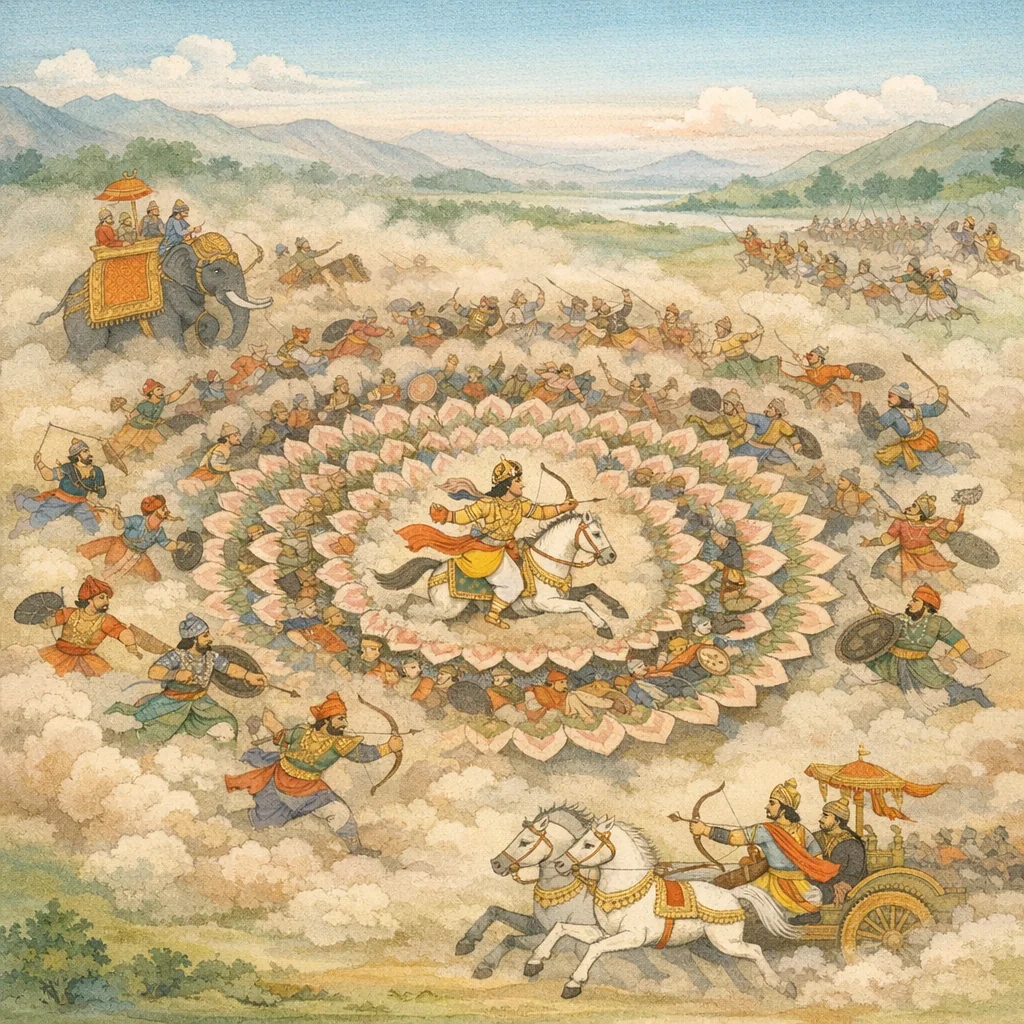
This chapter opens with Saṃjaya’s characterization of the five Pāṇḍavas as exceptionally formidable in battle, accompanied by Kṛṣṇa, and then offers comparative encomia: Kṛṣṇa is presented as unequaled in excellence; Yudhiṣṭhira is praised for truth, dharma, generosity, and reverence toward brāhmaṇas; Bhīma is compared to world-ending destructive force and to Jāmadagnya (Paraśurāma) in martial intensity; Arjuna is described as incomparable in vow-competence and archery with the Gāṇḍīva; Nakula’s defining virtues are enumerated (guru-affection, discipline, humility, self-restraint, and valor); Sahadeva is likened to the Aśvins in learning and prowess. The chapter then locates these dispersed excellences as ‘collected’ in Abhimanyu, describing him as a convergence of Pāṇḍava and Kṛṣṇa qualities. Dhṛtarāṣṭra requests a comprehensive account of how Abhimanyu was killed. Saṃjaya begins that account by stating that the cakravyūha was designed by Droṇa, with kings arranged in it, richly equipped and visually marked (banners, red garments, gold ornaments). The coalition is specified: Lakṣmaṇa (Duryodhana’s son) is placed forward with a large force; the Kaurava king is depicted with Karṇa, Duḥśāsana, and Kṛpa; Droṇa stands at the front as formation-leader; Jayadratha (Sindhurāja) is positioned prominently, with Aśvatthāman and other royal sons nearby, and allied leaders (Śalya, Bhūriśravas, the Gāndhāra king) on the flanks—establishing the operational geometry that will frame Abhimanyu’s isolation.
Chapter Arc: संजय धृतराष्ट्र को रणभूमि का दृश्य सुनाते हैं—तावक सेना कवच-विहीन, धूल से ढकी, दिशाएँ ताकती हुई, अर्जुन के पराक्रम से पराजित-सी; और उसी पृष्ठभूमि में दुर्योधन का तीखा उपालम्भ द्रोण के प्रति उठ खड़ा होता है। → दुर्योधन द्रोणाचार्य को कटु वचन कहकर युधिष्ठिर को न पकड़ पाने का दोष देता है और संकेत करता है कि मानो कौरव पक्ष ‘वध्य’ ठहर गया हो; द्रोण प्रतिज्ञा की ओर बढ़ते हैं, और संशप्तक पुनः अर्जुन को दक्षिण दिशा में युद्ध के लिए ललकार कर उसे मुख्य मोर्चे से दूर खींचने का उपाय करते हैं। → अभिमन्यु द्वारा कौरव-व्यूह को भेदने और अकेले पड़ जाने का संक्षिप्त, तीव्र वर्णन—उसके आक्रमण से कौरवों में दावानल-ग्रस्त वनवासियों-सा भय फैलता है; फिर धृतराष्ट्र का शोक-प्रश्न उभरता है: अर्जुन के युवा पुत्र के रण में मारे जाने का समाचार सुनकर उनका हृदय विदीर्ण हो उठता है। → संजय अभिमन्यु के ‘विक्रीडित’ समान युद्ध-कौशल और कौरव-सेना में मची भगदड़ का सार बताकर घटना-क्रम को समेटते हैं—यह अध्याय विस्तृत वध-वृत्तान्त नहीं, बल्कि उसके लिए मंच रचने वाला संक्षेप-आख्यान है। → अभिमन्यु-वध का पूर्ण विवरण और उसके पीछे की घेराबंदी/अन्याय की परतें अगले अध्यायों के लिए छोड़ दी जाती हैं।
Shlokas
Verse 1
अपना बछ। है २ >> (अभिमन्युवधपर्व) त्रयस्त्रिंशो&ध्याय: दुर्योधनका उपालम्भ, द्रोणाचार्यकी प्रतिज्ञा और अभिमन्युवधके वृत्तान्तका संक्षेपसे वर्णन संजय उवाच पूर्वमस्मासु भग्नेषु फाल्गुनेनामितौजसा । द्रोणे च मोघसंकल्पे रक्षिते च युधिष्िरे,संजय कहते हैं--महाराज! जब अमित तेजस्वी अर्जुनने पहले ही हम सब लोगोंको भगा दिया, द्रोणाचार्यका संकल्प व्यर्थ हो गया तथा राजा युधिष्ठिर सर्वथा सुरक्षित रह गये, तब आपके समस्त सैनिक द्रोणाचार्यकी सम्मतिसे युद्ध बंद करके भयसे अत्यन्त उद्विग्न हो दसों दिशाओंकी ओर देखते हुए शिविरकी ओर चल दिये। वे सब-के-सब युद्धमें पराजित होकर धूलमें भर गये थे। उनके कवच छित्न-भिन्न हो गये थे तथा कभी न चूकनेवाले अर्जुनके बाणोंसे विदीर्ण होकर वे रणक्षेत्रमें अत्यन्त उपहासके पात्र बन गये
Sañjaya said: O King, when earlier we had been routed by Phālguna (Arjuna) of immeasurable prowess, when Droṇa’s resolve had come to nothing, and when King Yudhiṣṭhira had been kept fully protected, then all your troops, with Droṇa’s assent, ceased fighting and, shaken with fear, looking to the ten directions, moved back toward the camp. All were defeated, caked with dust; their armour was torn to pieces; and, pierced by Arjuna’s unfailing arrows, they became objects of ridicule on the battlefield.
Verse 2
सर्वे विध्वस्तकवचास्तावका युधि निर्जिता: । रजस्वला भृशोद्विग्ना वीक्षमाणा दिशो दश,संजय कहते हैं--महाराज! जब अमित तेजस्वी अर्जुनने पहले ही हम सब लोगोंको भगा दिया, द्रोणाचार्यका संकल्प व्यर्थ हो गया तथा राजा युधिष्ठिर सर्वथा सुरक्षित रह गये, तब आपके समस्त सैनिक द्रोणाचार्यकी सम्मतिसे युद्ध बंद करके भयसे अत्यन्त उद्विग्न हो दसों दिशाओंकी ओर देखते हुए शिविरकी ओर चल दिये। वे सब-के-सब युद्धमें पराजित होकर धूलमें भर गये थे। उनके कवच छित्न-भिन्न हो गये थे तथा कभी न चूकनेवाले अर्जुनके बाणोंसे विदीर्ण होकर वे रणक्षेत्रमें अत्यन्त उपहासके पात्र बन गये
Sañjaya said: All your warriors, their armour shattered, were defeated in battle. Covered with dust and deeply shaken with fear, they kept looking in all ten directions—bewildered and seeking safety—after their rout on the field.
Verse 3
अवहारं ततः कृत्वा भारद्वाजस्य सम्मते | लब्धलक्ष्यै: शरैर्भिन्ना भूशावहसिता रणे,संजय कहते हैं--महाराज! जब अमित तेजस्वी अर्जुनने पहले ही हम सब लोगोंको भगा दिया, द्रोणाचार्यका संकल्प व्यर्थ हो गया तथा राजा युधिष्ठिर सर्वथा सुरक्षित रह गये, तब आपके समस्त सैनिक द्रोणाचार्यकी सम्मतिसे युद्ध बंद करके भयसे अत्यन्त उद्विग्न हो दसों दिशाओंकी ओर देखते हुए शिविरकी ओर चल दिये। वे सब-के-सब युद्धमें पराजित होकर धूलमें भर गये थे। उनके कवच छित्न-भिन्न हो गये थे तथा कभी न चूकनेवाले अर्जुनके बाणोंसे विदीर्ण होकर वे रणक्षेत्रमें अत्यन्त उपहासके पात्र बन गये
Sañjaya said: Then, acting in accordance with the counsel of Bhāradvāja (Droṇa), they made a withdrawal. Split apart by arrows that had found their mark, they became objects of ridicule on the battlefield, lying smeared with dust.
Verse 4
श्लाघमानेषु भूतेषु फाल्गुनस्यामितान् गुणान् । केशवस्य च सौहार्दे कीर्त्यमाने<र्जुनं प्रति,समस्त प्राणी अर्जुनके असंख्य गुणोंकी प्रशंसा तथा उनके प्रति भगवान् श्रीकृष्णके सौहार्दका बखान कर रहे थे
Sañjaya said: While the assembled beings were extolling the immeasurable virtues of Phālguna (Arjuna), and while they were also celebrating Keśava’s (Kṛṣṇa’s) warm friendship and loyal regard toward Arjuna, the scene was filled with admiration for excellence joined to steadfast companionship—an ethical ideal amid the harshness of war.
Verse 5
अभिशस्ता इवाभूवन् ध्यानमूकत्वमास्थिता: । ततः प्रभातसमये द्रोणं दुर्योधनो 5ब्रवीत्,उस समय आपके महारथीगण कलंकित-से हो रहे थे। वे ध्यानस्थसे होकर मूक हो गये थे। तदनन्तर प्रातःकाल दुर्योधन द्रोणाचार्यके पास जाकर उनसे कुछ कहनेको उद्यत हुआ
They appeared as though disgraced, having fallen into a silence born of brooding contemplation. Then, at daybreak, Duryodhana addressed Droṇa—ready to speak of what should be done next.
Verse 6
प्रणयादभिमानाच्च द्विषद्वृद्धा च दुर्मना: । शृण्वतां सर्वयोधानां संरब्धो वाक्यकोविद:,शत्रुओंके अभ्युदयसे वह मन-ही-मन बहुत दुःखी हो गया था। द्रोणाचार्यके प्रति उसके हृदयमें प्रेम था। उसे अपने शौर्यपर अभिमान भी था। अतः अत्यन्त कुपित हो बातचीतमें कुशल राजा दुर्योधनने समस्त योद्धाओंके सुनते हुए इस प्रकार कहा--
Sañjaya said: Driven by affection and by pride, and with his hostility intensified, the ill-disposed king became inwardly distressed. Then, skilled in speech yet inflamed with anger, he spoke in the hearing of all the warriors.
Verse 7
नूनं वयं वध्यपक्षे भवतो द्विजसत्तम । तथा हि नाग्रही: प्राप्तं समीपेडद्य युधिष्ठिरम्,द्विजश्रेष्ठ! निश्चय ही हमलोग आपकी दृष्टिमें शत्रुवर्गके अन्तर्गत हैं। यही कारण है कि आज आपने अत्यन्त निकट आनेपर भी राजा युधिष्ठिरको नहीं पकड़ा है
Sañjaya said: “Surely we stand among those whom you deem fit to be slain, O best of twice-born. For that is why, even though King Yudhiṣṭhira came within your very reach today, you did not seize him.”
Verse 8
इच्छतस्ते न मुच्येत चक्षु:प्राप्तो रणे रिपु: । जिधघृक्षतो रक्ष्यमाण: सामरैरपि पाण्डवै:,'रणक्षेत्रमें कोई शत्रु आपके नेत्रोंके समक्ष आ जाय और उसे आप पकड़ना चाहें तो सम्पूर्ण देवताओंके साथ रहे सारे पाण्डव उसकी रक्षा क्यों न कर रहे हों, निश्चय ही वह आपसे छूटकर नहीं जा सकता
Sañjaya said: If, in the midst of battle, an enemy comes within the range of your very eyes and you truly wish to seize him, then even if all the Pāṇḍavas—backed by the gods themselves—were to protect him, he could not possibly slip away from you.
Verse 9
वरं दत्त्वा मम प्रीतः पश्चाद् विकृतवानसि । आशाभड़ूं न कुर्वन्ति भक्तस्यार्या: कंचन,“आपने प्रसन्न होकर पहले तो मुझे वर दिया और पीछे उसे उलट दिया; परंतु श्रेष्ठ पुरुष किसी प्रकार भी अपने भक्तकी आशा भंग नहीं करते हैं”
Sañjaya said: “Though you were pleased and first granted me a boon, you later reversed it. Yet the noble never, in any way, shatter the hope of one who is devoted.”
Verse 10
ततो<प्रीतस्तथोक्त: सन् भारद्वाजो<ब्रवीन्नपम् । नाईसे मां तथा ज्ञातुं घटमानं तव प्रिये,दुर्योधनके ऐसा कहनेपर द्रोणाचार्यको तनिक भी प्रसन्नता नहीं हुई। वे दुःखी होकर राजासे इस प्रकार बोले--'राजन्! तुमको मुझे इस प्रकार प्रतिज्ञा भंग करनेवाला नहीं समझना चाहिये। मैं अपनी पूरी शक्ति लगाकर तुम्हारा प्रिय करनेकी चेष्टा कर रहा हूँ
Sañjaya said: Then Bhāradvāja (Droṇa), displeased at being addressed in that manner, spoke to the king: “O ruler, you should not regard me as one who breaks his pledge. I am striving with all my might to accomplish what is dear to you.”
Verse 11
ससुरासुरगन्धर्वा: सयक्षोरगराक्षसा: । नाल॑ लोका रणे जेतुं पाल्यमानं किरीटिना,“परंतु एक बात याद रखो, किरीटधारी अर्जुन रणक्षेत्रमें जिसकी रक्षा कर रहे हों, उसे देवता, असुर, गन्धर्व, यक्ष, नाग तथा राक्षसोंसहित सम्पूर्ण लोक भी नहीं जीत सकते
Sañjaya said: Even if the worlds were joined by the gods and the asuras, together with the Gandharvas, Yakṣas, Nāgas, and Rākṣasas, they would still not be able to conquer in battle one who is being protected by the diadem-wearing Arjuna.
Verse 12
विश्वसृग् यत्र गोविन्द: पृतनानीस्तथार्जुन: । तत्र कस्य बल क्रामेदन्यत्र त्यम्बकात् प्रभो:,“जहाँ जगत्स्रष्टा भगवान् श्रीकृष्ण तथा अर्जुन सेनानायक हों, वहाँ भगवान् शंकरके सिवा दूसरे किस पुरुषका बल काम कर सकता है
Sañjaya said: Where Govinda, the very creator and sustainer of the world, stands, and where Arjuna serves as the commander of the forces, whose strength could possibly prevail there—except that of the Lord Tryambaka (Śiva) alone?
Verse 13
सत्यं तात ब्रवीम्यद्य नैतज्जात्वन्यथा भवेत् । अद्यैकं प्रवरं कंचित् पातयिष्ये महारथम्,“तात! आज मैं एक सच्ची बात कहता हूँ, यह कभी झूठी नहीं हो सकती। आज मैं पाण्डवपक्षके किसी श्रेष्ठ महारथीको अवश्य मार गिराऊँगा
Sañjaya said: “My son, I speak the truth today—this can never turn out otherwise. Today I shall surely strike down one eminent great chariot-warrior from the Pāṇḍava side.”
Verse 14
तं च व्यूहं विधास्यामि यो<भेट्यस्त्रिदशैरपि । योगेन केनचिद् राजन्नर्जुनस्त्वपनीयताम्,“राजन! आज उस व्यूहका निर्माण करूँगा, जिसे देवता भी तोड़ नहीं सकते; परंतु किसी उपायसे अर्जुनको यहाँसे दूर हटा दो
Sañjaya said: “O King, I shall now arrange such a battle-formation as cannot be broken even by the gods. Yet, by some stratagem, Arjuna must be drawn away from here.”
Verse 15
न ह्वाज्ञातमसाध्यं वा तस्य संख्ये5स्ति किंचन । तेन हुपात्तं सकल॑ सर्वज्ञानमितस्तत:,'युद्धके सम्बन्धमें कोई ऐसी बात नहीं है, जो अर्जुनके लिये अज्ञात अथवा असाध्य हो। उन्होंने इधर-उधरसे युद्धविषयक सम्पूर्ण ज्ञान प्राप्त कर लिया है”
Sañjaya said: In the press of battle there is nothing for him that is either unknown or impossible. For he has gathered, from every quarter, the complete knowledge of warfare—so that in this conflict he stands fully equipped in skill and understanding.
Verse 16
द्रोणेन व्याहते त्वेवे संशप्तकगणा: पुनः । आह्वयन्नर्जुनं संख्ये दक्षिणामभितो दिशम्,द्रोणाचार्यके ऐसा कहनेपर पुनः संशप्तकगणोंने दक्षिण दिशामें जा अर्जुनको युद्धके लिये ललकारा
Sañjaya said: Even as Droṇa was thus engaged in combat, the band of the Saṁśaptakas once again challenged Arjuna on the battlefield, drawing him toward the southern quarter. The episode underscores a deliberate tactic of war: to distract a principal warrior from the main front by provoking him with a vowed, relentless enemy-host.
Verse 17
ततोडअर्जुनस्याथ परै: सार्थ समभवद् रण: । तादृशो यादृशो नान्य: श्रुतो दृष्टो5पि वा क्वचित्,वहाँ अर्जुनका शत्रुओंके साथ ऐसा घोर संग्राम हुआ, जैसा दूसरा कोई कहीं न तो देखा गया है और न सुना ही गया है
Sanjaya said: Then Arjuna engaged the enemy in battle, and a fierce combat arose. It was of such a kind that nothing like it had ever been heard of or seen anywhere—an encounter unparalleled in memory, marking the terrible intensity of war and the extraordinary prowess brought forth on that day.
Verse 18
तत्र द्रोणेन विहितो व्यूहो राजन् व्यरोचत । चरन् मध्यंदिने सूर्य: प्रतपन्निव दुर्दूश:,राजन! उस समय वहाँ द्रोणाचार्यने जिस व्यूहका निर्माण किया, वह मध्याह्नकालमें विचरते हुए सूर्यकी भाँति शत्रुओंको संताप देता-सा सुशोभित हो रहा था। उसे जीतना तो दूर रहा, उसकी ओर आँख उठाकर देखना भी अत्यन्त कठिन था
Sañjaya said: “There, O King, the battle-formation arranged by Droṇa shone forth brilliantly. Like the sun moving at midday, it seemed to scorch the enemy—dazzling, hard to look upon, and formidable to approach.”
Verse 19
त॑ चाभिमन्युर्वचनात् पितुर्ज्येष्ल्थ भारत । बिभेद दुर्भिदं संख्ये चक्रव्यूहमनेकधा,भारत! यद्यपि उस चक्रव्यूहका भेदन करना अत्यन्त दुष्कर कार्य था तो भी वीर अभिमन्युने अपने ताऊ युधिष्ठिरकी आज्ञासे उस व्यूहका बारंबार भेदन किया
Sanjaya said: O Bharata, at the command of his father’s eldest (brother), Abhimanyu—though the cakravyūha was exceedingly hard to break in battle—split that formidable formation again and again. The episode highlights steadfast obedience to rightful authority and courageous resolve even when the task is near-impossible.
Verse 20
स कृत्वा दुष्करं कर्म हत्वा वीरान् सहस्रश: । षट्सु वीरेषु संसक्तो दौःशासनिवशं गत:,अभिमन्युने वह दुष्कर कर्म करके सहस्रों वीरोंका वध किया और अन्तमें छः वीरोंके साथ अकेला ही उलझकर दु:शासनपुत्रके हाथसे मारा गया
Sañjaya said: Having accomplished a deed exceedingly hard to perform—slaying heroes by the thousand—he at last became entangled in combat with six warriors at once, and thus met his end at the hands of Duḥśāsana’s son. The verse underscores both the extraordinary valor of the lone fighter and the grim moral weight of a war where many against one becomes the means of victory.
Verse 21
सौभद्र: पृथिवीपाल जहौ प्राणान् परंतप: । वयं परमसंद्ृष्टा: पाण्डवा: शोककर्शिता: । सौभद्रे निहते राजन्नवहारमकुर्महि,भूपाल! शत्रुओंको संताप देनेवाले सुभद्राकुमारने जब प्राण त्याग दिये, उस समय हमलोगोंको बड़ा हर्ष हुआ और पाण्डव शोकसे व्याकुल हो गये। राजन! सुभद्रा-कुमारके मारे जानेपर हमलोगोंने युद्ध बंद कर दिया
Sañjaya said: “O king, when Saubhadra—the scorcher of foes—gave up his life, we (on your side) felt great exhilaration, while the Pāṇḍavas were crushed by grief. O ruler, when Saubhadra was slain, we ceased the fighting for the time being.”
Verse 22
धृतराष्ट उवाच पुत्रं पुरुषसिंहस्य संजयाप्राप्तयौवनम् । रणे विनिहतं श्रुत्वा भृशं मे दीर्यते मन:,धृतराष्ट्र बोले--संजय! पुरुषसिंह अर्जुनका वह पुत्र अभी युवावस्थामें भी नहीं पहुँचा था। उसे युद्धमें मारा गया सुनकर मेरा हृदय अत्यन्त विदीर्ण हो रहा है
Dhṛtarāṣṭra said: “O Sañjaya, hearing that the son of the lion among men (Arjuna)—still not yet come to full youth—has been slain in battle, my heart is being torn apart exceedingly.”
Verse 23
दारुण: क्षत्रधर्मोडयं विहितो धर्मकर्तृभिः । यत्र राज्येप्सव: शूरा बाले शस्त्रमपातयन्,धर्मशास्त्रके निर्माताओंने यह क्षत्रिय-धर्म अत्यन्त कठोर बनाया है, जिसमें स्थित होकर राज्यके लोभी शूर-वीरोंने एक बालकपर अस्त्र-शस्त्रोंका प्रहार किया
Dhṛtarāṣṭra said: “Cruel indeed is this so‑called rise of kṣatriya-duty, as it has been laid down by the makers of dharma—where, driven by desire for sovereignty, heroic men have hurled weapons even at a mere boy.”
Verse 24
बालमत्यन्तसुखिनं विचरन्तमभीतवत् | कृतास्त्रा बहवो जष्नुरब्रूहि गावल्गणे कथम्,संजय! वह अत्यन्त प्रसन्न रहनेवाला बालक जब निर्भय-सा होकर युद्धमें विचर रहा था, उस समय अस्त्रविद्याके पारंगत बहुसंख्यक शूरवीरोंने उसका वध कैसे किया? यह मुझे बताओ
Dhṛtarāṣṭra said: “Tell me, O Saṃjaya, son of Gāvalgaṇa—how did many warriors, fully trained in the use of weapons, manage to slay that boy who was exceedingly cheerful and, as if fearless, moved about in the battle?”
Verse 25
बिभित्सता रथानीकं सौभद्रेणामितौजसा । विक्रीडितं यथा संख्ये तन््ममाचक्ष्व संजय,संजय! अमित तेजस्वी सुभद्राकुमारने युद्धके मैदानमें रथियोंकी सेनाको विदीर्ण करनेकी इच्छासे जिस प्रकार युद्धका खेल किया था, वह सब मुझे बताओ
Dhṛtarāṣṭra said: “O Sañjaya, tell me in full how the mighty son of Subhadrā, driven by the desire to shatter the host of chariot-warriors, sported in the thick of battle—as though war itself were his play.”
Verse 26
संजय उवाच यन्मां पृच्छसि राजेन्द्र सौभद्रस्य निपातनम् | तत् ते कार्त्स्न्येन वक्ष्यामि शूणु राजन् समाहित:,संजयने कहा--राजेन्द्र! आप जो मुझसे सुभद्राकुमारके मारे जानेका वृत्तान्त पूछ रहे हैं, वह सब मैं आपको पूर्णरूपसे बताऊँगा। राजन्! आप एकाग्रचित्त होकर सुनें
Sañjaya said: “O king of kings, what you ask me—the account of the fall of Subhadrā’s son—I shall tell you in its entirety. O king, listen with a focused mind.”
Verse 27
विक्रीडितं कुमारेण यथानीकं बिभित्सता । आरुग्णाश्न यथा वीरा दुः:साध्याश्वापि विप्लवे,आपकी सेनाके व्यूहका भेदन करनेकी इच्छासे कुमार अभिमन्युने जिस प्रकार रणक्रीड़ा की थी और उस प्रलयंकर संग्राममें जैसे-जैसे दुर्जय वीरोंके भी पाँव उखाड़ दिये थे, वह सब बता रहा हूँ
“I shall tell how the young prince Abhimanyu, intent on breaking your army’s formation, made sport of battle; and how, in that ruinous clash, he steadily unseated even heroes deemed hard to overcome.”
Verse 28
दावाग्न्यभिपरीतानां भूरिगुल्मतृणद्रुमे । वनौकसामिवारण्ये त्वदीयानामभूद् भयम्,जैसे प्रचुर लता-गुल्म, घास-पात और वृक्षोंसे भरे हुए वनमें दावानलसे घिरे हुए वनवासियोंको महान् भयका सामना करना पड़ता है, उसी प्रकार अभिमन्युसे आपके सैनिकोंको अत्यन्त भय प्राप्त हुआ था
Sañjaya said: “Just as forest-dwellers, hemmed in by a raging wildfire in a wilderness thick with abundant shrubs, grasses, and trees, are seized by great terror, so too your warriors were overcome by intense fear because of Abhimanyu.”
Verse 33
इति श्रीमहाभारते द्रोणपर्वणि अभिमन्युवधपर्वणि अभिमन्युवधसंक्षेपकथने त्रयस्त्रिंशो 5ध्याय:
Thus, in the Śrī Mahābhārata, within the Droṇa Parva, in the section concerning the slaying of Abhimanyu, in the concise narration of Abhimanyu’s death, ends the thirty-third chapter.
Frequently Asked Questions
The implied dilemma concerns whether a highly exclusionary formation that restricts entry/exit—when staffed by multiple elite protectors—preserves the spirit of fair combat or transforms the engagement into a morally ambiguous containment, especially when directed against a single entrant separated from support.
The chapter models guṇa-vicāra: excellence is multi-dimensional (truthfulness, discipline, learning, valor, strategic competence), and leadership assessment in itihāsa depends on composite virtues rather than a single metric of strength.
No explicit phalaśruti is stated here; the chapter functions as narrative framing—establishing character valuation and tactical conditions—so its interpretive ‘result’ lies in understanding how praise, comparison, and formation-logic prepare the causal explanation of Abhimanyu’s battlefield death within Droṇa-parva.