Adhyaya 18
द्रोणपर्व — अध्याय १८: संशप्तकगणयुद्धे अर्जुनस्यास्त्रप्रयोगः (Drona Parva, Chapter 18: Arjuna’s astra-deployment against the Saṃśaptakas)
Upa-parva: Saṃśaptaka-nivṛtti (Episode of the Saṃśaptakas’ renewed engagement against Arjuna)
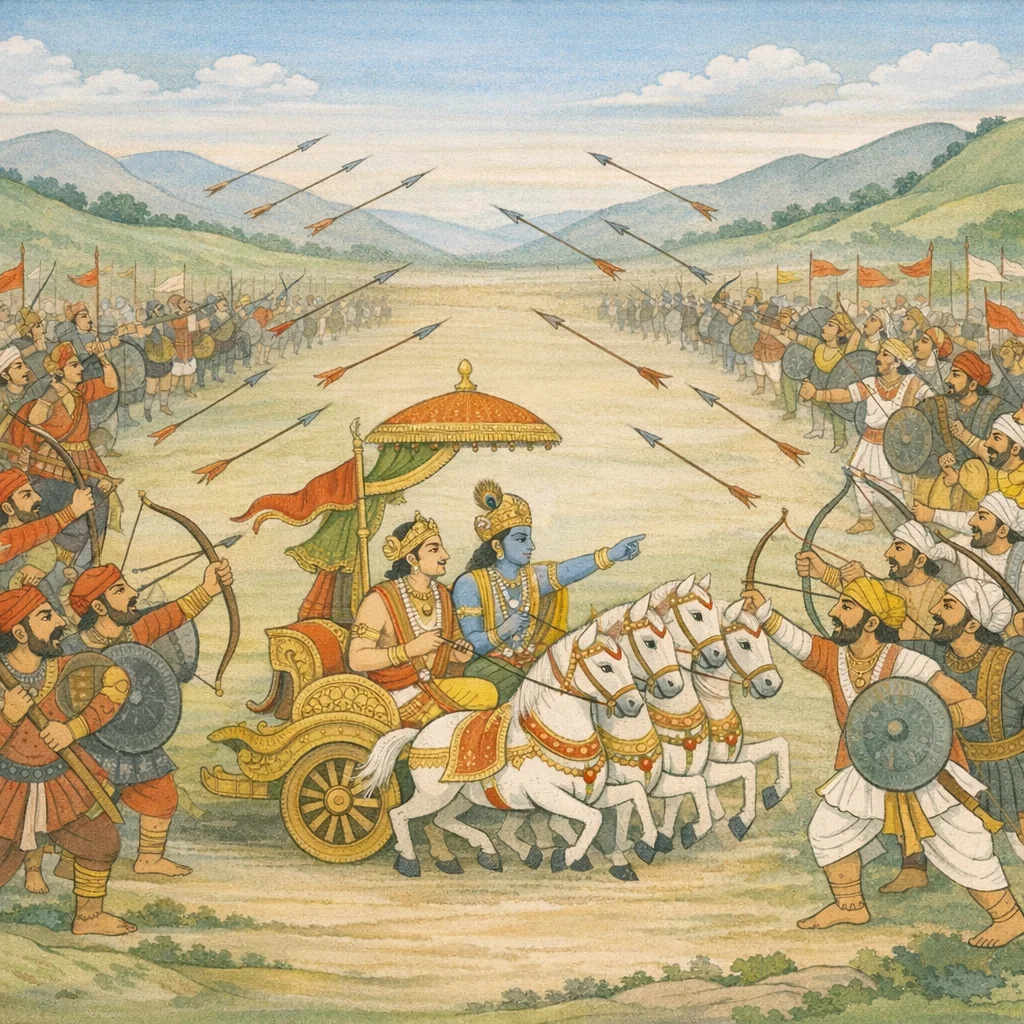
Sañjaya reports that, seeing the Saṃśaptaka groups return to the engagement, Arjuna addresses Vāsudeva (Kṛṣṇa) and orders a direct advance, expressing that the opponents do not intend to leave the field alive. Kṛṣṇa, affirming Arjuna, drives the chariot with exceptional agility, described through aerial and divine-chariot similes. The Saṃśaptakas mass their missile-fire to cover Arjuna and Kṛṣṇa, rendering them momentarily indistinct. Arjuna intensifies his effort, signals resolve with the Devadatta conch, and deploys the Tvāṣṭra astra, producing multiple forms that confuse the adversaries into striking one another. When a dense arrow-storm again obscures the chariot, Kṛṣṇa shows human fatigue and calls out for Arjuna; Arjuna responds by using the Vāyavya astra to disperse the missile-cloud like wind scattering dry leaves. He then conducts systematic reduction of enemy forces—severing standards, breaking chariots, and disabling elephants and cavalry—until the field is described as dust-stilled by blood and strewn with bodies. The chapter closes by noting that during this interval, Droṇa, with a formed array, advances toward Yudhiṣṭhira, indicating the wider strategic consequence of Arjuna’s absorption in the Saṃśaptaka fight.
Chapter Arc: संजय धृतराष्ट्र से कहते हैं—तत्पश्चात संशप्तक योद्धा रथों से चन्द्राकार व्यूह रचकर समतल भूमि पर प्रसन्नतापूर्वक डट जाते हैं, मानो आज ही अर्जुन को बाँध लेने का व्रत पूरा करेंगे। → किरिटधारी अर्जुन को आते देख त्रिगर्त-वीर हर्ष से उछल पड़ते हैं; उनकी गर्जना दिशाओं और आकाश को भर देती है। कृष्ण (देवकीनन्दन) के सामने वे अर्जुन को लक्ष्य कर उन्मत्त उत्साह दिखाते हैं—मृत्यु को ही निवृत्ति मानकर। → संशप्तक एक-एक कर अर्जुन पर बाण-वर्षा करते हैं; प्रत्युत्तर में पार्थ उन्हें द्विगुण वेग से बेधते हैं। सुबाहु लोहे-से कठोर तीस शरों से अर्जुन के किरीट पर प्रहार करता है—क्षण भर को युद्ध का केन्द्र स्वयं ‘किरिट’ बन जाता है, और दोनों पक्षों की दृष्टि वहीं टिक जाती है। → अर्जुन के संनतपर्व (कठोर, तीक्ष्ण) बाणों से संशप्तक दल तितर-बितर होने लगता है; वे भयभीत मृग-गणों की भाँति इधर-उधर भागते हैं। फिर भी सुशर्मा उन्हें लज्जा और लोक-अपवाद का भय दिखाकर लौटने को उकसाता है; वीर शंख बजाकर परस्पर उत्साह बढ़ाते हैं और पुनः पलट आते हैं। → संशप्तक और ‘नारायण’ नाम से पुकारे गए गोपाल-योद्धा मृत्यु को ही व्रत मानकर फिर से अर्जुन पर टूट पड़ते हैं—अगले क्षणों में यह प्रतिज्ञा-युद्ध किसका अंत लिखेगा, यही अनिश्चितता छा जाती है।
Shlokas
Verse 1
संजय कहते हैं--राजन्! तदनन्तर संशप्तक योद्धा रथोंद्वारा ही सेनाका चन्द्राकार व्यूह बनाकर समतल प्रदेशमें प्रसन्नतापूर्वक खड़े हो गये
Sañjaya said: “O King, thereafter the Saṁśaptaka warriors, forming the army into a crescent-shaped battle array with their chariots, took their positions cheerfully on level ground.”
Verse 2
ते किरीटिनमायान्तं दृष्टवा हर्षेण मारिष । उदक्रोशन् नरव्याप्रा: शब्देन महता तदा
Sañjaya said: “O revered sir, when those tiger-like warriors saw the diademed hero approaching, they were filled with joy and at that moment raised a great shout.”
Verse 3
आर्य! किरीटधारी अर्जुनको आते देख पुरुषसिंह संशप्तक हर्षपूर्वक बड़े जोर-जोरसे गर्जना करने लगे ।। स शब्द: प्रदिश: सर्वा दिश: खं च समावृणोत् । आवृतत्वाच्च लोकस्य नासीतू तत्र प्रतिस्वन:
Sañjaya said: As the lion-like Saṃsaptakas saw Arjuna, the wearer of the diadem, approaching, they roared again and again with exultation. That thunderous sound filled all the quarters and even the sky; and because the whole world seemed enveloped by it, no other echo or counter-sound was heard there.
Verse 4
उस सिंहनादने सम्पूर्ण दिशाओं, विदिशाओं तथा आकाशको व्याप्त कर लिया। इस प्रकार सम्पूर्ण लोक व्याप्त हो जानेसे वहाँ दूसरी कोई प्रतिध्वनि नहीं होती थी ।। सो$तीव सम्प्रहृष्टांस्तानुपलभ्य धनंजय: । किंचिदश्युत्स्मयन् कृष्णमिदं वचनमत्रवीत्,अर्जुनने उन सबको अत्यन्त हर्षमें भरा हुआ देख किंचित् मुसकराते हुए भगवान् श्रीकृष्णसे इस प्रकार कहा--
That lion-like roar spread through all the directions, the intermediate quarters, and even the sky. As it pervaded the whole world, no other echo could arise there—everything was drowned in that single, overwhelming sound. Seeing them all filled with intense exhilaration, Dhanañjaya (Arjuna), smiling slightly, addressed Kṛṣṇa (Acyuta) with these words.
Verse 5
पश्यैतान् देवकीमातर्मुमूर्षूनद्य संयुगे । ्रातृस्त्रैगर्तकानेवं रोदितव्ये प्रहर्षितान्,“देवकीनन्दन! देखिये तो सही, ये त्रिगर्तदेशीय सुशर्मा आदि सब भाई मृत्युके निकट पहुँचे हुए हैं। आज युद्धस्थलमें जहाँ इन्हें रोना चाहिये, वहाँ ये हर्षसे उछल रहे हैं
“O son of Devakī (Kṛṣṇa)! Look at them—the Trigarta brothers of Suśarmā—today in this battle they have drawn near to death. On the field where they ought to weep, they are instead leaping about in exultation.”
Verse 6
अथवा हर्षकालो<यं त्रैगर्तानामसंशयम् । कुनरैर्दुरवापान् हि लोकान प्राप्स्यन्त्यनुत्तमान्,“अथवा इसमें संदेह नहीं कि यह इन त्रिगर्तोंके लिये हर्षका ही अवसर है; क्योंकि ये उन परम उत्तम लोकोंमें जायँगे, जो दुष्ट मनुष्योंके लिये दुर्लभ हैं!
Sañjaya said: “Or else, beyond doubt, this is a time of rejoicing for the Trigartas; for, by meeting death in battle, they will attain the highest worlds—realms that are hard to reach for base and wicked men.”
Verse 7
एवमुक्त्वा महाबाहुर्ईषीकेशं ततोड<र्जुन: । आससाद रणे व्यूढां त्रिगर्तानामनीकिनीम्,भगवान् हृषीकेशसे ऐसा कहकर महाबाहु अर्जुनने युद्धमें त्रिगर्तोंकी व्यूहाकार खड़ी हुई सेनापर आक्रमण किया
Sañjaya said: Having spoken thus, the mighty-armed Arjuna then advanced in the battle and fell upon the Trigartas’ army, which stood drawn up in battle-formation.
Verse 8
स देवदत्तमादाय शड्खं हेमपरिष्कृतम् दध्मौ वेगेन महता घोषेणापूरयन् दिश:,उन्होंने सुवर्णजटित देवदत्त नामक शंख लेकर उसकी ध्वनिसे सम्पूर्ण दिशाओंको परिपूर्ण करते हुए उसे बड़े वेगसे बजाया
Sañjaya said: Taking up the conch named Devadatta, adorned with gold, he blew it with great force, filling the directions with its resounding roar.
Verse 9
तेन शब्देन वित्रस्ता संशप्तकवरूथिनी । विचेष्टावस्थिता संख्ये हश्मसारमयी यथा,उस शंखनादसे भयभीत हो वह संशप्तक-सेना युद्धभूमिमें लोहेकी प्रतिमाके समान निश्चेष्ठट खड़ी हो गयी
Startled by that resounding cry, the Saṁśaptaka battle-array stood in the midst of combat utterly motionless—like a figure cast of solid metal.
Verse 10
(सा सेना भरतश्रेष्ठ निश्चेष्ठा शुशुभे तदा । चित्र पटे यथा न्यस्ता कुशलै: शिल्पिभिनरिे: ।। भरतश्रेष्ठ! वह निनश्वेष्ट हुई सेना ऐसी सुशोभित हुई, मानो कुशल कलाकारोंद्वारा चित्रपटमें अंकित की गयी हो। स्वनेन तेन सैन्यानां दिवमावृण्वता तदा । सस्वना पृथिवी सर्वा तथैव च महोदधि: ।। स्वनेन सर्वसैन्यानां कर्णास्तु बधिरीकृता: ।) सम्पूर्ण आकाशमें फैले हुए उस शंखनादने समूची पृथ्वी और महासागरको भी प्रतिध्वनित कर दिया। उस ध्वनिसे सम्पूर्ण सैनिकोंके कान बहरे हो गये। वाहास्तेषां विवृत्ताक्षा: स्तब्धकर्णशिरोधरा: । विष्टब्धचरणा मूत्र रुधिरं च प्रसुखुवु:,उनके घोड़े आँखें फाड़-फाड़कर देखने लगे। उनके कान और गर्दन स्तब्ध हो गये, चारों पैर अकड़ गये और वे मूत्रके साथ-साथ रुधिरका भी त्याग करने लगे
Sañjaya said: O best of the Bharatas, at that moment the army stood motionless and yet appeared striking—like a scene carefully painted by skilled artists upon a canvas. That blare, spreading through the sky, made the whole earth resound, and the great ocean too echoed it. By that roar the ears of all the soldiers were as though deafened. Their mounts stared wide-eyed; their ears and necks stiffened, their legs locked, and they began to void urine and even blood.
Verse 11
उपलभ्य तत: संज्ञामवस्थाप्य च वाहिनीम् । युगपत् पाण्डुपुत्राय चिक्षिपु: कड्कपत्रिण:
Sañjaya said: Regaining their senses and re-forming their battle-array, the sword-bearing warriors at once hurled themselves against the son of Pāṇḍu. Thus is it in war: even after shock and disorder, disciplined ranks recover swiftly and renew the assault, making the field a trial of steadiness, resolve, and the harsh code of combat.
Verse 12
थोड़ी देरमें चेत होनेपर संशप्तकोंने अपनी सेनाको स्थिर किया और एक साथ ही पाण्डुपुत्र अर्जुनपर कंकपक्षीकी पाँखवाले बाणोंकी वर्षा आरम्भ कर दी ।। तान्यर्जुन: सहस्राणि दशपञ्चभिराशुगै: । अनागतान्येव शरैश्निच्छेदाशु पराक्रमी,परंतु पराक्रमी अर्जुनने पंद्रह शीघ्रगामी बाणोंद्वारा उनके सहस्रों बाणोंको अपने पास आनेसे पहले ही शीघ्रतापूर्वक काट डाला
Sañjaya said: When they had regained their wits, the Saṁsaptakas steadied their host and together began a downpour of feathered arrows upon Arjuna, the son of Pāṇḍu. But mighty Arjuna swiftly cut those thousands of shafts apart before they could reach him, using only fifteen fast-flying arrows. In the crush of battle, it was disciplined mastery, not mere rage—measured force that neutralized harm and shielded his side without loss of composure.
Verse 13
ततोर्ड्जुनं शितैर्बाणर्दशभिर्दशभि: पुनः । प्राविध्यन्त ततः पार्थस्तानविध्यत् त्रिभिस्त्रिभि:,तदनन्तर संशप्तकोंने दस-दस तीखे बाणोंसे पुनः अर्जुनको बींध डाला, यह देख उन कुन्तीकुमारने भी तीन-तीन बाणोंसे संशप्तकोंको घायल कर दिया
Sañjaya said: Then the Saṁsaptakas again struck Arjuna with sharp arrows—ten and ten. Seeing this, Pārtha (Arjuna), the son of Kuntī, in return pierced them with arrows, three and three, meeting their assault with measured, disciplined counterblows amid the press of battle.
Verse 14
एकैकस्तु ततः पार्थ राजन् विव्याध पठ्चभि: । सच तान् प्रतिविव्याध द्वाभ्यां द्वाभ्यां पराक्रमी,राजन! फिर उनमेंसे एक-एक योद्धाने अर्जुनको पाँच-पाँच बाणोंसे बींध डाला और पराक्रमी अर्जुनने भी दो-दो बाणोंद्वारा उन सबको घायल करके तुरंत बदला चुकाया
Sañjaya said: Then, O King, each warrior in turn pierced Pārtha, the son of Pṛthā, with five arrows. The mighty Arjuna repaid them at once, striking each back with two arrows, wounding them and answering their assault without delay—swift martial reciprocity within the fierce code of battle.
Verse 15
भूय एव तु संक्रुद्धास्त्वर्जुन॑ सहकेशवम् । आपूरयन् शरैस्तीक्ष्णैस्तडागमिव वृष्टिभि:,तत्पश्चात् अत्यन्त कुपित हो संशप्तकोंने पुनः श्रीकृष्णसहित अर्जुनको पैने बाणोंद्वारा उसी प्रकार परिपूर्ण करना आरम्भ किया, जैसे मेघ वर्षाद्वारा सरोवरको पूर्ण करते हैं
Sañjaya said: Thereafter, the Saṁsaptakas, inflamed with wrath, once more filled Arjuna—together with Keśava (Śrī Kṛṣṇa)—with keen arrows, as rain-clouds fill a lake with their downpour.
Verse 16
ततः शरसहस्राणि प्रापतन्नर्जुनं प्रति । भ्रमराणामिव व्राता: फुल्लं द्रमगणं वने,तत्पश्चात् अर्जुनपर एक ही साथ हजारों बाण गिरे, मानो वनमें फूले हुए वृक्षपर भौंरोंके समूह आ गिरे हों
Sañjaya said: Then thousands of arrows fell all at once toward Arjuna, like swarms of bees descending upon a cluster of forest trees in full bloom. The image reveals the battlefield’s concentrated fury, where skill and resolve are tested amid a storm of weapons.
Verse 17
ततः सुबाहुस्त्रिंशद्धिरद्रिसारमयै: शरै: । अविध्यदिषुभिग्गाढं किरीटे सव्यसाचिनम्,तदनन्तर सुबाहुने लोहेके बने हुए तीस बाणोंद्वारा अर्जुनके किरीटमें गहरा आघात किया
Sañjaya said: Then Subāhu, with thirty arrows fashioned of mountain-hard essence, struck the ambidextrous Arjuna, driving the shafts deep into his crown. The moment reveals the battle’s relentless intensity, where prowess and endurance are tested without pause, even as each warrior remains bound to his chosen duty (dharma) on the field.
Verse 18
तैः किरीटी किरीटस्थैहेमपुड्खैरजिद्ागै: । शातकुम्भमयापीडो बभौ सूर्य इवोत्थित:,सोनेके पंखोंसे युक्त सीधे जानेवाले वे बाण उनके किरीटमें चारों ओरसे धँस गये। उन बाणोंद्वारा किरीटधारी अर्जुनकी वैसी ही शोभा हुई जैसे स्वर्णमय मुकुटसे मण्डित भगवान् सूर्य उदित एवं प्रकाशित हो रहे हों इति श्रीमहाभारते द्रोणपर्वणि संशप्तकवधपर्वणि सुधन्ववधे अष्टादशो 5 ध्याय: ।। १८ || इस प्रकार श्रीमह्ाभारत द्रोणपर्वके अन्तर्गत संशप्तकवधपर्वमें सुधन्वाका वधविषयक अठारहवाँ अध्याय पूरा हुआ
Sañjaya said: Pierced all around in his diadem by those straight-flying arrows with golden fletching, the diadem-wearing Arjuna shone forth like the rising sun, crowned with a radiant golden circlet. Even amid the battle’s violence, the scene affirms steadfastness: wounds and danger do not diminish inner resolve, and courage can appear as luminous discipline in the face of harm.
Verse 19
हस्तावापं सुबाहोस्तु भल्लेन युधि पाण्डव: । चिच्छेद तं चैव पुन: शरवर्षैरवाकिरत्,तब पाण्डुनन्दन अर्जुनने भल्लका प्रहार करके युद्धमें सुबाहुके दस्तानेकी काट दिया और उसके ऊपर पुनः बाणोंकी वर्षा आरम्भ कर दी
Sañjaya said: In the thick of battle, the Pāṇḍava (Arjuna) struck Subāhu with a sharp bhalla-arrow and severed his hand-guard; then, without pause, he covered him again with a relentless shower of arrows—an image of disciplined martial resolve aimed at victory in a righteous war.
Verse 20
ततः सुशर्मा दशभि: सुरथस्तु किरीटिनम् | सुधर्मा सुधनुश्वैव सुबाहुश्न समार्पयत्,यह देख सुशर्मा, सुरथ, सुधर्मा, सुधन््वा और सुबाहुने दस-दस बाणोंसे किरीटधारी अर्जुनको घायल कर दिया
Sañjaya said: Then Suśarmā struck the diadem-wearing Arjuna with ten arrows; and Suratha, Sudharmā, Sudhanu, and Subāhu likewise each assailed him with ten shafts, wounding him in the press of battle. Thus, in the heat of war, many warriors together sought to check the foremost fighter, showing how collective force is used against a single righteous champion when the tide of combat demands it.
Verse 21
तांस्तु सर्वान् पृथग्बाणैर्वानरप्रवरध्वज: । प्रत्यविध्यद् ध्वजांश्रैषां भल्लैश्वचिच्छेद सायकान्,फिर कपिध्वज अर्जुनने भी पृथक्ू-पृथक् बाण मारकर उन सबको घायल कर दिया। भल््लोंद्वारा उनकी ध्वजाओं तथा सायकोंको भी काट गिराया
Sañjaya said: Then Arjuna, whose banner bore the emblem of the foremost of monkeys, Hanumān, struck each of them separately with his arrows, wounding them one by one; and with sharp bhalla-shafts he also cut down their standards and severed their missiles.
Verse 22
सुधन्वनो धनुश्छित्त्वा हयांश्वास्यावधीच्छरै: । अथास्य सशिरस्त्राणं शिर: कायादपातयत्,सुधन्वाका धनुष काटकर उसके घोड़ोंको भी बाणोंसे मार डाला। फिर शिरस्त्राणसहित उसके मस्तकको भी काटकर धड़से नीचे गिरा दिया
Sañjaya said: Having cut down Sudhanvan’s bow, he then slew his horses with arrows. Thereafter, he struck off Sudhanvan’s head together with its helmet, causing it to fall from the body.
Verse 23
तस्मिन्निपतिते वीरे त्रस्तास्तस्य पदानुगा: । व्यद्रवन्त भयाद् भीता यत्र दौर्योधनं बलम्,वीरवर सुधन्वाके धराशायी हो जानेपर उसके अनुगामी सैनिक भयभीत हो गये, वे भयके मारे वहीं भाग गये, जहाँ दुर्योधनकी सेना थी
Sañjaya said: When that heroic warrior fell, his followers—terrified—broke ranks. Struck by fear, they fled at once to the place where Duryodhana’s main force was stationed.
Verse 24
ततो जघान संक्रुद्धो वासविस्तां महाचमूम् । शरजालैरविच्छिन्नैस्तम: सूर्य इवांशुभि:,/2//00॥७५७७२६० ; के 2४ पर ३00४६ ९ तब क्रोधमें भरे हुए इन्द्रकुमार अर्जुनने बाणसमूहोंकी अविच्छिन्न वर्षा करके उस विशाल वाहिनीका उसी प्रकार संहार आरम्भ किया, जैसे सूर्यदेव अपनी किरणोंद्वारा महान् अन्धकारका नाश करते हैं
Then Arjuna, inflamed with wrath, began to strike down that vast host of warriors. With an unbroken downpour of arrow-nets he commenced its destruction, just as the sun dispels great darkness with its rays.
Verse 25
ततो भग्ने बले तस्मिन् विप्रलीने समन्ततः । सव्यसाचिनि संक्रुद्धे त्रैगर्तानू भयमाविशत्,तदनन्तर जब संशप्तकोंकी सारी सेना भागकर चारों ओर छिप गयी और सव्यसाची अर्जुन अत्यन्त क्रोधमें भर गये, तब उन त्रिगर्तदेशीय योद्धाओंके मनमें भारी भय समा गया
Then, when that force had been broken and scattered in all directions, and when Arjuna—renowned as Savyasācin—was inflamed with anger, a great fear seized the Trigarta warriors.
Verse 26
ते वध्यमाना: पार्थेन शरै: संनतपर्वभि: । अमुहांस्तत्र तत्रैव त्रस्ता मृगगणा इव
Sañjaya said: Struck by Pārtha’s arrows—shafts whose joints were well-set and firm—they reeled in bewilderment, scattering here and there across the battlefield like herds of deer startled by sudden danger.
Verse 27
अर्जुनके झुकी हुई गाँठवाले बाणोंकी मार खाकर वे सभी सैनिक वहाँ भयभीत मृगोंकी भाँति मोहित हो गये ।। ततल्त्रिगर्तराट् क्रुद्धस्तानुवाच महारथान् | अलं द्रुतेन वः शूरा न भयं कर्तुमरहथ,तब क्रोधमें भरे हुए त्रिगर्तरजने अपने उन महारथियोंसे कहा--'शूरवीरो! भागनेसे कोई लाभ नहीं है। तुम भय न करो
Struck by Arjuna’s arrows with bent tips, all those warriors there became bewildered, like frightened deer. Then the king of the Trigartas, angered, addressed his great chariot-fighters: “Enough of fleeing, heroes. You ought not to give way to fear.”
Verse 28
शप्त्वाथ शपथानू् घोरान् सर्वसैन्यस्य पश्यत: । गत्वा दौर्योधनं सैन्यं कि वै वक्ष्यथ मुख्यश:,“सारी सेनाके सामने भयंकर शपथ खाकर अब यदि दुर्योधनकी सेनामें जाओगे तो तुम सभी श्रेष्ठ महारथी क्या जवाब दोगे?
Sañjaya said: “After uttering dreadful oaths—while the entire army looks on—when you go back to Duryodhana’s host, what, in truth, will you foremost warriors say in reply?”
Verse 29
नावहास्या: कथ॑ं लोके कर्मणानेन संयुगे । भवेम सहिता: सर्वे निवर्तध्वं यथाबलम्,“हमें युद्धमें ऐसा कर्म करके किसी प्रकार संसारमें उपहासका पात्र नहीं बनना चाहिये। अतः तुम सब लोग लौट आओ । हमें यथाशक्ति एक साथ संगठित होकर युद्धभूमिमें डटे रहना चाहिये”
Sañjaya said: “How could we, by such conduct in this battle, become objects of ridicule in the world? Therefore, all of you turn back. Let us, united together, stand firm on the battlefield to the best of our strength.”
Verse 30
एवमुक्तास्तु ते राजन्नुदक्रोशन् मुहुर्मुहुः । शड्खांश्व॒ दश्मिरे वीरा हर्षयन्त: परस्परम्,राजन! त्रिगर्तराजके ऐसा कहनेपर वे सभी वीर बारंबार गर्जना करने और एक-दूसरेमें हर्ष एवं उत्साह भरते हुए शंख बजाने लगे
Sañjaya said: “O King, thus addressed, those warriors again and again raised loud cries; and, gladdening one another and kindling mutual ardor, they blew their conches.”
Verse 31
ततस्ते संन्यवर्तन्त संशप्तकगणा: पुन: । नारायणाश्च गोपाला मृत्युं कृत्वा निवर्तनम्,तब वे समस्त संशप्तकगण और नारायणी सेनाके ग्वाले मृत्युको ही युद्धसे निवृत्तिका अवसर मानकर पुन: लौट आये
Sanjaya said: Then those bands of the Saṁśaptakas turned back again. And the cowherds of the Nārāyaṇī host too returned—treating death itself as the only permissible ground for withdrawing from the fight.
Frequently Asked Questions
The chapter frames a duty-driven choice: whether decisive, large-scale force (astra escalation and rapid neutralization) is warranted against vow-bound opponents, despite the broader costs and the risks created elsewhere on the battlefield.
Effective action requires clarity under obscuration—discipline in perception, calibrated response to threat, and responsibility for second-order consequences beyond the immediate tactical success.
No explicit phalaśruti is stated; the implicit meta-commentary is structural—Arjuna’s localized success coincides with Droṇa’s opportunity to strike Yudhiṣṭhira, underscoring the epic’s theme that outcomes propagate through interconnected decisions.