Adhyaya 167
Nārāyaṇāstra-utpātaḥ — Aśvatthāman’s Rallying Roar after Droṇa’s Fall (द्रोणपर्व, अध्याय १६७)
Upa-parva: Aśvatthāman’s Roar and the Nārāyaṇāstra Portents (Adhyāya 167 context-unit)
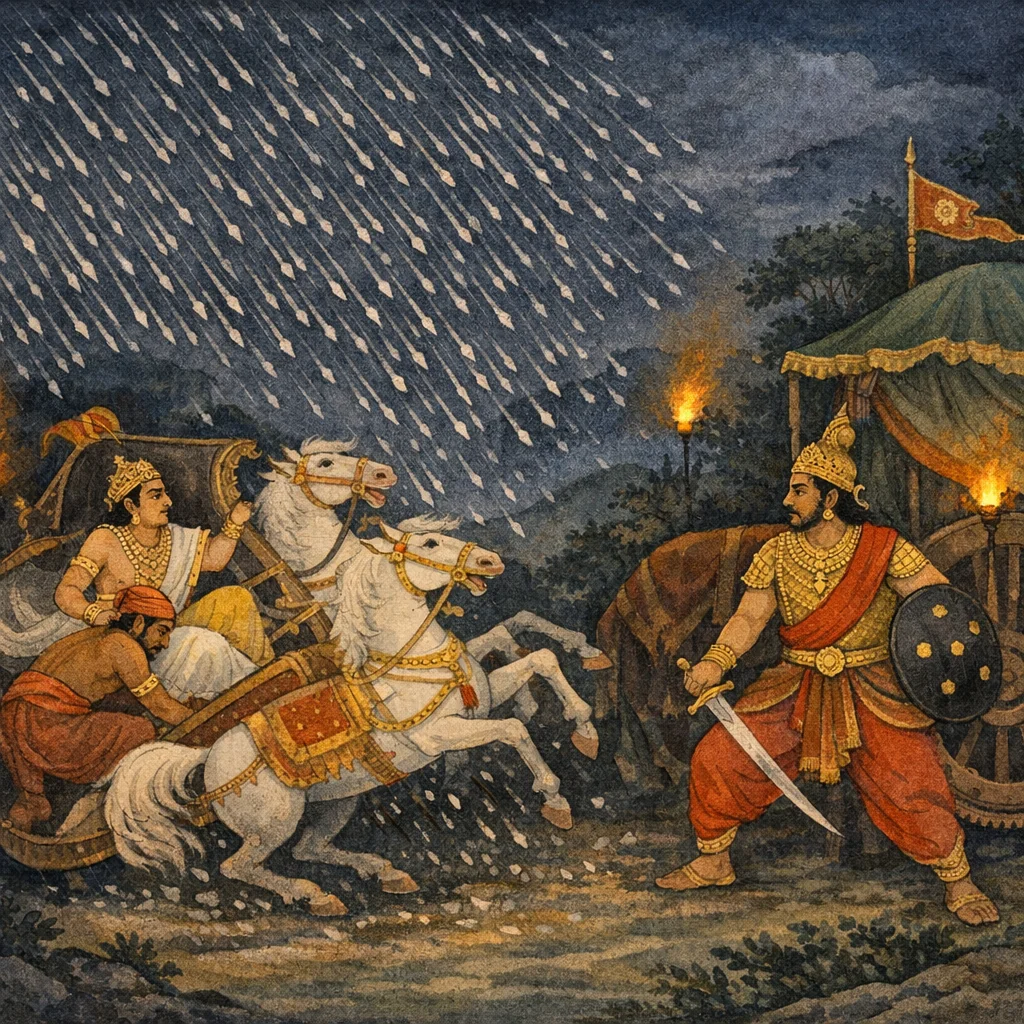
Sañjaya reports that with the appearance of the Nārāyaṇāstra, the battlefield is marked by violent, abnormal phenomena: gusting winds with spray, thunder in a cloudless sky, trembling earth, agitation of the ocean, and disorientation among animals and beings; the sun appears obscured, and predatory creatures converge. The kings and hosts become mentally unsettled, and the Kaurava forces scatter in fear. Dhṛtarāṣṭra then questions Sañjaya about how, after such rout and after Droṇa’s death, the Kaurava side is turned back toward engagement and what counsel or cause steadies the Pāṇḍavas in protecting Dhṛṣṭadyumna. Sañjaya narrates Yudhiṣṭhira addressing Arjuna after hearing the renewed tumult. Arjuna identifies the terrible roar as Aśvatthāman’s: he explains Droṇa’s grief-driven collapse after hearing a deceptive report, his laying down of weapons, and his subsequent killing, which Arjuna characterizes as a grave ethical breach against an elder brāhmaṇa-ācārya. The chapter thus binds three strands—portents, mass panic and regrouping, and an explicit ethical indictment—into a single causal frame: contested dharma produces both psychological shock and retaliatory consolidation.
Chapter Arc: रात्रियुद्ध की घोर संकुलता में, संजय धृतराष्ट्र से कहता है कि युधिष्ठिर ने पाण्डवों, पाञ्चालों और सोमकों को द्रोणाचार्य-वध की आकांक्षा से आगे बढ़ने का आदेश दिया—अंधकार में भी धर्मराज का संकल्प चमक उठा। → युधिष्ठिर के वचन से पाञ्चाल-सृञ्जय गर्जना करते हुए द्रोण की ओर टूट पड़ते हैं; उसी उथल-पुथल में कृतवर्मा (हार्दिक्य) युधिष्ठिर को रोकने/दबाने के लिए सामने आता है और दोनों के बीच तीव्र रथयुद्ध छिड़ जाता है। → युधिष्ठिर पहले कृतवर्मा को बार-बार बाणों से बेधते हैं, कवच भेदने वाले तीक्ष्ण शर उसके अंगों में धँसते हैं; प्रत्युत्तर में कृतवर्मा शरशत-वर्षा कर युधिष्ठिर का कवच फाड़ देता है, धनुष काट देता है और रथ-व्यवस्था तोड़कर धर्मपुत्र को विरथ व शरार्दित कर देता है—यहीं युद्ध का पलड़ा अचानक कौरव-पक्ष की ओर झुकता है। → धनुष छिन्न, रथ नष्ट और कवच विदीर्ण होने पर युधिष्ठिर रण से शीघ्र अपसारित होते हैं; कृतवर्मा उन्हें ‘निर्जित’ कर पुनः द्रोण के रथचक्र की रक्षा में लग जाता है, जिससे द्रोण के चारों ओर सुरक्षा-घेरा सुदृढ़ हो जाता है। → युधिष्ठिर का हटना पाण्डव-सेना के मनोबल और द्रोण-वध-योजना पर क्या प्रभाव डालेगा, और रात्रि के इस अराजक संग्राम में अगला निर्णायक प्रहार कौन करेगा?
Shlokas
Verse 1
इस प्रकार श्रीमह्माभारत द्रोणपर्वके अन्तर्गत घटोत्कचवधपर्वमें रात्रियुद्धके प्रसंगमें संकुलयुद्धविषयक एक सौ चौंसठवाँ अध्याय पूरा हुआ ॥/ १६४ ॥/ अपन क्रात _ रस: पज्चषष्ट्याधिकशततमोड< ध्याय: दोनों सेनाओंका युद्ध और कृतवर्माद्वारा युधिष्ठिरकी पराजय संजय उवाच वर्तमाने तदा रौद्रे रात्रियुद्धे विशाम्पते । सर्वभूतक्षयकरे धर्मपुत्रो युधिष्ठिर:,संजय कहते हैं--प्रजानाथ! जब सम्पूर्ण भूतोंका विनाश करनेवाला वह भयंकर रात्रियुद्ध आरम्भ हुआ, उस समय धर्मपुत्र युधिष्ठिरने पाण्डवों, पांचालों और सोमकोंसे कहा --दौड़ो, द्रोणाचार्यपर ही उन्हें मार डालनेकी इच्छासे आक्रमण करो”
Sanjaya said: O lord of men, when that dreadful night-battle—bringing destruction upon all beings—was underway, Dharmaputra Yudhiṣṭhira (stood forth to act and command).
Verse 2
अब्रवीत् पाण्डवांश्वैव पञज्चालांश्वैव सोमकान् । अभिद्रवत संयात द्रोणमेव जिघांसया,संजय कहते हैं--प्रजानाथ! जब सम्पूर्ण भूतोंका विनाश करनेवाला वह भयंकर रात्रियुद्ध आरम्भ हुआ, उस समय धर्मपुत्र युधिष्ठिरने पाण्डवों, पांचालों और सोमकोंसे कहा --दौड़ो, द्रोणाचार्यपर ही उन्हें मार डालनेकी इच्छासे आक्रमण करो”
Sañjaya said: “O lord of men, when that dreadful night-battle—bringing destruction upon multitudes—had begun, Dharmaputra Yudhiṣṭhira addressed the Pāṇḍavas, the Pañcālas, and the Somakas: ‘Charge forth together! Rush upon Droṇa alone, intent on slaying him.’”
Verse 3
राज्ञस्ते वचनाद् राजन् पञज्चाला: सृञ्जयास्तथा । द्रोणमेवा भ्यवर्तन्त नदन्तो भैरवान् रवान्,राजन! राजा युधिष्ठिरके आदेशसे पांचाल और सूंजय भयानक गर्जना करते हुए द्रोणाचार्यपर ही टूट पड़े
Sañjaya said: O King, in obedience to their sovereign’s command, the Pañcālas and the Sṛñjayas surged straight toward Droṇa, roaring with dreadful cries.
Verse 4
तंतुते प्रतिगर्जन्तः प्रत्युद्यातास्त्वमर्षिता: । यथाशक्ति यथोत्साहं यथासत्त्वं च संयुगे,वे सब-के-सब अमर्षमें भरे हुए थे और युद्धस्थलमें अपनी शक्ति, उत्साह एवं धैर्यके अनुसार बारंबार गर्जना करते हुए द्रोणाचार्यपर चढ़ आये
Sañjaya said: Inflamed with indignation, they surged forward in counter-attack. Roaring again and again on the battlefield, each advanced according to his own strength, his own ardor, and his own steadfast courage.
Verse 5
कृतवर्मा तु हार्दिक्यो युधिष्िरमुपाद्रवत् । द्रोणं प्रति समायान्तं मत्तो मत्तमिव द्विपम्,जैसे मतवाला हाथी किसी मतवाले हाथीपर आक्रमण कर रहा हो, उसी प्रकार युधिष्ठिरको द्रोणाचार्यपर धावा करते देख हृदिकपुत्र कृतवर्माने आगे बढ़कर उन्हें रोका
Sañjaya said: Hārdikya Kṛtavarmā rushed to check Yudhiṣṭhira, who was charging toward Droṇa—like a maddened elephant surging against another maddened elephant.
Verse 6
शैनेयं शरवर्षाणि विकिरन्तं समन्तत: । अभ्ययात् कौरवो राजन भूरि: संग्राममूर्थनि,राजन! युद्धके मुहानेपर चारों ओर बाणोंकी बौछार करते हुए शिनिपौत्र सात्यकिपर कुरुवंशी भूरिने धावा किया
Sañjaya said: “O King, Bhūri of the Kauravas charged at Śaineya (Sātyaki) on the very crest of the battle, while he was scattering showers of arrows in every direction.”
Verse 7
सहदेवमथायान्तं द्रोणप्रेप्सु महारथम् । कर्णो वैकर्तनो राजन् वारयामास पाण्डवम्,राजन! द्रोणाचार्यको पकड़नेके लिये आते हुए महारथी पाण्डुपुत्र सहदेवको वैकर्तन कर्णने रोका
Sañjaya said: “O King, as Sahadeva, the son of Pāṇḍu—a great chariot-warrior—advanced with the aim of seizing Droṇa, Karṇa, known as Vaikartana, checked him.”
Verse 8
भीमसेनमथायान्तं व्यादितास्यमिवान्तकम् | स्वयं दुर्योधनो राजा प्रतीप॑ं मृत्युमाव्रजत्,मुँह बाये यमराजके समान अथवा विपक्षी बनकर आयी हुई मृत्युके समान भीमसेनका सामना स्वयं राजा दुर्योधनने किया
Sañjaya said: “As Bhīmasena advanced—like Death itself with gaping jaws—King Duryodhana, of his own accord, moved to confront him, as though going straight toward an opposing Death.”
Verse 9
नकुलं॑ च युधां श्रेष्ठ सर्वयुद्धविशारदम् । शकुनि: सौबलो राजन् वारयामास सत्वर:
Sañjaya said: “O King, Śakuni, the son of Subala, swiftly checked Nakula as well—Nakula, foremost among warriors and skilled in every mode of combat.”
Verse 10
राजन! सम्पूर्ण युद्धकलामें कुशल योद्धाओंमें श्रेष्ठ नकुलको सुबलपुत्र शकुनिने शीघ्रतापूर्वक आकर रोका ।। शिखण्डिनमथायान्तं रथेन रथिनां वरम् | कृप: शारद्वतो राजन् वारयामास संयुगे,नरेश्वरर रथसे आते हुए रथियोंमें श्रेष्ठ शिखण्डीको युद्धसस््थलमें शरद्वानके पुत्र कृपाचार्यने रोका
Sañjaya said: “O King, Śakuni, son of Subala, swiftly came forward and checked Nakula, the foremost among warriors skilled in every art of war. Then, as Shikhandi—best of chariot-fighters—advanced in his chariot, Kripa, son of Sharadvat, restrained him on the battlefield.”
Verse 12
महाराज! मयूरके समान रंगवाले घोड़ोंद्वारा आते हुए प्रयत्नशील प्रतिविन्ध्यको दुःशासनने यत्नपूर्वक रोका ।। भैमसेनिमथायान्तं मायाशतविशारदम् | अश्व॒त्थामा महाराज राक्षसं प्रत्यषेधयत्
Sañjaya said: “O King, Duhshasana, with deliberate effort, checked Prativindhya as he advanced, drawn by horses of peacock-like hue. Then Ashvatthama, O Majesty, barred the oncoming Bhimasena—skilled in a hundred stratagems—treating him as a fierce, rakshasa-like foe.”
Verse 13
प्रतिविन्ध्यमथायान्तं मयूरसदृशै्हयै: । दुःशासनो महाराज यत्तो यत्तमवारयत्,राजन! सैकड़ों मायाओंके प्रयोगमें कुशल भीमसेन-कुमार राक्षस घटोत्कचको आते देख अभश्वत्थामाने रोका ।। ट्रुपदं वृषसेनस्तु ससैन्यं सपदानुगम् । वारयामास समरे द्रोणप्रेप्सुं महारथम् समरांगणमें द्रोणको पराजित करनेकी इच्छावाले सेना और सेवकोंसहित महारथी द्रपदको वृषसेनने रोका
Sanjaya said: O great king, as Prativindhya advanced, drawn by horses splendid as peacocks, Duḥśāsana checked him again and again, wherever he turned. Meanwhile, in the thick of battle, Vṛṣasena held back the great chariot-warrior Drupada—who had come with his troops and attendants, intent on bringing down Droṇa. Thus the war moved by relentless counter-strokes: each fighter’s vow and purpose met an opposing restraint, turning private enmity and strategy into a chain of moral trials under the weight of dharma and duty.
Verse 14
विराट द्रुतमायान्तं द्रोणस्य निधन प्रति । मद्रराज: सुसंक्कुद्धो वारयामास भारत,भारत! द्रोणको मारनेके उद्देश्यसे शीघ्रतापूर्वक आते हुए राजा विराटको अत्यन्त क्रोधमें भरे हुए मद्रराज शल्यने रोक दिया
Sañjaya said: As King Virāṭa rushed swiftly forward, intent on bringing about Droṇa’s death, the Madra king Śalya—burning with fierce anger—held him back, O Bhārata. In the war’s turmoil, personal resolve collided with strategic restraint, and wrath itself could bend a determined warrior’s course.
Verse 15
शतानीकमथायान्तं नाकुलिं रभसं रणे । चित्रसेनो रुरोधाशु शरैद्रोणपरीप्सया,द्रोणाचार्यके वधकी इच्छासे रणक्षेत्रमें वेगपूर्वक आते हुए नकुलपुत्र शतानीकको चित्रसेनने अपने बाणोंद्वारा तुरंत रोक दिया
Sañjaya said: As Śatānīka, the son of Nakula, rushed impetuously into the battle, Citrasena swiftly checked him with volleys of arrows, driven by the desire to press the fight toward Droṇācārya—toward Droṇa’s side and the purpose at stake.
Verse 16
अर्जुन च युधां श्रेष्ठ प्राद्रवन्तं महारथम् । अलम्बुषो महाराज राक्षसेन्द्रो न्यवारयत्
Sañjaya said: O King, as Arjuna—the foremost among warriors—charged forward in his great chariot, Alambuṣa, the lord of the Rākṣasas, checked and obstructed him. In the press of battle, even the most righteous and capable hero could be strategically delayed, his resolve tested amid the turmoil.
Verse 17
महाराज! कौरव-सेनापर धावा करते हुए योद्धाओंमें श्रेष्ठ महारथी अर्जुनको राक्षसराज अलम्बुषने रोका ।। तथा द्रोणं महेष्वासं निध्नन्तं शात्रवान् रणे | धृष्टद्युम्नो5थ पाज्चाल्यो हृष्टरूपमवारयत्
Sanjaya said: O King, as the foremost warriors charged upon the Kaurava host, the great chariot-warrior Arjuna was checked by Alambusha, the king of the Rākṣasas. Likewise, in the thick of battle, Dhrishtadyumna of Panchala, radiant with fierce resolve, confronted and restrained the mighty archer Drona as he struck down his foes. Thus were key champions deliberately engaged to curb slaughter and turn the tide—valor and strategy entwined with the grave moral weight of duty-bound combat under dharma.
Verse 18
इसी प्रकार रणभूमिमें शत्रुसैनिकोंका संहार करनेवाले, हर्ष और उत्साहसे युक्त, महाधनुर्धर द्रोणाचार्यको पांचाल राजकुमार धृष्टद्युम्नने आगे बढ़नेसे रोक दिया ।। तथान्यान् पाण्डुपुत्राणां समायातान् महारथान् | तावका रथिनो राजन् वारयामासुरोजसा,राजन्! इसी तरह आक्रमण करनेवाले पाण्डव-पक्षके अन्य महारथियोंकों आपकी सेनाके महारथियोंने बलपूर्वक रोका
Sañjaya said: In the same manner, O King, as Dhṛṣṭadyumna checked the advance of Droṇācārya—the great bowman who, with joy and ardor, was slaughtering the enemy host—so too did your chariot-warriors, by sheer force, hold back the other great champions of the Pāṇḍavas as they surged forward. Thus, amid the battle’s fury, individual prowess and disciplined resistance shaped the course of killing and survival, though all were bound by duty to fight.
Verse 19
गजारोहा गजैस्तूर्ण संनिपत्य महामृथे । योधयन्तश्न मृदूनन्त: शतशो5थ सहस्रश:,उस महासमरमें सैकड़ों और हजारों हाथीसवार तुरंत ही विपक्षी गजारोहियोंसे भिड़कर परस्पर जूझने और सैनिकोंको रौंदने लगे
Sañjaya said: In that great battle, elephant-riders, swiftly closing in with their elephants, collided with the opposing elephant-corps. Then, by the hundreds and by the thousands, they fought one another at close quarters, while their mighty beasts trampled the soldiers underfoot—an image of war’s overwhelming force, where valor and strategy unfold amid indiscriminate destruction.
Verse 20
निशीथे तुरगा राजन् द्रावयन्त: परस्परम् । समदृश्यन्त वेगेन पक्षवन्तो यथाउद्रय:
Sañjaya said: “At the dead of night, O King, the horses, driving one another on in their rush, appeared—by the sheer force of their speed—like winged creatures. In that darkness, the frenzy of battle made even ordinary steeds seem to transcend their nature, as if war itself had given them wings.”
Verse 21
राजन! रातके समय एक-दूसरेपर वेगसे धावा करते हुए घोड़े पंखधारी पर्वतोंके समान दिखायी देते थे ।। सादिन: सादिश्ि: सार्थ प्रासशक्त्यृष्टिपाणय: । समागच्छन् महाराज विनदन्तः पृथक् पृथक्,महाराज! हाथमें प्रास, शक्ति और ऋष्टि धारण किये घुड़सवार सैनिक पृथक्-पृथक् गर्जना करते हुए शत्रुपक्षके घुड़सवारोंके साथ युद्ध कर रहे थे
Sañjaya said: O King, in the darkness of night, as they charged at one another with great speed, the horses appeared like winged mountains. The mounted warriors, bearing lances (prāsa), javelins (śakti), and spears (ṛṣṭi) in hand, advanced in separate bodies, each raising his own fierce battle-cry, and engaged the enemy’s cavalry in close combat.
Verse 22
नरास्तु बहवस्तत्र समाजम्मु: परस्परम् । गदाभिमर्मुसलैश्वैव नानाशस्त्रैश्व संयुगे,उस युद्धस्थलमें बहुसंख्यक पैदल मनुष्य गदा और मुसल आदि नाना प्रकारके अस्त्रोंद्वारा एक-दूसरेपर आक्रमण करते थे
Sañjaya said: There, in that press of battle, many foot-soldiers closed in upon one another and struck each other down—some with maces, some with clubs, and others with weapons of many kinds. The scene shows war reduced to brutal hand-to-hand violence, where the mass of ordinary fighters bear the immediate cost of the leaders’ ambitions.
Verse 23
कृतवर्मा तु हार्दिक्यो धर्मपुत्रं युधिष्ठिरम् । वारयामास संक्रुद्धों वेलेवोद्वृत्तमर्णवम्,जैसे उत्ताल तरंगोंवाले महासागरको तटभूमि रोक देती है, उसी प्रकार धर्मपुत्र युधिष्ठिरको अत्यन्त क्रोधमें भरे हुए हृदिकपुत्र कृतवर्माने रोक दिया
Sañjaya said: Hārdikya Kṛtavarmā, inflamed with anger, checked Dharmaputra Yudhiṣṭhira—just as a shoreline holds back the heaving ocean when its waves rise in tumult. The image proclaims restraint amid fury: even in war, force is met by a counter-force that curbs further escalation.
Verse 24
युधिष्ठिरस्तु हार्दिक्यं विदृध्वा पजचभिराशुगै: । पुनर्विव्याध विंशत्या तिष्ठ तिछेति चाब्रवीत्,युधिष्ठिरने कृतवर्माकों पहले पाँच बाणोंसे घायल करके फिर बीस बाणोंसे बींध डाला और कहा--'खड़ा रह, खड़ा रह”
Sañjaya said: Yudhiṣṭhira, having first struck Hārdikya (Kṛtavarmā) with five swift arrows, again pierced him with twenty more. Then he declared, “Stand firm—stand firm!” In the midst of battle, the righteous king’s words carry a stern ethical edge: he seeks not merely to kill, but to check the opponent’s advance and compel him to face the consequences of the violence he has chosen.
Verse 25
कृतवर्मा तु संक्रुद्धो धर्मपुत्रस्य मारिष | धनुश्विच्छेद भल्लेन तं च विव्याध सप्तभि:,माननीय नरेश! तब अत्यन्त कुपित हुए कृतवर्माने भी एक भल्ल्लसे धर्मपुत्र युधिष्ठिरका धनुष काट दिया और उन्हें भी सात बाणोंसे बींध डाला
Sañjaya said: Kṛtavarmā, inflamed with anger, struck at Dharmaputra Yudhiṣṭhira—O venerable one. With a sharp bhalla-arrow he cut his bow, and then pierced him with seven arrows. The scene shows how wrath in battle drives warriors to disable an opponent’s means of defense first, even when that opponent is famed for righteousness.
Verse 26
अथान्यद् धनुरादाय धर्मपुत्रो महारथ: । हार्दिक्यं दशभिर्बाणैर्बाह्लोरुससि चार्पयत्
Sañjaya said: Then the son of Dharma, that great chariot-warrior, took up another bow and struck Hārdikya with ten arrows, and also pierced Bāhlīka in the chest—pressing the battle forward with resolute, duty-bound force.
Verse 27
तदनन्तर महारथी धर्मकुमार युधिष्ठिरने दूसरा धनुष लेकर कृतवर्माकी छाती और भुजाओंमें दस बाण मारे ।। माधवस्तु रणे विद्धो धर्मपुत्रेण मारिष । प्राकम्पत च रोषेण सप्तभि क्षार्दयच्छरै:,आर्य! रणभूमिमें धर्मपुत्र युधिष्ठिरके बाणोंसे घायल होकर कृतवर्मा काँपने लगा और उसने क्रोधपूर्वक युधिष्ठिरको भी सात बाण मारे
Thereafter the great chariot-warrior Yudhiṣṭhira, the son of Dharma, took up another bow and struck Kṛtavarmā in the chest and arms with ten arrows. Wounded in battle by the son of Dharma, Kṛtavarmā trembled; then, driven by anger, he retaliated and pierced Yudhiṣṭhira with seven sharp arrows. The passage shows how, amid war’s chaos, injury swiftly turns into wrath and counter-violence, testing restraint and dharma even in those devoted to righteousness.
Verse 28
तस्य पार्थो धनुश्छित्त्वा हस्तावापं निकृत्य च । प्राहिणोत्नेशितान् बाणान् पज्च राजज्छिलाशितान्,राजन! तब कुन्तीकुमार युधिष्ठिरने कृतवर्माके धनुष और दस्तानेको काटकर उसके ऊपर पाँच तीखे बाण चलाये जो शिलापर तेज किये गये थे
Sañjaya said: Then Pārtha (Yudhiṣṭhira), having cut down his bow and also severed his hand-guard, released five well-aimed arrows, O King—arrows sharpened upon stone.
Verse 29
ते तस्य कवचं भित्त्वा हेमचित्रं महाधनम् । प्राविशन् धरणीं भित्त्वा वल्मीकमिव पन्नगा:,जैसे सर्प बाँबीमें घुस जाते हैं, उसी प्रकार वे बाण कृतवर्माके सुवर्णजटित बहुमूल्य कवचको छिज्न-भिन्न करके धरती फाड़कर उसके भीतर घुस गये
Sañjaya said: Having shattered his richly wrought, gold-inlaid, exceedingly valuable armor, they pierced the earth and disappeared into it—like serpents slipping into an anthill.
Verse 30
अक्ष्णोनिमिषमात्रेण सो$5न्यदादाय कार्मुकम् | विव्याध पाण्डवं षष्ट्या सूतं च नवभि: शरै:,कृतवर्माने पलक मारते-मारते दूसरा धनुष हाथमें लेकर पाण्डुपुत्र युधिष्ठिरको साठ और उनके सारथिको नौ बाणोंसे घायल कर दिया
Sañjaya said: In the mere time of a single blink, he seized another bow and swiftly pierced the Pāṇḍava (Yudhiṣṭhira) with sixty arrows, and his charioteer with nine.
Verse 31
तस्य शक्तिममेयात्मा पाण्डवो भुजगोपमाम् | चिक्षेप भरतश्रेष्ठ रथे न्यस्य महद् धनु:,भरतश्रेष्ठ तब अमेय आत्मबलसे सम्पन्न पाण्डुनन्दन युधिष्ठिरने अपने विशाल धनुषको रथपर रखकर कृतवर्मापर एक सर्पाकार शक्ति चलायी
Sañjaya said: Then the Pāṇḍava of immeasurable spirit, having set his great bow down upon the chariot, hurled at him a spear-weapon, serpent-like in its swift, coiling flight.
Verse 32
सा हेमचित्रा महती पाण्डवेन प्रवेरिता । निर्भिद्य दक्षिणं बाहुं प्राविशद् धरणीतलम्,पाण्डुकुमार युधिष्ठिरकी चलायी हुई वह सुवर्ण-चित्रित विशाल शक्ति कृतवर्माकी दाहिनी भुजाको छेदकर धरतीमें समा गयी
Sañjaya said: The great spear, adorned with golden designs and hurled by the Pāṇḍava, pierced through Kṛtavarmā’s right arm and then sank into the earth.
Verse 33
एतस्मिन्नेव काले तु गृहा पार्थ: पुनर्धनु: । हार्दिक्यं छादयामास शरै: संनतपर्वभि:,इसी समय युधिष्ठिरने पुनः धनुष हाथमें लेकर झुकी हुई गाँठवाले बाणोंद्वारा कृतवर्माको ढक दिया
Sañjaya said: At that very moment, Pārtha again took up his bow and, with arrows whose joints were bent, completely covered Hārdikya (Kṛtavarmā) in a dense shower. The scene underscores the relentless momentum of battle, where resolve and skill are repeatedly reasserted, and where even renowned warriors are pressed by disciplined, concentrated force.
Verse 34
ततस्तु समरे शूरो वृष्णीनां प्रवरो रथी । व्यश्वसूतरथं चक्रे निमेषार्धाद् युधिषछ्तिरम्,फिर तो वृष्णिवंशके शूरवीर श्रेष्ठ महारथी कृतवर्माने समरांगणमें आधे निमेषमें ही युधिष्ठिरको घोड़ों, सारथि और रथसे हीन कर दिया
Sañjaya said: Then, in that battle, the heroic and foremost charioteer among the Vṛṣṇis reduced Yudhiṣṭhira to a chariotless state—depriving him of horses, charioteer, and chariot—in less than half a blink. The episode underscores how swiftly martial prowess can overturn outward supports in war, even for a king devoted to dharma, reminding that righteousness does not guarantee immunity from the violent contingencies of the battlefield.
Verse 35
ततस्तु पाण्डवो ज्येष्ठ: खड्ग॑ चर्म समाददे । तदस्य निशितैर्बाणैव्यधमन्माधवो रणे,तब ज्येष्ठ पाण्डव युधिष्ठिरने ढाल-तलवार हाथमें ले ली। किंतु कृतवर्माने रणक्षेत्रमें तीखे बाण मारकर उनके उस खड्गको नष्ट कर दिया
Sañjaya said: Then the eldest of the Pāṇḍavas took up his sword and shield. But in the battle, Mādhava struck at him with sharp arrows, shattering that sword—showing how swiftly resolve and weaponry alike can be undone amid the ruthless momentum of war.
Verse 36
तोमरं तु ततो गृहा स्वर्णदण्डं दुरासदम् । प्रैषयत् समरे तूर्ण हार्दिक्यस्य युधिछ्िर:,तब समरांगणमें युधिष्ठिरने सुवर्णमय दण्डसे युक्त दुर्धर्ष तोमर हाथमें लेकर उसे तुरंत ही कृतवर्मापर चला दिया
Sañjaya said: Then Yudhiṣṭhira, taking up a formidable javelin with a golden shaft, swiftly hurled it in the battle at Hārdikya (Kṛtavarmā). Even amid the violence of war, the scene underscores the grim ethical tension of kṣatriya-duty: the king who values righteousness is compelled to act decisively in combat when the conflict demands it.
Verse 37
तमापतन्तं सहसा धर्मराजभुजच्युतम् । द्विधा चिच्छेद हार्दिक्य: कृतहस्त: स्मयन्निव,धर्मराजके हाथसे छूटकर सहसा अपने ऊपर आते हुए उस तोमरके सिद्धहस्त कृतवर्माने मुसकराते हुए-से दो टुकड़े कर दिये
Sañjaya said: The javelin, slipping from Dharmarāja’s arm, suddenly came hurtling toward him. Then Hārdikya (Kṛtavarman), a master of weapons, as if smiling, cut it into two pieces—displaying calm skill amid the fury of battle.
Verse 38
तत: शरशतेनाजोौ धर्मपुत्रमवाकिरत् | कवचं चास्य संक्रुद्धः शरैस्तीक्ष्णरदारयत्,तब युद्धस्थलमें कृतवर्माने सैकड़ों बाणोंसे धर्मपुत्र युधिष्ठिरको ढक दिया और अत्यन्त कुपित होकर उसने उनके कवचको भी तीखे बाणोंसे विदीर्ण कर डाला
Sañjaya said: Then, in the midst of battle, Kṛtavarman showered Dharmaputra Yudhiṣṭhira with a hundred arrows. Enraged, he also tore apart Yudhiṣṭhira’s armor with sharp shafts.
Verse 39
हार्दिक्यशरसंछन्न॑ं कवचं तन््महाधनम् । व्यशीर्यत रणे राज॑स्ताराजालमिवाम्बरात्,राजन! कृतवर्माके बाणोंसे आच्छादित हुआ वह बहुमूल्य कवच आकाशसे तारोंके समुदायकी भाँति रणभूमिमें बिखर गया
Sañjaya said: O King, that priceless cuirass—covered over by the arrows of Hārdikya—was shattered and scattered across the battlefield, like a net of stars falling from the sky.
Verse 40
स च्छिन्नधन्वा विरथ: शीर्णवर्मा शरार्दित: । अपायासीदू रणात् तूर्ण धर्मपुत्रो युधिष्ठिर:,इस प्रकार धनुष कट जाने, रथ नष्ट होने और कवच छित्न-भिन्न हो जानेपर बाणोंसे पीड़ित हुए धर्मपुत्र युधिष्ठिर तुरंत ही युद्धसे पलायन कर गये
Sañjaya said: With his bow cut down, his chariot lost, his armour shattered, and tormented by arrows, Dharmaputra Yudhiṣṭhira quickly withdrew from the battlefield.
Verse 41
कृतवर्मा तु निर्जित्य धर्मात्मानं युधिष्ठिरम् । पुनद्रोणस्य जुगुपे चक्रमेव महात्मन:,धर्मात्मा युधिष्ठिरको जीतकर कृतवर्मा पुनः महात्मा द्रोणके रथचक्रकी ही रक्षा करने लगा
Sañjaya said: Having overcome the righteous Yudhiṣṭhira, Kṛtavarmā once again took up the task of guarding the wheel of the noble Droṇa’s chariot.
Verse 165
इति श्रीमहाभारते द्रोणपर्वणि घटोत्कचवधपर्वणि रात्रियुद्धे युधिष्ठिरापयानं नाम पज्चषष्ट्यधिकशततमो<ध्याय:
Thus, in the Śrī Mahābhārata, within the Droṇa Parva—specifically in the section on the slaying of Ghaṭotkaca, during the night-battle—ends the one-hundred-and-sixty-fifth chapter, entitled “Yudhiṣṭhira’s Withdrawal.”
Frequently Asked Questions
The dilemma concerns whether strategic deception and the killing of an unresisting elder-ācārya can be justified by war aims; the narrative presents the act as generating profound moral rupture and legitimizing retaliatory resolve in the opponent’s leadership.
The chapter implies that means and ends cannot be cleanly separated: violations of truthfulness and restraint may secure short-term objectives but produce long-term destabilization—psychological, social, and karmic—manifesting as fear, escalation, and cycles of retribution.
No explicit phalaśruti is stated here; the meta-commentary functions indirectly through Sañjaya’s framing and Arjuna’s ethical evaluation, positioning the episode as a cautionary node within the war’s moral architecture.