Adhyaya 154
घटोत्कच-कर्णयुद्धम् (Ghaṭotkaca–Karna Combat and the Release of Śakti)
Upa-parva: Ghaṭotkaca–Karna Night Engagement (Māyā-yuddha Episode)
Saṃjaya describes Ghaṭotkaca, after slaying Alāyudha, roaring at the front and inducing acute fear in the Kaurava host. Karṇa attacks major Pāṇḍava-aligned fighters with dense arrow volleys; a prolonged exchange follows in which neither Karṇa nor Ghaṭotkaca appears inferior. Ghaṭotkaca then escalates by employing a fierce aerial māyā: lightning-like flashes, ominous sounds, and a storm of weapons—arrows, spears, axes, maces, stones, discs—fall across the battlefield, producing disorder, casualties, and retreat. Kurus denounce the unseen rākṣasa tactics as kūṭa-yuddha and press Karṇa to end the threat using the divine Śakti granted by Śakra in exchange for Karṇa’s earrings and armor. Karṇa, maintaining composure amid the chaos, resolves to deploy the weapon; the Śakti pierces through the māyā and Ghaṭotkaca’s heart, rising skyward after the strike. Ghaṭotkaca falls in a terrifying expanded form, still crushing a portion of the Kaurava force by the impact of his body. The Kauravas celebrate Karṇa’s feat and regroup, with Karṇa rejoining Duryodhana’s side.
Chapter Arc: संजय धृतराष्ट्र को सुनाते हैं कि द्रोण के उकसावे के बाद दुर्योधन फिर कर्ण से मंत्रणा करता है—अर्जुन-कृष्ण की अजेय गति और आज के संकट का अर्थ क्या है? → कर्ण पाण्डवों की धावा-शक्ति का स्मरण कराता है—देवों से भी दुर्भेद्य आचार्य-रचित व्यूह को अर्जुन ने भेद दिया; जयद्रथ जीवन बचाकर लौटना चाहता था, पर ‘अनार्य’ रीति से रोका गया और द्रोण से शरण/अभय की बात उठती है। साथ ही कर्ण द्रोण की वृद्धावस्था और शीघ्र-गमन/पराक्रम की सीमाओं का संकेत देकर दुर्योधन को ‘परम यत्न’ के लिए उकसाता है। → कर्ण का तीखा निष्कर्ष—हमारी पुरुषार्थ-शक्ति को निकृष्ट उपायों/कपट-पराक्रम से काटा जा रहा है; और अब सैन्धव (जयद्रथ) युद्ध में निहत हो चुका है—यह दैव-विधान की अटलता का भी संकेत है। → कर्ण दुर्योधन को धैर्य और पुनः संगठित होकर युद्ध आरम्भ करने की सलाह देता है; दोषारोपण से अधिक, शेष सेना को समेटकर रण में टिके रहने का आग्रह करता है, और दैव तथा पुरुषार्थ—दोनों के बीच संतुलित दृष्टि रखता है। → पुनः युद्ध का आरम्भ—जयद्रथ-वध के बाद कौरव पक्ष किस प्रकार प्रतिशोध और रक्षा-रणनीति बदलेगा, और द्रोण की भूमिका आगे कैसे मुड़ेगी?
Shlokas
Verse 1
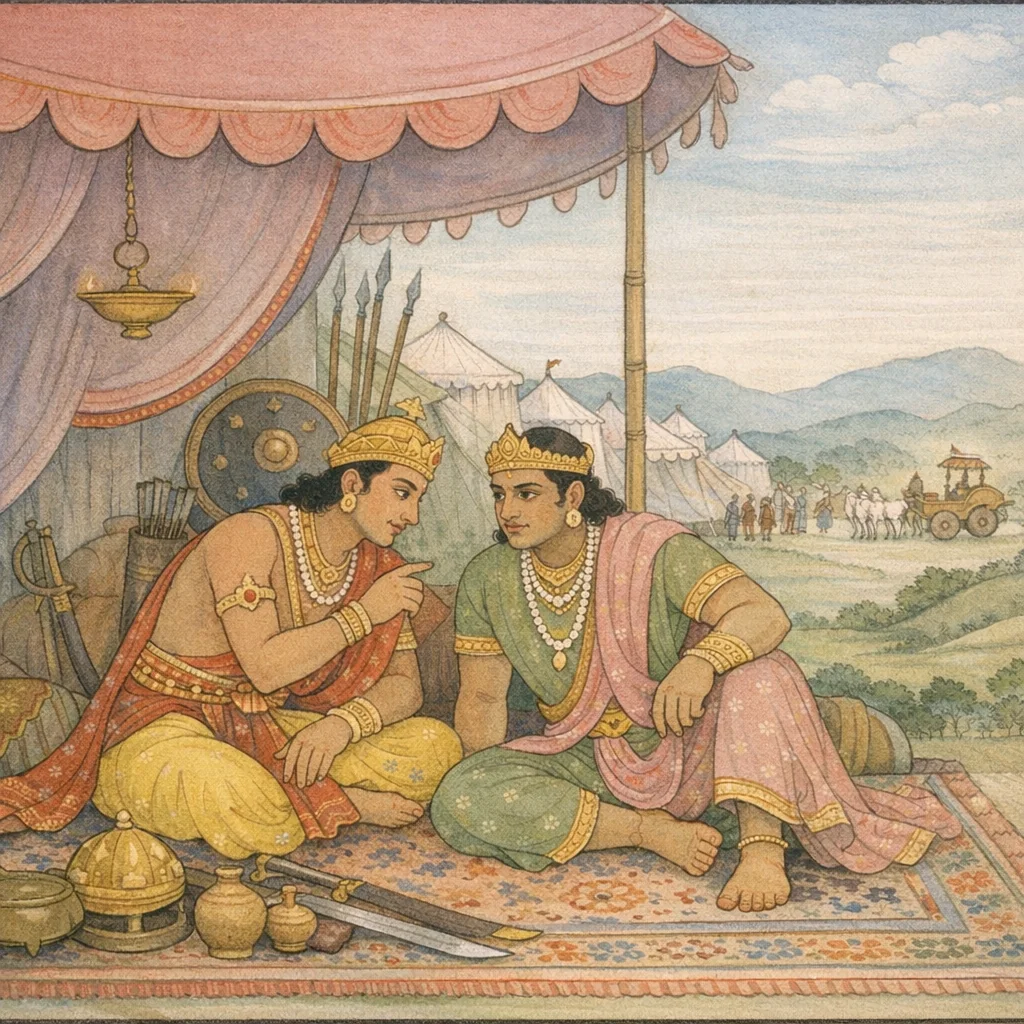
/ अपर बक। है २ >> द्विपज्चाशर्दाधिकशततमो< ध्याय: दुर्योधन और कर्णकी बातचीत तथा पुनः युद्धका आरम्भ संजय उवाच ततो दुर्योधनो राजा द्रोणेनैवं प्रचोदित: । अमर्षवशमापन्नो युद्धायैव मनो दथे,संजय कहते हैं--राजन्! तदनन्तर द्रोणाचार्यसे इस प्रकार प्रेरित हो अमर्षमें भरे हुए राजा दुर्योधनने मन-ही-मन युद्ध करनेका ही निश्चय किया
Sañjaya said: Then King Duryodhana, thus urged on by Droṇa, fell under the sway of indignation and resolved in his heart to engage in battle.
Verse 2
अब्रवीच्च तदा कर्ण पुत्रो दुर्योधनस्तव । पश्य कृष्णसहायेन पाण्डवेन किरीटिना
Sañjaya said: Then your son Duryodhana spoke to Karṇa: “Look—Arjuna the Pāṇḍava, wearer of the diadem, advances with Krishna as his support.”
Verse 3
आचार्यविदहितं व्यूहं भित्त्वा देवै: सुदुर्भिदम् । तव व्यायच्छमानस्य द्रोणस्यथ च महात्मन:
Sañjaya said: Having broken through the battle-formation devised by the preceptor—one that even the gods would find exceedingly hard to pierce—they pressed forward, even as your noble Droṇa, the great-souled one, strove to hold them back.
Verse 4
मिषतां योधमुख्यानां सैन्धवो विनिपातित: । उस समय आपके पुत्र दुर्योधनने कर्णसे इस प्रकार कहा--'कर्ण! देखो, श्रीकृष्णसहित पाण्डुपुत्र अर्जुनने आचार्यद्वारा निर्मित व्यूहको, जिसका भेदन करना देवताओंके लिये भी अत्यन्त कठिन था, भेदकर तुम्हारे और महात्मा द्रोणके युद्धमें तत्पर रहते हुए भी मुख्य- मुख्य योद्धाओंके देखते-देखते सिंधुराज जयद्रथको मार गिराया है ।। २-३ $ || पश्य राधेय पृथ्वीशा: पृथिव्यां प्रवरा युधि
Sañjaya said: “Before the very eyes of the foremost warriors, the king of Sindhu (Jayadratha) has been struck down. Look, O Rādheya (Karna): even the best of kings on earth—renowned for battle—stood watching as this happened.”
Verse 5
पार्थेनैकेन निहता: सिंहेनेवेतरे मृगा: । “राधानन्दन! देखो, जैसे सिंह दूसरे वन्य पशुओंका संहार कर डालता है, उसी प्रकार एकमात्र कुन्तीकुमार अर्जुनद्वारा मारे गये ये भूमण्डलके श्रेष्ठ भूपाल युद्धभूमिमें पड़े हैं ।। ४ ५ “| मम व्यायच्छमानस्थ द्रोणस्य च महात्मन:
Sañjaya said: “Slain by Partha (Arjuna) alone, they lie like other beasts felled by a lion. O son of Radha (Karna), behold: just as a lion destroys the other wild animals, so too these foremost kings of the earth, struck down by the single Kunti’s son Arjuna, are strewn upon the battlefield.”
Verse 6
अल्पावशेषं सैन्यं मे कृतं शक्रात्मजेन ह | “मेरे और महात्मा द्रोणके परिश्रमपूर्वक युद्ध करते रहनेपर भी इन्द्रपुत्र अर्जुनने मेरी सेनाको अल्प-मात्रामें ही जीवित छोड़ा है (अधिकांश सेनाको तो मार ही डाला है) ।। ५६ || कथ॑ं नियच्छमानस्य द्रोणस्य युधि फाल्गुन:
Sañjaya said: “Indra’s son Arjuna has reduced my army to a mere remnant. Even while the great Droṇa strove in battle to restrain him, how did Phālguna (Arjuna) still accomplish this on the field?”
Verse 7
भिन्द्यात् सुदुर्भिदं व्यूहं यतमानो5पि संयुगे । प्रतिज्ञाया गत: पारं हत्वा सैन्धवमर्जुन:
Sañjaya said: Even while striving amid the clash of battle, Arjuna pierced that formation—hard to break though it was. Having crossed to the far shore of his vow, he fulfilled his pledge by slaying Saindhava (Jayadratha).
Verse 8
“यदि इस युद्धमें आचार्य द्रोण अर्जुनको रोकनेकी पूरी चेष्टा करते तो प्रयत्न करनेपर भी वे समरांगणमें उस दुर्भद्य व्यूहको कैसे तोड़ सकते थे? सिंधुराजको मारकर अर्जुन अपनी प्रतिज्ञाके भारसे मुक्त हो गये ।। पश्य राधेय पृथ्वीशान् पृथिव्यां पातितान् बहून् । पार्थेन निहतान् संख्ये महेन्द्रोपमविक्रमान्,'राधाकुमार! संग्रामभूमिमें पार्थके मारे और पृथ्वीपर गिराये हुए इन बहुसंख्यक भूपतियोंको देखो, ये सब-के-सब देवराज इन्द्रके समान पराक्रमी थे
Sañjaya said: If, in this war, the preceptor Droṇa had exerted himself to the utmost to restrain Arjuna, then—even with all effort—how could Arjuna have broken that hard-to-breach battle-formation on the field? Having slain the king of Sindhu, Arjuna was freed from the burden of his vow. Behold, O son of Rādhā: many kings, cast down upon the earth, slain by Pārtha in battle—each of them possessed of valor like that of Mahendra (Indra).
Verse 9
अनिच्छत: कथं वीर द्रोणस्य युधि पाण्डव: । भिन्द्यात् सुदुर्भिदं व्यूहं यतमानस्य शुष्मिण:,“वीर! यदि बलवान द्रोणाचार्य पूरा प्रयत्न करके उन्हें व्यूहमें नहीं घुसने देना चाहते तो वे उस दुर्भद्य व्यूहको कैसे तोड़ सकते थे?
Sañjaya said: “O hero, if Droṇa—mighty and fully exerting himself in battle—did not wish to let the Pāṇḍava enter, how could that Pāṇḍava have broken through that formation, so hard to pierce?”
Verse 10
दयित: फाल्गुनो नित्यमाचार्यस्य महात्मन: । ततोअस्य दत्तवान् द्वारमयुद्धेनैव शत्रुहन्,'शत्रुसूदन! किंतु अर्जुन तो महात्मा आचार्य द्रोणको सदा ही परम प्रिय हैं। इसीलिये उन्होंने युद्ध किये बिना ही उन्हें व्यूहमें घुसनेका मार्ग दे दिया
Sañjaya said: “Phalguna (Arjuna) was always dear to the noble preceptor. Therefore, O slayer of foes, he granted him an entry into the battle-formation without even fighting.”
Verse 11
अभयं सिन्धुराजाय दत्त्वा द्रोण: परंतप: । प्रादात् किरीटिने द्वारं पश्य निर्गुणतां मयि
Sañjaya said: Having granted safety to the king of Sindhu, Droṇa—the scorcher of foes—then opened a passage for the diadem-wearing Arjuna. Behold my own lack of discernment and worth: I can only report how the mighty, even amid war, still make room for mercy and strategic necessity.
Verse 12
'शत्रुओंको संताप देनेवाले द्रोणाचार्यने सिंधुराजको अभय-दान देकर भी किरीटधारी अर्जुनको व्यूहमें घुसनेका मार्ग दे दिया। देखो, मुझमें कितनी गुणहीनता है ।। यद्यदास्यदनुज्ञां वै पूर्वमेव गृहान् प्रति । प्रस्थातुं सिन्धुराजस्य नाभविष्यज्जनक्षय:,“यदि उन्होंने पहले ही सिंधुराजको घर जानेकी आज्ञा दे दी होती तो यह इतना बड़ा जनसंहार नहीं होता
Sañjaya said: Droṇa, the scorcher of foes, granted safety to the king of Sindhu and yet opened a passage for the diadem-wearing Arjuna to enter the formation. Behold how lacking in merit I am! If Duryodhana had earlier permitted the Sindhu king to depart for his home, this vast slaughter of men would not have occurred.
Verse 13
जयद्रथो जीवितार्थी गच्छमानो गृहान् प्रति । मयानार्येण संरुद्धो द्रोणात् प्राप्पाभयं सखे,“सखे! जयद्रथ अपनी जीवनरक्षाके लिये घरकी ओर पधार रहे थे, परंतु मुझ अधमने ही द्रोणाचार्यसे अभय पाकर उन्हें रोक लिया
Sañjaya said: “O friend, Jayadratha, intent on saving his life, was making his way back toward his home. Yet I—acting ignobly—blocked him, after first obtaining assurance of safety from Droṇa.”
Verse 14
(रक्षामि सैन्धवं युद्धे नैन॑ प्राप्स्पति फाल्गुन: । मम सैन्यविनाशाय रुद्धो विप्रेण सैन्धव: ।। “'मैं युद्धमें सिंधुराजकी रक्षा करूँगा; अर्जुन उसे नहीं पा सकेंगे”! ऐसा कहकर इस ब्राह्मणने मेरी सेनाका संहार करानेके लिये सिंधुराजको रोक लिया। तस्य मे मन्दभाग्यस्य यतमानस्य संयुगे । हतानि सर्वसैन्यानि हतो राजा जयद्रथ: ।। 'युद्धमें प्रयत्न करनेपर भी मुझ भाग्यहीनकी सारी सेनाएँ नष्ट हो गयीं और राजा जयद्रथ भी मार डाले गये। पश्य योधवरान् कर्ण शतशो5थ सहस्रश: । पार्थनामाड्कितैर्बाणै: सर्वे नीता यमक्षयम् ।। “कर्ण! इन सैकड़ों-हजारों श्रेष्ठ योद्धाओंको देखो, ये सब-के-सब अर्जुनके नामसे अंकित बाणोंद्वारा यमलोक पहुँचाये गये हैं । कथमेकरथेनाजौ बहूनां न: प्रपश्यताम् । विपन्न: सैन्धवो राजा योधाश्रैव सहस्रश: ।।) “हम बहुसंख्यक योद्धा देखते ही रह गये और युद्धस्थलमें एकमात्र रथकी सहायतासे अर्जुनने मेरे इन सहस्रों योद्धाओं तथा सिंधुराज जयद्रथको भी मार डाला। यह कैसे सम्भव हुआ। अद्य मे भ्रातर: क्षीण॒क्षित्रसेनादयो रणे । भीमसेनं समासाद्य पश्यतां नो दुरात्मनाम्
Sañjaya said: “I will protect the king of Sindhu in battle; Phālguna (Arjuna) will not reach him.” Saying this, that brāhmaṇa held back Jayadratha—bringing about the destruction of my army. Though I, ill-fated, strove in the fight, all my forces were slain, and King Jayadratha too was killed. Look, Karṇa—hundreds and thousands of foremost warriors have all been sent to Yama’s abode by arrows marked with Pārtha’s name. How, while we watched in great numbers, did the king of Sindhu perish in the battle by the power of a single chariot—and with him thousands of warriors? Today my brothers—Kṣitrasena and the rest—have been cut down in the field, as we wicked men looked on, after they confronted Bhīmasena.
Verse 15
“आज युद्धमें हम दुरात्माओंके देखते-देखते मेरे चित्रसेन आदि भाई भीमसेनसे भिड़कर नष्ट हो गये” ।। कर्ण उवाच आचार्य मा विगर्हस्व शक््त्यासौ युध्यते द्विज: । यथाबलं यथोत्साहं त्यक्त्वा जीवितमात्मन:
Karṇa said: “Teacher, do not censure him. That brahmin fights with his spear-weapon. Having cast aside concern for his own life, he is battling according to his strength and according to his courage.”
Verse 16
कर्ण बोला--भाई! तुम आचार्यकी निन्दा न करो। वह ब्राह्मण तो अपने बल, शक्ति और उत्साहके अनुसार प्राणोंका भी मोह छोड़कर युद्ध करता ही है ।। यद्येनं समतिक्रम्य प्रविष्ट: श्वेतवाहन: । नात्र सूक्ष्मोडपि दोष: स्यादाचार्यस्य कथंचन,यदि श्वेतवाहन अर्जुन आचार्य द्रोणका उल्लंघन करके सेनामें घुस गये तो इसमें किसी प्रकार आचार्यका कोई सूक्ष्मसे भी सूक्ष्म दोष नहीं है
Karna said: “Brother, do not disparage the Teacher. That Brahmin fights, casting off even attachment to life itself, in accordance with his own strength, power, and resolve. And if Arjuna—he of the white steeds—has entered the army after overstepping Drona, then in this there is not the slightest fault of the preceptor in any way.”
Verse 17
कृती दक्षो युवा शूर: कृतास्त्रो लघुविक्रम: । दिव्यास्त्रयुक्तमास्थाय रथं वानरलक्षणम्,अर्जुन अस्त्रविद्याके विद्वान, दक्ष, युवावस्थासे सम्पन्न, शूरवीर, अनेक दिव्यास्त्रोंके ज्ञाता और शीतघ्रता-पूर्वक पराक्रम प्रकट करनेवाले हैं। वे दिव्यास्त्रोंसे सम्पन्न एवं वानरध्वजसे उपलक्षित रथपर बैठे हुए थे। श्रीकृष्णने उनके घोड़ोंकी बागडोर ले रखी थी। वे अभेद कवचसे सुरक्षित थे। उन्हे अपने बाहुबलका अभिमान है ही। ऐसी दशामें पराक्रमी अर्जुन कभी जीर्ण न होनेवाले दिव्य गाण्डीव धनुषको लेकर तीखे बाणोंकी वर्षा करते हुए यदि वहाँ आचार्य द्रोणको लाँघ गये तो वह उनके योग्य ही कर्म था
Karna said: “Arjuna is accomplished and capable—young, heroic, fully trained in weapons, and swift in action. Mounted upon his chariot marked with the monkey-banner and equipped with celestial missiles, he advanced. In such a condition, if the mighty Arjuna, taking up his unfailing divine bow Gāṇḍīva and showering sharp arrows, passed beyond Ācārya Droṇa, that deed was only fitting for him.”
Verse 18
कृष्णेन च गृहीताश्वमभेद्यकवचावृत: । गाण्डीवमजरं दिव्यं धनुरादाय वीर्यवान्,अर्जुन अस्त्रविद्याके विद्वान, दक्ष, युवावस्थासे सम्पन्न, शूरवीर, अनेक दिव्यास्त्रोंके ज्ञाता और शीतघ्रता-पूर्वक पराक्रम प्रकट करनेवाले हैं। वे दिव्यास्त्रोंसे सम्पन्न एवं वानरध्वजसे उपलक्षित रथपर बैठे हुए थे। श्रीकृष्णने उनके घोड़ोंकी बागडोर ले रखी थी। वे अभेद कवचसे सुरक्षित थे। उन्हे अपने बाहुबलका अभिमान है ही। ऐसी दशामें पराक्रमी अर्जुन कभी जीर्ण न होनेवाले दिव्य गाण्डीव धनुषको लेकर तीखे बाणोंकी वर्षा करते हुए यदि वहाँ आचार्य द्रोणको लाँघ गये तो वह उनके योग्य ही कर्म था
Karna said: “With Krishna holding the reins of his horses, and protected by impenetrable armor, the mighty Arjuna took up the divine, undecaying bow Gāṇḍīva. Thus equipped—swift in action, rich in celestial weapons, and borne on the chariot marked by the monkey-banner—if he surged past Ācārya Droṇa while showering sharp arrows, that deed was fully in keeping with his prowess.”
Verse 19
प्रवर्षन् निशितान् बाणान् बाहुद्रविणदर्पित: । यदर्जुनो5 भ्ययाद् द्रोणमुपपन्नं हि तस्य तत्,अर्जुन अस्त्रविद्याके विद्वान, दक्ष, युवावस्थासे सम्पन्न, शूरवीर, अनेक दिव्यास्त्रोंके ज्ञाता और शीतघ्रता-पूर्वक पराक्रम प्रकट करनेवाले हैं। वे दिव्यास्त्रोंसे सम्पन्न एवं वानरध्वजसे उपलक्षित रथपर बैठे हुए थे। श्रीकृष्णने उनके घोड़ोंकी बागडोर ले रखी थी। वे अभेद कवचसे सुरक्षित थे। उन्हे अपने बाहुबलका अभिमान है ही। ऐसी दशामें पराक्रमी अर्जुन कभी जीर्ण न होनेवाले दिव्य गाण्डीव धनुषको लेकर तीखे बाणोंकी वर्षा करते हुए यदि वहाँ आचार्य द्रोणको लाँघ गये तो वह उनके योग्य ही कर्म था
Karna said: “Proud of the wealth of his arms—his sheer martial power—Arjuna showered sharp arrows. If Arjuna pressed past (or overreached) Droṇa there, that was indeed fitting for him.”
Verse 20
आचार्य: स्थविरो राजन् शीघ्रयाने तथाक्षम: । बाहुव्यायामचेष्टायामशक्तस्तु नराधिप,राजन! नरेश्वर! आचार्य द्रोण अब बूढ़े हुए। वे शीघ्रतापूर्वक चलनेमें भी असमर्थ हैं। भुजाओंद्वारा परिश्रमपूर्वक की जानेवाली प्रत्येक चेष्टामें अब उनकी शक्ति उतनी काम नहीं देती है
O king, Ācārya Droṇa has grown old; he is no longer able to move with speed. And in every exertion that demands strenuous use of the arms, lord of men, his strength no longer answers as it once did.
Verse 21
इसीलिये श्रीकृष्ण जिनके सारथि हैं, वे श्वेतवाहन अर्जुन द्रोणाचार्यको लाँच गये। यही कारण है कि मैं इसमें ट्रोणाचार्यका दोष नहीं देख रहा हूँ
Therefore Arjuna, the white-bannered warrior whose charioteer is Śrī Kṛṣṇa, was able to overpass and outmaneuver Droṇācārya. For this very reason, I do not perceive any fault in Droṇa.
Verse 22
अजय्यान् पाण्डवान् मन्ये द्रोणेनास्त्रविदा मृथे । तथा होनमततिक्रम्य प्रविष्ट: श्वेतवाहन:,मैं तो ऐसा मानता हूँ कि अस्त्रवेत्ता होनेपर भी द्रोण युद्धमें पाण्डवोंको नहीं जीत सकते, तभी तो उन्हें लाँधकर श्वेतवाहन अर्जुन व्यूहमें घुस गये
Karna said: “I deem the Pāṇḍavas unconquerable in battle even by Droṇa, though he is a master of weapons. That is why Śvetavāhana (Arjuna), overstepping him, has entered the battle-formation.”
Verse 23
दैवादिष्टेडन्यथाभावो न मन्ये विद्यते क्वचित् । यतो नो युध्यमानानां परं शकक््त्या सुयोधन
Karna said: “When destiny has ordained a course, I do not believe there can be any other outcome anywhere. Therefore, O Suyodhana, since we are already engaged in battle, exert your utmost strength and resolve.”
Verse 24
परं यत्नं कुर्वतां च त्वया सार्थ रणाजिरे
“Even while you and your companions exert your utmost effort on the battlefield, …” (Karna speaks in the midst of combat, stressing the limits of human striving amid the moral pressure and uncertainty of war.)
Verse 25
हत्वास्माकं पौरुषं वै देवं पश्चात् करोति नः । सतत चेष्टमानानां निकृत्या विक्रमेण च
Karna said: “After destroying our manly prowess, he then makes it out to be ‘divine’ on our side. Even though we are constantly striving, he overcomes us by deceit as well as by sheer force.”
Verse 26
समरांगणमें तुम्हारे साथ हमलोग भी विजयके लिये महान् प्रयत्न करते हैं, छल-कपट तथा पराक्रमद्वारा भी सदा विजयकी चेष्टामें लगे रहते हैं, तो भी दैव हमारे पुरुषार्थको नष्ट करके हमें पीछे ढकेल देता है ।। दैवोपसृष्ट: पुरुषो यत् कर्म कुरुते क्वचित् । कृतं कृतं हि तत्कर्म दैवेन विनिपात्यते,दैव या दुर्भाग्यका मारा हुआ पुरुष कहीं जो भी कर्म करता है, उसके किये हुए प्रत्येक कर्मको दैव उलट देता है
Karna said: “When a man is struck by fate, whatever action he undertakes anywhere, each and every deed he has done is overturned by destiny itself. Though we strive mightily for victory on the battlefield—by effort, by strategy, even by sheer valor—fate shatters our human endeavor and drives us back.”
Verse 27
यत् कर्तव्यं मनुष्पेण व्यवसायवता सदा । तत् कार्यमविशड्केन सिद्धिर्देवे प्रतेष्ठिता,मनुष्यको सदा उद्योगशील होकर निःशंकभावसे अपने कर्तव्यका पालन करना चाहिये; परंतु उसकी सिद्धि दैवके ही अधीन है
Karna said: “A person who is steadfast in resolve should always do what must be done; he should perform his duty without hesitation. Yet the final attainment of success rests with the divine—human effort is obligatory, but its fruition is not fully in human hands.”
Verse 28
निकृत्या वज्चिता: पार्था विषयोगैश्व भारत | दग्धा जतुगृहे चापि द्यूतेन च पराजिता:,भारत! हमलोगोंने कपट करके कुन्तीकुमारोंको छला, उन्हें मारनेके लिये विषका प्रयोग किया, लाक्षागृहमें जलाया, जूएमें हटाया और राजनीतिका सहारा लेकर उन्हें वनमें भी भेजा। इस प्रकार प्रयत्नपूर्वक किये हुए हमारे उन सभी कार्योंको दैवने नष्ट कर दिया
Karna said: “O Bhārata, by deceit the sons of Pṛthā were cheated; poison was employed against them; they were even burned in the house of lac; and they were defeated through the dice-game. Yet, despite all these deliberate acts meant to destroy them, destiny overturned our efforts.”
Verse 29
राजनीति व्यपश्रित्य प्रहिताश्वैव काननम् । यत्नेन च कृतं॑ तत्तद् दैवेन विनिपातितम्,भारत! हमलोगोंने कपट करके कुन्तीकुमारोंको छला, उन्हें मारनेके लिये विषका प्रयोग किया, लाक्षागृहमें जलाया, जूएमें हटाया और राजनीतिका सहारा लेकर उन्हें वनमें भी भेजा। इस प्रकार प्रयत्नपूर्वक किये हुए हमारे उन सभी कार्योंको दैवने नष्ट कर दिया
Karna said: “Relying on political stratagems, we even had the sons of Kuntī driven into the forest. Yet every such deed—carefully planned and carried out with effort—has been brought to ruin by fate, O descendant of Bharata. We deceived the Kuntī-born princes through deceit, used poison to kill them, tried to burn them in the house of lac, and defeated them in the gambling match; but destiny overturned all of it.”
Verse 30
युध्यस्व यत्नमास्थाय दैवं कृत्वा निरर्थकम् । यततस्तव तेषां च दैवं मार्गेण यास्यति,फिर भी तुम दैवको व्यर्थ समझकर प्रयत्नपूर्वक युद्ध करो। तुम्हारे और पाण्डवोंके अपनी-अपनी विजयके लिये प्रयत्न करते रहनेपर दैव अपने गन्तव्य मार्गसे जाता रहेगा
Karna said: “Fight, taking firm hold of your own effort, and do not treat ‘fate’ as the decisive cause. As you and they (the Pāṇḍavas) each strive for your own victory, destiny will proceed along its own appointed course.”
Verse 31
न तेषां मतिपूर्व हि सुकृतं दृश्यते क्वचित् । दुष्कृतं तव वा वीर बुद्धया हीनं॑ कुरूद्धह,वीर कुरुश्रेष्ठ! मुझे तो पाण्डवोंका बुद्धिपूर्वक किया हुआ कहीं कोई सुकृत नहीं दिखायी देता अथवा तुम्हारा बुद्धिहीनतापूर्वक किया हुआ कोई दुष्कृत भी देखनेमें नहीं आता
Karna said: “O hero, foremost of the Kurus, I do not see anywhere among the Pāṇḍavas any meritorious deed done with deliberate forethought; nor do I see in you any wrongful deed committed through lack of judgment.”
Verse 32
दैवं प्रमाणं सर्वस्य सुकृतस्येतरस्य वा | अनन्यकर्म दैवं हि जागर्ति स्वपतामपि,सुकृत हो या दुष्कृत, सबपर दैवका ही अधिकार है; वही उसका फल देनेवाला है। अपना ही पूर्वकृत कर्म दैव है, जो मनुष्योंके सो जानेपर भी जागता रहता है
Karna said: Fate is the decisive authority over everything—whether one’s deeds are meritorious or otherwise. Indeed, what is called ‘fate’ is none other than one’s own past action; it keeps watch and brings results even when people lie asleep, unaware.
Verse 33
बहूनि तव सैन्यानि योधाश्व बहवस्तव । न तथा पाण्डुपुत्राणामेवं युद्धमवर्तत,पहले तुम्हारे पास बहुत-सी सेनाएँ और बहुत-से योद्धा थे। पाण्डवोंके पास उतने सैनिक नहीं थे। इस अवस्थामें युद्ध आरम्भ हुआ था
Karna said: “You had many armies and many warriors. The sons of Pandu did not have so many. It was under such unequal conditions that this war began.”
Verse 34
तैरल्पैर्बहवो यूय॑ क्षयं नीता: प्रहारिण: । शड्के दैवस्य तत् कर्म पौरुषं येन नाशितम्,तथापि उन अल्पसंख्यकोंने तुम बहुसंख्यक योद्धाओंको क्षीण कर दिया। मैं समझता हूँ, वह दैवका ही कर्म है; जिसने तुम्हारे पुरुषार्थका नाश कर दिया है
Karna said: “By those few, many of you—fighters and strikers—have been brought to ruin. I suspect this is the work of fate itself, by which your human effort and prowess have been thwarted and rendered fruitless.”
Verse 35
संजय उवाच एवं सम्भाषमाणानां बहु तत् तज्जनाधिप | पाण्डवानामनीकानि समदृश्यन्त संयुगे,संजय कहते हैं--राजन्! इस प्रकार जब कर्ण और दुर्योधन परस्पर बहुत-सी बातें कर रहे थे, उसी समय युद्धस्थलमें पाण्डवोंकी सेनाएँ दिखायी दीं
Sañjaya said: O king, while Karṇa and Duryodhana were thus conversing at length on many matters, at that very time the battle-lines of the Pāṇḍavas came into view on the field of war.
Verse 36
ततः प्रववृते युद्ध व्यतिषक्तरथद्धिपम् | तावकानां परै: सार्थ राजन दुर्मन्त्रिते तव,राजन्! तदनन्तर आपकी कुमन्त्रणाके अनुसार आपके पुत्रोंका शत्रुओंके साथ घोर युद्ध छिड़ गया, जिसमें रथसे रथ और हाथीसे हाथी भिड़ गये थे
Sañjaya said: Then, O King, the battle broke out—chariots locked with chariots and elephants with elephants—between your sons’ forces and the enemy. It was a grim consequence of your misguided counsel, for through poor judgment the conflict surged into a tangled, close-quarters slaughter.
Verse 151
इस प्रकार श्रीमहाभारत द्रोणपर्वके अन्तर्गत जयद्रथवधपर्वमें द्रोणवाक्यविषयक एक सौ इक्यावनवाँ अध्याय पूरा हुआ
Thus ends the one-hundred-and-fifty-first chapter of the Mahabharata’s Drona Parva, within the sub-section on the slaying of Jayadratha, a chapter centered on Drona’s words.
Verse 152
इति श्रीमहाभारते द्रोणपर्वणि जयद्रथवधपर्वणि पुनर्युद्धारम्भे द्विपज्चाशदधिकशततमो<्ध्याय:
Thus, in the Śrī Mahābhārata, within the Droṇa Parva—specifically in the section on the slaying of Jayadratha—the battle is taken up anew; this is the one hundred and fifty-second chapter.
Verse 231
तेनैवमभ्यतिक्रान्त: श्वेताश्वः कृष्णसारथि: । तस्य दोषं न पश्यामि द्रोणस्थानेन हेतुना
Thus, though he has been so overstepped and outmaneuvered, the warrior of the white horses—whose charioteer is Kṛṣṇa—I do not perceive any fault in him; the cause lies in the position and advantage of Droṇa’s battle-array and station.
Verse 236
सैन्धवो निहतो युद्धे दैवमत्र पर॑ स्मृतम् । सुयोधन! दैवके विधानमें कहीं कोई उलट-फेर नहीं हो सकता, यह मेरी मान्यता है; क्योंकि हमलोग सम्पूर्ण शक्ति लगाकर युद्ध कर रहे थे, तो भी रणभूमिमें सिंधुराज मारे गये। इस विषयमें दैव (प्रारब्ध)-को ही प्रधान माना गया है
Karna said: “The king of Sindhu has been slain in battle; in this matter, destiny is remembered as the supreme factor. O Suyodhana, it is my conviction that there can be no overturning what fate has ordained. For even though we fought with our full strength, the lord of Sindhu was killed on the battlefield. Therefore, in this event, destiny—one’s ripened past karma—is to be regarded as paramount.”
Frequently Asked Questions
The narrative stages a dilemma between adherence to regulated combat norms and the necessity to counter an asymmetric, deceptive threat; Karṇa must choose whether to expend a singular divine weapon to prevent broader force failure.
Under extreme conditions, agency is expressed through disciplined judgment: composure and proportional response are portrayed as virtues, yet every ‘necessary’ escalation carries downstream consequences that reconfigure future choices.
No explicit phalaśruti is stated here; the chapter’s meta-level function is causal—documenting why the Śakti is expended now, thereby shaping later strategic possibilities within the war’s moral economy.