Adhyaya 138
अन्धकार-रजःसंमूढे रणाङ्गणे प्रदीपप्रकाशः | Illumination of the Army in Darkness and Dust
Upa-parva: Niśā-yuddha (Night Battle) Episode — Pradīpa-prakāśana (Illumination by Lamps)
Saṃjaya describes a battlefield overwhelmed by darkness (tamas) and dust (rajas), where combatants cannot clearly recognize one another and fighting proceeds by inference and shouted signals. In the confusion, large numbers of warriors strike indiscriminately; formations loosen and units scatter under pressure from leading fighters. Dhṛtarāṣṭra questions how any clarity or advantage could arise in such conditions. Saṃjaya reports a reorganization: Duryodhana assigns protectors and reconstructs the array, placing Droṇa to the fore, Śalya to the rear, Aśvatthāman on a flank, and Śakuni on another, while the king supervises preservation of the remaining forces at night. Duryodhana then instructs infantry to set aside heavy weapons and carry blazing lamps/torches, after which the army becomes visibly segmented and radiant. Both sides adopt illumination at scale—specified distributions across elephants, chariots, horses, standards, and rear lines—transforming the night field into a luminous panorama. The chapter culminates in heightened imagery: reflections on armor and weapons, intensified visibility, and the sense of a vast, almost celestial spectacle, while the strategic reality remains continued engagement under artificial light.
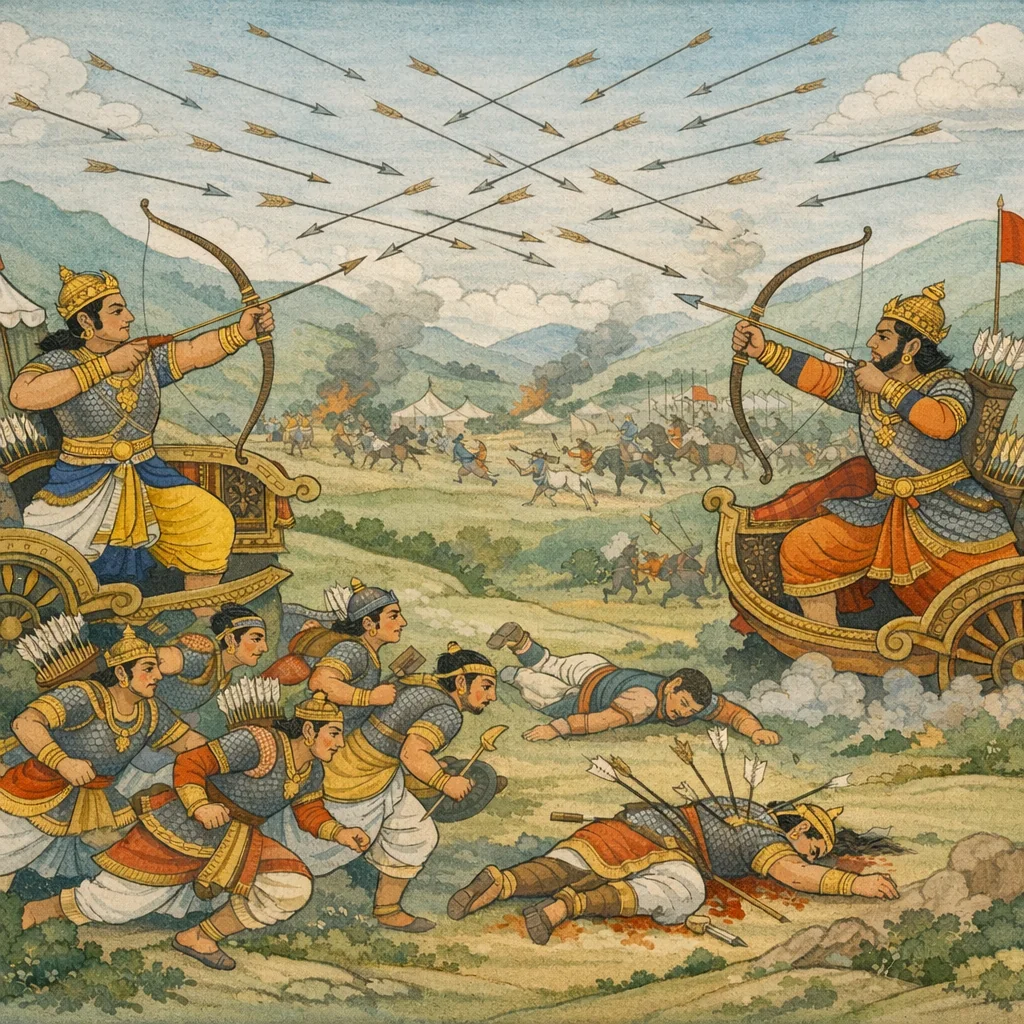
Chapter Arc: संजय धृतराष्ट्र को बताता है कि रणभूमि में भीमसेन का क्रोध पुराने वैर की स्मृति से और प्रज्वलित हो उठा—और उसी क्षण कर्ण के मन में अपराध-बोध की छाया उतर आई, क्योंकि धृतराष्ट्र के पुत्र भीम के हाथों प्रत्यक्ष गिर रहे थे। → भीमसेन कर्ण पर तीक्ष्ण बाण-वर्षा करता है; कर्ण भी प्रत्युत्तर देता है, पर भीम का वेग रुकता नहीं। कर्ण के कवच और दाहिनी भुजा तक को भेदते हुए बाण ऐसे धँसते हैं जैसे सर्प बाँबी में घुसें। इसी बीच धृतराष्ट्र के सात पुत्र (चित्र, उपचित्र, चित्राक्ष, चारुचित्र, शरासन, चित्रायुध, चित्रवर्मा) कर्ण की रक्षा हेतु दौड़ते हैं, जिससे युद्ध का घेरा और घना हो जाता है। → भीमसेन उन सातों राजकुमारों को आते ही एक-एक कर बाणों से धराशायी कर देता है; साथ ही सहस्रों शरों से कर्ण को ढँककर उसे विवश-सा कर देता है—कर्ण का पलायन/पीछे हटना और धृतराष्ट्र-पुत्रों का एक साथ पतन अध्याय का शिखर बनता है। → रणभूमि में भीम का पराक्रम स्थापित होता है: कर्ण की रक्षा-व्यवस्था टूटती है, धृतराष्ट्र के सात पुत्र मारे जाते हैं, और कौरव पक्ष पर भय व शोक की लहर दौड़ती है। कर्ण का अपराध-बोध और असहायता इस परिणाम को और तीखा कर देती है। → कौरव सेना कर्ण के रथ की रक्षा के लिए चारों ओर से पुकारती और जुटती है—अब प्रश्न यह है कि कर्ण फिर कैसे टिकेगा, और भीम का यह उग्र प्रवाह आगे किस पर टूटेगा।
Shlokas
Verse 1
ऑपन-माजल बछ। जि षट्त्रिशर्दाधकशततमो< ध्याय: भीमसेन और कर्णका युद्ध, कर्णका पलायन, धृतराष्ट्रके सात पुत्रोंका वध तथा भीमका पराक्रम संजय उवाच तवात्मजांस्तु पतितान् दृष्टवा कर्ण: प्रतापवान् । क्रोधेन महता5<विष्टो निर्विण्णो5भूत् स जीवितात्,संजय कहते हैं--राजन्! आपके पुत्रोंको रणभूमिमें गिरा हुआ देख प्रतापी कर्ण अत्यन्त कुपित हो अपने जीवनसे विरक्त हो उठा
Sanjaya said: “O King, seeing your sons fallen on the battlefield, the mighty Karna—seized by overwhelming wrath—became disgusted with life itself.”
Verse 2
आगस्कृतमिवात्मानं मेने चाधिरथिस्तदा । यत्प्रत्यक्ष॑ं तव सुता भीमेन निहता रणे,उस समय अधिरथपुत्र कर्ण अपने-आपको अपराधी-सा मानने लगा; क्योंकि भीमसेनने उसकी आँखोंके सामने रणभूमिमें आपके पुत्रोंको मार डाला था
Sanjaya said: “Then Adhirathi (Karna) regarded himself as though guilty, for right before his eyes your sons had been slain in battle by Bhimasena.”
Verse 3
भीमसेनस्तत: क्रुद्ध: कर्णस्य निशितान् शरान् | निचखान स सम्भ्रान्त: पूर्ववैरमनुस्मरन्,तदनन्तर पहलेके वैरका बारंबार स्मरण करके कुपित हुए भीमसेनने कर्णके शरीरमें बड़े वेगसे अपने पैने बाण धँँसा दिये
Sañjaya said: Then Bhīmasena, inflamed with anger and again and again recalling the enmity of former days, in the turmoil of battle drove his sharp arrows with great force into Karṇa’s body.
Verse 4
स भीम॑ पज्चभिर्विद्ध्वा राधेय: प्रहसन्निव । पुनर्विव्याध सप्तत्या स्वर्णपुड्खै: शिलाशितै:,तब राधानन्दन कर्णने हँसते हुए-से पाँच बाण मारकर भीमसेनको घायल कर दिया। फिर शानपर चढ़ाकर तेज किये हुए सुवर्णमय पंखवाले सत्तर बाणोंद्वारा उन्हें गहरी चोट पहुँचायी
Sañjaya said: Karṇa, son of Rādhā, as though laughing, first pierced Bhīma with five arrows. Then he struck him again with seventy arrows—gold-feathered and honed upon stone—inflicting deep wounds.
Verse 5
अविचिन्त्याथ तान् बाणान् कर्णेनास्तान्वृकोदर: । रणे विव्याध राधेयं शतेनानतपर्वणाम्,कर्णके चलाये हुए उन बाणोंकी कुछ भी परवा न करके भीमसेनने रणभूमिमें झुकी हुई गाँठवाले सौ बाणोंद्वारा राधापुत्रको घायल कर दिया
Sañjaya said: Disregarding the arrows shot by Karṇa, Vṛkodara (Bhīma) in the thick of battle pierced Rādheya (Karṇa) with a hundred arrows whose joints were bent.
Verse 6
पुनश्न विशिखैस्ती&णैर्विंद्ध्वा मर्मसु पठचभि: । धनुश्चिच्छेद भल्लेन सूतपुत्रस्य मारिष,माननीय नरेश! फिर पाँच तीखे बाणोंद्वारा सूतपुत्रके मर्मस्थानोंमें चोट पहुँचाकर भीमसेनने एक भल्लद्वारा उसका धनुष काट दिया
Sañjaya said: Then again, having pierced the Sūta’s son with five sharp, swift arrows at his vital points, Bhīmasena cut down his bow with a broad-headed shaft, O venerable king.
Verse 7
अथान्यद् धनुरादाय कर्णो भारत दुर्मना: । इषुभिश्छादयामास भीमसेन॑ परंतप:,भारत! तब शत्रुओंको संताप देनेवाले कर्णने खिन्न होकर दूसरा धनुष हाथमें ले भीमसेनको अपने बाणोंद्वारा आच्छादित कर दिया
Sañjaya said: Then Karṇa, O Bhārata, distressed in mind, took up another bow and, the scorcher of foes, covered Bhīmasena with a dense shower of arrows.
Verse 8
तस्य भीमो हयान् हत्वा विनिहत्य च सारथिम् । प्रजहास महाहासं कृते प्रतिकृते पुन:,भीमसेनने उसके घोड़ों और सारथिको मारकर उसके प्रहारका बदला चुका लेनेके पश्चात् पुनः बड़े जोरसे अट्टहास किया
Sañjaya said: Bhīma, having slain his horses and also killed his charioteer, laughed aloud once more with a mighty roar—having repaid blow for blow.
Verse 9
इषुश्नि: कार्मुकं चास्य चकर्त पुरुषर्षभ: । तत् पपात महाराज स्वार्णपृष्ठं महास्वनम्,महाराज! पुरुषशिरोमणि भीमने अपने बाणोंद्वारा कर्णका धनुष भी फिर काट दिया। स्वर्णमय पृष्ठभागसे युक्त और गम्भीर टंकार करनेवाला उसका वह धनुष पृथ्वीपर गिर पड़ा
Sañjaya said: The bull among men, Bhīma, with his arrows cut down Karṇa’s bow as well. O King, that bow—gold-backed and resonant with a deep twang—fell to the earth.
Verse 10
अवारोहदू रथात् तस्मादथ कर्णो महारथ: । गदां गृहीत्वा समरे भीमाय प्राहिणोद् रुषा,महारथी कर्ण उस रथसे उतर गया और गदा लेकर उसने समरभूमिमें भीमसेनपर रोषपूर्वक चला दी
Sañjaya said: Then Karṇa, that great chariot-warrior, descended from his chariot. Seizing a mace on the battlefield, he hurled it in wrath at Bhīmasena.
Verse 11
तामापतन्तीमालक्ष्य भीमसेनो महागदाम् । शरैरवारयद् राजन् सर्वसैन्यस्य पश्यत:,राजन्! उस विशाल गदाको अपने ऊपर आती देख भीमसेनने सब सेनाओंके देखते- देखते बाणोंद्वारा उसका निवारण कर दिया
Sañjaya said: Seeing that massive mace hurtling toward him, Bhīmasena checked it with a volley of arrows, O King, in full view of the entire army.
Verse 12
ततो बाणसहस्राणि प्रेषयामास पाण्डव: । सूतपुत्रवधाकाड्क्षी त्वरमाण: पराक्रमी
Sañjaya said: Then the Pāṇḍava hero, eager to bring about the death of the charioteer’s son (Karna), swiftly and with great valor loosed thousands of arrows.
Verse 13
तब सूतपुत्रके वधकी इच्छावाले पराक्रमी पाण्डुपुत्र भीमसेनने बड़ी उतावलीके साथ एक हजार बाण चलाये ।। तानिषूनिषुभि: कर्णो वारयित्वा महामृथे । कवचं भीमसेनस्य पाटयामास सायकै:,परंतु कर्णने उस महासमरमें अपने बाणोंद्वारा उन सभी बाणोंका निवारण करके भीमसेनके कवचको बाणोंसे छिन्न-भिन्न कर दिया
Sañjaya said: Then Bhīmasena, the valiant son of Pāṇḍu, burning with the desire to slay Karṇa, loosed a thousand arrows in great haste. In that mighty clash, Karṇa checked those shafts with his own, and with his missiles tore Bhīma’s armor to pieces.
Verse 14
अथैनं पजञ्चविंशत्या नाराचानां समार्पयत् । पश्यतां सर्वसैन्यानां तदद्भुतमिवाभवत्,तदनन्तर उसने सब सेनाओंके देखते-देखते भीमसेनपर पचीस नाराचोंका प्रहार किया। वह अद्भुत-सी बात हुई
Sañjaya said: Then, before the eyes of all the armies, he struck Bhīmasena with twenty-five nārāca arrows. To everyone watching, it seemed like something wondrous—an astonishing feat amid the grim momentum of battle.
Verse 15
ततो भीमो महाबाहुर्नवभिर्नतपर्वभि: । प्रेषयामास संक्रुद्ध: सूतपुत्रस्य मारिष,माननीय नरेश! तब अत्यन्त क्रोधमें भरे हुए महाबाहु भीमसेनने सूतपुत्रको झुकी हुई गाँठवाले नौ बाण मारे
Sañjaya said: Then Bhīma, the mighty-armed, inflamed with fierce anger, shot nine arrows with bent joints at the Sūta’s son (Karna), O venerable one.
Verse 16
ते तस्य कवचं भिन्त्वा तथा बाहुं च दक्षिणम् अभ्ययुर्धरणीं तीक्ष्णा वल्मीकमिव पन्नगा:,वे तीखे बाण कर्णके कवच तथा दाहिनी भुजाको विदीर्ण करके बाँबीमें घुसनेवाले सर्पोंके समान धरतीमें समा गये
Sañjaya said: Having pierced his armour and also his right arm, those sharp arrows plunged into the earth—like serpents slipping into an anthill.
Verse 17
स च्छाद्यमानो बाणौघैर्भीमसेन धनुश्च्युतैः । पुनरेवाभवत् कर्णो भीमसेनात् पराड्मुख:,भीमसेनके धनुषसे छूटे हुए बाणसमूहोंसे आच्छादित होकर कर्ण पुनः भीमसेनसे विमुख हो गया (उन्हें पीठ दिखाकर भाग चला)
Sañjaya said: Overwhelmed and covered by volleys of arrows released from Bhīmasena’s bow, Karṇa once again turned away from Bhīmasena—showing his back and withdrawing from the fight.
Verse 18
त॑ पराड्मुखमालोक्य पदातिं सूतनन्दनम् | कौन्तेयशरसंछन्न॑ राजा दुर्योधनो<ब्रवीत्,सूतपुत्र कर्णको युद्धसे विमुख, पैदल तथा भीमसेनके बाणोंसे आच्छादित देखकर राजा दुर्योधन अपने सैनिकोंसे बोला--
Sañjaya said: Seeing Karṇa, the charioteer’s son, turned away and fighting on foot, his body covered by the arrows of Kuntī’s son, King Duryodhana addressed him. In the war’s moral strain, the king’s words carried both urgency and reproach, calling the famed warrior back to steadfastness and duty amid the chaos of retreat and wounds.
Verse 19
त्वरध्वं सर्वतो यत्ता राधेयस्य रथं प्रति । ततस्तव सुता राजन श्र॒त्वा क्षातुर्वचो द्रुतम्
Sañjaya said: “Hurry—press forward from every side toward the chariot of Rādheya (Karṇa)!” Then, O king, your sons, swiftly hearing the charioteer’s urgent words, moved to act at once.
Verse 20
चित्रोपचित्रश्षित्राक्ष क्षारुचित्र: शरासन:
Sañjaya said: “He was adorned in variegated and splendid fashion; his eyes were striking; and his bow—his very weapon of war—was itself remarkable and richly distinguished.” In the epic’s ethical frame, the verse shows how martial prowess and outward brilliance are still noticed and recounted, even as the war’s deeper moral cost continues to unfold.
Verse 21
तानापतत एवाशु भीमसेनो महारथ:,महारथी भीमसेनने उनके आते ही शीघ्रतापूर्वक एक-एक बाण मारकर आपके सभी पुत्रोंको युद्धमें धराशायी कर दिया। वे मारे जाकर आँधीके उखाड़े हुए वृक्षोंके समान पृथ्वीपर गिर पड़े
Sañjaya said: As they rushed in, Bhīmasena—the great chariot-warrior—swiftly struck down all your sons in battle, felling each with a single arrow. Slain, they collapsed upon the earth like trees torn up by a violent storm—an image of war’s ruthless finality and the tragic cost of kṣatriya conflict.
Verse 22
एकैकेन शरेणाजौ पातयामास ते सुतान् । ते हता न््यपतन् भूमौ वातरुग्णा इव द्रुमा:,महारथी भीमसेनने उनके आते ही शीघ्रतापूर्वक एक-एक बाण मारकर आपके सभी पुत्रोंको युद्धमें धराशायी कर दिया। वे मारे जाकर आँधीके उखाड़े हुए वृक्षोंके समान पृथ्वीपर गिर पड़े
Sañjaya said: In the thick of battle, Bhīmasena swiftly struck down your sons, felling each one with a single arrow. Slain, they collapsed upon the earth like trees torn up by a violent wind—an image that underscores the ruthless momentum of war and the tragic fragility of life when dharma has already been eclipsed by vengeance and slaughter.
Verse 23
दृष्टवा विनिहतान् पुत्रांस्तव राजनमहारथान् । अश्रुपूर्णमुख: कर्ण क्षत्तु: सस्मार तद् वच:,राजन्! आपके महारथी पुत्रोंको इस प्रकार मारा गया देख कर्णके मुखपर आँसुओंकी धारा बह चली। उस समय उसे विदुरजीकी कही हुई बात याद आयी
Sañjaya said: O King, seeing your sons—those great chariot-warriors—slain in this manner, Karṇa’s face filled with tears. At that moment he recalled the words earlier spoken by Vidura, the royal counsellor, as if a warning of dharma once ignored had returned with the force of fate amid the ruin of war.
Verse 24
रथं चान्यं समास्थाय विधिवत् कल्पितं पुनः । अभ्ययात् पाण्डवं युद्धे त्वरमाण: पराक्रमी,फिर उस पराक्रमी वीरने विधिपूर्वक सजाये हुए दूसरे रथपर बैठकर युद्धमें शीघ्रतापूर्वक पाण्डुपुत्र भीमसेनपर धावा किया
Sañjaya said: Mounting another chariot, newly and properly prepared according to rule, that valiant warrior hastened into battle and charged toward the Pāṇḍava—Bhīmasena—driven by urgency and martial resolve.
Verse 25
तावन्योन्यं शरैर्भित्त्वा स्वर्णपुड्खै: शिलाशितै: । व्यभ्राजेतां यथा मेघौ संस्यूतौ सूर्यरश्मिभि:,वे दोनों एक-दूसरेको शिलापर तेज किये हुए सुवर्णपंखयुक्त बाणोंद्वारा क्षत-विक्षत करके सूर्यकी किरणोंमें पिरोये हुए बादलोंके समान सुशोभित होने लगे
Sañjaya said: Having pierced and torn one another with arrows whose golden fletchings gleamed and whose points were whetted on stone, the two warriors shone forth—like clouds threaded through with the sun’s rays.
Verse 26
षट्त्रिंशद्धिस्ततो भल्लैरनिशितैस्तिग्मतेजनै: । व्यधमत् कवचं क्रुद्धः सूतपुत्रस्य पाण्डव:,तत्पश्चात् क्रोधमें भरे हुए भीमसेनने प्रचण्ड तेजवाले छत्तीस तीखे भल्लोंका प्रहार करके सूतपुत्रके कवचकी धज्जियाँ उड़ा दीं
Sañjaya said: Then the Pāṇḍava, inflamed with wrath, struck the charioteer’s son with thirty-six razor-sharp bhalla arrows, blazing with keen force, and tore his armour to shreds.
Verse 27
सूतपुत्रो5पि कौन्तेयं शरै: संनतपर्वभि: । पज्चाशता महाबाहुर्विव्याध भरतर्षभ,भरतश्रेष्ठ। फिर महाबाहु सूतपुत्रने भी कुन्तीकुमार भीमसेनको झुकी हुई गाँठवाले पचास बाणोंसे बींध डाला
Sañjaya said: Then the charioteer’s son (Karṇa) too, O best of the Bharatas, the mighty-armed one, pierced Bhīma—the son of Kuntī—with fifty arrows whose joints were bent down. Thus, in the relentless code of battle, Karṇa answered force with force, intensifying the duel without yielding ground.
Verse 28
रक्तचन्दनदिग्धाड़ौ शरै: कृतमहाव्रणौ । शोणिताक्तौ व्यराजेतां चन्द्रसूर्याविवोदितो,उन दोनोंने अपने शरीरमें लाल चन्दन लगा रखे थे। इसके सिवा उनके शरीरमें बाणोंके आघातसे बड़े-बड़े घाव हो गये थे। इस प्रकार खूनसे लथपथ हुए वे दोनों योद्धा उदयकालीन सूर्य और चन्द्रमाके समान शोभा पा रहे थे
Sañjaya said: Smeared with red sandal paste, their bodies torn by arrows into great wounds and drenched in blood, those two warriors shone—like the moon and the sun rising together.
Verse 29
तौ शोणितोक्षितैगत्रि: शरैश्छिन्नतनुच्छदौ । कर्णभीमौ व्यराजेतां निर्मुक्ताविव पन्नगौं,बाणोंद्वारा उन दोनोंके कवच कट गये थे और सारे अंग रक्तसे भींग गये थे। उस दशामें वे कर्ण और भीमसेन केंचुल छोड़कर निकले हुए दो सर्पोके समान शोभा पाने लगे। जैसे दो व्याप्र अपनी दाढ़ोंसे एक-दूसरेपर चोट करते हैं, उसी प्रकार वे दोनों पुरुषव्याप्र योद्धा परस्पर प्रहार कर रहे थे। वे दोनों वीर दो मेघोंके समान बाणधाराकी वर्षा कर रहे थे
Sañjaya said: With their limbs drenched in blood and their armour cut away by arrows, Karṇa and Bhīmasena shone forth like two serpents that have just cast off their slough.
Verse 30
व्याप्राविव नरव्याप्रौ दृष्टाभिरितरेतरम् । शरधारासूजौ वीरौ मेघाविव ववर्षतु:,बाणोंद्वारा उन दोनोंके कवच कट गये थे और सारे अंग रक्तसे भींग गये थे। उस दशामें वे कर्ण और भीमसेन केंचुल छोड़कर निकले हुए दो सर्पोके समान शोभा पाने लगे। जैसे दो व्याप्र अपनी दाढ़ोंसे एक-दूसरेपर चोट करते हैं, उसी प्रकार वे दोनों पुरुषव्याप्र योद्धा परस्पर प्रहार कर रहे थे। वे दोनों वीर दो मेघोंके समान बाणधाराकी वर्षा कर रहे थे
Sañjaya said: Like two tigers, those two tiger-like warriors, glaring at one another, struck back and forth. Both heroes, pouring forth streams of arrows, rained them down like two storm-clouds.
Verse 31
वारणाविव चान्योन्यं विषाणाभ्यामरिंदमौ । निर्भिन्दन्तौ स्वगात्राणि सायकैश्लारु रेजतु:
Sañjaya said: Like two mighty elephants, those two foe-subduers closed upon each other, as if goring with horns; and as they pierced each other’s limbs with volleys of arrows, they shone—terrible and splendid—amid the clash.
Verse 32
जैसे दो हाथी अपने दाँतोंसे एक-दूसरेपर आघात करते हैं, उसी प्रकार वे शत्रुदमन वीर अपने बाणोंद्वारा एक-दूसरेके शरीरोंको विदीर्ण करते हुए सुशोभित हो रहे थे ।। नादयन्तौ प्रहर्षन्ती विक्रीडन्तो परस्परम् । मण्डलानि विकुर्वाणौ रथाभ्यां रथसत्तमौ,रथियोंमें श्रेष्ठ भीम और कर्ण सिंहनाद करते, अत्यन्त हर्षसे उत्फुल्ल हो उठते और आपसमें खेल-सा करते हुए रथोंद्वारा मण्डलगतिसे विचरते थे
Sañjaya said: Like two elephants striking one another with their tusks, those two enemy-subduing heroes shone as they tore each other’s bodies with volleys of arrows. Roaring aloud, exultant, and as if sporting with one another, the foremost of chariot-warriors—Bhīma and Karṇa—wheeled their chariots in circling maneuvers.
Verse 33
वृषाविवाथ नर्दन्तौ बलिनौ वासितान्तरे | सिंहाविव पराक्रान्तौ नरसिंहौ महाबलौ,जैसे गायके लिये दो बलवान् साँड़ गरजते हुए लड़ जाते हैं, उसी प्रकार वे सिंहके समान पराक्रमी महान् बलशाली पुरुषसिंह कर्ण और भीम क्रोधसे लाल आँखें करके एक- दूसरेको देखते हुए महापराक्रमी इन्द्र और बलिके समान युद्ध कर रहे थे
Sañjaya said: “Then those two mighty warriors, roaring like powerful bulls amid their bellowing and charging like lions—lion-like men of great strength—faced one another in wrath. Like Indra and Bali contending in battle, Karṇa and Bhīma fought on, each measuring the other with fierce, reddened eyes, their valor inflamed by anger.”
Verse 34
परस्परं वीक्षमाणौ क्रोधसंरक्तलोचनौ । युयुधाते महावीर्यों शक्रवैरोचनी यथा,जैसे गायके लिये दो बलवान् साँड़ गरजते हुए लड़ जाते हैं, उसी प्रकार वे सिंहके समान पराक्रमी महान् बलशाली पुरुषसिंह कर्ण और भीम क्रोधसे लाल आँखें करके एक- दूसरेको देखते हुए महापराक्रमी इन्द्र और बलिके समान युद्ध कर रहे थे
Sañjaya said: Gazing at one another, their eyes reddened with wrath, the two mighty heroes fought on—like Śakra (Indra) and Virocana’s son (Bali) contending in battle. The verse underscores how anger intensifies the ferocity of war, turning heroic prowess into a near-cosmic clash, while the narrator frames the duel through a mythic comparison to convey its moral and emotional gravity.
Verse 35
ततो भीमो महाबाहुर्बाहुभ्यां विक्षिपन् धनु: । व्यराजत रणे राजन्सविद्युदिव तोयद:,राजन! उस रणक्षेत्रमें महाबाहु भीमसेन अपनी भुजाओंसे धनुषकी टंकार करते हुए बिजलीसहित मेघके समान शोभा पा रहे थे
Sañjaya said: Then Bhīma, the mighty-armed, brandishing and shaking his bow with his powerful arms, shone upon the battlefield, O King, like a rain-cloud lit with lightning—an image of overwhelming force and impending destruction amid the righteous yet tragic clash of kinsmen.
Verse 36
स नेमिघोषस्तनितश्चापविद्युच्छराम्बुभि: । भीमसेनमहामेघ: कर्णपर्वतमावृणोत्,रथके पहियोंकी घरघराहट जिसकी गम्भीर गर्जना थी और धनुष ही विद्युतके समान प्रकाशित होता था, भीमसेनरूपी उस महामेघने बाणरूपी जलकी वर्षसे कर्णरूपी पर्वतको ढक दिया
Sañjaya said: With the deep thunder of wheel-rims and the bow flashing like lightning, Bhīmasena—like a vast storm-cloud—poured a rain of arrows and completely covered Karṇa, who stood like a mountain. The image underscores how, in the fury of war, prowess and resolve can momentarily overwhelm even the mightiest, as if nature itself were unleashed.
Verse 37
तत:ः शरसहस्रेण सम्यगस्तेन भारत । पाण्डवो व्यकिरत् कर्ण भीमो भीमपराक्रम:,भरतनन्दन! तदनन्तर अच्छी तरह चलाये हुए सहस्रों बाणोंसे भयंकर पराक्रमी पाण्डुपुत्र भीमने कर्णको आच्छादित कर दिया
Sañjaya said: Then, O Bhārata, with a thousand arrows, expertly discharged, Bhīma—the Pāṇḍava of dreadful prowess—showered and completely covered Karṇa. The scene underscores the relentless escalation of battle, where martial skill and resolve are tested amid the larger struggle over rightful order and kingship.
Verse 38
तत्रापश्यंस्तव सुता भीमसेनस्य विक्रमम् । सुपुड्ख: कड़कवासोभिरययत् कर्ण छादयच्छरै:,आपके पुत्रोंने वहाँ भीमसेनका यह अद्भुत पराक्रम देखा कि उन्होंने कंकपत्रयुक्त सुन्दर पंखवाले बाणोंसे कर्णको आच्छादित कर दिया
Sañjaya said: There your sons beheld Bhīmasena’s astonishing prowess—how, with well-feathered arrows, he pressed forward and covered Karṇa on every side with a dense shower of shafts. The sight proclaimed the battle’s relentless momentum, where valor is proved not by boast, but by the power to advance while keeping martial discipline amid the tumult.
Verse 39
स नन्दयन् रणे पार्थ केशवं च यशस्विनम् । सात्यकिं चक्ररक्षी च भीम: कर्णमयोधयत्,भीमसेन रणक्षेत्रमें कुन्तीकुमार अर्जुन, यशस्वी श्रीकृष्ण, सात्यकि तथा दोनों चक्ररक्षक युधामन्यु एवं उत्तमौजाको आनन्दित करते हुए कर्णके साथ युद्ध कर रहे थे
Sañjaya said: In the thick of battle Bhīma fought Karṇa, gladdening Pārtha (Arjuna), the illustrious Keśava (Kṛṣṇa), Sātyaki, and the chariot-guards by his valor and steadfastness on the field. It shows how a warrior’s courage can hearten allies and sustain morale under the war’s ethical strain.
Verse 40
विक्रमं भुजयोर्वीर्य धैर्य च विदितात्मन: । पुत्रास्तव महाराज दृष्टवा विमनसो5भवन्,महाराज! सुविख्यात भीमसेनके पराक्रम, बाहुबल और धैर्यको देखकर आपके सभी पुत्र उदास हो गये
Sañjaya said: O great king, seeing the famed Bhīmasena—known for prowess, arm-strength, valor, and steadfast courage—your sons grew disheartened. The sight of such disciplined power shook their confidence amid the war’s moral and physical pressures.
Verse 135
इस प्रकार श्रीमहाभारत द्रोणपर्वके अन्तर्गत जयद्रथवधपरव्वमें भीमसेनका पराक्रमविषयक एक सौ पैतीसवाँ अध्याय पूरा हुआ
Sañjaya said: Thus ends the one hundred and thirty-fifth chapter of the Śrī Mahābhārata’s Droṇa Parva, within the Jayadratha-vadha section, describing Bhīmasena’s valor. This closing formula marks the narrative’s onward course in the war-book, holding heroic effort forth as a moral force in the struggle for a just cause.
Verse 136
इति श्रीमहाभारते द्रोणपर्वणि जयद्रथवधपर्वणि भीमयुद्धे षट्त्रिंयधिकशततमो<्ध्याय:
Thus, in the Śrī Mahābhārata, within the Droṇa Parva—specifically in the Jayadratha-vadha section—concludes the one hundred and thirty-sixth chapter, concerning the battle involving Bhīma. This colophon closes a narrative unit and sets the episode within the wider ethical frame of war: vows, retaliation, and the mounting consequences of violence on the battlefield.
Verse 193
अभ्ययु: पाण्डवं युद्धे विसृजन्त: शिलीमुखान् । “वीरो! सब ओरसे राधानन्दन कर्णके रथकी ओर शीघ्र आओ और उसकी रक्षाका प्रबन्ध करो।' राजन! तब भाईकी यह बात सुनकर आपके पुत्र शीघ्रतापूर्वक युद्धमें पाण्डुपुत्र भीमपर बाणोंकी वर्षा करते हुए आ पहुँचे
Sañjaya said: In the battle the warriors surged toward the Pāṇḍava, loosing sharp arrows. “Hero! Come quickly from every side to the chariot of Karṇa, the son of Rādhā, and arrange his protection.” O King, hearing these words of their brother, your sons hastened into the fight and, showering arrows upon Bhīma, the son of Pāṇḍu, arrived at the scene.
Verse 203
चित्रायुथश्षित्रवर्मा समरे चित्रयोधिन: । उनके नाम इस प्रकार हैं--चित्र, उपचित्र, चित्राक्ष, चारुचित्र, शरासन, चित्रायुध और चित्रवर्मा। ये सब-के-सब समरभूमिमें विचित्र रीतिसे युद्ध करनेवाले थे
Sañjaya said: Citrāyudha and Citravarmā were warriors of varied and striking methods in battle. Their names were: Citra, Upacitra, Citrākṣa, Cārucitra, Śarāsana, Citrāyudha, and Citravarmā. All of them fought on the battlefield with unusual, artful tactics.
Frequently Asked Questions
The episode highlights action under impaired perception: when recognition fails, the risk of misdirected harm rises, pressing the duty to fight against the duty to discriminate responsibly—resolved pragmatically through illumination and re-formation.
Order must be re-established when conditions degrade: leadership restores clarity through logistics, standardized signals, and reconstituted formations, illustrating that ethical and strategic agency depends on reliable perception and coordination.
No explicit phalaśruti is presented in this chapter’s cited passage; its significance is primarily narrative and thematic, emphasizing how environmental factors (darkness/dust) reshape conduct and accountability within the broader war framework.