Adhyaya 102
धर्मराजस्य चिन्ता, भीमसेनप्रेषणम्, द्रोणानीकप्रवेशप्रयत्नः (Yudhiṣṭhira’s Anxiety and the Dispatch of Bhīma; Attempted Breakthrough into Droṇa’s Formation)
Upa-parva: Bhīmasena–Droṇa-pratisaṃyoga (Strategic engagement of Bhīma with Droṇa’s array)
Saṃjaya reports that as formations churn and the battle grows increasingly severe, Yudhiṣṭhira cannot locate Arjuna or Kṛṣṇa and also does not see Sātyaki, producing a crisis of situational awareness. Weighing the ethical risk of neglecting Sātyaki against the urgent need to reestablish contact with Arjuna’s movement, Yudhiṣṭhira resolves to send Bhīma along their difficult route while ensuring his own protection. He approaches Bhīma with visible distress, interprets the sound of Pāñcajanya as a sign of intense combat around Arjuna, and frames his fear as both personal grief and operational concern. Bhīma accepts the command, coordinates with Dhṛṣṭadyumna regarding the king’s defense, and departs in martial readiness. The chapter then shifts to Bhīma’s advance: Kaurava warriors attempt to encircle and delay him; Bhīma counters, breaks through units (including elephant contingents), and engages Droṇa directly. Droṇa blocks Bhīma’s entry, prompting Bhīma’s forceful reply and escalation. Bhīma damages Droṇa’s chariot, disperses opposing fighters, defeats multiple named adversaries, routs the surrounding rathin forces, and resumes his push toward Droṇa’s sector, marking a tactical breakthrough attempt amid a broader effort to reach Arjuna and Sātyaki.
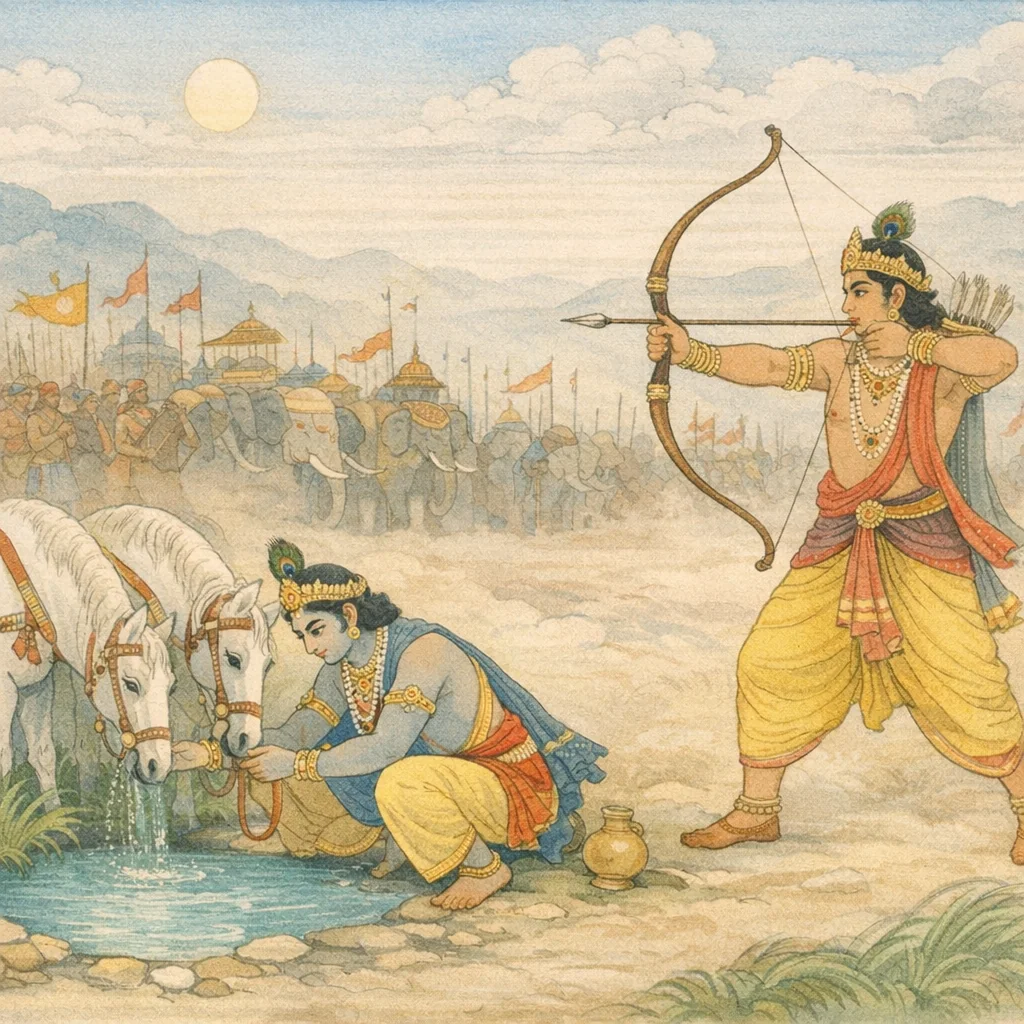
Chapter Arc: संजय धृतराष्ट्र से कहता है—रणभूमि में एक अद्भुत, पहले कभी न देखा गया दृश्य घटा: अर्जुन के रथ के लिए जल का प्राकट्य, और कृष्ण का रथ से उतरकर घोड़ों को बाणों की पीड़ा से छुड़ाना। → चारों ओर रथ-समूह, हाथी-घोड़े और शस्त्र-वर्षा अर्जुन पर टूट पड़ते हैं; धूल इतनी उड़ती है कि सूर्य तक ढँक जाता है और घायल योद्धा कृष्ण-अर्जुन को ठीक से देख भी नहीं पाते। फिर भी अर्जुन शत्रु-प्रहारों को ऐसे ‘ग्रस’ लेता है जैसे समुद्र नदियों को। इस असंभव-सा धैर्य और गति देखकर सिद्ध-चारण और सैनिकों में साधुवाद उठता है—पर कौरव पक्ष में विस्मय के साथ भय भी बढ़ता है कि जयद्रथ तक पहुँचने से उन्हें कौन रोक पाएगा। → कृष्ण जलाशय/जल-प्रबंध के सहारे घोड़ों को पानी पिलाते, स्नान कराते, चारा-दाना खिलाते और फिर उसी क्षण उन्हें रथ में जोतकर रथ को आगे बढ़ा देते हैं—यह ‘रण के बीच विश्राम’ नहीं, बल्कि विजय-यात्रा का निर्णायक पुनर्संयोजन है; कौरव सैनिक देखते-देखते कहते हैं कि ये दोनों धनुर्धारियों की आँखों के सामने ही जयद्रथ की ओर बढ़ रहे हैं और हमारी सेना को रौंदते जा रहे हैं। → अध्याय का फल यह बनता है कि पाण्डव-पक्ष की गति और मनोबल स्थिर हो जाता है—अर्जुन का रथ फिर से पूर्ण वेग में है; कौरव सेना में ‘सैन्य-विस्मय’ फैलता है, और युद्ध का प्रवाह जयद्रथ-वध की ओर और अधिक अनिवार्य प्रतीत होने लगता है। → धूल-आवरण और रण-कोलाहल के बीच कृष्ण-अर्जुन का रथ जयद्रथ की दिशा में बढ़ चुका है—अब प्रश्न यह है कि क्या कौरव-व्यूह इस वेग को रोक पाएगा, या जयद्रथ का अंत निकट है?
Shlokas
Verse 1
इस प्रकार श्रीमहाभारत द्रोणपर्वके अन्तर्गत जयद्रथवधपर्वमें विन्द और अनुविन्दका वध तथा अर्जुनके द्वार जलाशयका निर्माणविषयक निन््यानबेवाँ अध्याय पूरा हुआ ॥/ ९९ ॥/ (दाक्षिणात्य अधिक पाठके १६३ “लोक मिलाकर कुल ६४ ३ “लोक हैं) #द१०3८5>> | बी है शततमो< ध्याय: श्रीकृष्णके द्वारा अश्वपरिचर्या तथा खा-पीकर हृष्ट-पुष्ट हुए अश्वोंद्वारा अर्जुनका पुन: शत्रुसेनापर आक्रमण करते हुए जयद्रथकी ओर बढ़ना संजय उवाच सलिले जनिते तस्मिन् कौन्तेयेन महात्मना । निस्तारिते द्विषत्सैन्ये कृते च शरवेश्मनि,संजय कहते हैं--राजन्! जब महात्मा कुन्तीकुमारने वह जल उत्पन्न कर दिया, शत्रुओंकी सेनाको आगे बढ़नेसे रोक दिया और बाणोंका घर बना दिया, तब महातेजस्वी भगवान् श्रीकृष्णने तुरंत ही रथसे उतरकर कंकपत्रयुक्त बाणोंसे क्षत-विक्षत हुए घोड़ोंको खोल दिया
Sanjaya said: “O King, when the great-souled son of Kunti had brought forth water, checked the advance of the hostile army, and fashioned a protective ‘house’ of arrows, then the mighty Lord Krishna at once descended from the chariot and unyoked the horses that had been torn and wounded by barbed shafts.”
Verse 2
वासुदेवो रथात् तूर्णमवतीर्य महाद्युति: । मोचयामास तुरगान् विनुन्नान् कड़कपत्रिभि:,संजय कहते हैं--राजन्! जब महात्मा कुन्तीकुमारने वह जल उत्पन्न कर दिया, शत्रुओंकी सेनाको आगे बढ़नेसे रोक दिया और बाणोंका घर बना दिया, तब महातेजस्वी भगवान् श्रीकृष्णने तुरंत ही रथसे उतरकर कंकपत्रयुक्त बाणोंसे क्षत-विक्षत हुए घोड़ोंको खोल दिया
Sanjaya said: “O King, then Vāsudeva—radiant with great splendor—swiftly descended from the chariot and released the horses, which had been grievously wounded by arrows feathered with heron-plumes.”
Verse 3
अदृष्टपूर्व तद् दृष्टवा साधुवादों महानभूत् । सिद्धचारणसंघानां सैनिकानां च सर्वश:,यह अदृष्टपूर्व कार्य देखकर सिद्ध, चारण तथा सैनिकोंके मुखसे निकला हुआ महान् साधुवाद सब ओर गूँज उठा
Sanjaya said: “Seeing that unprecedented deed, a great cry of acclaim—‘Well done!’—arose on every side, voiced by the assembled Siddhas and Cāraṇas as well as by the soldiers throughout the host.”
Verse 4
पदातिन तु कौन्तेयं युध्यमानं महारथा: । नाशवनुवन् वारयितुं तदद्भुतमिवाभवत्,पैदल युद्ध करते हुए कुन्तीकुमार अर्जुनको समस्त महारथी मिलकर भी न रोक सके; यह अद्भुत-सी बात हुई
Sanjaya said: “Even when Arjuna, the son of Kuntī, fought on foot, the assembled great chariot-warriors could not check him. It seemed almost a marvel.”
Verse 5
आपतत्सु रथौधेषु प्रभूतगजवाजिषु । नासम्भ्रमत् तदा पार्थस्तदस्य पुरुषानति,रथियोंके समूह तथा बहुत-से हाथी-घोड़े सब ओरसे उनपर टूट पड़े थे, तो भी उस समय कुन्तीकुमार अर्जुनको तनिक भी घबराहट नहीं हुई। उनका यह धैर्य और साहस समस्त पुरुषोंसे बढ़-चढ़कर था
Sanjaya said: “When dense masses of chariots—along with many elephants and horses—came rushing in from all sides, Pārtha (Arjuna) did not lose his composure even then. Such steadiness and valor in him surpassed that of other men.”
Verse 6
व्यसृजन्त शरौघांस्ते पाण्डवं प्रति पार्थिवा: । न चाव्यथत धर्मात्मा वासवि: परवीरहा
Sañjaya said: Those kings loosed torrents of arrows against the Pāṇḍava. Yet the righteous-souled hero—Indra’s son, the slayer of enemy-champions—did not waver or falter, standing firm amid the assault.
Verse 7
सम्पूर्ण भूपाल पाण्डुनन्दन अर्जुनपर बाणसमूहोंकी वर्षा कर रहे थे, तो भी शत्रुवीरोंका संहार करनेवाले इन्द्रकुमार धर्मात्मा पार्थ तनिक भी व्यथित नहीं हुए ।। स तानि शरजालानि गदा: प्रासांश्व वीर्यवान् आगतानग्रसत् पार्थ: सरित: सागरो यथा
Sañjaya said: Though the assembled kings poured down a rain of arrows upon Arjuna, the son of Pāṇḍu, the righteous Pārtha—Indra’s son, a destroyer of hostile champions—was not in the least shaken. That mighty warrior swallowed up those incoming nets of arrows, and the maces and spears as well, just as the ocean receives the rivers.
Verse 8
उन पराक्रमी कुन्तीकुमारने शत्रुओंके उन बाणसमूहों, गदाओं और प्रासोंको अपने पास आनेपर उसी प्रकार ग्रस लिया, जैसे समुद्र सरिताओंको अपनेमें मिला लेता है ।। अस्त्रवेगेन महता पार्थो बाहुबलेन च । सर्वेषां पार्थिवेन्द्राणामग्रसत् तान् शरोत्तमान्,अर्जुनने अस्त्रोंके महान् वेग और बाहुबलसे समस्त राजाधिराजोंके उत्तमोत्तम बाणोंको नष्ट कर दिया
Sanjaya said: With the tremendous impetus of his weapons and the strength of his arms, Partha (Arjuna) swallowed up—i.e., completely neutralized—the finest arrows launched by all those royal lords. As the ocean receives the rivers into itself, so did that mighty son of Kunti absorb the enemy’s volleys of arrows, maces, and spears as they came, turning their assault into futility through superior skill and power.
Verse 9
तत् तु पार्थस्य विक्रान्तं वासुदेवस्थ चो भयो: । अपूजयन् महाराज कौरवा महदद्भुतम्,महाराज! अर्जुन और भगवान् श्रीकृष्ण दोनोंके उस अत्यन्त अद्भुत पराक्रमकी समस्त कौरवोंने भूरि-भूरि प्रशंसा की
Sañjaya said: “But, O King, the Kauravas openly acclaimed that truly wondrous display of valor shown by both Pārtha (Arjuna) and Vāsudeva (Kṛṣṇa).”
Verse 10
किमद्धुततमं लोके भविताप्यथवा हाभूत् । यदश्वान् पार्थगोविन्दौ मोचयामासतू रणे,संसारमें इससे बढ़कर और कोई अत्यन्त अद्भुत घटना क्या होगी अथवा हुई होगी कि अर्जुन और श्रीकृष्णने उस भयंकर संग्राममें भी घोड़ोंको रथसे खोल दिया
Sañjaya said: “What could be more wondrous in this world—whether yet to occur or already past—than this: that Pārtha (Arjuna) and Govinda (Kṛṣṇa), even amid that dreadful battle, unyoked the horses from the chariot?”
Verse 11
भयं विपुलमस्मासु तावधत्तां नरोत्तमौ | तेजो विदधतुश्चोग्रं विस्रब्धौ रणमूर्थनि
Sañjaya said: Those two best of men cast a great fear upon our side; and, standing with calm confidence at the very forefront of battle, they displayed a fierce and overwhelming splendor—an energy that shook the hearts of their opponents and steadied their own resolve.
Verse 12
उन दोनों नरश्रेष्ठ वीरोंने हमलोगोंमें महान् भय उत्पन्न कर दिया और युद्धके मुहानेपर निर्भय और निश्चिन्त होकर अपने भयानक तेजका प्रदर्शन किया ।। अथ स्मयन् हृषीकेश: स्त्रीमध्य इव भारत । अर्जुनेन कृते संख्ये शरगर्भगृहे तथा,भरतनन्दन! युद्धस्थलमें अर्जुनके बनाये हुए उस बाणनिर्मित गृहमें भगवान् श्रीकृष्ण उसी प्रकार मुसकराते हुए निर्भय खड़े थे, मानो वे स्त्रियोंके बीचमें हों
Sanjaya said: Those two foremost heroes filled our ranks with great fear, and at the very mouth of battle—fearless and untroubled—displayed their dreadful splendor. Then Hrishikesha (Krishna), O Bharata, stood smiling, as if among women, within that arrow-built shelter fashioned by Arjuna in the fight. O delight of the Bharatas, on the battlefield the Blessed Krishna remained there without fear, smiling in that house made of arrows, as though he were in the midst of women—utterly at ease amid terror.
Verse 13
उपावर्तयदव्यग्रस्तान श्वान् पुष्करेक्षण: । मिषतां सर्वसैन्यानां त्वदीयानां विशाम्पते,प्रजानाथ! कमलनयन श्रीकृष्णने आपके सम्पूर्ण सैनिकोंके देखते-देखते उद्धेगशून्य होकर उन घोड़ोंकोी टहलाया
Sañjaya said: O lord of the people, O king—Puṣkarekṣaṇa (Kṛṣṇa), remaining wholly unperturbed, turned those horses back and guided them about, even as all your troops looked on.
Verse 14
तेषां श्रमं च ग्लानिं च वमथुं वेपथुं व्रणान् । सर्व व्यपानुदत् कृष्ण: कुशलो हाश्वकर्मणि,घोड़ोंकी चिकित्सा करनेमें कुशल श्रीकृष्णने उनके परिश्रम, थकावट, वमन, कम्पन और घाव--सारे कष्टोंको दूर कर दिया
Sañjaya said: Kṛṣṇa, skilled in the care and treatment of horses, removed all their afflictions—fatigue and exhaustion, nausea, trembling, and wounds—restoring them to sound condition amid the pressures of war.
Verse 15
शल्यानुद्धृत्य पाणिभ्यां परिमृज्य च तान् हयान् । उपावर्त्य यथान्यायं पाययामास वारि स:,उन्होंने अपने दोनों हाथोंसे बाण निकालकर उन घोड़ोंको मला और यथोचित रूपसे टहलाकर उन्हें पानी पिलाया
Sañjaya said: Having pulled out the arrowheads with his own hands, he gently rubbed down those horses; then, after turning them back and walking them as was proper, he gave them water to drink.
Verse 16
स ताल्लब्धोदकान् स्नातान् जग्धान्नान् विगतक््लमान् | योजयामास संदृष्ट: पुनरेव रथोत्तमे,श्रीकृष्णने पानी पिलाकर उन्हें नहलाया, घास और दाने खिलाये तथा जब उनकी सारी थकावट दूर हो गयी, तब पुनः उस उत्तम रथमें उन्हें बड़ी प्रसन्नताके साथ जोत दिया
Sañjaya said: Seeing that the horses had obtained water, been bathed, eaten their fodder and grain, and were freed from fatigue, he yoked them once again—gladly—to that excellent chariot.
Verse 17
स तं रथवरं शौरि: सर्वशस्त्रभृतां वर: । समास्थाय महातेजा: सार्जुन: प्रययौ द्रुतम्,तदनन्तर सम्पूर्ण शस्त्रधारियोंमें श्रेष्ठ महातेजस्वी श्रीकृष्ण उस उत्तम रथपर अर्जुनसहित आरूढ़ हो बड़े वेगसे आगे बढ़े
Sañjaya said: Then Śauri—foremost among all who bear weapons, radiant with great splendor—mounted that excellent chariot together with Arjuna and sped forward swiftly.
Verse 18
रथं रथवरस्याजोौ युक्त लब्धोदकैर्हयै: । दृष्टवा कुरुबलश्रेष्ठा: पुनर्विमनसो5भवन्,रथियोंमें श्रेष्ठ अर्जुनके उस रथको समरांगणमें पानी पीकर सुस्ताये हुए घोड़ोंसे जुता हुआ देख कौरव-सेनाके श्रेष्ठ वीर फिर उदास हो गये
Sañjaya said: Seeing Arjuna’s chariot—the finest of charioteers—yoked with horses that had obtained water and were refreshed on the battlefield, the foremost warriors of the Kuru host once again became downcast.
Verse 19
विनिः:श्वसन्तस्ते राजन् भग्नदंष्टा इवोरगा: । धिगहो धिग्गतः पार्थ: कृष्णश्रेत्यब्रुवन् पृथक्,राजन! टूटे दाँतवाले सर्पोके समान लंबी साँस खींचते हुए वे पृथक्-पृथक् कहने लगे --“अहो! हमें धिक्कार है, धिक्कार है, अर्जुन और श्रीकृष्ण तो चले गये”
Sañjaya said: O King, those warriors, heaving long sighs like serpents with broken fangs, spoke separately in despair: “Shame on us—shame! Arjuna has gone, and Kṛṣṇa as well.”
Verse 20
त्वत्सेना: सर्वतो दृष्टवा लोमहर्षणमद्भुतम् । त्वरध्वमिति चाक्रन्दन् नैतदस्तीति चाब्रुवन्,आपकी सम्पूर्ण सेनाएँ वह अद्भुत रोमांचकारी व्यापार देखकर अपने साथियोंको पुकार-पुकारकर कहने लगीं--“वीरो! ऐसा नहीं हो सकता। तुम सब लोग शीघ्रतापूर्वक उनका पीछा करो”
Sañjaya said: Seeing that astonishing, hair-raising spectacle, all your forces cried out to their comrades: “Hurry! This cannot be—pursue them at once!”
Verse 21
सर्वक्षत्रस्य मिषतो रथेनैकेन दंशितौ । बाल: क्रीडनकेनेव कदर्थीकृत्य नो बलम्,हमलोग चीखते-चिल्लाते तथा रोकनेकी चेष्टा करते ही रह गये; परंतु कुछ न हो सका। शत्रुओंको संताप देनेवाले कवचधारी श्रीकृष्ण और अर्जुन हम सब क्षत्रियोंके देखते-देखते हमारे बलकी अवहेलना करके एकमात्र रथके द्वारा सम्पूर्ण राजमण्डलीमें अपना पराक्रम दिखाकर उसी प्रकार बेरोक-टोक आगे बढ़ गये हैं, जैसे बालक खिलौनोंसे खेलता हुआ निकल जाता है
Sanjaya said: “Before the very eyes of all the Kshatriyas, those two—armoured and fierce—have, with a single chariot, humiliated our forces. As a child toys with playthings, so have they treated our strength with contempt and moved on unhindered, displaying their prowess amid the assembled kings.”
Verse 22
क्रोशतां यतमानानामसंसक्तौ परंतपौ | दर्शयित्वा$5त्मनो वीर्य प्रयातौ सर्वराजसु,हमलोग चीखते-चिल्लाते तथा रोकनेकी चेष्टा करते ही रह गये; परंतु कुछ न हो सका। शत्रुओंको संताप देनेवाले कवचधारी श्रीकृष्ण और अर्जुन हम सब क्षत्रियोंके देखते-देखते हमारे बलकी अवहेलना करके एकमात्र रथके द्वारा सम्पूर्ण राजमण्डलीमें अपना पराक्रम दिखाकर उसी प्रकार बेरोक-टोक आगे बढ़ गये हैं, जैसे बालक खिलौनोंसे खेलता हुआ निकल जाता है
Sañjaya said: “Though we shouted and strove to restrain them, we could not check them. The two scorchers of foes—armoured Kṛṣṇa and Arjuna—disregarding our strength before the eyes of all the kṣatriyas, drove on with a single chariot through the entire assembly of kings, displaying their prowess and passing ahead unhindered, as a child slips through while playing with toys.”
Verse 23
(यथा दैवासुरे युद्धे तृणीकृत्य च दानवान् । इन्द्राविष्णू पुरा राजन् जम्भस्य वधकाडुक्षिणौ ।।) राजन! पूर्वकालमें जैसे देवासुर-संग्राममें चम्भासुरका वध करनेकी इच्छावाले इन्द्र और भगवान् विष्णु दानवोंको तिनकोंके समान तुच्छ मानते हुए आगे बढ़ गये थे (उसी प्रकार श्रीकृष्ण और अर्जुन जयद्रथको मारनेके लिये बड़े वेगसे अग्रसर हो रहे हैं)। तौ प्रयातौ पुनर्दष्टवा तदान्ये सैनिकाब्रुवन् त्वरध्वं कुरव: सर्वे वधे कृष्णकिरीटिनो:,उन दोनोंको पुनः आगे बढ़ते देख दूसरे सैनिक बोल उठे--“कौरवो! श्रीकृष्ण और अर्जुनका वध करनेके लिये तुम सब लोग शीघ्र चेष्टा करो। इस रणक्षेत्रमें रथपर बैठे हुए श्रीकृष्ण हमारी अवहेलना करके हम सब थधनुर्धरोंके देखते-देखते जयद्रथकी ओर बढ़े जा रहे हैं!
Sañjaya said: “O King, just as in the ancient war between gods and demons, Indra and Viṣṇu—intent on slaying Jambha—advanced, treating the Dānavas as mere straw, so too are Śrī Kṛṣṇa and Arjuna surging forward with great speed to kill Jayadratha. Seeing those two press on again, the other soldiers cried out: ‘All you Kurus, hurry—make every effort to kill Kṛṣṇa and the diademed Arjuna! From his chariot in this battlefield, Kṛṣṇa is disregarding us and, before the eyes of all our bowmen, is driving straight toward Jayadratha!’”
Verse 24
रथयुक्तो हि दाशाहों मिषतां सर्वधन्विनाम् । जयद्रथाय यात्येष कदर्थीकृत्य नो रणे,उन दोनोंको पुनः आगे बढ़ते देख दूसरे सैनिक बोल उठे--“कौरवो! श्रीकृष्ण और अर्जुनका वध करनेके लिये तुम सब लोग शीघ्र चेष्टा करो। इस रणक्षेत्रमें रथपर बैठे हुए श्रीकृष्ण हमारी अवहेलना करके हम सब थधनुर्धरोंके देखते-देखते जयद्रथकी ओर बढ़े जा रहे हैं!
Sañjaya said: “Even as all the archers look on, Dāśārha (Śrī Kṛṣṇa), seated on the chariot, is driving straight toward Jayadratha—treating us with contempt on this battlefield.”
Verse 25
तत्र केचिन्मिथो राजन् समभाषन्त भूमिपा: । अदृष्टपूर्व संग्रामे तद् दृष्टया महदद्भुतम्,राजन! वहाँ कुछ भूमिपाल समरांगणमें श्रीकृष्ण और अर्जुनका वह अत्यन्त अद्भुत अदृष्टपूर्व कार्य देखकर आपसमें इस प्रकार बातें करने लगे---
Sañjaya said: “There, O King, some of the rulers began speaking among themselves. Having witnessed that great wonder—an unprecedented feat seen in the midst of battle—they conversed with astonishment.”
Verse 26
सर्वसैन्यानि राजा च धृतराष्ट्रो5त्ययं गतः । दुर्योधनापराधेन क्षत्रं कृत्स्ना च मेदिनी
Sañjaya said: “All the armies—and King Dhṛtarāṣṭra as well—have been brought to ruin. Through Duryodhana’s wrongdoing, the entire Kṣatriya order and the whole earth have been devastated.”
Verse 27
इत्येवं क्षत्रियास्तत्र ब्रुवन्त्यन्ये च भारत,भारत! इसी प्रकार वहाँ दूसरे क्षत्रिय निम्नांकित बातें कहते थे--'योग्य उपायको न जाननेवाले और मिथ्या दृष्टि रखनेवाले राजा धृतराष्ट्र यमलोकमें गये हुए सिन्धुराज जयद्रथका जो और्ध्वदैहिक कृत्य है, उसका सम्पादन करें”
O Bhārata, thus in that place other kṣatriyas were heard to say: “Let Dhṛtarāṣṭra—misguided in vision and ignorant of proper means—perform the funerary rites (aūrdhvadaihika) due to the king of Sindhu, Jayadratha, who has gone to Yama’s abode.”
Verse 28
सिन्धुराजस्य यत् कृत्यं गतस्य यमसादनम् | तत् करोतु वृथादृष्टिर्धार्तराष्ट्रीडनुपायवित्,भारत! इसी प्रकार वहाँ दूसरे क्षत्रिय निम्नांकित बातें कहते थे--'योग्य उपायको न जाननेवाले और मिथ्या दृष्टि रखनेवाले राजा धृतराष्ट्र यमलोकमें गये हुए सिन्धुराज जयद्रथका जो और्ध्वदैहिक कृत्य है, उसका सम्पादन करें”
“Let Dhṛtarāṣṭra—misguided in vision and ignorant of proper means—carry out, O Bhārata, the duty owed to the king of Sindhu who has gone to Yama’s abode.” Thus, in that place, other kṣatriyas too were heard speaking in this vein.
Verse 29
ततः शीघ्रतरं प्रायात् पाण्डव: सैन्धवं प्रति । विवर्तमाने तिग्मांशौ हृष्टे: पीतोदकै्हयै:,तदनन्तर पानी पीकर हर्ष और उत्साहमें भरे हुए घोड़ोंद्वारा पाण्डुकुमार अर्जुन सिन्धुराज जयद्रथकी ओर बड़े वेगसे बढ़ने लगे। उस समय सूर्यदेव अस्ताचलके शिखरकी ओर ढलते चले जा रहे थे
Then the son of Pāṇḍu (Arjuna) sped still faster toward Saindhava (Jayadratha). As the sharp-rayed sun slanted toward the crest of the western mountain, the horses—having drunk and filled with joy and ardor—bore him forward with tremendous speed.
Verse 30
त॑ प्रयान्तं महाबाहुं सर्वशस्त्रभूतां वरम् । नाशवनुवन् वारयितुं योधा: क्रुद्धमिवान्तकम्
Sañjaya said: As that mighty-armed hero advanced—pre-eminent among all who wield weapons—the warriors were unable to check him, as though they were trying to restrain Death itself when enraged.
Verse 31
जैसे क्रोधमें भरे हुए यमराजको रोकना असम्भव है, उसी प्रकार आगे बढ़ते हुए समस्त शस्त्रधारियोंमें श्रेष्ठ महाबाहु अर्जुनको आपके सैनिक रोक न सके ।। विद्राव्य तु ततः सैन्यं पाण्डव: शत्रुतापन: । यथा मृगगणान् सिंह: सैन्धवार्थे व्यलोडयत्,जैसे सिंह मृगोंके झुंडको खदेड़ता हुआ उन्हें मथ डालता है, उसी प्रकार शत्रुओंको संताप देनेवाले पाण्डुकुमार अर्जुन आपकी सेनाको खदेड़-खदेड़कर मारने और मथने लगे
Sañjaya said: Having then put your army to flight, the Pāṇḍava—scorcher of foes—began to crush and scatter it for the sake of Saindhava, just as a lion drives and rends a herd of deer. In this moment the narrative underscores the moral pressure of war: Arjuna’s overwhelming force is not mere rage, but a focused, duty-driven pursuit aimed at rescuing the threatened and answering a grave breach of battlefield ethics.
Verse 32
गाहमानस्त्वनीकानि तूर्णमश्वानचोदयत् । बलाकाभ तु दाशार्ह: पाउ्चजन्यं व्यनादयत्,सेनाके भीतर घुसते हुए श्रीकृष्णने तीव्र वेगसे अपने घोड़ोंको आगे बढ़ाया और बगुलोंके समान श्वेत रंगवाले अपने पांचजन्य शंखको बड़े जोरसे बजाया
Sañjaya said: As he plunged into the enemy battle-formations, Kṛṣṇa—the Dāśārha—urged the horses forward with swift force, and then sounded his conch Pāñcajanya, white as a flock of cranes, with a resounding blast—an act that steadied allies, challenged foes, and signaled unwavering resolve amid the chaos of war.
Verse 33
कौन्तेयेनाग्रत: सृष्टा न्यपतन् पृष्ठतः शरा: । तूर्णात् तूर्णतरं हाश्वा: प्रावहन् वातरंहस:
Sañjaya said: The arrows released by the son of Kuntī, though shot forward, fell behind—so swiftly did his horses carry the chariot, faster than the fastest, like the wind itself. The scene underscores how, amid the chaos of war, mastery of speed and control can overturn ordinary expectations of cause and effect, turning skill into a decisive moral and strategic advantage.
Verse 34
वायुके समान वेगशाली अश्व इतनी तीव्रातितीव्र गतिसे रथको लिये हुए भाग रहे थे कि कुन्तीकुमार अर्जुनद्वारा आगेकी ओर फेंके हुए बाण उनके रथके पीछे गिरते थे ।। ततो नृपतय: क्रुद्धा: परिवद्रुर्धनंजयम् । क्षत्रिया बहवश्चान्ये जयद्रथवधैषिणम्,तत्पश्चात् क्रोधमें भरे हुए बहुत-से नरेशों तथा अन्य क्षत्रियोंने जयद्रथवधकी इच्छा रखनेवाले अर्जुनको चारों ओरसे घेर लिया
Sañjaya said: The horses, swift as the wind, carried the chariot forward with such extreme speed that the arrows Arjuna shot ahead fell behind the chariot. Then many kings, enraged, along with other kṣatriya warriors, surged in from all sides to surround Dhanañjaya (Arjuna), intent on preventing—or avenging—the slaying of Jayadratha. The passage highlights how single-minded resolve in battle provokes collective resistance, and how wrath and rivalry can eclipse restraint even among those bound by the warrior code.
Verse 35
सैन्येषु विप्रयातेषु धिष्ठितं पुरुषर्षभम् । दुर्योधनो<न्वयात् पार्थ त्वरमाणो महाहवे,सेनाओंके सहसा आक्रमण करनेपर पुरुषश्रेष्ठ अर्जुन कुछ ठहर गये। इसी समय उस महासमरमें राजा दुर्योधनने बड़ी उतावलीके साथ उनका पीछा किया
Sañjaya said: When the armies surged forward in disorder and pressed in suddenly, Arjuna—the best of men—paused for a moment, holding his ground. At that very time, in that great battle, King Duryodhana, driven by haste and resolve, pursued him closely—intent on seizing the advantage in the chaos of war.
Verse 36
वातोद्धृतपताकं तं रथ जलदनि:स्वनम् । घोरं कपिध्वजं दृष्टवा विषण्णा रथिनो5भवन्,हवा लगनेसे अर्जुनके रथकी पताका फहरा रही थी। उस रथसे मेघकी गर्जनाके समान गम्भीर ध्वनि हो रही थी और ध्वजापर वानरवीर हनुमानजी विराजमान थे। उस भयंकर रथको देखकर सम्पूर्ण रथी विषादग्रस्त हो गये
Sañjaya said: When they saw that terrible chariot—its banner whipped aloft by the wind, its roar deep like thunderclouds, and bearing the monkey-banner (Hanumān) upon its standard—the warriors in their chariots were seized with dejection. The sight and sound of Arjuna’s emblematic chariot struck them as a moral shock, proclaiming a cause guarded by the divine and weakening the enemy’s resolve even before weapons met.
Verse 37
दिवाकरे5थ रजसा सर्वतः संवृते भृशम् । शरार्ताश्न रणे योधा: शेकु: कृष्णौ न वीक्षितुम्,उस समय सब ओर इतनी धूल उड़ रही थी कि सूर्यदेव छिप गये। उस रफक्षेत्रमें बाणोंसे पीड़ित हुए सैनिक श्रीकृष्ण और अर्जुनकी ओर आँख उठाकर देख भी नहीं सकते थे
Sañjaya said: Then, when dust heavily veiled the sun on every side, the warriors on the battlefield—pierced and tormented by arrows—could not even raise their eyes to look toward Kṛṣṇa and Arjuna. The scene shows how war’s violence overwhelms ordinary strength and perception, reducing fighters to fear and helplessness before the chariot of those who remain unshaken amid chaos.
Verse 100
इति श्रीमहाभारते द्रोणपर्वणि जयद्रथवधपर्वणि सैन्यविस्मये शततमो<ध्याय: ।। २१०० |। इस प्रकार श्रीमहाभारत द्रोणपर्वके अन्तर्गत जयद्रथवधपर्वमें सेनाविस्मयविषयक सौवाँ अध्याय पूरा हुआ
Sañjaya said: “Thus, in the Śrī Mahābhārata, within the Droṇa Parva, in the section concerning the slaying of Jayadratha, the hundredth chapter—on the theme of the army’s astonishment—comes to an end.” This colophon marks the close of a narrative unit in which the shock and disarray of the forces underscore the moral weight of decisive acts in war and the swift turning of fortune on the battlefield.
Verse 263
विलयं समनुप्राप्ता तच्च राजा न बुध्यते । “एकमात्र दुर्योधनके अपराधसे राजा धृतराष्ट्र तथा उनकी सम्पूर्ण सेनाएँ भारी विपत्तिमें फँस गयीं। सारा क्षत्रियसममाज और सम्पूर्ण पृथ्वी विनाशके द्वारपर जा पहुँची है। इस बातको राजा धृतराष्ट्र नहीं समझ रहे हैं!
Sañjaya said: “Destruction has already drawn near, yet the king does not perceive it. Because of the single fault centered on Duryodhana, King Dhṛtarāṣṭra and all his forces have fallen into a grievous calamity; the entire community of kṣatriyas and the whole earth stand at the threshold of ruin—still Dhṛtarāṣṭra fails to understand.”
Frequently Asked Questions
Yudhiṣṭhira must decide how to act when key allies are unaccounted for: he fears public reproach if Sātyaki is neglected, yet must preserve the royal center and respond to the implied peril around Arjuna—forcing a triage of duties.
Effective leadership combines ethical reasoning with operational clarity: allocate protection for critical leadership, maintain alliance obligations, and issue decisive orders even when information is incomplete and emotions are destabilizing.
No explicit phalaśruti is presented here; the chapter functions as narrative reportage emphasizing strategic conduct and moral pressure rather than a formal soteriological conclusion.