Adhyaya 77
Āśvamedhika Parva, Adhyāya 77 — Saindhava resistance, Arjuna’s restraint, and Duḥśalā’s supplication
Upa-parva: Aśvamedha-anuyātrā (Arjuna’s escort of the sacrificial horse) — Saindhava-śamana episode
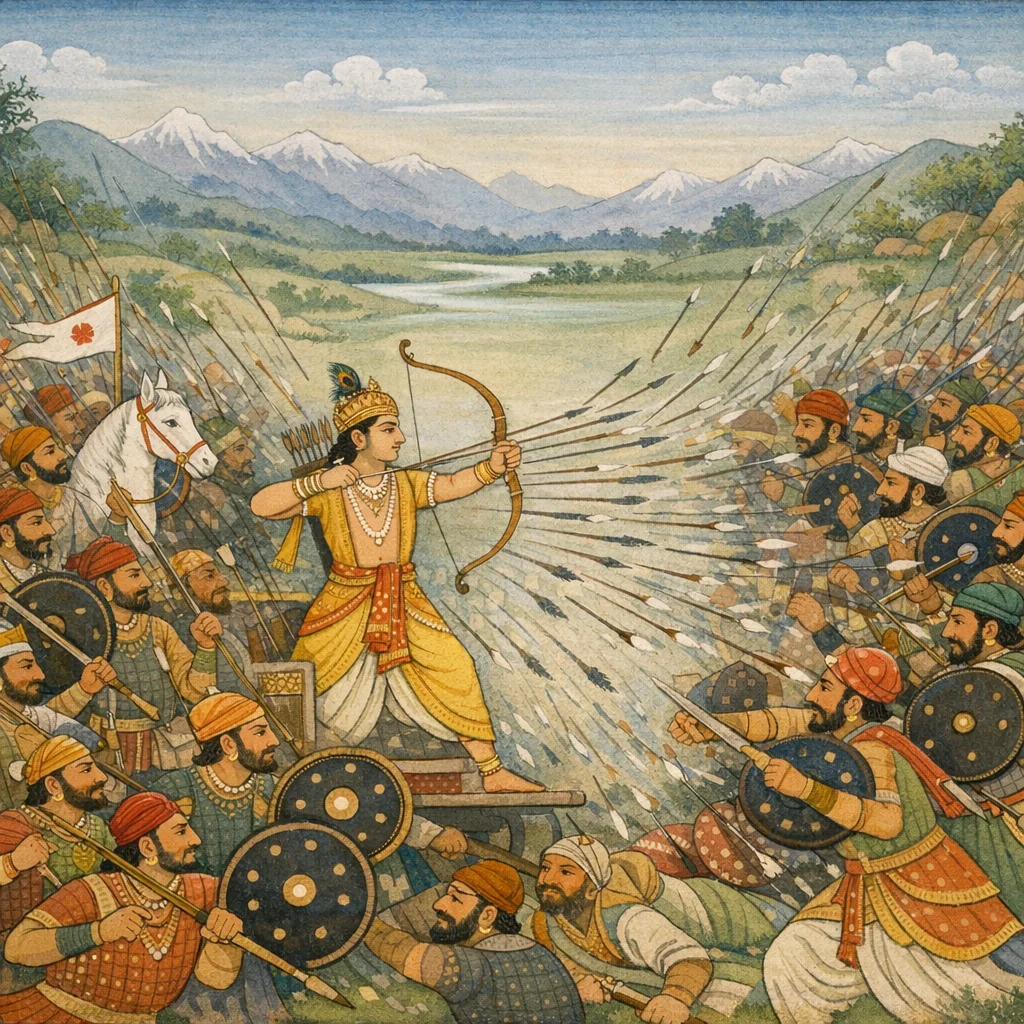
Vaiśaṃpāyana describes Arjuna standing formidable in battle as Saindhava fighters re-form and discharge dense volleys of arrows. Arjuna addresses them with controlled speech, urging them to exert their full strength while indicating he will subdue their arrogance; however, he simultaneously recalls Yudhiṣṭhira’s injunction that rival kṣatriyas seeking victory should be conquered rather than killed. He frames a conditional surrender logic: he will not harm women and children, and any combatant who declares submission is to be treated as defeated rather than destroyed. The Saindhavas escalate with arrows, spears, and śaktis; Arjuna neutralizes the projectiles mid-flight and disables many opponents with precise strikes, producing disorder and retreat. Observing her forces exhausted, Duḥśalā (daughter of Dhṛtarāṣṭra) arrives with her grandson to seek peace; Arjuna lowers his bow and receives her formally. She explains that her son Suratha died from grief upon hearing of Arjuna’s approach and his father’s death; she appeals for compassion, invoking familial ties, Gandhārī and Dhṛtarāṣṭra, and the innocence of the child. Arjuna, grieving and condemning the prior political greed that led to mass destruction, grants reconciliation, consoles Duḥśalā, and releases her. The Saindhava conflict is thus resolved without annihilation, and Arjuna resumes the Aśvamedha horse’s onward course, eventually approaching Maṇipūra’s region.
Chapter Arc: यज्ञ का अश्व, श्वेतवाहन अर्जुन के संरक्षण में, सैन्धव-देश की सीमा में प्रवेश करता है—और पुराने अपमान की ज्वाला से क्षत्रिय-राजा क्रोध में उठ खड़े होते हैं। → सैन्धव नरेश, जो पहले अर्जुन से पराजित हो चुके थे, इस बार संगठित होकर उसे चारों ओर से घेर लेते हैं। वे ऐसे तीक्ष्ण बाण-वर्षा करते हैं जो हाथियों की गति भी रोक दे; अर्जुन क्षण-क्षण शर-जाल में ढँकता जाता है और रणभूमि में हाहाकार फैलता है। → अर्जुन, शरों से आच्छादित होकर भी, पिंजरे में फुदकते पक्षी-सा मार्ग खोजता हुआ, अपनी दिव्य धनुर्विद्या से मेघ-जाल समान सेना को शर-वृष्टि से विदीर्ण कर देता है—और शरत्कालीन सूर्य की भाँति पुनः प्रकाशमान होकर घेरा तोड़ देता है। → सैन्धवों की संयुक्त घेराबंदी टूटती है; अर्जुन का पराक्रम पुनः स्थापित होता है और यज्ञाश्व सुरक्षित आगे बढ़ता है। → पराजित सैन्धव-राजा और उनके सहयोगी आगे कौन-सा छल या नया संघटन करेंगे—यह प्रश्न अगले प्रसंग की ओर धकेलता है।
Shlokas
Verse 1
ऑपन-माज बछ। डे सप्तसप्ततितमो<ध्याय: अर्जुनका सैन्धवोंके साथ युद्ध वैशम्पायन उवाच (जित्वा प्रसाद्य राजानं भगदत्तसुतं तदा । विसृज्य याते तुरगे सैन्धवान् प्रति भारत ।।) सैन्धवैरभवद् युद्ध ततस्तस्य किरीटिन: । हतशेषैर्महाराज हतानां च सुतैरपि,वैशम्पायनजी कहते हैं--भरतनन्दन! महाराज भगदत्तके पुत्र राजा वज्रदत्तको पराजित और प्रसन्न करनेके पश्चात् उसे विदा करके जब अर्जुनका घोड़ा सिंधुदेशमें गया, तब महाभारत-युद्धमें मरनेसे बचे हुए सिंधुदेशीय योद्धाओं तथा मारे गये राजाओंके पुत्रोंके साथ किरीटधारी अर्जुनका घोर संग्राम हुआ
Vaiśampāyana said: “O Bhārata, after Arjuna had defeated and then graciously appeased King Vajradatta, the son of Bhagadatta, and had dismissed him, the sacrificial horse moved on toward the land of Sindhu. Thereupon the diadem-wearing Arjuna was drawn into a fierce battle with the Sindhu warriors who had survived the great war, and also with the sons of kings who had been slain.”
Verse 2
तेडवतीर्णमुपश्रुत्य विषयं श्वेतवाहनम् । प्रत्युद्ययुरमृष्यन्तो राजान: पाण्डवर्षभम्,यज्ञके घोड़ेको और श्वेतवाहन अर्जुनको अपने राज्यके भीतर आया हुआ सुनकर वे सिंधुदेशीय क्षत्रिय अमर्षमें भरकर उन पाण्डवप्रवर अर्जुनका सामना करनेके लिये आगे बढ़े
Hearing that the sacrificial horse and Arjuna, the rider of the white chariot, had entered their realm, the Kṣatriya kings of Sindhu, seething with resentment, advanced to confront Arjuna, the foremost of the Pāṇḍavas.
Verse 3
अश्वृं च तं परामृश्य विषयान्ते विषोपमा: । न भयं चक्रिरे पार्थाद् भीमसेनादनन्तरात्,वे विषके समान भयंकर क्षत्रिय अपने राज्यके भीतर आये हुए उस घोड़ेकी पकड़कर भीमसेनके छोटे भाई अर्जुनसे तनिक भी भयभीत नहीं हुए
Vaiśampāyana said: Having seized that horse within their own territory, those men—deadly as poison—felt no fear at all of Pārtha Arjuna, the younger brother of Bhīmasena. In their pride and hostility, they treated the sacrificial horse as a provocation and chose defiance over restraint, setting the stage for conflict against dharma’s royal rite.
Verse 4
तेडविदूराद् धनुष्पाणिं यज्ञियस्थ हयस्य च । बीभत्सुं प्रत्यपद्यन्त पदातिनमवस्थितम्,यज्ञसम्बन्धी घोड़ेसे थोड़ी ही दूरपर अर्जुन हाथमें धनुष लिये पैदल ही खड़े थे। वे सभी क्षत्रिय उनके पास जा पहुँचे
Vaiśaṃpāyana said: From a short distance away they saw Arjuna—terrible in battle—standing on foot with bow in hand, stationed near the sacrificial horse. Those kṣatriyas then approached him. The scene underscores the Ashvamedha’s moral boundary: the horse is a ritual emblem of sovereignty, and confronting its guardian tests whether power will be pursued through rightful challenge or through reckless aggression against a dharma-framed rite.
Verse 5
ततस्ते त॑ं महावीर्या राजान: पर्यवारयन् । जिगीषन्तो नरव्याप्रं पूर्व विनिकृता युधि,वे महापराक्रमी क्षत्रिय पहले युद्धमें अर्जुनसे परास्त हो चुके थे और अब उन पुरुषसिंह पार्थको जीतना चाहते थे। अतः उन सबने उन्हें घेर लिया
Vaiśampāyana said: Then those kings of great prowess surrounded him. Eager to conquer that tiger among men, they—who had previously been humbled in battle—now sought to overcome him again, driven by wounded pride and the warrior’s hunger for victory.
Verse 6
ते नामान्यपि गोत्राणि कर्माणि विविधानि च । कीर्तयन्तस्तदा पार्थ शरवर्षैरवाकिरन्,वे अर्जुनसे अपने नाम, गोत्र और नाना प्रकारके कर्म बताते हुए उनपर बाणोंकी बौछार करने लगे
Vaiśaṃpāyana said: At that time, O Pārtha, they proclaimed their own names and lineages and recounted their various deeds, and while doing so they showered him with a rain of arrows—boasting of identity and past exploits even as they pressed the attack.
Verse 7
ते किरन्त: शरव्रातान् वारणप्रतिवारणान् । रणे जयमभीप्सन्त: कौन्तेयं पर्यवारयन् ७ ।। वे ऐसे बाणसमूहोंकी वर्षा करते थे, जो हाथियोंको भी आगे बढ़नेसे रोक देनेवाले थे। उन्होंने रणभूमिमें विजयकी अभिलाषा रखकर कुन्तीकुमारको घेर लिया
Vaiśampāyana said: Showering volleys of arrows—so dense that they could check even the advance of elephants—those warriors, longing for victory in the battle, surrounded the son of Kuntī. The scene underscores how martial ambition can harden into collective pressure, testing a hero’s steadiness amid overwhelming force.
Verse 8
ते समीक्ष्य च तं कृष्णमुग्रकर्माणमाहवे । सर्वे युयुधिरे वीरा रथस्थास्तं पदातिनम्,युद्धमें भयानक कर्म करनेवाले अर्जुनको पैदल देखकर वे सभी वीर रथपर आरूढ़ हो उनके साथ युद्ध करने लगे
Vaiśampāyana said: Seeing Kṛṣṇa—terrible in his deeds amid battle—standing as a foot-soldier, all those heroes, mounted on their chariots, engaged him in combat.
Verse 9
ते तमाजध्निरे वीर॑ं निवातकवचान्तकम् | संशप्तकनिहन्तारं हन्तारं सैन्धवस्य च,निवातकवचोंका विनाश, संशप्तकोंका संहार और जयद्रथका वध करनेवाले वीर अर्जुनपर स्वैन्धवोंने सब ओरसे प्रहार आरम्भ कर दिया
Vaiśampāyana said: Then they began to strike at that hero Arjuna from every side—he who had brought the Nivātakavacas to their end, who had destroyed the Saṃśaptakas, and who had slain Jayadratha.
Verse 10
ततो रथसहस्रेण हयानामयुतेन च । कोष्ठकीकृत्य बीभत्सुं प्रहषष्टमनमसो 5 भवन्,एक हजार रथ और दस हजार घोड़ोंसे अर्जुनको घेरकर उन्हें कोष्ठबद्ध-सा करके वे मन-ही-मन बड़े प्रसन्न हो रहे थे
Then, surrounding Arjuna (Bībhatsu) with a thousand chariots and ten thousand horses, they enclosed him as though penned in a stockade; and, with minds inwardly delighted, they rejoiced at having him thus hemmed in.
Verse 11
त॑ स्मरन्तो वर्ध वीरा: सिन्धुराजस्य चाहवे । जयद्रथस्य कौरव्य समरे सव्यसाचिना,कुरुनन्दन! कुरुक्षेत्रके समराड़णमें सव्यसाची अर्जुनके द्वारा जो सिंधुराज जयद्रथका वध हुआ था, उसकी याद उन वीरोंको कभी भूलती नहीं थी
Vaiśampāyana said: Those warriors kept recalling, again and again, the slaying of Jayadratha—the king of Sindhu—by Savyasācī Arjuna in battle. The memory of that deed, performed on the field of Kurukṣetra, did not fade from their minds.
Verse 12
ततः पर्जन्यवत् सर्वे शरवृष्टीरवासृजन् । तै: कीर्ण: शुशुभे पार्थो रविरमेघान्तरे यथा,वे सब योद्धा मेघके समान अर्जुनपर बाणोंकी वर्षा करने लगे। उन बाणोंसे आच्छादित होकर कुन्ती-नन्दन अर्जुन बादलोंमें छिपे हुए सूर्यकी भाँति शोभा पा रहे थे
Then, like rain-bearing clouds, all the warriors let loose a downpour of arrows. Covered and hemmed in by those shafts, Pārtha Arjuna—Kuntī’s son—shone forth like the sun seen within the folds of clouds, his radiance undiminished amid the storm of battle.
Verse 13
स शरै: समवच्छन्नक्षुकाशे पाण्डवर्षभ: । पञड्चरान्तरसंचारी शकुन्त इव भारत,भरतनन्दन! बाणोंसे आच्छादित हुए पाण्डवप्रवर अर्जुन पींजड़ेके भीतर फुदकनेवाले पक्षीकी भाँति जान पड़ते थे
Vaiśaṃpāyana said: Arjuna—the bull among the Pāṇḍavas—was covered all over with arrows and hemmed in as though within a narrow space. O Bhārata, O joy of the Bharatas, he looked like a bird darting about inside a cage—an image that reveals both the fury of the assault and the warrior’s endurance: though wounded and constrained, he still moved and resisted, refusing despair and never forsaking his duty.
Verse 14
ततो हाहाकृतं सर्व कौन्तेये शरपीडिते । त्रैलोक्यम भवद् राजन् रविरासीच्च निष्प्रभ:,राजन! कुन्तीकुमार अर्जुन जब इस प्रकार बाणोंसे पीड़ित हो गये, तब उनकी ऐसी अवस्था देख त्रिलोकी हाहाकार कर उठी और सूर्यदेवकी प्रभा फीकी पड़ गयी
Vaiśaṃpāyana said: Then, O king, when Kuntī’s son (Arjuna) was tormented by arrows, all the worlds broke into cries of alarm. Seeing his plight, the three worlds were thrown into an uproar, and even the Sun seemed to lose its radiance—signaling the cosmic gravity of a righteous hero brought low by violence.
Verse 15
ततो ववौ महाराज मारुतो लोमहर्षण: । राहुरग्रसदादित्यं युगपत् सोममेव च,महाराज! उस समय रोंगटे खड़े कर देनेवाली प्रचण्ड वायु चलने लगी। राहुने एक ही समय सूर्य और चन्द्रमा दोनोंको ग्रस लिये
Vaiśampāyana said: Then, O great king, a fierce wind arose that made the hair stand on end. At that very moment Rāhu seized the Sun, and simultaneously the Moon as well—an ominous sign, as though the cosmic order itself were disturbed, mirroring the mounting tension of the tale.
Verse 16
उल्काश्न जच्निरे सूर्य विकीर्यन्त्य:ः समन्ततः । वेपथुश्चा भवद् राजन् कैलासस्य महागिरे:,चारों ओर बिखरकर गिरती हुई उल्काएँ सूर्यसे टकराने लगीं। राजन! उस समय महापर्वत कैलास भी काँपने लगा
Vaiśampāyana said: Meteors appeared and, scattering in all directions, seemed to strike the sun. O king, at that moment even Mount Kailāsa, the great mountain, began to tremble—an ominous upheaval in nature reflecting the gravity of the events unfolding.
Verse 17
मुमुचु: श्वासमत्युष्णं दु:ः:खशोकसमन्विता: । सप्तर्षयो जातभयास्तथा देवर्षयोडपि च,सप्तर्षियों और देवर्षियोंको भी भय होने लगा। वे दुःख और शोकसे संतप्त हो अत्यन्त गरम-गरम साँस छोड़ने लगे
Vaiśaṃpāyana said: Overwhelmed by grief and sorrow, they let out exceedingly hot breaths. Fear arose even among the Seven Ṛṣis, and likewise among the divine seers as well—so intense was the dread that it disturbed the very guardians of sacred order.
Verse 18
शशं चाशु विनिर्भिद्य मण्डलं शशिनो5पतत् । विपरीता दिशश्वापि सर्वा धूमाकुलास्तथा,पूर्वोक्त उल्काएँ चन्द्रमामें स्थित हुए शश-चिह्नका भेदन करके चन्द्रमण्डलके चारों ओर गिरने लगीं । सम्पूर्ण दिशाएँ धूमाच्छन्न होकर विपरीत प्रतीत होने लगीं
Vaiśaṃpāyana said: The meteoric portents swiftly struck and split the hare-mark on the Moon, then fell around the lunar disc. All the directions, too, became choked with smoke and appeared inverted—an ominous overturning of the natural order, foretelling calamity and moral disturbance in the world.
Verse 19
रासभारुणसंकाशा धनुष्मन्त: सविद्युतः । आवृत्य गगन मेघा मुमुचुर्मासशोणितम्,गधेके समान रंग और लाल रंगके सम्मिश्रणसे जो रंग हो सकता है, वैसे वर्णवाले मेघ आकाशको घेरकर रक्त और मांसकी वर्षा करने लगे। उनमें इन्द्रधनुषका भी दर्शन होता था और बिजलियाँ भी कौंधती थीं
Vaiśampāyana said: Clouds, dark like the hue of a donkey and tinged with ruddy redness, bearing bow-like arcs and flashing with lightning, covered the sky and began to pour down flesh and blood. The sight was a dreadful omen, signaling the collapse of natural order and forewarning the moral and physical devastation that follows from violent disorder.
Verse 20
एवमासीत् तदा वीरे शरवर्षेण संवृते । फाल्गुने भरतश्रेष्ठ तदद्भुतमिवाभवत्,भरतश्रेष्ठ] वीर अर्जुनके उस समय शत्रुओंकी बाण-वर्षसे आच्छादित हो जानेपर ऐसे-ऐसे उत्पात प्रकट होने लगे। वह अद्भुत-सी बात हुई
Vaiśampāyana said: Thus it was then, O best of the Bharatas: when the hero Phālguna (Arjuna) was covered by a rain of arrows, the scene appeared wondrous—as though something extraordinary had come to pass.
Verse 21
तस्य तेनावकीर्णस्य शरजालेन सर्वतः । मोहात् पपात गाण्डीवमावापश्न करादपि,उस बाणसमूहके द्वारा सब ओरसे आच्छादित हुए अर्जुनपर मोह छा गया। उस समय उनके हाथसे गाण्डीव धनुष और दस्ताने गिर पड़े
Vaiśampāyana said: When Arjuna was completely covered on every side by that net of arrows, delusion overcame him. In that moment, even from his hand the Gāṇḍīva bow—and his protective hand-gear—slipped and fell.
Verse 22
तस्मिन् मोहमनुप्राप्ते शरजालं महत् तदा । सैन्धवा मुमुचुस्तूर्ण गतसत्त्वे महारथे,महारथी अर्जुन जब मोहग्रस्त एवं अचेत हो गये, उस समय भी सिंधुदेशीय योद्धा उनपर वेगपूर्वक महान् बाणसमूहकी वर्षा करते रहे
Vaiśampāyana said: When that great warrior had fallen into delusion and lost his presence of mind, the Sindhu-country fighters, even then, swiftly let loose a vast net of arrows upon him.
Verse 23
ततो मोहसमापन्न॑ ज्ञात्वा पार्थ दिवौकस: । सर्वे वित्रस्तमनसस्तस्य शान्तिकृतो5भवन्,अर्जुनको मोहके वशीभूत हुआ जान सम्पूर्ण देवता मन-ही-मन संत्रस्त हो गये और उनके लिये शान्तिका उपाय करने लगे
Then, realizing that Pārtha (Arjuna) had fallen into delusion, the gods of heaven all became inwardly alarmed. With anxious minds, they sought a pacific remedy to restore his calm—quelling his confusion and re-establishing right judgment.
Verse 24
ततो देवर्षय: सर्वे तथा सप्तर्षयोडपि च । ब्रह्मर्षयश्च विजयं जेपु: पार्थस्य धीमत:,फिर तो समस्त देवर्षि, सप्तर्षि और ब्रह्मर्षि मिलकर बुद्धिमान् अर्जुनकी विजयके लिये मन्त्र-जप करने लगे
Then all the divine seers, along with the Seven Sages, and the Brahmarṣis as well, began the recitation of sacred mantras for the victory of the wise Pārtha (Arjuna).
Verse 25
ततः प्रदीपिते देवै: पार्थतेजसि पार्थिव । तस्थावचलवद्ू धीमान् संग्रामे परमास्त्रवित्,पृथ्वीनाथ! तदनन्तर देवताओंके प्रयत्नसे अर्जुनका तेज पुनः उद्दीप्त हो उठा और उत्तम अस्त्र-विद्याके ज्ञाता परम बुद्धिमान् धनंजय संग्रामभूमिमें पर्वतके समान अविचल भावसे खड़े हो गये
Vaiśampāyana said: Then, when the gods rekindled the splendor of Arjuna, O king, that wise Dhanañjaya—supreme in the knowledge of celestial weapons—stood firm on the battlefield, unmoving like a mountain.
Verse 26
विचकर्ष धर्नुर्दिव्यं ततः कौरवनन्दन: । यन्त्रस्येवेह शब्दो5 भून्महांस्तस्य पुनः पुन:,फिर तो कौरवनन्दन अर्जुनने अपने दिव्य धनुषकी प्रत्यंचा खींची। उस समय उससे बार-बार मशीनकी तरह बड़े जोर-जोरसे टंकार-ध्वनि होने लगी
Vaiśampāyana said: Then Arjuna, the delight of the Kuru line, drew back the string of his divine bow. Again and again a great, resounding twang arose from it, like the noise of a well-driven machine.
Verse 27
ततः स शरवर्षाणि प्रत्यमित्रान् प्रति प्रभु: । ववर्ष धनुषा पार्थो वर्षाणीव पुरंदर:,इसके बाद जैसे इन्द्र पानीकी वर्षा करते हैं, उसी तरह प्रभावशाली पार्थने अपने धनुषद्वारा शत्रुओंपर बाणोंकी झड़ी लगा दी
Vaiśampāyana said: Then that mighty Pārtha, turning against the opposing foes, poured forth showers of arrows from his bow—just as Purandara (Indra) sends down torrents of rain.
Verse 28
ततस्ते सैन्धवा योधा: सर्व एव सराजका: । नादृश्यन्त शरै: कीर्णा: शलभैरिव पादपा:,फिर तो पार्थके बाणोंसे आच्छादित हो समस्त सैन्धव योद्धा टिडिियोंसे ढँके हुए वृक्षोंकी भाँति अपने राजासहित अदृश्य हो गये
Vaiśaṃpāyana said: Then all those Sindhu warriors—together with their king—were so thickly covered by Pārtha’s arrows that they could no longer be seen, like trees hidden from view when swarmed over by locusts.
Verse 29
तस्य शब्देन वित्रेसुर्भयार्ताश्च विदुद्र॒ुवु: । मुमुचुश्नाश्रु शोकार्ता: शुशुचुश्चापि सैन्धवा:,कितने ही गाण्डीवकी टंकार-ध्वनिसे ही थर्रा उठे। बहुतेरे भयसे व्याकुल होकर भाग गये और अनेक सैन्धव योद्धा शोकसे आतुर होकर आँसू बहाने एवं शोक करने लगे
Vaiśaṃpāyana said: At the sound of it, they were shaken with terror; those stricken by fear fled in all directions. And the Saindhava warriors, overwhelmed by grief, let their tears fall and lamented aloud—so dreadful was the twang of the Gāṇḍīva that it broke their courage and foretold ruin.
Verse 30
तांस्तु सर्वान् नरव्याप्र:सैन्धवान् व्यचरद् बली । अलातचक्रवद् राजन् शरजालै: समार्पयत्,राजन! उस समय महाबली पुरुषसिंह अर्जुन अलातचक्रकी भाँति घूम-घूमकर सारे सैन्धवोंपर बाण-समूहोंकी वर्षा करने लगे
Vaiśampāyana said: Then the mighty Arjuna, tiger among men, ranged about among all those Saindhavas and, O king, showered them with nets of arrows, whirling like a blazing firebrand spun in a circle.
Verse 31
तदिन्द्रजालप्रतिमं बाणजालममित्रहा । विसृज्य दिक्षु सर्वासु महेन्द्र इव वज्रभूत्,शत्रुसूदन अर्जुनने वज्रधारी महेन्द्रकी भाँति सम्पूर्ण दिशाओंसे इन्द्रजालके समान बाणोंका जाल-सा फैला दिया
Vaiśaṃpāyana said: Then Arjuna, the slayer of foes, released in every direction a net of arrows resembling Indra’s wondrous illusion—like Mahendra himself become the thunderbolt—spreading a weaponized web meant to overwhelm the enemy on all sides.
Verse 32
मेघजालनिभ सैन्यं विदार्य शरवृष्टिभि: । विबभौ कौरवश्रेष्ठ; शरदीव दिवाकर:,जैसे शरत्कालके सूर्य मेघोंकी घटाको छिन्न-भिन्न करके प्रकाशित होते हैं, उसी प्रकार कौरवश्रेष्ठ अर्जुन अपने बाणोंकी वृष्टिसे शत्रुसेनाको विदीर्ण करके अत्यन्त शोभा पाने लगे
Vaiśampāyana said: Like the autumn sun that shines forth after tearing apart a mass of clouds, Arjuna—the foremost of the Kurus—split the enemy host with showers of arrows and appeared in heightened splendor.
Verse 76
इस प्रकार श्रीमह्याभारत आश्वगेधिकपर्वके अन्तर्गत अनुगीतापर्वमें वज़दत्तकी पराजयविषयक छिह्वत्तरवाँ अध्याय पूरा हुआ
Thus ends the seventy-sixth chapter, concerning the defeat of Vajradatta, within the Anugītā section of the Aśvamedhika Parva of the sacred Mahābhārata.
Verse 77
इति श्रीमहाभारते आश्वमेधिके पर्वणि अनुगीतापर्वणि सैन्धवयुद्धे सप्तसप्ततितमो<ध्याय:
Thus ends the seventy-seventh chapter, titled “The Battle with the Sindhu King,” within the Anugītā section of the Aśvamedhika Parva of the revered Mahābhārata.
Frequently Asked Questions
Arjuna must reconcile battlefield capability with Dharmarāja’s directive: whether to eliminate hostile kṣatriya opponents or to compel submission while limiting fatalities, especially when noncombatants and kinship claims enter the encounter.
Power is ethically validated by restraint: legitimate victory aims at restoring order and reducing future harm, and compassion toward supplicants and innocents functions as a dharmic constraint on coercive force.
No explicit phalaśruti appears in this adhyāya; its meta-significance is narrative-ethical, illustrating how post-war sovereignty is stabilized through controlled force, sanctuary, and reconciliation rather than total destruction.