Adhyaya 10
Marutta’s Sacrifice: Indra’s Threat, Saṃvarta’s Mantric Restraint, and Divine Reconciliation (अध्याय १०)
Upa-parva: Marutta–Saṃvarta–Indra Episode (Yajña Authority and Divine Compliance)
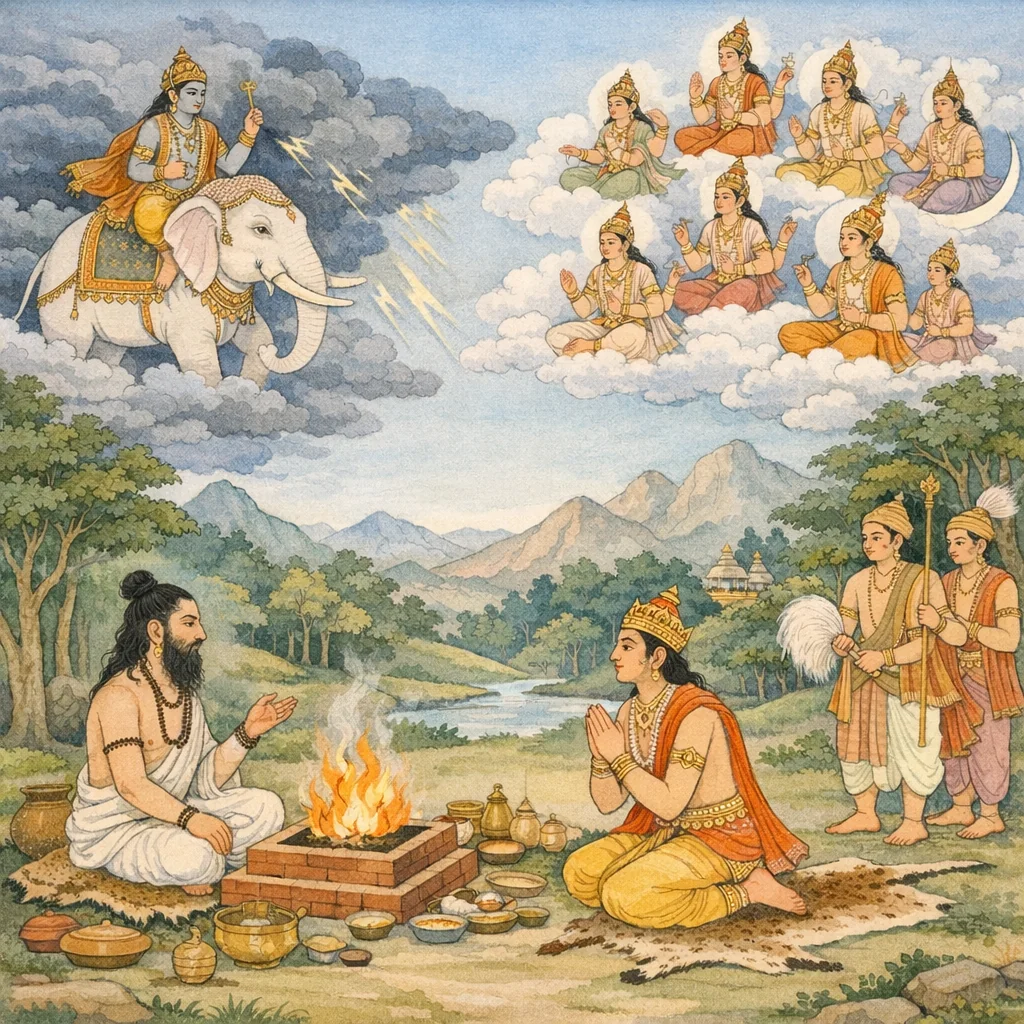
Chapter 10 records a structured dispute over sacrificial authority. Indra asserts the superiority of brahmanical power yet threatens to strike Marutta with the vajra unless Bṛhaspati is appointed as priest. A messenger-figure (Dhṛtarāṣṭra, identified as a Gandharva in the exchange) conveys Indra’s ultimatum. Marutta responds by denying the acceptability of betrayal in friendship and rejects the demand, affirming Saṃvarta’s role. As Indra’s approach becomes audible and alarming, Marutta seeks protection from Saṃvarta, who promises to neutralize the danger through a ‘saṃstambhinī’ restraining vidyā, effectively suspending the threat and redirecting the situation from force to ritual order. Marutta then requests not punishment but Indra’s direct participation: acceptance of oblations, soma-drinking, and the gods’ enjoyment of their stations. Indra arrives with the gods, is welcomed according to śāstra, acknowledges Saṃvarta’s identity as Bṛhaspati’s younger brother, and his anger subsides. Indra then actively organizes the sacrificial infrastructure and specifies offerings, after which the rite prospers; the gods depart satisfied, and Marutta’s wealth-distribution and stable rule are highlighted. The chapter closes by transitioning to Vaiśaṃpāyana’s frame, where the Pāṇḍava king (Yudhiṣṭhira) is inspired to undertake sacrifice using the described resources and precedent.
Chapter Arc: इन्द्र, अपने सिंहासन की असुरक्षा से विचलित होकर गन्धर्वराज धृतराष्ट्र को दूत बनाकर मरुत्त के यज्ञ-वैभव को भय का कारण मानते हुए धमकी-संदेश भेजता है। → धृतराष्ट्र मरुत्त के पास पहुँचकर आकाश-गर्जना और वज्र-प्रहार की आशंका सुनाता है; मरुत्त के पुरोहित संवर्त (बृहस्पति के अनुज, तपोधन) इन्द्र-भय को तुच्छ बताकर मन्त्रबल से देवताओं को बुलाने और शक्र के तेज को स्तम्भित करने का संकल्प लेते हैं। → संवर्त की स्तम्भिनी विद्या/मन्त्र-प्रभाव से इन्द्र सहित देवगण विवश होकर यज्ञ में उपस्थित होते हैं; इन्द्र स्वयं संवर्त की महिमा पहचानकर क्रोध त्यागता है और मरुत्त के यज्ञ को स्वीकार करता है। → देवता इन्द्र-वचन से प्रसन्न होकर यज्ञ-कार्य में प्रवृत्त होते हैं; इन्द्र मरुत्त की पूजा से तृप्त होकर उसे यज्ञ-सम्पत्ति (अत्यधिक सुवर्ण) के सदुपयोग—देव-तर्पण और यजन—का उपदेश देता है। → वैशम्पायन के अनुसार पाण्डव-राजा (युधिष्ठिर) यह वृत्तान्त सुनकर उस धन/यज्ञ-सम्पदा के विषय में आगे की योजना हेतु अमात्यों से पुनः मन्त्रणा करने लगता है।
Shlokas
Verse 1
ऑपनआक्ाता बछ। अर: दशमो< ध्याय: इन्द्रका गन्धर्वराजको भेजकर मरुत्तको भय दिखाना और संवर्तका मन्त्रबलसे इन्द्रसहित सब देवताओंको बुलाकर मरुत्तका यज्ञ पूर्ण करना इन्द्र वाच एवमेतद् ब्रह्म॒बलं गरीयो न ब्राह्मणात् किंचिदन्यद् गरीय: । आविक्षितस्य तु बल॑ न मृष्ये वज्मस्मै प्रहरिष्यामि घोरम्,इन्द्रने कहा--यह ठीक है कि ब्रह्मबल सबसे बढ़कर है। ब्राह्मणसे श्रेष्ठ दूसरा कोई नहीं है; किंतु मैं राजा मरुत्तके बलको नहीं सह सकता। उनके ऊपर अवश्य अपने घोर वज्रका प्रहार करूँगा
Śakra (Indra) said: “So it is indeed: brahma-bala is the greatest; nothing is greater than a brāhmaṇa. Yet I cannot endure the might of King Marutta, of the line of Āvikṣit. I will strike him with my terrible thunderbolt (vajra).”
Verse 2
धृतराष्ट्र प्रहितो गच्छ मरुत्तं संवर्तेन संगतं त॑ं वदस्व । बृहस्पतिं त्वमुपशिक्षस्व राजन् वजन वा ते प्रहरिष्यामि घोरम्,गन्धर्वराज धृतराष्ट्र! अब तुम मेरे भेजनेसे वहाँ जाओ और संवर्तके साथ मिले हुए राजा मरुत्तसे कहो--“राजन्! आप बृहस्पतिको आचार्य बनाकर उनसे यज्ञकर्मकी शिक्षा- दीक्षा ग्रहण कीजिये। अन्यथा मैं इन्द्र आपपर घोर वच्रका प्रहार करूँगा”
Śakra (Indra) commands Dhṛtarāṣṭra: “Go as my envoy to King Marutta, who has allied himself with Saṃvarta. Tell him: ‘O King, accept Bṛhaspati as your teacher and receive proper instruction in the rites of yajña. Otherwise I, Indra, will strike you with my dreadful thunderbolt (vajra).’”
Verse 3
व्यास उवाच ततो गत्वा धृतराष्ट्रो नरेन्द्र प्रोवाचेदं वचनं वासवस्य,व्यासजी कहते हैं--तब गन्धर्वराज धृतराष्ट्र राजा मरुत्तके पास गये और उनसे इन्द्रका संदेश इस प्रकार कहने लगे--“महाराज! आपको विदित हो कि मैं धृतराष्ट्र नामक गन्धर्व हूँ और आपको देवराज इन्द्रका संदेश सुनाने आया हूँ। राजसिंह! सम्पूर्ण लोकोंके स्वामी महामना इन्द्रने जो कुछ कहा है, उनका वह वाक्य सुनिये
Vyāsa said: Then Dhṛtarāṣṭra, king of the Gandharvas, went to King Marutta and conveyed to him the message of Vāsava (Indra), saying: “O great king, know that I am the Gandharva named Dhṛtarāṣṭra, and I have come to deliver to you the message of Indra, lord of the gods. O lion among kings, listen to the words spoken by the high-minded Indra, sovereign of all the worlds.”
Verse 4
गन्धर्व मां धृतराष्ट्रं निबोध त्वामागतं वक्तुकामं नरेन्द्र । ऐन्द्रं वाक्यं शृणु मे राजसिंह यत् प्राह लोकाधिपतिर्महात्मा,व्यासजी कहते हैं--तब गन्धर्वराज धृतराष्ट्र राजा मरुत्तके पास गये और उनसे इन्द्रका संदेश इस प्रकार कहने लगे--“महाराज! आपको विदित हो कि मैं धृतराष्ट्र नामक गन्धर्व हूँ और आपको देवराज इन्द्रका संदेश सुनाने आया हूँ। राजसिंह! सम्पूर्ण लोकोंके स्वामी महामना इन्द्रने जो कुछ कहा है, उनका वह वाक्य सुनिये
Vyāsa said: “O king, know me to be the Gandharva named Dhṛtarāṣṭra, who has come to you wishing to speak. O lion among kings, listen to the message of Indra from me—the very words spoken by the great-souled Lord of the worlds.”
Verse 5
बृहस्पति याजकं त्वं वृणीष्व वजन वा ते प्रहरिष्यामि घोरम् । वचदश्षेदेतन्न करिष्यसे मे प्राहैतदेतावदचिन्त्यकर्मा,अचिन्त्यकर्मा इन्द्र कहते हैं--'राजन्! आप बृहस्पतिको अपने यज्ञका पुरोहित बनाइये। यदि आप मेरी यह बात नहीं मानेंगे तो मैं आपपर भयंकर वज्रका प्रहार करूँगा”
Vyāsa said: Indra—whose deeds surpass all ordinary measure—declared, “O King, choose Bṛhaspati as the officiating priest for your sacrifice. If you do not obey my command, I will strike you with my dreadful thunderbolt (vajra).”
Verse 6
मरुत्त उवाच त्वं चैवैतद् वेत्थ पुरंदरश्न विश्वेदेवा वसवश्चाश्विनौ च । मित्रद्रोहे निष्कृतिर्नास्ति लोके महत पापं ब्रह्म॒हत्यासमं तत्,मरुत्तने कहा--गन्धर्वराज! आप, इन्द्र, विश्वेदव, वसुगण तथा अश्विनीकुमार भी इस बातको जानते हैं कि मित्रके साथ द्रोह करनेपर ब्रह्महत्याके समान महान् पाप लगता है। उससे छुटकारा पानेका संसारमें कोई उपाय नहीं है
Marutta said: “You too know this, O lord of the Gandharvas—and so does Purandara (Indra), along with the Viśvedevas, the Vasus, and the two Aśvins: in this world there is no expiation for treachery toward a friend. It is a grievous sin, equal to the killing of a brāhmaṇa.”
Verse 7
बृहस्पतिर्याजयतां महेन्द्र देवश्रेष्ठ वज़भृतां वरिष्ठम् । संवर्तो मां याजयिताद्य राजन् न ते वाक््यं तस्य वा रोचयामि,गन्धर्वराज! बृहस्पतिजी वज्रधारियोंमें श्रेष्ठ देवेश्वर महेन्द्रका यज्ञ करायें। मेरा यज्ञ तो अब संवर्तजी ही करायेंगे। इसके विरुद्ध न तो मैं आपकी बात मानूँगा और न इन्द्रकी ही
Marutta said: “Let Bṛhaspati officiate the sacrifice for Mahendra—best among the gods, foremost of the thunderbolt-bearers. But as for my sacrifice, O king, today it is Saṃvarta who shall conduct it. I do not approve of your counsel, nor of his (Indra’s).”
Verse 8
गन्धर्व उवाच घोरो नाद: श्रूयतां वासवस्य नभसस््तले गर्जतो राजसिंह । व्यक्त वज्ञ मोक्ष्यते ते महेन्द्र: क्षेमं राज॑श्षिन्त्यतामेष काल:,गन्धर्वराजने कहा--राजसिंह! आकाशमें गर्जना करते हुए इन्द्रका वह घोर सिंहनाद सुनिये। जान पड़ता है, महेन्द्र आपके ऊपर वज्र छोड़ना ही चाहते हैं; अतः राजन्! अपनी रक्षा एवं भलाईका उपाय सोचिये। इसके लिये यही अवसर है
The Gandharva said: “O lion among kings, listen to that dreadful roar of Vāsava (Indra) thundering in the sky. It is clear that Mahendra is about to hurl his thunderbolt (vajra) at you. Therefore, O king, consider at once the means of your safety and well-being—this is the decisive moment.”
Verse 9
व्यास उवाच इत्येवमुक्तो धृतराष्ट्रेण राजन् श्रुत्वा नादं नदतो वासवस्य | तपोनित्यं धर्मविदां वरिष्ठं संवर्त तं ज्ञापयामास कार्यम्,व्यासजी कहते हैं--राजन! धृतराष्ट्रके ऐसा कहनेपर राजा मरुत्तने आकाशमें गरजते हुए इन्द्रका शब्द सुनकर सदा तपस्यामें तत्पर रहनेवाले धर्मज्ञोंमें श्रेष्ठ संवर्तको इन्द्रके इस कार्यकी सूचना दी
Vyāsa said: “O King, when Dhṛtarāṣṭra had spoken thus, King Marutta heard the thunderous roar of Vāsava (Indra) resounding in the sky. Then he informed Saṃvarta—ever devoted to austerity and foremost among the knowers of dharma—about the matter that Indra had set in motion.”
Verse 10
मरुत्त उवाच इममात्मानं प्लवमानमारा- दध्वा दूरं तेन न दृश्यतेड्द्य । प्रपद्ये5हं शर्म विप्रेन्द्र त्वत्तः प्रयच्छ तस्मादभयं विप्रमुख्य,मरुत्तने कहा--विप्रवर! देवराज इन्द्र दूरसे ही प्रहार करनेकी चेष्टा कर रहे हैं, वे दूरकी राहपर खड़े हैं, इसलिये उनका शरीर दृष्टिगोचर नहीं होता। ब्राह्मणशिरोमणे! मैं आपकी शरणमें हूँ और आपके द्वारा अपनी रक्षा चाहता हूँ, अतः आप कृपा करके मुझे अभय-दान दें। देखिये, ये वज्रधारी इन्द्र दसों दिशाओंको प्रकाशित करते हुए चले आ रहे हैं। इनके भयंकर एवं अलौकिक सिंहनादसे हमारी यज्ञशालाके सभी सदस्य थर्रा उठे हैं इति श्रीमहाभारते आश्वमेधिके पर्वणि अश्वमेधपर्वणि संवर्तमरुत्तीये दशमो<ध्याय:
Marutta said: “Having set himself at a distance, Indra now strikes from afar; standing on the far path, his body is not visible today. O best of brahmins, I take refuge in you—grant me protection from your side; therefore bestow fearlessness upon me. Behold: that thunderbolt-bearing Indra advances, lighting up the ten directions; by his dreadful, otherworldly lion-roar, all who are gathered in our sacrificial hall tremble.”
Verse 11
अयमायाति वै वज्री दिशो विद्योतयन् दश । अमानुषेण घोरेण सदस्यास्त्रासिता हि नः,मरुत्तने कहा--विप्रवर! देवराज इन्द्र दूरसे ही प्रहार करनेकी चेष्टा कर रहे हैं, वे दूरकी राहपर खड़े हैं, इसलिये उनका शरीर दृष्टिगोचर नहीं होता। ब्राह्मणशिरोमणे! मैं आपकी शरणमें हूँ और आपके द्वारा अपनी रक्षा चाहता हूँ, अतः आप कृपा करके मुझे अभय-दान दें। देखिये, ये वज्रधारी इन्द्र दसों दिशाओंको प्रकाशित करते हुए चले आ रहे हैं। इनके भयंकर एवं अलौकिक सिंहनादसे हमारी यज्ञशालाके सभी सदस्य थर्रा उठे हैं
Marutta said: “Behold, the wielder of the thunderbolt is coming, lighting up the ten directions. By his dreadful, unearthly roar, the members of our sacrificial assembly have indeed been struck with fear.”
Verse 12
संवर्त उवाच भयं शक्राद् व्येतु ते राजसिंह प्रणोत्स्येडहं भयमेतत् सुघोरम् । संस्तम्भिन्या विद्यया क्षिप्रमेव मा भैस्त्वमस्याभिभवात् प्रतीत:,संवर्तने कहा--राजसिंह! इन्द्रसे तुम्हारा भय दूर हो जाना चाहिये। मैं स्तम्भिनी विद्याका प्रयोग करके बहुत जल्द तुम्हारे ऊपर आनेवाले इस अत्यन्त भयंकर संकटको दूर किये देता हूँ। मुझपर विश्वास करो और इन्द्रसे पराजित होनेका भय छोड़ दो
Saṁvarta said: “O lion among kings, let your fear of Śakra (Indra) depart. I shall drive away this most dreadful fear. By the Stambhinī spell I will quickly neutralize the terrible danger that is coming upon you. Trust in me, and do not fear being overcome by Indra.”
Verse 13
अहं संस्तम्भयिष्यामि मा भैस्त्वं शक्रतो नूप । सर्वेषामेव देवानां क्षयितान्यायुधानि मे
Saṁvarta said: “I shall hold him in check—do not be afraid, O king. I have already destroyed the weapons of all the gods, even of Śakra (Indra).”
Verse 14
दिशो वच्ं व्रजतां वायुरेतु वर्ष भूत्वा वर्षतां काननेषु । आप: प्लवन्त्वन्तरिक्षे वृथा च सौदामनी दृश्यते मापि भैस्त्वम्
Saṃvarta said: “Let the wind carry my words to every direction. Becoming rain, let it pour down upon the forests. Let the waters surge and spread through the sky; and let lightning be seen—yet without cause for harm. Do not be afraid.”
Verse 15
अग्निदेव तुम्हारी सब ओरसे रक्षा करें। देवराज इन्द्र तुम्हारे लिये जलकी नहीं, सम्पूर्ण कामनाओंकी वर्षा करें और तुम्हारे वधके लिये उठे हुए और जलराशिके साथ चंचल गतिसे चले हुए महाघोर वज्रको वे देवेन्द्र अपने हाथमें ही रखे रहें
Saṃvarta said: “May Agni protect you on every side. May Indra, king of the gods, rain down for you not mere water but the full abundance of your desires. And may that dread thunderbolt of Devendra—raised to strike down your slayer and rushing with the restless speed of a surging flood—remain held back in his own hand.”
Verse 16
मरुत्त उवाच घोर: शब्द: श्रूयते वै महास्वनो वज्रस्यैष सहितो मारुतेन । आत्मा हि मे प्रव्यथते मुहुर्मुहु- न॑ मे स्वास्थ्यं जायते चाद्य विप्र,मरुत्तने कहा--विप्रवर! आँधीके साथ ही जोर-जोरसे होनेवाली वज़्की भयंकर गड़गड़ाहट सुनायी दे रही है। इससे रह-रहकर मेरा हृदय काँप उठता है। आज मनमें तनिक भी शान्ति नहीं है
Marutta said: “A dreadful sound is being heard—an immense roar: it is the thunderbolt’s crash, accompanied by the wind. Again and again my very self trembles; today, O brāhmaṇa, no steadiness or peace arises in me.”
Verse 17
संवर्त उवाच वज्ञादुग्राद् व्येतु भयं तवाद्य वातो भूत्वा हन्मि नरेन्द्र बज़म् । भयं त्यक्त्वा वरमन्यं वृणीष्व कं ते काम॑ं मनसा साधयामि,संवर्तने कहा--नरेन्द्र! तुम्हें इन्द्रके भयंकर वज़से आज भयभीत नहीं होना चाहिये। मैं वायुका रूप धारण करके अभी इस वज्रको निष्फल किये देता हूँ। तुम भय छोड़कर मुझसे कोई दूसरा वर माँगो। बताओ, मैं तुम्हारी कौन-सी मानसिक इच्छा पूर्ण करूँ?
Saṁvarta said: “Let your fear of Indra’s dreadful thunderbolt depart today. Assuming the form of the Wind, I shall at once render this bolt powerless. Cast off fear and choose some other boon from me. Tell me—what desire of your mind shall I fulfill?”
Verse 18
मरुत्त उवाच इन्द्र: साक्षात् सहसाभ्येतु विप्र हविर्यज्ञे प्रतिगृह्नातु चैव । स्वं स्वं धिष्णयं चैव जुषन्तु देवा हुतं सोम॑ प्रतिगृह्नन्तु चैव,मरुत्तने कहा--ब्रह्मर्ष! आप ऐसा प्रयत्न कीजिये, जिससे साक्षात् इन्द्र मेरे यज्ञमें शीघ्रतापूर्वक पधारें और अपना हविष्य-भाग ग्रहण करें। साथ ही अन्य देवता भी अपने- अपने स्थानपर आकर बैठ जायाँ और सब लोग एक साथ आहुतिरूपमें प्राप्त हुए सोमरसका पान करें
Marutta said: “O brahmin-sage, strive in such a way that Indra himself may come here swiftly and accept his share in this oblation-sacrifice. Let the other gods also take their respective seats and be pleased; and let them all together receive the offered Soma and drink it.”
Verse 19
संवर्त उवाच अयमिन्द्रो हरिभिरायाति राजन् देवै: सर्वैस्त्वरितै: स्तूयमान: । मन्त्राहूतो यज्ञमिमं मयाद्य पश्यस्वैनं मन्त्रविस्रस्तकायम्,(तदनन्तर संवर्तने अपने मन्त्रबलसे सम्पूर्ण देवताओंका आवाहन किया और) मरुत्तसे कहा--राजन! ये इन्द्र सम्पूर्ण देवताओंके द्वारा अपनी स्तुति सुनते शीघ्रगामी अश्वोंसे युक्त रथकी सवारीसे आ रहे हैं। मैंने मनत्रबलसे आज इस यज्ञमें इनका आवाहन किया है। देखो, मन्त्रशक्तिसे इनका शरीर इधर खिंचता चला आ रहा है
Saṁvarta said: “O King, here comes Indra, drawn by his tawny steeds, while all the gods—hastening—praise him. By mantra I have summoned him today to this sacrifice. Look at him: by the force of the mantra his very body is being compelled and drawn toward this rite.”
Verse 20
ततो देवै: सहितो देवराजो रथे युड्क््त्वा तान् हरीन् वाजिमुख्यान् । आयाद् यज्ञमथ राज्ञ: पिपासु- राविक्षितस्याप्रमेयस्थ सोमम्,तत्पश्चात् देवराज इन्द्र अपने रथमें उन सफेद रंगके अच्छे घोड़ोंको जोतकर देवताओंको साथ ले सोमपानकी इच्छासे अनुपम पराक्रमी राजा मरुत्तकी यज्ञशालामें आ पहुँचे
Then Indra, king of the gods, accompanied by the other deities, yoked to his chariot those foremost steeds, white with a tawny sheen. Thirsting to drink the Soma, he came to the sacrifice of the immeasurably mighty King Marutta, son of Avikṣit—entering the arena where divine privilege meets royal merit, and where the duty of honoring a worthy rite is made manifest.
Verse 21
तमायान्तं सहित देवसंघै: प्रत्युध्ययां सपुरोधा मरुत्त: । चक्रे पूजां देवराजाय चाग्रयां यथाशास्त्रं विधिवत् प्रीयमाण:,देववृन्दके साथ इन्द्रको आते देख राजा मरुत्तने अपने पुरोहित संवर्त मुनिके साथ आगे बढ़कर उनकी अगवानी की और बड़ी प्रसन्नताके साथ शास्त्रीय विधिसे उनका अग्रपूजन किया
Seeing Indra, king of the gods, approaching with the assembled deities, King Marutta—together with his family priest—went forward to receive him. With a joyful heart he rendered the divine king the foremost honor and worship, exactly as the sacred ordinances prescribe and in proper ritual form, thus exemplifying reverent hospitality and disciplined adherence to dharma.
Verse 22
संवर्त उवाच स्वागतं ते पुरुहृतेह विद्वन् यज्ञोड्प्ययं संनिहिते त्वयीन्द्र शोशुभ्यते बलवृत्रघ्न भूय: पिबस्व सोम॑ सुतमुद्यतं मया,संवर्तने कहा--पुरुह्दत इन्द्र! आपका स्वागत है। विद्वन्! आपके यहाँ पधारनेसे इस यज्ञकी शोभा बहुत बढ़ गयी है। बल और वृत्रासुरका वध करनेवाले देवराज! मेरेद्वारा तैयार किया हुआ यह सोमरस प्रस्तुत है, आप इसका पान कीजिये
Saṃvarta said: “Welcome here, O Puruhūta (Indra), O wise one. With you present, this sacrifice shines all the more. O mighty slayer of Vṛtra, king of the gods, drink again the Soma—pressed and prepared by me, now offered and held ready.”
Verse 23
मरुत्त उवाच शिवेन मां पश्य नमश्न ते<स्तु प्राप्तो यज्ञ: सफल जीवित मे । अयं यज्ञ कुरुते मे सुरेन्द्र बृहस्पतेरवरजो विप्रमुख्य:,मरुत्तने कहा--सुरेन्द्र! आपको नमस्कार है। आप मुझे कल्याणमयी दृष्टिसे देखिये। आपके पदार्पणसे मेरा यज्ञ और जीवन सफल हो गया। बृहस्पतिजीके छोटे भाई ये विप्रवर संवर्तजी मेरा यज्ञ करा रहे हैं
Marutta said: “Salutations to you, O Surendra, Lord of the gods. Look upon me with auspicious grace. With your arrival my sacrifice has borne fruit, and my very life is fulfilled. O Indra, this foremost of Brahmins—Saṃvarta, the younger brother of Bṛhaspati—is conducting my sacrifice.”
Verse 24
इन्द्र उवाच जानामि ते गुरुमेनं तपोधनं बृहस्पतेरनुजं तिग्मतेजसम् । यस्याद्धानादागतोऊहं नरेन्द्र प्रीतिमेंडद्य त्वयि मन्यु: प्रणष्ट:,इन्द्रने कहा--नरेन्द्र! आपके इन गुरुदेवको मैं जानता हूँ। ये बृहस्पतिजीके छोटे भाई और तपस्याके धनी हैं। इनका तेज दुःसह है। इन्हींके आवाहनसे मुझे आना पड़ा है। अब मैं आपपर प्रसन्न हूँ और मेरा सारा क्रोध दूर हो गया है
Indra said: “O king, I recognize this revered preceptor of yours—rich in ascetic merit, the younger brother of Bṛhaspati, and possessed of an unbearable brilliance. It is by his invocation that I have come here. Now I am pleased with you, and my anger toward you has entirely subsided.”
Verse 25
संवर्त उवाच यदि प्रीतस्त्वमसि वै देवराज तस्मात्स्वयं शाधि यज्ञे विधानम् । स्वयं सर्वान् कुरु भागान् सुरेन्द्र जानात्वयं सर्वलोकश्ष देव,संवर्तने कहा--देवराज! यदि आप प्रसन्न हैं तो यज्ञमें जो-जो कार्य आवश्यक है, उसका स्वयं ही उपदेश दीजिये तथा सुरेन्द्र! स्वयं ही सब देवताओंके भाग निश्चित कीजिये। देव! यहाँ आये हुए सब लोग आपकी प्रसन्नताका प्रत्यक्ष अनुभव करें
Saṃvarta said: “O king of the gods, if you are truly pleased, then personally instruct the proper procedure for this sacrifice. O Indra, yourself assign the allotted shares to all the deities, so that, O divine one, all the people here may directly recognize your favor.”
Verse 26
व्याय उवाच एवमुक्तस्त्वाज्धिरसेन शक्र: समादिदेश स्वयमेव देवान् । सभा: क्रियन्तामावसथाश्न मुख्या: सहस्रशश्रित्रभूता: समृद्धा:,व्यासजी कहते हैं--राजन! संवर्तके यों कहनेपर इन्द्रने स्वयं ही सब देवताओंको आज्ञा दी कि “तुम सब लोग अत्यन्त समृद्ध एवं चित्र-विचित्र ढंगके हजारों अच्छे सभा- भवन बनाओ
Vyāsa said: When Śakra (Indra) had thus been addressed by Ājadhirasena, he himself issued orders to the gods: “Let assembly-halls be constructed, and also the principal residences—by the thousand—variegated in design and richly furnished.”
Verse 27
क्लृप्ता: स्थूणा: कुरुतारोहणानि गन्धर्वाणामप्सरसां च शीघ्रम् । यत्र नृत्येरन्नप्सरस: समस्ता: स्वर्गोपम: क्रियतां यज्ञवाट:,“गन्धर्वों और अप्सराओंके लिये ऐसे रंगमण्डपका निर्माण करो, जिसमें बहुत-से सुन्दर स्तम्भ लगे हों। उनके रंगमंचपर चढ़नेके लिये बहुत-सी सीढ़ियाँ बना दो। यह सब कार्य शीघ्र हो जाना चाहिये। यह यज्ञशाला स्वर्गके समान सुन्दर एवं मनोहर बना दो। जिसमें सारी अप्सराएँ नृत्य कर सकें”
Vyāsa said: “Quickly set up well-arranged pillars and construct the platforms and stairways for the Gandharvas and the Apsarases to ascend. Let the sacrificial enclosure be made like heaven itself—beautiful and delightful—so that all the Apsarases may dance there.”
Verse 28
इत्युक्तास्ते चक्करुराशु प्रतीता दिवौकस: शक्रवाक्यान्नरेन्द्र । ततो वाक्यं प्राह राजानमिन्द्र: प्रीतो राजन् पूज्यमानो मरुत्तम्,नरेन्द्र! देवराजके ऐसा कहनेपर सम्पूर्ण देवताओंने संतुष्ट होकर उनकी आज्ञाके अनुसार शीघ्र ही सबका निर्माण किया। राजन! तत्पश्चात् पूजित एवं संतुष्ट हुए इन्द्रने राजा मरुत्तसे इस प्रकार कहा--
Thus addressed, the gods—delighted—swiftly carried out the constructions in accordance with Śakra’s command, O king. Thereafter Indra, pleased and honored, spoke to King Marutta: “O king…”
Verse 29
एष त्वयाहमिह राजन् समेत्य ये चाप्यन्ये तव पूर्वे नरेन्द्र । सर्वाश्षान्या देवता: प्रीयमाणा हविस्तुभ्यं प्रतिगृह्नन्तु राजन्,“राजन! यह मैं यहाँ आकर तुमसे मिला हूँ। नरेन्द्र! तुम्हारे जो अन्यान्य पूर्वज हैं, वे तथा अन्य सब देवता भी यहाँ प्रसन्नतापूर्वक पधारे हैं। राजन्! ये सब लोग तुम्हारा दिया हुआ हविष्य ग्रहण करेंगे
“O King, having come here I have met with you; and so too have your other forefathers, O lord of men. All the other deities as well, pleased in heart, have arrived here. O King, may they all accept the sacrificial oblation you offer.”
Verse 30
आग्नेयं वै लोहितमालभन्तां वैश्वदेवं बहुरूपं हि राजन् नीलं चोक्षाणं मेध्यमप्पालभन्तां चलच्छिश्र॑ं सम्प्रदिष्टं द्विजाग्रया:,'राजेन्द्र! अग्निके लिये लाल रंगकी वस्तुएँ प्रस्तुत की जाये, विश्वेदेवोंके लिये अनेक रूप-रंगवाले पदार्थ दिये जाय, श्रेष्ठ ब्राह्मण यहाँ छूकर दिये गये चंचल शिश्चवाले नील रंगके वृषभका दान ग्रहण करें”
Vyāsa said: “O king, let red-hued offerings be presented for Agni; for the Viśvedevas, let offerings of many forms and colors be given. And let the foremost Brāhmaṇas accept, as prescribed, a pure, rite-worthy dark-blue bull—restless and lively—after ritually touching it.”
Verse 31
ततो यज्ञो ववृधे तस्य राजन् यत्र देवा: स्वयमन्नानि जह्लु: । यस्मिन् शक्रो ब्राह्मणै: पूज्यमान: सदस्यो<भूद्धरिमान् देवराज:,नरेश्वर! तदनन्तर राजा मरुत्तके यज्ञका कार्य आगे बढ़ा, जिसमें देवतालोग स्वयं ही अन्न परोसने लगे। ब्राह्मणोंद्वारा पूजित, उत्तम अभश्रोंसे युक्त देवराज इन्द्र उस यज्ञमण्डपमें सदस्य बनकर बैठे थे
Then, O king, his sacrifice grew ever more magnificent—so much so that the gods themselves served out the food there. In that sacrificial assembly, Śakra (Indra), honored by the Brahmins and possessed of his tawny steeds, sat as a member of the council, O lord of men.
Verse 32
ततः: संवर्तश्रैत्यगतो महात्मा यथा वल्लिः प्रज्वलितो द्वितीय: । हवींष्युच्चैराह्नययन् देवसंघान् जुहावाग्नौ मन्त्रवत् सुप्रतीत:,इसके बाद द्वितीय अग्निके समान तेजस्वी एवं यज्ञमण्डपमें बैठे हुए महात्मा संवर्तने अत्यन्त प्रसन्नचित्त होकर देववृन्दका उच्चस्वरसे आह्वान करते हुए मन्त्रपाठपूर्वक अग्निमें हविष्यका हवन किया
Then the great-souled Saṃvarta, having taken his seat in the sacrificial enclosure, shone like a second blazing fire. With a loud voice he invoked the hosts of the gods, and—his mind fully composed and confident in the rite—he offered the oblations into the fire in due form, accompanied by mantra-recitation.
Verse 33
ततः पीत्वा बलभित् सोममग्रयं ये चाप्यन्ये सोमपा देवसंघा: । सर्वेडनुज्ञाता: प्रययु: पार्थिवेन यथाजोष॑ तर्पिता: प्रीतिमन््त:,तत्पश्चात् इन्द्र तथा सोमपानके अधिकारी अन्य देवताओंने उत्तम सोमरसका पान किया। इससे सबको तृप्ति एवं प्रसन्नता हुई। फिर सब देवता राजा मरुत्तकी अनुमति लेकर अपने-अपने स्थानको चले गये
Then Balabhit (Indra), having drunk the finest Soma, and the other assemblies of gods who partake of Soma also drank that excellent Soma-juice. Fully satisfied and gladdened, all of them—having received the king’s permission—departed, each to his own abode.
Verse 34
ततो राजा जातरूपस्य राशीन् पदे पदे कारयामास हृष्ट: । द्विजातिभ्यो विसृजन् भूरि वित्तं रराज वित्तेश इवारिहन्ता,तदनन्तर शत्रुहन्ता राजा मरुत्तने बड़े हर्षके साथ वहाँ ब्राह्मणोंको बहुत-से धनका दान करते हुए उनके लिये पग-पगपर सुवर्णके ढेर लगवा दिये। उस समय धनाध्यक्ष कुबेरके समान उनकी शोभा हो रही थी
Then the king, delighted at heart, had heaps of gold placed at every step. Lavishing abundant wealth upon the twice-born (Brahmins) as gifts, the slayer of foes shone in splendor like Kubera, the lord of riches.
Verse 35
ततो वित्त विविध संनिधाय यथोत्साहं कारयित्वा च कोषम् | अनुज्ञातो गुरुणा संनिवृत्य शशास गामखिलां सागरान्ताम्,इसके बाद ब्राह्मणोंके ले जानेसे जो नाना प्रकारका धन बच गया, उसको मरुत्तने उत्साहपूर्वक कोष-स्थान बनवाकर उसीमें जमा कर दिया। फिर अपने गुरु संवर्तकी आज्ञा लेकर वे राजधानीको लौट आये और समुद्रपर्यन्त पृथ्वीका राज्य करने लगे
Then, having gathered together the remaining wealth of many kinds, Marutta—according to his full capacity and zeal—had a treasury built and deposited it there. With his teacher Saṃvarta’s permission, he returned to his capital and thereafter ruled the entire earth, bounded by the ocean—exercising rightful kingship grounded in obedience to the guru and orderly stewardship of resources.
Verse 36
एवंगुण: सम्बभूवेह राजा यस्य क्रतौ तत् सुवर्ण प्रभूतम् । तत् त्वं समादाय नरेन्द्र वित्तं यजस्व देवांस्तर्पयानो निवापै:,नरेन्द्र! राजा मरुत्त ऐसे प्रभावशाली हुए थे। उनके यज्ञमें बहुत-सा सुवर्ण एकत्र किया गया था। तुम उसी धनको मँगवाकर यज्ञभागसे देवताओंको तृप्त करते हुए यजन करो
Such was the greatness of King Marutta in this world: in his sacrifice abundant gold was amassed. Therefore, O king, procure that wealth and perform sacrifice—satisfying the gods with their allotted oblations and offerings.
Verse 37
वैशम्पायन उवाच ततो राजा पाण्डवो हृष्टरूप: श्रुत्वा वाक््यं सत्यवत्या: सुतस्य । मनश्नक्रे तेन वित्तेन यह ततोअमात्यैर्मन्त्रयामास भूय:,वैशम्पायनजी कहते हैं--जनमेजय! सत्यवतीनन्दन व्यासजीके ये वचन सुनकर पाण्डुकुमार राजा युधिष्छिर बहुत प्रसन्न हुए और उन्होंने उस धनके द्वारा यज्ञ करनेका विचार किया तथा इस विषयमें मन्त्रियोंके साथ बारंबार मन्त्रणा की
Vaiśampāyana said: Then the Pāṇḍava king, radiant with joy, having heard the words of Satyavatī’s son (Vyāsa), resolved in his mind to undertake a sacrifice with that wealth; and again and again he deliberated on the matter with his ministers.
Verse 215
नरेश्वर! मैं अभी उन्हें स्तम्भित करता हूँ; अतः तुम इन्द्रसे न डरो। मैंने सम्पूर्ण देवताओंके अस्त्र-शस्त्र भी क्षीण कर दिये हैं। चाहे दसों दिशाओंमें वज्ञ गिरे, आँधी चले, इन्द्र स्वयं ही वर्षा बनकर सम्पूर्ण वनोंमें निरन्तर बरसते रहें, आकाशमें व्यर्थ ही जलप्लावन होता रहे और बिजली चमके तो भी तुम भयभीत न होओ ।। वह्निदेवस्त्रातु वा सर्वतस्ते कामानू् सर्वान् वर्षतु वासवो वा | वज्र तथा स्थापयतां वधाय महाघोरं प्लवमानं जलौघचै:
Saṃvarta said: “O king, I shall paralyze them this very moment; therefore do not fear Indra. I have already exhausted the weapons and missiles of all the gods. Even if thunderbolts fall in all ten directions, even if fierce winds rage, even if Indra himself becomes the rain and pours without cease upon every forest, even if the sky is flooded with water and lightning flashes in vain—still, do not be afraid. Whether the Fire-god comes to protect you from every side, or whether Vāsava (Indra) showers every desire upon you, or even sets his thunderbolt for slaughter, and a dreadful deluge of waters surges—stand firm, free from fear.”
Frequently Asked Questions
Whether a king should yield to a superior power’s coercive demand (Indra’s ultimatum) by replacing his chosen priest, or uphold ritual propriety and loyalty to the officiant, accepting risk while seeking a dharmic resolution.
Authority is stabilized when force is subordinated to dharma: tapas and mantra function as instruments of restraint and reconciliation, enabling lawful participation of all stakeholders rather than victory through intimidation.
Yes. The concluding frame (Vaiśaṃpāyana) redirects the exemplum toward Yudhiṣṭhira’s intention to perform sacrifice, positioning the episode as a precedent-text for post-conflict governance, ritual legitimacy, and socially productive wealth distribution.