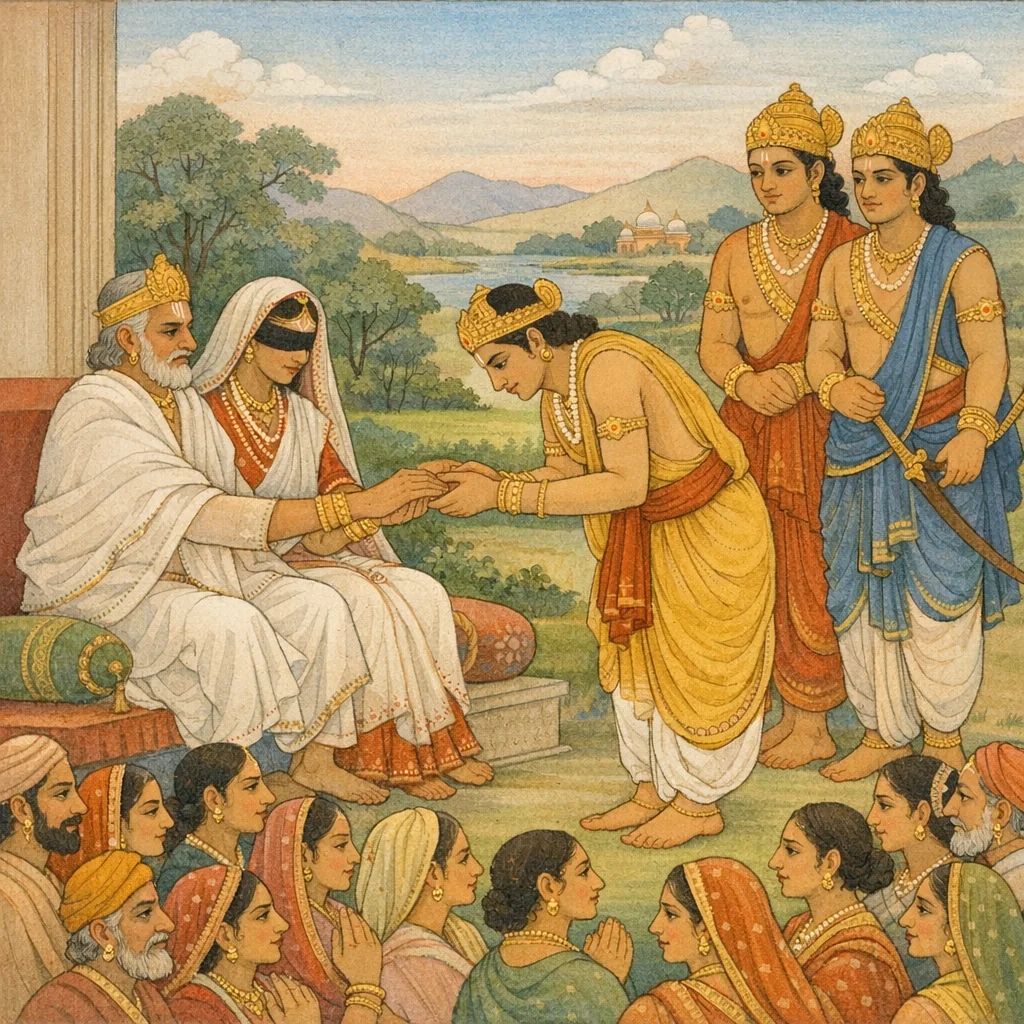
Adhyaya 8
धृतराष्ट्रस्य वनप्रस्थानानुज्ञा | Permission for Dhṛtarāṣṭra’s Forest-Retirement
Upa-parva: Dhṛtarāṣṭra–Vānaprastha Anujñā (Permission for Forest-Retirement Episode)
Vyāsa addresses Yudhiṣṭhira, arguing that the aged Dhṛtarāṣṭra—especially after the loss of his sons—should not be made to endure prolonged hardship in the city and should be granted leave to pursue forest discipline. He notes Gāndhārī’s capacity to bear grief with steadiness and presents the royal-ascetic trajectory as a precedent: ancient rājarṣis commonly conclude life in the forest. Vaiśaṃpāyana reports Yudhiṣṭhira’s reverential reply: Vyāsa is authoritative, and Dhṛtarāṣṭra is simultaneously father, king, and guru, whose instructions a son should follow by dharma. Vyāsa confirms that Yudhiṣṭhira’s reasoning is correct and instructs him not to obstruct Dhṛtarāṣṭra’s intention, describing death in battle or a regulated death in the forest as compatible endpoints for rājarṣis. He further recalls Dhṛtarāṣṭra’s prior guardianship and ritual generosity during Yudhiṣṭhira’s absence, reinforcing reciprocal obligation. After obtaining consent, Vyāsa departs for the forest; Yudhiṣṭhira then approaches Dhṛtarāṣṭra with deference, citing the concurrence of advisers (including Kṛpa, Vidura, Sañjaya, and Yuyutsu) and requests that the king take provisions before departing for the āśrama.
Chapter Arc: भीष्म के स्वर्गगमन, श्रीकृष्ण के द्वारका-प्रस्थान, और विदुर-संजय के विलग होने के बाद धृतराष्ट्र के चारों ओर शून्य-सा छा जाता है; वह युधिष्ठिर से वनगमन की आज्ञा माँगने का निश्चय करता है। → धृतराष्ट्र गान्धारी सहित अपने पिता (व्यास) की पूर्वानुमति और युधिष्ठिर की सहमति का स्मरण कर सभा-जन, सुहृद्, ब्राह्मण तथा कुरुजांगल की समस्त प्रजा के सामने अपना संकल्प रखता है। नगर-जनपद के चारों वर्ण एकत्र होते हैं; राज्य की स्थिरता, वृद्ध राजा का त्याग, और प्रजा की आशंका—सब एक साथ उभरते हैं। → धृतराष्ट्र सार्वजनिक रूप से घोषणा करता है कि वह गान्धारी के साथ शीघ्र वन को जाएगा—यह ‘न्यास’/उत्तरदायित्व-हस्तांतरण का क्षण है, जहाँ वह युधिष्ठिर की पालक-भूमिका को स्वीकार कर प्रजा के सामने अंतिम बार राज-धर्म की मुहर लगाता है। → युधिष्ठिर धृतराष्ट्र के हित में जो आदेश/उपदेश दिया जाए उसे मानने की प्रतिज्ञा करता है; धृतराष्ट्र को यह संतोष होता है कि युधिष्ठिर के राज्य में प्रजा सुरक्षित है और उसे दुर्योधन के ऐश्वर्य से भी श्रेष्ठ ‘सुख’ (आत्मिक शांति) प्राप्त हो रही है। → वनगमन की तैयारी और विदाई का भाव गहराता है—अगला चरण: धृतराष्ट्र-गान्धारी का वास्तविक प्रस्थान और उसके परिणाम।
Shlokas
Verse 1
ऑपन-मा_ज बछ। अि<-छऋज अष्टमो>< ध्याय: धृतराष्ट्रका कुरुजांगलदेशकी प्रजासे वनमें जानेके लिये आज्ञा माँगना युधिछिर उवाच एवमेतत् करिष्यामि यथा55त्थ पृथिवीपते । भूयश्चैवानुशास्यो5हं भवता पार्थिवर्षभ,युधिष्ठिर बोले--पृथ्वीनाथ! नृपश्रेष्ठी] आप जैसा कहते हैं, वैसा ही करूँगा। अभी आप मुझे कुछ और उपदेश दीजिये अपड-#-रू- नवमो< ध्याय: प्रजाजनोंसे धृतराष्ट्रकी क्षमा-प्रार्थना धृतराष्ट्र रवाच शान्तनु: पालयामास यथावद् वसुधामिमाम् | तथा विचित्रवीर्यश्ष॒ भीष्मेण परिपालित:
Yudhiṣṭhira said: “So be it. I shall do exactly as you have spoken, O lord of the earth. Yet, O bull among kings, instruct me further still.”
Verse 2
भीष्मे स्वर्गमनुप्राप्ते गते च मधुसूदने । विदुरे संजये चैव को<न्यो मां वक्तुमहति,भीष्मजी स्वर्ग सिधारे, भगवान् श्रीकृष्ण द्वारका पधारे और विदुर तथा संजय भी आपके साथ ही जा रहे हैं। अब दूसरा कौन रह जाता है, जो मुझे उपदेश दे सके यथा च पाण्डुर्श्राता मे दयितो भवतामभूत्
Yudhiṣṭhira said: “Now that Bhīṣma has attained heaven, and Madhusūdana (Kṛṣṇa) has departed, and Vidura and Saṃjaya as well—who else remains that is worthy to instruct me? And just as Pāṇḍu was my beloved elder, so too were you dear to us.”
Verse 3
यत् तु मामनुशास्तीह भवानद्य हिते स्थित: । कर्तास्मि तन््महीपाल निर्व॒तो भव पार्थिव,भूपाल! पृथ्वीपते! आज मेरे हितसाधनमें संलग्न होकर आप मुझे यहाँ जो कुछ उपदेश देते हैं, मैं उसका पालन करूँगा। आप संतुष्ट हों मया च भवतां सम्यक् शुश्रूषा या कृतानघा:
Yudhiṣṭhira said: “O king, whatever counsel you give me here today, intent upon my welfare, I shall follow. O lord of the earth, be satisfied; for I have served you rightly and without fault.”
Verse 4
वैशम्पायन उवाच एवमुक्त: स राजर्षिर्धर्मराजेन धीमता । कौन्तेयं समनुज्ञातुमियेष भरतर्षभ,वैशम्पायनजी कहते हैं--भरतश्रेष्ठ! बुद्धिमान् धर्मराज युधिष्ठिरके ऐसा कहनेपर राजर्षि धृतराष्ट्रने कुन्तीकुमारसे जानेके लिये अनुमति लेनेकी इच्छा की और कहा -- यदा दुर्योधनेनेदं भुक्ते राज्यमकण्टकम्
Vaiśampāyana said: O bull among the Bharatas, when the wise Dharmarāja (Yudhiṣṭhira) had spoken thus, the royal sage Dhṛtarāṣṭra wished to seek permission from the son of Kuntī (Yudhiṣṭhira) to depart. He began to speak, recalling the time when Duryodhana had enjoyed the kingdom without obstruction—setting the moral frame for his own withdrawal and accountability after the ruin brought by adharma.
Verse 5
पुत्र संशाम्यतां तावन््ममापि बलवान् श्रम: । इत्युक्त्वा प्राविशद् राजा गान्धार्या भवनं तदा,“बेटा! अब शान्त रहो। मुझे बोलनेमें बड़ा परिश्रम होता है (अब तो मैं जानेकी ही अनुमति चाहता हूँ)।' ऐसा कहकर राजा धृतराष्ट्रने उस समय गान्धारीके भवनमें प्रवेश किया अपि तत्र न वो मन्दो दुर्बुद्धिरपराद्धवान् । दुर्योधनने जब अकण्टक राज्यका उपभोग किया था, उस समय उस खोटी बुद्धिवाले मूर्ख नरेशने भी आपलोगोंका कोई अपराध नहीं किया था (वह केवल पाण्डवोंके साथ अन्याय करता रहा) ।। ४ $ || तस्यापराधाद् दुर्बुद्धेरभिमानान्महीक्षिताम्
Vaiśampāyana said: “Son, be calm for the moment. Even for me, speaking has become a heavy strain.” Having said this, King Dhṛtarāṣṭra then entered Gāndhārī’s residence. The moment underscores the exhaustion of grief and the ethical weight of speech: restraint and composure are urged when emotions and responsibility have become overwhelming.
Verse 6
तमासनगतं देवी गान्धारी धर्मचारिणी । उवाच काले कालज्ञा प्रजापतिसमं पतिम्,वहाँ जब वे आसनपर विराजमान हुए, तब समयका ज्ञान रखनेवाली धर्मपरायणा गान्धारी देवीने उस समय प्रजापतिके समान अपने पतिसे इस प्रकार पूछा-- विमर्द: सुमहानासीदनयात् स्वकृतादथ । (घातिता: कौरवेयाश्व पृथिवी च विनाशिता ।) उस दुर्बुद्धिके अपने ही किये हुए अन्याय, अपराध और अभिमानसे यहाँ असंख्य राजाओंका महान् संहार हो गया। सारे कौरव मारे गये और पृथ्वीका विनाश हो गया ।। ५३ || तन्मया साधु वापीदं यदि वासाधु वै कृतम्
When he had taken his seat, Queen Gāndhārī—steadfast in dharma and discerning of the right moment—addressed her husband, who was like Prajāpati in dignity. She said: “A terrible calamity has arisen from the injustice you yourself set in motion. Countless kings have been slain; the Kauravas have been destroyed, and the earth itself has been brought to ruin. Tell me—was what I did in this matter right, or was it wrong?”
Verse 7
इस प्रकार श्रीमह्याभारत आश्रमवासिकपवके अन्तर्गत आश्रमवासपर्वमें धृतराष््रका उपसंवादविषयक सातवाँ अध्याय पूरा हुआ,अनुज्ञात: स्वयं तेन व्यासेन त्वं महर्षिणा । युधिष्ठिरस्यानुमते कदारण्यं गमिष्यसि “महाराज! स्वयं महर्षि व्यासने आपको वनमें जानेकी आज्ञा दे दी है और युधिष्ठिरकी भी अनुमति मिल ही गयी है। अब आप कब वनको चलेंगे?” वृद्धोडयं हतपुत्रो5यं दु:खितो5यं नराधिप:
Dhṛtarāṣṭra said: “O King, the great sage Vyāsa himself has granted you permission, and Yudhiṣṭhira’s consent has also been obtained. When, then, will you depart for the forest? I am old; my sons are slain; I am overwhelmed with sorrow, O lord of men.”
Verse 8
धृतराष्ट उवाच गान्धार्यहमनुज्ञात: स्वयं पित्रा महात्मना । युधिष्ठिरस्यानुमते गन्तास्मि नचिराद् वनम्,धृतराष्ट्रने कहा--गान्धारि! मेरे महात्मा पिता व्यासने स्वयं तो आज्ञा दे ही दी है, युधिष्ठिरकी भी अनुमति मिल गयी है; अत: अब मैं जल्दी ही वनको चलूँगा इति श्रीमहाभारते आश्रमवासिके पर्वणि आश्रमवासपर्वणि धृतराष्ट्रकृतवनगमनप्रार्थनेडष्टमो 5 ध्याय: इयं च कृपणा वृद्धा हतपुत्रा तपस्विनी
Dhṛtarāṣṭra said: “Gāndhārī, my great-souled father himself has granted me permission, and Yudhiṣṭhira too has consented. Therefore, before long I shall depart for the forest.”
Verse 9
अहं हि तावत् सर्वेषां तेषां दुर्दयूतदेविनाम् पुत्राणां दातुमिच्छामि प्रेतभावानुगं वसु,हतपुत्राविमौ वृद्धौ विदित्वा दु:खितौं तथा इति श्रीमहाभारते आश्रमवासिके पर्वणि आश्रमवासपर्वणि धृतराष्ट्रप्रार्थने नवमो<ध्याय:
Dhṛtarāṣṭra said: “For my part, I wish to offer wealth—such as is fitting for the departed—for all those sons who were ruined by the evil of gambling. Knowing that we two aged parents are bereft of our children and sunk in grief, I desire to make these gifts.”
Verse 10
सर्वप्रकृतिसांनिध्यं कारयित्वा स्ववेश्मनि | जानेके पहले मैं चाहता हूँ कि समस्त प्रजाको घरपर बुलाकर अपने मरे हुए उन जुआरी पुत्रोंके उद्देश्य्से उनके पारलौकिक लाभके लिये कुछ धन दान कर दूँ ।। वैशम्पायन उवाच इत्युक्त्वा धर्मराजाय प्रेषयमास वै तदा,अयं च कौरवो राजा कुन्तीपुत्रो युधिष्ठिर:
Having arranged for the presence of all the royal officers and leading men in his own residence, he expressed his wish: before anything else, he wanted to summon the entire populace to his house and, for the otherworldly welfare of his deceased sons—those who had fallen through their addiction to gambling—make gifts of wealth in charity. Thus speaking, he then sent word to Dharmarāja, the Kaurava king, Kuntī’s son Yudhiṣṭhira.
Verse 11
स च तद् वचनातू् सर्व समानिन्ये महीपतिः । वैशम्पायनजी कहते हैं--जनमेजय! ऐसा कहकर राजा धूृतराष्ट्रने धर्मराज युधिष्ठिरके पास अपना विचार कहला भेजा। राजा युधिष्ठिरने देनेके लिये उनकी आज्ञाके अनुसार वह सब सामग्री जुटा दी (धृतराष्ट्रने उसका यथायोग्य वितरण कर दिया) ।। १०३ || ततः प्रतीतमनसो ब्राह्मणा: कुरुजाड्ुला:,न जातु विषमं चैव गमिष्यति कदाचन ये कभी आपलोगोंके प्रति विषमभाव नहीं रखेंगे। लोकपालोंके समान महातेजस्वी तथा सम्पूर्ण धर्म और अर्थके मर्मज्ञ ये चार भाई जिनके सचिव हैं, वे भीम, अर्जुन, नकुल और सहदेवसे घिरे हुए महाबाहु महातेजस्वी युधिष्छिर सम्पूर्ण जीव-जगत्के स्वामी भगवान् ब्रहद्माकी भाँति आपलोगोंका इसी तरह पालन करेंगे, जैसे पहलेके लोग करते आये हैं
Vaiśampāyana said: “Janamejaya, having spoken thus, King Dhṛtarāṣṭra conveyed his intention to Dharmarāja Yudhiṣṭhira. Yudhiṣṭhira, in obedience to his command, gathered all the requisites meant for charitable giving, and Dhṛtarāṣṭra then distributed them appropriately. The episode marks a turning from royal possession to ethical stewardship—wealth redirected toward dharma through regulated, purposeful generosity.”
Verse 12
ततो निष्क्रम्य नृपतिस्तस्मादन्त:पुरात् तदा,चत्वार: सचिवा यस्य भ्रातरो विपुलौजस: । लोकपालसमा द्ोते सर्वधर्मार्थदर्शिन: ये कभी आपलोगोंके प्रति विषमभाव नहीं रखेंगे। लोकपालोंके समान महातेजस्वी तथा सम्पूर्ण धर्म और अर्थके मर्मज्ञ ये चार भाई जिनके सचिव हैं, वे भीम, अर्जुन, नकुल और सहदेवसे घिरे हुए महाबाहु महातेजस्वी युधिष्छिर सम्पूर्ण जीव-जगत्के स्वामी भगवान् ब्रहद्माकी भाँति आपलोगोंका इसी तरह पालन करेंगे, जैसे पहलेके लोग करते आये हैं
Vaiśampāyana said: Then the king went out from the inner palace. He was attended by four ministers—his own brothers, mighty in strength—radiant like the guardians of the world and fully discerning the principles of dharma and artha. (In context, the passage assures that they will not act with partiality, and that Yudhiṣṭhira, surrounded by Bhīma, Arjuna, Nakula, and Sahadeva, will protect and govern the people righteously, as the men of old were wont to do.)
Verse 13
समवेतांश्व॒ तान् सर्वान् पौरान् जानपदांस्तथा,ब्रहोव भगवानेष सर्वभूतजगत्पति: । (एवमेव महाबाहुर्भीमार्जुनयमैर्वृत: ।) युधिष्ठिरो महातेजा भवतः पालयिष्यति ये कभी आपलोगोंके प्रति विषमभाव नहीं रखेंगे। लोकपालोंके समान महातेजस्वी तथा सम्पूर्ण धर्म और अर्थके मर्मज्ञ ये चार भाई जिनके सचिव हैं, वे भीम, अर्जुन, नकुल और सहदेवसे घिरे हुए महाबाहु महातेजस्वी युधिष्छिर सम्पूर्ण जीव-जगत्के स्वामी भगवान् ब्रहद्माकी भाँति आपलोगोंका इसी तरह पालन करेंगे, जैसे पहलेके लोग करते आये हैं
Vaiśampāyana said: “All those citizens and countryfolk assembled here—this Yudhiṣṭhira, mighty-armed and radiant, surrounded by Bhīma, Arjuna, and the twin brothers, Nakula and Sahadeva—will protect you in the same manner. Like Brahmā, the blessed lord of all beings and of the world, he will safeguard you without partiality, as the righteous of old were wont to do.”
Verse 14
तानागतानभिप्रेक्ष्य समस्तं च सुहृज्जनम् । ब्राह्मणांश्र महीपाल नानादेशसमागतान्,अवश्यमेव वक्तव्यमिति कृत्वा ब्रवीमि व: । एष न्यासो मया दत्त: सर्वेषां वो युधिष्ठिर:
Seeing all those who had arrived—his entire circle of well-wishers, and the brāhmaṇas gathered from many regions—the king resolved, “It must certainly be spoken.” Therefore he addressed them: “This charge, this entrusted responsibility, has been placed by me upon you all—(and) upon Yudhiṣṭhira.”
Verse 15
उवाच मतिमान् राजा धृतराष्ट्रोडम्बिकासुत: । भूपाल जनमेजय! राजाने देखा कि समस्त पुरवासी और जनपदके लोग वहाँ आ गये हैं। सम्पूर्ण सुहृद-वर्गके लोग भी उपस्थित हैं और नाना देशोंके ब्राह्मण भी पधारे हैं। तब बुद्धिमान् अम्बिकानन्दन राजा धृतराष्ट्रने उन सबको लक्ष्य करके कहा-- || १३-१४ $ || भवन्त: कुरवश्चैव चिरकालं सहोषिता:,यदेव तै: कृतं किंचिद् व्यलीकं व: सुतैर्मम
Vaiśampāyana said: Then the wise king Dhṛtarāṣṭra, son of Ambikā, addressed those assembled: “O Kurus, you have long dwelt together. If, through my sons, anything at all has been done to you that was crooked, false, or hurtful…” (He thus begins a public acknowledgement, preparing the ground for reconciliation and moral reckoning after the devastation of the Kuru conflict.)
Verse 16
यदिदानीमहं ब्रूयामस्मिन् काल उपस्थिते,पालयामास नस्तातो विदितार्थो न संशय: । धृतराष्ट्र बोले--सज्जनो! महाराज शान्तनुने इस पृथ्वीका यथावत््रूपसे पालन किया था। उसके बाद भीषद्वारा सुरक्षित हमारे तत्त्वज्ञ पिता विचित्रवीर्यने इस भूमण्डलकी रक्षा की; इसमें संशय नहीं है यदन्येन मदीयेन तदनुज्ञातुमर्ह थ । मेरे पुत्रोंने तथा मुझसे सम्बन्ध रखनेवाले और किसीने आपलोगोंका जो कुछ भी अपराध किया हो, उसके लिये मुझे क्षमा करें और जानेकी आज्ञा दें ।। भवद्धिर्न हि मे मन्यु: कृतपूर्व: कथंचन
Vaiśaṃpāyana said: “Now, at this time that has come upon us, I must speak. Our forefather, King Śāntanu, ruled this earth in the proper way—of this there is no doubt. After him, our father Vicitravīrya, protected by Bhīṣma, safeguarded this realm; there is no uncertainty in this. If any other person connected with me should also be granted leave, please permit it. Whatever offence my sons, or I, or anyone related to me may have committed against you—please forgive it, and grant us permission to depart. For from you there has never been any anger shown toward me at any time.”
Verse 17
अरण्यगमने बुद्धिर्गान्धारीसहितस्य मे,तेषामस्थिरबुद्धीनां लुब्धानां कामचारिणाम्
Vaiśampāyana said: “My resolve was to depart for the forest together with Gāndhārī—seeing those people as fickle-minded, greedy, and driven by unrestrained desire.”
Verse 18
भवन्तो>5प्यनुजानन्तु मा च वो5भूदू विचारणा,“अब आपलोग भी मुझे वनमें जानेकी आज्ञा दें। इस विषयमें आपके मनमें कोई अन्यथा विचार नहीं होना चाहिये। आपलोगोंका हमारे साथ जो यह प्रेम-सम्बन्ध सदासे चला आ रहा है, ऐसा सम्बन्ध दूसरे देशके राजाओंके साथ वहाँकी प्रजाका नहीं होगा, ऐसा मेरा विश्वास है कृते याचेडद्य व: सर्वान् गान्धारीसहितो5नघा: । निष्पाप प्रजाजन! मेरे पुत्रोंकी बुद्धि चंचल थी। वे लोभी और स्वेच्छाचारी थे। उनके अपराधोंके लिये आज गान्धारीसहित मैं आप सब लोगोंसे क्षमा-याचना करता हूँ ।। १७४६ || इत्युक्तास्तेन ते सर्वे पौरजानपदा जना: । नोचुर्बाष्पकला: किंचिद् वीक्षांचक्रु: परस्परम् धृतराष्ट्रके इस प्रकार कहनेपर नगर और जनपदमें निवास करनेवाले सब लोग नेत्रोंसे आँसू बहाते हुए एक-दूसरेका मुँह देखने लगे। किसीने कोई उत्तर नहीं दिया
Vaiśampāyana said: When he had spoken thus, all the people of the city and the countryside—overcome with tears—could only look at one another’s faces. No one uttered any reply.
Verse 19
अस्माकं भवतां चैव येयं प्रीतिर्हिं शाश्व॒ती । न च सान्येषु देशेषु राज्ञामिति मतिर्मम,“अब आपलोग भी मुझे वनमें जानेकी आज्ञा दें। इस विषयमें आपके मनमें कोई अन्यथा विचार नहीं होना चाहिये। आपलोगोंका हमारे साथ जो यह प्रेम-सम्बन्ध सदासे चला आ रहा है, ऐसा सम्बन्ध दूसरे देशके राजाओंके साथ वहाँकी प्रजाका नहीं होगा, ऐसा मेरा विश्वास है
Vaiśampāyana said: “This enduring bond of affection between us and you is truly everlasting. In my judgment, such a relationship between kings and their people is not found in other lands. Therefore, you too should grant me permission to depart for the forest; let there be no contrary thought in your minds about this matter.”
Verse 20
शान्तो5स्मि वयसानेन तथा पुत्रविनाकृत: । उपवासकृश श्वास्मि गान्धारीसहितो5नघा:,“निष्पाप प्रजाजन! अब इस बुढ़ापेने गरधारीसहित मुझको बहुत थका दिया है। पुत्रोंके मारे जानेका दुःख भी बना ही रहता है तथा उपवास करनेके कारण भी हम दोनों अधिक दुर्बल हो गये हैं
Vaiśampāyana said: “I am worn down by old age, and I am also bereft of my sons. I have grown emaciated from fasting, and—together with Gāndhārī—I have become weak, O blameless one.”
Verse 21
“सज्जनो! युधिष्ठिरके राज्यमें मुझे बड़ा सुख मिला है। मैं समझता हूँ कि दुर्योधनके राज्यसे भी बढ़कर सुख मुझे प्राप्त हुआ है”
Vaiśaṃpāyana said: “O noble ones! In Yudhiṣṭhira’s reign I obtained great happiness. I consider that I have gained a happiness even greater than what would have come under Duryodhana’s rule.”
Verse 22
मम चान्धस्य वृद्धस्य हतपुत्रस्य का गति: । ऋते वन॑ महाभागास्तन्मानुज्ञातुमरहथ
“As for me—blind, aged, and bereft of my sons—what course, what refuge remains? O noble ones, apart from going to the forest there is nothing left; therefore you should grant me permission for that.”
Verse 23
“एक तो मैं जन्मका अन्धा हूँ, दूसरे बूढ़ा हो गया हूँ, तीसरे मेरे सभी पुत्र मारे गये हैं। महाभाग प्रजाजन! अब आप ही बतायें, वनमें जानेके सिवा मेरे लिये दूसरी कौन-सी गति है? इसलिये अब आपलोग मुझे जानेकी आज्ञा दें” ।। तस्य तद् वचन श्रुत्वा सर्वे ते कुरुजाड्ला: । बाष्पसंदिग्धया वाचा रुरुदुर्भरतर्षभ,भरतश्रेष्ठ! राजा धृतराष्ट्रकी ये बातें सुनकर वहाँ उपस्थित हुए कुरुजांगलनिवासी सभी मनुष्योंके नेत्रोंस आँसुओंकी धारा बह चली और वे फूट-फूटकर रोने लगे
Vaiśampāyana said: “I am blind from birth; secondly, I have grown old; thirdly, all my sons have been slain. O noble people, you yourselves tell me—what other course remains for me except to go to the forest? Therefore, grant me leave to depart.” Hearing these words, all those people of Kuru-jāṅgala, their voices choked with tears, began to weep aloud. O bull among the Bharatas, O best of the Bharatas—on hearing King Dhṛtarāṣṭra’s speech, the eyes of all the men present, dwellers of Kuru-jāṅgala, overflowed with streams of tears, and they sobbed uncontrollably.
Verse 24
तानविन्रुवतः किंचित् सर्वान् शोकपरायणान् | पुनरेव महातेजा धृतराष्ट्रोडब्रवीदिदम्,उन सबको शोकमग्न होकर कुछ भी उत्तर न देते देख महातेजस्वी धुृतराष्ट्रने पुनः बोलना आरम्भ किया
Seeing them all sunk in grief and not replying even a little, the mighty Dhṛtarāṣṭra once again began to speak.
Verse 26
स चापि पालयामास यथावत् तच्च वेत्थ ह । उनके बाद मेरे भाई पाण्डुने इस राज्यका यथावत्रूपसे पालन किया। इसे आप सब लोग जानते हैं। अपने प्रजापालनरूपी गुणके कारण ही वे आपलोगोंके परम प्रिय हो गये थे
Vaiśampāyana said: “He too governed the kingdom in the proper manner—this you all well know. Because of his virtue expressed as the protection and care of his subjects, he became exceedingly dear to you all.”
Verse 33
असम्यग् वा महाभागास्तत् क्षन्तव्यमतन्द्रितैः । निष्पाप महाभागगण! पाण्डुके बाद मैंने भी आपलोगोंकी भली या बुरी सेवा की है, उसमें जो भूल हुई हो, उसके लिये आप आलस्यरहित प्रजाजन मुझे क्षमा करें
Vaiśampāyana said: “If anything has been done improperly, O noble ones, let it be forgiven by you who are vigilant and free from negligence. O sinless assembly of the great! In my service to you—whether good or flawed—if any mistake has occurred, then, O diligent people, please pardon me.”
Verse 63
तद् वो हृदि न कर्तव्यं मया बद्धोडयमञ्जलि: । उस अवसरपर मुझसे भला या बुरा जो कुछ भी कृत्य हो गया, उसे आपलोग अपने मनमें न लावें। इसके लिये मैं आपलोगोंसे हाथ जोड़कर क्षमा-प्रार्थना करता हूँ
“Do not keep this in your hearts; I stand before you with folded hands. Whatever good or ill I may have done on this occasion, do not hold it in your minds. For this reason I beg your forgiveness with joined palms.”
Verse 73
पूर्वराज्ञां च पुत्रो5यमिति कृत्वानुजानथ । “यह राजा धृतराष्ट्र बूढ़ा है। इसके पुत्र मारे गये हैं; अतः यह दुःखमें डूबा हुआ है और यह अपने प्राचीन राजाओंका वंशज है'--ऐसा समझकर आपलोग मेरे अपराधोंको क्षमा करते हुए मुझे वनमें जानेकी आज्ञा दें
Vaiśampāyana said: “Considering him to be a descendant of the ancient kings, grant him leave. ‘This king Dhṛtarāṣṭra is aged; his sons have been slain; therefore he is overwhelmed by sorrow, and he belongs to the lineage of former rulers.’ Understanding thus, forgive my offences and permit me to depart for the forest.”
Verse 83
गान्धारी पुत्रशोकार्ता युष्मान् याचति वै मया । यह बेचारी वृद्धा तपस्विनी गान्धारी, जिसके सभी पुत्र मारे गये हैं तथा जो पुत्रशोकसे व्याकुल रहती है, मेरे साथ आपलोगोंसे क्षमा-याचना करती है
Vaiśampāyana said: “Gāndhārī, overwhelmed by grief for her sons, is—through me—making a supplication to you all.”
Verse 93
अनुजानीत भद्ठं वो त्रजाव शरणं च व: । इन दोनों बूढ़ोंको पुत्रोंके मारे जानेसे दुखी जानकर आपलोग वनमें जानेकी आज्ञा दें। आपका कल्याण हो। हम दोनों आपकी शरणमें आये हैं
Vaiśampāyana said: “Grant us leave—may welfare be yours. We seek refuge with you. Knowing that these two elders are crushed by grief at the loss of their sons, permit them to depart for the forest. May good befall you; we have come under your protection.”
Verse 106
सर्वेर्भवद्धिद्रष्टव्य: समेषु विषमेषु च । ये कुरुकुलरत्न कुन्तीपुत्र राजा युधिष्ठिर आपलोगोंके पालक हैं। अच्छे और बुरे सभी समयोंमें आप सब लोग इनपर कृपादृष्टि रखें
Vaiśampāyana said: “All of you should keep your eyes upon him—both in favorable times and in adverse. King Yudhiṣṭhira, Kuntī’s son, the jewel of the Kuru line, is the protector of you all. Therefore, in every season of fortune and misfortune alike, let your gaze rest on him with compassion and support.”
Verse 116
क्षत्रियाश्वैव वैश्याश्व शूद्राश्ैव समाययु: । उधर राजाका संदेश पाकर कुरुजांगलदेशके ब्राह्मण, क्षत्रिय, वैश्य और शाूद्र वहाँ आये। उन सबके हृदयमें बड़ी प्रसन्नता थी
Vaiśampāyana said: “Kṣatriyas, Vaiśyas, and Śūdras too assembled together. Having received the king’s message, the people of Kuru-jāṅgala—Brahmins, Kṣatriyas, Vaiśyas, and Śūdras—came there, their hearts filled with great joy. The scene underscores social cohesion and dutiful response to royal summons, suggesting a moment of collective order and goodwill after the devastations of war.”
Verse 146
भवन्तो5स्य च वीरस्य न्यासभूता: कृता मया । मुझे ये बातें अवश्य कहनी चाहिये, ऐसा सोचकर ही मैं आपलोगोंसे यह सब कहता हूँ। मैं इन राजा युधिष्ठिरको धरोहरके रूपमें आप सब लोगोंके हाथ सौंप रहा हूँ और आपलोगोंको भी इन वीर नरेशके हाथमें धरोहरकी ही भाँति दे रहा हूँ
Vaiśampāyana said: “I have appointed you all as trustees for this heroic king. Thinking, ‘I must certainly say these things,’ I speak thus: I entrust King Yudhiṣṭhira to you as a sacred deposit, and I likewise place you in the hands of this valiant ruler as a deposit—so that mutual responsibility, protection, and righteous counsel may be upheld.”
Verse 153
परस्परस्य सुह्दद: परस्परहिते रता: । 'सज्जनो! आप और कौरव चिरकालसे एक साथ रहते आये हैं। आप दोनों एक- दूसरेके सुहृद् हैं और दोनों सदा एक-दूसरेके हितमें तत्पर रहते हैं
Vaiśampāyana said: “They are mutual well-wishers, devoted to one another’s good. ‘O noble one, you and the Kauravas have long lived together; you are each other’s friends, and both are ever intent on each other’s welfare.’”
Verse 166
तथा भवद्धधिः कर्तव्यमविचार्य वचो मम । “इस समय मैं आपलोगोंसे वर्तमान अवसरपर जो कुछ कहूँ, मेरी उस बातको आपलोग बिना विचारे स्वीकार करें; यही मेरी प्रार्थना है,अत्यन्तगुरुभक्तानामेषो5ञ्जलिरिदं नम: । आपलोगोंने पहले मुझपर किसी तरह कोई रोष नहीं प्रकट किया है। आपलोग अत्यन्त गुरुभक्त हैं; अतः आपके सामने मेरे ये दोनों हाथ जुड़े हुए हैं और मैं आपको यह प्रणाम करता हूँ
Vaiśampāyana said: “So should you act—accept my words without hesitation or second-guessing. You have never shown me displeasure in any way. Since you are deeply devoted to your teacher, I stand before you with folded hands and offer you my respectful salutation.”
Verse 173
व्यासस्यानुमते राज्ञस्तथा कुन्तीसुतस्य मे | “मैंने गान्धारीके साथ वनमें जानेका निश्चय किया है; इसके लिये मुझे महर्षि व्यास तथा कुन्तीनन्दन राजा युधिष्ठिरकी भी अनुमति मिल गयी है
Vaiśampāyana said: “With the permission of the sage Vyāsa, and likewise with the consent of the king—Kuntī’s son (Yudhiṣṭhira)—I have resolved to go to the forest together with Gāndhārī.”
Verse 231
युधिष्ठिरगते राज्ये प्राप्तश्चास्मि सुखं महत् । मन्ये दुर्योधनैश्वर्याद् विशिष्टमिति सत्तमा:
Vaiśampāyana said: “Now that the kingdom has passed to Yudhiṣṭhira, I too have attained great happiness. I consider this state of affairs superior to the former sovereignty of Duryodhana, O best of the virtuous.”
Verse 1236
ददृशे त॑ जन सर्व सर्वाश्व प्रकृतीस्तथा । तदनन्तर महाराज धुृतराष्ट्र अन्तःपुरसे बाहर निकले और वहाँ नगर तथा जनपदकी समस्त प्रजाके उपस्थित होनेका समाचार सुना
Vaiśampāyana said: Then all the people were seen gathered there, along with the various royal establishments and resources. After this, O King, Dhṛtarāṣṭra came out from the inner apartments and heard the report that the entire populace of the city and the surrounding countryside had assembled.
Frequently Asked Questions
Whether Yudhiṣṭhira should prioritize retaining the elder king within the polity for symbolic stability or honor Dhṛtarāṣṭhira’s dharmically appropriate wish to renounce, thereby balancing rājadharma with pitṛ-dharma and āśrama-dharma.
Legitimate authority includes knowing when to release control: enabling a lawful life-stage transition (to vānaprastha) is itself dharma, and grief and responsibility can be ethically redirected into disciplined restraint rather than prolonged political entanglement.
No explicit phalaśruti is stated; the meta-commentary operates through normative assertion—Vyāsa frames forest-retirement as the “higher dharma” for rājarṣis and presents non-obstruction as the interpretive key for aligning personal duty with the epic’s broader renunciatory trajectory.