Adhyaya 142
Adhyāya 142: Cyavana, the Devas’ Arrogance, and Vāyu’s Counsel on Protecting Brāhmaṇas
Upa-parva: Anuśāsana Instructional Cycle on Brāhmaṇa-Dharma and Kṣatra Protection (Contextual Episode)
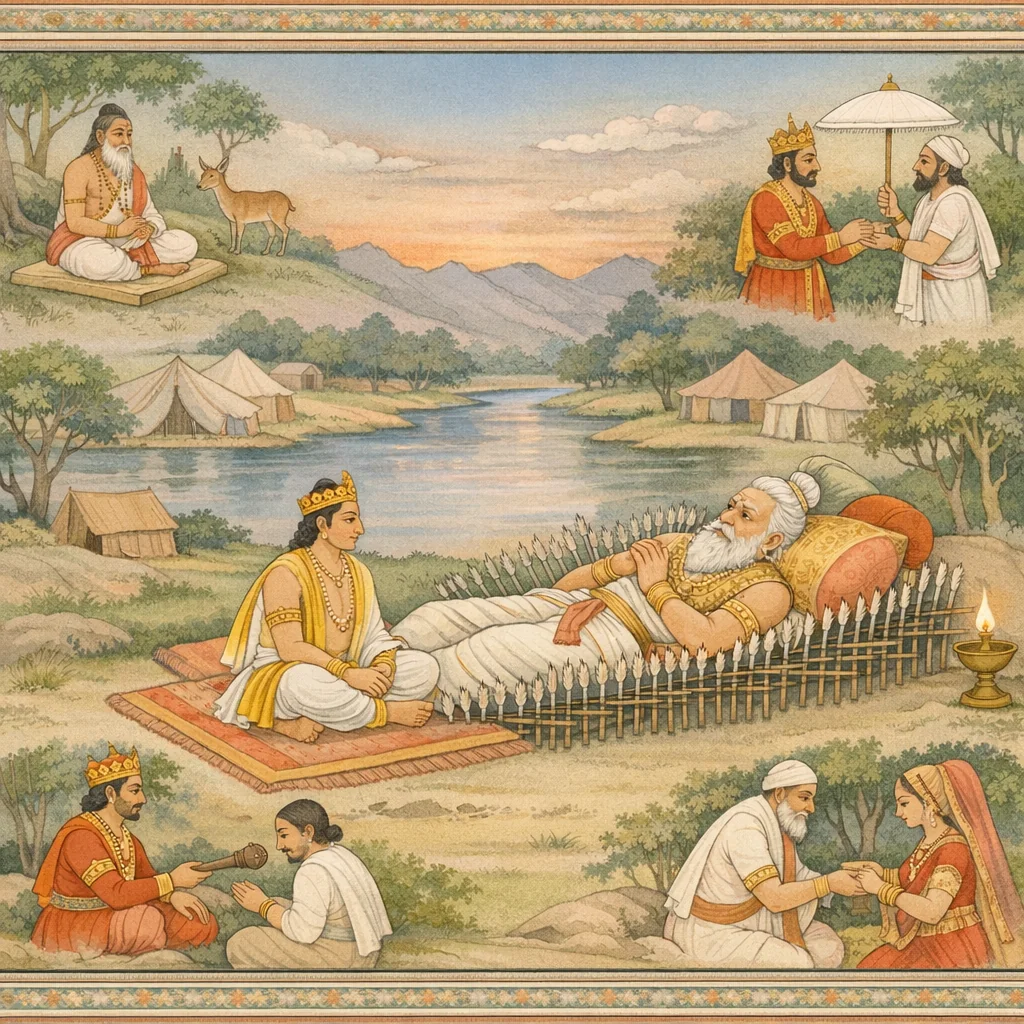
Bhīṣma continues the didactic frame: Arjuna remains silent as Pavana (Vāyu) resumes instruction, urging the listener (Janādhipa) to understand the ‘chief duty’ concerning Brāhmaṇas. An exemplum follows: when the devas, including Indra, become intoxicated with pride, Cyavana deprives them of their earthly domain, and (by the chapter’s phrasing) their heaven is also imperiled; distressed, they approach Brahmā for refuge. Brahmā directs them to seek Brāhmaṇas and regain both worlds through appeasement. The devas approach the Brāhmaṇas, but the exchange escalates into a contest framed as victory over the ‘kapas’; the Brāhmaṇas initiate a destructive rite, and a wealthy emissary attempts conciliation by praising the Brāhmaṇas’ virtues—Vedic learning, sacrificial discipline, truthfulness, restraint, non-exploitative conduct, care for dependents, and regulated habits. The Brāhmaṇas refuse, asserting superiority; conflict ensues, and ritual fire—described as Brahmā-created ‘havyabhuj’—consumes the opposing party, after which the devas’ power and status are restored. Returning to the frame, Arjuna replies with reverence, affirming lifelong service to Brāhmaṇas and crediting Dattātreya’s grace for his fame. Vāyu concludes with a directive: protect Brāhmaṇas according to kṣatra-dharma, restrain the senses, and note a future grave danger associated with the Bhṛgus.
Chapter Arc: युधिष्ठिर के मन में दान और प्रायश्चित्त के सूक्ष्म नियमों को लेकर शंका उठती है—‘ग्रहसूतक’ जैसे शब्दों का सही अर्थ क्या है, और अशौच/अपवित्रता की स्थितियों में धर्म का आचरण कैसे हो? → भीष्म उत्तर देते हुए राजाओं और महर्षियों के उदाहरणों की शृंखला खोलते हैं—तप, दान, और धर्मसम्मत दण्ड-नीति से किन-किन ने ‘अनुत्तम लोक’ प्राप्त किए। हर कथा एक नया मानदण्ड रखती है: कहीं यज्ञार्थ दान, कहीं कन्यादान, कहीं न्यायपूर्ण दण्ड। → उदाहरणों का शिखर उस बोध में आता है कि केवल दान की मात्रा नहीं, उसका ‘धर्म-नियत’ स्वरूप (पात्र, काल, विधि, और शुद्ध भाव) ही लोक-प्राप्ति का कारण बनता है—देवावृध का यज्ञार्थ दिव्य दान, सुद्युम्न का धर्मतः दण्ड, और भगीरथ/मदिराश्व/लोमपाद के कन्यादान—सब एक ही सिद्धान्त को उजागर करते हैं। → भीष्म संकेत करते हैं कि शास्त्रीय निर्णय में संध्या-काल की मर्यादा भी धर्म है; अतः वे कहते हैं कि जहाँ शंका होगी, उसका उत्तर वे अगले प्रातः स्पष्ट करेंगे। → भीष्म का वचन—‘कल प्रभात में बताऊँगा’—युधिष्ठिर की शंकाओं को अगले उपदेश के लिए खुला छोड़ देता है।
Shlokas
Verse 1
2: बछ। अकाल - कुछ लोग 'ग्रहसूतकयो:” का अर्थ करते हैं "कारागारस्थाशौचवतो” इसके अनुसार जो जेलमें रह आया हो तथा जो जनन-मरण-सम्बन्धी अशौचसे युक्त हो ऐसे लोगोंका दिया हुआ क्षेत्रदान स्वीकार करनेपर तीन रात उपवास करनेसे प्रतिग्रह-दोषसे छुटकारा मिलता है। सप्तत्रिशर्दाधिकशततमोब< ध्याय: दानसे स्वर्गलोकमें जानेवाले राजाओंका वर्णन युधिछिर उवाच दानेन वर्ततेत्याह तपसा चैव भारत । तदेतन्मे मनोदु:खं व्यपोह त्वं पितामह । किंस्वित् पृथिव्यां होतन्मे भवान् शंसितुमरहति,युधिष्ठिरने पूछा--भरतनन्दन! पितामह! आप कहते हैं कि दान और तप दोनोंसे ही मनुष्य स्वर्गमें जाता है, परंतु मेरे मनमें संशयजनित दुःख हो रहा है। आप इसका निवारण कीजिये। इस पृथ्वीपर दान और तपमेंसे कौन-सा साधन श्रेष्ठ है, यह बतानेकी कृपा करें
Yudhiṣṭhira said: “O Bhārata, you have declared that one attains the heavenly world through giving, and also through austerity. Yet a sorrow born of doubt troubles my mind—remove it, O Grandfather. On this earth, which is truly superior for me: charity or austerity? Please tell me.”
Verse 2
भीष्म उवाच शृणु यैर्धर्मनिरतैस्तपसा भावितात्मभि: । लोका हासंशयं प्राप्ता दानपुण्यरतैर्नुपै:,भीष्मजीने कहा--युधिष्ठिर! तपस्यासे शुद्ध अन्तः:करणवाले जिन धर्मात्मा राजाओंने दान-पुण्यमें तत्पर रहकर नि:सन्देह बहुत-से उत्तम लोक प्राप्त किये हैं, उनके नाम बता रहा हूँ, सुनो
Bhīṣma said: “Listen, Yudhiṣṭhira. Kings devoted to dharma, their souls refined by austerity, and intent upon the merit of giving, have without doubt attained many excellent worlds. I shall tell you their names—hear them.”
Verse 3
सत्कृतश्न तथा<<त्रेय: शिष्येभ्यो ब्रह्म निर्गुणम् । उपदिश्य तदा राजन् गतो लोकाननुत्तमान्,राजन्! लोकसम्मानित महर्षि आत्रेय अपने शिष्योंको निर्गुण ब्रह्मका उपदेश देकर उत्तम लोकोंमें गये हैं
Bhīṣma said: “O King, the venerable sage Ātreya, honored by the world, instructed his disciples in the attributeless (nirguṇa) Brahman; and having thus imparted that highest teaching, he departed to the unsurpassed realms.”
Verse 4
शिबिरौशीनर: प्राणान् प्रियस्य तनयस्य च । ब्राह्मणार्थमुपाकृत्य नाकपृष्ठमितो गत:
Bhīṣma said: King Śibi of the Uśīnara line, for the sake of a brāhmaṇa, offered up his own life—and even that of his beloved son—and then departed from this world to the heavenly realm.
Verse 5
उशीनरकुमार शिवि अपने प्यारे पुत्रके प्राणोंको ब्राह्मणके लिये निछावर करके यहाँसे स्वर्गलोकमें चले गये ।। प्रतर्दन: काशिपति: प्रदाय तनयं स्वकम् । ब्राह्मणायातुलां कीर्तिमिह चामुत्र चाश्षुते,काशीके राजा प्रतर्दनने अपने प्यारे पुत्रको ब्राह्मणकी सेवामें अर्पित कर दिया, जिसके कारण उन्हें इस लोकमें अनुपम कीर्ति मिली और परलोकमें भी वे अक्षय आनन्दका उपभोग कर रहे हैं
Bhīṣma said: “King Śibi, the prince of the Uśīnara line, surrendered even the life of his beloved son for the sake of a brāhmaṇa, and departing from this world attained heaven. Likewise Pratardana, the lord of Kāśī, offered his own dear son into a brāhmaṇa’s service; by that act he gained incomparable fame in this world and, in the next, enjoys imperishable bliss.”
Verse 6
रन्तिदेवश्व सांकृत्यो वसिष्ठाय महात्मने । अर्घ्य प्रदाय विधिवल्लेभे लोकाननुत्तमान्,संकृतिके पुत्र राजा रन्तिदेवने महात्मा वसिष्ठ मुनिको विधिवत् अर्घ्यदान किया, जिससे उन्हें श्रेष्ठ लोकोंकी प्राप्ति हुई
Bhishma said: King Rantideva, the son of Saṅkṛti, duly offered the ceremonial arghya to the great-souled sage Vasiṣṭha. By this reverent hospitality, performed according to proper rite, he attained the highest and unsurpassed worlds.
Verse 7
दिव्यं शतशलाकं च यज्ञार्थ काउचनं शुभम् | छत्र॑ देवावृधो दत्त्वा ब्राह्मणायास्थितो दिवम्,देवावृध नामक राजा यज्ञमें सोनेकी सौ तीलियोंवाले सुन्दर दिव्य छत्रका ब्राह्मणको दान करके स्वर्ग-लोकको प्राप्त हुए हैं
Bhīṣma said: King Devāvṛdha, having given to a brāhmaṇa a splendid, golden, divine parasol fitted with a hundred ribs for sacrificial use, attained heaven.
Verse 8
भगवानम्बरीष श्च ब्राह्मणायामितौजसे । प्रदाय सकल राष्ट्र सुरलोकमवाप्तवान्,ऐश्वर्यशशाली राजा अम्बरीष अमित तेजस्वी ब्राह्मणको अपना सारा राज्य सौंपकर देवलोकको प्राप्त हुए
Bhishma said: The illustrious King Ambarisha, endowed with great splendor, bestowed his entire kingdom upon a brāhmaṇa of immeasurable spiritual power; having thus renounced sovereignty in a righteous gift, he attained the world of the gods.
Verse 9
सावित्र: कुण्डलं दिव्यं यानं च जनमेजय: । ब्राह्मणाय च गा दत्त्वा गतो लोकाननुत्तमान्,सूर्यपुत्र कर्ण अपना दिव्य कुण्डल देकर तथा महाराजा जनमेजय ब्राह्मणको सवारी और गौ दान करके उत्तम लोकोंमें गये हैं
Bhīṣma said: Sāvitra, having given away his divine ear-ornament, and King Janamejaya, having donated a conveyance and cows to a brāhmaṇa, attained the unsurpassed worlds.
Verse 10
वृषादर्भिश्न राजर्षी रत्नानि विविधानि च । रम्यांक्षावसथान् दत्त्वा द्विजेभ्यो दिवमागत:,राजर्षि वृषादर्भिने ब्राह्मणोंको नाना प्रकारके रत्न तथा रमणीय गृह प्रदान करके स्वर्गलोकमें स्थान प्राप्त किया है
Bhīṣma said: The royal sage Vṛṣādarbhisna, having bestowed upon the twice-born (brāhmaṇas) many kinds of precious gems and delightful dwellings, attained heaven.
Verse 11
निमी राष्ट्रं च वैदर्भि: कन्यां दत्त्वा महात्मने । अगस्त्याय गतः स्वर्ग सपुत्रपशुबान्धव:,विदर्भके पुत्र राजा निमि अगस्त्य मुनिको अपनी कन्या और राज्यका दान करके पुत्र, पशु और बान्धवोंसहित स्वर्गलोकमें चले गये
Bhīṣma said: King Nimi of Vidarbha, having bestowed both his kingdom and his daughter upon the great-souled sage Agastya, departed to heaven together with his sons, his cattle, and his kinsmen.
Verse 12
जामदग्न्यश्न विप्राय भूमिं दत््वा महायशा: । रामो3क्षयांस्तथा लोकान् जगाम मनसो5डघिकान्,महायशस्वी जमदग्निनन्दन परशुरामजीने ब्राह्मणको भूमिदान करके उन अक्षय लोकोंको प्राप्त किया है, जिन्हें पानेकी मनमें कल्पना भी नहीं हो सकती
Bhīṣma said: The illustrious Rama, son of Jamadagni (Parashurama), having bestowed the earth in gift to the Brahmin, attained imperishable worlds—realms beyond even what the mind can readily conceive.
Verse 13
अवर्षति च पर्जन्ये सर्वभूतानि देवराट् । वसिष्ठो जीवयामास येन यातो$क्षयां गतिम्,एक बार संसारमें वर्षा न होनेपर मुनिवर वसिष्ठजीने समस्त प्राणियोंको जीवन दान दिया था, जिससे उन्हें अक्षय लोकोंकी प्राप्ति हुई
Bhīṣma said: When the rain failed to fall, all living beings suffered. Then the great sage Vasiṣṭha restored them to life; through that life-giving act he attained an imperishable state (an undecaying realm).
Verse 14
रामो दाशरथिश्वैव हुत्वा यज्ञेषु वै वसु । स गतो हाक्षयाँललोकान् यस्य लोके महद् यश:,दशरथनन्दन भगवान् श्रीरामचन्द्रजी यज्ञोंमें प्रचुर धनकी आहुति देकर संसारमें अपने महान् यशकी स्थापना करके अक्षय लोकोंमें चले गये
Bhīṣma said: “Rama, the son of Dasharatha, having offered abundant wealth as oblations in sacrifices, established great renown in this world and then attained the imperishable realms.”
Verse 15
कक्षसेनश्न् राजर्षिवेसिष्ठाय महात्मने । न्यासं यथावत् संन््यस्थ जगाम सुमहायशा:,महायशस्वी राजर्षि कक्षसेन महात्मा वसिष्ठको अपना सर्वस्व समर्पण करके स्वर्गलोकमें गये हैं
Bhīṣma said: The illustrious royal sage Kakṣasena, having duly entrusted (all that he possessed) to the great-souled Vasiṣṭha in the proper manner, renounced his holdings and departed for the heavenly world—his fame exceedingly great.
Verse 16
करन्धमस्य पौत्रस्तु मरुत्तोडविक्षित: सुतः । कन्यामांगिरसे दत्त्वा दिवमाशु जगाम सः:,करन्धमके पौत्र, अविक्षित॒के पुत्र महाराज मरुत्तने अंगिराके पुत्र संवर्तको कन्यादान करके शीघ्र ही स्वर्गलोकमें स्थान प्राप्त कर लिया
Bhīṣma said: “Marutta, the grandson of Karandhama and the son of Avikṣit, quickly attained heaven after giving his daughter in marriage, in accordance with dharma, to a descendant of Aṅgiras.”
Verse 17
ब्रह्मदत्तश्न पाज्चाल्यो राजा धर्मभृतां वर: । निर्धि शड्खमनुज्ञाप्प जगाम परमां गतिम्,पाञ्चालदेशके राजा धर्मात्माओंमें श्रेष्ठ ब्रह्मदत्तने ब्राह्यणको शंखनामक निधि प्रदान करके परम गति प्राप्त कर ली थी
Bhīṣma said: “King Brahmadatta of Pañcāla, foremost among upholders of dharma, bestowed upon a brāhmaṇa a treasure called ‘Shankha’ and, through that righteous generosity, attained the highest state.”
Verse 18
राजा मित्रसहश्चैव वसिष्ठाय महात्मने । मदयमन्तीं प्रियां भार्या दत्त्वा च त्रिदिवं गत:,राजा मित्रसह महात्मा वसिष्ठ मुनिको अपनी प्यारी पत्नी मदयन्ती सेवाके लिये देकर स्वर्गलोकमें चले गये
Bhīṣma said: “King Mitrasaha, having given his beloved wife Madayantī to the great-souled sage Vasiṣṭha for service, thereafter departed to the heavenly world.”
Verse 19
मनो: पुत्रश्न सुद्युम्नो लिखिताय महात्मने । दण्डमुद्धृत्य धर्मेण गतो लोकाननुत्तमान्,मनुपुत्र राजा सुद्युम्न महात्मा लिखितको धर्मतः दण्ड देकर परम उत्तम लोकोंमें गये
Bhīṣma said: “Manu’s son, King Sudyumna, having duly wielded daṇḍa—the rod of punishment—in accordance with dharma, attained the unsurpassed worlds; and so too did the great-souled Likhita, through righteous conduct and the proper exercise of authority.”
Verse 20
सहस्रचित्यो: राजर्षि: प्राणानिष्टान् महायशा: । ब्राह्मणार्थे परित्यज्य गतो लोकाननुच्तमान्
Bhīṣma said: “The illustrious royal sage Sahasracitya, renouncing even his dearly cherished life for the sake of a brāhmaṇa, attained the highest worlds.”
Verse 21
महान् यशस्वी राजर्षि सहस्नचित्य ब्राह्मणके लिये अपने प्यारे प्राणोंकी बलि देकर श्रेष्ठ लोकोंमें गये हैं ।। सर्वकामैश्व सम्पूर्ण दत्त्वा वेश्म हिरण्मयम् । मौद्गल्याय गतः स्वर्ग शतद्युम्नो महीपति:,महाराजा शत्द्युम्नने मौदगल्य नामक ब्राह्मणको समस्त कामनाओंसे परिपूर्ण सुवर्णमय गृह दान देकर स्वर्ग प्राप्त किया है
Bhishma said: King Śatadyumna, having gifted to the Brahmin Maudgalya a golden house furnished with every desired comfort, attained heaven. This passage proclaims the moral power of complete, selfless giving—especially to worthy recipients—as a kingly duty that leads to exalted worlds.
Verse 22
भ्क्ष्यभोज्यस्य च कृतान् राशय: पर्वतोपमान् | शाण्डिल्याय पुरा दत्त्वा सुमन्युर्दिवमास्थित:
Bhīṣma said: “Having formerly given to Śāṇḍilya vast heaps of prepared foods—edibles and cooked dishes—piled up like mountains, Sumanyu thereafter attained heaven.”
Verse 23
राजा सुमन्युने भक्ष्य, भोज्य पदार्थोंके पर्वत-जैसे कितने ही ढेर लगाकर उन्हें शाण्डिल्यको दान दिया था। जिससे उन्होंने स्वर्गलोकमें स्थान प्राप्त कर लिया ।। नाम्ना च द्युतिमान् नाम शाल्वराजो महाद्युति: । दत्त्वा राज्यमूचीकाय गतो लोकाननुत्तमान्,महातेजस्वी शाल्वराज द्युतिमान् महर्षि ऋचीकको राज्य देकर सर्वोत्तम लोकोंमें चले गये
Bhishma said: King Sumanyu heaped up mountain-like piles of edible provisions and delightful foods and gave them in charity to Shandilya; by that meritorious gift he gained a place in heaven. Likewise, the illustrious Shalva king named Dyutiman—radiant and mighty—handed over his kingdom to the sage Richika and departed to the unsurpassed worlds, showing the power of generosity and the renunciation of sovereignty for higher attainment.
Verse 24
मदिराश्चश्व राजर्षिददत््वा कन्यां सुमध्यमाम् | हिरण्यहस्ताय गतो लोकान् देवैरधिष्ठितान्
Bhishma said: Madirāśvā, the royal sage, having given a slender-waisted maiden in marriage to Hiraṇyahasta, departed to those worlds presided over by the gods—signifying the meritorious end attained through righteous gifting and proper conduct in marital alliance.
Verse 25
राजर्षि मदिराश्व अपनी सुन्दरी कन्या विप्रवर हिरण्यहस्तको देकर देवताओंके लोकमें चले गये ।। लोमपादश्न राजर्षि: शान्तां दत्त्वा सुतां प्रभु: ऋष्यश्ज्भाय विपुलै: सर्वे: कामैरयुज्यत,प्रभावशाली राजर्षि लोमपादने मुनिवर ऋष्यशृंगको अपनी शान्ता नामवाली कन्या दान की थी, इससे उनकी सम्पूर्ण कामनाएँ पूर्णरूपसे सफल हुईं
Bhishma said: The royal sage Lomapada, a powerful ruler, gave his daughter Shanta in marriage to the eminent brahmin-sage Rishyasringa. By this righteous act of offering his daughter to a worthy ascetic, Lomapada gained abundant prosperity and saw all his aims fulfilled—showing that honoring virtue and supporting spiritual excellence brings both worldly welfare and moral merit.
Verse 26
कौत्साय दत्त्वा कन्यां तु हंसीं नाम यशस्विनीम् | गतो$क्षयानतो लोकानू् राजर्षिश्ष भगीरथ:,राजर्षि भगीरथ अपनी यशस्विनी कन्या हंसीका कौत्स ऋषिको दान करके अक्षय लोकोंमें गये हैं
Bhīṣma said: Having given his illustrious daughter named Haṃsī in marriage to the sage Kautsa in accordance with dharma, the royal seer Bhāgīratha attained the imperishable worlds.
Verse 27
दत्त्वा शतसहस्र॑ तु गवां राजा भगीरथ: । सवत्सानां कोहलाय गतो लोकाननुत्तमान्,राजा भगीरथने कोहल नामक ब्राह्णको एक लाख सवत्सा गौएँ दान कीं, जिससे उन्हें उत्तम लोकोंकी प्राप्ति हुई
Bhīṣma said: King Bhāgīratha, having bestowed a hundred thousand cows—each with her calf—upon the Brahmin Kohala, attained the highest worlds.
Verse 28
एते चान्ये च बहवो दानेन तपसा च ह । युधिष्ठिर गताः स्वर्ग विवर्तन्ते पुनः पुन:,युधिष्ठिर! ये तथा और भी बहुत-से राजा दान और तपस्याके प्रभावसे बारंबार स्वर्गलोकको जाते और पुनः वहाँसे इस लोकमें लौट आते हैं
Bhīṣma said: “O Yudhiṣṭhira, these and many other kings, by the power of charity and austerity, attain heaven; yet again and again they return from there to this world.”
Verse 29
तेषां प्रतिष्ठिता कीर्तियावत् स्थास्यति मेदिनी । गृहस्थैर्दानतपसा यैलोंका वै विनिर्जिता:,जिन गृहस्थोंने दान और तपस्याके बलसे उत्तम लोकोंपर विजय पायी है, उनकी कीर्ति इस लोकमें तबतक प्रतिष्ठित रहेगी, जबतक कि यह पृथ्वी स्थिर रहेगी
Bhīṣma said: The fame of those householders who, through generosity and disciplined austerity, have won for themselves the highest worlds will remain firmly established in this world for as long as the earth endures.
Verse 30
शिष्टानां चरितं होतत् कीर्तितं मे युधिष्ठिर । दानयज्ञप्रजासगैरेते हि दिवमास्थिता:,युधिष्ठिर! यह शिष्ट पुरुषोंका चरित्र बताया गया है। ये सब नरेश दान, यज्ञ और संतानोत्पादन करके स्वर्गमें प्रतिष्ठित हुए हैं
Bhīṣma said: “O Yudhiṣṭhira, I have thus recounted to you the conduct of the cultured and righteous. Indeed, these kings attained heaven by practicing generosity, performing sacrifices, and sustaining the line through begetting offspring.”
Verse 31
दत्त्वा तु सततं ते5स्तु कौरवाणां धुरन्धर | दानयज्ञक्रियायुक्ता बुद्धिर्धमोपचायिनी,कौरवधुरंधर! तुम भी सदा दान करते रहो। तुम्हारी बुद्धि दान और यज्ञकी क्रियामें संलग्न हो धर्मकी उन्नति करती रहे
Bhīṣma said: “O foremost bearer of the Kauravas’ burden, may you be one who gives continually. Let your understanding remain engaged in the acts of charity and sacrifice, ever fostering the growth of dharma.”
Verse 32
यत्र ते नृपशार्दूल संदेहो वै भविष्यति । श्वः प्रभाते हि वक्ष्यामि संध्या हि समुपस्थिता,नृपश्रेष्ठी अब तुम्हें जिस विषयमें संदेह होगा, उसे मैं कल सबेरे बताऊँगा; क्योंकि इस समय संध्याकाल उपस्थित है
Bhīṣma said: “O tiger among kings, whatever point leaves you in doubt, I shall explain it to you tomorrow at dawn; for evening twilight has now arrived.”
Verse 136
इस प्रकार श्रीमह्याभारत अनुशासनपर्वके अन्तर्गत दानधर्मपर्वमें प्रायक्षित्तविधि नामक एक सौ छत्तीसवाँ अध्याय पूरा हुआ
Thus concludes the one hundred and thirty-sixth chapter, titled “The Procedure of Expiation,” within the section on the Dharma of Gifts in the Anuśāsana Parva of the sacred Mahābhārata. The narrative frame signals the completion of Bhīṣma’s instruction on how wrongdoing may be ethically addressed through prescribed acts of atonement and purification.
Verse 137
इति श्रीमहाभारते अनुशासनपर्वणि दानधर्मपर्वणि सप्तत्रिंशदधिकशततमो ध्याय:,इस प्रकार श्रीमह्याभारत अनुशासनपर्वके अन्तर्गत दानधर्मपर्वमें एक सौ सैंतीसवाँ अध्याय पूरा हुआ
Thus, in the Śrī Mahābhārata, within the Anuśāsana Parva—specifically in the section on the dharma of giving (dāna-dharma)—the one-hundred-and-thirty-seventh chapter comes to an end. The closing formula marks the completion of the discourse, framing the teaching as part of Bhīṣma’s ethical instruction on righteous generosity.
Frequently Asked Questions
The tension is between power asserted through pride and power disciplined by dharma: the devas’ arrogance leads to loss, while restoration depends on seeking refuge, honoring Brāhmaṇical authority, and acting with restraint rather than entitlement.
A ruler (and warrior) should protect Brāhmaṇas through kṣatra-dharma and simultaneously cultivate indriya-nigraha; social order is sustained by disciplined force aligned with reverence for sacred learning.
No explicit phalaśruti formula is stated in these verses; instead, the chapter implies consequential ‘fruit’ through the exemplum—loss from pride and restoration through appeasement and dharmic discipline.