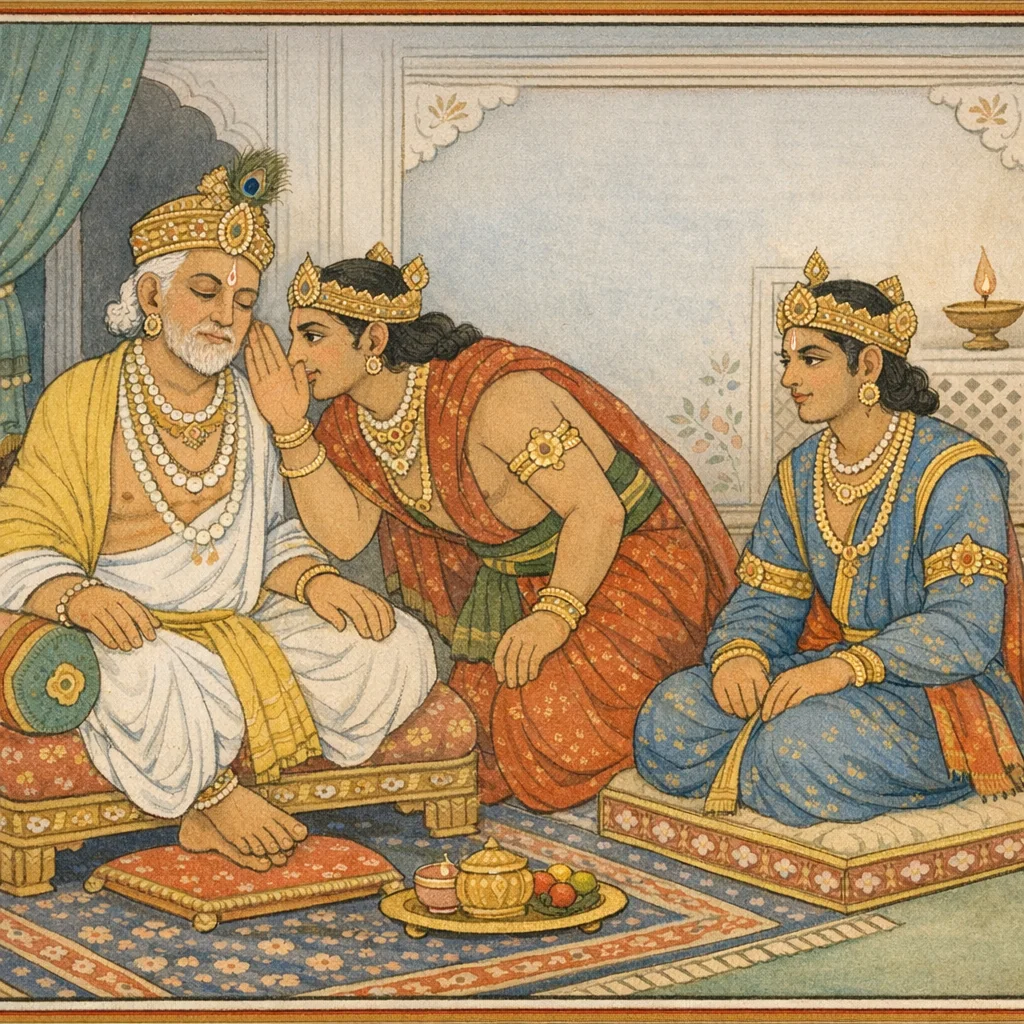
Adhyaya 200
Nārada’s Visit at Indraprastha and Counsel on Concord; Introduction to Sundopasunda–Tilottamā
Upa-parva: Indraprastha-Rājya-prāpti and Nārada’s Counsel on Pāñcālī (Polyandry Nīti Episode)
Janamejaya requests a detailed account of how the Pāṇḍavas, having attained sovereignty at Indraprastha, lived without mutual friction while sharing one dharmapatnī, Draupadī. Vaiśaṃpāyana reports that, with Dhṛtarāṣṭra’s approval, the brothers prosper and Yudhiṣṭhira rules the earth in a dharma-aligned manner alongside his siblings, attending to civic duties and royal decorum. Devarṣi Nārada arrives unexpectedly; Yudhiṣṭhira offers a suitable seat, performs arghya according to rite, and respectfully presents the state of the kingdom. Draupadī is summoned, approaches purified and composed, pays reverence, and receives Nārada’s blessings before withdrawing. In private, Nārada instructs the brothers that since Pāñcālī is their single lawful wife, a clear policy must be instituted to prevent internal division. As a warning, he references the famed asura-brothers Sundopasunda, who—though united in kingdom and household—came to conflict due to Tilottamā. Yudhiṣṭhira then asks for the full account of their origin and the mechanism of their mutual destruction, setting up the subsequent narrative expansion.
Chapter Arc: धृतराष्ट्र के सम्मुख दुर्योधन अपनी नीति का आवरण रचता है—विदुर को भ्रमित रखने के लिए वह पाण्डवों के गुणों का ही बखान करने की योजना बताता है, ताकि भीतर की विष-इच्छा पहचान में न आए। → दुर्योधन ‘समय के अनुसार आवश्यक कार्य’ की दुहाई देकर कर्ण को भी साथ खींचता है और पाण्डवों को तोड़ने-फोड़ने के गुप्त उपाय गिनाने लगता है—विश्वस्त ब्राह्मणों/दूतों, ‘आप्तकारियों’ और छल-प्रयोगों से कुन्तीपुत्रों तथा माद्रीपुत्रों में फूट डालने की रूपरेखा बनती है। → वह सबसे तीखे प्रस्तावों तक पहुँचता है—द्रुपद के यहाँ रहते हुए ही पाण्डवों को भेदना, द्रौपदी (कृष्णा) को बहकाकर पतियों से विमुख कराना, और आवश्यकता पड़े तो कर्ण को भेजकर उन्हें बुला लाकर ‘आप्तकारियों’ के जाल में गिराना; साथ ही चेतावनी देता है कि जब तक द्रुपद पर उनका विश्वास पक्का नहीं होता, तभी तक वे साध्य हैं। → दुर्योधन अपने मत को ‘शत्रु-निग्रह’ की नीति कहकर पिता के सामने रख देता है और कर्ण से भी समर्थन/सम्मति पूछता है—यानी निर्णय का भार राजसभा पर डालकर अपने षड्यंत्र को वैधता का रंग देता है। → धृतराष्ट्र और कर्ण इस प्रस्तावित छल-नीति पर क्या प्रतिक्रिया देंगे—और विदुर, जिसे भ्रमित रखने की बात कही गई, क्या इस अंतर्धारा को पहचान लेगा?
Shlokas
Verse 1
इस प्रकार श्रीमहाभारत आदिपर्वके अन्तर्गत विदुरागमन-राज्यलम्भपर्वमें दुर्योधनवचनविषयक एक सौ निन््यानबेवाँ अध्याय पूरा हुआ ॥/ १९९ ॥। (दाक्षिणात्य अधिक पाठके ३९६ श्लोक मिलाकर कुल ७० ३ “लोक हैं) ३. राज्यके स्वामी, अमात्य, सुहृद, कोष, राष्ट्र, दुर्ग और सेना--इन सात अंगोंको सात प्रकृतियाँ कहते हैं। २. संधि, विग्रह, यान, आसन, द्वैधीभाव और समाश्रय--ये छ: गुण हैं। इनमें शत्रुसे मेल रखना संधि, उससे लड़ाई छेड़ना विग्रह, आक्रमण करना यान, अवसरकी प्रतीक्षामें बैठे रहना आसन, दुरंगी नीति बर्तना द्वैधीभाव और अपनेसे बलवान् राजाकी शरण लेना समाश्रय कहलाता। द्विशततमो<्ध्याय: धृतराष्ट्र और दुर्योधनकी बातचीत, शत्रुओंको वशमें करनेके उपाय धृतराष्ट उवाच अहमप्येवमेवैतच्चिकीर्षामि यथा युवाम् । विवेक्तुं नाहमिच्छामि त्वाकारं विदुरं प्रति,धृतराष्ट्रने कहा--बेटा! मैं भी तो वही करना चाहता हूँ, जैसा तुम दोनों चाहते हो; परंतु मैं अपनी आकृतिसे भी विदुरपर अपने मनका भाव प्रकट होने देना नहीं चाहता
Dhṛtarāṣṭra said: “My son, I too wish to do exactly what you both desire. Yet I do not want, even by my outward expression, to let Vidura perceive what is in my mind.”
Verse 2
ततस्तेषां गुणानेव कीर्तयामि विशेषत: । नावबुध्येत विदुरो ममाभिप्रायमिज्ञितै:,इसीलिये विदुरके सामने विशेषत: पाण्डवोंके गुणोंका ही बखान करता हूँ, जिससे वह इशारेसे भी मेरे मनोभावको न ताड़ सके
Therefore I shall speak, with particular emphasis, only of their virtues—so that Vidura, not grasping my intention, may not discern the design in my mind even through indirect hints.
Verse 3
यच्च त्वं मन्यसे प्राप्तं तद् ब्रवीहि सुयोधन । राधेय मन्यसे यच्च प्राप्तकालं वदाशु मे,सुयोधन और कर्ण! तुम दोनों समयके अनुसार जो कार्य करना आवश्यक समझते हो वह शीघ्र मुझे बताओ
Dhṛtarāṣṭra said: “Suyodhana, tell me what you judge to be the proper course that has now presented itself. And you too, Rādheya (Karna)—tell me at once what you consider timely and necessary to be done.”
Verse 4
दुर्योधन उवाच अद्य तान् कुशलैविंप्रै: सुगुप्तैराप्तकारिभि: । कुन्तीपुत्रान् भेदयामो माद्रीपुत्रो च पाण्डवी,दुर्योधन बोला--पिताजी! आज अत्यन्त गुप्तरूपसे कुछ ऐसे चतुर ब्राह्मणोंको नियुक्त करना चाहिये, जिनके कार्योंपर हमारा पूर्ण विश्वास हो। हमें उनके द्वारा पाण्डवोंमेंसे कुन्ती और माद्रीके पुत्रोंमें फूट डालनेकी चेष्टा करनी चाहिये
Duryodhana said: “Today, let us employ clever brāhmaṇas—well-concealed and fully reliable agents—to work for our purpose. Through them, let us try to sow dissension among the sons of Kuntī and the son of Mādrī among the Pāṇḍavas.”
Verse 5
अथवा द्रुपदो राजा महद्धिर्वित्तसंचयै: । पुत्राश्नास्य प्रलोभ्यन्ताममात्याश्वैव सर्वश:,अथवा धनकी बहुत बड़ी राशि देकर राजा द्रुपद, उनके पुत्र तथा मन्त्रियोंकों सर्वथा प्रलोभनमें डालना चाहिये, जिससे पंचालनरेश कुन्तीनन्दन युधिष्ठिरको त्याग दें--उन्हें अपने घर और नगरसे निकाल दें, अथवा वे ब्राह्मगणलोग पाण्डवोंके मनमें वहीं रहनेकी रुचि उत्पन्न करें
Or else, let King Drupada be induced—by vast hoards of wealth—and let his sons and all his ministers as well be thoroughly tempted. The intent is to sway the Pañcāla court away from the Pāṇḍavas, so that Yudhiṣṭhira, son of Kuntī, is abandoned and driven out from their city and home.
Verse 6
परित्यजेद् यथा राजा कुन्तीपुत्र युधिष्ठिरम् । अथ तत्रैव वा तेषां निवासं रोचयन्तु ते,अथवा धनकी बहुत बड़ी राशि देकर राजा द्रुपद, उनके पुत्र तथा मन्त्रियोंकों सर्वथा प्रलोभनमें डालना चाहिये, जिससे पंचालनरेश कुन्तीनन्दन युधिष्ठिरको त्याग दें--उन्हें अपने घर और नगरसे निकाल दें, अथवा वे ब्राह्मगणलोग पाण्डवोंके मनमें वहीं रहनेकी रुचि उत्पन्न करें
Duryodhana said: “Let the king (Drupada) be induced to abandon Yudhiṣṭhira, the son of Kuntī. Or else, let those (brāhmaṇas/agents) make the Pāṇḍavas take a liking to staying right there.”
Verse 7
इहैषां दोषदद्वासं वर्णयन्तु पृथक् पृथक् ते भिद्यमानास्तत्रैव मन: कुर्वन्तु पाण्डवा:,वे अलग-अलग इन सभी पाण्डवोंसे कहें कि हस्तिनापुरका निवास आपलोगोंके लिये अत्यन्त हानिकारक होगा। इस प्रकार ब्राह्मणोंद्वारा बुद्धिभेद उत्पन्न कर देनेपर सम्भव है, पाण्डवलोग अपने मनमें वहीं (पंचालदेशमें ही) रहनेका निश्चय कर लें
Duryodhana said: “Here, let them describe—separately, one by one—how residence here would be harmful for these men. If their minds are thus divided, the Pāṇḍavas may well resolve to keep their hearts fixed there itself (in that land), rather than returning to Hastināpura.”
Verse 8
अथवा कुशला: केचिदुपायनिपुणा नरा: । इतरेतरत:ः पार्थान् भेदयन्त्वनुरागत:,अथवा कुछ ऐसे मनुष्य भेजे जाय, जो उपाय ढूँढ़ निकालनेमें चतुर तथा कार्यकुशल हों और प्रेमपूर्वक बातें करके कुन्तीपुत्रोंमें परस्पर फ़ूट डाल दें
Or else, let some capable men—skilled in expedients and effective in action—be dispatched, so that, by speaking in a show of affection and loyalty, they may sow division among the sons of Kuntī (the Pāṇḍavas), setting them against one another.
Verse 9
व्युत्थापयन्तु वा कृष्णां बहुत्वात् सुकरं हि तत् अथवा पाण्डवांस्तस्यां भेदयन्तु ततश्न॒ ताम्,अथवा कृष्णाको ही इस प्रकार बहका दें कि वह अपने पतियोंका परित्याग कर दे। अनेक पति होनेके कारण (उसका किसीमें भी सुदृढ़ अनुराग नहीं हो सकता; अतः) उनका परित्याग कराना सरल है। अथवा वे लोग पाण्डवोंको ही द्रौपदीकी ओरसे विलग कर दें और ऐसा होनेपर द्रौपदीको उनकी ओरसे विरक्त बना दें
Duryodhana said: “Let them estrange Kṛṣṇā (Draupadī) from her husbands—for since she has many husbands, that would be easy. Or else, let them first create dissension between the Pāṇḍavas and her; and once that separation is achieved, make her turn away from them.”
Verse 10
भीमसेनस्य वा राजन्नुपायकुशलैनरि: । मृत्युविधीयतां छन्नै: स हि तेषां बलाधिक:,अथवा राजन! उपायकुशल मनुष्य छिपे रहकर भीमसेनका ही वध कर डालें; क्योंकि वही पाण्डवोंमें सबसे अधिक बलवान् है
Duryodhana said: “O King, let a man skilled in stratagems secretly arrange Bhīmasena’s death; for among them he is the one who surpasses the others in strength.”
Verse 11
तमाश्रित्य हि कौन्तेय: पुरा चास्मान् न मन्यते । सहि तीक्ष्णश्न शूरश्न तेषां चैव परायणम्,उसीका आश्रय लेकर कुन्तीनन्दन युधिष्ठिर पहलेसे ही हमें कुछ नहीं समझते। वह बड़े तीखे स्वभावका और शूरवीर है। वही पाण्डवोंका सबसे बड़ा सहारा है
Relying on him, the son of Kuntī has long held us in no regard. For he is sharp in temper and a hero in battle; indeed, he is the chief refuge and final support of those (Pāṇḍavas).
Verse 12
तस्मिंस्त्वभिहते राजन् हतोत्साहा हतौजस: । यतिष्यन्ते न राज्याय स हि तेषां व्यपाश्रय:,राजन! उसके मारे जानेपर पाण्डवोंका बल और उत्साह नष्ट हो जायगा। फिर वे राज्य लेनेका प्रयत्न नहीं करेंगे। भीमसेन ही उनका सबसे बड़ा आश्रय है
O King, if he is struck down, the Pāṇḍavas will lose both their courage and their strength. They will no longer strive to win the kingdom, for he is their chief support and refuge.
Verse 13
अजेयो हार्जुन: संख्ये पृष्ठगोपे वृकोदरे । तमृते फाल्गुनो युद्धे राधेयस्य न पादभाक्,भीमसेनको पृष्ठ रक्षक पाकर ही अर्जुन युद्धमें अजेय बने हुए हैं। यदि भीम न हों तो वे रणभूमिमें कर्णकी एक चौथाईके बराबर भी नहीं हो सकेंगे
Duryodhana said: “Arjuna is invincible in battle because Bhima (Vṛkodara) guards his back. Without him, Phalguna (Arjuna) would not, in war, be worthy even of a quarter-share compared with Radheya (Karna).”
Verse 14
ते जानानास्तु दौर्बल्यं भीमसेनमृते महत् । अस्मान् बलवतो ज्ञात्वा न यतिष्यन्ति दुर्बला:,भीमसेनके बिना अपनी बहुत बड़ी दुर्बलताका अनुभव करके वे दुर्बल पाण्डव हमें अपनेसे बलवान् जानकर राज्य लेनेका प्रयत्न नहीं करेंगे
Duryodhana said: “Realizing their great weakness when Bhīmasena is absent, those feeble Pāṇḍavas—knowing us to be the stronger—will not even attempt to strive for the kingdom.”
Verse 15
इहागतेषु वा तेषु निदेशवशवर्तिषु । प्रवर्तिष्पामहे राजन् यथाशास्त्र निबर्हणम्,राजन्! अथवा यदि वे यहाँ आकर हमारी आज्ञाके अधीन होकर रहेंगे, तब हम नीतिशास्त्रके अनुसार उनके विनाशके कार्यमें लग जायँगे
Duryodhana said: “If they come here and live under our command, then, O King, we shall set ourselves—according to the prescriptions of polity and law—to the work of their destruction.”
Verse 16
अथवा दर्शनीयाभि: प्रमदाभिर्विलो भ्यताम् । एकैकस्तत्र कौन्तेयस्तत: कृष्णा विरज्यताम्,अथवा देखनेमें सुन्दर युवती स्त्रियोंद्वारा एक-एक पाण्डवको लुभाया जाय और इस प्रकार कृष्णाका मन उनकी ओरसे फेर दिया जाय
Or else, let attractive young women be used to entice them: let each son of Kuntī be lured one by one, so that Kṛṣṇā (Draupadī) may turn her affection away from them.
Verse 17
प्रेष्यतां चैव राधेयस्तेषामागमनाय वै । तैस्तै: प्रकारै: संनीय पात्यन्तामाप्तकारिभि:,अथवा पाण्डवोंको यहाँ बुला लानेके लिये राधानन्दन कर्णको भेजा जाय और यहाँ लाकर विश्वसनीय कार्यकर्ताओंद्वारा विभिन्न उपायोंसे उन सबको मार गिराया जाय
Duryodhana said: “Let Radheya (Karna) be dispatched to bring them here. And once they have been lured here by one means or another, let them be struck down by trusted agents.”
Verse 18
एतेषामप्युपायानां यस्ते निर्दोषवान् मत: । तस्य प्रयोगमातिष्ठ पुरा कालो$तिवर्तते,पिताजी! इन उपायोंमेंसे जो भी आपको निर्दोष जान पड़े, उसीसे पहले काम लीजिये; क्योंकि समय बीता जा रहा है। जबतक वे राजाओंमें श्रेष्ठ ट्रपदपर उनका पूरा विश्वास नहीं जम जाता, तभीतक उन्हें मारा जा सकता है। पूरा विश्वास जम जानेपर तो उन्हें मारना असम्भव हो जायगा
Duryodhana said: “Of these stratagems, whichever you deem free from fault—take it up and put it into action at once, Father, before time slips away. While the Pāṇḍavas have not yet secured firm trust and protection from Drupada, foremost among kings, they can still be struck down; but once that confidence is fully established, killing them will become impossible.”
Verse 19
यावद्धयकृतविश्वासा द्रुपदे पार्थिवर्षभे । तावदेव हि ते शक््या न शक््यास्तु ततः परम्,पिताजी! इन उपायोंमेंसे जो भी आपको निर्दोष जान पड़े, उसीसे पहले काम लीजिये; क्योंकि समय बीता जा रहा है। जबतक वे राजाओंमें श्रेष्ठ ट्रपदपर उनका पूरा विश्वास नहीं जम जाता, तभीतक उन्हें मारा जा सकता है। पूरा विश्वास जम जानेपर तो उन्हें मारना असम्भव हो जायगा
Duryodhana urges immediate action: as long as the Pāṇḍavas have not yet secured firm trust with King Drupada—best among rulers—they can still be struck down; but once that confidence is fully established, harming them will become impossible.
Verse 20
एषा मम मतिस्तात निग्रहाय प्रवर्तते । साध्वी वा यदि वासाध्वी कि वा राधेय मन्यसे,पिताजी! शत्रुओंको वशमें करनेके लिये ये ही उपाय मेरी बुद्धिमें आते हैं; मेरा यह विचार भला है या बुरा, यह आप जानें। अथवा कर्ण! तुम्हारी क्या राय है?
Duryodhana said: “Father, this is the plan my mind is set upon for bringing our enemies under control. Whether this resolve is righteous or unrighteous—judge it yourself. Or you, Radheya (Karna), what do you think?”
Verse 200
इति श्रीमहाभारते आदिपर्वणि विदुरागमनराज्यलम्भपर्वणि दुर्योधनवाक्ये द्विशततमो<ध्याय:
Thus ends the two-hundredth chapter in the Ādi Parva of the Śrī Mahābhārata, within the section concerning Vidura’s arrival and the gaining of the kingdom—concluding with the words of Duryodhana.
Frequently Asked Questions
The dharma-sankat concerns preventing jealousy and rivalry in an exceptional marital arrangement while preserving political unity—requiring explicit norms (nīti) rather than reliance on goodwill alone.
Stable governance and stable household order are interlinked; disciplined procedure, transparent boundaries, and timely counsel reduce the probability that desire and status-competition will fracture collective purpose.
No explicit phalaśruti appears here; the chapter functions as a framing unit that legitimizes ethical instruction through Nārada’s authority and prepares the listener for the cautionary embedded narrative that follows.