Adhyaya 86
Pretaśilā at Gayā: Muṇḍapṛṣṭha, Gadādhara’s Manifestation, and the Fruits of Śrāddha & Deity-Worship
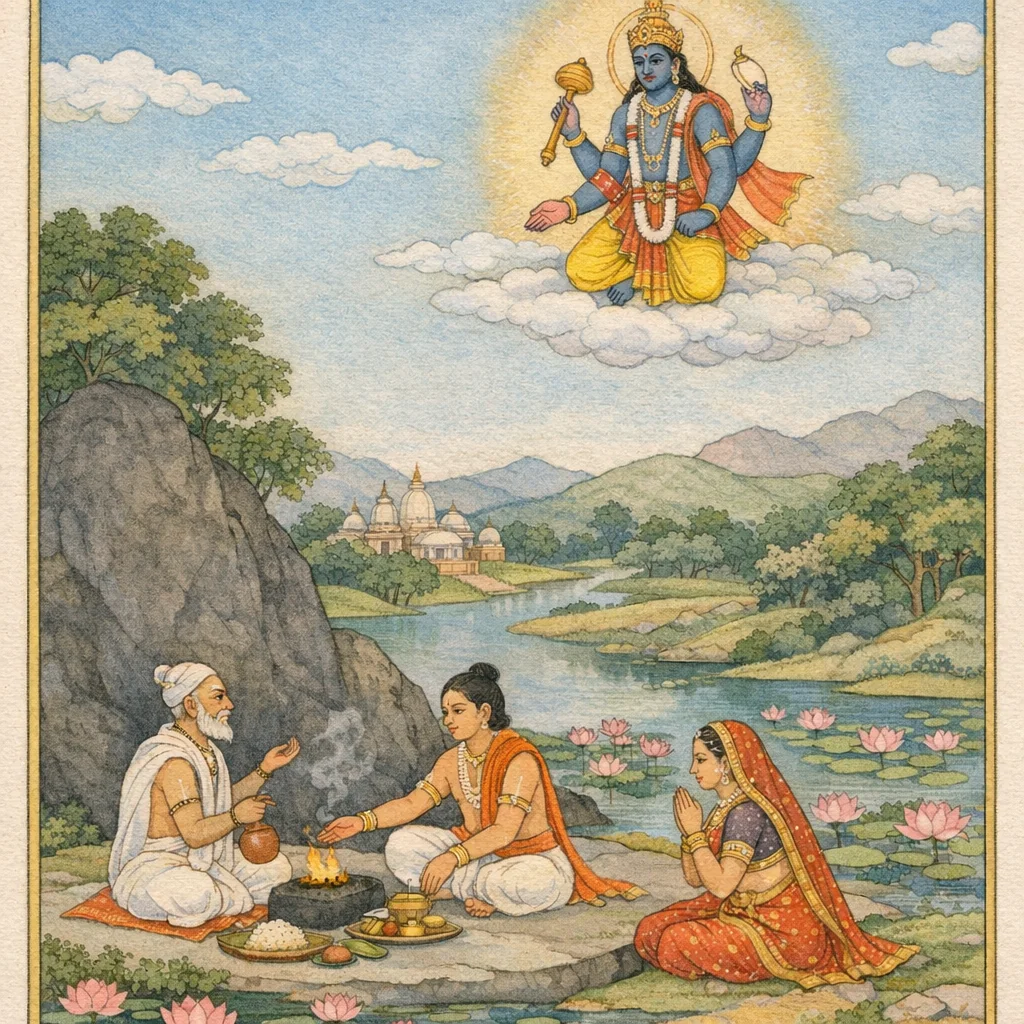
Brahmā proclaims the sanctity of Pretaśilā at Gayā: a dharma-supported sacred stone embodying all the gods, set upon Gayāsura’s head/back and therefore called Muṇḍapṛṣṭha. He sacralizes the region through Brahma-saras outlets, lotus-groves, and mountains such as Aravinda/Krauñcapāda, forming a tīrtha-network whose rites bestow Brahmaloka upon the Pitṛs. The teaching then turns from place-myth to theology: the primordial mace-bearing Lord, Hari/Gadādhara, is both manifest and unmanifest, appearing through avatāras from Matsya to Kalki. A ritual sequence follows, listing upacāras and dānas to Gadādhara and allied deities, with phalaśruti—prosperity, progeny, victory, and liberation—culminating in the claim that worship and śrāddha at Gayā uplift both performer and ancestors to Brahmaloka, presenting Gayā rites as a complete soteriological path integrating Vaiṣṇava supremacy with multi-deity tīrtha observances.
Shlokas
Verse 1
पञ्चाशीतितमो ऽध्यायः ब्रह्मोवाच / येयं प्रेतशिला ख्याता गयायां सा त्रिधा स्थिता / प्रभासे प्रेतकुण्डे च गयासुरशिरस्यपि
Brahmā said: This renowned “Pretaśilā” at Gayā is established in three forms—at Prabhāsa, at the Preta-kuṇḍa, and also at the head-site of Gayāsura.
Verse 2
धर्मेण धारिता भूत्यै सर्वदेवमयी शिला / प्रेतत्वं ये गता नॄणां मित्राद्या बान्धवादयः
Upheld by dharma for the sake of welfare, the sacred śilā is revered as embodying all the gods. The friends and other kinsmen of men who have entered the state of preta (departed spirit) are thus connected through such dharmic rites.
Verse 3
तेषामुद्धरणार्थाय यतः प्रेतशिला शुभा / अतो ऽत्र मुनयो भूपा राजपत्न्यादयः सदा
Because the auspicious Pretaśilā is present for the purpose of delivering them, sages, kings, royal queens, and others are ever found here to perform the rites.
Verse 4
तस्यां शिलायां श्राद्धादिकर्तारो ब्रह्मलोकगाः / गयासुरस्य यन्मुण्डं तस्य पृष्ठे शिला यतः
Upon that sacred stone, those who perform śrāddha and allied rites attain the world of Brahmā; for the stone rests upon the back of Gayāsura—indeed, it is said to be his head.
Verse 5
मुणाडपृष्ठो गिरिस्तस्मात्सर्वदेवमयो ह्ययम् / मुण्डपृष्ठस्य पादेषु यतो ब्रह्मसरोमुखाः
Therefore that mountain is called Muṇḍapṛṣṭha; indeed it is pervaded by the presence of all the gods. At the feet of Muṇḍapṛṣṭha are the outlets and sources of Brahma-saras, Brahmā’s sacred lake.
Verse 6
अरविन्दवनं तेषु तेन चैवोपलक्षितः / अरविन्दो गिरिर्नाम क्रौञ्चपादाङ्कितो यतः
Among them is a lotus-grove, by which this place is clearly recognized; and there is a mountain named Aravinda, so called because it is marked by the footprints of the krauñca bird.
Verse 7
तस्मा द्गिरिः क्रैञ्चपादः पितॄणां ब्रह्मलोकदः / गदाधरादयो देवा आद्या आदौ व्यवस्थिताः
Therefore, the mountain called Krañcapāda bestows Brahmaloka upon the Pitṛs; and the primeval gods—beginning with the mace-bearing Lord (Gadādhara)—were established there from the very first.
Verse 8
शिलारूपेण चाव्यक्तास्तस्माद्देवमयी शिला / गया शिरश्छादयित्वा गुरुत्वादास्थिता शिला
Therefore, in an unmanifest form (avyakta) she became a stone—indeed, a stone filled with divine presence. Covering (the head) at Gayā, that stone remained fixed there because of its great weight.
Verse 9
कालान्तरेण व्यक्तश्चस्थित आदिगदाधरः / महारुद्रादिदेवैस्तु आनादिनिधनो हरिः
In the course of time, the Primordial Lord, bearing the mace, manifests and abides in the world. He is Hari—beginningless and endless—revered even by Mahārudra and the other gods.
Verse 10
धर्म संरक्षणार्थाय अधर्मादिविनष्टये / दैत्यराक्षसनाशार्थं मत्स्यः पूर्वं यथाभवत्
To protect Dharma and to destroy the forces of Adharma, and for the annihilation of daityas and rākṣasas—thus, in former times, the Lord first manifested as Matsya, the Fish.
Verse 11
कूर्मो वराहो नृहरिर्वामनो राम ऊर्जितः / यथा दाशरथी रामः कृष्णोबुद्धो ऽथ कल्क्यपि
He manifests as Kūrma, Varāha, Narasiṃha, Vāmana, and the mighty Rāma; likewise as Rāma, the son of Daśaratha; as Kṛṣṇa, as Buddha, and also as Kalki.
Verse 12
तथा व्यक्तो ऽव्यक्तरूपी आसीदादिर्गदाधरः / आदिरादौ पूजितो ऽत्र देवैर्ब्रह्मादिभिर्यतः
Likewise, the Primordial One—bearing the mace—existed as both the manifest and the unmanifest. That First Cause was worshipped here in the beginning by the gods, headed by Brahmā.
Verse 13
पाद्याद्यैर्गन्धपुष्पाद्यैरत आदिगदाधरः / गदाधरं सुरैः सार्धमाद्यं गत्वा ददाति यः
He who, with offerings such as water for washing the feet (pādya) and the like—along with fragrance, flowers, and other worship-materials—goes to the Primordial Lord, Gadādhara (mace-bearing Viṣṇu), and makes the offering, attains the grace of that Original Gadādhara, together with the Devas.
Verse 14
अर्घ्यं पात्रं च पाद्यं च गन्धपुष्पं च धूपकम् / दीपं नैवैद्यमुत्कष्टं माल्यानि विविधानि च
Offer arghya (respectful water-offering), a vessel, water for washing the feet, fragrant substances and flowers, incense, a lamp, excellent food-offerings (naivedya), and various kinds of garlands.
Verse 15
वस्त्राणि मुकुटं घण्टा चामरं प्रेक्षणीयकम् / अलङ्कारादिकं पिण्डमन्नदानादिकं तथा
Offer clothes, a crown, a bell, a cāmara (fly-whisk), and other items fit to be presented; likewise ornaments, the piṇḍa (ritual rice-ball for the departed), and acts such as giving food in charity.
Verse 16
तेषां तावद्धनं धान्यमायुरारो ग्यसम्पदः / पुत्त्रादिसन्ततिश्रेयोविद्यार्थं काम ईप्सितः
For them there will indeed be wealth and grain, along with the blessings of long life, health, and prosperity; excellence through a lineage of sons and descendants, attainment of knowledge, and the fulfillment of desired aims.
Verse 17
भार्या स्वर्गादिवासश्च स्वर्गादागत्य राज्यकम् / कुलीनः सत्त्वसम्पन्नो रणे मर्दितशात्रवनः
A virtuous wife, a dwelling in heaven, and then—returning from heaven—royal sovereignty; noble birth, fullness of courage and goodness, and the crushing of enemy forces in battle—these are the fruits of merit.
Verse 18
वधबन्धविनिर्मुक्तश्चान्ते मोक्षमवाप्नुयात् / श्राद्धपिण्डादिकर्तारः पितृभिर्ब्रह्मलोकगाः
Freed from the bondage of violence and slaughter, one attains liberation in the end. Those who perform śrāddha, piṇḍa-offerings, and related rites go—together with the Pitṛs—to Brahmaloka.
Verse 19
जगन्नाथं ये ऽप्चयन्ति सुभद्रां बलभद्रकम् / ज्ञानं प्राप्य श्रियं पुत्रान्व्रजन्ति पुरुषोत्तमम्
Those who worship Jagannātha—together with Subhadrā and Balabhadra—attain true knowledge, prosperity, and worthy sons, and ultimately reach Puruṣottama (the Supreme Lord).
Verse 20
पुरुषोत्तमराजस्य सूर्यस्य च गणस्य च / पुरतस्तत्र पिण्डादि पितॄणां ब्रिह्मलोकदः
There, in the presence of King Puruṣottama, of the Sun, and of the divine attendants (gaṇas), the offering of piṇḍa and related rites for the Pitṛs bestows attainment of Brahmaloka.
Verse 21
नत्वा कपर्दिविघ्नेशं सर्वविघ्नैः प्रमुच्यते / कार्तिकेयं पूजयित्वा ब्रह्मलोकमवाप्नुयात्
Having bowed to Kapardi Vighneśa, one is freed from all obstacles. Having worshipped Kārtikeya, one may attain the realm of Brahmā (Brahmaloka).
Verse 22
द्वादशादित्यमभ्यर्च्य सर्वरोगैः प्रमुच्यते / वैश्वानरं समभ्यर्च्य उत्तमां दीप्तिमाप्नुयात्
By worshipping the Twelve Ādityas, one is freed from all diseases. By duly worshipping Vaiśvānara, one attains supreme radiance.
Verse 23
रेवन्तं पूजयित्वाथ अश्वानाप्नोत्यनुत्तमान् / अभ्यर्च्येन्द्रं महैश्वर्यं गौरीं सौभाग्यमाप्नुयात्
Having worshipped Revanta, one obtains unsurpassed horses. By venerating Indra, one gains great lordly prosperity; and by worshipping Gaurī, one attains good fortune and auspicious marital happiness.
Verse 24
विद्यां सरस्वतीं प्रार्च्य लक्ष्मीं संपूज्य च श्रियम् / गरुडं च समभ्यर्च्य विघ्नवृन्दात्प्रमुच्यते
Having first worshipped Sarasvatī, the embodiment of sacred knowledge, and duly honored Lakṣmī, the giver of prosperity, and also having reverently worshipped Garuḍa—one is released from multitudes of obstacles.
Verse 25
क्षेत्रपालं समभ्यर्च्य ग्रहवृन्दैः प्रमुच्यते / मुण्डपृष्ठं समभ्यर्च्य सर्वकाममवाप्नुयात्
By duly worshipping Kṣetrapāla, one is released from the afflictions caused by the host of planets. By duly worshipping Muṇḍapṛṣṭha, one may obtain the fulfillment of all desires.
Verse 26
नागाष्टकं समभ्यर्च्य नागदष्टो विमुच्यते / ब्रह्माणं पूजयित्वा च ब्रह्मलोकमवाप्नुयात्
By duly worshipping (reciting with reverence) the Nāgāṣṭaka, one who has been bitten by a serpent is freed from its affliction. And by worshipping Brahmā, one attains Brahmaloka, the world of Brahmā.
Verse 27
बलभद्रं समभ्यर्च्य बलारोग्यमवाप्नुयात् / सुभद्रां पूजयित्वा तु सौभाग्यं परमाप्नुयात्
By duly worshipping Balabhadra, one attains strength and freedom from illness; and by worshipping Subhadrā, one attains the highest good fortune.
Verse 28
सर्वान्कामानवाप्नोति संपूज्य पुरुषोत्तमम् / नारायणं तु संपूज्य नराणामधिपो भवेत्
By reverently worshipping the Supreme Person (Puruṣottama), one attains all desired aims. And by worshipping Nārāyaṇa, one becomes a lord among men.
Verse 29
स्पृष्ट्वा नत्वा नारसिंहं संग्रामे विजयी भवेत् / वराहं पूजयित्वा तु भूमिराज्यमवाप्नुयात्
By touching and bowing to Lord Narasiṁha, one becomes victorious in battle. And by worshipping Lord Varāha, one attains sovereignty over the earth (worldly dominion).
Verse 30
मालाविद्याधरौ स्पष्ट्वा विद्याधरपदं लभेत् / सर्वान्कामानवाप्नोति संपूज्यादिगदाधरम्
Having clearly mastered the mantric pair known as Mālā and Vidyādhara, one attains the status of a Vidyādhara. By duly worshipping the primordial bearer of the mace (Ādi-Gadādhara, Lord Viṣṇu), one obtains all desired aims.
Verse 31
सोमनाथं समभ्यर्च्य शिवलोकमवाप्नुयात् / रुद्रेश्वरं नमस्कृत्य रुद्रलोके महीयते
Having duly worshipped Somanātha, one attains the realm of Śiva; and having bowed to Rudreśvara, one is honored and exalted in Rudra’s world.
Verse 32
रामेश्वरं नरो नत्वा रामवत्सुप्रियो भवेत् / ब्रह्मेश्वरं नरः स्तुत्वा ब्रह्मलोकाय कल्प्यते
He who bows to Rāmeśvara becomes especially dear to the devotees of Rāma; and he who praises Brahmeśvara becomes fit to attain Brahmaloka.
Verse 33
कालेश्वरं समभ्यर्च्य नरः कालञ्जयो भवेत् / केदारं पूजयित्वा तु शिवलोके महीयते
Having duly worshipped Kāleśvara, a man becomes a conqueror of Time (death). And having worshipped Kedāra, he is honored and exalted in Śiva’s world.
Verse 34
सिद्धेश्वरं च संपूज्य सिद्धो ब्रह्मपुरं व्रजेत् / आद्यै रुद्रादिभिः सार्धं दृष्ट्वा ह्यादिगदाधरम्
Having duly worshipped Siddheśvara, the accomplished one proceeds to Brahmapura; and, together with the primordial beings such as Rudra and others, he indeed beholds the Primeval Lord who bears the mace.
Verse 35
कुलानां शतमुद्धृत्य नयेद्ब्रह्मपुरं नरः / धर्मार्थो प्राप्नुयाद्धर्ममर्थार्थो चार्थमाप्नुयात्
Having uplifted a hundred lineages, a man may lead them to Brahma’s city. One who seeks Dharma attains Dharma; and one who seeks wealth attains wealth.
Verse 36
कामान्संप्राप्नुयात्कामी मोक्षार्थो मोक्षमाप्नुयात् / राज्यार्थो राज्यमाप्नोति शान्त्यर्थो शान्तिमाप्नुयात्
One who seeks desires attains desired enjoyments; one who seeks liberation attains liberation. One who seeks sovereignty attains a kingdom; and one who seeks peace attains peace.
Verse 37
सर्वार्थो सर्वमाप्नोति संपूज्यादिगदाधरम् / पुत्रान्पुत्रार्थिनी स्त्री च सौभाग्यं च तदर्थिनी
By duly worshipping the primordial mace-bearer, Gadādhara (Lord Viṣṇu), one who seeks every aim attains all attainments; a woman desiring sons obtains sons, and she who seeks good fortune gains auspicious marital prosperity.
Verse 38
वंशार्थिनी च वंशान्वै प्राप्यार्च्यादिगदाधरम् / श्राद्धेन पिण्डदानेन अन्नदानेन वारिदः
One who longs for progeny and the continuance of the family line should duly approach and worship Ādi-Gadādhara, the wielder of the mace; through śrāddha rites, the offering of piṇḍas, the gift of food, and the gifting of water, such merit is gained.
Verse 39
ब्रह्मलोकमवाप्नोति संपूज्यादिगदाधरम् / पृथिव्यां सर्वतीर्थेभ्यो यथा श्रेष्ठा गया पुरी
Having duly worshipped Ādi-Gadādhara—the primordial mace-bearer (Viṣṇu)—one attains Brahmaloka. Just as on earth the city of Gayā is regarded as the foremost among all sacred pilgrimage sites.
Verse 40
तथा शिलादिरूपश्च श्रेष्ठश्चैव गदाधरः / तस्मिन्दृष्टे शिला दृष्टा यतः सर्वं गदाधरः
Likewise, the Supreme Lord—Gadādhara—appears in forms such as a sacred stone, and He alone is the Highest. When He is beheld, that stone too is truly beheld, for in truth everything is Gadādhara.
Frequently Asked Questions
The text asserts that Pretaśilā is sarvadevamaya and rests on Gayāsura’s head/back; thus rites performed upon it are exceptionally efficacious. It explicitly states that those who perform śrāddha and allied rites on that stone attain Brahmā’s world, and that performers of śrāddha and piṇḍa offerings go together with the Pitṛs to Brahmaloka.
Adhyāya 86 presents Gayā as a unified ritual ecosystem where different devatā-upāsanās remove specific obstacles and confer specific fruits (health, disease-removal, radiance, prosperity), while still culminating in Gadādhara’s supremacy and the central aim of Pitṛ-upliftment through śrāddha/piṇḍa.