Adhyaya 68
Marut-Soma Boon and Nahusha–Yayati Lineage (Marutakanyā–Vamśa-varṇana)
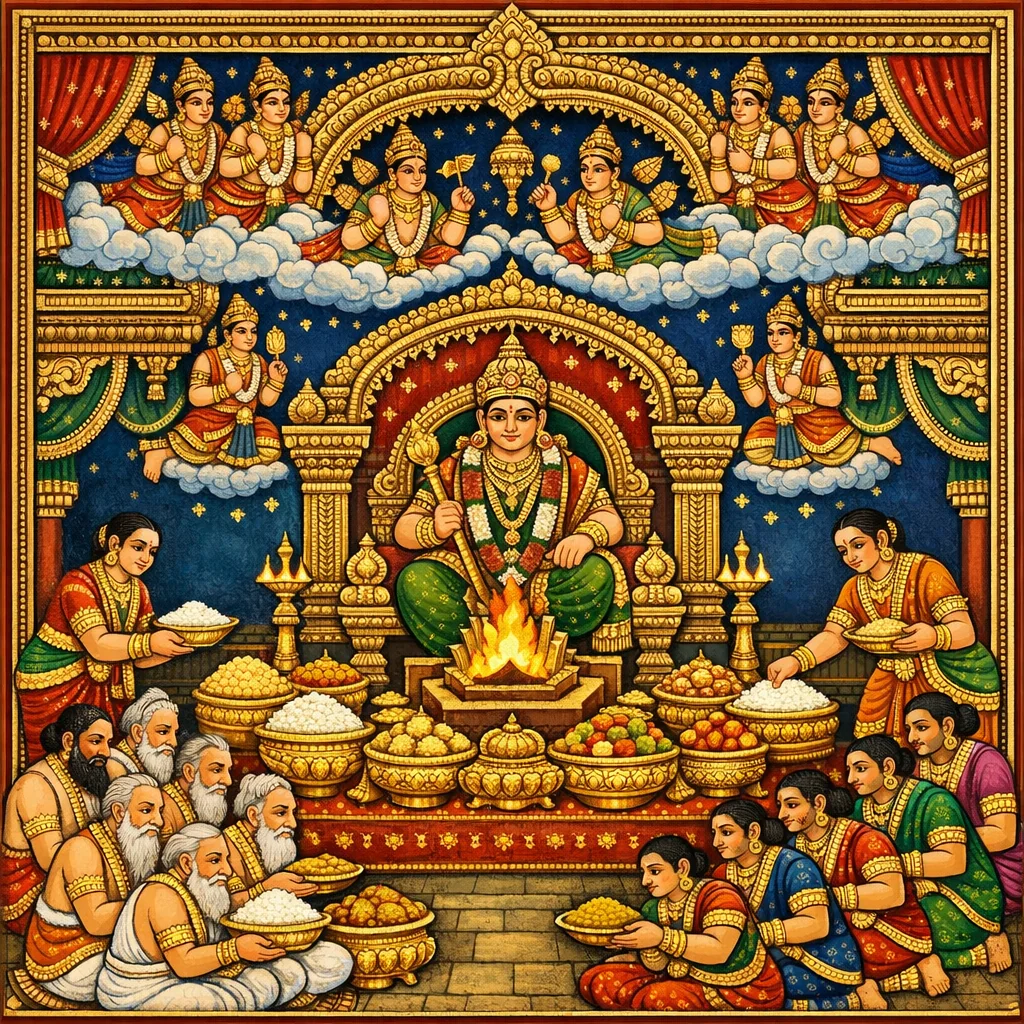
The chapter begins with the Ṛṣis asking how Marut’s connected daughter (Marutakanyā) was married to a king and what heroic offspring arose from that union. Sūta replies with a theme of reciprocity: a ruler repeatedly offers Marut-soma, pleases the Maruts, and receives the boon of akṣayya-anna—food that never diminishes even when eaten and lavishly distributed day and night. The narration then turns to vamśa (dynastic) listing, tracing descendants such as Anenasa → Kṣatradharma → Pratipakṣa → Sṛñjaya → Jaya/Vijaya and onward, culminating in the Nahūṣa line. Nahūṣa’s six sons—Yati, Yayāti, Saṃyāti, Āyati, Viyati, and Kṛti—are named, with a contrast drawn: Yati, the eldest, chooses renunciation and seeks mokṣa and brahmabhāva, while Yayāti is highlighted as the active ruler of the earth among the brothers. The chapter further records Yayāti’s marriages to Devayānī (daughter of Uśanas/Śukra) and Śarmiṣṭhā (daughter of Vṛṣaparvan), establishing the matrimonial basis for later Purāṇic dynastic branches.
Shlokas
Verse 1
इति श्रीब्रह्माण्डे महापुराणे वायुप्रोक्ते मध्यमभागे तृतीय उपोद्धातपादे धन्वन्तरिसंभवादिवर्णनं नाम सप्तषष्टितमो ऽध्यायः // ६७// ऋषय ऊचुः मरुतेन कथं कन्या राज्ञे दत्ता महात्मना / किंवीर्याश्च महात्मानो जाता मरुतकन्यया
Thus, in the holy Brahmāṇḍa Mahāpurāṇa, in the middle section spoken by Vāyu, within the third upoddhāta-pāda, is the sixty-seventh chapter called “The account of the arising of Dhanvantari and other matters.” The ṛṣis said: “How did the great-souled Marut give his daughter to the king? And what mighty, noble beings were born of Marut’s daughter?”
Verse 2
सूत उवाच आहरत्स मरुत्सोममन्नकामः प्रजेश्वरः / मासिमासि महातेजाः षष्टिसंवत्सरान्नृप
Sūta said: “O king, Marut, radiant with great splendor, lord of the people, desiring offerings of food, brought Soma month after month for sixty years.”
Verse 3
तेन ते मरुतस्तस्य मरुत्सोमेन तोषिताः / अक्षय्यान्नं ददुः प्रीताः सर्वकामपरिच्छदम्
Pleased by the marut-soma he offered, the Maruts, rejoicing, bestowed upon him inexhaustible food, a gift that fulfills every desire.
Verse 4
अन्नं तस्य सकृद्भुक्तमहोरात्रं न क्षीयते / कोटिशो दीय मानं च सूर्यस्योदयनादपि
That food, once eaten, does not diminish through day and night; and even if given away millions of times from sunrise onward, it never decreases.
Verse 5
मित्रज्योतेस्तु कन्याया मरितस्य च धीमतः / तस्माज्जाता महासत्त्वा धर्मज्ञा मोक्षदर्शिनः
From the daughter of Mitrajyoti and the wise Marita were born great-souled ones—knowers of dharma and seers of liberation (moksha).
Verse 6
संन्यस्य गृहधर्माणि वैराग्यं समुपस्थिताः / यतिधर्ममवाप्येह ब्रह्मभूयाय ते गताः
Casting aside the duties of household life, detachment arose in them; attaining here the dharma of the yati, they went onward toward Brahmanhood.
Verse 7
अनेनसः सुतो जातः क्षत्रधर्मः प्रतापवान् / क्षत्रधर्मसुतो जातः प्रतिपक्षो महातपाः
To Anenasa was born a son, Ksatradharma, mighty in valor; and to Ksatradharma was born a son, Pratipaksa, a great ascetic of profound tapas.
Verse 8
प्रतिपक्षसुतश्चापि सृंजयो नाम विश्रुतः / सृंजयस्य जयः पुत्रो विजयस्तस्य जज्ञिवान्
Pratipakṣa too had a renowned son named Sṛṃjaya. Sṛṃjaya’s son was Jaya, and from Jaya was born Vijaya.
Verse 9
विजयस्य जयः पुत्रस्तस्य हर्यश्वकः स्मृतः / इर्यश्वस्य सुतो राजा सहदेवः प्रतापवान्
Vijaya’s son was Jaya, whose son is remembered as Haryaśvaka. From Iryaśva was born the mighty king Sahadeva.
Verse 10
सहदेवस्य धर्मात्मा अहीन इति विश्रुतः / अहीनस्य चयत्सेनस्तस्य पुत्रो ऽथ संकृतिः
Sahadeva’s righteous son was famed as Ahīna. Ahīna’s son was Cayatsena, and his son thereafter was Saṃkṛti.
Verse 11
संकृतेरपि धर्मात्मा कृतधर्मा महायशाः / इत्येते क्षत्रधर्माणो नहुषस्य निबोधत
Saṃkṛti too had a righteous son, Kṛtadharmā, of great renown. Know that these are Nahūṣa’s descendants, steadfast in kṣatriya-dharma.
Verse 12
नहुषस्य तु दायादाः षडिन्द्रोपमतेजसः / यतिर्ययातिः संयातिरायतिर्वियतिः कृतिः
Nahūṣa’s heirs were six, radiant with splendor like Indra: Yati, Yayāti, Saṃyāti, Āyati, Viyati, and Kṛti.
Verse 13
यतिर्ज्येष्ठस्तु तेषां वै ययातिस्तु ततो ऽवरः / काकुत्स्थकन्यां गां नाम लेभे पत्नीं यतिस्तदा
Among them, Yati was the eldest, and after him came Yayati, the younger. Then Yati took as wife Kakutstha’s daughter, named “Gā”.
Verse 14
स यतिर्मोक्षमास्थाय ब्रह्मभूतो ऽभवन्मुनिः / तेषां मध्ये तु पञ्चानां ययातिः पृथिवीपतिः
Yati, taking refuge in liberation, became a sage one with Brahman. And among those five, Yayati was the lord of the earth.
Verse 15
देवयानीमुशनसः सुतां भार्यामवाप ह / शर्मिष्ठामासुरीं चैव तनयां वृषपर्वणः
He took as wife Devayani, the daughter of Usanas (Shukracharya), and also Sharmishtha the Asuri, daughter of Vrishaparvan.
Verse 16
यदुं च तुर्वसुं चैव देवयानो व्यजायत / द्रुह्युं चानुं च पूरुं च शर्मिष्ठा वार्षपर्वणी
Devayani bore Yadu and Turvasu; and Sharmishtha, daughter of Vrishaparvan, bore Druhyu, Anu, and Puru.
Verse 17
अजीजनन्महावीर्यान्सुतान्देवसुतोपमान् / रथं तस्मै ददौ शक्रः प्रीतः परमभास्वरम्
They begot mighty sons, like the sons of the gods. Pleased, Shakra (Indra) bestowed upon him a supremely radiant chariot.
Verse 18
असंगं काञ्चनं दिव्यमक्षयौ च महेषुधी / युक्तं मनोजवैरश्वैर्येन कन्यां समुद्वहत्
He bore the maiden away in that foremost chariot—divine, of unattached gold—furnished with great inexhaustible quivers and yoked to horses swift as thought.
Verse 19
स तेन रथमुख्येन जिगाय सततं महीम् / ययातिर्युधि दुर्द्धर्षो देवदानवमानवैः
With that foremost chariot he continually conquered the earth; in battle Yayāti was hard to withstand even for gods, Dānavas, and men.
Verse 20
पौरवाणां नृपाणां च सर्वेषां सो ऽभवद्रथी / यावत्सुदेशप्रभवः कौरवो जनमेजयः
Among the Paurava kings and indeed all rulers, he alone was the great chariot-warrior—until Janamejaya the Kaurava, born of Sudesha, arose.
Verse 21
कुरोः पौत्रस्य राज्ञरतु राज्ञः पारीक्षितस्य ह / जगाम सरथो नाशं शापाद्गार्ग्यस्य धीमतः
Thereafter that chariot, together with King Parīkṣit, grandson of Kuru, met destruction—through the curse of the wise Gārgya.
Verse 22
गार्ग्यस्य हि सुतं बालं स राजा जनमेजयः / दुर्बुद्धिर्हिंसया मास लोहगन्धी नराधिपः
King Janamejaya harmed the young son of Gārgya; that lord of men was of perverse mind, given to violence, and reeking as of iron.
Verse 23
स लोहगन्धी राजर्षिः परिधावन्नितस्ततः / पौरजानपदैस्त्यक्तो न लेभे शर्म कर्हिचित्
That royal seer Lohagandhī ran about in every direction; abandoned by townsmen and countryfolk, he never found peace.
Verse 24
ततः स दुःखसंतप्तो नालभत्संविदं क्वचित / स प्रायाच्छौनकमृषिं शरणं व्यथितस्तदा
Then, scorched by sorrow, he found no comfort anywhere; distressed, he went to seek refuge with the sage Śaunaka.
Verse 25
इन्द्रोतोनाम विख्यातो यो ऽसौ मुनि रुदारधीः / योजयामास चैन्द्रोतः शौनको जनमेजयम्
That sage famed as Indrota, steadfast in mind; Śaunaka, known as Indrota, appointed Janamejaya to the sacred undertaking.
Verse 26
अश्वमेधेन राजानं पावनार्थं द्विजोत्तमाः / स लोहगन्धो व्यनशत्त स्यावभृथमेत्य ह
The foremost twice-born performed the Aśvamedha to purify the king; Lohagandhī went to the avabhṛtha bath and thereafter vanished.
Verse 27
स वै दिव्यो रथस्तस्माद्वसोश्चेदिपतेस्तथा / दत्तः शक्रेन तुष्टेन लेभे तस्माद्बृहद्रथः
That divine chariot of Vasu, lord of Cedi, was bestowed by pleased Śakra; thus did Bṛhadratha obtain it.
Verse 28
ततो हत्वा जरासंधं भीमस्तं रथमुत्तमम् / प्रददौ वासुदेवाय प्रीत्या कौरवनन्दनः
Then, having slain Jarāsandha, Bhīma, the joy of the Kuru line, gladly presented that finest chariot to Vāsudeva.
Verse 29
स जरां प्राप्य राजर्षिर्ययातिर्नहुषात्मजः / पुत्रं श्रेष्टं वरिष्ठं च यदुमित्यब्रवीद्वचः
When royal sage Yayāti, son of Nahuṣa, was overtaken by old age, he addressed his best and eldest son, saying: “Yadu!”
Verse 30
जरावली च मां तात पलितानि च पर्ययुः / काव्यस्योशनसः शापान्न च तृप्तो ऽस्मि यौवने
My son, the lines of age and the grey hairs have come upon me; by the curse of Kāvya Uśanas I found no contentment even in youth.
Verse 31
त्वं यदो प्रतिपद्यस्व पाप्मानं जरया सह / जरां मे प्रतिगृह्णीष्व तं यदुः प्रत्युवाच ह
He said, “O Yadu, take upon yourself sin along with old age; accept my old age.” Then Yadu replied.
Verse 32
अनिर्दिष्टा हि मे भिक्षा ब्राह्मणस्य प्रतिश्रुता / सा तु व्यायामसाध्या वै न ग्रहीष्यामि ते जराम्
A gift promised to me by a brāhmaṇa is still unspecified; it must be attained through striving, and therefore I will not accept your old age.
Verse 33
जरायां बहवो दोषाः पानभोजनकारिताः / तस्माज्जरां न ते राजन्ग्रहीतुमहमुत्सहे
In old age there are many faults born of eating and drinking; therefore, O King, I do not dare to take upon myself your jarā (senescence).
Verse 34
सितश्मश्रुधरो दीनो जरया शिथिलीकृतः / वलीसंततगात्रश्च निराशो दुर्बलाकृतिः
With white beard and moustache, wretched, loosened by jarā; his limbs threaded with wrinkles, hopeless, and of feeble form.
Verse 35
अशक्तः कार्यकरणे परिबूतस्तु यौवने / सहोपवीतिभिश्चैव तां जरां नाभिकामये
Powerless to perform one’s duties, scorned even in youth; even among the wearers of the upavīta, I do not desire such jarā.
Verse 36
संति ते बहवः पुत्रा मत्तः प्रियतरा नृप / प्रतिगृह्णन्तु धर्मज्ञ पुत्रमन्यं वृणीष्व वै
O King, you have many sons dearer to you than I; O knower of dharma, let them accept it—choose another son indeed.
Verse 37
स एवमुक्तो यदुना दीव्रकोपसमन्वितः / उवाच वदतां श्रेष्टो ज्येष्ठं तं गर्हयन्सुतम्
Thus addressed by Yadu, he was seized by fierce wrath; the father, foremost in speech, spoke while censuring that eldest son.
Verse 38
आश्रमः कस्तवान्यो ऽस्ति को वा धर्मविधिस्तव / मामनादृत्य दुर्बुद्धे यदहं तव देशिकः
What other āśrama is there for you, and who ordains your rule of dharma? O misguided one, why do you slight me, when I am your deśika, your sacred teacher?
Verse 39
एवमुक्त्वा यदुं राजा शशापैनं स मन्युमान् / यस्त्वं मे त्दृदयाज्जातो वयः स्वं न प्रयच्छसि
Having spoken thus, the king, filled with wrath, cursed Yadu: “Though born from my very heart, you do not grant me your own youth.”
Verse 40
तस्मान्न राज्यभाङ्मूढ प्रजा ते वै भविष्यति / तुर्वसो प्रतिपद्यस्व पाप्मानं जरया सह
Therefore, O fool, you shall have no share in kingship; nor shall a people be yours. Turvasu, take upon yourself sin together with old age.
Verse 41
तुर्वसुरुवाच न कामये जरां तात कामभोगप्रणाशिनीम् / जरायां बहवो दोषाः पानभोजन कारिताः
Turvasu said: “Father, I do not desire old age, which destroys the enjoyments of kāma. In old age there are many faults, brought on by eating and drinking.”
Verse 42
तस्माज्जरां न ते राजन्ग्रहीतुमहमुत्सहे / ययातिरुवाच यस्त्वं मे त्दृदयाज्जातो वयः स्वं न प्रयच्छसि
Therefore, O king, I do not dare to take upon myself your old age. Yayati said: “Though born from my very heart, you do not grant me your own youth.”
Verse 43
तस्मात्प्रजानु विच्छेदं तुर्वसो तव यास्यति / संकीर्णेषु च धर्मेण प्रतिलोमनरेषु च
Therefore, O Turvasu, your people shall fall into division; when dharma becomes confused and men of pratiloma (inverted order) arise.
Verse 44
पिशिताशिषु चान्येषु मूढ राजा भविष्यसि / गुरुदारप्रसक्तेषु तिर्यग्योनिगतेषु वा / वासस्ते पाप म्लेच्छेषु भविष्यति न संशयः
O fool, you shall be king among flesh-eaters and other deluded ones—among those ensnared by the guru’s wife, or those fallen into animal wombs. O sinner, your dwelling shall be among the mlecchas; of this there is no doubt.
Verse 45
सूत उवाच एवं तु तुर्वसुंशप्त्वा ययातिः सुतमात्मनः
Suta said: Having thus cursed Turvasu, Yayati spoke to his own son.
Verse 46
शर्मिष्ठायाः सुतं द्रुह्युमिदं वचनमब्रवीत् / द्रुह्यो त्वं प्रतिपद्यस्व वर्णरूपविनाशिनीम्
Then he spoke these words to Druhyu, the son of Sarmishtha: “O Druhyu, accept the lot that destroys varna and outward form.”
Verse 47
जरा वर्षसहस्रंवै यौवनं स्वं ददस्व मे / पूर्णे वर्षसहस्रे ते प्रतिदास्यामि यौवनम्
Give me your jarā—your old age—for a thousand years, and grant me your youth; when your thousand years are fulfilled, I shall return your youth to you.
Verse 48
स्वं चादास्यामि भूयो ऽहं पाप्मानं जरया सह / द्रुह्युरुवाच नारोहेत रथं नाश्वं जीर्णो भुङ्क्ते न च स्त्रियम् / न सुखं चास्य भवति न जरां तेन कामये
I shall again give you my sin, together with old age. Druhyu said: the aged cannot mount a chariot or a horse, nor can they enjoy a woman; no happiness comes to them—therefore I do not desire old age.
Verse 49
ययातिरुवाच यस्त्वं मे हृदयाज्जातो वयः स्वं न प्रयच्छसि
Yayati said: You who were born from my very heart—why do you not grant me your youth?
Verse 50
तस्माद्द्रुह्यो प्रियः कामो न ते संपत्स्यते क्वचित् / नौप्लवोत्तरसंचारस्तव नित्यं भविष्यति
Therefore, O Druhyu, your cherished desire shall never be fulfilled anywhere; for you there shall ever be passage and crossing by boat and raft.
Verse 51
अराजा राजवंशस्त्वं तत्र नित्यं वसिष्यसि / अनो त्वं प्रतिपाद्यस्व पाप्मानं जरया सह
Though of royal lineage, you shall not be a king, and there you shall dwell forever. Now accept this sin, together with old age.
Verse 52
एवं वर्षसहस्रं तु चरेयं यौवनेन ते / अनुरुवाच जीर्णः शिशुरिवाशक्तो जरया ह्यशुचिः सदा / न जुहोति स काले ऽग्निं तां जरां नाभिकामये
Thus, with your youth, I would roam for a thousand years. Anu said: worn down by age, I am helpless like a child and ever impure; one cannot even offer oblations into the sacred fire at the proper time—such old age I do not desire.
Verse 53
ययातिरूवाच / यस्त्वं मे हृदयाज्जातो वयः स्वं न प्रयच्छसि
Yayāti said: O son, born from my very heart, why do you not grant me your own youth?
Verse 54
जरादोष स्त्वयोक्तो ऽयं तस्मात्त्वं प्रतिपत्स्यसे / प्रजा च यौवनं प्राप्ता विनशिष्यत्यनो तव
The fault of old age that you have spoken of shall fall upon you; and your progeny, having attained youth, will bring ruin upon your line.
Verse 55
अग्निप्रस्कन्दनपरास्त्वं वाप्येवं भविष्यसि / पूरो त्वं प्रतिपद्यस्व पाप्मानं जरया सह
You will become one ready even to leap into fire—such shall be your fate; O Pūru, take upon yourself this sin together with old age.
Verse 56
जरावली च मां तात पलितानि च पर्ययुः / काव्यस्योशनसः शापान्न च तृप्तो ऽस्मियौवने
My son, the garland of old age and grey hairs has encompassed me; by the curse of Kāvya Uśanas I am not satisfied even in youth.
Verse 57
कञ्चित्कालं चरेयं वै विषयान्वयसा तव / पूर्णे वर्षसहस्रे ते प्रतिदास्यामि यौवनम्
For some time I shall partake of worldly pleasures by your youth; when your thousand years are complete, I will return your youth to you.
Verse 58
स्वं चैव प्रतिपत्स्ये ऽहं पाप्मानं जरया सह / सूत उवाच एवमुक्तः प्रत्युवाच पुत्रः पितरमञ्जसा
"I will accept your sin along with the old age." Suta said: Thus addressed, the son replied to the father immediately.
Verse 59
यथा तु मन्यसे तात करिष्यामि तथैव च / प्रतिपत्स्ये च ते राजन्पाप्मानं जरया सह
O Father, as you think fit, I will do exactly that. O King, I will accept your sin along with the old age.
Verse 60
गृहाण यौवनं मत्तश्चर कामान्यथेप्सितान् / जरयाहं प्रतिच्छन्नो वयोरूपधरस्तव
Take youth from me and enjoy desires as you wish. Covered by old age, I will take on your age and appearance.
Verse 61
यौवनं भवते दत्त्वा चरिष्यामि यथार्थवत् / ययातिरुवाच पूरो प्रीतो ऽस्मि भद्रं ते प्रीतश्चेदं ददामि ते
Having given youth to you, I will live accordingly. Yayati said: "O Puru, I am pleased. May you be blessed. Being pleased, I grant this to you."
Verse 62
सर्वकामसमृद्धा ते प्रजा राज्ये भविष्यति / सूत उवाच पूरोरनुमतो राजा ययातिः स्वजरां ततः
"Your subjects in the kingdom will be enriched with all desires." Suta said: Then King Yayati, accepted by Puru, [transferred] his old age.
Verse 63
संक्रामयामास तदा प्रासादद्भार्गवस्य तु / गौरवेणाथ वयसा ययातिर्नहुषात्मजः
Then Yayāti, son of Nahuṣa, entered the palace of the Bhārgava, bearing the dignity and majesty of his age.
Verse 64
प्रीतियुक्तो नरश्रेष्ठश्चचार विषयान्स्वकान् / यथाकामं यथोत्साहं यथाकालं यथासुखम्
Filled with joy, that best of men moved within his own realm as he wished—according to zeal, due season, and in ease.
Verse 65
धर्माविरोधी राजेन्द्रो यथाशक्ति स एव हि / देवानतर्पयद्यज्ञैः पितॄञ्श्राद्धैस्तथैव च
That lord of kings, never opposing dharma, to the best of his ability satisfied the gods with yajñas and likewise the ancestors with śrāddha rites.
Verse 66
दाराननुग्रहैरिष्टैः कामैश्च द्विजसत्तमान् / अतिथीनन्नपानैश्च वैश्यंश्च परिपालनैः
He gratified the foremost dvijas with cherished gifts and desired boons, welcomed guests with food and drink, and sustained the vaiśyas through protection and care.
Verse 67
आनृशंस्येन शूद्रांश्च दस्यून्संनिग्रहेण च / धर्मेण च प्रजाः सर्वा यथावदनुरञ्जयत्
He won over the śūdras through compassion, restrained the bandits with firm control, and delighted all his subjects rightly through dharma.
Verse 68
ययातिः पालयामास साक्षादिन्द्र इवापरः / स राजा सिंहविक्रान्तो युवा विषयगोचरः
Yayāti protected and ruled his people like Indra himself. That king was lion-valiant, youthful, and moved amid the objects of sense.
Verse 69
अविरोधेन धर्मस्य चचार सुखमुत्तमम् / स मार्गमाणः कामानामतद्दोषनिदर्शनात्
Without opposing dharma, he enjoyed the highest pleasures. Seeking after desires, he did not perceive their faults.
Verse 70
विश्वाच्या सहितो रेमे वैब्राजे नन्दने वने / अपश्यत्स यदा तान्वै वर्द्धमानान्नृपस्तदा
With Viśvācī he delighted in the radiant Nandana grove of Vaibrāja. And when the king beheld those things increasing, then…
Verse 71
गत्वा पूरोः सकाशं वै स्वां जरां प्रत्यपद्यत / संप्राप्य स तु तान्कामांस्तृप्तः खिन्नश्च पार्थिवः
Going to Puru, he took back his own old age. Having attained those desires, the king was satisfied, yet also weary.
Verse 72
कालं वर्षसहस्रं वै सस्मार मनुजाधिपः / परिसंख्याय काले च कलाः काष्ठास्तथैव च
The lord of men recalled a span of a thousand years. And in reckoning time, he counted even its measures—kalās and kāṣṭhās as well.
Verse 73
पूर्णं मत्वा ततः कालं पूरुं पुत्रमुवाच ह / यथा सुखं यथोत्साहं यथाकालमरिन्दम
Then, considering the time fulfilled, he spoke to his son Puru: 'O tamer of foes, according to pleasure, zeal, and time...'
Verse 74
सेविता विषयः पुत्र यौवनेन मया तव / पूरो प्रीतो ऽस्मि भद्रं ते गृहाण त्वं स्वयौवनम्
'O son, I have enjoyed the objects of the senses with your youth. O Puru, I am pleased. Blessings be upon you. Take back your own youth.'
Verse 75
राज्यं च त्वं गृहाणेदं त्वं हि मे प्रियकृत्सुतः / प्रतिपेदे जरां राजा ययातिर्नहुषात्मजः
'Accept this kingdom also, for you are indeed the son who has done me a great service.' King Yayati, the son of Nahusha, then resumed his old age.
Verse 76
यौवनं प्रतिपेदे च पूरुः स्वं पुनरात्मनः / अभिषेक्तुकामं च नृपं पूरुं पुत्रं कनीयसम्
Puru regained his own youth once again. And seeing the King desiring to consecrate his youngest son Puru [as ruler]...
Verse 77
ब्राह्मणप्रमुखा वर्णा इदं वचनमब्रुवन् / कथं शुक्रस्य नप्तारं देवयान्याः सुतं प्रभो
The social orders headed by the Brahmanas spoke these words: 'O Lord, how can you pass over the grandson of Shukra, the son of Devayani?'
Verse 78
ज्येष्ठं यदुमतिक्रम्य राज्यं दास्यसि पूरवे / यदुर्ज्येष्ठस्तव सुतो जातस्तमनुदतुर्वसुः
You will bestow the kingdom upon Puru, passing over the elder Yadu; for Yadu, though your firstborn son, was born after Turvasu.
Verse 79
शर्मिष्ठायाः सुतो द्रुह्युस्ततो ऽनुः पूरुरेव च / कथं ज्येष्ठानतिक्रम्य कनीयान्राज्यमर्हति / सुतः संबोधयामस्त्वां धर्मं समनुपालय
Śarmiṣṭhā’s sons are Druhyu, then Anu, and then Puru. How can the younger deserve the kingdom without passing over the elders? O son, we admonish you—uphold dharma in full.
Verse 80
ययातिरुवाच ब्राह्मणप्रमुखा वर्णाः सर्वे शृण्वन्तु मे वचः
Yayāti said: “Let all the varṇas, with the brāhmaṇas foremost, listen to my words.”
Verse 81
ज्येष्ठं प्रति यथा राज्यं न देयं मे कथञ्चन / मातापित्रोर्वचनकृद्वीरः पुत्रः प्रशस्यते
In no way should I grant the kingdom to the eldest; the valiant son who fulfills the word of mother and father is praised.
Verse 82
मम ज्येष्ठेन यदुना नियोगो नानुपालितः / प्रतिकूलः पितुर्यश्च न स पुत्रः सतांमतः
My eldest, Yadu, did not obey my command; one who stands opposed to his father is not deemed a son by the righteous.
Verse 83
स पुत्रः पुत्रवद्यश्च वर्त्तते पितृमातृषु / यदुनाहमवज्ञातस्तथा तुर्वसुनापि च
He behaves toward his father and mother as a true son; yet Yadu slighted me, and Turvasu did the same.
Verse 84
द्रुह्युना चानुना चैव मय्यवज्ञा कृता भृशम् / पूरुणा तु कृतं वाक्यं मानितश्च विशेषतः
Druhyu and Anu greatly slighted me; but Puru fulfilled my word and honored me above all.
Verse 85
कनीयान्मम दायादो जरा येन धृता मम / सर्वे कामा मम कृताः पूरुणा पुण्यकारिणा
My youngest heir is he who bore my jarā—my old age; Puru, doer of merit, fulfilled all my desires.
Verse 86
शुक्रेण च वरो दत्तः काव्येनोशनसा स्वयम् / पुत्रो यस्त्वानुवर्त्तेत स राजा तु महामते
Kavya Ushanas—Shukra himself—has granted this boon: O great-minded one, the son who follows you shall be king.
Verse 87
प्रजा ऊचुः भवतो ऽनुमतो ऽप्येवं पूरू राज्ये ऽभिषिच्यताम् / यः पुत्रो गुणसंपन्नो मातापित्रोर्हितः सदा
The people said: with your consent, let Puru be anointed to the kingdom; for he is the virtuous son who ever seeks the welfare of his mother and father.
Verse 88
सर्वमर्हति कल्याणं कनीयानपि स प्रभुः / अर्हे ऽस्य पूरू राज्यस्य यः प्रियः प्रियकृत्तव
That lord, though the youngest, is worthy of every auspicious good. He is fit for Pūru’s kingdom, for he is beloved and performs beloved deeds.
Verse 89
वरदानेन शुक्रस्य न शक्यं वक्तुमुत्तरम् / पौरजान पदैस्तुष्टैरित्युक्ते नाहुषस्तदा
By Śukra’s boon, no reply could be spoken. When the townsfolk uttered words of satisfaction, Nāhuṣa then fell silent.
Verse 90
अभिषिच्य ततः पूरुं स राज्ये सुतमात्मनः / दिशि दक्षिणपूर्वस्यां तुर्वसुं तु न्यवेशयत्
Then he anointed Pūru, his own son, to the kingship. And in the southeastern quarter he स्थापित Turvasu.
Verse 91
दक्षिणापरतो राजा यदुं ज्येष्ठं न्यवेशयत् / प्रतीच्यामुत्तरस्यां च द्रुह्युं चानुं च तावुभौ
The king placed Yadu, the eldest, in the southwestern region. And in the northwestern quarter he set Druhyu and Anu, those two.
Verse 92
सप्तद्वीपां ययातिस्तु जित्वा पृथ्वीं ससागराम् / व्यभजत्पञ्चधा राजा पुत्रेभ्यो नाहुषस्तदा
Having conquered the earth of the seven continents together with its seas, Yayāti—then King Nāhuṣa divided it fivefold among his sons.
Verse 93
तैरियं पृथिवी सर्वा सप्तद्वीपा सपत्तना / यथाप्रदेशं धर्मज्ञैर्धर्मेण प्रतिपान्यते
By them the whole earth—together with the seven dvīpas and its peoples—is, in each region, upheld and governed by the knowers of dharma, through dharma itself.
Verse 94
एवं विभज्य पृथिवीं पुत्रेभ्यो नाहुषस्तदा / पुत्रसंक्रामितश्रीस्तु प्रीतिमा नभवन्नृपः
Thus Nahusha divided the earth among his sons; and when the royal splendor passed on to them, the king became filled with joy.
Verse 95
धनुर्न्यस्य पृषत्कांश्च राज्यं चैव सुतेषु तु / प्रीतिमानभवद्राजा भारमावेश्य बन्धुषु
Laying aside bow and arrows, and entrusting the kingdom to his sons, the king placed the burden upon his kinsmen and became joyful.
Verse 96
अत्र गाथा महाराज्ञा पुरा गीता ययातिना / याभिः प्रत्याहरेत्कामात्कूर्मौंऽगानीव सर्वशः
Here is the gāthā once sung by the great king Yayāti; by it one should draw back the senses from desire, as a tortoise withdraws its limbs on every side.
Verse 97
न जातु कामः कामानमुपभोगेन शाम्यति / हविषा कृष्णवर्त्मेव भूय एवाभिवर्द्धते
Desire is never quenched by the enjoyment of desired things; it only grows ever more, like fire that blazes higher when fed with ghee as an offering.
Verse 98
यत्पृथिव्यां व्रीहियवं हिरण्यं पशवः स्त्रियः / नालमेकस्य तत्सर्वमिति पश्यन्न मुह्यति
On earth are rice and barley, gold, cattle, and women—yet all of this is not enough for one alone. Seeing thus, one is not deluded.
Verse 99
यदा न कुरुते भावं सर्वभूतेष्वमङ्गलम् / कर्मणा मनसा वाचा ब्रह्म संपद्यते तदा
When one harbors no ill will toward any being—in deed, in mind, or in speech—then one attains Brahman.
Verse 100
यदा परान्न बिभेति यदान्यस्मान्न बिभ्यति / यदा नेच्छति न द्वेष्टि ब्रह्म संपद्यते तदा
When one fears none and none fear him; when one neither desires nor hates—then one attains Brahman.
Verse 101
या दुस्त्यजा दुर्मतिभिर्या न जीर्यति जीर्यतः / यैषा प्राणान्तिको रोगस्तां तृष्णां त्यजतः सुखम्
That craving is hard to abandon for the misguided; it does not grow old though one grows old. It is a life-ending disease—one who renounces that thirst finds peace.
Verse 102
जीर्यन्ति जीर्यतः केशा दन्ता जीर्यन्ति जीर्यतः / जीविताशा धनाशा च जीर्यतो ऽपि न जीर्यति
As one grows old, the hair grows old and the teeth grow old; yet the hope for life and the hope for wealth do not grow old, even in old age.
Verse 103
यच्च कामसुखं लोके यच्छ दिव्यं महत्सुखम् / कृष्णाक्षयसुखस्यैतत्कलां नर्हन्ति षोडशीम्
The pleasures of desire in this world, and even the great bliss of heaven—none of these is worthy of even a sixteenth part of Śrī Kṛṣṇa’s imperishable joy.
Verse 104
एवमुक्त्वा स राजर्षिः सदारः प्रस्थितो वनम् / भृगुतुङ्गे तपस्तप्त्वा तत्रैव च महायशाः
Having spoken thus, the royal sage set out for the forest with his wife. On Bhṛgutunga he performed austerities, and there he gained great renown.
Verse 105
पालयित्वा व्रतं चार्षं तत्रैव स्वर्ग माप्तवान् / तस्य वंशास्तु पञ्चैते पुण्या देवर्षिसत्कृताः
Having upheld the ṛṣis’ sacred vow, he attained heaven from that very place. His five lineages are holy, honored by the divine seers.
Verse 106
यैर्व्याप्ता पृथिवी कृत्स्ना सूर्यस्येव गभस्तिभिः / धन्यः प्रजावा नायुष्मान्कीर्त्तिमांश्च भवेन्नरः
By them the whole earth was pervaded, like the sun’s own rays. Through them a man becomes blessed, rich in offspring, long‑lived, and renowned.
Verse 107
ययातेश्चारितं सर्वं पठञ्छृण्वन्द्विजोत्तमाः
O best of the twice‑born, read and listen to the entire sacred account of Yayāti.
Frequently Asked Questions
A dynastic chain is listed leading into the Nahusha family: multiple intermediate kings (e.g., Anenasa → Kshatradharma → Pratipaksha → Srinjaya and successors) culminate in Nahusha and his six heirs—Yati, Yayati, Samyati, Ayati, Viyati, and Kriti—setting up the later branching of Yayati’s line.
The Marut-soma offering pleases the Maruts, who grant akshaya-anna—food that does not diminish despite repeated consumption and large-scale distribution—an archetypal Purāṇic “inexhaustible benefit” (akṣayya-phala) theme tied to sustained ritual reciprocity.
Yati, though eldest, is portrayed as taking moksha-oriented renunciation (becoming brahma-bhuta), while Yayati is emphasized as the ruling king among the remaining brothers; this contrast explains why political succession and later dynastic narratives flow primarily through Yayati rather than the senior line.