Adhyaya 63
Gāndharva-lakṣaṇa (Traits/Classification of the Gandharvas) and Royal-Genealogical Continuities (Vamśa-prasaṅga)
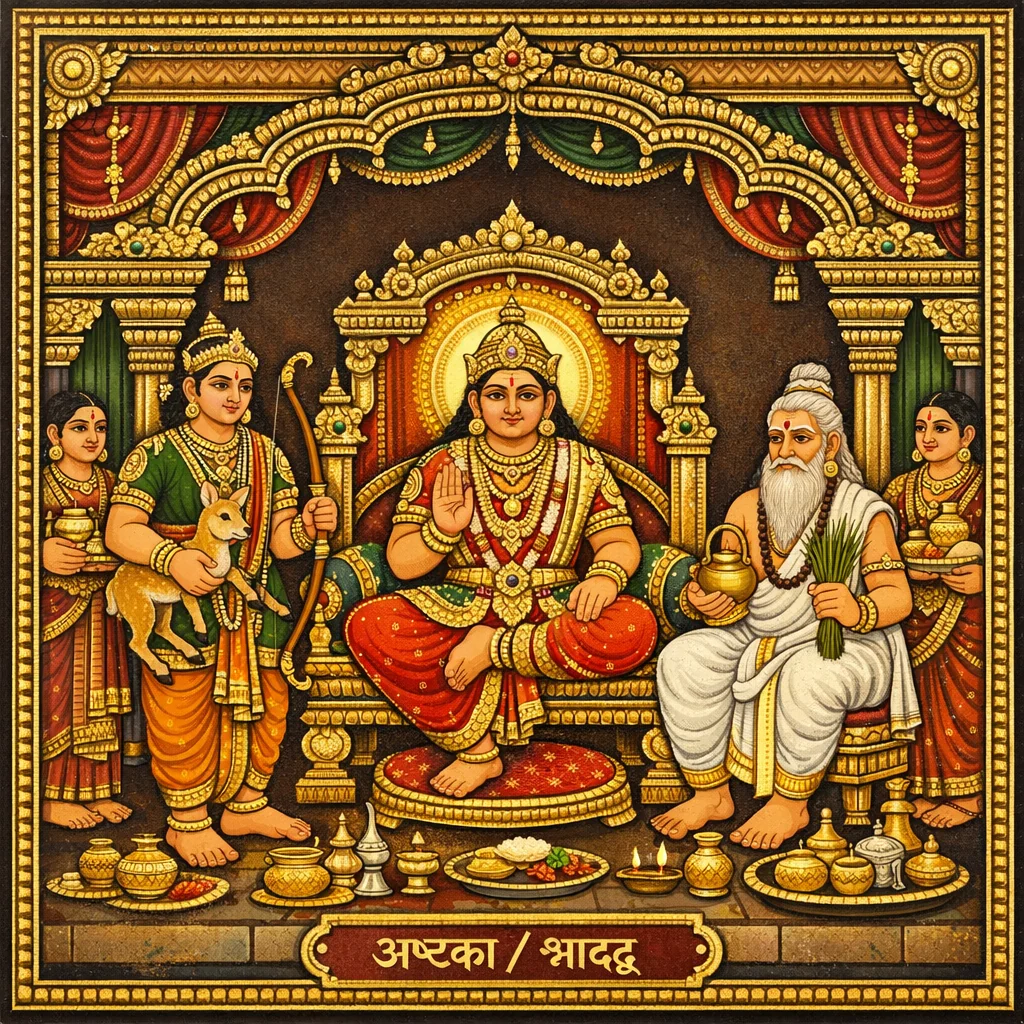
Framed as Sūta’s narration in a Purāṇic catalog style, this chapter quickly turns to vamśa (genealogical) material. Mentions of Kukudmin/Revat(a) and a place occupied by puṇyajanas and rākṣasas set a mythic-historical backdrop, then the account moves through kṣatriya groupings, flight-and-pursuit motifs, and named lineages. A compact chain is listed (Nabhāga/Nābhāga → Nābhāga/Nābhāda; Ambarīṣa; Virūpa; Pṛṣadaśva; Rathītara), followed by a key social-theological note: some groups are “kṣatra-prasūtā” yet remembered as Āṅgirasa, implying lineage reclassification through pravara and kṣetra affiliation. The narrative then enters Solar-dynasty (Ikṣvāku) traditions—Ikṣvāku’s descendants, notable sons such as Vikukṣi, Nimi, and Daṇḍa, and administrative/territorial assignments toward uttarāpatha and the southern directions. A ritual-ethical vignette tied to Aṣṭakā/Śrāddha follows: the king orders meat for śrāddha; Vikukṣi hunts and eats part of the game, and the meat is to be ritually handled by Vasiṣṭha, highlighting dharma tensions between royal command, ritual purity, and personal conduct. Overall, the adhyāya blends the title-marker of gandharva-lakṣaṇa with genealogical indexing and a dharma episode explaining epithets and lineage memory.
Shlokas
Verse 1
इति श्रीब्रह्माण्डे महापुराणे वायुप्रोक्ते मध्यमभागे तृतीय उपोद्धातपादे भार्गवचरिते गान्धर्वलक्षणं नाम द्विषष्टितमो ऽध्यायः // ६२// सूत उवाच कुकुद्मिननस्तु तं लोकं रैवतस्य गतस्य ह / त्दृता पुण्यजनैः सर्वा राक्षसैः साकुशस्थली
Thus, in the Śrī Brahmāṇḍa Mahāpurāṇa, in the middle section proclaimed by Vāyu, within the Bhārgava narrative’s third introductory division, is the sixty-second chapter called “Gāndharva-lakṣaṇa.” Sūta said: when Kukudmī, son of Raivata, had gone to that world, the whole land named Sākuśasthalī became filled with Puṇyajanas and Rākṣasas.
Verse 2
तद्वै भ्रातृशतं तस्य धार्मिकस्य महात्मनः / निबध्यमानं नाराचैर्विदिशः प्राद्रवद्भयात्
The hundred brothers of that righteous great-souled one, being pinned down by nārāca arrows, fled in fear toward Vidiśā.
Verse 3
तेषां तु तद्भयक्रान्तक्षत्रियाणां च विद्रुताम् / अन्ववायस्तु सुमहांस्तत्र तत्र द्विजोत्तमाः
Behind those kṣatriyas, driven into flight by fear, there followed—here and there—a very great retinue, accompanied by dvijottamas, the foremost of the twice-born.
Verse 4
शार्याता इति विख्याता दिक्षु सर्वासु धर्मिकाः / धृष्टस्य धर्ष्टिकं सर्वं रणधृष्टं बभूव ह
They were famed as the Śāryātas, steadfast in dharma in every quarter; and through the boldness of Dhṛṣṭa, all the Dhārṣṭikas became fearless upon the field of battle.
Verse 5
त्रिसाहस्रं तु स गणः क्षत्रियाणां महात्मनाम् / नभगस्य च दायादो नाभादो नाम वीर्यवान्
That host of great-souled kṣatriyas numbered three thousand; and Nabhaga’s heir was the mighty one named Nābhāda.
Verse 6
अंबरीषस्तु नाभागिर्विरूपस्तस्य चात्मजः / पृषदश्वो विरूपस्य तस्य पुत्रो रथीतरः
Ambarīṣa was the son of Nābhāga; his son was Virūpa. Virūpa’s son was Pṛṣadaśva, and his son was Rathītara.
Verse 7
एते क्षत्रप्रसूता वै पुनश्चाङ्गिरसः स्मृताः / रथीतराणां प्रवराः क्षेत्रोपेता द्विजातयः
Though born of kṣatriya stock, these are again remembered as Āṅgirasa. Among the Rathītaras they are the foremost pravaras, regarded as dvijāti through the kṣetra connection.
Verse 8
क्षुवतस्तु मनोः पूर्वमिक्ष्वाकुरभिनिःसृतः / तस्य पुत्रशतं त्वासीदिक्ष्वाकोर्भूरिदक्षिमम्
From Kṣuvata, even before Manu, Ikṣvāku came forth. Ikṣvāku had a hundred sons, renowned for abundant gifts and generosity.
Verse 9
तेषां श्रेष्ठो विकुक्षिस्तु निमिर्दण्डश्च ते त्रयः / शकुनिप्रमुखास्तस्य पुत्राः पञ्चाशतस्तु ते
Among them Vikukṣi was the foremost; Nimi and Daṇḍa—these three were eminent. His sons were fifty in number, with Śakuni at their head.
Verse 10
उत्तरापथदेशस्य रक्षितारो महीक्षितः / चत्वारिंशत्तथाष्टौ च दक्षिणस्यां तु वै दिशि
Mahīkṣit became the guardian of the land of Uttarāpatha; and in the southern quarter as well there were forty-eight protectors (kings).
Verse 11
विराटप्रमुखास्ते च दक्षिणापथरक्षिणः / इक्ष्वाकुस्तु विकुक्षिं वै अष्टकायामथा दिशत्
They, with Virāṭa at their head, were guardians of the Southern Path. Then Ikṣvāku appointed Vikukṣi for the Aṣṭakā śrāddha.
Verse 12
राजोवाच / मांसमानय श्राद्धे त्वं मृगान्हत्वा महाबल / श्राद्धं मम तु कर्त्तव्यमष्टकानां न संशयः
The king said: “O mighty one, bring meat for the śrāddha by slaying game in the hunt. I must perform the Aṣṭakā śrāddha—of this there is no doubt.”
Verse 13
स गतो मृगयां चैव वचनात्तस्य धीमतः / मृगान्सहस्रकान्हत्वा परिश्रान्तश्च वीर्यवान्
At the command of that wise one, he went out to hunt. Having slain thousands of beasts, the valiant man grew utterly weary.
Verse 14
भक्षयच्छशकं तत्र विकुक्षिर्मृगयां गतः / आगते हि विकुक्षै तु समांसे महसैनिके
Vikukṣi, gone out on the hunt, ate a hare (śaśaka) there. When that great warrior returned bearing the meat, then…
Verse 15
वसिष्ठं चोदयामास मांस प्रोक्षयतामिति / तथेति चोदितो राज्ञा विधिवत्तदुपस्थितम्
The king urged Vasiṣṭha: “Perform the prokṣaṇa—the purifying sprinkling—upon the meat.” Thus commanded by the king, Vasiṣṭha replied “So be it,” and duly carried it out according to rite.
Verse 16
स दृष्ट्वोपहतं मांसं क्रुद्धो राजानमब्रवीत् / अनेनोपहतं मांसं पुत्रेण तव पार्थिव
Seeing the tainted flesh, he grew wrathful and said to the king, “O ruler of the earth, this flesh has been defiled by your son.”
Verse 17
शशभक्षाददुष्टं वै नैव मांसं महाद्युते / शशो दुरात्मना पूर्वममना भक्षितो ऽनघ
O greatly radiant one, flesh is not tainted merely by eating a hare; yet, O blameless one, that hare had earlier been eaten by the wicked Aman.
Verse 18
तेन मांसमिदं दुष्टं पितॄणां नृपसत्तम / इक्ष्वाकुस्तु ततः क्रुद्धो विकुक्षिमिदमब्रवीत्
O best of kings, therefore this flesh has become defiled for the Pitris. Then Ikshvaku, angered, spoke thus to Vikukshi.
Verse 19
पितृकर्मणि निर्दिष्टो मया च मृगयां गतः / शशं भक्षयसे ऽरण्ये निर्घृणः पूर्वमद्य तु
I appointed you to hunt for the rite to the Pitris; yet you, pitiless, eat the hare in the forest—before as well as today.
Verse 20
तस्मात्परित्यजामि त्वां गच्छ त्वं स्वेन कर्मणा / एवमिक्ष्वाकुणा त्यक्तो वसिष्ठवचनात्सुतः
Therefore I cast you off; go according to your own karma. Thus, at Vasishtha’s word, Ikshvaku abandoned his son.
Verse 21
इक्ष्वाकौसंस्थिते तस्मिञ्छशादः पृथिवीमिमाम् / प्राप्तः परगधर्मात्मा स चायोध्याधिपो ऽभवत्
In the Ikṣvāku line at that time, Śaśāda obtained this very earth; steadfast in the higher dharma, he became the lord of Ayodhyā.
Verse 22
तदाकरोत्स राज्यं वै वसिष्ठपरिनोदितः / ततस्तेनैनसा पूर्णो राज्यावस्थो महीपतिः
Then, urged on by Vasiṣṭha, he took up the kingship; thereafter the lord of the earth, though established on the throne, became filled with that sin.
Verse 23
कालेन गतवान्सो ऽथ शकृन्मूत्रतरङ्गितम् / ज्ञात्वैवमेतदाख्यानं ना विधिर्भक्षयेद्बुधः
In time he passed on, and then reached a hell heaving with waves of filth and urine. Knowing this account, the wise should not partake of flesh.
Verse 24
मांसभक्षयितामुत्र यस्य मांसमिहाद्म्यहम् / एतन्मांसस्य मांसत्वं प्रवदन्ति मनीषिणः
“In the world beyond, the flesh of him whom I shall devour—his very flesh I eat here.” Thus do the wise declare the true ‘flesh-nature’ of meat.
Verse 25
शशादस्य तु दायादः ककुत्स्थो नाम वीर्यवान् / इन्द्रस्य वृषभूतस्य ककुत्स्थो जयते पुरा
Śaśāda’s heir was the mighty one named Kakutstha; in ancient times Kakutstha was born of Indra, who had assumed the form of a bull.
Verse 26
पूर्वमाडीबके युद्धे ककुत्स्थस्तेन संस्मृतः / अनेनास्तु ककुत्स्थस्य पृथुश्चानेन स स्मृतः
Formerly, in the battle of Māḍībaka, Kakutstha was remembered through him; and by this same lineage, Pṛthu too is remembered along with Kakutstha.
Verse 27
दृषदश्वः पृथोः पुत्रस्तस्मादन्ध्रस्तु वीर्यवान् / अन्ध्रात्तु युवनाश्वस्तु शावस्तस्तस्य चात्मजः
Dṛṣadaśva was the son of Pṛthu; from him was born the mighty Andhra. From Andhra came Yuvanāśva, and his son was Śāvasta.
Verse 28
जज्ञे श्रावस्तको राजा श्रावस्ती येन निर्मिता / श्रावस्तस्य तु दायादो बृहदश्वो महायशाः
King Śrāvastaka was born, by whom the city of Śrāvastī was founded. Śrāvasta’s heir was Bṛhadaśva, renowned with great fame.
Verse 29
बृहदश्वसुतश्चापि कुवलाश्व इति श्रुतः / यस्तु धुन्धुवधाद्राजा धुन्धुमारत्वमागतः
Bṛhadaśva’s son was famed as Kuvalāśva; and by slaying Dhundhu, that king attained the title Dhundhumāra.
Verse 30
ऋषय ऊचुः धुन्धोर्वधं महाप्राज्ञ घोतुमिच्छाम विस्तरात् / यदर्थं कुवलाश्वस्य धुन्धुमारत्वमागतम्
The ṛṣis said: “O great sage, we wish to hear in full the slaying of Dhundhu—by what cause did Kuvalāśva attain the name Dhundhumāra?”
Verse 31
सूत उवाच कुवलाश्वस्य पुत्राणां सहस्राण्येकविंशतिः / सर्वे विद्यासु निष्णाता बलवन्तो दुरासदाः
Sūta said: Kuvalāśva had twenty-one thousand sons. All were accomplished in the sciences, mighty in strength, and hard to assail.
Verse 32
बभूवुर्धार्मिकाः सर्वे यज्वानो भूरिदक्षिणाः / कुवलाश्वं महावीर्यं शूरमुत्तमधार्मिकम्
All of them were righteous, performers of yajñas, and givers of abundant gifts. Kuvalāśva was of great might, a hero, and foremost in Dharma.
Verse 33
बृहदश्वो ह्यभ्यषिञ्चत्तस्मिन्राज्ये नराधिपः / पुत्रसंक्रामितश्रीस्तु वनं राजा विवेश ह
Bṛhadaśva, lord of men, was anointed to that kingdom. Having passed the royal splendor on to his son, the king entered the forest.
Verse 34
बृहदश्वं महाराजं शूरमुत्तमधार्मिकम् / प्रयास्यन्तमुतङ्कस्तु ब्रह्मर्षिः प्रत्यवारयत्
As the great king Bṛhadaśva—valiant and foremost in Dharma—was about to depart, the brahmarṣi Uttaṅka restrained him.
Verse 35
उत्तङ्क उवाच भवता रक्षणं कार्यं तत्तावत्कर्त्तुमर्हति / निरुद्विग्नस्तपस्छर्तुं न हि शक्रो ऽपि पार्थिव
Uttaṅka said: O king, you must undertake the duty of protection for the time being; you are fit to do so. To practice tapas in perfect peace is not possible even for Śakra (Indra), O ruler of the earth.
Verse 36
ममाश्रमसमीपेषु मेरोर्हि परितस्तु वै / समुद्रो वालुकापूर्णस्तत्र तिष्ठति भूपते
O king! Near my hermitage, all around Mount Meru, there truly lies an ocean filled with sand.
Verse 37
देवतानामवध्यस्तु महाकायो महाबलः / अन्तर्भूमिगतस्तत्र वालुकान्तर्हितो महान्
He is invulnerable even to the gods—vast of body and mighty in strength; there he has gone beneath the earth, hidden within the sands, the great one.
Verse 38
राक्षसस्य मधोः पुत्रो धुन्धुर्नाम महासुरः / शेते लोकविनाशाय तप आस्थाय दारुणम्
Dhundhu, the great asura, son of the rakshasa Madhu, lies there, having undertaken dreadful austerity for the destruction of the worlds.
Verse 39
संवत्सरस्य पर्यन्ते स निश्वासं विमुञ्चति / यदा तदा मही तत्र चलति स्म सकानना
At the end of each year he releases his breath; whenever he does so, the earth there trembles along with its forests.
Verse 40
तस्य निश्वासवातेन रज उद्धूयते महत् / आदित्यपथमावृत्य सप्ताहं भूमिकंपनम्
By the wind of his breath, a vast dust is raised; it veils the path of the sun, and for seven days the earth quakes.
Verse 41
सविस्फुलिङ्गं सज्वारं सधूममतिदारुणम् / तेन राजन्न शक्नोमि तस्मिन्स्थातुं स्व आश्रमे
It is filled with sparks, with blazing fire and with smoke—most dreadful; therefore, O King, I cannot remain there in my own āśrama.
Verse 42
तं वारय महाबाहो लोकानां हितकाम्यया / तेजस्ते सुमहद्विष्मुस्तेजसाप्याययिष्यति
O mighty-armed one, restrain him for the welfare of the worlds; your tejas is exceedingly great, and by that radiance you will subdue the wicked one.
Verse 43
लोकाः स्वस्था भवन्त्वद्य तस्मिन्विनिहते सुरे / त्वं हि तस्य वधार्थाय समर्थः पृथिवीपते
When that deva is slain, may the worlds become peaceful this very day; O lord of the earth, you alone are able to accomplish his death.
Verse 44
विष्णुना च वरो दत्तो मम पूर्व यतो ऽनघ / न हि धुन्धुर्महावीर्यस्तेजसाल्पेन शाक्यते
O blameless one, Viṣṇu has already granted me a boon before; Dhundhu of great might cannot be overcome by a little tejas.
Verse 45
निर्दग्धुं पृथिवीपालैरपि वर्षशतैरपि / वीर्यं हि सुमहत्तस्य देवैरपि दुरासदम्
Even the kings who guard the earth could not burn him, though they strove for hundreds of years; so vast is his power, hard to assail even for the devas.
Verse 46
एवमुक्तस्तु राजर्षिरुत्तङ्केन महात्मना / कुवलाश्वं तु तं प्रादात्तस्मिन् धुन्धुनिवारणे
Thus addressed by the great-souled Uttanka, the royal sage entrusted Kuvalāśva to him for the quelling of Dhundhu.
Verse 47
भगवन्न्यस्तशस्भो ऽहमयं तु तनयो मम / भविष्यति द्विजश्रेष्ठ धुन्धुमारो न संशयः
O Bhagavan, I have laid down my weapons; yet this son of mine, O best of brahmins, will surely be Dhundhumāra—of that there is no doubt.
Verse 48
स तमादिश्य तनयं धुन्धुमाग्णमच्युतम् / जगाम स वनायैव तपसे शंसितव्रतः
Having instructed his son—Acyuta-like, the one who would burn away Dhundhu—he, steadfast in a praised vow, departed to the forest for austerities.
Verse 49
कुवलाश्वस्तु धर्मात्मा पितुर्वचनमाश्रितः / सहक्रैरेकविंशत्या पुत्राणां सह पार्थिवः
Kuvalāśva, righteous in spirit, heeding his father’s word, set forth as king together with his twenty-one thousand sons.
Verse 50
प्रायादुत्तङ्कसहितो धुन्धोस्तस्य निवारणे / तमाविशत्ततो विष्णुर्भगवान्स्वेन तेजसा
He set out with Uttanka to restrain Dhundhu; then Bhagavan Vishnu entered into him with His own radiant power.
Verse 51
उत्तङ्कस्य नियोगात्तु लोकानां हितकाम्यया / तस्मिन्प्रयाते दुर्धर्षे दिवि शब्दो महानभूत्
By Uttanka’s command, seeking the welfare of the worlds, when that unassailable one set forth, a mighty sound arose in the heavens.
Verse 52
अद्य प्रभृत्येष नृपो धुन्धुमारो भविष्यति / दिव्यैः पुष्पैश्च तं देवाः संमतात्समवाकिरन्
From this day forth, this king shall be known as Dhundhumara. The approving gods showered him with celestial flowers.
Verse 53
देवदुन्दुभयश्चैव प्रणेदुर्हि तदा भृशम् / स गत्वा पुरुषव्याघ्रस्तनयैः सह वीर्यवान्
Then the divine kettledrums resounded mightily. That valiant hero, a tiger among men, went forth together with his sons.
Verse 54
समुद्रं खानयामास वालुकापूर्णमव्ययम् / तस्य पुत्रैः खनद्भिश्च वालुकान्तर्हितस्तदा
He began to dig into the ocean, filled with sand and inexhaustible. And as his sons dug on, he then vanished, hidden within the sand.
Verse 55
धुन्धुरासादितस्तत्र दिशमाश्रित्य पश्चिमाम् / मुखजेनाग्निना क्रुद्धो लोकानुद्वर्तयन्निव
There Dhundhu drew near, taking refuge toward the western quarter. Enraged, he spewed fire from his mouth, as though he would overturn the worlds.
Verse 56
वारि सुस्राव चोगेन महोदधिरिवोदये / सोमस्य सो ऽसुरश्रेष्ठो धारोर्मिकलिलो महान्
By the power of yoga, water poured forth like the great ocean at dawn; the mighty stream of that foremost Asura of Soma swelled, thick with waves.
Verse 57
तस्य पुत्रास्तु निर्दग्धास्त्रय उर्वरिता मृधे / ततः स राजातिबलो राक्षसं तं महाबलम्
His three sons were burned up in the battle, leaving only remnants; then that exceedingly mighty king advanced toward the great and powerful Rākṣasa.
Verse 58
आससाद महातेजा धुन्धुं बन्धुनिबर्हणम् / तस्य वारिमयं वेगमपि वत्स नराधिपः
The king of mighty splendor closed in upon Dhundhu, the destroyer of kinsmen; my child, he even withstood that water-born onrush of his.
Verse 59
योगी योगेन वह्निं च शमयामास वारिणा / निरस्यन्तं महाकायं बलेनोदकराक्षसम्
The yogin, by yoga, quenched the fire with water; and with sheer strength he drove back that huge-bodied water-Rākṣasa.
Verse 60
उत्तङ्कं दर्शयामास कृतकर्मा नराधिपः / उत्तङ्कश्च वरं प्रादात्तस्मै राज्ञे महात्मने
The lord of men, his deed accomplished, brought Uttanka into view; and the great-souled Uttanka granted that king a boon.
Verse 61
ददतश्चाक्षयं वित्तं शत्रुभिश्चाप्य धुष्यताम् / धर्मे रतिं च सततं स्वर्गे वासं तथाक्षयम्
He who gives in charity gains inexhaustible wealth, even if assailed by enemies. He ever delights in dharma and attains an imperishable dwelling in heaven.
Verse 62
पुत्राणां चाक्षयांल्लोकान्स्वर्गे ये रक्षसा हताः / तस्य पुत्रास्त्रयः शिष्टा दृढाश्वो ज्येष्ठ उच्यते
Those who were slain in heaven by a rākṣasa— their sons too attain imperishable realms in heaven. He had three noble sons; the eldest is called Dṛḍhāśva.
Verse 63
भद्राश्वः कपिलाश्वश्च कनीयांसौ तु तौ स्मृतौ / धैन्धुमारिर्दृढाश्वश्च हर्यश्वस्तस्य चात्मजः
Bhadrāśva and Kapilāśva are remembered as the younger two. There were Dhaindhumāri and Dṛḍhāśva; and his son was Haryaśva.
Verse 64
हर्यश्वस्य निकुंभो ऽभूत्क्षात्रधर्मरतः सदा / संहताश्वो निकुंभस्य सुतो रणविशारदः
Haryaśva’s son was Nikumbha, ever devoted to the kṣatriya dharma. Nikumbha’s son was Saṃhatāśva, skilled in the arts of war.
Verse 65
कृशाश्वश्चाकृताश्वश्च संहताश्वसुतावुभौ / तस्य पत्नी हैमवती सती माता दृषद्वती
Saṃhatāśva had two sons, Kṛśāśva and Akṛtāśva. His wife was the virtuous Haimavatī Satī, and his mother was Dṛṣadvatī.
Verse 66
विख्याता त्रिषु लोकेषु पुत्रश्चास्य प्रसेनजित् / युवनाश्वसुतस्तस्य त्रिषु लोकेषु विश्रुतः
He was renowned in the three worlds; his son was Prasenajit. And that son of Yuvanāśva too was celebrated throughout the three worlds.
Verse 67
अत्यन्तधार्मिका गौरी तस्य पत्नी पतिव्रता / अभिशस्ता तु सा भर्त्रा नदी सा बाहुदा कृता
Gaurī, supremely devoted to dharma, was his wife, steadfast in wifely vows. Yet, cursed by her husband, she became the river called Bāhudā.
Verse 68
तस्यास्तु गौरिकः पुत्रश्चक्रवर्ती बभूव ह / मान्धाता यौवनाश्वो वै त्रैलोक्यविजयी नृपः
Her son Gaurika became a cakravartin, a universal sovereign. And Māndhātā, the son of Yuvanāśva, was truly a king who conquered the three worlds.
Verse 69
अत्राप्युदाहरन्तीमं श्लोकं पौराणिका द्विजाः / यावत्सूर्य उदयते यावच्च प्रतितिष्ठति
Here too, the twice-born sages learned in the Purāṇas cite this verse: so long as the sun rises, and so long as it stands established.
Verse 70
सर्वं तद्यौवनाश्वस्य मान्धातुः क्षेत्रमुच्यते / तस्य चैत्ररथी भार्या शशबिन्दोः सुताभवत्
All that region is spoken of as the kṣetra, the domain, of Māndhātā, son of Yuvanāśva. His wife Caitrarathī was the daughter of Śaśabindu.
Verse 71
साध्वी बिन्दुमती नाम रूपेणाप्रतिमा भुवि / पतिव्रता च ज्येष्ठा च भातॄणामयुतस्य सा
The virtuous lady named Bindumatī was unmatched in beauty upon the earth. She was a devoted wife, and the eldest among ten thousand brothers.
Verse 72
तस्यामुत्पादयामास मान्धाता त्रीन्सुतन्प्रभुः / पुरुकुत्समंबरीषं मुचुकुन्दं च विश्रुतम्
Through her, the mighty Māndhātā begot three sons: Purukutsa, Ambarīṣa, and the renowned Mucukunda.
Verse 73
अंबरीषस्य दायादो युवनाश्वो ऽपरः स्मृतः / नर्मदायां समुत्पन्नः संभूतस्तस्य चात्मजः
As Ambarīṣa’s heir is remembered another Yuvanāśva. His son was Saṃbhūta, born upon the Narmadā.
Verse 74
संभूतस्यात्मजः पुत्रो ङ्यनरण्यः प्रतापवान् / रावणेन हतो येन त्रैलोक्यं विजितं पुरा
Saṃbhūta’s son was the mighty Ṅyanaraṇya. He was slain by Rāvaṇa, who long ago had conquered the three worlds.
Verse 75
तेन दृश्योनरण्यस्य हर्यश्वस्तस्य चात्मजः / हर्यश्वात्तु दृषद्वत्यां जज्ञे च सुमतिर्नृपः
From him (Ṅyanaraṇya) came Dṛśyonaraṇya, whose son was Haryaśva. And from Haryaśva, upon the Dṛṣadvatī, was born King Sumati.
Verse 76
तस्य पुत्रो ऽभवद्राजा त्रिधन्वा नाम धार्मिकः / आसीत्त्रिधन्वनश्चापि विद्वांस्त्रय्यारुणिः प्रभुः
His son became a righteous king named Tridhanvā. And in Tridhanvan’s line there was also the wise lord Trayyāruṇi, learned in the Vedic lore.
Verse 77
तस्य सत्यव्रतो नाम कुमारो ऽभून्महाबलः / तेन भार्या विदर्भस्य त्दृता हत्वा दिवौकसः
He had a prince named Satyavrata, mighty in strength. He seized Tdr̥tā, the wife of Vidarbha, after overpowering the dwellers of heaven.
Verse 78
पाणिग्रहणमन्त्रेषु निष्टानं प्रापितेष्विह / कामाद्बलाच्च मोहाच्च संहर्षेण बलेन च
Though the rite of the pāṇigrahaṇa mantras—the taking of the hand in marriage—had been duly established here, it was done out of desire, by force, through delusion, and by the violence of strife.
Verse 79
भाविनोर्ऽथस्य च बलात्तत्कृतं तेन धीमता / तमधर्मेण संयुक्तं पिता भय्यारुणो ऽत्यजत्
Driven by the force of hoped-for gain in times to come, that wise one did this deed. Seeing him joined to adharma, his father Bhayyāruṇi cast him away.
Verse 80
अपध्वंसेति बहुशो वदन्क्रोधसमन्वितः / पितरं सो ऽब्रवीदेकः क्व गच्छामीति वै मुहुः
Filled with wrath, he uttered again and again, “Apadhvaṃsa!” Then, alone, he repeatedly said to his father, “Where shall I go?”
Verse 81
पिता चैनमथोवाच श्वपाकैः सह वर्त्तय / नाहं पुत्रेण पुत्रार्थी त्वयाद्य कुलपांसन
Then the father said to him: “Live among the śvapākas (outcastes); I seek no son through a son like you—today you are the stain of our lineage.”
Verse 82
इत्युक्तः स निराक्रामन्नगराद्वचना द्विभोः / न चैनं वारयामास वसिष्ठो भगवानृषिः
Thus addressed, he departed from the city at his father’s word; and even the revered sage Vasiṣṭha did not restrain him.
Verse 83
स तु सत्यव्रतो धीमाञ्श्वपाकावसथान्तिके / पित्रा त्यक्तो ऽवसद्धीरः पिता चास्य वनं ययौ
But he, steadfast in his vow of truth and wise of mind, dwelt resolutely near the śvapāka settlement; his father cast him off and went away into the forest.
Verse 84
तस्मिंस्तु विषये तस्य नावर्षत्पाकशासनः / समा द्वादश संपूर्मास्तेनाधर्मेण वै तदा
In his realm, Indra the Pākaśāsana sent down no rain; because of that adharma, twelve full years passed in drought.
Verse 85
दारांस्तु तस्य विषये विश्वामित्रो महातपाः / संन्यस्य सागरानूपे चचार विपुलं तपः
In that land, Viśvāmitra, mighty in austerity, left his wife there and performed vast tapas in a grove by the ocean’s shore.
Verse 86
तस्य पत्नी गले बद्ध्वा मध्यमंपुत्रमौरसम् / शिष्टानां भरणार्थाय व्यक्रीणाद्गोशतेन वै
His wife bound their middle-born true son by the neck and, to provide sustenance for the righteous, sold him for a hundred cows.
Verse 87
तं तु बद्धं गले दृष्टवा विक्रयार्थं नरोत्तमः / महर्षिपुत्रं धर्मात्मा मोक्षयामास सुव्रतः
Seeing the great seer’s son bound by the neck for sale, the noblest man—righteous in soul and steadfast in vow—set him free.
Verse 88
सत्यव्रतो महाबुद्धिर्भरणं तस्य चाकरोत् / विश्वामित्रस्य तुष्ट्यर्थमनुकंपार्थमेव च
Satyavrata, vast in wisdom, provided for him—both to please Viśvāmitra and out of compassion.
Verse 89
सो ऽभवद्गालवो नाम गले बद्धो महातपाः / महर्षिः कौशिकस्तात तेन वीरेण मोक्षितः
That great ascetic, bound by the neck, was named Gālava; my child, Maharṣi Kauśika was freed by that hero.
Verse 90
तस्य व्रतेन भक्त्या च कृपया च प्रतिज्ञया / विश्वामित्रकलत्रं च बभार विनये स्थितः
By his vow, devotion, compassion, and solemn promise—abiding in humility—he also bore the responsibility of caring for Viśvāmitra’s wife.
Verse 91
हत्वा मृगान्वराहांश्च महिषांश्च जलेचरान् / विश्वामित्राश्रमाभ्यासे तन्मांसमनयत्ततः
Having slain deer, boars, buffaloes, and creatures of the waters, he then brought that meat to the vicinity of Viśvāmitra’s āśrama.
Verse 92
उपांशुव्रतमास्थाय दीक्षां द्वादशवार्षिकीम् / पितुर्नियोगादभजन्नृपे तु वनमास्थिते
When the king had taken up residence in the forest, he—by his father’s command—undertook the upāṃśu vow and observed the twelve-year dīkṣā.
Verse 93
अयोध्यां चैव राष्ट्रं च तथैवान्तः पुरं पुनिः / याज्योत्थान्यायसंयोगाद्वसिष्ठः पर्यरक्षत
By the rightful order connected with the yajña, Vasiṣṭha once more safeguarded Ayodhyā, the realm, and the inner palace.
Verse 94
सत्यव्रतः सुबाल्यात्तु भाविनोर्ऽथस्य वै बलात् / वसिष्ठे ऽभ्यधिकं मन्युं धारयामास मन्युना
Satyavrata, from his very boyhood, driven by the force of what was to come, harbored an even greater wrath toward Vasiṣṭha.
Verse 95
पित्रा तु तं तदा राष्ट्रात्परित्यक्तं स्वमात्मजम् / न वारयामास मुनिर्वसिष्ठः कारणेन वै
When the father cast off his own son from the kingdom, the sage Vasiṣṭha, for a certain reason, did not restrain him.
Verse 96
पाणिग्रहममन्त्राणां निष्ठा स्यात्सप्तमे पदे / एवं सत्यव्रतस्तां वै हृतवान्सप्तमे पदे
The rite-mantras of taking the hand find their consummation at the seventh step; thus Satyavrata indeed carried her off at the seventh step.
Verse 97
जानन्धर्मान्वसिष्ठस्तु नवमन्त्रानिहेच्छति / इति सत्यव्रतो रोषं वसिष्ठे मनसाकरोत्
Vasiṣṭha, knower of dharma, desired here nine mantras; thinking so, Satyavrata kindled anger in his mind toward Vasiṣṭha.
Verse 98
गुणबुद्ध्या तु भगवान्वसिष्ठः कृतवांस्तपः / न तु सत्यव्रतो ऽबुध्यदुपांशुव्रतमस्य वै
With discerning regard for virtue, the venerable Vasiṣṭha performed austerity; but Satyavrata did not understand his upāṃśu-vrata, the quiet vow.
Verse 99
तस्मिंस्तु परमो रोषः पितुरासीन्महात्मनः / तेन द्वादश वर्षाणि नावर्षत्पाकशासनः
At that, the great-souled father was seized by supreme wrath; because of it Pākaśāsana (Indra) sent no rain for twelve years.
Verse 100
तेन त्विदानीं वहता दीक्षां तां दुर्वहां भुवि / कुलस्य निष्कृतिः स्वस्य सृतेयं च भवेदिति
Therefore he now bears upon the earth that hard-to-bear dīkṣā, so that his own lineage may find expiation and this creation may endure.
Verse 101
ततो वसिष्ठो भगवान्पित्रा त्यक्तं न वारयत् / अभिषेक्ष्याम्यहं नष्टे पश्चादेनमिति प्रभुः
Then the blessed Vasiṣṭha did not restrain him who had been cast off by his father. The Lord declared, “When this is lost, afterward I myself shall perform his abhiṣeka (sacred consecration).”
Verse 102
स तु द्वादशवर्षाणि दीक्षां तामुद्वहन्बली / अविद्यमाने मांसे तु वसिष्ठस्य महात्मनः
He, the mighty one, bore that dīkṣā for twelve years; yet in the abode of the great-souled Vasiṣṭha there was no meat to be found.
Verse 103
सर्वकामदुघां धेनुं स ददर्श नृपात्मजः / तां वै क्रोधाच्च मोहाच्च श्रमच्चैव क्षुधान्वितः
The prince beheld the wish-fulfilling cow that yields all desires; seized by anger and delusion, worn by toil and driven by hunger, he gazed upon her.
Verse 104
दस्युधर्मगतो दृष्ट्वा जघान बलिनां वरः / सतु मांसं स्वयं चैव विश्वामित्रस्य चात्मजान्
Seeing him fallen into the way of brigands, the foremost among the strong struck him down; and of that flesh he ate himself and fed the sons of Viśvāmitra as well.
Verse 105
भोजयामास तच्छ्रुत्वा वसिष्ठस्तं तदात्यजत् / प्रोवाच चैव भगवान्वसिष्ठस्तं नृपात्मजम्
Hearing this, Vasiṣṭha at once forsook him; and the blessed Vasiṣṭha spoke thus to the prince.
Verse 106
पातयेयमहं क्रूर तव शङ्कुम पोह्य वै / यदि ते त्रीणि शङ्कूनि न स्युर्हि पुरुषाधम
O cruel one! I shall cast down your stake—remove it. If you have not three stakes, O basest of men!
Verse 107
पितुश्चापारितोषेण गुरोर्देगध्रीवधेन च / अप्रोक्षितोपयोगाच्च त्रिविधस्ते व्यतिक्रमः
By displeasing your father, by slaying the guru’s Degadhrīva, and by using what was not ritually purified—threefold is your transgression.
Verse 108
एवं स त्रीणि शङ्कूनि दृष्ट्वा तस्य महातपाः / त्रिशङ्कुरिति होवाच त्रिशङ्कुस्तेन स स्मृतः
Thus the great ascetic, seeing his three stakes, declared, “Triśaṅku”; and by that he came to be remembered as Triśaṅku.
Verse 109
विश्वामित्रस्तु दाराणामागतो भरणे कृते / ततस्तस्मै वरं प्रादात्तदा प्रीतस्त्रिशङ्कवे
Then Viśvāmitra came to provide for his wives; and, pleased at heart, he granted a boon to Triśaṅku.
Verse 110
छन्द्यमानो वरेणाथ गुरुं वव्रेनृपात्मजः / सशरीरो व्रजे स्वर्गमित्येवं याचितो वरः
Delighted by the boon, the prince chose his guru as the very object of his request: “May I go to heaven in this very body”; thus was the boon he sought.
Verse 111
अनावृष्टिभये तस्मिञ्जाते द्वादशवार्षिके / अभिषिच्य राज्ये पित्र्ये योजयामास तं मुनिः
When the fear of a twelve-year drought arose, the sage anointed him in his ancestral kingdom and appointed him to rule.
Verse 112
मिषतां देवतानां च वसिष्ठस्य च कौशिकः / सशरीरं तदा तं वै दिवमारोपयत्प्रभुः
Before the very eyes of the gods and of Vasiṣṭha, the mighty Kauśika then raised him to heaven, body and all.
Verse 113
मिषतस्तु वसिष्ठस्य तदद्भुतमिवाभवत् / अत्राप्युदाहरन्तीमं श्लोकं पौराणिका जनाः
As Vasiṣṭha looked on, it seemed like a marvel; and in this very matter the Purāṇic narrators cite this verse.
Verse 114
विश्वामित्रप्रसादेन त्रिशङ्कुर्दिविराजते / देवैः सार्द्धं महातेजानुग्रहात्तस्य धीमतः
By Viśvāmitra’s grace Triśaṅku shines in heaven together with the gods, through the favor of that wise one of mighty splendor.
Verse 115
तस्य सत्यरता नाम भार्या कैकयवंशजा / कुमारं जनयामास हरिश्चन्द्रमकल्मषम्
His wife Satyaratā, born of the Kaikaya line, gave birth to a spotless son—Hariścandra, free from all taint.
Verse 116
स तु राजा हरिश्चन्द्रस्त्रैशङ्कव इति श्रुतः / अहर्ता राजसूयस्य सम्रडिति परिश्रुतः
That king, Harishchandra, was renowned as “Traishankava.” He was famed as the performer of the Rajasuya sacrifice and celebrated everywhere as “Samrat,” the sovereign lord.
Verse 117
हरिश्चन्द्रस्य तु सुतो रोहितो नाम वीर्यवान् / हरितो रोहितस्याथ चञ्चुर्हरीत उच्यते
Harishchandra’s mighty son was named Rohita. Rohita’s son was Harita, and Harita’s son was Cañcu, who is also called Hārīta.
Verse 118
विनयश्च सुदेवश्च चञ्चुपुत्रौ बभूवतुः / चैता सर्वस्य क्षत्रस्य विजयस्तेन स स्मृतः
Cañcu had two sons, Vinaya and Sudeva. They were regarded as the victory of the entire Kshatriya line; therefore he is remembered as “Vijaya,” the triumphant one.
Verse 119
रुरुकस्तनयस्तस्य राजा धर्मार्थकोविदः / रुरुकात्तु वृकः पुत्रस्तस्माद्बाहुर्विजज्ञिवान्
His son was King Ruruka, skilled in dharma and artha. From Ruruka was born Vṛka, and from him arose Bāhu, the wise.
Verse 120
हैहयैस्तालजङ्घैश्च निरस्तो व्यसनी नृपः / शकैर्यवनकांबोजैः पारदैः पह्लवैस्तथा
That king, given over to vice, was driven out by the Haihayas and the Tālajaṅghas; and likewise by the Śakas, Yavanas, Kāmbojas, Pāradas, and Pahlavas.
Verse 121
नात्यर्थं धार्मिको ऽभूत्स धर्म्ये सति युगे तथा / सगरस्तु सुतो बाहोर्जज्ञे सह गरेण वै
Even in that age of righteousness, he was not exceedingly devout. King Sagara, son of Bāhu, was indeed born together with the “gara”.
Verse 122
भृगोराश्रममासाद्य ह्यौर्वैण परिरक्षितः / अग्नेयमस्त्रं लब्ध्वा तु भार्गवात्सगरो नृपः
Reaching Bhṛgu’s hermitage, he was protected by Aurva. Then King Sagara received from the Bhārgava the fiery weapon, the Agneya-astra.
Verse 123
जघान पृथिवीं गत्वा तालजङ्घान्सहैहयान् / शकानां पह्लवानां च धर्मं निरसदच्युतः
He went across the earth and slew the Tālajaṅghas together with the Haihayas. Sagara, steadfast like Acyuta, also set aside the dharma-customs of the Śakas and the Pahlavas.
Verse 124
क्षत्रियाणां तथा तेषां पारदानां च धर्मवित् / ऋषय ऊचुः कथं स सगरो राजा गरेण सह जज्ञिवान्
The sages, versed in the dharma of those Kṣatriyas and of the Pāradas, said: “How was King Sagara born together with the ‘gara’?”
Verse 125
किमर्थं वा शकादीनां क्षत्रियाणां महौजसाम् / धर्मान्कुलोचितान्क्रुद्धो राजा निरसदच्युतः
Why did the king, steadfast like Acyuta, in anger set aside the clan-ordained dharmas of the mighty Kṣatriyas—Śakas and the rest?
Verse 126
सुत उवाच बाहोर्व्यसनिनस्तस्य त्दृतं राज्यं पुरा किल / हैहयैस्तालजङ्घैश्च शकैः सार्द्धं समागतैः
Suta said: In ancient times, the kingdom of Bahu, fallen into vice, was seized by the Haihayas, the Talajanghas, and the Sakas who came together.
Verse 127
यवनाः पारदाश्चैव कांबोजाः पह्लवास्तथा / हैहयार्थं पराक्रान्ता एते पञ्च गणास्तदा
The Yavanas, the Paradas, the Kambojas, and the Pahlavas—these five hosts then advanced in valor for the sake of the Haihayas.
Verse 128
त्दृतराज्यस्तदाबाहुः संन्यस्य स तदा गृहम् / वनं प्रविश्य धर्मात्मा सह पत्न्या तपो ऽचरत्
When his kingdom was taken, Bahu renounced his home; righteous in spirit, he entered the forest with his wife and practiced austerity.
Verse 129
कदाचिदप्यकल्पः स तोयार्थं प्रस्थितो नृपः / वृद्धत्वाद्दुर्बलत्वाच्च ह्यन्तरा स ममार च
Once the king set out to fetch water, but through old age and frailty he died on the way.
Verse 130
पत्नी तु यादवी तस्य सगर्भा पृष्ठतो ऽप्यगात् / सपत्न्या तु गरस्तस्यै दत्तो गर्भजिघांसया
His wife, a Yadavi, though pregnant, followed behind; but a co-wife gave her poison, seeking to destroy the child in the womb.
Verse 131
सा तु भर्तुश्चितां कृत्वा वह्निं तं समारोहयत् / और्वस्तं भार्गवो दृष्ट्वा कारुण्याद्धि न्यवर्त्तयत्
She built her husband’s funeral pyre and mounted that fire. Seeing the sage Aurva, Bhārgava, moved by compassion, restrained her.
Verse 132
तस्याश्रमे तु गर्भं सा गरेण च तदा सह / व्यजायत महाबाहुं सगरं नाम धर्मिकम्
In that hermitage she conceived, together with the ‘gara’ (poison or potion), and gave birth to a mighty-armed, righteous son named Sagara.
Verse 133
और्वस्तु जातकर्मादीन्कृत्वा तस्य महात्मनः / अध्याप्य वेदाञ्छास्त्राणि ततो ऽस्त्रं प्रत्यपादयत्
Aurva performed the birth rites and other saṃskāras for that noble soul; after teaching him the Vedas and the śāstras, he then bestowed upon him the divine astras.
Verse 134
ततः शकान्स यवनान्कांबोजान्पारदांस्तथा / पह्लवांश्चैव निःशेषान्कर्तुं व्यवसितो नृपः
Then the king resolved to wipe out without remainder the Śakas, the Yavanas, the Kāmbojas, the Pāradas, and the Pahlavas as well.
Verse 135
ते हन्यमाना वीरेण सगरेण महात्मना / वसिष्ठं शरणं सर्वे संप्राप्ताः शरणैषिणः
As they were being slain by the great hero Sagara, all of them, seeking refuge, approached Vasiṣṭha, taking him as their sanctuary.
Verse 136
वसिष्ठो वीक्ष्य तान्युक्तान्विनयोन महामुनिः / सगरं वारयामास तेषां दत्त्वाभयं तथा
The great sage Vasiṣṭha, seeing their humble words, granted them fearlessness and restrained Sagara.
Verse 137
सगरः स्वां प्रतिज्ञां च गुरोर्वाक्यं निशम्य च / जघान धर्मं वै तेषां वेषान्यत्वं चकार ह
Sagara, heeding his own vow and his guru’s word, deprived them of their dharma and made them adopt different garb.
Verse 138
अर्द्धं शाकानां शिरसो मुण्डयित्वा व्यसर्जयत् / यवनानां शिरः सर्वं कांबोजानां तथैव च
He shaved half the Śakas’ heads and dismissed them; but the Yavanas’ heads entirely, and likewise the Kāmbojas’.
Verse 139
पारदा मुक्तकेशाश्च पह्लवाः श्मश्रुधारिणः / निःस्वाध्यायवषट्काराः कृतास्तेन महात्मना
That great-souled one made the Pāradas wear their hair unbound, the Pahlavas wear beards, and deprived them of svādhyāya and the vaṣaṭ sacrificial call.
Verse 140
शका यवन कांबोजाः पह्लवाः पारदैः सह / कलिस्पर्शा महिषिका दार्वस्छोलाः खशास्तथा
The Śakas, Yavanas, Kāmbojas, and Pahlavas along with the Pāradas; and also the Kalisparśas, Mahiṣikas, Dārvas, Cholas, and Khaśas.
Verse 141
सर्वे ते क्षत्रियगणा धर्मस्तेषां निराकृतः / वसिष्ठवचनात्पूर्वं सगरेण महात्मना
All those clans of Kshatriyas had their dharma set aside; the great-souled Sagara, even before Vasiṣṭha’s word, had annulled their sacred order.
Verse 142
स धर्मविजयी राजा विजित्येमां वसुन्धराम् / अश्वं वै चारयामास वाजिमेधाय दीक्षितः
That king, victorious through dharma, having conquered this earth, and consecrated for the Vājimedha, set the sacrificial horse to roam.
Verse 143
तस्य चारयतः सो ऽश्वः समुद्रे पूर्वदक्षिणे / वेलासमीपे ऽपहृतो भूमिं चैव प्रवेशितः
As the horse was being sent forth, near the shore of the southeastern sea it was stolen away and hidden within the earth.
Verse 144
स तं देशं सुतैः सर्वैः खानयामास पार्थिवः / आसेदुश्च ततस्तस्मिन्खनन्तस्ते महार्मवे
Then the earthly king had that region dug up by all his sons; and as they dug on, they came at last to the mighty ocean.
Verse 145
तमादिपुरुषं देवं हरिं कृष्णं प्रजापतिम् / विष्णुं कपिलरूपेण हंसं नारायणं प्रभुम्
They beheld that God, the primal Puruṣa—Hari, Kṛṣṇa, Prajāpati—Viṣṇu in the form of Kapila, the Lord Nārāyaṇa in the form of Haṃsa.
Verse 146
तस्य चक्षुः समासाद्य तेजस्तत्प्रतिपद्यते / दग्धाः पुत्रास्तदा सर्वेचत्वारस्त्ववशेषिताः
Upon encountering his gaze, they met with that fiery energy. All the sons were burnt then; only four remained.
Verse 147
बर्हिकेतुः सुकेतुश्च तथा धर्मरथश्च यः / शूरः पञ्चजनश्चैव तस्य वंशकराः प्रभोः
Barhiketu, Suketu, Dharmaratha, and the brave Panchajana were the continuers of that Lord's lineage.
Verse 148
प्रादाच्च तस्य भगवान्हरिर्नारायणो वरान् / अक्षयत्वं स्ववंशस्य वाजिमेधशतं तथा
And Lord Hari Narayana granted him boons: the imperishability of his lineage and a hundred horse sacrifices.
Verse 149
विभुः पुत्रं समुद्रं च स्वर्गे वासं तथाक्षयम् / तं समुद्रो ऽश्वमादाय ववन्दे सरितांपतिः
A powerful son, the Ocean (as a son), and eternal residence in heaven. The Lord of Rivers (Ocean), taking the horse, worshipped him.
Verse 150
सागरत्वं च लेभे स कर्मणा तेन तस्य वै / तं चाश्वमेधिकं सो ऽश्वं समुद्रात्प्राप्य पार्थिवः
He obtained the state of being 'Sagara' by that deed of his. The King obtained that sacrificial horse from the Ocean.
Verse 151
आजहाराश्वमेधानां शतं चैव पुनः पुनः / षष्टिं पुत्रसहस्राणि दग्धान्यस्य रुषा विभो
That mighty Lord performed, again and again, a hundred Aśvamedha sacrifices; by his wrath, sixty thousand sons were burned to ashes.
Verse 152
तेषां नारायणं तेजः प्रविष्टानि महात्मनाम् / पुत्राणां तु सहस्राणि षष्टिस्तु इति नः श्रुतम्
Into those great souls entered the radiance of Nārāyaṇa; we have heard that the sons were sixty thousand in number.
Verse 153
ऋषय ऊचुः सगरस्यात्मजा नाना कथं जाता महाबलाः / विक्रान्ताः षष्टिसाहस्रा विधिना केन वा वद
The sages said: “How were Sagara’s many sons born, all of mighty strength? By what ordinance did those sixty thousand valiant ones come to be? Tell us.”
Verse 154
सुत उवाच द्वेपत्न्यौ सगरस्यास्तां तपसा दगधकिल्बिषे / ज्येष्ठा विदर्भदुहिता केशिनी नाम नामतः
Sūta said: Sagara had two wives, whose sins had been burned away by austerity. The elder was the daughter of Vidarbha, known by the name Keśinī.
Verse 155
कनीयसी तु या तस्यपत्नी परमधर्मिणी / अरिष्टनेमिदुहिता रूपेणाप्रतिमा भुवि
His younger wife was supremely devoted to dharma; she was the daughter of Ariṣṭanemi, unmatched in beauty upon the earth.
Verse 156
और्वस्ताभ्यां वरं प्रादात्तपसाराधितः प्रभुः / एका जनिष्यते पुत्रं वंशकर्त्तारमीप्सितम्
Pleased by their austerities, the Lord granted a boon to Aurva’s two wives: one of them would bear the desired son, the establisher of the lineage.
Verse 157
षष्टिं पुत्रसहस्राणि द्वितीया जनयिष्यति / मुनेस्तु वचनं श्रुत्वा केशिनी पुत्रमेककम्
The second would bear sixty thousand sons; hearing the sage’s words, Keśinī chose the boon of a single son.
Verse 158
वंशस्य कारणं श्रेष्ठं जग्राह नृप संसदि / षष्टिं पुत्रसहस्राणि सुपर्णभगिनी तथा
In the king’s court she accepted the finest boon, the very cause of the dynasty—a son who would found the line; and Suparṇa’s sister likewise accepted the boon of sixty thousand sons.
Verse 159
महाभागा प्रमुदिता जग्राह सुमतिस्तथा / अथ काले गते ज्येष्ठा ज्येष्ठं पुत्रं व्यजायत
Fortunate Sumati too accepted the boon with delight; and when the time had passed, the elder queen gave birth to her firstborn son.
Verse 160
असमञ्ज इति ख्यातं काकुत्स्थं सगरात्मजम् / सुमतिस्त्वपि जज्ञे वै गर्भतुंबं यशस्विनी
Sagara’s son of the Kakutstha line became famed as Asamañja; and the illustrious Sumati too gave birth to a garbha-tumba—an earthen jar of gestation (kumbha).
Verse 161
षष्टिः पुत्रसहस्राणां तुंबमध्याद्विनिस्सृताः / घृतपूर्णेषु कुंभेषु तान्गर्भान्यदधात्ततः
From the midst of the gourd emerged the embryos of sixty thousand sons; then he placed those unborn ones into jars filled with sacred ghee.
Verse 162
धात्रीश्चैकैकशः प्रादात्तावतीः पोषणे नृपः / ततो नवसु मासेषु समुत्तस्थुर्यथासुखम्
The king appointed a nurse for each one, one by one, for their nurture; and after nine months they all rose up in ease and well-being.
Verse 163
कुमारास्ते महाभागाः सगरप्रीतिवर्द्धनाः / कालेन महाता चैव यैवनं समुपाश्रिताः
Those greatly fortunate princes increased Sagara’s joy; and as much time passed, they came to the fullness of youth.
Verse 164
केशिन्यास्तनयो यो ऽन्यः सगरस्यात्मसंभवः / असमञ्ज इति ख्यातो वर्हिकेतुर्महाबलः
Sagara’s other son, born of Keśinī, was famed as Asamañja—Varhiketu, a man of great might.
Verse 165
पौराणामहिते युक्तः पित्रा निर्वासितः पुरात् / तस्य पुत्रोंऽशुमान्नाम असमञ्जस्य वीर्यवान्
Engaged in deeds harmful to the citizens, he was banished from the city by his father; and Asamañja’s valiant son was named Aṃśumān.
Verse 166
तस्य पुत्रस्तु धर्मात्मा दिलीप इति विश्रुतः / दिलीपात्तु महातेजा वीरो जातो भगीरथः
His son, righteous in spirit, became renowned as Dilīpa; and from Dilīpa was born the heroic Bhagīratha, radiant with great splendor.
Verse 167
येन गङ्गा सरिच्छ्रेष्ठा विमानैरुपशोभिता / इहानीता सुरेशाद्वै दुहितृत्वे च कल्पिता
By him the Gaṅgā, foremost of rivers, adorned with celestial vimānas, was brought here from Indra, lord of the gods, and was also established in the place of a daughter.
Verse 168
अत्राप्युदाहरन्तीमं श्लोकं पौराणिका जनाः / भगीरथस्तु तां गङ्गामानयामास कर्मभिः
Here too the Purāṇic sages recite this verse: Bhagīratha, by his deeds and austere striving, brought that Gaṅgā here.
Verse 169
तस्माद्भागीरथी गङ्गा कथ्यते वंशवित्तमैः / भगीरथसुतश्चापि श्रुतो नाम बभूवह
Therefore, those skilled in royal lineages call her “Bhāgīrathī Gaṅgā”; and Bhagīratha’s son too became known by the name Śruta.
Verse 170
नाभागस्तस्य दायादो नित्यं धर्मपरायणः / अम्बरीषः सुतस्तस्य सिंधुद्वीपस्ततो ऽभवत्
His heir was Nābhāga, ever devoted to Dharma; his son was Ambarīṣa, and from Ambarīṣa was born Siṃdhudvīpa.
Verse 171
पूर्वे वंशपुराणज्ञा गायन्तीति परिश्रुतम् / नाभागेरंबरीषस्य भुजाभ्यां परिपालिता
It is well heard that the ancients, knowers of lineages and the Purāṇas, sang of this: Ambarīṣa of Nabhāga protected the people with the strength of his arms.
Verse 172
बभूव वसुधात्यर्थं तापत्रयविवर्जिता / अयुतायुः सुतस्तस्य सिंधुद्वीपस्य वीर्यवान्
Under his rule the earth became exceedingly prosperous, free from the threefold afflictions; his mighty son was Sindhudvīpa, named Ayutāyu.
Verse 173
अयुतायोस्तु दायाद ऋतुपर्णो महायशाः / दिव्याक्षहृदयज्ञो ऽसौ राजा नलसखो बली
Ayutāyu’s heir was the greatly renowned Ṛtuparṇa; he knew the inner secret of the divine dice, a mighty king and friend of Nala.
Verse 174
नलौ द्वाविति विख्यातौ पुराणेषु दृढव्रतौ / वीरसेनात्मजश्चैव यश्चेक्ष्वाकुकुलोद्वहः
In the Purāṇas, two steadfast men are famed as “Nala”: one the son of Vīrasena, and the other the foremost glory of the Ikṣvāku line.
Verse 175
ऋतुपर्णस्य पुत्रो ऽभूत्सर्वकामो जनेश्वरः / सुदासस्तस्य तनयो राजा इन्द्रसखो ऽभवत्
Ṛtuparṇa’s son was Sarvakāma, lord of the people; his son was Sudāsa, who became a renowned king called Indrasakha, “friend of Indra.”
Verse 176
सुदासस्य सुतः प्रोक्तः सौदासो नाम पार्थिवः / ख्यातः कल्माषपादो वै नाम्ना सित्रसहश्च सः
Sudāsa’s son is spoken of as the king named Saudāsa. He was famed as Kalmāṣapāda, and was also known by the name Sitrasaha.
Verse 177
वसिष्ठस्तु महातेजाः क्षेत्रे कल्माषपादके / अश्मकं जनयामास त्विक्ष्वाकुकुलवृद्धये
Vasiṣṭha, mighty in spiritual splendor, in the field of Kalmāṣapāda begot Aśmaka for the increase of the Ikṣvāku line.
Verse 178
अश्मकस्यौरसो यस्तु मूलकस्तत्सुतो ऽभवत् / अत्राप्युदाहरन्तीमं मूलकं वै नृपं प्रति
Aśmaka’s true-born son was Mūlaka; he became his son. Here too this account is cited as an example concerning King Mūlaka.
Verse 179
स हि रामभयाद्राजा स्त्रीभिः परिवृतो ऽवसत् / विवस्त्रस्त्राणमिच्छन्वै नारीकवच ईश्वरः
That king, fearing Rāma, dwelt surrounded by women. Seeking protection from nakedness, he was known as the lord with a ‘women’s armor’ (nārī-kavaca).
Verse 180
मूलकस्यापि धर्मात्मा राजा शतरथः स्मृतः / तस्माच्छतरथाज्जज्ञे राजा त्विडविडो बली
Mūlaka’s son is remembered as the righteous king Śataratha. From Śataratha was born the mighty king Tviḍaviḍa.
Verse 181
आसीत्त्वैडविडः श्रीमान्कृशशर्मा प्रतापवान् / पुत्रो विश्वसहस्रस्य पुत्रीकस्यां व्यजायत
In the Vaidaviḍa line there was the illustrious, valorous Kṛśaśarmā; he was the son of Viśvasahasra, born of Putrīkā.
Verse 182
दिलीपस्तस्य पुत्रो ऽभूत्खट्वाङ्ग इति विश्रुतः / येन स्वर्गादिहागत्य मुहूर्त्तं प्राप्य जीवितम्
His son was Dilīpa, famed as Khaṭvāṅga; descending from heaven to this world, he obtained life for only a single muhūrta.
Verse 183
त्रयो ऽभिसंहिता लोका बुद्ध्या सत्येन चैव हि / दीर्घबाहुः सुतस्तस्य रघुस्तस्मादजायत
By wisdom and truth he brought the three worlds into accord (and under his sway); his son was Dīrghabāhu, and from him Raghu was born.
Verse 184
अजः पुत्रो रघोश्चापि तस्माज्जज्ञे स वीर्यवान् / राजा दशरथो नाम इक्ष्वाकुकुलनन्दनः
Raghu’s son was Aja; from him was born that mighty one—King Daśaratha, the delight of the Ikṣvāku line.
Verse 185
रामो दाशरथिर्वीरो धर्मज्ञो लोकविश्रुतः / भरतो लक्ष्मणश्चैव शत्रुघ्नश्च महाबलः
Rāma, Daśaratha’s heroic son, was a knower of dharma and renowned in the world; and so too were Bharata, Lakṣmaṇa, and mighty Śatrughna.
Verse 186
माधवं लवणं हत्वा गत्वा मधुवनं च तत् / शत्रुघ्रेन पुरी तत्र मथुरा विनिवेशिता
Having slain Mādhava (Lavaṇa), Śatrughna went to Madhuvana and there established the city of Mathurā.
Verse 187
सुबाहुः शूरसे नश्च शत्रुघ्नस्य सुतावुभौ / पालयामासतुस्तौ तु वैदेह्यौ मथुरां पुरीम्
Śatrughna’s two sons, Subāhu and Śūrasena, both of Vaidehī lineage, ruled and protected the city of Mathurā.
Verse 188
अङ्गदश्चन्द्रकेतुश्च लक्ष्मणस्यात्मजावुभौ / हिमवत्पर्वतस्यान्ते स्फीतौ जनपदौ तयोः
Aṅgada and Candraketu, the two sons of Lakṣmaṇa, had two flourishing realms near the borders of Mount Himavat.
Verse 189
अङ्गदस्याङ्गदाख्याता देशे कारयते पुरी / चन्द्रकेतोस्तु विख्याता चन्द्रचक्रा पुरी शुभा
Aṅgada founded in his land a city called Aṅgadā; and Candraketu’s famed and auspicious city was Candracakrā.
Verse 190
भरतस्यात्मजौ वीरौ तक्षः पुष्कर एव च / गान्धारविषये सिद्धे तयोः पुर्यो महात्मनोः
Bharata’s valiant sons, Takṣa and Puṣkara, established their two cities in the land of Gandhāra, those great-souled ones.
Verse 191
तक्षस्य दिक्षु विख्याता नाम्ना तक्षशिला पुरी / पुष्करस्यापि वीरस्य विख्याता पुष्करावती
The city named Takṣaśilā became famed in every quarter by Takṣa; and Puṣkarāvatī, of the valiant Puṣkara, was likewise renowned.
Verse 192
गाथां चैवात्र गायन्ति ये पुराण विदो जनाः / रामेण बद्धां सत्यार्थां महात्म्यात्तस्य धीमतः
Here the knowers of the Purāṇas also sing a gāthā—woven by Rāma the wise, true in meaning, through the greatness of his glory.
Verse 193
श्यामो युवा लोहिताक्षो दीप्तास्यो मीतभाषितः / आजानुबाहुः सुमुखः सिंहस्कन्धो महाभुजः
Dark-hued and youthful, red-eyed, with a radiant face and measured speech; his arms reached to his knees, his countenance was fair, his shoulders like a lion’s, his arms mighty.
Verse 194
दशवर्षसहस्राणि रामो राज्यमकारयत् / ऋक्सामयजुषां घोषो यो घोषश्च महास्वनः
For ten thousand years Rāma caused the kingdom to be ruled; and the chant of the Ṛk, Sāma, and Yajus Vedas resounded with a mighty roar.
Verse 195
अव्युच्छिन्नो ऽभवद्राज्ये दीयतां भुज्यतामिति / जनस्थाने वसन्कार्यं त्रिदशानां चकार सः
In the realm the order “let gifts be given, let enjoyments be shared” went on unbroken; and dwelling in Jana-sthāna, he also fulfilled the work of the Thirty Gods.
Verse 196
तमागस्कारिणं पूर्वं पौलस्त्यं मनुजर्षभः / सीतायाः पदमन्विच्छन्निजघान महायशाः
Then the greatly renowned Rama, best of men, while seeking the footprints of Sita, first struck down the guilty Paulastya.
Verse 197
सत्त्ववान्गुणसंपन्नो दीप्यमानः स्वतेजसा / अतिसूर्यं च वह्निं च रामो दाशरथिर्बभौ
Rama, son of Dasaratha—steadfast and rich in virtues—blazed with his own splendor, as though surpassing the sun and fire.
Verse 198
एवमेष महाबाहोस्तस्य पुत्रौ बभूवतुः / कुशो लव इति ख्यातो तयोर्देशौ निबोधत
Thus that mighty-armed one had two sons, famed as Kusha and Lava; now learn of the realms belonging to them.
Verse 199
कुशस्य कोशला राज्यं पुरी चापि कुशस्थली / रम्या निवेशिता तेन विन्ध्यपर्वतसानुषु
Kusha’s kingdom was Kosala, and his city was Kushasthali; that lovely city he founded upon the slopes of the Vindhya mountains.
Verse 200
उत्तराकोशले राज्य लवस्य च महात्मनः / श्रावस्तिर्लोकविख्याता कुशवंशं निबोधत
The great-souled Lava ruled in Uttara-Kosala; world-renowned Shravasti was his city—now know the lineage of Kusha.
Frequently Asked Questions
The sampled passage foregrounds a chain associated with Nabhāga/Nābhāda and descendants such as Ambarīṣa, Virūpa, Pṛṣadaśva, and Rathītara, alongside Solar-dynasty indexing through Ikṣvāku and key descendants like Vikukṣi, Nimi, and Daṇḍa.
It assigns protective rulership by direction/region—explicitly naming uttarāpatha and dakṣiṇāpatha protectors—showing how Purāṇic geography is encoded as administrative-dharmic stewardship.
It illustrates dharma tensions in funerary/ancestral rites: royal command for śrāddha provisions, the hunter’s conduct (Vikukṣi consuming part of the game), and the need for Vasiṣṭha’s ritual mediation—an etiological pattern often used to explain reputations, taboos, and lineage memory.