Adhyaya 6
Ṛṣabhadeva’s Indifference to Siddhis, Vigilance Toward the Mind, and the Kali-yuga Rise of Anti-Vedic धर्म
Continuing the Ṛṣabhadeva-carita, King Parīkṣit asks why a perfectly pure bhakta—who naturally may attain mystic siddhis—would disregard such powers. Śukadeva replies with a warning about the mind: it is as unreliable as animals caught by a hunter; even great beings like Śiva and Saubhari were disturbed, so the sādhaka must remain ever vigilant. The chapter portrays Ṛṣabhadeva’s avadhūta-like behavior—appearing dull, wandering naked, placing stones in His mouth—to teach yogīs detachment from the subtle body and the finality of renunciation when performed in true God-consciousness. His apparent bodily end in a forest fire highlights the instructive nature of His līlā, not material defeat. The narrative then turns to a Kali-yuga prophecy: King Arhat imitates externals and founds a Veda-opposed system (identified here as the beginning of Jain dharma), fostering wider pāṣaṇḍa trends that reject cleanliness, worship, and Vedic authority. The chapter closes by glorifying Ṛṣabhadeva’s auspiciousness: hearing and speaking His pastimes grants pure bhakti, in which even mukti is insignificant compared to loving service to Mukunda.
Shlokas
Verse 1
ऋषिरुवाच सत्यमुक्तं किन्त्विह वा एके न मनसोऽद्धा विश्रम्भमनवस्थानस्य शठकिरात इव सङ्गच्छन्ते ॥ २ ॥
The sage said: You have spoken truly; yet here some do not place full trust in the unsteady mind, just as a crafty hunter remains wary even of captured prey.
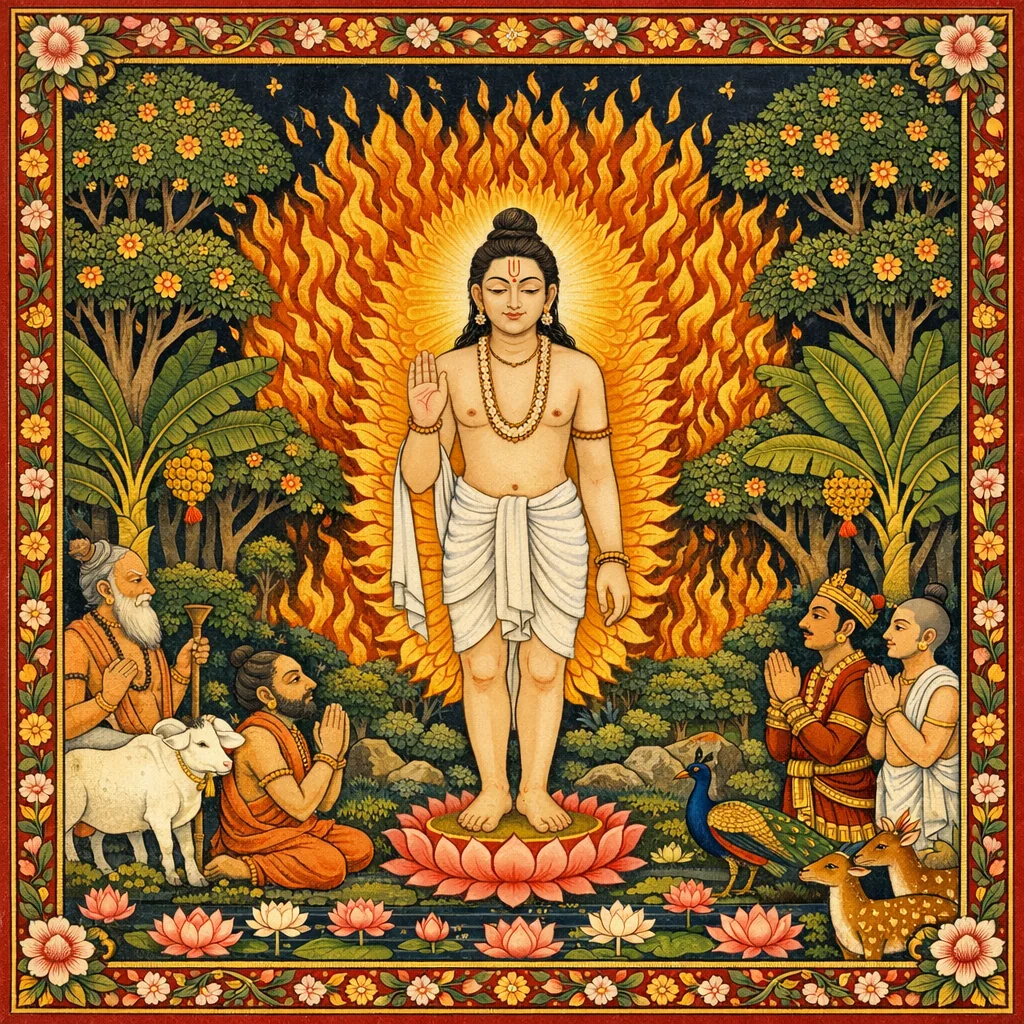
Verse 2
ऋषिरुवाच सत्यमुक्तं किन्त्विह वा एके न मनसोऽद्धा विश्रम्भमनवस्थानस्य शठकिरात इव सङ्गच्छन्ते ॥ २ ॥
Śukadeva said: O King, you have spoken rightly. As a crafty hunter does not trust even captured animals, fearing they may flee, so the spiritually advanced do not trust the mind; they remain ever vigilant, watching its movements.
Verse 3
तथा चोक्तम्— न कुर्यात्कर्हिचित्सख्यं मनसि ह्यनवस्थिते । यद्विश्रम्भाच्चिराच्चीर्णं चस्कन्द तप ऐश्वरम् ॥ ३ ॥
Therefore it is said: Never make friendship with the unsteady mind. By trusting it completely, long-practiced austerity and spiritual opulence can suddenly fall away.
Verse 4
नित्यं ददाति कामस्यच्छिद्रं तमनु येऽरय: । योगिन: कृतमैत्रस्य पत्युर्जायेव पुंश्चली ॥ ४ ॥
If a yogī makes friends with the mind and gives it an opening, the mind continually grants access to enemies like lust, anger, and greed—like an unchaste wife drawn by paramours, bringing ruin upon her husband.
Verse 5
कामो मन्युर्मदो लोभ: शोकमोहभयादय: । कर्मबन्धश्च यन्मूल: स्वीकुर्यात्को नु तद् बुध: ॥ ५ ॥
Lust, anger, pride, greed, lamentation, illusion, fear, and the rest all arise from the mind; from them comes bondage to karma. What wise person, then, would place faith in the mind?
Verse 6
अथैवमखिललोकपालललामोऽपि विलक्षणैर्जडवदवधूतवेषभाषाचरितैरविलक्षितभगवत्प्रभावो योगिनां साम्परायविधिमनुशिक्षयन् स्वकलेवरं जिहासुरात्मन्यात्मानमसंव्यवहितमनर्थान्तरभावेनान्वीक्षमाण उपरतानुवृत्तिरुपरराम ॥ ६ ॥
Lord Ṛṣabhadeva was the head of all kings and emperors within this universe, but assuming the dress and language of an avadhūta, He acted as if dull and materially bound. Consequently no one could observe His divine opulence. He adopted this behavior just to teach yogīs how to give up the body. Nonetheless, He maintained His original position as a plenary expansion of Lord Vāsudeva, Kṛṣṇa. Remaining always in that state, He gave up His pastimes as Lord Ṛṣabhadeva within the material world. If, following in the footsteps of Lord Ṛṣabhadeva, one can give up his subtle body, there is no chance that one will accept a material body again.
Verse 7
तस्य ह वा एवं मुक्तलिङ्गस्य भगवत ऋषभस्य योगमायावासनया देह इमां जगतीमभिमानाभासेन सङ्क्रममाण: कोङ्कवेङ्ककुटकान्दक्षिणकर्णाटकान्देशान् यदृच्छयोपगत: कुटकाचलोपवन आस्यकृताश्मकवल उन्माद इव मुक्तमूर्धजोऽसंवीत एव विचचार ॥ ७ ॥
Actually Lord Ṛṣabhadeva had no material body, but due to yoga-māyā He considered His body material, and therefore, because He played like an ordinary human being, He gave up the mentality of identifying with it. Following this principle, He began to wander all over the world. While traveling, He came to the province of Karṇāṭa in South India and passed through Koṅka, Veṅka and Kuṭaka. He had no plan to travel this way, but He arrived near Kuṭakācala and entered a forest there. He placed stones within His mouth and began to wander through the forest, naked and with His hair disheveled like a madman.
Verse 8
अथ समीरवेगविधूतवेणुविकर्षणजातोग्रदावानलस्तद्वनमालेलिहान: सह तेन ददाह ॥ ८ ॥
While He was wandering about, a wild forest fire began. This fire was caused by the friction of bamboos, which were being blown by the wind. In that fire, the entire forest near Kuṭakācala and the body of Lord Ṛṣabhadeva were burnt to ashes.
Verse 9
यस्य किलानुचरितमुपाकर्ण्य कोङ्कवेङ्ककुटकानां राजार्हन्नामोपशिक्ष्य कलावधर्म उत्कृष्यमाणे भवितव्येन विमोहित: स्वधर्मपथमकुतोभयमपहाय कुपथपाखण्डमसमञ्जसं निजमनीषया मन्द: सम्प्रवर्तयिष्यते ॥ ९ ॥
Śukadeva Gosvāmī continued speaking to Mahārāja Parīkṣit: My dear King, the King of Koṅka, Veṅka and Kuṭaka whose name was Arhat, heard of the activities of Ṛṣabhadeva and, imitating Ṛṣabhadeva’s principles, introduced a new system of religion. Taking advantage of Kali-yuga, the age of sinful activity, King Arhat, being bewildered, gave up the Vedic principles, which are free from risk, and concocted a new system of religion opposed to the Vedas. That was the beginning of the Jain dharma. Many other so-called religions followed this atheistic system.
Verse 10
येन ह वाव कलौ मनुजापसदा देवमायामोहिता: स्वविधिनियोगशौचचारित्रविहीना देवहेलनान्यपव्रतानि निजनिजेच्छया गृह्णाना अस्नानानाचमनाशौचकेशोल्लुञ्चनादीनि कलिनाधर्मबहुलेनोपहतधियो ब्रह्मब्राह्मणयज्ञपुरुषलोकविदूषका: प्रायेण भविष्यन्ति ॥ १० ॥
People who are lowest among men and bewildered by the illusory energy of the Supreme Lord will give up the original varṇāśrama-dharma and its rules and regulations. They will abandon bathing three times daily and worshiping the Lord. Abandoning cleanliness and neglecting the Supreme Lord, they will accept nonsensical principles. Not regularly bathing or washing their mouths regularly, they will always remain unclean, and they will pluck out their hair. Following a concocted religion, they will flourish. During this Age of Kali, people are more inclined to irreligious systems. Consequently these people will naturally deride Vedic authority, the followers of Vedic authority, the brāhmaṇas, the Supreme Personality of Godhead and the devotees.
Verse 11
ते च ह्यर्वाक्तनया निजलोकयात्रयान्धपरम्परयाऽऽश्वस्तास्तमस्यन्धे स्वयमेव प्रपतिष्यन्ति ॥ ११ ॥
Low-minded people, blinded by gross ignorance, establish a religion that strays from Vedic principles; following their own mental concoctions, they themselves fall into the darkest realms.
Verse 12
अयमवतारो रजसोपप्लुतकैवल्योपशिक्षणार्थ: ॥ १२ ॥
This incarnation appears to teach the truth of kaivalya (liberation) to those overwhelmed by rajas, the mode of passion.
Verse 13
तस्यानुगुणान् श्लोकान् गायन्ति— अहो भुव: सप्तसमुद्रवत्या द्वीपेषु वर्षेष्वधिपुण्यमेतत् । गायन्ति यत्रत्यजना मुरारे: कर्माणि भद्राण्यवतारवन्ति ॥ १३ ॥
Learned scholars sing fitting verses: “Ah! On this earth with seven seas, among all islands and lands, Bhārata-varṣa is most pious. Here people are accustomed to glorifying the auspicious deeds of Murāri in His incarnations, such as Lord Ṛṣabhadeva, for the welfare of all.”
Verse 14
अहो नु वंशो यशसावदात: प्रैयव्रतो यत्र पुमान् पुराण: । कृतावतार: पुरुष: स आद्य- श्चचार धर्मं यदकर्महेतुम् ॥ १४ ॥
“Oh, how pure and renowned is the dynasty of Priyavrata! In that line the primeval Purusha, the original Supreme Personality of Godhead, descended as an incarnation and practiced dharma that frees one from the bondage of karmic results.”
Verse 15
को न्वस्य काष्ठामपरोऽनुगच्छे- न्मनोरथेनाप्यभवस्य योगी । यो योगमाया: स्पृहयत्युदस्ता ह्यसत्तया येन कृतप्रयत्ना: ॥ १५ ॥
“What mystic yogī could follow Lord Ṛṣabhadeva’s supreme example even in the mind? He cast aside all yogic perfections that other yogīs yearn for—who, then, can be compared with Him?”
Verse 16
इति ह स्म सकलवेदलोकदेवब्राह्मणगवां परमगुरोर्भगवत ऋषभाख्यस्य विशुद्धाचरितमीरितं पुंसां समस्तदुश्चरिताभिहरणं परममहामङ्गलायनमिदमनुश्रद्धयोपचितयानुशृणोत्याश्रावयति वावहितो भगवति तस्मिन् वासुदेव एकान्ततो भक्तिरनयोरपि समनुवर्तते ॥ १६ ॥
Śukadeva Gosvāmī continued: Lord Ṛṣabhadeva is the supreme master of all Vedic knowledge, of human beings, demigods, cows, and brāhmaṇas. I have described His pure, transcendental deeds, which destroy the sinful acts of all living beings. This narration of His pastimes is a treasury of all auspiciousness. Whoever, following the ācārya succession, attentively hears or recites it with faith will surely attain unalloyed, exclusive devotion at the lotus feet of Lord Vāsudeva.
Verse 17
यस्यामेव कवय आत्मानमविरतं विविधवृजिनसंसारपरितापोपतप्यमानमनुसवनं स्नापयन्तस्तयैव परया निर्वृत्या ह्यपवर्गमात्यन्तिकं परमपुरुषार्थमपि स्वयमासादितं नो एवाद्रियन्ते भगवदीयत्वेनैव परिसमाप्तसर्वार्था: ॥ १७ ॥
In that supreme devotion, the sages constantly bathe the self—scorched by the many miseries of sinful material existence—in devotional service. By that highest bliss they are fully satisfied, and even liberation personified comes to serve them. Yet the devotees do not accept it, for by belonging to the Lord they have fulfilled all aims and risen beyond material desires.
Verse 18
राजन् पतिर्गुरुरलं भवतां यदूनां दैवं प्रिय: कुलपति: क्व च किङ्करो व: । अस्त्वेवमङ्ग भगवान् भजतां मुकुन्दो मुक्तिं ददाति कर्हिचित्स्म न भक्तियोगम् ॥ १८ ॥
My dear King, for the Yadus (and the Pāṇḍavas) Lord Mukunda is truly the protector, spiritual master, worshipable Deity, beloved friend, and head of the dynasty; indeed, at times He even serves your family as a messenger or servant. Those who worship seeking His favor receive liberation from Him very easily, but He does not so easily grant the chance to render direct service to Him—bhakti-yoga.
Verse 19
नित्यानुभूतनिजलाभनिवृत्ततृष्ण: श्रेयस्यतद्रचनया चिरसुप्तबुद्धे: । लोकस्य य: करुणयाभयमात्मलोक- माख्यान्नमो भगवते ऋषभाय तस्मै ॥ १९ ॥
The Supreme Personality of Godhead, Lord Ṛṣabhadeva, ever realized His true self; thus He was complete in Himself and free from thirst for external enjoyment. The world, long asleep in the bodily conception of life, does not know its real welfare. Out of causeless mercy He taught the truth of the soul and the goal of life. Therefore we offer our respectful obeisances to the Lord who appeared as Ṛṣabhadeva.
Frequently Asked Questions
Because siddhis are incidental and potentially distracting; they are not the prayojana (ultimate goal). Śukadeva emphasizes that the mind remains a risk-factor even for advanced practitioners, and siddhis can empower subtle ego, sense-enjoyment, or complacency. Ṛṣabhadeva’s neglect teaches that the mature bhakta seeks only Vāsudeva’s service, not secondary attainments, and that true perfection is freedom from identification with the subtle body (liṅga-śarīra), not the acquisition of extraordinary abilities.
It presents the mind as inherently restless and capable of cheating at any moment. The text uses exemplars (Śiva’s agitation upon Mohinī and Saubhari’s fall) to show that mere attainment of yogic maturity does not grant immunity from mental turbulence. If the yogī gives the mind an opening, it allies with enemies like lust, anger, and greed—leading to spiritual “death,” i.e., renewed bondage through karma and desire.
Arhat is described as a ruler of Koṅka, Veṅka, and Kuṭaka who hears of Ṛṣabhadeva and imitates externals while abandoning Vedic principles, thereby introducing a Veda-opposed system identified here as the beginning of Jain dharma. The warning is that in Kali-yuga, people—overwhelmed by rajas and tamas—tend to reject varṇāśrama, purity disciplines, and devotion, adopting concocted doctrines that deride Vedic authority, brāhmaṇas, the Lord, and devotees, resulting in further degradation.
The narrative frames these acts as didactic līlā: Ṛṣabhadeva adopts avadhūta behavior to demonstrate radical detachment and the method of giving up bodily identification, especially with the subtle body that carries karma and desires. The forest fire episode signals the conclusion of His manifest pastimes and reinforces that His ‘end’ is not a karmic death but a teaching device—encouraging practitioners to transcend fear, lamentation, and attachment by steady bhakti and vigilance over the mind.
Mukti is portrayed as insignificant for pure devotees because loving service to Mukunda is itself the complete fulfillment of life. Even if liberation personified offers service, devotees do not prioritize it; bhakti is higher than liberation because it is relational, positive, and centered on the Lord’s pleasure rather than the self’s relief.