Adhyaya 87
Avanti–Narmadā–Puṣkara Tīrtha-Kathana (धौम्यकथितं तीर्थवर्णनम्)
Upa-parva: Tīrtha-yātrā / Tīrtha-kathana (Pilgrimage Topography within Āraṇyaka-parva)
Dhauṃya enumerates sacred sites in the western (pratīcī) direction, beginning with Avanti and the auspicious Narmadā, described with fertile groves and a reverse-flowing (pratyaksrotā) characterization. The discourse then marks a holy ‘Niketa’ associated with the sage Viśravas and the birth of Kubera, indexing mythic genealogy to place. It introduces Vaiḍūryaśikhara, a meritorious mountain with divine flora, and a lotus-filled lake frequented by devas and gandharvas, emphasizing the site’s wondrous, heaven-like qualities. Additional tīrthas include a river connected with Viśvāmitra and the narrative of Yayāti’s fall and recovery of worlds through adherence to enduring dharmas. The chapter lists further landmarks—Puṇya-hrada, Maināka, Asita, and renowned āśramas (Kakṣasena, Cyavana, Jambūmārga)—where tapas is said to succeed with comparatively little effort. It proceeds to Ketumālā, Medhyā, Gaṅgāraṇya, and Saindhavāraṇya, culminating in Puṣkara (Pitāmaha-saras), beloved of Vaikhānasa sages; a phalaśruti-style claim follows: even mental intention toward Puṣkara is portrayed as sin-diminishing and conducive to heavenly joy.
Chapter Arc: जनमेजय के समक्ष वैशम्पायन पाण्डवों की उस व्याकुलता का चित्र खींचते हैं—अर्जुन के वियोग से उनका मन दीन है, और वे उससे मिलने को आतुर हैं; इसी बेचैनी के बीच धौम्य उन्हें पूर्वदिशा के तीर्थों का मार्ग बताने लगते हैं। → धौम्य एक-एक कर पुण्याश्रमों, नदियों और सरोवरों का वर्णन करते हैं—गोमती जैसे देवर्षि-सेवित तीर्थ, देवताओं की यज्ञभूमियाँ, और ऐसे स्थल जहाँ तप, दान, व्रत तथा यज्ञ से पितृ-ऋण और कुल-उद्धार का विधान बताया गया है; तीर्थों की महिमा जितनी बढ़ती है, उतना ही पाण्डवों का ‘उद्धार’ और ‘आश्वासन’ पाने का आग्रह तीव्र होता जाता है। → तीर्थ-महात्म्य का शिखर उन वचनों में आता है जहाँ धौम्य ‘गया’ आदि स्थलों के फल का प्रतिपादन करते हैं—अश्वमेध/वृषोत्सर्ग जैसे कर्मों द्वारा ‘दश पूर्वान् दशावरान्’ तक संतति-उद्धार का कथन; साथ ही विश्वामित्र के कान्यकुब्ज प्रसंग जैसे आख्यान-बीज तीर्थों को केवल भूगोल नहीं, धर्म-इतिहास बना देते हैं। → वर्णन पूर्वदिशा के पवित्र स्थलों की एक सुसंगत माला बनकर स्थिर होता है—भागीरथी-सम्बद्ध सरोवर/‘ब्रह्मशाला’ जैसे स्थानों का स्मरण और देववन जैसे तपोवनों का संकेत पाण्डवों को यह बोध कराता है कि वनवास केवल दण्ड नहीं, शुद्धि और संबल का पथ है। → धौम्य की तीर्थ-सूची आगे भी विस्तृत होने का संकेत देती है—पाण्डव अभी मार्ग पर हैं, और अर्जुन-वियोग की पीड़ा के बीच अगला तीर्थ-क्रम तथा उससे जुड़ी कथाएँ शेष हैं।
Shlokas
Verse 1
#2:8 #:23:.0 () हि २ 7 सप्ताशीतितमो< ध्याय: धौम्यद्वारा पूर्वदिशाके तीर्थोंका वर्णन वैशम्पायन उवाच तान् सर्वनित्सुकान् दृष्टवा पाण्डवान् दीनचेतस: । आश्चासयंस्तथा धौम्यो बृहस्पतिसमो<ब्रवीत्
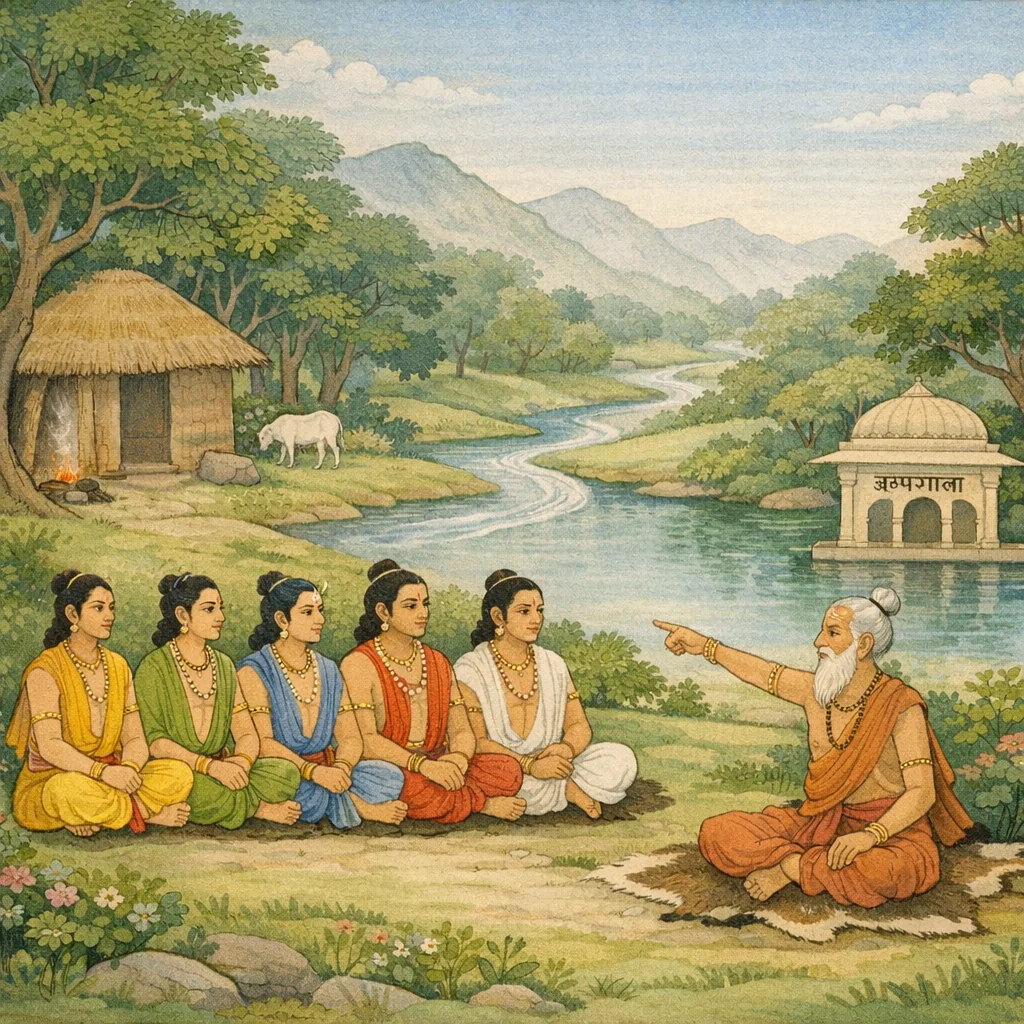
Vaiśampāyana said: Seeing the Pāṇḍavas all continually anxious and their hearts cast down, Dhaumya—calm and wise like Bṛhaspati—spoke to them, offering reassurance. The scene frames a moral moment: when the righteous are overwhelmed by hardship, counsel grounded in dharma steadies the mind and renews resolve.
Verse 2
ब्राह्मणानुमतान् पुण्यानाश्रमान् भरतर्षभ । दिशस्तीर्थानि शैलांश्व शूणु मे वदतो5नघ
Vaiśampāyana said: O bull among the Bharatas, listen, O sinless one, as I describe the sacred hermitages approved by the brāhmaṇas—along with the holy fords in every direction and the mountains. The narration turns toward a dharma-guided map of pilgrimage: places sanctified by tradition and ethical authority, meant to orient the listener toward merit, restraint, and reverence.
Verse 3
वैशम्पायनजी कहते हैं--जनमेजय! पाण्डवोंका चित्त अर्जुनके लिये अत्यन्त दीन हो रहा था। वे सब-के-सब उनसे मिलनेको उत्सुक थे। उनकी ऐसी अवस्था देखकर बृहस्पतिके समान तेजस्वी महर्षि धौम्यने उन्हें सान्त्वना देते हुए कहा--'पापरहित भरतकुलभूषण! ब्राह्मणलोग जिन्हें आदर देते हैं, उन पुण्य आश्रमों, दिशाओं, तीर्थों और पर्वतोंका मैं वर्णन करता हूँ, सुनो ।। याउछुत्वा गदतो राजन् विशोको भवितासि ह | द्रौपद्या चानया सार्थ भ्रातृभिश्न नरेश्वर,“नरेश्वर! राजन! मेरे मुखसे उन सबका वर्णन सुनकर तुम द्रौपदी तथा भाइयोंके साथ शोकरहित हो जाओगे
Vaiśampāyana said: “O Janamejaya, the Pāṇḍavas’ hearts grew exceedingly despondent on Arjuna’s account. All of them longed to see him. Seeing them in such a state, the radiant sage Dhaumya—like Bṛhaspati in splendor—consoled them and said: ‘O sinless ornament of the Bharata line! I shall describe to you those holy hermitages, directions, sacred fords, and mountains that are honored by Brahmins. Listen. Hearing my account, O king, you will become free from grief—together with Draupadī and your brothers, O lord of men.’”
Verse 4
श्रवणाच्चैव तेषां त्वं पुण्यमाप्स्यसि पाण्डव | गत्वा शतगुणं चैव तेभ्य एव नरोत्तम,“नरश्रेष्ठ पाण्डुनन्दन! उनका श्रवण करनेमात्रसे तुम्हें उनके सेवनका पुण्य प्राप्त होगा; और वहाँ जानेसे सौगुने पुण्यकी प्राप्ति होगी
Vaiśaṃpāyana said: “O Pāṇḍava, by merely hearing about them you will gain merit; but by going there in person, O best of men, that very merit becomes a hundredfold.” The statement underscores the Mahābhārata’s ethic that reverent listening to sacred persons/places is purifying, yet direct encounter and purposeful pilgrimage intensify one’s inner discipline and dharmic benefit.
Verse 5
पूर्व प्राचीं दिशं राजन् राजर्षिगणसेविताम् । रम्यां ते कथयिष्यामि युधिषछ्िर यथास्मृति,“महाराज युधिष्ठिर! मैं अपनी स्मरणशक्तिके अनुसार सबसे पहले राजर्षिगणोंद्वारा सेवित रमणीय प्राची दिशाका वर्णन करूँगा
Verse 6
तस्यां देवर्षिजुष्टायां नैमिषं नाम भारत | यत्र तीर्थानि देवानां पुण्यानि च पृथक् पृथक्,“भरतनन्दन! देवर्षिसेवित प्राची दिशामें नैमिष नामक तीर्थ है, जहाँ भिन्न- भिन्न देवताओंके अलग-अलग पुण्यतीर्थ हैं
Vaiśampāyana said: “O Bhārata, in that region—frequented by divine seers—lies the sacred place called Naimiṣa, where the gods have their holy fords, each distinct and separately sanctifying.”
Verse 7
यत्र सा गोमती पुण्या रम्या देवर्षिसेविता । यज्ञभूमिश्च देवानां शामित्रं च विवस्वत:,“जहाँ देवर्षिसेवित परम रमणीय पुण्यमयी गोमती नदी है। देवताओंकी यज्ञभूमि और सूर्यका यज्ञपात्र विद्यमान है
Vaiśampāyana said: “There lies the sacred Gomati—beautiful and holy, frequented by divine seers. There too is the gods’ consecrated ground for sacrifice, and the sacrificial vessel associated with Vivasvat (the Sun).” The verse frames the place as ethically charged: a landscape sanctified by tapas and yajña, where right conduct is supported by the memory of divine worship and disciplined ritual.
Verse 8
तस्यां गिरिवर: पुण्यो गयो राजर्षिसत्कृत: । शिवं ब्रह्मसरो यत्र सेवितं त्रिदशर्षिभि:,'प्राची दिशामें ही पुण्य पर्वतश्रेष्ठ गय है जो राजर्षि गयके द्वारा सम्मानित हुआ है। वहाँ कल्याणमय ब्रह्मसरोवर है जिसका देवर्षिगण सेवन करते हैं
Vaiśampāyana said: In that eastern region stands the holy, foremost mountain named Gaya, honored by royal sages. There too is the auspicious Brahma-lake, a sacred waterside resort frequented and revered by the divine seers—signaling a landscape where kingship is measured by reverence for tīrthas and the cultivation of purity through pilgrimage.
Verse 9
यदर्थे पुरुषव्याप्र कीर्तयन्ति पुरातना: । एष्टव्या बहव: पुत्रा यद्येको5पि गयां व्रजेत्,'पुरुषसिंह! उस गयाके विषयमें ही प्राचीनलोग यह कहा करते हैं कि “बहुत-से पुत्रोंकी इच्छा करनी चाहिये; सम्भव है उनमेंसे एक भी गया जाय या अश्वमेधयज्ञ करे अथवा नीलवृषका- उत्सर्ग करे। ऐसा पुरुष अपनी संततिद्वारा दस पहलेकी और दस बादकी पीढ़ियोंका उद्धार कर देता है”
Vaiśampāyana said: “Concerning that very purpose for which the men of old exert themselves and speak with praise, it is said: one should desire many sons—if only one among them should go to Gayā.” The statement points to the traditional belief that a single dutiful descendant, by performing the prescribed rites at Gayā, can secure spiritual benefit and uplift for the ancestral line.
Verse 10
यजेत वाश्वमेधेन नीलं वा वृषमुत्सूजेत् । उत्तारयति संतत्या दशपूर्वान् दशावरान्,'पुरुषसिंह! उस गयाके विषयमें ही प्राचीनलोग यह कहा करते हैं कि “बहुत-से पुत्रोंकी इच्छा करनी चाहिये; सम्भव है उनमेंसे एक भी गया जाय या अश्वमेधयज्ञ करे अथवा नीलवृषका- उत्सर्ग करे। ऐसा पुरुष अपनी संततिद्वारा दस पहलेकी और दस बादकी पीढ़ियोंका उद्धार कर देता है”
Vaiśampāyana said: “Let a man perform the Aśvamedha sacrifice, or let him release a dark-blue bull as a consecrated gift. By the merit that flows through his lineage, such a person delivers ten generations before him and ten generations after him.” In this context the ancients are cited to stress the ethical value of desiring worthy offspring: even if only one descendant undertakes a great rite or a meritorious release, the benefit is believed to uplift the whole family line.
Verse 11
महानदी च तत्रैव तथा गयशिरो नृप । यत्रासौ कीर्त्यते विप्रैरक्षय्यकरणो वट:,'राजन्! वहीं महानदी और गयशीर्षतीर्थ है, जहाँ ब्राह्मणोंने अक्षयवटकी स्थिति बतायी है जिसके जड़ और शाखा आदि उपकरण कभी नष्ट नहीं होते
Vaiśampāyana said: “O king, there too are the great river and the sacred place called Gayaśiras—where the Brahmins point out the Akṣayavaṭa, the ‘imperishable banyan,’ whose roots and branches are famed as never perishing.”
Verse 12
यत्र दत्त पितृभ्योऊन्नमक्षय्यं भवति प्रभो । सा च पुण्यजला तत्र फल्गुर्नाम महानदी,'प्रभो! वहाँ पितरोंके लिये दिया हुआ अन्न अक्षय होता है। भरतश्रेष्ठ! वहीं फल्गु नामवाली पुण्यसलिला महानदी है और वहीं बहुत-से फल-मूलोंवाली कौशिकी नदी प्रवाहित होती है जहाँ तपोधन विश्वामित्र ब्राह्मणत्वको प्राप्त हुए थे
Vaiśaṃpāyana said: “O lord, in that place the food-offering given to the Pitṛs becomes inexhaustible. There too flows the great river named Phalgu, whose waters are holy.”
Verse 13
बहुमूलफला चापि कौशिकी भरतर्षभ । विश्वामित्रो5 ध्यगाद् यत्र ब्राह्मणत्वं तपोधन:,'प्रभो! वहाँ पितरोंके लिये दिया हुआ अन्न अक्षय होता है। भरतश्रेष्ठ! वहीं फल्गु नामवाली पुण्यसलिला महानदी है और वहीं बहुत-से फल-मूलोंवाली कौशिकी नदी प्रवाहित होती है जहाँ तपोधन विश्वामित्र ब्राह्मणत्वको प्राप्त हुए थे
Vaiśampāyana said: O bull among the Bharatas, the river Kauśikī too flows there, rich in many roots and fruits—at that very place where the ascetic treasure Viśvāmitra attained the status of a brāhmaṇa. The passage points to a sacred landscape whose natural abundance and remembered austerity make it a fitting ground for rites and moral aspiration.
Verse 14
गड्जा यत्र नदी पुण्या यस्यास्तीरे भगीरथ: । अयजतू तत्र बहुभि: क्रतुभिर्भूरिदक्षिणै:,'पूर्वदिशामें ही पुण्यनदी गड़ा बहती है, जिसके तटपर राजा भगीरथने प्रचुर दक्षिणावाले बहुत-से यज्ञोंका अनुष्ठान किया था
Vaiśampāyana said: In the eastern region flows the sacred river Gaḍjā; upon its bank King Bhagīratha once performed many sacrificial rites, each endowed with abundant gifts. The verse evokes the sanctity of place and the ideal of righteous kingship expressed through generous, dharma-aligned ritual action.
Verse 15
पज्चालेषु च कौरव्य कथयन्त्युत्पलावनम् । विश्वामित्रोडयजद् यत्र पुत्रेण सह कौशिक:,“कुरुनन्दन! पंचालदेशमें ऋषिलोग उत्पलावन बतलाते हैं, जहाँ कुशिकनन्दन विश्वामित्रने अपने पुत्रके साथ यज्ञ किया था
Vaiśampāyana said: “O scion of the Kurus, in the land of the Pañcālas the sages speak of a grove called Utpalāvana—where Kauśika Viśvāmitra once performed a sacrifice together with his son.”
Verse 16
यत्रानुवंशं भगवाञ्जामदग्न्यस्तथा जगौ । विश्वामित्रस्य तां दृष्टवा विभूतिमतिमानुषीम्,'उसी यज्ञमें विश्वामित्रका अलौकिक वैभव देखकर जमदग्निनन्दन परशुरामने उनके वंशके अनुरूप यशका वर्णन किया था
Vaiśampāyana said: There, the revered Jāmadagnya (Paraśurāma) recounted the lineage in due manner; and, having beheld Viśvāmitra’s extraordinary, more-than-human splendor at that sacrifice, he described the fame befitting his ancestry—highlighting how spiritual power and earned renown are to be recognized when they arise from disciplined striving.
Verse 17
कान्यकुब्जेडपिबत् सोममिन्द्रेण सह कौशिक: । ततः क्षत्रादपाक्रामद् ब्राह्मणो5स्मीति चाब्रवीत्,विश्वामित्रजीने कान्यकुब्जदेशमें इन्द्रके साथ सोमपान किया; वहीं वे क्षत्रियत्वसे ऊपर उठ गये और “मैं ब्राह्मण हूँ” यह बात घोषित कर दी
Vaiśampāyana said: In Kānyakubja, Kauśika drank the Soma together with Indra. Thereupon he rose beyond the status of a kṣatriya and openly declared, “I am a brāhmaṇa.” The passage highlights the theme of inner transformation and the claim to spiritual authority grounded in ascetic achievement rather than mere birth.
Verse 18
पवित्रमृषिभिर्जुष्ट पुण्यं पावनमुत्तमम् । गड़्ायमुनयोववीर संगमं लोकविश्रुतम्,“वीरवर! गंगा और यमुनाका परम उत्तम पुण्यमय पवित्र संगम सम्पूर्ण जगत्में विख्यात है और बड़े-बड़े महर्षि उसका सेवन करते हैं
Vaiśampāyana said: “O best of heroes, the supremely purifying and meritorious confluence of the Gaṅgā and Yamunā is renowned throughout the world. Great sages resort to it, for it is a sacred place that cleanses and uplifts those who approach it with reverence.”
Verse 19
यत्रायजत भूतात्मा पूर्वमेव पितामह: । प्रयागमिति विख्यातं तस्माद् भरतसत्तम
Vaiśaṃpāyana said: “Because the Grandsire—ancient, all-pervading in spirit—performed sacrifice there in former times, that place came to be renowned as Prayāga, O best of the Bharatas.”
Verse 20
“जहाँ समस्त प्राणियोंके आत्मा भगवान् ब्रह्माजीने पहले ही यज्ञ किया था। भरतकुलभूषण! ब्रह्माजीके उस प्रकृष्टयागसे ही उस स्थानका नाम “प्रयाग” हो गया ।। अगस्त्यस्य तु राजेन्द्र तत्राश्रमवरो नृप । तत् तथा तापसारण्यं तापसैरुपशोभितम्,'राजेन्द्र! वहाँ महर्षि अगस्त्यका श्रेष्ठ आश्रम है। इसी प्रकार तापसारण्य तपस्वीजनोंसे सुशोभित है
Vaiśampāyana said: “At that place, the blessed Brahmā—who is the inner Self of all living beings—performed a sacrifice long ago. O ornament of the Bharata line! From that excellent sacrificial rite of Brahmā, the place itself came to be known as ‘Prayāga.’ And there, O king, is the foremost hermitage of the sage Agastya; likewise that forest of ascetics is adorned by tapasvins.”
Verse 21
हिरण्यबिन्दु: कथितो गिरी कालज्जरे महान् | आगरए््त्यपर्वतो रम्य: पुण्यो गिरिवर: शिव:,“कालग्जर पर्वतपर हिरण्यबिन्दु नामसे प्रसिद्ध महान् तीर्थ बताया गया है। आगर््त्यपर्वत बहुत ही रमणीय, पवित्र, श्रेष्ठ एवं कल्याणस्वरूप है
Vaiśampāyana said: The great mountain called Kālañjara is spoken of as (the sacred place) Hiraṇyabindu. There too is the delightful Agastya Mountain—holy, foremost among mountains, and auspicious—renowned as a благотворный (welfare-bestowing) tīrtha. The passage highlights how certain landscapes are remembered not merely as geography but as moral-spiritual landmarks that invite purification and right conduct.
Verse 22
महेन्द्रो नाम कौरव्य भार्गवस्य महात्मन: । अयजत् तत्र कौन्तेय पूर्वमेव पितामह:,“कुरुनन्दन! महात्मा भार्गवका निवासस्थान महेन्द्र-पर्वत है। कुन्तीनन्दन! वहाँ ब्रह्माजीने पूर्वकालमें यज्ञ किया था
Vaiśampāyana said: “O scion of the Kurus, the great mountain called Mahendra is the dwelling-place of the noble Bhārgava. O son of Kuntī, it was there that the Pitāmaha (Brahmā) performed a sacrifice in ancient times.” The verse situates a sacred geography: a revered sage’s abode is validated by primordial ritual, implying that places sanctified by tapas and yajña become fitting grounds for dharmic counsel and purification.
Verse 23
यत्र भागीरथी पुण्या सरस्यासीद् युधिष्ठिर । यत्र सा ब्रह्मशालेति पुण्या ख्याता विशाम्पते
Vaiśampāyana said: “O Yudhiṣṭhira, there was a sacred lake where the holy Bhāgīrathī (Gaṅgā) was present—there, that place was renowned among men as the meritorious ‘Brahmaśālā.’”
Verse 24
धूतपाप्मभिराकीर्णा पुण्यं तस्याश्न दर्शनम् 'युधिष्ठिर! जहाँ पुण्यसलिला भागीरथी गंगा सरोवरमें स्थित थी। महाराज! जहाँपर उन्हें 'ब्रह्मशाला” यह पवित्र नाम दिया गया है। वह पुण्यतीर्थ निष्पाप मनुष्योंसे व्याप्त है; उसका दर्शन पुण्यमय बताया गया है ।। पवित्रो मड्नलीयश्व ख्यातो लोके महात्मन:
Vaiśampāyana said: “O Yudhiṣṭhira, that sacred place is filled with people whose sins have been washed away, and merely seeing it is declared meritorious. There, the Bhāgīrathī Gaṅgā—holy in her waters—abides in a lake. O king, it is there that she is known by the pure name ‘Brahmaśālā.’ That holy ford is frequented by sinless persons, and its very sight is said to confer virtue; it is famed in the world, O great-souled one, as both purifying and auspicious.”
Verse 25
केदारक्ष मतड्स्य महानाश्रम उत्तम: । कुण्डोद: पर्वतो रम्यो बहुमूलफलोदक:
Vaiśampāyana said: “There is the excellent great hermitage of Kedārakṣa (Kedāra), and the delightful mountain called Kuṇḍoda, rich in many roots and fruits and abundant in water.”
Verse 26
नैषधस्तृषितो यत्र जलं शर्म च लब्धवान् । “वहीं महात्मा मतंगऋषिका महान् एवं उत्तम आश्रम केदारतीर्थ है। वह परम पवित्र, मंगलकारी और लोकमें विख्यात है। कुण्डोद नामक रमणीय पर्वत बहुत फल-मूल और जलसे सम्पन्न है, जहाँ प्यासे हुए निषधनरेशको जल और शान्तिकी उपलब्धि हुई थी ।। यत्र देववनं पुण्यं तापसैरुपशोभितम्
Vaiśampāyana said: In that place, the king of Niṣadha, tormented by thirst, obtained water and also peace and relief. There too is a sacred divine grove, made beautiful by ascetics—renowned as a supremely pure, auspicious, and celebrated holy region, where the presence of tapas and sanctity brings calm to the afflicted.
Verse 27
तीर्थानि सरित: शैला: पुण्यान्यायतनानि च,“महाराज! पूर्वदिशामें जो बहुत-से तीर्थ, नदियाँ, पर्वत और पुण्य मन्दिर आदि हैं, उनका मैंने तुमसे (संक्षेपमें) वर्णन किया है। अब शेष तीन दिशाओंके सरिताओं, पर्वतों और पुण्यस्थानोंका वर्णन करता हूँ, सुनो"
Vaiśampāyana said: “O great king, I have briefly described to you the many sacred fords, rivers, mountains, and holy shrines that lie in the eastern quarter. Now listen as I describe the rivers, mountains, and sanctified places that remain in the other three directions.”
Verse 28
प्राच्यां देशि महाराज कीर्तितानि मया तव । तिसृष्वन्यानि पुण्यानि दिक्षु तीर्थानि मे शृणु । सरितः: पर्वतांश्चैव पुण्यान्यायतनानि च,“महाराज! पूर्वदिशामें जो बहुत-से तीर्थ, नदियाँ, पर्वत और पुण्य मन्दिर आदि हैं, उनका मैंने तुमसे (संक्षेपमें) वर्णन किया है। अब शेष तीन दिशाओंके सरिताओं, पर्वतों और पुण्यस्थानोंका वर्णन करता हूँ, सुनो"
Vaiśampāyana said: “O great king, I have already recounted to you the sacred fords, rivers, mountains, and holy shrines of the eastern quarter. Now listen as I describe the other meritorious tīrthas in the remaining three directions—together with their rivers, mountains, and sanctified abodes.”
Verse 86
इस प्रकार श्रीमहाभारत वनपर्वके अन्तर्गत तीर्थयात्रापर्वमें धौम्यकी तीर्थयात्राविषयक छियासीवाँ अध्याय पूरा हुआ
Vaiśampāyana said: Thus concludes the eighty-sixth chapter of the Tīrthayātrā section within the Vana Parva of the Śrī Mahābhārata, describing Dhaumya’s pilgrimage. This closing colophon signals the completion of a unit of sacred-travel narration, framing pilgrimage as a disciplined, dharmic practice that purifies intention and strengthens ethical resolve amid hardship.
Verse 87
इति श्रीमहाभारते वनपर्वणि तीर्थयात्रापर्वणि धौम्यतीर्थयात्रायां सप्ताशीतितमो<ध्याय:
Thus, in the revered Mahābhārata, within the Vana Parva—specifically the section on pilgrimage to sacred fords (Tīrthayātrā Parva), in the episode concerning Dhaumya’s pilgrimage—ends the eighty-seventh chapter.
Verse 263
बाहुदा च नदी यत्र नन्दा च गिरिमूर्थनि । “वहीं तपस्वीजनोंसे सुशोभित पवित्र देववन नामक पुण्यक्षेत्र है, जहाँ पर्वतके शिखरपर बाहुदा और नन्दा नदी बहती हैं
Vaiśampāyana said: “There is a sacred region called Devavana, made radiant by ascetics. There, upon the mountain’s summit, the rivers Bāhudā and Nandā flow—marking the place as a pure and meritorious tīrtha.”
Frequently Asked Questions
Rather than a conflict between agents, the chapter frames an instructional choice: cultivating dharma through pilgrimage, reverence for sacred sites, and disciplined attention to exempla attached to geography.
Moral and spiritual formation is presented as achievable through tīrtha-oriented practice—listening, remembering, and visiting places associated with ṛṣis and dharmic precedents—where tapas and purification are emphasized.
Yes. The Puṣkara passage asserts that even mental orientation or intention toward Puṣkara can diminish pāpa (demerit) and is associated with enjoyment in a heavenly state, functioning as a motivational meta-commentary.