Adhyaya 80
Puṣkara-Tīrtha-Māhātmya and the Phala of Pilgrimage (Nārada–Yudhiṣṭhira; Pulastya–Bhīṣma Transmission)
Upa-parva: Tīrtha-yātrā (Pilgrimage Discourse) — Puṣkara-Māhātmya and Western Sacred Route
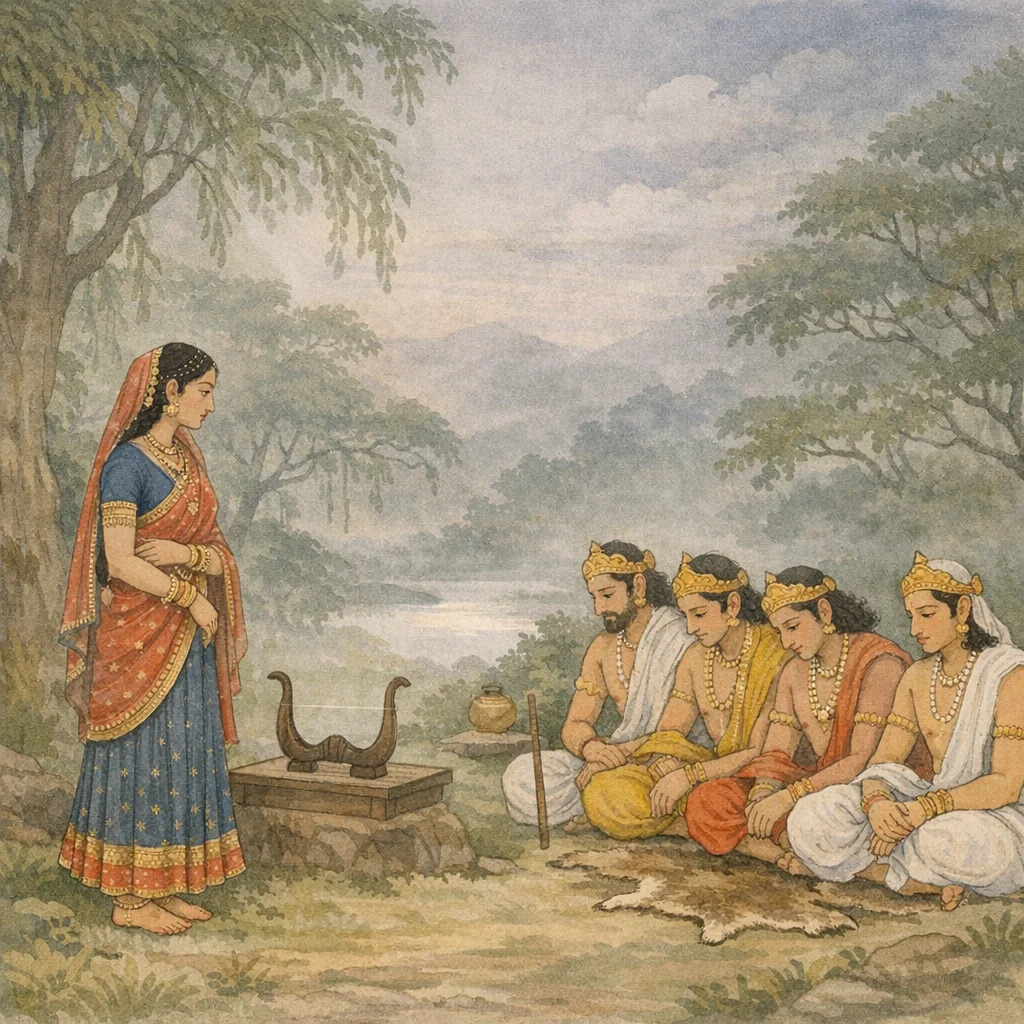
Vaiśaṃpāyana narrates the Pāṇḍavas’ forest residence with Draupadī, describing their disciplined composure. The devarṣi Nārada appears, radiant and honored; he reassures Yudhiṣṭhira and invites a request. Yudhiṣṭhira asks for a complete account of the fruit of circumambulating the earth in pilgrimage. Nārada answers by citing what Bhīṣma learned from Pulastya during a pitṛ-oriented vow on the Gaṅgā. The embedded dialogue establishes that tīrtha-phala depends on inner restraints—controlled body and mind, contentment, purity, humility, non-anger, truthfulness, and compassion. Pulastya contrasts expensive Vedic sacrifices with pilgrimage as an efficacious and, in principle, more accessible path. The chapter then elevates Puṣkara as a premier tīrtha with continual divine presence, special efficacy in Kārttika, and rewards described in sacrificial equivalences (e.g., aśvamedha-like fruits). A long itinerary follows, listing additional sites (e.g., Jambūmārga, Prabhāsa, Sarasvatī confluences, Varadāna, Dvāravatī/Piṇḍāraka, Dṛmī, Vasoḥdhārā, and others) with associated observances (bathing, tarpaṇa, offerings, feeding brāhmaṇas, vows) and promised outcomes, culminating in a structured sacred map that links geography, discipline, and ritual memory.
Chapter Arc: काम्यक वन में अर्जुन के बिना पाण्डव-शिविर सूना पड़ गया है; द्रौपदी का मन आश्रय-स्तम्भ के हट जाने से डगमगा उठता है। → द्रौपदी अर्जुन को ‘सैन्यविजयी’ और सबका ‘गति/आश्रय’ बताकर उसकी अनुपस्थिति का भय बढ़ाती है—इन्द्र-सम पराक्रमी, संग्राम में अनिवर्तनीय उस वीर के बिना वे वन में कैसे टिकेंगे? दिशाएँ भी उसे तमसाच्छन्न-सी प्रतीत होती हैं। → द्रौपदी का तीखा, भाव-विह्वल निष्कर्ष: ‘फाल्गुन के बिना मुझे काम्यक में धृति नहीं मिलती; यह रमणीय वन भी अब रमणीय नहीं।’ अर्जुन के दीर्घ, पीन, परिघ-सदृश भुजाओं और शस्त्र-धनुषधारी रूप का स्मरण उसकी व्यथा को चरम पर ले जाता है। → वह अर्जुन के पूर्व-पराक्रम (राजसूय में योगदान, शुद्ध बाणों से ब्राह्मणार्थ शिकार आदि) का स्मरण कर पाण्डवों के मन में उसके प्रति भरोसा जगाती है—अर्जुन लौटेगा, और उसके लौटने पर ही स्थैर्य आएगा। → अर्जुन के लौटने तक पाण्डवों का वनवास-जीवन कैसे टिकेगा—और द्रौपदी की यह व्यथा युधिष्ठिर को कौन-सा निर्णय लेने को बाध्य करेगी?
Shlokas
Verse 1
(दाक्षिणात्य अधिक पाठके ५ श्लोक मिलाकर कुल ३२ श्लोक हैं) पडा नाप () ऑन अत (तीर्थयात्रापर्व) अशीतितमोअ<ध्याय: अर्जुनके लिये द्रोपदीसहित पाण्डवोंकी चिन्ता जनमेजय उवाच भगवन् काम्यकात् पार्थे गते मे प्रपितामहे । वाण्डवा: किमकुर्वस्ते तमृते सव्यसाचिनम्,जनमेजयने पूछा--भगवन्! मेरे प्रपितामह अर्जुनके काम्यकवनसे चले जानेपर उनसे अलग रहते हुए शेष पाण्डवोंने कौन-सा कार्य किया?
Janamejaya said: “Revered sir, when my great-grandsire Arjuna had departed from the Kāmyaka forest, what did the Pāṇḍavas do while living apart from him—without the left-handed archer (Arjuna)?”
Verse 2
स हि तेषां महेष्वासो गतिरासीदनीकजित् । आदित्यानां यथा विष्णुस्तथैव प्रतिभाति मे,वे सैन्यविजयी, महान् धनुर्धर अर्जुन ही उन सबके आश्रय थे। जैसे आदित्योंमें विष्णु हैं, वैसे ही पाण्डवोंमें मुझे धनंजय जान पड़ते हैं
Janamejaya said: “For them, that great archer—conqueror of armies—was their very refuge and sure course. Just as Viṣṇu stands foremost among the Ādityas, so does Dhanañjaya (Arjuna) appear to me among the Pāṇḍavas.”
Verse 3
तेनेन्द्रसमवीर्येण संग्रामेष्वनिवर्तिना । विनाभूता वने वीरा: कथमासन् पितामहा:,वे संग्रामसे कभी पीछे न हटनेवाले और इन्द्रके समान पराक्रमी थे। उनके बिना मेरे अन्य वीर पितामह वनमें कैसे रहते थे?
Janamejaya asked: “Those heroes were equal in prowess to Indra and never turned back in battle. Deprived of them, how did my grandsires manage to live in the forest?”
Verse 4
वैशम्पायन उवाच गते तु पाण्डवे तात काम्यकात् सत्यविक्रमे । बभूवु: पाण्डवेयास्ते दु:ः:खशोकपरायणा:,वैशम्पायनजी कहते हैं--तात! सत्यपराक्रमी पाण्डुकुमार अर्जुनके काम्यकवनसे चले जानेपर सभी पाण्डव उनके लिये दुःख और शोकमें मग्न रहने लगे
Vaiśampāyana said: “Dear one, when the Pāṇḍava—Arjuna of true and steadfast valor—had departed from the Kāmyaka forest, those sons of Pāṇḍu were overcome with sorrow and grief on his account.”
Verse 5
आक्षिप्तसूत्रा मणयश्कछिन्नपक्षा इव द्विजा: | अप्रीतमनस: सर्वे बभूवुरथ पाण्डवा:,जैसे मणियोंकी मालाका सूत टूट जाय अथवा पक्षियोंके पंख कट जाये, वैसी दशामें उन मणियों और पक्षियोंकी जो अवस्था होती है, वैसी ही अर्जुनके बिना पाण्डवोंकी थी। उन सबके मनमें तनिक भी प्रसन्नता नहीं थी
Vaiśampāyana said: Like beads whose string has been snapped, or like birds with their wings cut off, so were the Pāṇḍavas without Arjuna. All of them became heavy-hearted, with no trace of gladness in their minds—showing how the loss of a righteous protector and companion can unmake a community’s strength and morale.
Verse 6
वन॑ तु तदभूत् तेन हीनमक्लिष्टकर्मणा । कुबेरेण यथा हीन वन चैत्ररथं तथा,अनायास ही महान् कर्म करनेवाले अर्जुनके बिना वह वन उसी प्रकार शोभाशून्य-सा हो गया, जैसे कुबेरके बिना चैत्ररथ वन
Vaiśampāyana said: That forest, bereft of him—the tireless doer of deeds—became as though deprived of its splendor. Just as the Caitraratha grove would seem diminished without Kubera, so too did the forest appear empty and beautyless without Arjuna. The verse underscores how the presence of a virtuous, capable person can confer order, confidence, and radiance upon a place, and how their absence is felt as a moral and emotional loss.
Verse 7
तमृते ते नरव्यात्रा: पाण्डवा जनमेजय । मुदमप्राप्तुवन्तो वै काम्यके न्यवसंस्तदा,जनमेजय! अर्जुनके बिना वे नरश्रेष्ठ पाण्डव आनन्दशून्य हो काम्यकवनमें रह रहे थे
Vaiśampāyana said: “O Janamejaya, those tiger-like men—the Pāṇḍavas—lived then in the Kāmyaka forest without attaining joy, for they were bereft of Arjuna. The passage underscores how the strength and morale of a righteous band can falter when a key protector and companion is absent, even while they continue to endure their exile with restraint.”
Verse 8
ब्राह्मणार्थे पराक्रान्ता: शुद्धैर्बाणैर्महार था: । निध्नन्तो भरतश्रेष्ठ मेध्यान् बहुविधान् मृगान्,भरतश्रेष्ठ! वे महारथी वीर शुद्ध बाणोंद्वारा ब्राह्मणोंके (बाघम्बर आदिके) लिये पराक्रम करके नाना प्रकारके पवित्र- मृगोंको मारा करते थे
Vaiśampāyana said: “O best of the Bharatas, those great chariot-warriors, exerting themselves for the sake of the Brahmins, used their pure arrows to strike down many kinds of ritually fit (edible/offerable) game animals.” The line frames their hunting not as mere sport but as a duty-bound act of provision for Brahmins, invoking the ethical idea that violence may be permitted when regulated by dharma and directed toward sanctioned ends.
Verse 9
नित्यं हि पुरुषव्यात्रा वन््याहारमरिंदमा: । उपाकृत्य उपाहत्य ब्राह्मणेभ्यो न्यवेदयन्,वे नरश्रेष्ठ और शत्रुदमन पाण्डव प्रतिदिन ब्राह्मणोंके लिये जंगली फल-मूलका आहार संगृहीत करके उन्हें अर्पित करते थे
Vaiśaṃpāyana said: Those tiger-like men, the Pandavas—subduers of foes—would daily gather the simple forest fare of fruits and roots, prepare it and bring it, and then respectfully present it to the Brahmins. The passage highlights their steady discipline in exile and their ethical commitment to sustaining sacred guests and teachers even amid hardship.
Verse 10
सर्वे संन्यवसंस्तत्र सोत्कण्ठा: पुरुषर्षभा: | अह्ृष्टमनस: सर्वे गते राजन् धनंजये,राजन्! धनंजयके चले जानेपर वे सभी नरश्रेष्ठ वहाँ खिन्नचित्त हो उन्हींके लिये उत्कण्ठित होकर रहते थे
Vaiśaṃpāyana said: When Dhanaṃjaya (Arjuna) had departed, all those bull-like men remained there, dwelling together in one place—every one of them joyless at heart and filled with longing for him, O King. The verse underscores how the absence of a righteous and capable leader can weigh upon companions, revealing their dependence, affection, and the moral gravity of separation in a dharmic quest.
Verse 11
विशेषतस्तु पाउ्चाली स्मरन्ती मध्यमं पतिम् । उद्विग्नं पाण्डवश्रेष्ठमिदं वचनमब्रवीत्,विशेषत: पांचालराजकुमारी द्रौपदी अपने मझले पति अर्जुनका स्मरण करती हुई सदा उद्विग्न रहनेवाले पाण्डवशिरोमणि युधिष्ठिरसे इस प्रकार बोली--
Vaiśampāyana said: Draupadī, the princess of Pāñcāla, thinking especially of her middle husband Arjuna, addressed these words to Yudhiṣṭhira—the foremost of the Pāṇḍavas—who remained continually anxious. The verse frames her speech as arising from remembrance, concern, and a moral urgency within their exile.
Verse 12
योअर्र्जुनेनार्जुनस्तुल्यो द्विबाहुर्बहुबाहुना । तमृते पाण्डवश्रेष्ठ वन॑ न प्रतिभाति मे,'पाण्डवश्रेष्ठ] जो दो भुजावाले अर्जुन सहस्रबाहु अर्जुनके समान पराक्रमी हैं, उनके बिना यह वन मुझे अच्छा नहीं लगता
Vaiśampāyana said: “O best of the Pāṇḍavas, this forest does not please me without him—Arjuna of two arms—who is equal in prowess to the many-armed Arjuna (Sahasrabāhu).”
Verse 13
शून्यामिव प्रपश्यामि तत्र तत्र महीमिमाम् | बन्ाश्चर्यमिदं चापि वनं कुसुमितद्रुमम्,“मैं यत्र-तत्र यहाँकी जिस-जिस भूमिपर दृष्टि डालती हूँ, सबको सूनी-सी ही पाती हूँ। यह अनेक आश्चर्यसे भरा हुआ और विकसित कुसुमोंसे अलंकृत वृक्षोंवाला काम्यकवन भी सव्यसाची अर्जुनके बिना पहले-जैसा रमणीय नहीं जान पड़ता है। नीलमेघके समान कान्ति और मतवाले गजराजकी-सी गतिवाले उन कमलनयन अर्जुनके बिना यह काम्यकवन मुझे तनिक भी नहीं भाता है। राजन! जिनके धनुषकी टंकार बिजलीकी गड़गड़ाहटके समान सुनायी देती है, उन सव्यसाचीकी याद करके मुझे तनिक भी चैन नहीं मिलता'
Vaiśampāyana said: “Wherever I cast my eyes upon this land, it appears to me as though it were empty. Even this wondrous forest—this woodland adorned with trees in full bloom—no longer seems as delightful as before in the absence of Savyasācī Arjuna.”
Verse 14
न तथा रमणीयं वै तमृते सव्यसाचिनम् | नीलाम्बुदसमप्रख्यं मत्तमातड्रगामिनम्,“मैं यत्र-तत्र यहाँकी जिस-जिस भूमिपर दृष्टि डालती हूँ, सबको सूनी-सी ही पाती हूँ। यह अनेक आश्चर्यसे भरा हुआ और विकसित कुसुमोंसे अलंकृत वृक्षोंवाला काम्यकवन भी सव्यसाची अर्जुनके बिना पहले-जैसा रमणीय नहीं जान पड़ता है। नीलमेघके समान कान्ति और मतवाले गजराजकी-सी गतिवाले उन कमलनयन अर्जुनके बिना यह काम्यकवन मुझे तनिक भी नहीं भाता है। राजन! जिनके धनुषकी टंकार बिजलीकी गड़गड़ाहटके समान सुनायी देती है, उन सव्यसाचीकी याद करके मुझे तनिक भी चैन नहीं मिलता'
Vaiśampāyana said: “This place is not truly delightful without Savyasācin (Arjuna). Without him—whose splendor is like a dark rain-cloud and whose gait is like that of an intoxicated lordly elephant—everything here seems bereft of its former charm.”
Verse 15
तमृते पुण्डरीकाक्षं काम्यकं॑ नातिभाति मे | यस्य वा धनुषो घोष: श्रूयते चाशनिस्वन: । न लभे शर्म वै राजन् स्मरन्ती सव्यसाचिनम्,“मैं यत्र-तत्र यहाँकी जिस-जिस भूमिपर दृष्टि डालती हूँ, सबको सूनी-सी ही पाती हूँ। यह अनेक आश्चर्यसे भरा हुआ और विकसित कुसुमोंसे अलंकृत वृक्षोंवाला काम्यकवन भी सव्यसाची अर्जुनके बिना पहले-जैसा रमणीय नहीं जान पड़ता है। नीलमेघके समान कान्ति और मतवाले गजराजकी-सी गतिवाले उन कमलनयन अर्जुनके बिना यह काम्यकवन मुझे तनिक भी नहीं भाता है। राजन! जिनके धनुषकी टंकार बिजलीकी गड़गड़ाहटके समान सुनायी देती है, उन सव्यसाचीकी याद करके मुझे तनिक भी चैन नहीं मिलता'
Vaiśampāyana said: “Without lotus-eyed Arjuna, Kāmyaka forest no longer pleases me. The very twang of his bow is heard like the roar of a thunderbolt. O king, remembering that ambidextrous archer, I find no peace at all.”
Verse 16
तथा लालप्यमानां तां निशम्य परवीरहा । भीमसेनो महाराज द्रौपदीमिदमब्रवीत्,महाराज! इस प्रकार विलाप करती हुई द्रौपदीकी बात सुनकर शत्रुवीरोंका संहार करनेवाले भीमसेनने उससे इस प्रकार कहा
Hearing Draupadī as she lamented in this manner, Bhīmasena—slayer of hostile heroes—addressed her, O King, and spoke these words. The verse frames Bhīma’s response as arising from attentive listening to suffering, setting the ethical tone for counsel that follows: grief is acknowledged, and action is prepared within the demands of kṣatriya duty and justice.
Verse 17
भीम उवाच मन:प्रीतिकरं भद्ठे यद् ब्रवीषि सुमध्यमे । तन्मे प्रीणाति हृदयममृतप्राशनोपमम्,भीमसेन बोले--भद्रे! सुमध्यमे! तुम जो कुछ कहती हो, वह मेरे मनको प्रसन्न करनेवाला है। तुम्हारी बात मेरे हृदयको अमृतपानके तुल्य तृप्ति प्रदान करती है
Bhima said: “O auspicious lady, O slender-waisted one, what you say brings delight to my mind. Your words satisfy and gladden my heart, as though I were drinking nectar.”
Verse 18
यस्य दीर्घौ समौ पीनौ भुजौ परिघसंनिभौ । मौर्वीकृतकिणौ वृत्ती खड्गायुधधनुर्थरी,जिनकी दोनों भुजाएँ लम्बी, मोटी, बराबर-बराबर तथा परिघके समान सुशोभित होनेवाली हैं, जिनपर प्रत्यज्चाकी रगड़का चिह्न बन गया है, जो गोलाकार हैं और जिनमें खड्ग एवं धनुष सुशोभित होते हैं, सोनेके भुजबन्दोंसे विभूषित होकर जो पाँच-पाँच फनवाले दो सर्पोंके समान प्रतीत होती है उन पाँचों अंगुलियोंसे युक्त दोनों भुजाओंसे विभूषित नरश्रेष्ठ अर्जुनके बिना आज यह वन सूर्यहीन आकाशके समान श्रीहीन दिखलायी देता है
Bhīma said: “He whose two arms are long, equal, and powerfully thick—like iron bars; whose rounded arms bear the calluses made by the bowstring; who is ever equipped with sword and bow—without that best of men, Arjuna, this forest today appears bereft of splendor, like the sky without the sun.”
Verse 19
निष्काजड्दकृतापीडौ पञ्चशीर्षाविवोरगौ । तमृते पुरुषव्याप्र॑ नष्टसूर्यमिवाम्बरम्,जिनकी दोनों भुजाएँ लम्बी, मोटी, बराबर-बराबर तथा परिघके समान सुशोभित होनेवाली हैं, जिनपर प्रत्यज्चाकी रगड़का चिह्न बन गया है, जो गोलाकार हैं और जिनमें खड्ग एवं धनुष सुशोभित होते हैं, सोनेके भुजबन्दोंसे विभूषित होकर जो पाँच-पाँच फनवाले दो सर्पोंके समान प्रतीत होती है उन पाँचों अंगुलियोंसे युक्त दोनों भुजाओंसे विभूषित नरश्रेष्ठ अर्जुनके बिना आज यह वन सूर्यहीन आकाशके समान श्रीहीन दिखलायी देता है
Bhīma said: “Without him—the tiger among men—this forest appears like a sky bereft of the sun. His two arms, long, massive, and evenly matched, marked by the friction of the bowstring, rounded and splendid with sword and bow, adorned with golden armlets, seem like two serpents with five hoods. Deprived of such a hero, the wilderness itself looks stripped of its radiance.”
Verse 20
यमाश्रित्य महाबाहुं पाड्चाला: कुरवस्तथा । सुराणामपि मत्तानां पृतनासु न बिभ्यति
Bhima said: “Relying on that mighty-armed one, the Pāñcālas—and likewise the Kurus—do not fear in the ranks of battle, even when facing foes who are intoxicated with the pride and power of the gods. Such is the confidence that arises when an army shelters under a truly great protector.”
Verse 21
यस्य बाहू समाश्रित्य वयं सर्वे महात्मन: । मन्यामहे जितानाजोौ परानू् प्राप्तां च मेदिनीम्
Bhīma said: 'Relying on whose mighty arms, O great-souled one, we all believe that we have already conquered our enemies in battle and have even attained the earth (sovereignty).'
Verse 22
तमृते फाल्गुनं वीर॑ न लभे काम्यके धृतिम् । पश्यामि च दिश: सर्वास्तिमिरेणावृता इव । जिन महाबाहु अर्जुनका आश्रय लेकर पाज्चाल और कुरुवंशके वीर युद्धके लिये उद्यत देवताओंकी सेनाका सामना करनेसे भी भयभीत नहीं होते हैं, जिन महात्माके बाहुबलके भरोसे हम सब लोग युद्धमें अपने शत्रुओंको पराजित और इस पृथ्वीका राज्य अपने अधिकारमें आया हुआ मानते हैं, उन वीरवर अर्जुनके बिना हमें काम्यकवनमें धैर्य नहीं प्राप्त हो रहा है। मुझे सारी दिशाएँ अन्धकारसे आच्छन्न-सी दिखायी देती हैं | २०-२१३ || ततोअब्रवीत् साश्रुकण्ठो नकुल: पाण्डुनन्दन:,भीमसेनकी यह बात सुनकर पाण्डुनन्दन नकुल अश्रुगदूगदकण्ठसे बोले--
Bhima said: “Without Phalguna (Arjuna), O hero, I cannot find steadiness of mind here in the Kāmyaka forest. Indeed, I see all the directions as though covered in darkness.” In ethical and narrative terms, Bhima’s words express how deeply the brothers’ confidence and sense of rightful purpose in their struggle depend on Arjuna’s presence and prowess; his absence feels like a moral and strategic eclipse.
Verse 23
नकुल उवाच यस्मिन् दिव्यानि कर्माणि कथयन्ति रणाजिरे | देवा अपि युधां श्रेष्ठ तमृते का रतिर्वने,नकुलने कहा--जिन महावीर अर्जुनके विषयमें रणप्रांगणके भीतर देवताओं के द्वारा भी दिव्य कर्मोंका वर्णन किया जाता है, उन योद्धाओंमें श्रेष्ठ धनंजयके बिना अब इस वनमें हमें क्या प्रसन्नता है?
Nakula said: “He in whose case even the gods recount his wondrous deeds on the battlefield—without that Dhanañjaya, the best of warriors, what joy can there be for us in this forest?”
Verse 24
उदीचीं यो दिशं गत्वा जित्वा युधि महाबलान् । गन्धर्वमुख्याञ्छतशो हयाँल्लेभे महाद्युति:,जिन महातेजस्वीने उत्तर दिशामें जाकर महाबली मुख्य-मुख्य गन्धर्वोंको युद्धमें परास्त करके उनसे सैकड़ों घोड़े प्राप्त किये
Nakula said: 'He who went to the northern quarter and, in battle, overcame the mighty—indeed the foremost among the Gandharvas—obtained hundreds of horses. The episode highlights valor disciplined by purpose: strength is shown not as mere aggression, but as the capacity to secure resources and uphold one’s duty through rightful prowess.'
Verse 25
राज्ञे तित्तिरिकल्माषाउछीमतोडनिलरंहस: । प्रादाद् भ्रात्रे प्रिय: प्रेमणा राजसूये महाक्रतौ,जिन्होंने महायज्ञ राजसूयमें अपने प्यारे भाई धर्मराज युधिष्ठिरको प्रेमपूर्वक वायुके समान वेगशाली तित्तिरिकल्माष नामक सुन्दर घोड़े भेंट किये थे
Nakula said: “For the king, there was a splendid horse named Tittiri-kalmāṣa—highly prized and swift as the wind. Out of affection and with loving intent, he presented it to his dear brother, King Yudhiṣṭhira, at the great royal consecration sacrifice (Rājasūya).” The verse highlights the ethic of fraternal loyalty and the ideal of offering one’s best possessions in support of righteous kingship and public duty.
Verse 26
तमृते भीमधन्वानं भीमादवरजं वने | कामये काम्यके वासं नेदानीममरोपमम्,भीमके छोटे भाई उन भयंकर थधनुर्धर देवोपम अर्जुनके बिना इस समय मुझे इस काम्यकवनमें रहनेकी इच्छा नहीं होती
Nakula said: “Without that awe-inspiring archer—Arjuna, the younger brother of Bhīma, godlike in prowess—I do not, at this time, desire to remain in the Kāmyaka forest. In his absence, even this refuge feels incomplete.”
Verse 27
सहदेव उवाच यो धनानि च कन्याश्च युधि जित्वा महारथ: । आजहार पुरा राज्ञे राजसूये महाक्रतौ,सहदेवने कहा--जिन महारथी वीरने पहले राजसूय महायज्ञके अवसरपर युद्धमें जीतकर बहुत धन और कन्याएँ महाराज युधिष्ठिरको भेंट की थीं, जिन अनन्त तेजस्वी धनंजयने भगवान् श्रीकृष्णकी सम्मतिसे युद्धके लिये एकत्र हुए समस्त यादवोंको अकेले ही जीतकर सुभद्राका हरण कर लिया था
Sahadeva said: “That great chariot-warrior who, in battle, won wealth and maidens and formerly brought them as tribute to the king at the grand Rājasūya sacrifice—(it is of him I speak).” The statement recalls Arjuna’s earlier feats performed in service of Yudhiṣṭhira’s consecration, framing prowess as legitimate when subordinated to royal duty and sacrificial order rather than personal gain.
Verse 28
यः समेतान् मृथे जित्वा यादवानमितलद्युति: । सुभद्रामाजहारैको वासुदेवस्य सम्मते,सहदेवने कहा--जिन महारथी वीरने पहले राजसूय महायज्ञके अवसरपर युद्धमें जीतकर बहुत धन और कन्याएँ महाराज युधिष्ठिरको भेंट की थीं, जिन अनन्त तेजस्वी धनंजयने भगवान् श्रीकृष्णकी सम्मतिसे युद्धके लिये एकत्र हुए समस्त यादवोंको अकेले ही जीतकर सुभद्राका हरण कर लिया था
Sahadeva said: “He who, in battle, defeated the assembled Yādavas—he of immeasurable splendor—then, with Vāsudeva’s approval, single-handedly carried off Subhadrā.” The statement recalls Arjuna’s prowess and also frames the act as sanctioned by Kṛṣṇa, suggesting that valor is to be aligned with rightful counsel and accepted norms rather than mere force.
Verse 29
तस्य जिष्णोर्बूसीं दृष्टवा शून्यामिव निवेशने । ह्ृदयं मे महाराज न शाम्यति कदाचन,महाराज! उन्हीं विजयी भ्राता धनंजयके आसनको अब अपनी कुटियामें सूना देखकर मेरे हृदयको कभी शान्ति नहीं मिलती। अत: शत्रुदमन! मैं इस वनसे अन्यत्र चलना पसंद करता हूँ। वीरवर अर्जुनके बिना अब यह वन रमणीय नहीं लगता
Sahadeva said: “O great king, when I see the seat of Jishnu (Arjuna) lying empty, as though the dwelling itself were deserted, my heart finds no peace at any time. Without that foremost hero Arjuna, this forest no longer feels delightful; therefore, O subduer of foes, I would rather go elsewhere from here.”
Verse 30
वनादस्माद् विवासं तु रोचये5हमरिंदम । न हि नस्तमृते वीर॑ं रमणीयमिदं वनम्,महाराज! उन्हीं विजयी भ्राता धनंजयके आसनको अब अपनी कुटियामें सूना देखकर मेरे हृदयको कभी शान्ति नहीं मिलती। अत: शत्रुदमन! मैं इस वनसे अन्यत्र चलना पसंद करता हूँ। वीरवर अर्जुनके बिना अब यह वन रमणीय नहीं लगता
Sahadeva said: “O subduer of foes, I wish to depart from this forest and live elsewhere. For without that heroic one, this forest is no longer delightful to us.”
Verse 79
इस प्रकार श्रीमह्याभारत वनपर्वके अन्तर्गत नलोपाख्यानपर्वमें ब॒हदश्षयमनविषयक उन्यासीवाँ अध्याय पूरा हुआ
Thus ends the seventy-ninth chapter on the theme of Bṛhadaśva and Yama, within the Nala episode of the Vana Parva of the revered Mahābhārata.
Verse 80
इति श्रीमहाभारते वनपर्वणि तीर्थयात्रापर्वणि अर्जुनानुशोचने अशीतितमो<थध्याय: ।। ८० || इस प्रकार श्रीमह्ाभारत वनपर्वके अन्तर्गत तीर्थयात्रापर्वमें अजुनके लिये पाण्डवॉका अनुतापविषयक जअसीवाँ अध्याय पूरा हुआ
Thus ends the eightieth chapter of the Vana Parva of the Śrī Mahābhārata, within the section on the pilgrimage to sacred fords, dealing with the Pāṇḍavas’ lamentation for Arjuna. The colophon marks the close of this unit, framing the preceding discourse as an ethical and emotional response to Arjuna’s absence and the burdens of dharma borne by his brothers.
Frequently Asked Questions
The doubt concerns comparative efficacy: what is the complete fruit of earth-circumambulating pilgrimage, and how merit is determined—by external rites and wealth-intensive yajñas or by disciplined conduct combined with tīrtha observance.
Merit is ethically conditioned: tīrtha travel is not presented as mechanical purification but as effective when joined to restraint, humility, truth, non-anger, purity, and compassionate regard for beings.
Yes. Repeated equivalences to major sacrifices (e.g., aśvamedha/agnīṣṭoma-like fruits) function as a phalaśruti framework that indexes ritual value, legitimizes pilgrimage within Vedic merit logic, and motivates disciplined participation.