Adhyaya 57
दमयन्त्याः कार्यनिश्चयः — Damayantī’s Crisis Plan and Vārṣṇeya’s Departure
Upa-parva: Nala–Damayantī Upākhyāna (Episode of Nala and Damayantī)
Bṛhadaśva narrates Damayantī’s observation of King Nala’s altered state: though renowned (puṇyaśloka), he appears mentally displaced by gambling and unresponsive to counsel. Fear and grief prompt her to assess what has been lost and what remains, first attempting to engage ministers through Bṛhatsenā, but finding no effective relief as Nala does not welcome the report. Recognizing the escalating compulsion—Puṣkara’s dice seemingly ‘obedient’ while Nala’s outcomes invert—Damayantī concludes that direct persuasion is failing. She turns to Vārṣṇeya, Nala’s charioteer, appeals to his knowledge of Nala’s prior conduct, and requests operational assistance. She instructs him to yoke Nala’s swift horses, convey the couple’s children to Kuṇḍina (Vidarbha) under her kin’s protection, and then choose his own safe course. Vārṣṇeya reports to key ministers, obtains authorization, transports the children and equipment to Vidarbha, and, distressed, proceeds onward to Ayodhyā where he enters King Ṛtupārṇa’s service as charioteer—setting up later narrative developments.
Chapter Arc: दमयन्ती के स्वयंवर का समाचार चारों दिशाओं में फैलते ही काम-पीड़ित राजाओं का हृदय धड़क उठता है; वे उसे पाने की उत्कंठा में शीघ्र विदर्भ की ओर दौड़ पड़ते हैं। → स्वर्ण-स्तम्भों और तोरणों से सुसज्जित रंगमण्डप में राजाओं और देवताओं का आगमन होता है। दमयन्ती के मन में नल के प्रति अटल प्रेम है, पर देवता भी नल का ही रूप धारण कर लेते हैं—एक ही रूप के अनेक प्रतिबिम्बों में वह अपने वर को कैसे पहचाने? वह बार-बार विचार करती है कि ‘एक भी पृथक् चिह्न नहीं दिखता’। → दमयन्ती सत्य-प्रतिज्ञा और देव-नियति का स्मरण कर देवताओं से प्रार्थना करती है कि यदि नल ही उसके लिए निश्चित हैं तो वे उसी को उसके सामने प्रकट कर दें। देवता उसके सत्य और धैर्य से प्रसन्न होकर नल को पहचानने योग्य संकेत देते हैं; दमयन्ती नल का वरण करती है। → देवता नल को वरदान देते हैं (जैसे वरुण द्वारा इच्छानुसार जल-प्राकट्य आदि) और अन्य राजा विदा होते हैं। तत्पश्चात भीम शास्त्र-विधि से नल-दमयन्ती का विवाह सम्पन्न कराते हैं। → विवाह के बाद नल-दमयन्ती का देवतुल्य विहार आरम्भ होता है—पर इस सुख के क्षितिज पर आगे आने वाली परीक्षा की छाया अभी अनकही रह जाती है।
Shlokas
Verse 1
हि आय न [के है आम सप्तपञ्चाशत्तमो<्ध्याय: स्वयंवरमें दमयन्तीद्वारा नलका वरण, देवताओंका नलको वर देना, देवताओं और राजाओंका प्रस्थान, नल- दमयन्तीका विवाह एवं नलका यज्ञानुष्ठान और संतानोत्पादन बृहदश्व उवाच अथ काले शुभे प्राप्ते तिथौ पुण्ये क्षणे तथा । आजुहाव महीपालान् भीमो राजा स्वयंवरे,बृहदश्व मुनि कहते हैं--राजन्! तदनन्तर शुभ समय, उत्तम तिथि तथा पुण्यदायक अवसर आनेपर राजा भीमने समस्त भूपालोंको स्वयंवरके लिये बुलाया
Bṛhadaśva said: “Then, when an auspicious time had arrived—on a holy lunar day and at a meritorious moment—King Bhīma summoned the rulers of the earth to the svayaṃvara.”
Verse 2
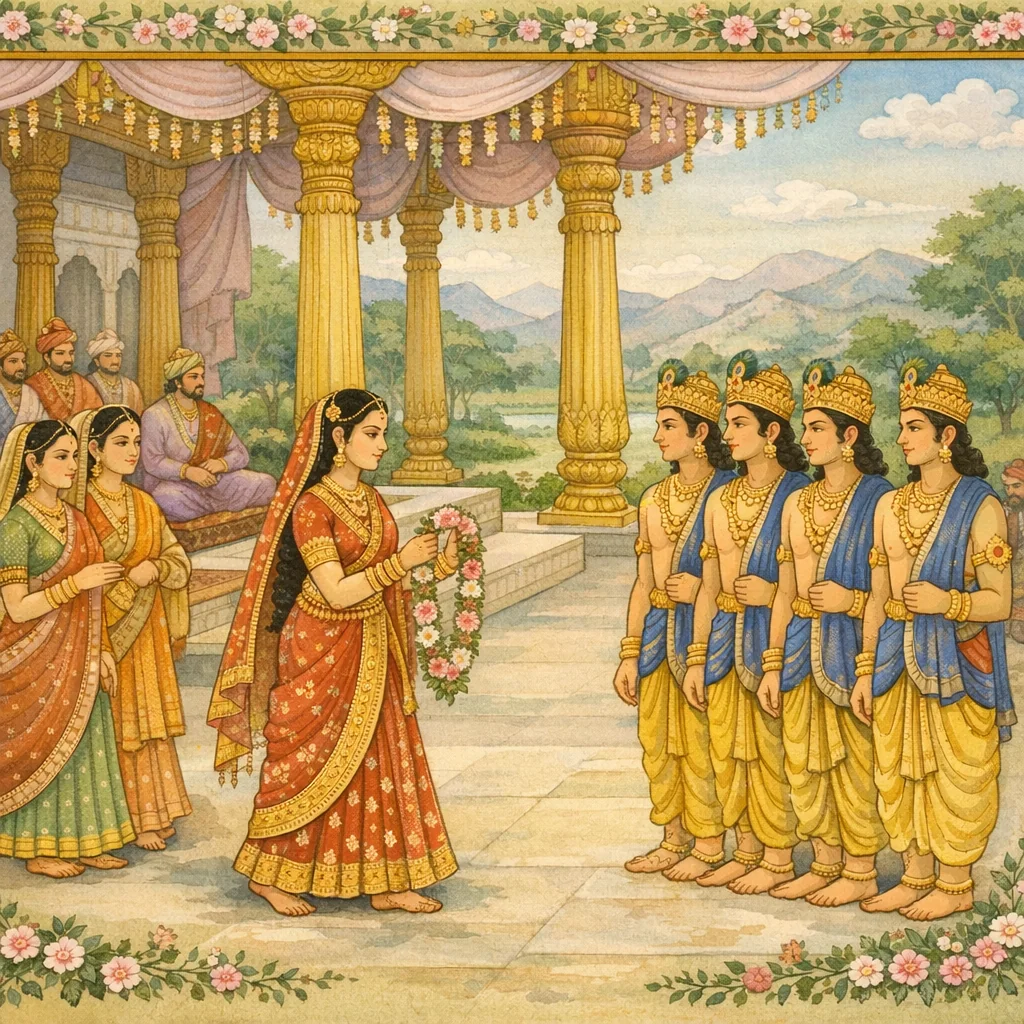
तच्छुत्वा पृथिवीपाला: सर्वे हच्छयपीडिता: । त्वरिता: समुपाजम्मुर्दमयन्तीम भीप्सव:,यह सुनकर सब भूपाल कामपीड़ित हो दमयन्तीको पानेकी इच्छासे तुरंत चल दिये
Hearing this, all the kings—tormented by the fever of desire—set out at once in haste, longing to win Damayantī. The verse underscores how unchecked passion can drive even rulers into impulsive pursuit, setting the stage for a contest where self-control and rightful conduct will be tested.
Verse 3
कनकस्तम्भरुचिरं तोरणेन विराजितम् | विविशुस्ते नृपा रड़ं महासिंहा इवाचलम्,रंगमण्डप सोनेके खम्भोंसे सुशोभित था। तोरणसे उसकी शोभा और बढ़ गयी थी। जैसे बड़े-बड़े सिंह पर्वतकी गुफामें प्रवेश करते हैं, उसी प्रकार उन नरेशोंने रंगमण्डपमें प्रवेश किया
Bṛhadaśva said: “Adorned with golden pillars and made even more splendid by its ceremonial gateway-arch, the kings entered the arena-hall—like great lions entering a mountain cave.” The scene underscores royal dignity and disciplined conduct in public assembly, where power is displayed through order, splendor, and controlled presence rather than mere aggression.
Verse 4
सुरभिस्रग्धरा: सर्वे प्रमृष्टमणिकुण्डला:,वहाँ सब भूपाल भिन्न-भिन्न आसनोंपर बैठ गये। सबने सुगन्धित फूलोंकी माला धारण कर रखी थी और सबके कानोंमें विशुद्ध मणिमय कुण्डल झिलमिला रहे थे
Bṛhadaśva said: All the kings took their seats on various thrones and seats of honor. Each wore a fragrant garland, and in their ears gleamed spotless, well-polished earrings set with gems—an image of royal decorum and courtly order before the unfolding of the tale.
Verse 5
तां राजसमितिं पुण्यां नागैभोंगवर्तीमिव । सम्पूर्णा पुरुषव्याघ्रैव्यप्रि्गिरिगुहामिव,व्याप्रोंसे भरी हुई पर्वतकी गुफा तथा नागोंसे सुशोभित भोगवती पुरीकी भाँति वह पुण्यमयी राजसभा नरश्रेष्ठ भूपालोंसे भरी दिखायी देती थी
Bṛhadaśva said: “That sacred royal assembly appeared completely filled with tiger-like men—eminent kings and heroes—just as Bhogavatī is adorned with nāgas, and just as a mountain-cave is crowded with prowling tigers.”
Verse 6
तत्र सम पीना दृश्यन्ते बाहव: परिघोपमा: । आकारवर्णसुश्लक्ष्णा: पञज्चशीर्षा इवोरगा:,वहाँ भूमिपालोंकी (पाँच अँगुलियोंसे युक्त) परिघ-जैसी मोटी भुजाएँ आकार-प्रकार और रंगमें अत्यन्त सुन्दर तथा पाँच मस्तकवाले सर्पके समान दिखायी देती थीं
There, the kings’ arms were seen—thick and evenly rounded, like iron clubs. Smooth and handsome in form and complexion, they appeared like five-hooded serpents, suggesting both regal power and the latent danger that accompanies martial might.
Verse 7
सुकेशान्तानि चारूणि सुनासाक्षिभ्रुवाणि च । मुखानि राज्ञां शोभन्ते नक्षत्राणि यथा दिवि,जैसे आकाशकमें तारे प्रकाशित होते हैं, उसी प्रकार सुन्दर केशान्तभागसे विभूषित एवं रुचिर नासिका, नेत्र और भौंहोंसे युक्त राजाओंके मनोहर मुख सुशोभित हो रहे थे
Bṛhadaśva said: “The faces of the kings shone—adorned with beautiful hairlines and endowed with fine noses, eyes, and brows—just as the stars shine in the sky.” The verse highlights royal splendor as an outward sign of prosperity and status, setting a vivid scene rather than offering a direct moral injunction.
Verse 8
दमयन्ती ततो रजझ्ुूं प्रविवेश शुभानना । मुष्णन्ती प्रभया राज्ञां चक्षूंषि च मनांसि च,तदनन्तर अपनी प्रभासे राजाओंके नयनोंको लुभाती और चित्तको चुराती हुई सुन्दर मुखवाली दमयन्तीने रंगभूमिमें प्रवेश किया
Then Damayantī, the fair-faced lady, entered the arena. By the radiance of her beauty she captivated the kings—stealing away both their eyes and their hearts—so that their attention and desire were drawn wholly toward her.
Verse 9
तस्या गात्रेषु पतिता तेषां दृष्टिर्महात्मनाम् । तत्र तत्रैव सक्ता5भूज्न चचाल च पश्यताम्,वहाँ आते ही दमयन्तीके अंगोंपर उन महामना नरेशोंकी दृष्टि पड़ी। उसे देखनेवाले राजाओंमेंसे जिसकी दृष्टि दमयन्तीके जिस अंगपर पड़ी, वहीं लग गयी, वहाँसे हट न सकी
Bṛhadaśva said: The gaze of those great-souled kings fell upon her limbs; and wherever any one of them looked upon Damayantī, his eyes became fixed there, unable to move away, even as they continued to watch her. The scene underscores how beauty can overpower self-mastery, testing the discipline and restraint expected of rulers.
Verse 10
ततः संकीर्त्यमानेषु राज्ञां नामसु भारत । ददर्श भैमी पुरुषान् पज्चतुल्याकृतीनिह,भारत! तत्पश्चात् राजाओंके नाम, रूप, यश और पराक्रम आदिका परिचय दिया जाने लगा। भीमकुमारी दमयन्तीने आगे बढ़कर देखा, यहाँ तो एक जगह पाँच पुरुष एक ही आकृतिके बैठे हुए हैं
Bṛhadaśva said: Then, as the names of the kings were being proclaimed, O Bhārata, Bhīmā’s daughter (Damayantī) looked ahead and saw here five men of identical appearance. In the midst of the public display of royal fame and merit, she is confronted with a moral and perceptual trial: to discern the true Nala beyond outward sameness.
Verse 11
तान् समीक्ष्य ततः सर्वान् निर्विशेषाकृतीन् स्थितान् । संदेहादथ वैदर्भी नाभ्यजानान्नलं नृपम्,उन सबके रूप-रंग आदिमें कोई अन्तर नहीं था। वे पाँचों नलके ही समान दिखायी देते थे। उन्हें एक जगह स्थित देखकर संदेह उत्पन्न हो जानेसे विदर्भराजकुमारी वास्तविक राजा नलको पहचान न सकी
After carefully observing them all standing there with indistinguishable forms, the princess of Vidarbha was overcome by doubt; and because of that uncertainty she could not recognize King Nala. The scene underscores how outward appearances can be made deceptive, and how discernment—beyond mere sight—is required when truth is veiled by divine or moral tests.
Verse 12
यं यं हि ददृशे तेषां तं त॑ मेने नल॑ नृपम् । सा चिन्तयन्ती बुद्धयाथ तर्कयामास भाविनी,वह उनमेंसे जिस-जिस व्यक्तिपर दृष्टि डालती, उसी-उसीको राजा नल समझने लगती थी। वह भाविनी राजकन्या बुद्धिसे सोच-विचारकर मन-ही-मन तर्क करने लगी
Whomever among them she happened to look upon, she took that very one to be King Nala. Then the noble-minded princess, reflecting with her intelligence, began to reason inwardly—seeking to discern the truth amid deceptive appearances.
Verse 13
कथं हि देवाज्जानीयां कथं विद्यां नल॑ नृपम् । एवं संचिन्तयन्ती सा वैदर्भी भृशदु:खिता,अहो! मैं कैसे देवताओंको जानूँ और किस प्रकार राजा नलको पहिचानूँ।” इस चिन्तामें पड़कर विदर्भराजकुमारी दमयन्तीको बड़ा दुःख हुआ
Bṛhadaśva said: “How indeed am I to recognize the gods, and how am I to identify King Nala?” Thus reflecting again and again, the princess of Vidarbha, Damayantī, was overwhelmed with intense sorrow—caught between reverence for the divine and steadfast fidelity to the one she had chosen.
Verse 14
श्रुतानि देवलिड्रानि तर्कयामास भारत । देवानां यानि लिड्डानि स्थविरेभ्य: श्रुतानि मे,शरणं प्रति देवानां प्राप्तकालममन्यत । भारत! उसने अपने सुने हुए देवचिह्ञोंपर भी विचार किया। वह मन-ही-मन कहने लगी 'मैंने बड़े-बूढ़े पुरुषोंसे देवताओंकी पहचान करानेवाले जो लक्षण या चिह्न सुन रखे हैं, उन्हें यहाँ भूमिपर बैठे हुए इन पाँच पुरुषोंमेंसे किसी एकमें भी नहीं देख पाती हूँ।! उसने अनेक प्रकारसे निश्चय और बार-बार विचार करके देवताओंकी शरणमें जाना ही समयोचित कर्तव्य समझा
Bṛhadaśva said: “O Bhārata, she reflected upon the divine signs she had heard of. ‘The marks by which the gods are recognized—taught to me by elders—I do not perceive any of them in any one of these five men seated here upon the ground.’ After repeatedly weighing the matter in many ways and reaching a firm conclusion, she judged that the proper course, at that moment, was to seek refuge in the gods.”
Verse 15
तानीह तिष्ठतां भूमावेकस्थापि न लक्षये । सा विनिश्ित्य बहुधा विचार्य च पुन: पुनः:
“Though they are here, standing upon the ground, I cannot discern even a single one in its proper place. Therefore, after determining the matter, I reflected on it in many ways—again and again.”
Verse 16
वाचा च मनसा चैव नमस्कार प्रयुज्य सा
Bṛhadaśva said: “With both speech and mind, she offered a reverent salutation.” The line emphasizes that true respect is not merely verbal or outward, but must be joined with inward intention—an ethical ideal of sincerity in conduct.
Verse 17
देवेभ्य: प्रा्जलिर्भूत्वा वेपमानेदमब्रवीत् । हंसानां वचन श्रुत्वा यथा मे नैषधो वृतः । पतित्वे तेन सत्येन देवास्तं प्रदिशन्तु मे
With palms joined in reverence to the gods, trembling, he spoke these words: “Having heard the speech of the swans, just as Nala of Niṣadha was chosen for me—by the truth of that vow and fidelity, may the gods now point him out to me.” The verse frames devotion and truthfulness as moral forces capable of guiding one through confusion and restoring rightful union.
Verse 18
तत्पश्चात् मन एवं वाणीद्वारा देवताओंको नमस्कार करके दोनों हाथ जोड़कर काँपती हुई वह इस प्रकार बोली--'मैंने हंसोंकी बात सुनकर निषधनरेश नलका पतिरूपमें वरण कर लिया है। इस सत्यके प्रभावसे देवतालोग स्वयं ही मुझे राजा नलकी पहचान करा दें ।। मनसा वचसा चैव यथा नाभिचराम्यहम् | तेन सत्येन विबुधास्तमेव प्रदिशन्तु मे,“यदि मैं मन, वाणी एवं क्रियाद्वारा कभी सदाचारसे च्युत नहीं हुई हूँ तो उस सत्यके प्रभावसे देवतालोग मुझे राजा नलकी ही प्राप्ति करावें
Bṛhadaśva said: Thereafter, she bowed in her mind and through her words to the gods; joining both hands, trembling, she spoke thus: “Having heard the words of the swans, I have chosen Nala, king of Niṣadha, as my husband. By the power of this truth, may the gods themselves make me recognize the true King Nala. If I have never strayed—by mind or by speech—from right conduct, then by that truth may the divine ones point out to me that very Nala.” In this scene, Damayantī invokes satya (truth) as a moral force: her inner integrity becomes the means by which confusion is dispelled and the rightful choice is safeguarded.
Verse 19
यथा देवै: स मे भर्ता विहितो निषधाधिप: । तेन सत्येन मे देवास्तमेव प्रदिशन्तु मे,“यदि देवताओंने उन निषधनरेश नलको ही मेरा पति निश्चित किया हो तो उस सत्यके प्रभावसे देवता-लोग मुझे उनन््हींको बतला दें
Bṛhadaśva said: “If the gods themselves have ordained that the lord of Niṣadha is my husband, then by the power of that truth may the gods point out to me that very man.”
Verse 20
यथेदं व्रतमारब्धं नलस्याराधने मया । तेन सत्येन मे देवास्तमेव प्रदिशन्तु मे,“यदि मैंने नलकी आराधनाके लिये ही यह व्रत आरम्भ किया हो तो उस सत्यके प्रभावसे देवता मुझे उनन््हींको बतला दें
Bṛhadaśva said: “If I have undertaken this vow solely for the purpose of honoring and serving Nala, then by the power of that truth may the gods point out to me that very one (Nala).”
Verse 21
स्वं चैव रूप॑ कुर्वन्तु लोकपाला महेश्वरा: । यथाहमभिजानीयां पुण्यश्लोक॑ नराधिपम्,“महेश्वर लोकपालगण अपना रूप प्रकट कर दें, जिससे मैं पुण्यश्लोक महाराज नलको पहचान सकूँ”
Bṛhadaśva said: “Let the great divine guardians of the worlds reveal their own true forms, so that I may correctly recognize the virtuous and renowned king Nala.” In this moment, the speaker seeks clarity and truth in perception, emphasizing that right action depends upon right recognition and the removal of deception.
Verse 22
निशम्य दमयन्त्यास्तत् करुणं प्रतिदेवितम् । निश्चयं परमं तथ्यमनुरागं च नैषधे,दमयन्तीका वह करुण विलाप सुनकर तथा उसके अन्तिम निश्चय, नलविषयक वास्तविक अनुराग, विशुद्ध हृदय, उत्तम बुद्धि तथा नलके प्रति भक्ति एवं प्रेम देखकर देवताओंने दमयन्तीके भीतर वह यथार्थ शक्ति उत्पन्न कर दी, जिससे उसे देवसूचक लक्षणोंका निश्चय हो सके
Bṛhadaśva said: Hearing Damayantī’s piteous lament, and seeing her final, unwavering resolve—her genuine and truthful love for the king of Niṣadha—(the divine powers) caused a true inner strength to arise in her, by which she could discern the distinguishing signs that reveal the gods. The passage highlights how purity of heart, steadfast devotion, and clear intelligence become the means to right discernment in a moral crisis.
Verse 23
मनोविशुद्ि बुद्धिं च भक्ति रागं च नैषधे | यथोक्तं चक्रिरे देवा: सामर्थ्य लिड्रधारणे,दमयन्तीका वह करुण विलाप सुनकर तथा उसके अन्तिम निश्चय, नलविषयक वास्तविक अनुराग, विशुद्ध हृदय, उत्तम बुद्धि तथा नलके प्रति भक्ति एवं प्रेम देखकर देवताओंने दमयन्तीके भीतर वह यथार्थ शक्ति उत्पन्न कर दी, जिससे उसे देवसूचक लक्षणोंका निश्चय हो सके
Bṛhadaśva said: Seeing in Damayantī—who belonged to the land of Niṣadha—her purity of heart, clarity of understanding, steadfast devotion, and deep love (for Nala), the gods brought about in her the very capacity that had been spoken of: the power to discern and hold fast to the distinguishing signs by which the divine could be recognized. Thus, moved by her sincere resolve and compassionate lament, they enabled her to judge correctly and remain true to her chosen dharma of fidelity.
Verse 24
सापश्यद् विबुधान् सर्वानस्वेदान् स्तब्धलोचनान् | हृषितस्रग्रजोहीनान् स्थितानस्पृशत: क्षितिम्,अब दमयन्तीने देखा--सम्पूर्ण देवता स्वेदरहित हैं--उनके किसी अंगमें पसीनेकी बूँद नहीं दिखायी देती, उनकी आँखोंकी पलकें नहीं गिरती हैं। उन्होंने जो पुष्पमालाएँ पहन रखी हैं, वे नूतन विकाससे युक्त हैं--कुम्हलाती नहीं हैं। उनपर धूल-कण नहीं पड़ रहे हैं। वे सिंहासनोंपर बैठे हैं, किंतु अपने पैरोंसे पृथ्वीतलका स्पर्श नहीं करते हैं और उनकी परछाईं नहीं पड़ती है
Bṛhadaśva said: She beheld all the gods—free from sweat, their gaze unblinking. Their garlands remained fresh and fully blossomed, never withering; no dust clung to them. Though seated in their splendid seats, they did not touch the earth with their feet. The vision marked them as beings beyond ordinary bodily limitation, revealing a realm where purity, radiance, and effortless order prevail.
Verse 25
ध्स्ट पक हा छायाद्वितीयो म्लानस्रग्रज:स्वेदसमन्वित: । भूमिष्ठो नैषधश्चैव निमेषेण च सूचित:,उन पाँचोंमें एक पुरुष ऐसे हैं, जिनकी परछाईं पड़ रही है। उनके गलेकी पुष्पमाला कुम्हला गयी है। उनके अंगोंमें धूल-कण और पसीनेकी बूँदें भी दिखायी पड़ती हैं। वे पृथ्वीका स्पर्श किये बैठे हैं और उनके नेत्रोंकी पलकें गिरती हैं। इन लक्षणोंसे दमयन्तीने निषधराज नलको पहचान लिया
Bṛhadaśva said: “Among those five, one man alone casts a shadow. His garland has withered; dust and beads of sweat cling to his limbs. He sits touching the earth, and the blinking of his eyes gives him away. By these signs Damayantī recognized Nala, the king of Niṣadha.”
Verse 26
सा समीक्ष्य तु तान् देवान् पुण्यश्लोक॑ च भारत | नैषधं वरयामास भैमी धर्मेण पाण्डव,भरतकुलभूषण पाण्डुनन्दन! राजकुमारी दमयन्तीने उन देवताओं तथा पुण्यश्लोक नलकी ओर पुनः दृष्टिपात करके धर्मके अनुसार निषधराज नलका ही वरण किया
O Bhārata, after looking again at those gods and at Puṇyaśloka Nala, Bhīmī (Damayantī) chose the king of Niṣadha in accordance with dharma—affirming her rightful, ethical choice despite divine presence and temptation.
Verse 27
विलज्जमाना वस्त्रान्तं जग्राहायतलोचना । स्कन्ध देशेडसृजत् तस्य स्रजं परमशो भनाम्
Bṛhadaśva said: With modest embarrassment, the lotus-eyed maiden caught hold of the edge of her garment. Then, at his shoulder, she placed upon him a garland of surpassing beauty—an act that quietly signals acceptance and decorum within the bounds of propriety.
Verse 28
ततो हाहेति सहसा मुक्त: शब्दो नराधिपै:,फिर तो दूसरे राजाओंके मुखसे सहसा 'हाहाकार'-का शब्द निकल पड़ा
Then, all at once, from the mouths of the other kings there burst forth the cry “Hā! Hā!”—a spontaneous outcry of alarm and grief at what they had just witnessed, revealing how swiftly royal composure can give way to human anguish in the face of sudden calamity.
Verse 29
देवैर्महर्षिभिस्तत्र साधु साथ्विति भारत । विस्मितैरीरित: शब्द: प्रशंसद्धिर्नलं नृूपम्,भारत! देवता और महर्षि वहाँ साधुवाद देने लगे। सबने विस्मित होकर राजा नलकी प्रशंसा करते हुए इनके सौभाग्यको सराहा
Bṛhadaśva said: “There, the gods and the great seers exclaimed, ‘Well done! Well done, O Bhārata!’ In amazement, they raised a cry of praise, extolling King Nala.” The verse underscores how righteous conduct and noble qualities naturally draw the approval of the wise and the divine.
Verse 30
दमयन्तीं तु कौरव्य वीरसेनसुतो नृपः । आश्वासयद् वरारोहां प्रहृष्टेनान्तरात्मना,कुरुनन्दन! वीरसेनकुमार नलने उललसित हृदयसे सुन्दरी दमयन्तीको आश्वासन देते हुए कहा--
Bṛhadaśva said: “O scion of the Kurus, King Nala, the son of Vīrasena, with a heart uplifted in joy, spoke words of reassurance to the fair-limbed Damayantī.”
Verse 31
यत् त्वं भजसि कल्याणि पुमांसं देवसंनिधौ । तस्मान्मां विद्धि भर्तारमेवं ते वचने रतम्,“कल्याणी! तुम देवताओंके समीप जो मुझ-जैसे पुरुषका वरण कर रही हो, इस अलौकिक अनुरागके कारण अपने इस पतिको तुम सदा अपनी प्रत्येक आज्ञाके पालनमें तत्पर समझो
Bṛhadaśva said: “O auspicious lady, since you choose a man like me in the very presence of the gods, therefore know me to be your husband; and know this as well—that I shall be devoted to carrying out your words.”
Verse 32
यावच्च मे धरिष्यन्ति प्राणा देहे शुचिस्मिते । तावत् त्वयि भविष्यामि सत्यमेतद् ब्रवीमि ते,“पवित्र मुसकानवाली देवि! मेरे इस शरीरमें जबतक प्राण रहेंगे, तबतक तुममें मेरा अनन्य अनुराग बना रहेगा, यह मैं तुमसे सच्ची प्रतिज्ञा करके कहता हूँ!
Bṛhadaśva said: “O lady of pure, gentle smile, as long as breath sustains this body of mine, so long shall I remain devoted to you. This I declare to you as truth.”
Verse 33
दमयन्ती तथा वाग्भिरभिनन्द्य कृताज्जलि: । तौ परस्परत: प्रीतौ दृष्टवा त्वग्निपुरोगमान्
Damayantī, with palms joined in reverence, greeted them with gracious words. Seeing the two of them mutually delighted, she then looked toward those who were proceeding with Agni in the lead—an auspicious sign that affirmed their concord and the rightness of their conduct.
Verse 34
वृते तु नैषधे भैम्या लोकपाला महौजस:
Bṛhadaśva said: When the king of Niṣadha (Nala) had been chosen by Bhīmā’s daughter (Damayantī), the mighty guardians of the worlds—great in power—were present (as witnesses to that choice).
Verse 35
प्रत्यक्षदर्शनं यज्ञे गतिं चानुत्तमां शुभाम्
Bṛhadaśva said: “In the sacrifice there is direct, visible realization, and there is also a supremely excellent and auspicious destiny (attained thereby).”
Verse 36
अग्निरात्मभवं प्रादाद् यत्र वाउछति नैषथ:
Bṛhadaśva said: “There, Agni bestowed what was born of his own essence—at the very place where the Naiṣadha (Nala) was longing and yearning.”
Verse 37
यमस्त्वन्नरसं प्रादाद् धर्मे च परमां स्थितिम्,यमराजने यह कहा कि “राजा नलकी बनायी हुई रसोईमें उत्तमोत्तम रस एवं स्वाद उपलब्ध होगा और धर्ममें इनकी दृढ़ निष्ठा बनी रहेगी”
Bṛhadaśva said: Yama bestowed upon him excellence in the taste and savor of food, and also the highest steadiness in dharma—so that in King Nala’s kitchen the finest flavors would be available, and his firm commitment to righteousness would remain unshaken.
Verse 38
अपां पतिरपां भावं यत्र वाउ्छति नैषध: । स्रजश्नोत्तमगन्धाद्या: सर्वे च मिथुन ददुः,जलके स्वामी वरुणने नलकी इच्छाके अनुसार जल प्रकट होनेका वर दिया और यह भी कहा कि "तुम्हारी पुष्पमालाएँ सदा उत्तम गन्धसे सम्पन्न होंगी।/ इस प्रकार सब देवताओंने दो-दो वर दिये
Bṛhadaśva said: Varuṇa, lord of the waters, granted the Naiṣadha (Nala) this boon: that water would appear wherever he wished. He also declared that Nala’s garlands would always be endowed with the finest fragrance. Thus, each of the gods bestowed two boons upon him.
Verse 39
वरानेवं प्रदायास्य देवास्ते त्रिदिवं गता: । पार्थिवाश्चानु भूयास्य विवाहं विस्मयान्विता:
Bṛhadaśva said: “Having thus granted him the boons, those gods departed for heaven. And the earthly kings too, having witnessed that marriage, were filled with wonder.”
Verse 40
गतेषु पार्थिवेन्द्रेषु भीम: प्रीतो महामना:
Bṛhadaśva said: When the kings had departed, Bhīma—noble-minded and greatly pleased—remained, his satisfaction reflecting the restoration of order after the assembly of rulers had dispersed.
Verse 41
उष्य तत्र यथाकामं नैषधो द्विपदां वर:
Bṛhadaśva said: “Stay there as you wish; the Naiṣadha king, the best among men, (will act accordingly).”
Verse 42
भीमेन समनुज्ञातो जगाम नगरं स्वकम् | मनुष्योंमें श्रेष्ठ निषधनरेश नल अपनी इच्छाके अनुसार कुछ दिनोंतक ससुरालमें रहे, फिर विदर्भनरेश भीमकी आज्ञा ले (दमयन्तीसहित) अपनी राजधानीको चले गये ।। ४१६ || अवाप्य नारीरल्नं तु पुण्यश्लोकोडपि पार्थिव:
With Bhīma’s permission, Nala, the Niṣadha king—counted among the best of men—departed for his own city. Having stayed for some days in his father-in-law’s house according to his wish, he then took leave of Bhīma, the ruler of Vidarbha, and set out for his capital together with Damayantī. Thus, even that renowned and virtuous king, having obtained the jewel among women, returned home with due propriety and gratitude, honoring the bonds of kinship and consent.
Verse 43
अतीव मुदितो राजा भ्राजमानों5शुमानिव
Bṛhadaśva said: The king, exceedingly delighted, shone forth—like the radiant Sun—his joy and splendor openly visible.
Verse 44
अरज्जयत् प्रजा वीरो धर्मेण परिपालयन् | राजा नल सूर्यके समान प्रकाशित होते थे। वीरवर नल अत्यन्त प्रसन्न रहकर अपनी प्रजाका धर्मपूर्वक पालन करते हुए उसे प्रसन्न रखते थे || ४३ $ ।। ईजे चाप्यश्वमेधेन ययातिरिव नाहुष:
Bṛhadaśva said: The heroic king Nala kept his subjects content, protecting them through righteousness. Nala shone like the Sun. Ever cheerful, that best of warriors maintained his people in accordance with dharma and thereby gladdened them. He also performed the Aśvamedha sacrifice, like Yayāti, the son of Nāhuṣa.
Verse 45
अन्यैश्न बहुभिर्धीमान् क्रतुभिश्चाप्तदक्षिणै: | उन बुद्धिमान् नरेशने नहुषनन्दन ययातिकी भाँति अश्वमेध तथा पर्याप्त दक्षिणावाले दूसरे बहुत-से यज्ञोंका भी अनुष्ठान किया || ४४ ई || पुनश्चन रमणीयेषु वनेषूपवनेषु च
Bṛhadaśva said: That wise king—O descendant of Nahuṣa—like Yayāti, performed the Aśvamedha and also many other sacrifices, each duly completed with ample priestly fees. Thereafter, he again took delight in pleasant forests and groves.
Verse 46
जनयामास च ततो दमयन्त्यां महामना: । इन्द्रसेनं सुतं चापि इन्द्रसेनां च कन््यकाम्,महामना नलने दमयन्तीके गर्भसे इन्द्रसेन नामक एक पुत्र और इन्द्रसेना नामवाली एक कन्याको जन्म दिया
Bṛhadaśva said: Thereafter, the noble-minded Nala begot upon Damayantī two children—Indrasena, a son, and Indrasenā, a daughter. Thus, even amid trials, the royal household’s continuity and responsibilities of lineage were upheld.
Verse 47
एवं स यजमानश्ष् विहरंक्ष नराधिप: । ररक्ष वसुसम्पूर्णा वसुधां वसुधाधिप:,इस प्रकार यज्ञोंका अनुष्ठान तथा सुखपूर्वक विहार करते हुए महाराज नलने धन- धान्यसे सम्पन्न वसुन्धराका पालन किया
Thus, while performing sacrifices as a patron and enjoying royal pastimes, that lord of men—himself the lord of the earth—protected the land, making it abundant in wealth and resources. The verse underscores the ethical ideal of kingship: prosperity is sustained not by indulgence alone, but by righteous ritual duty and vigilant governance.
Verse 56
इस प्रकार श्रीमह्याभारत वनपर्वके अन्तर्गत नलोपाख्यानपर्वमें नलकर्तृक देवदौत्यविषयक छप्पनवाँ अध्याय पूरा हुआ
Thus ends the fifty-sixth chapter, concerning Nala’s account of the divine messenger, within the Nala episode of the Vana Parva of the sacred Mahābhārata. This closing colophon signals the completion of a narrative unit and frames the episode as a moral exemplum—where human conduct is measured against dharma even amid extraordinary, divinely mediated events.
Verse 57
इति श्रीमहाभारते वनपर्वणि नलोपाख्यानपर्वणि दमयन्तीस्वयंवरे सप्तपजञ्चाशत्तमो<ध्याय:
Thus ends the fifty-seventh chapter in the Vana Parva of the Śrī Mahābhārata, within the episode of Nala, specifically the section describing Damayantī’s svayaṃvara (self-choice in marriage).
Verse 153
शरणं प्रति देवानां प्राप्तकालममन्यत । भारत! उसने अपने सुने हुए देवचिह्ञोंपर भी विचार किया। वह मन-ही-मन कहने लगी 'मैंने बड़े-बूढ़े पुरुषोंसे देवताओंकी पहचान करानेवाले जो लक्षण या चिह्न सुन रखे हैं, उन्हें यहाँ भूमिपर बैठे हुए इन पाँच पुरुषोंमेंसे किसी एकमें भी नहीं देख पाती हूँ।! उसने अनेक प्रकारसे निश्चय और बार-बार विचार करके देवताओंकी शरणमें जाना ही समयोचित कर्तव्य समझा
Bṛhadaśva said: She judged that the proper moment had come to seek refuge in the gods. Reflecting inwardly on the divine marks she had heard described by elders, she found none of those signs in any one of the five men seated on the ground. After repeated deliberation and firm resolve, she concluded that turning to the gods for protection was the most fitting duty at that time.
Verse 273
वरयामास चैवैनं पतित्वे वरवर्णिनी । विशाल नेत्रोंवाली दमयन्तीने लजाते-लजाते नलके वस्त्रका छोर पकड़ लिया और उनके गलेमें परम सुन्दर फूलोंका हार डाल दिया। इस प्रकार वरवर्णिनी दमयन्तीने राजा नलका पतिरूपमें वरण कर लिया
Bṛhadaśva said: Then the fair-complexioned Damayantī chose him as her husband. With large, lotus-like eyes, she shyly took hold of the edge of Nala’s garment and placed upon his neck a supremely beautiful garland of flowers. In this way, the radiant Damayantī publicly accepted King Nala as her chosen lord—an act of deliberate commitment and moral agency in the midst of the svayaṃvara.
Verse 333
तानेव शरणं देवाञ्जग्मतुर्मनसा तदा । इसी प्रकार दमयन्तीने भी हाथ जोड़कर विनीत वचनोंद्वारा महाराज नलका अभिनन्दन किया। वे दोनों एक-दूसरेको पाकर बड़े प्रसन्न हुए। उन्होंने सामने अग्नि आदि देवताओंको देखकर मन-ही-मन उनकी ही शरण ली
Bṛhadaśva said: Then, in their hearts, they sought refuge in those very gods. In the same manner, Damayantī, with folded hands and humble words, greeted King Nala. Reunited, the two were filled with joy; and seeing before them the deities such as Agni, they inwardly took shelter in the divine—an act of reverence and moral steadiness amid uncertainty.
Verse 343
प्रहृषष्टमनस: सर्वे नलायाष्टो वरान् ददु: । दमयन्तीने जब नलका वरण कर लिया, तब उन सब महातेजस्वी लोकपालोंने प्रसन्नचित्त होकर नलको आठ वरदान दिये
Bṛhadaśva said: When all the divine guardians were delighted at heart, they granted Nala eight boons—an auspicious confirmation of his worthiness after Damayantī had chosen him, and a reminder that righteous conduct and steadfast character draw the favor of higher powers.
Verse 353
नैषधाय ददौ शक्र: प्रीयमाण: शचीपति: । शचीपति इन्द्रने प्रसन्न होकर निषधराज नलको यह वर दिया कि “मैं यज्ञमें तुम्हें प्रत्यक्ष दर्शन दूँगा और अन्तमें सर्वोत्तम शुभ गति प्रदान करूँगा”
Bṛhadaśva said: Pleased at heart, Śakra—lord of Śacī—granted this boon to Naiṣadha (King Nala): “In your sacrifice I shall appear to you directly, and in the end I shall bestow upon you the highest auspicious destiny.” The episode underscores that sincere merit and right conduct draw divine favor, and that ritual is meant to culminate in inner and ultimate good rather than mere display.
Verse 366
लोकानात्मप्रभांश्वेव ददौ तस्मै हुताशन: । हविष्यभोक्ता अग्निदेवने नलको अपने ही समान तेजस्वी लोक प्रदान किये और यह भी कहा कि 'राजा नल जहाँ चाहेंगे, वहीं मैं प्रकट हो जाऊँगा”
Bṛhadaśva said: Hutāśana (Agni), the eater of oblations, granted him radiant worlds akin to his own splendor. He also assured King Nala: “Wherever you wish, there I shall manifest.” The episode underscores the moral force of divine reciprocity—when a person acts with integrity and reverence, the gods respond with protection, access, and timely aid.
Verse 396
दमयन्त्याश्व मुदिता: प्रतिजग्मुर्यथागतम् । इस प्रकार राजा नलको वरदान देकर वे देवता-लोग स्वर्गलोकको चले गये। स्वयंवरमें आये हुए राजा भी विस्मयविमुग्ध हो नल और दमयन्तीके विवाहोत्सवका-सा अनुभव करते हुए प्रसन्नतापूर्वक जैसे आये थे, वैसे लौट गये
Bṛhadaśva said: Rejoicing for Damayantī, they departed and returned the way they had come. Having granted their boon, the gods went back to heaven; and the kings who had assembled for the svayaṃvara, astonished and delighted, withdrew as they had arrived—feeling as though they had witnessed a true wedding-festival of Nala and Damayantī. The episode underscores how rightful union and divine approval restore harmony, and how even powerful rulers bow to a dharmic outcome without contention.
Verse 403
विवाहं कारयामास दमयन्त्या नलस्य च । सब नरेशोंके विदा हो जानेपर महामना भीमने बड़ी प्रसन्नताके साथ नल-दमयन्तीका शास्त्रविधिके अनुसार विवाह कराया
Bṛhadaśva said: After all the kings had taken their leave, the noble-minded Bhīma, filled with joy, had Nala and Damayantī married according to the prescriptions of sacred law. The episode underscores that rightful union is to be solemnized not by mere desire or force, but through socially and ritually sanctioned dharma, once public order has been restored.
Verse 423
रेमे सह तया राजज्छच्येव बलवृत्रहा । राजन! पुण्यश्लोक महाराज नलने भी उस रमणीरत्नको पाकर उसके साथ उसी प्रकार विहार किया, जैसे शचीके साथ इन्द्र करते हैं
Bṛhadaśva said: “O king, having obtained her, King Nala delighted in her company and enjoyed life with her—just as Indra, the slayer of the mighty Vṛtra, sports with Śacī.” The verse underscores the ideal of marital companionship and mutual joy, presenting Nala’s union as auspicious and socially sanctioned rather than merely sensual.
Verse 456
दमयन्त्या सह नलो विजहारामरोपम: । तदनन्तर देवतुल्य राजा नलने दमयन्तीके साथ रमणीय वनों और उपवनोंमें विहार किया
Bṛhadaśva said: Nala, godlike in splendor, sported together with Damayantī. Thereafter, the king—equal to the gods in bearing—wandered and took delight with Damayantī in charming forests and pleasure-groves. The passage underscores the harmony of rightful companionship and the calm prosperity that follows when a ruler’s life is aligned with affection, restraint, and dharma.
Frequently Asked Questions
Damayantī must choose between continued direct confrontation of an impaired ruler (risking escalation and loss) and discreet protective action—prioritizing dependents’ safety and continuity of household welfare when counsel is not received.
When judgment is clouded by obsession, ethical responsibility may shift from persuasion to safeguarding: dharma includes timely action (kāla-jñāna), reliance on trustworthy agents, and protection of vulnerable parties.
No explicit phalaśruti appears in this unit; its meta-function is structural, establishing causal links for later events (Vārṣṇeya’s service under Ṛtupārṇa) and illustrating dharma as context-sensitive stewardship rather than mere admonition.