Adhyaya 276
Mārkaṇḍeya’s Consolation to the King: Exempla of Rāma and the Efficacy of Allies (मार्कण्डेयाश्वासनम्)
Upa-parva: Mārkaṇḍeya-samvāda (Consolation and Exempla Discourse)
This chapter presents a structured reassurance delivered by the sage Mārkaṇḍeya. He affirms that the king’s present crisis is historically intelligible by recalling that even Rāma, famed for immense energy, encountered severe adversity due to forest-exile. The sage then directly prohibits grief, emphasizing the listener’s kṣatriya identity and the path of arm-strength and resolute decision. He asserts that no moral fault is visible in the king, and that even divine and anti-divine beings would falter on such a path—thus reframing suffering as a measure of difficulty rather than personal failure. Mārkaṇḍeya cites collective victories (e.g., Vṛtra’s defeat by Indra with the Maruts) to foreground the practical advantage of coordinated support. He contrasts this with Rāma’s recovery of Vaidehī and defeat of Daśagrīva despite being ‘without assistance,’ and then highlights the Pandavas’ own demonstrated capacity: the retrieval of Draupadī and the subjugation of Jayadratha. He concludes that great-souled leaders do not succumb to grief. Vaiśaṃpāyana closes the unit by noting the king’s renewed steadiness after being consoled.
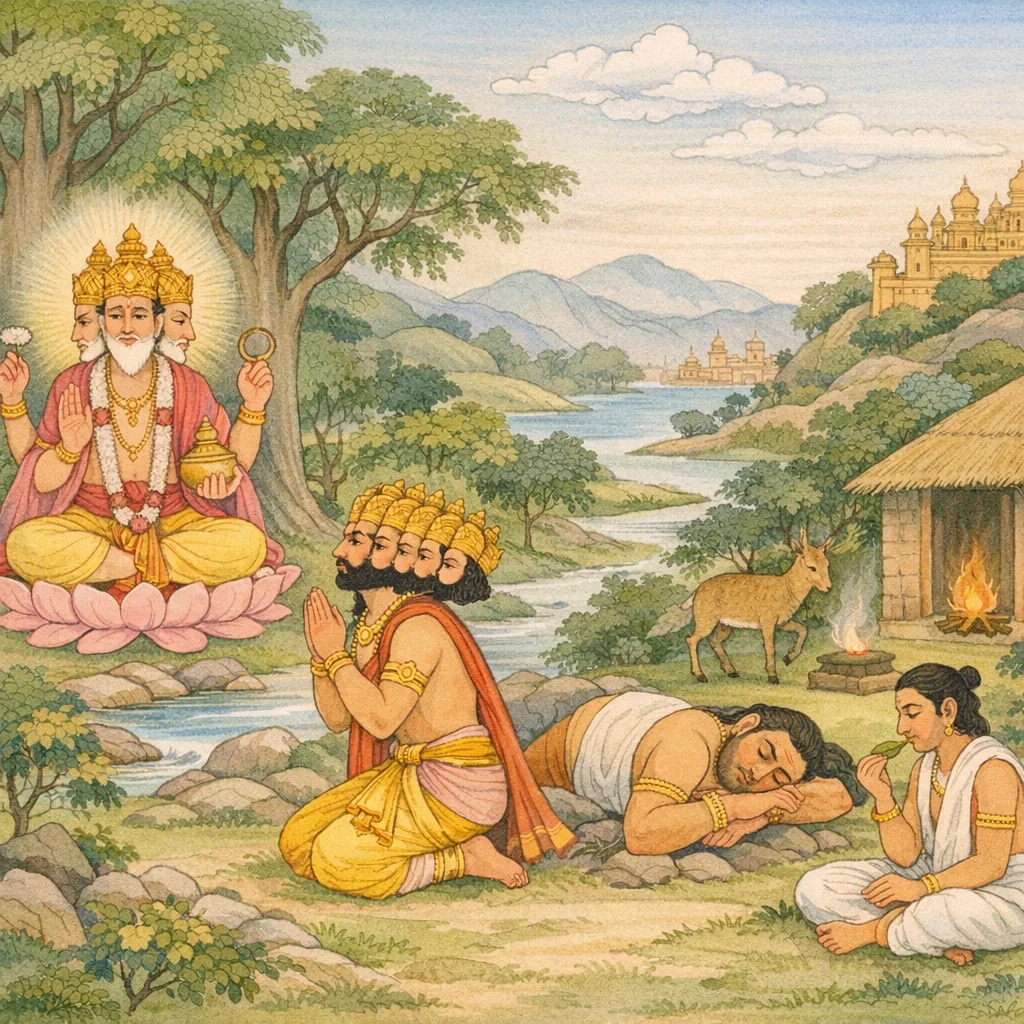
Chapter Arc: युधिष्ठिर के समक्ष रामोपाख्यान में राक्षस-वंश की जड़ें खुलती हैं—रावण, कुम्भकर्ण, विभीषण, खर और शूर्पणखा की उत्पत्ति, उनकी तपस्या और वर-प्राप्ति का वृत्तांत आरम्भ होता है। → लंकापुरी में वैभवशाली वैश्रवण (कुबेर) का निवास और राक्षसी परिचारिकाओं का प्रसंग आते ही सत्ता-प्रतिस्पर्धा की छाया गहराती है; उधर रावण और उसके भ्राताओं की कठोर तपस्या (भूमि-शयन, आहार-संयम, पर्णाहार) उन्हें अलौकिक सामर्थ्य की ओर धकेलती है। → ब्रह्मा वरदान देते हुए सीमा रेखा खींचते हैं—देव, दानव, गन्धर्व आदि से अभय, पर ‘मनुष्य’ से नहीं; इसी क्षण रावण का भविष्य-बीज पड़ता है, और उसका नामकरण-भाव भी उभरता है: जो लोकों को रुलाए, वही ‘रावण’। → वर-प्राप्ति के साथ रावण का अहं और भय-उत्पादन स्पष्ट होता है—दशग्रीव का बल देवताओं में भी आतंक जगाता है; कथा यह स्थापित करती है कि तपस्या से शक्ति तो मिलती है, पर मर्यादा-विहीन इच्छा उसे विनाश की ओर मोड़ देती है। → वरदान की ‘मनुष्य-अपवाद’ वाली शर्त भविष्य के निर्णायक प्रतिद्वन्द्वी की ओर संकेत करती है—अब प्रश्न यह है कि कौन-सा मनुष्य इस अभय-ढाल को भेदेगा?
Shlokas
Verse 1
ऑड2 # () ऑणआ अप पज्चसप्तर्त्याधिकाद्वेशततमो< ध्याय: रावण, कुम्भकर्ण, विभीषण, खर और शूर्पणखाकी उत्पत्ति, तपस्या और वरप्राप्ति तथा कुबेरका रावणको शाप देना मार्कण्डेय उवाच पुलस्त्यस्य तु यः क्रोधादर्धदेहो 5 भवन्मुनि: । विश्रवा नाम सक्रोध: स वैश्रवणमैक्षत,मार्कण्डेयजी कहते हैं--राजन! पुलस्त्यके क्रोधसे उनके आधे शरीरसे जो “विश्रवा' नामक मुनि प्रकट हुए थे, वे कुबेरको कुपित दृष्टिसे देखने लगे
Mārkaṇḍeya said: “O King, from Pulastya’s anger there arose, as it were from half his body, a sage named Viśravā. Still inflamed with wrath, that Viśravā cast an angry gaze upon Vaiśravaṇa (Kubera).”
Verse 2
बुबुधे तं तु सक्रोध॑ पितरं राक्षसे श्वर: । कुबेरस्तत्प्रसादार्थ यतते सम सदा नूप,युधिष्ठिर! राक्षसोंके स्वामी कुबेरको जब यह बात मालूम हो गयी कि मेरे पिता मुझपर रष्ट रहते हैं, तब वे उन्हें प्रसन्न रखनेका यत्न करने लगे
Mārkaṇḍeya said: “When Kubera, lord of the Rākṣasas, came to know that my father was angry with me, he continually strove—remaining even-tempered—to win my father’s favor. O king Yudhiṣṭhira, he exerted himself to keep him pleased.”
Verse 3
स राजराजो लड्कायां न्न्यवसन्नरवाहन: । राक्षसी: प्रददौ तिस्र: पितुर्वे परिचारिका:,राजराज कुबेर स्वयं लंकामें ही रहते थे। वे मनुष्योंद्वारा ढोई जानेवाली पालकी आदिकी सवारीपर चलते थे, इसलिये नरवाहन कहलाते थे। उन्होंने अपने पिता विश्रवाकी सेवाके लिये तीन राक्षसकन्याओंको परिचारिकाओंके रूपमें नियुक्त कर दिया था
Markandeya said: That sovereign king (Kubera) dwelt in Lanka and was known as Naravahana, for he rode in conveyances borne by men. For the service of his father, Vishrava, he appointed three rākṣasī maidens as attendants—thus establishing an ordered household where duty to one’s elders was formally provided for.
Verse 4
ता: सदा तं महात्मानं संतोषयितुमुद्यता: । ऋषिं भरतशार्दूल नृत्यगीतविशारदा:,भरतमश्रेष्ठ! वे तीनों ही नाचने और गानेकी कलामें निपुण थीं तथा सदा ही उन महात्मा महर्षिको संतुष्ट रखनेके लिये सचेष्ट रहती थीं ॥॥|॥॥॥/ / ५५५५ ॥॥॥॥॥॥॥५/७ ३३७॥
Markandeya said: Those women, ever intent on pleasing that great-souled sage, were continually engaged in satisfying him. O tiger among the Bharatas, they were highly skilled in dance and song, and they strove always to keep the rishi content—an image of disciplined service offered to spiritual excellence rather than to mere pleasure.
Verse 5
पुष्पोत्कटा च राका च मालिनी च विशाम्पते । अन्योन्यस्पर्धया राजन् श्रेयस्कामा: सुमध्यमा:,महाराज! उनके नाम थे--पुष्पोत्कटा, राका तथा मालिनी। वे तीनों सुन्दरियाँ अपना भला चाहती थीं। इसलिये एक-दूसरीसे स्पर्धा रखकर मुनिकी सेवा करती थीं
Mārkaṇḍeya said: “O lord of the people, there were three women named Puṣpotkaṭā, Rākā, and Mālinī. Slender-waisted and intent on their own highest good, they vied with one another, O king, in devoted service—each striving to excel the others.”
Verse 6
स तासां भगवांस्तुष्टो महात्मा प्रददौ वरान् । लोकपालोपमान् पुत्रानेकैकस्या यथेप्सितान्
Markandeya said: Pleased with them, the blessed great-souled one granted boons—sons to each of those women, as each had wished—sons comparable in stature and guardianship to the very protectors of the worlds. The episode underscores how sincere conduct and devotion, when met with divine favor, are answered not merely with personal gain but with offspring envisioned as upholders of order and responsibility.
Verse 7
वे ऐश्वर्यशशाली महात्मा उनकी सेवाओंसे प्रसन्न हो गये और उनमेंसे प्रत्येकको उनकी इच्छाके अनुसार लोकपालोंके समान पराक्रमी पुत्र होनेका वरदान दिया ।। पुष्पोत्कटायां जज्ञाते द्वौ पुत्रौ राक्षसेश्वरी । कुम्भकर्णदशग्रीवौ बलेनाप्रतिमौ भुवि,पुष्पोत्कटाके दो पुत्र हुए--रावण और कुम्भकर्ण। ये दोनों ही राक्षसोंके अधिपति थे। भूमण्डलमें इनके समान बलवान दूसरा कोई नहीं था
Mārkaṇḍeya said: The great, lordly beings—pleased by their devoted service—granted each of them a boon: sons endowed with prowess like that of the world-guardians, according to their desire. Thus, to Puṣpotkaṭā were born two sons, the rākṣasa-lords Kumbhakarṇa and Daśagrīva (Rāvaṇa), unmatched in strength upon the earth. The passage underscores how disciplined service can yield extraordinary worldly power—yet such power, if not governed by dharma, becomes a peril to the world.
Verse 8
मालिनी जनयामास पुत्रमेक॑ विभीषणम् । राकायां मिथुनं जज्ञे खर: शूर्पणखा तथा,मालिनीने एक ही पुत्र विभीषणको जन्म दिया। राकाके गर्भसे एक पुत्र और एक पुत्री हुई। पुत्रका नाम खर था और पुत्रीका शूर्पणखा
Mārkaṇḍeya said: Mālinī bore a single son, Vibhīṣaṇa. And from Rākā there were born twins as well—a son named Khara and a daughter named Śūrpaṇakhā. Thus the lineage is recounted, showing how later moral choices arise within a shared family origin.
Verse 9
विभीषणस्तु रूपेण सर्वेभ्यो5भ्यधिको5भवत् । स बभूव महाभागो धर्मगोप्ता क्रियारति:,इन सब बालकोंमें विभीषण ही सबसे अधिक रूपवान्, सौभाग्यशाली, धर्मरक्षक तथा कर्तव्यपरायण थे
Mārkaṇḍeya said: “But Vibhīṣaṇa surpassed all the others in beauty. He became a man of great fortune—one who guarded dharma and took delight in rightful action and duty.”
Verse 10
दशग्रीवस्तु सर्वेषां श्रेष्ठो राक्षसपुड्भव: । महोत्साहो महावीरयों महासत्त्वपराक्रम:,रावणके दस मस्तक थे। वही सबमें ज्येष्ठ तथा राक्षसोंका स्वामी था। उत्साह, बल, धैर्य और पराक्रममें भी वह महान् था
Mārkaṇḍeya said: “Daśagrīva (Rāvaṇa) was the foremost among all, the pre-eminent leader of the Rākṣasas. He was possessed of great enterprise and energy, great heroic power, and a mighty spirit and prowess.” The verse frames Rāvaṇa’s extraordinary capacities—qualities that can elevate a ruler when governed by dharma, yet become dangerous when driven by pride and unrighteous desire.
Verse 11
कुम्भकर्ण शारीरिक बलमें सबसे बढ़ा-चढ़ा था। युद्धमें भी वह सबसे बढ़कर था। मायावी और रणकुशल तो था ही, वह निशाचर बड़ा भयंकर भी था
Mārkaṇḍeya said: “Kumbhakarṇa surpassed all others in sheer bodily strength, and in battle too he stood above the rest. He was not only a master of stratagems and skilled in the arts of war; as a night-roaming rākṣasa he was also profoundly terrifying. The account highlights how formidable power and tactical brilliance, when joined to a fearsome nature, can become a grave threat on the battlefield.”
Verse 12
खरो धनुषि विक्रान्तो ब्रह्मद्विट॒ पिशिताशन: । सिद्धविघ्नकरी चापि रौद्री शूर्पणखा तथा,खर थधर्नुर्विद्यामें विशेष पराक्रमी था। वह ब्राह्मणोंसे द्वेष रखनेवाला तथा मांसाहारी था। शूर्पणखाकी आकृति बड़ी भयानक थी। वह सिद्ध ऋषि-मुनियोंकी तपस्यामें विध्न डाला करती थी
Mārkaṇḍeya said: “Khara was exceedingly valiant in the use of the bow; he was a hater of brāhmaṇas and a flesh-eater. Likewise Śūrpaṇakhā was fierce and terrifying in form, and she would create obstacles to the austerities of accomplished sages.”
Verse 13
कुम्भकर्णो बलेनासीत् सर्वेभ्यो5भ्यधिको युधि । मायावी रणशौण्डश्न रौद्रश्न रजनीचर:,सर्वे वेदविद: शूरा: सर्वे सुचरितव्रता: । ऊषुः: पित्रा सह रता गन्धमादनपर्वते वे सभी बालक वेददवेत्ता, शूरवीर तथा ब्रह्मचर्यव्रतका पालन करनेवाले थे और अपने पिताके साथ गन्धमादन पर्वतपर सुखपूर्वक रहते थे
Mārkaṇḍeya said: “Kumbhakarṇa, by sheer strength, surpassed all others in battle. He was also a master of guile, a fierce reveler in warfare, and a terrifying night-roaming being. All of them were knowers of the Vedas, heroic, and steadfast in well-conducted vows. Content and devoted, they lived happily with their father on Mount Gandhamādana.”
Verse 14
ततो वैश्रवर्णं तत्र ददृशुर्नरवाहनम् | पित्रा सार्थ समासीनमृद्धया परमया युतम्,एक दिन नरवाहन कुबेर अपने महान् ऐश्वर्यसे युक्त होकर पिताके साथ बैठे थे। उसी अवस्थामें रावण आदिने उनको देखा
Then they beheld Vaiśravaṇa (Kubera), the lord who rides in a man-borne conveyance, seated there together with his father, endowed with supreme prosperity and splendor. In this scene, the narrative underscores how immense power and wealth can draw the gaze of rivals—setting the stage for envy and conflict when dharma is not guarded by restraint.
Verse 15
जातामर्षस्ततस्ते तु तपसे धृतनिश्चया: । ब्रह्माणं तोषयामासुर्घोरेण तपसा तदा,उनका वैभव देखकर इन बालकोंके हृदयमें डाह पैदा हो गयी। अतः उन्होंने मन-ही- मन तपस्या करनेका निश्चय किया और घोर तपस्याके द्वारा उन्होंने ब्रह्माजीको संतुष्ट कर लिया
Markandeya said: Then, stung by resentment, those boys—firmly resolved to undertake austerities—performed severe penance, and by that fierce tapas they satisfied Brahmā. The passage highlights how envy can harden into determination; the same power of resolve that can purify the mind through ascetic discipline is here first ignited by jealousy, warning that spiritual effort should be guided by right intention rather than rivalry.
Verse 16
अतिष्ठदेकपादेन सहस््रं परिवत्सरान् | वायुभक्षो दशग्रीव: पञ्चाग्नि: सुसमाहित:,रावण सहस्रों वर्षोतक एक पैरसे खड़ा रहा। वह चित्तको एकाग्र रखकर पंचाग्निसेवन करता और वायु पीकर रहता था
Mārkaṇḍeya said: Daśagrīva (Rāvaṇa) stood on a single foot for a thousand years. Living only on air, he practiced the austerity of the five fires with a mind perfectly concentrated—an image of extreme tapas that, while powerful, also warns that spiritual force without righteous intention can become a source of danger to the world.
Verse 17
अध:शायी कुम्भकर्णो यताहारो यतव्रतः । विभीषण: शीर्णपर्णमेकम भ्यवहारयन्,कुम्भकर्णने भी आहारका संयम किया। वह भूमिपर सोता और कठोर नियमोंका पालन करता था। विभीषण केवल एक सूखा पत्ता खाकर रहते थे
Mārkaṇḍeya said: “Kumbhakarṇa lay down upon the ground, restraining his food and observing strict vows. Vibhīṣaṇa, on the other hand, sustained himself by eating only a single withered leaf.” The passage highlights austerity and self-control as ethical disciplines, contrasting different modes of restraint within the same lineage.
Verse 18
उपवासरतिर्धीमान् सदा जप्यपरायण: । तमेव कालमातिष्ठत् तीव्रं तप उदारधी:,उनका भी उपवासमें ही प्रेम था। बुद्धिमान् एवं उदारबुद्धि विभीषण सदा जप किया करते थे। उन्होंने भी उतने समयतक तीव्र तपस्या की
Mārkaṇḍeya said: “He delighted in fasting; wise and steadfast, he was ever devoted to the discipline of sacred recitation. With noble understanding, he maintained that very period in rigorous austerity.”
Verse 19
खर: शूर्पणखा चैव तेषां वै तप्यतां तप: । परिचर्या च रक्षां च चक्रतुर्हष्टमानसौ
Mārkaṇḍeya said: “Khara and Śūrpaṇakhā, with delighted hearts, undertook service and protection for those engaged in austerities, supporting their penance and guarding them as they practiced their vows.”
Verse 20
खर और शूर्पणखा ये दोनों प्रसन्नमनसे तपस्यामें लगे हुए अपने भाइयोंकी परिचर्या तथा रक्षा करते थे ।। पूर्णे वर्षमहस्रे तु शिरश्छित्त्वा दशानन: । जुहोत्यग्नौ दुराधर्षस्तेनातुष्यज्जगत्प्र भु:
Mārkaṇḍeya said: When a full thousand years had been completed, Daśānana (Rāvaṇa), the unconquerable one, cut off his own head and offered it into the sacrificial fire; by that act of extreme austerity, the Lord of the world was pleased.
Verse 21
एक हजार वर्ष पूर्ण होनेपर दुर्धर्ष दशाननने अपना मस्तक काटकर अग्निमें उसकी आहुति दे दी। उसके इस अदभुत कर्मसे लोकेश्चर ब्रह्माजी बहुत संतुष्ट हुए ।। ततो ब्रह्मा स्वयं गत्वा तपसस्तान् न््यवारयत् | प्रलोभ्य वरदानेन सवनिव पृथक् पृथक्,तदनन्तर ब्रह्माजीने स्वयं जाकर उन सबको तपस्या करनेसे रोका और प्रत्येकको पृथक्-पृथक् वरदानका लोभ देते हुए कहा--
When a full thousand years had been completed, the formidable ten-headed one cut off his own head and offered it into the fire as an oblation. By this astonishing act, Brahmā, the Lord of the worlds, became greatly pleased. Then Brahmā himself went there and restrained them from continuing their austerities; enticing each one separately with the promise of boons, he spoke as follows—
Verse 22
ब्रह्मोवाच प्रीतो5स्मि वो निवर्तध्वं वरान् वृणुत पुत्रका: । यद् यदिष्टमृते त्वेकममरत्वं तथास्तु तत्
Brahmā said: “I am pleased with you. Now return (from your austerities); choose your boons, dear sons. Whatever you desire shall be granted—except for one thing: immortality. That shall not be.”
Verse 23
ब्रह्माजी बोले--पुत्रो! मैं तुम सबपर प्रसन्न हूँ, वर माँगो और तपस्यासे निवृत्त हो जाओ। केवल अमरत्वको छोड़कर जिसकी जो-जो इच्छा हो, उसके अनुसार वह वर माँगे। उसका वह मनोरथ पूर्ण होगा ।। यद् यदग्नौ हुतं सर्व शिरस्ते महदीप्सया । तथैव तानि ते देहे भविष्यन्ति यथेप्सया
Mārkaṇḍeya said: Brahmā declared that he was pleased and invited the ascetic to ask for boons—excluding only immortality. He then affirmed a specific assurance: whatever had been offered into the fire with intense resolve would return to the petitioner in embodied form exactly as desired. The episode underscores the ethical idea that disciplined intention and sacrificial effort, when aligned with divine sanction, bear precise and fitting results.
Verse 24
(तत्पश्चात् उन्होंने रावणकी ओर लक्ष्य करके कहा--) तुमने महत्त्वपूर्ण पद प्राप्त करनेकी इच्छासे अपने जिन-जिन मस्तकोंकी अग्निमें आहुति दी है, वे सब-के-सब पूर्ववत् तुम्हारे शरीरमें इच्छानुसार जुड़ जायँगे ।। वैरूप्यं च न ते देहे कामरूपधरस्तथा । भविष्यसि रणे5रीणां विजेता न च संशय:,तुम्हारे शरीरमें किसी प्रकारकी कुरूपता नहीं होगी, तुम इच्छानुसार रूप धारण कर सकोगे तथा युद्धमें शत्रुओंपर विजयी होओगे, इसमें संशय नहीं है
Then, fixing his gaze on Rāvaṇa, Mārkaṇḍeya declared: “All the heads you have offered into the fire, driven by the desire to attain a lofty station, will be restored to your body just as before, rejoining you at will. No deformity will remain in your frame; you will be able to assume forms as you please; and in battle you will be a conqueror of your enemies—of this there is no doubt.” The passage frames a boon that rewards fierce austerity, while also hinting at the moral tension of power gained through self-sacrifice and its likely use in war.
Verse 25
रावण उवाच गन्धर्वदेवासुरतो यक्षराक्षसतस्तथा । सर्पकिन्नरभूते भ्यो न मे भूयात् पराभव:,रावण बोला--भगवन्! गन्धर्व, देवता, असुर, यक्ष, राक्षस, सर्प, किन्नर तथा भूतोंसे कभी मेरी पराजय न हो
Rāvaṇa said: “May I never suffer defeat at the hands of Gandharvas, gods, Asuras, Yakṣas, Rākṣasas, serpents (Nāgas), Kinnaras, or Bhūtas.” In ethical terms, the verse voices a boon-seeker’s desire for invincibility and supremacy, reflecting the peril of power sought without humility or restraint.
Verse 26
ब्रह्मोवाच य एते कीर्तिता: सर्वे न तेभ्यो5स्ति भयं तव । ऋते मनुष्याद् भद्गं ते तथा तद् विहितं मया,ब्रह्माजीने कहा--तुमने जिन लोगोंका नाम लिया है, इनमेंसे किसीसे भी तुम्हें भय नहीं होगा। केवल मनुष्यको छोड़कर तुम सबसे निर्भय रहो। तुम्हारा भला हो। तुम्हारे लिये मनुष्यसे होनेवाले भयका विधान मैंने ही किया है
Brahmā said: “Of all those you have named, none will be a cause of fear to you. Except for a human being, you shall remain fearless before all. May good be yours—this limitation, that your danger would arise from a man, has been ordained by me.”
Verse 27
मार्कण्डेय उदाच एवमुक्तो दशग्रीवस्तुष्ट: समभवत् तदा | अवमेने हि दुर्बुद्धिर्मनुष्पानू पुरुषादक:,/८४८ २ 4८८ थक ओ *्थ मार्कण्डेयजी कहते हैं--राजन! ब्रह्माजीके ऐसा कहनेपर दसमुख रावण बहुत प्रसन्न हुआ। वह दुर्बुद्धि नरभक्षी राक्षस मनुष्योंकी अवहेलना करता था
Mārkaṇḍeya said: When thus addressed, Daśagrīva (Rāvaṇa) became greatly pleased at that time. For that wicked-minded, man-eating rākṣasa held human beings in contempt. The passage underscores how pride fed by praise or boons can harden into moral blindness, leading one to despise the vulnerable and disregard righteous restraint.
Verse 28
कुम्भकर्णमथोवाच तथैव प्रपितामहः । स वत्रे महतीं निद्रां तमसा ग्रस्तचेतन:,तत्पश्चात् ब्रह्माजीने कुम्भकर्णसे वर माँगनेको कहा। परंतु उसकी बुद्धि तमोगुणसे ग्रस्त थी; अतः: उसने अधिक कालतक नींद लेनेका वर माँगा
Then the Grandsire (Brahmā) addressed Kumbhakarṇa as well. But Kumbhakarṇa’s mind was overpowered by darkness and delusion (tamas); therefore, when invited to choose a boon, he asked for an immense, long-lasting sleep. The episode underscores how a clouded intellect turns even divine opportunity into self-harm, and how inner qualities (guṇas) shape moral choice.
Verse 29
तथा भविष्यतीत्युक्त्वा विभीषणमुवाच ह । वर वृष्णीष्व पुत्र त्वं प्रीतोडस्मीति पुन: पुन:,उसे 'ऐसा ही होगा” यों कहकर ब्रह्माजी विभीषणके पास गये और इस प्रकार बोले --<बेटा! मैं तुमपर बहुत प्रसन्न हूँ, अतः तुम भी वर माँगो।' ब्रह्माजीने यह बात बार-बार दुहरायी
Having said, “So it shall be,” Brahmā approached Vibhīṣaṇa and spoke to him: “My son, I am greatly pleased with you; therefore choose a boon.” Brahmā repeated this assurance again and again, underscoring that steadfast righteousness and sincere intent are worthy of divine favor.
Verse 30
विभीषण उवाच परमापद्गतस्यापि नाथर्मे मे मतिर्भवेत् अशिक्षितं च भगवन ब्रद्मास्त्र प्रतिभातु मे,विभीषण बोले--भगवन्! बहुत बड़ा संकट आनेपर भी मेरे मनमें कभी पापका विचार न उठे तथा बिना सीखे ही मेरे हृदयमें ब्रह्मासत्रके प्रयोग और उपसंहारकी विधि स्फुरित हो जाय
Verse 31
ब्रह्मोवाच यस्माद् राक्षसयोनौ ते जातस्यामित्रकर्शन । नाधर्मे धीयते बुद्धिरमरत्वं ददानि ते,ब्रह्माजीने कहा--शत्रुनाशन! राक्षसयोनिमें जन्म लेकर भी तुम्हारी बुद्धि अधर्ममें नहीं लगती; इसलिये (तुम्हारे माँगे हुए वरके अतिरिक्त) मैं तुम्हें अमरत्व भी देता हूँ
Verse 32
मार्कण्डेय उवाच राक्षसस्तु वरं लब्ध्वा दशग्रीवो विशाम्पते | लड़कायाश्ष्यावयामास युधि जित्वा धनेश्वरम्,मार्कण्डेयजी कहते हैं--राजन्! राक्षस दशाननने वर प्राप्त कर लेनेपर सबसे पहले अपने भाई कुबेरको युद्धमें परास्त किया और उन्हें लंकाके राज्यसे बहिष्कृत कर दिया
Mārkaṇḍeya said: “O lord of men, that rākṣasa Daśagrīva, having obtained a boon, first defeated the Lord of Wealth in battle and drove him out, dispossessing him of the sovereignty of Laṅkā.”
Verse 33
हित्वा स भगवॉल्लड्कामाविशद् गन्धमादनम् । गन्धर्वयक्षानुगतो रक्ष:किम्पुरुषै: सह
Markandeya said: “Leaving Laṅkā behind, that blessed one entered the Gandhamādana mountain. He went accompanied by Gandharvas and Yakṣas, together with Rākṣasas and Kimpuruṣas.”
Verse 34
भगवान् कुबेर लंका छोड़कर गन्धर्व, यक्ष, राक्षस तथा किम्पुरुषोंके साथ गन्धमादन पर्वतपर आकर रहने लगे ।। विमान पुष्पकं॑ तस्य जहाराक्रम्य रावण: । शशाप तं॑ वैश्रवणो न त्वामेतद् वहिष्यति,श््ड्््स्क््ा ज्ख्ड ५ व] 22 2 ४ है (22722%24/ 822 2 |. ४2: रावणने आक्रमण करके उनका पुष्पक विमान भी छीन लिया। तब कुबेरने कुपित होकर उसे शाप दिया--'अरे! यह विमान तेरी सवारीमें नहीं आ सकेगा। जो युद्धमें तुझे मार डालेगा, उसीका यह वाहन होगा। मैं तेरा बड़ा भाई होनेके कारण मान्य था, परंतु तूने मेरा अपमान किया है। इससे बहुत शीघ्र तेरा नाश हो जायगा”
Markandeya said: Ravana, having attacked, forcibly seized Kubera’s Pushpaka aerial chariot. Enraged, Vaishravana (Kubera) cursed him: “This chariot will not bear you as its rider. It shall become the vehicle of the one who slays you in battle. I was worthy of respect as your elder brother, yet you have insulted me; therefore your destruction will come swiftly.” The episode frames Ravana’s downfall as the moral consequence of violent usurpation and contempt for rightful authority.
Verse 35
यस्तु त्वां समरे हन्ता तमेवैतद् वहिष्यति । अवमन्य गुरुं मां च क्षिप्रं त्वं न भविष्यसि,श््ड्््स्क््ा ज्ख्ड ५ व] 22 2 ४ है (22722%24/ 822 2 |. ४2: रावणने आक्रमण करके उनका पुष्पक विमान भी छीन लिया। तब कुबेरने कुपित होकर उसे शाप दिया--'अरे! यह विमान तेरी सवारीमें नहीं आ सकेगा। जो युद्धमें तुझे मार डालेगा, उसीका यह वाहन होगा। मैं तेरा बड़ा भाई होनेके कारण मान्य था, परंतु तूने मेरा अपमान किया है। इससे बहुत शीघ्र तेरा नाश हो जायगा”
Markandeya said: “But the one who will slay you in battle—this very aerial car shall carry him. Having shown contempt for me, your elder and therefore your rightful superior, you will not endure for long; your ruin will come swiftly.”
Verse 36
विभीषणस्तु धर्मात्मा सतां मार्गमनुस्मरन् । अन्वगच्छन्महाराज श्रिया परमया युत:,महाराज! विभीषण धर्मात्मा थे। उन्होंने सत्पुरुषोंके मार्गकका ध्यान रखकर सदा अपने भाई कुबेरका अनुसरण किया; अतः वे उत्तम लक्ष्मीसे सम्पन्न हुए
Mārkaṇḍeya said: “Vibhīṣaṇa, being righteous at heart and keeping in mind the path followed by the virtuous, continued to follow (in allegiance and conduct), O king; therefore he became endowed with the highest prosperity.”
Verse 37
तस्मै स भगवांस्तुष्टो भ्राता क्षात्रे धनेश्वर: । सैनापत्यं ददौ धीमान् यक्षराक्षससेनयो:,बड़े भाई बुद्धिमान् भगवान् कुबेरने संतुष्ट होकर छोटे भाई विभीषणको यक्ष तथा राक्षसोंकी सेनाका सेनापति बना दिया
Pleased with him, the venerable lord of wealth—his elder brother, mighty in royal power—wisely bestowed upon him the command of the armies of the Yakṣas and the Rākṣasas. The episode underscores that authority is ideally granted as a reward for merit and right conduct, and that power, when entrusted, carries the ethical duty of protection and disciplined leadership.
Verse 38
राक्षसा: पुरुषादाश्ष पिशाचाश्न महाबला: । सर्वे समेत्य राजानमभ्यषिज्चन् दशाननम्,नरभक्षी राक्षस तथा महाबली पिशाच--सबने मिलकर दशमुख रावणको राक्षसराजके पदपर अभिषिक्त किया
Mārkaṇḍeya said: “The mighty Rākṣasas—man-eaters—and the powerful Piśācas all assembled together and consecrated Daśānana (the Ten-faced one) as their king.” The verse highlights how collective force and fear can enthrone a ruler, yet such legitimacy rests on violence and predation rather than dharma.
Verse 39
दशग्रीवश्व दैत्यानां देवानां च बलोत्कट: । आक्रम्य रत्नान्यहरत् कामरूपी विहड्भगम:,बलोन्मत्त रावण इच्छानुसार रूप धारण करने और आकाशमें भी चलनेमें समर्थ था। उसने दैत्यों और देवताओंपर आक्रमण करके उनके पास जो रत्न या रत्नभूत वस्तुएँ थीं, उन सबका अपहरण कर लिया
Verse 40
रावयामास लोकान् यत् तस्माद्रावण उच्यते । दशग्रीव: कामबलो देवानां भयमादधत्,उसने सम्पूर्ण लोकोंको रुला दिया था; इसलिये वह रावण कहलाता है। दशाननका बल उसके इच्छानुसार बढ़ जाता था; अतः वह सदा देवताओंको भयभीत किये रहता था
Mārkaṇḍeya said: “Because he made the worlds cry out, he came to be called Rāvaṇa. That ten-necked one, whose strength rose according to his desire, continually struck fear into the gods.” The verse underscores how power driven by unchecked desire becomes a source of suffering for all and a threat to cosmic order.
Verse 274
इस प्रकार श्रीमहाभारत वनपर्वके अन्तर्गत रामोपाख्यानपर्वमें राम- रावणजन्मकथनविषयक दो सौ चौद्वत्तरवाँ अध्याय पूरा हुआ
Thus ends the 274th chapter of the Rāmopākhyāna section within the Vana Parva of the Śrī Mahābhārata, dealing with the account of the births of Rāma and Rāvaṇa. This closing colophon signals the completion of a narrative unit that frames exemplary conduct and the moral consequences of one’s origins and choices.
Verse 275
इति श्रीमहाभारते वनपर्वणि रामोपाख्यानपर्वणि रावणादिवरप्राप्तौ पञ्चसप्तत्यधिकद्धिशततमो< ध्याय:,इस प्रकार श्रीमहाभारत वनपर्वके अन्तर्गत रामोपाख्यानपर्वमें रवण आदिको वरप्राप्तिविषयक दो सौ पचहत्तरवाँ अध्याय पूरा हुआ
Thus, in the Śrī Mahābhārata, within the Vana Parva, in the section known as the Rāmopākhyāna, the two-hundred-and-seventy-fifth chapter—concerning the obtaining of boons by Rāvaṇa and others—comes to its close. The colophon signals the completion of this episode, framing the narrative as a moral exemplum: extraordinary power gained through boons must still be governed by dharma, for unchecked desire and pride turn divine gifts into causes of ruin.
Frequently Asked Questions
The dilemma is how a ruler should respond to severe misfortune without abandoning duty: whether grief and self-reproach are justified, or whether steadiness and action consistent with kṣatriya ethics should prevail despite loss and humiliation.
Suffering is not proof of moral defect; it can accompany righteous conduct. Therefore, a leader should restrain despair, rely on disciplined judgment, and recognize the pragmatic force of capable allies and counsel.
No explicit phalaśruti is stated here; the meta-commentary is narrative: Vaiśaṃpāyana reports the king’s restored composure, marking the discourse as a functional intervention that stabilizes leadership and continuity of dharma in exile.