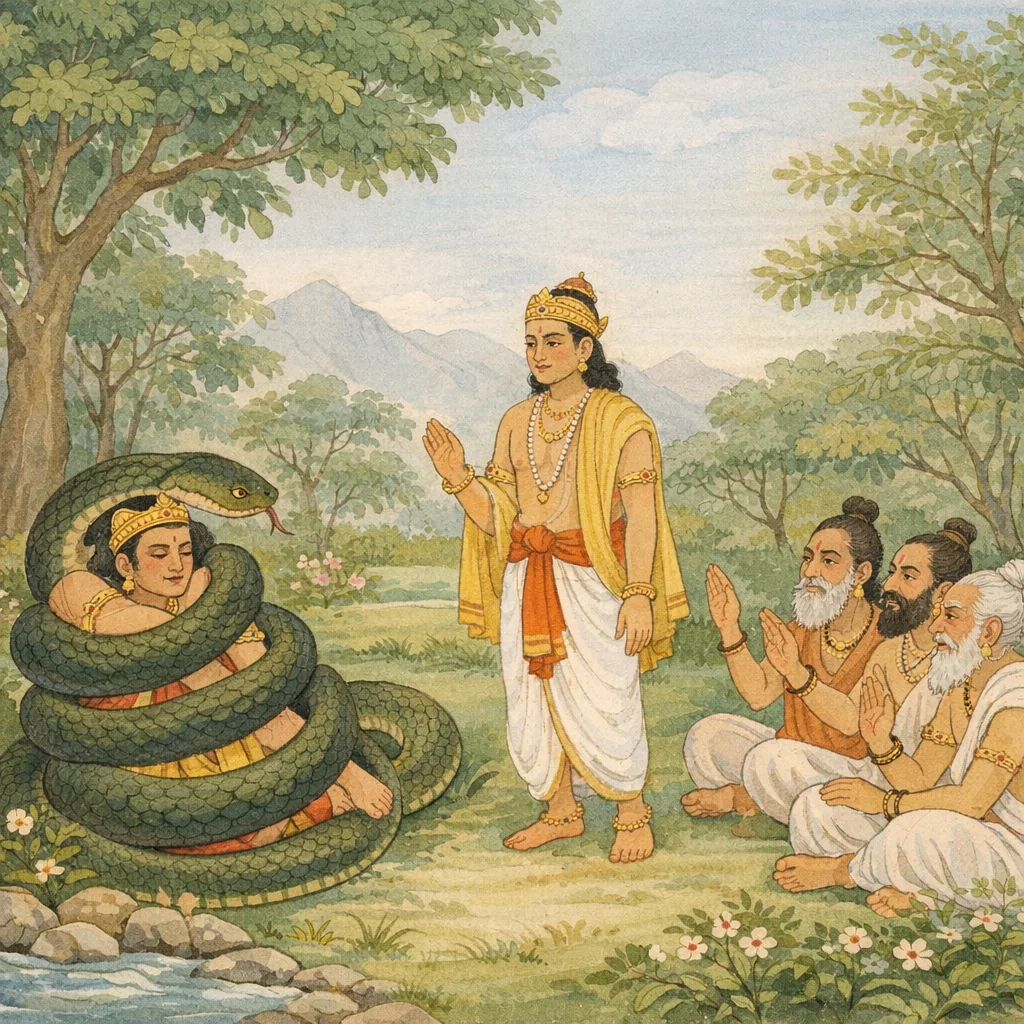
Adhyaya 182
Brāhmaṇa-māhātmya: Tārkṣya’s instruction on tapas, satya, and svadharma (Chapter 182)
Upa-parva: Mārkaṇḍeya–Brahmaṇa-māhātmya (Didactic episode on the excellence of Brāhmaṇas and tapas)
Vaiśaṃpāyana reports that the Pāṇḍavas request Mārkaṇḍeya to describe the excellence of foremost brāhmaṇas. The narrative introduces a Haihaya prince engaged in hunting who, mistaking an ascetic for game, strikes him down in the forest. Distressed and remorseful, the prince reports the incident to Haihaya rulers, who become despondent upon learning a root-and-fruit-eating muni has been harmed. Seeking to identify the ascetic, they proceed to the āśrama of the sage Tārkṣya (also addressed with the epithet Parapuraṃjaya). After being received, they decline honors, stating they are unworthy due to the wrongdoing of having harmed a brāhmaṇa. Tārkṣya asks how and where the brāhmaṇa was killed and invites them to witness the force of his tapas. When the party cannot locate the ascetic’s body, Tārkṣya identifies the slain brāhmaṇa as his own son, endowed with ascetic power, and the group expresses astonishment at his restoration to life. In response to their inquiry, Tārkṣya states that death does not prevail over such practitioners because they adhere to truth, maintain svadharma, speak for brāhmaṇas’ welfare, avoid misconduct, and uphold hospitality and proper care for dependents. He concludes that this is only a brief account, instructs them to depart without fear of sin, and the kings return home satisfied after honoring the great sage.
Chapter Arc: युधिष्ठिर के प्रश्नों से संतुष्ट सर्प-रूपधारी नहुष का कठोर बंधन ढीला पड़ता है—भीम अभी भी जकड़ा है, पर उत्तरों की ज्योति से मुक्ति का द्वार खुल चुका है। → युधिष्ठिर दान, सत्य, अहिंसा, प्रिय-वचन और धर्म-निष्ठा के गुरुत्व-लाघव पर सूक्ष्म प्रश्न उठाते हैं; नहुष मन-बुद्धि के भेद, विषय-भोग और मोक्ष-साधन की दार्शनिक व्याख्या देकर परीक्षा को और कठिन बना देता है। → नहुष निर्णायक रूप से धर्म-मार्ग का सार रखता है—पात्र को दान, सत्य-वचन, प्रिय-वचन और अहिंसा-निरति से स्वर्ग-गति; और मन-बुद्धि के विवेक से जीव का बंधन/मोक्ष—युधिष्ठिर की प्रज्ञा इस कसौटी पर खरी उतरती है। → नहुष युधिष्ठिर के उत्तरों से तृप्त होकर भीम को छोड़ देता है; ब्राह्मण-श्रेष्ठ भीम के साहस/उतावलेपन को धिक्कारते हुए पाण्डव-हित की सीख देते हैं; भीम को भय-मुक्त देखकर पाण्डव हर्ष से भर उठते हैं।
Shlokas
Verse 1
हि () हि २ 7 एकाशीरत्याधिकशततमो< ध्याय: युधिष्ठटिरद्वारा अपने प्रश्नोंका उचित उत्तर पाकर संतुष्ट हुए सर्परूपधारी नहुषका भीमसेनको छोड़ देना तथा युधिष्ठटिरके साथ वार्तालाप करनेके प्रभावसे सर्पयोनिसे मुक्त होकर स्वर्ग जाना युधिछिर उवाच भवानेतादृशो लोके वेदवेदाड़पारग: । ब्रूहि कि कुर्वतः कर्म भवेद् गतिरनुत्तमा,युधिष्ठिरने पूछा--तुम सम्पूर्ण वेद-वेदांगोंके पारगामी हो। लोकमें तुम्हारी ऐसी ही ख्वाति है। बताओ, किस कर्मके आचरणसे सर्वोत्तम गति प्राप्त हो सकती है?
Yudhiṣṭhira said: “You are renowned in this world as one who has mastered the Vedas and their auxiliary disciplines. Tell me—by performing what kind of action, and by what manner of conduct, does one attain the highest, unsurpassed destiny?”
Verse 2
सर्प उवाच पात्रे दत्त्वा प्रियाण्युक्त्वा सत्यमुक्त्वा च भारत । अहिंसानिरत: स्वर्ग गच्छेदिति मतिर्मम,सर्पने कहा--भारत! इस विषयमें मेरा विचार यह है कि मनुष्य सत्पात्रको दान देनेसे, सत्य और प्रिय वचन बोलनेसे तथा अहिंसा-धर्ममें तत्पर रहनेसे स्वर्ग (उत्तम गति) पा सकता है
Verse 3
युधिछिर उवाच दानाद् वा सर्प सत्याद् वा किमतो गुरु दृश्यते । अहिंसाप्रिययोश्वैव गुरुलाघवमुच्यताम्,युधिष्ठिरने पूछा--नागराज! दान और सत्यमें किसका पलड़ा भारी देखा जाता है? अहिंसा और प्रियभाषण--इनमेंसे किसका महत्त्व अधिक है और किसका कम? यह बताओ
Yudhiṣṭhira said: “O Serpent (king), which is seen to carry greater weight—generosity or truthfulness? And between non-violence and pleasing speech, which is the more important and which the lesser? Please declare their relative gravity.”
Verse 4
सर्प उवाच दानं च सत्य॑ तत्त्वं वा अहिंसा प्रियमेव च । एषां कार्यगरीयस्त्वाद् दृश्यते गुरुलाघवम्,सर्पने कहा--महाराज! दान, सत्य-तत्त्व, अहिंसा और प्रियभाषण--इनकी गुरुता और लघुता कार्यकी महत्ताके अनुसार देखी जाती है
The serpent said: “Charity, truthfulness, adherence to what is real (tattva), non-violence, and speaking what is pleasing—among these, what counts as ‘heavier’ or ‘lighter’ is judged according to the gravity of the situation and the importance of the task at hand.”
Verse 5
कस्माच्चिद् दानयोगाद्धि सत्यमेव विशिष्यते । सत्यवाक्याच्च राजेन्द्र किंचिद् दानं विशिष्यते,राजेन्द्र! किसी दानसे सत्यका ही महत्त्व बढ़ जाता है और कोई-कोई दान ही सत्यभाषणसे अधिक महत्त्व रखता है
The serpent said: “In some cases, among the paths of giving, it is truth alone that stands supreme. Yet, O best of kings, there are certain gifts whose merit surpasses even the speaking of truth.”
Verse 6
एवमेव महेष्वास प्रियवाक्यान्महीपते । अहिंसा दृश्यते गुर्वी ततश्च प्रियमिष्यते,महान् धनुर्थर भूपाल! इसी प्रकार कहीं तो प्रिय वचनकी अपेक्षा अहिंसाका गौरव अधिक देखा जाता है और कहीं अहिंसासे भी बढ़कर प्रियभाषणका महत्त्व दृष्टिगोचर होता है
“Just so, O great archer, O king: in some situations the weight and dignity of non-violence is seen to be paramount; and in other situations, gentle and pleasing speech is regarded as even more important than non-violence. Thus, what is ‘best’ is judged by context—sometimes restraint from harm, sometimes the healing power of kindly words.”
Verse 7
एवमेतद् भवेद् राजन् कायपिक्षमनन्तरम् | यदभिप्रेतमन्यत् ते ब्रूहि यावद् ब्रवीम्यहम्,राजन! इस प्रकार इनके गौरव-लाघवका निश्चय कार्यकी अपेक्षासे ही होता है। अब और जो कुछ भी प्रश्न तुम्हें अभीष्ट हो, वह पूछो । मैं यथासाध्य उत्तर देता हूँ
“So it is, O King: the assessment of what is weighty or light depends directly upon the demands of the situation and the work to be done. Now, if there is anything else you wish to know, ask it; I will speak as far as I am able.”
Verse 8
युधिछिर उवाच कथं स्वर्गे गति: सर्प कर्मणां च फल ध्रुवम् अशरीरस्य दृश्येत प्रब्रूहि विषयांश्व मे,युधिष्ठिरने पूछा--सर्प! मनुष्यको स्वर्गकी प्राप्ति और कर्मोका निश्चयरूपसे मिलनेवाला फल किस प्रकार देखनेमें आता है एवं देहाभिमानसे रहित पुरुषकी गति किस प्रकार होती है? इन विषयोंको मुझसे भलीभाँति कहिये
Yudhiṣṭhira said: “O Serpent, how is one’s passage to heaven understood, and how is the sure, unfailing fruit of actions seen to come about? And how is the course of one who is ‘without body’—free from bodily identification—made evident? Explain these matters to me clearly.”
Verse 9
सर्प उवाच तिस्रो वै गतयो राजन् परिदृष्टा: स्वकर्मभि: । मानुषं स्वर्गवासश्च तिर्यग्योनिश्चव तत् त्रिधा,सर्पने कहा--राजन्! अपने-अपने कर्मोंके अनुसार जीवोंकी तीन प्रकारकी गतियाँ देखी जाती हैं--स्वर्गलोककी प्राप्ति, मनुष्ययोनिमें जन्म लेना और पशु-पक्षी आदि योनियोंमें (तथा नरकोंमें) उत्पन्न होना।- बस, ये ही तीन योनियाँ हैं
The serpent said: “O King, three courses of existence are seen for beings, each according to one’s own deeds: residence in heaven, birth as a human, and birth among the animal orders. Thus, these are the threefold destinations determined by karma.”
Verse 10
तत्र वै मानुषाल्लोकाद् दानादिभिरतन्द्रित: । अहिंसार्थसमायुक्तै: कारणै: स्वर्गमश्लुते,इनमेंसे जो जीव मनुष्ययोनिमें उत्पन्न होता है, पर यदि आलस्य और प्रमादका त्याग करके अहिंसाका पालन करते हुए दान आदि शुभ कर्म करता है, तो उसे इन पुण्य कर्मोंके कारण स्वर्गलोककी प्राप्ति होती है
From that human world, a person who is diligent—casting off laziness and heedlessness—attains heaven through causes such as charity and other auspicious deeds, especially those aligned with the purpose of non-violence. The serpent thus teaches that human birth becomes fruitful when one actively practices ahiṃsā and performs meritorious acts, which lead to higher realms.
Verse 11
विपरीतैश्व राजेन्द्र कारणैर्मानुषो भवेत् । तिर्यग्योनिस्तथा तात विशेषज्षात्र वक्ष्यते,राजेन्द्र! इसके विपरीत कारण उपस्थित होनेपर मनुष्ययोनिमें तथा पशु-पक्षी आदि योनिमें जन्म लेना पड़ता है। तात! पशु-पक्षी आदि योनियोंमें जन्म लेनेका जो विशेष कारण है, उसे भी यहाँ बतलाया जाता है। जो काम, क्रोध, लोभ और हिंसामें तत्पर होकर मानवतासे भ्रष्ट हो जाता है, अपनी मनुष्य होनेकी योग्यताको भी खो देता है, वही पशु- पक्षी आदि योनिमें जन्म पाता है
The serpent said: “O king, when the causes are reversed, one becomes human again; and likewise, dear child, one may be born among the animal species. Here I shall also explain the particular cause for birth as an animal. One who is devoted to lust, anger, greed, and violence—falling away from true humanity and losing the very fitness of being human—comes to be born among beasts and birds.”
Verse 12
कामक्रोधसमायुक्तो हिंसालो भसमन्वित: । मनुष्यत्वात् परिभ्रष्टस्तिर्यग्योनौ प्रसूयते,राजेन्द्र! इसके विपरीत कारण उपस्थित होनेपर मनुष्ययोनिमें तथा पशु-पक्षी आदि योनिमें जन्म लेना पड़ता है। तात! पशु-पक्षी आदि योनियोंमें जन्म लेनेका जो विशेष कारण है, उसे भी यहाँ बतलाया जाता है। जो काम, क्रोध, लोभ और हिंसामें तत्पर होकर मानवतासे भ्रष्ट हो जाता है, अपनी मनुष्य होनेकी योग्यताको भी खो देता है, वही पशु- पक्षी आदि योनिमें जन्म पाता है
The serpent said: “O best of kings, one who is driven by desire and anger, and possessed of violence and greed, falls away from true human conduct. Having slipped from the state of humanity, he is born into an animal womb.”
Verse 13
तिर्यग्योन्या: पृथग्भावो मनुष्यार्थे विधीयते । गवादिशभ्यस्तथाश्रेभ्यो देवत्वमपि दृश्यते,फिर मनुष्य-जन्मकी प्राप्तिके लिये उसका तिर्यक्-योनिसे उद्धार होता है। गौओं तथा अश्वोंको भी उस योनिसे छुटकारा मिलकर देवत्वकी प्राप्ति होती है, यह बात देखी जाती है
The separation from an animal birth is ordained for the sake of attaining human status. Indeed, it is also observed that creatures such as cows and horses, once released from that condition, may even attain divinity. (Thus the serpent points to the graded ascent of beings through births, where conduct and destiny can lift one from lower embodiments toward higher states.)
Verse 14
सो<यमेता गतीस्तात जनन््तुश्चरति कार्यवान् । नित्ये महति चात्मानमवस्थापयते द्विज:,तात! प्रयोजनवश वही यह जीव इन्हीं तीन गतियोंमें भटकता रहता है। कर्मफलको चाहनेवाला देहाभिमानी जीव परवशतासे बार-बार जन्म लेता और दुःख-सुखका उपभोग करता है। किंतु तात! जो कर्मफलमें आसक्त नहीं है, वह प्रजाजनोंके पालनकी भावनावाला द्विज अपने आत्माको नित्य परब्रह्म परमात्मामें भलीभाँति स्थित कर देता है
The serpent said: “Dear child, this creature—driven by purposes and compelled by action—keeps moving through these very courses of existence. But the twice-born person who is not attached to the fruits of action establishes the self firmly in the Eternal, the Great (Brahman).”
Verse 15
जातो जातश्न बलवद् भुड्क्ते चात्मा स देहवान् । फलार्थस्तात निष्पृक्त: प्रजापालनभावन:,तात! प्रयोजनवश वही यह जीव इन्हीं तीन गतियोंमें भटकता रहता है। कर्मफलको चाहनेवाला देहाभिमानी जीव परवशतासे बार-बार जन्म लेता और दुःख-सुखका उपभोग करता है। किंतु तात! जो कर्मफलमें आसक्त नहीं है, वह प्रजाजनोंके पालनकी भावनावाला द्विज अपने आत्माको नित्य परब्रह्म परमात्मामें भलीभाँति स्थित कर देता है
The serpent said: “Born again and again, the embodied self—driven by its own force of habit—repeatedly experiences (the results of action). O dear one, the person who acts for the sake of fruits, identifying with the body, comes under dependence and is born time after time, tasting both sorrow and joy. But, O dear one, the twice-born who is not attached to the fruits of action, and who is intent on the welfare and protection of beings, firmly establishes his self in the eternal Supreme Brahman.”
Verse 16
युधिछिर उवाच शब्दे स्पर्शे च रूपे च तथैव रसगन्धयो: । तस्याधिष्ठानमव्यग्रो ब्रूहि सर्प यथातथम्,युधिष्ठिरने पूछा--सर्प! शब्द, स्पर्श, रूप, रस तथा गन्ध--इनका आधार क्या है? आप शान्तचित्त होकर इसे यथार्थरूपसे बताइये
Yudhiṣṭhira said: “O serpent, with an undistracted mind tell me truthfully, just as it really is: what is the underlying basis of sound, touch, form, and likewise of taste and smell?”
Verse 17
कि न गृह्नाति विषयान् युगपच्च महामते । एतावदुच्यतां चोक्तं सर्व पन्नगसत्तम
Yudhiṣṭhira said: “O wise one, why does he not seize the objects of sense all at once? Let just this much be stated. O best of serpents, you have already told everything.”
Verse 18
महामते! पन्नगश्रेष्ठ! मन विषयोंका एक ही साथ ग्रहण क्यों नहीं करता? इन उपर्युक्त सब बातोंको बताइये ।। सर्प उवाच यदात्मद्रव्यमायुष्मन् देहसंश्रयणान्वितम् । करणाधिष्ितं भोगानुपभुड्धक्ते यथाविधि,सर्पने कहा--आयुष्मन्! स्थूल, सूक्ष्म और कारण शरीरोंका आश्रय लेनेवाला और इन्द्रियोंसे युक्त जो आत्मा नामक द्रव्य है, वही विधिपूर्वक नाना प्रकारके भोगोंको भोगता है
The serpent said: “O long-lived one, the self—an enduring substance—takes support in embodied existence and operates through the instruments of sense and mind. It is that very self which, in due order and according to the governing conditions, experiences the many kinds of enjoyments.”
Verse 19
ज्ञान चैवात्र बुद्धिश्न मनश्न भरतर्षभ | तस्य भोगाधिकरणे करणानि निबोध मे,भरतश्रेष्ठ! ज्ञान, बुद्धि और मन--ये ही शरीरमें उसके करण समझो
The serpent said: “O bull among the Bharatas, know this: knowledge, intellect, and mind—these are indeed the inner instruments within the body. Understand from me, O best of the Bharatas, that they serve as the faculties by which the embodied being engages in experience and enjoyment.”
Verse 20
मनसा तात पर्येति क्रमशो विषयानिमान् | विषयायतनस्थो हि भूतात्मा क्षेत्रमास्थित:,तात! पाँचों विषयोंके आधारभूत पंचभूतोंसे बने हुए शरीरमें स्थित जीवात्मा इस शरीरमें स्थित हुआ ही मनके द्वारा क्रमशः इन पाँचों विषयोंका उपभोग करता है
The serpent said: “Dear child, the embodied self, stationed in the field of the body—this body being the seat of the sense-objects—moves through these objects one after another by means of the mind, and thus experiences them in due sequence. The teaching is that enjoyment and bondage arise not merely from the objects themselves, but from the mind’s successive engagement with them while the self abides in the bodily ‘field.’”
Verse 21
तत्र चापि नरव्यात्र मनो जन्तोर्विधीयते । तस्माद् युगपदत्रास्य ग्रहणं नोपपद्यते,नरश्रेष्ठ! विषयोंके उपभोगके समय (बुद्धिके द्वारा) इस जीवात्माका मन किसी एक ही विषयमें नियन्त्रित कर दिया जाता है। इसीलिये उसके द्वारा एक ही साथ अनेक विषयोंका ग्रहण सम्भव नहीं हो पाता है
Even there, O tiger among men, the mind of a living being is directed and confined (to a single object). Therefore, O best of men, it is not possible for him to grasp many objects all at once. The point is that during enjoyment the mind, guided by the intellect, fastens upon one sense-object at a time; hence simultaneous apprehension of multiple objects does not occur.
Verse 22
स आत्मा पुरुषव्याप्र भ्रुवोरन्तरमाश्रित: । बुद्धि द्रव्येषु सूजति विविधेषु परावराम्,पुरुषसिंह! वही आत्मा दोनों भौंहोंके बीच स्थित होकर उत्तम-अधम बुद्धिको भिन्न- भिन्न द्रव्योंकी ओर प्रेरित करता है
The Serpent said: “O tiger among men, that very Self, abiding in the space between the two eyebrows, impels the mind toward various objects, producing discernment of many kinds—higher and lower. Thus, the inner ruler directs one’s inclination toward what is noble or base, and thereby shapes conduct and its moral consequences.”
Verse 23
बुद्धेरुत्तरकाला च वेदना दृश्यते बुध: । एष वै राजशार्दूल विधि: क्षेत्रज्ञभावन:,बुद्धिकी क्रियाके उत्तरकालमें भी विद्वान् पुरुषोंको एक अनुभूति दिखायी देती है। नृपश्रेष्ठ! यही क्षेत्रज्ष आत्माको प्रकाशित करनेवाली विधि है
Even after the later phase of the intellect has passed, the wise still perceive a subtle awareness. O tiger among kings, this indeed is the method by which the Knower of the Field (the inner Self) is brought to manifestation—pointing beyond mere mental activity to direct realization of the आत्मन्.
Verse 24
युधिछ्िर उवाच मनसश्नापि बुद्धेश्न ब्रूहि मे लक्षणं परम् । एतदथध्यात्मविदुषां परं कार्य विधीयते,युधिष्ठिने कहा--सर्प! मुझे मन और बुद्धिका उत्तम लक्षण बतलाओ। अध्यात्मशास्त्रके विद्वानोंके लिये इनको जानना परम कर्तव्य कहा गया है
Yudhiṣṭhira said: “O serpent, tell me the highest defining marks of the mind and of the intellect. For those who are learned in the science of the Self, understanding these is declared to be a supreme duty.”
Verse 25
सर्प उवाच बुद्धिरात्मानुगा तात उत्पातेन विधीयते । तदश्रिता हि संजैषा बुद्धिस्तस्यैषिणी भवेत्,सर्पने कहा--तात! आत्माके भोग और मोक्षका सम्पादन करना ही बुद्धिका प्रयोजन है तथा आत्माका आश्रय लेकर ही बुद्धि विषयोंकी ओर जाती है। इस कारण वह आत्माका अनुसरण करनेवाली मानी जाती है। वह भी आत्माकी चेतनशक्तिके सम्बन्धसे ही है तथा बुद्धिके गुणविधानसे अर्थात् उसकी ज्ञानशक्तिके प्रभावसे ही मन उस गुणसे सम्पन्न होता है यानी इन्द्रियोंके विषयोंको ग्रहण करनेमें समर्थ हो जाता है। अतः बुद्धि तो कार्यके आरम्भसे प्रकट होती है और मन सदैव प्रकट रहता है। (कार्यको देखकर ही कारणकी सत्ता व्यक्त होती है--यह न्याय है)
The serpent said: “Dear one, the intellect follows the Self; it is set in motion by a sudden impulse. Resting upon the Self, this faculty called ‘intellect’ becomes the seeker that drives one onward. Thus, it is by leaning on the conscious principle within that the intellect turns toward objects and initiates action.”
Verse 26
बुद्धिरुत्पद्यते कार्यान््मनस्तूत्पन्नमेव हि । बुद्धे्गुणविधानेन मनस्तद्गुणवद् भवेत्,सर्पने कहा--तात! आत्माके भोग और मोक्षका सम्पादन करना ही बुद्धिका प्रयोजन है तथा आत्माका आश्रय लेकर ही बुद्धि विषयोंकी ओर जाती है। इस कारण वह आत्माका अनुसरण करनेवाली मानी जाती है। वह भी आत्माकी चेतनशक्तिके सम्बन्धसे ही है तथा बुद्धिके गुणविधानसे अर्थात् उसकी ज्ञानशक्तिके प्रभावसे ही मन उस गुणसे सम्पन्न होता है यानी इन्द्रियोंके विषयोंको ग्रहण करनेमें समर्थ हो जाता है। अतः बुद्धि तो कार्यके आरम्भसे प्रकट होती है और मन सदैव प्रकट रहता है। (कार्यको देखकर ही कारणकी सत्ता व्यक्त होती है--यह न्याय है)
The serpent said: “Intellect becomes manifest in relation to actions (and their arising), whereas the mind is already present. Through the intellect’s determination and imparting of qualities—through its power of knowing and discerning—the mind comes to share that same capacity, becoming fit to apprehend the objects of the senses. Thus, intellect is recognized by its emergence at the commencement of activity, while the mind is regarded as ever-present.”
Verse 27
एतदू् विशेषणं तात मनोबुद्धयोर्यदन्तरम् । त्वमप्यत्राभिसम्बुद्ध:ः कथं वा मन्यते भवान्,तात! मन और बुद्धिकी यह विशेषता ही उन दोनोंका अन्तर है। तुम भी तो इस विषयके अच्छे ज्ञाता हो, अत: बताओ, तुम्हारी कैसी मान्यता है?
‘Dear one, this is precisely the distinguishing mark—the difference that lies between mind and intellect. You too are well-awakened in this matter; so tell me, revered sir: what is your view?’
Verse 28
युधिछिर उवाच अहो बुद्धिमतां श्रेष्ठ शुभा बुद्धिरियं तव । विदितं वेदितव्यं ते कस्मात् समनुपृच्छसि,युधिष्ठिर बोले--बुद्धिमानोंमें श्रेष्ठ! तुम्हारी यह बुद्धि बड़ी उत्तम है। तुम तो जानने योग्य वस्तुको जान चुके हो, फिर मुझसे क्यों पूछते हो?
Yudhiṣṭhira said: “Ah, best among the wise—your understanding is truly auspicious and excellent. You have already grasped what ought to be known; why, then, do you question me further?”
Verse 29
सर्वज्ञं त्वां कथं मोह आविशत् स्वर्गवासिनम् | एवमद्धुतकर्माणमिति मे संशयो महान्,तुम तो सर्वज्ञ तथा स्वर्गके निवासी थे। तुमने बड़े अद्भुत कर्म किये थे। भला, तुम्हें कैसे मोह हो गया? (अर्थात् ब्राह्मणोंका अपमान कैसे कर बैठे?) इस बातको लेकर मेरे मनमें बड़ा संशय हो रहा है
Yudhiṣṭhira said: “You are all-knowing and a dweller in heaven; how, then, did delusion overtake you? You performed deeds of wondrous power. This leaves me with a great doubt—how could you fall into such confusion (so as to commit an affront to the brāhmaṇas)?”
Verse 30
सर्प उवाच सुप्रज्ञममपि चेच्छूरमृद्धिमोहयते नरम् | वर्तमान: सुखे सर्वो मुह्मतीति मतिर्मम,सर्पने कहा--राजन्! यह धन-सम्पत्ति बड़े-बड़े बुद्धिमान् और शूरवीर मनुष्यको भी मोहमें डाल देती है। मेरा तो ऐसा विश्वास है कि सुख-विलासमें डूबे हुए सभी लोग मोहित हो जाते हैं
Verse 31
सो>हमैश्वर्यमोहेन मदाविष्टो युधिष्ठिर । पतित: प्रतिसम्बुद्धस्त्वां तु सम्बोधयाम्यहम्,युधिष्ठिर! इसी तरह मैं भी ऐश्वर्यके मोहसे मदोन्मत्त हो गया और मुझे उस समय चेत हुआ, जब कि मेरा अधः:पतन हो चुका। अतः अब तुम्हें सचेत कर रहा हूँ
“So it was with me, O Yudhiṣṭhira: deluded by the fascination of power and prosperity, I became intoxicated with pride. I came to my senses only after I had already fallen. Therefore, having awakened through that downfall, I now seek to awaken you.”
Verse 32
कृतं कार्य महाराज त्वया मम परंतप । क्षीण:शाप: सुकृच्छो मे त्वया सम्भाष्य साधुना,परंतप महाराज! आज तुमने मेरा बहुत बड़ा कार्य किया। इस समय तुम-जैसे श्रेष्ठ पुरुषसे वार्तालाप करनेके कारण मेरा वह अत्यन्त कष्टदायक शाप निवृत्त हो गया
The serpent said: “O great king, O scorcher of foes, you have accomplished a great service for me. By conversing with you—a truly virtuous man—my grievous and long-oppressive curse has now been exhausted and brought to an end.”
Verse 33
अहं हि दिवि दिव्येन विमानेन चरन् पुरा । अभिमानेन मत्त: सन् कंचिन्नान्यमचिन्तयम्,पूर्वकालमें (जब मैं स्वर्गका राजा था,) दिव्य विमानपर चढ़कर आकाशगमें विचरता रहता था। उस समय अभिमानसे मत्त होकर मैं दूसरे किसीको कुछ नहीं समझता था
The serpent said: “In former times I moved about in heaven, riding a wondrous celestial chariot. Intoxicated by pride, I regarded no one else as worthy of my thought.” In the ethical frame of the episode, this confession marks the beginning of self-recognition: arrogance born of power and privilege blinds one to others and becomes the seed of downfall.
Verse 34
ब्रह्मर्षिदेवगन्धर्वयक्षराक्षसपन्नगा: । करान् मम प्रयच्छन्ति सर्वे त्रैलोक्यवासिन:,ब्रह्मर्षि, देवता गन्धर्व, यक्ष, राक्षत और नाग आदि जो भी इस त्रिलोकीमें निवास करनेवाले प्राणी थे, वे सब मुझे कर देते थे
The serpent said: “All who dwell in the three worlds—Brahmarishis, gods, Gandharvas, Yakshas, Rakshasas, and the serpent-folk—used to render tribute to me.” In context, the statement asserts a former, widely acknowledged supremacy and the social-ethical idea that power and sovereignty are expressed through the payment of kara (tribute), implying an order in which even exalted beings recognized the speaker’s authority.
Verse 35
चक्षुषा यं प्रपश्यामि प्राणिनं पृथिवीपते । तस्य तेजो हराम्याशु तद्धि-दृष्टेबलं मम,राजन! उन दिनों मैं जिस प्राणीकी ओर आँख उठाकर देखता था, उसका तेज तत्काल हर लेता था। यह थी मेरी दृष्टिकी शक्ति
The serpent said: “O lord of the earth, whichever living being I looked upon with my eyes, I would swiftly seize away that creature’s radiance and vital splendor. Such, O king, was the power inherent in my gaze.”
Verse 36
ब्रह्मर्षणां सहस्नं हि उवाह शिबिकां मम | स मामपनयो राजन् भ्रंशयामास वै श्रिय:,हजारों ही ब्रह्मर्षि मेरी पालकी ढोते थे। महाराज! मेरे इसी अत्याचारने मुझे स्वर्गकी राज्यलक्ष्मीसे भ्रष्ट कर दिया
The serpent said: “Indeed, a thousand Brahmarṣis once bore my palanquin. O King, that very act of oppression—making such sages carry me—became the cause of my downfall, stripping me of my royal fortune and heavenly splendor.”
Verse 37
तत्र हागस्त्य: पादेन वहन् स्पृष्टो मया मुनि: । अगस्त्येन ततो<स्म्युक्त: सर्पस्त्वं च भवेति ह,स्वर्गमें मुनिवर अगस्त्य जब मेरी पालकी ढो रहे थे, तब मैंने उन्हें लात मारी, इसलिये उन्होंने मुझे ऐसा कहा कि “तू निश्चय ही सर्प हो जा”
There, while the sage Agastya was carrying me, I struck him with my foot. Because of that, Agastya pronounced a curse upon me, saying, “You shall indeed become a serpent.” The episode underscores how arrogance and disrespect toward a venerable ascetic invite swift moral consequence, and how a single act of contempt can reshape one’s destiny.
Verse 38
ततस्तस्माद् विमानाग्र्यात् प्रच्युतश्ष्युतलक्षण: । प्रपतन् बुबुधे55त्मानं व्याली भूतमधोमुखम् । आयाचं तमहं विप्रं शापस्यान्तो भवेदिति,उनके इतना कहते ही मेरे सभी राजचिह्न लुप्त हो गये। मैं (सर्प होकर) उस उत्तम विमानसे नीचे गिरा। उस समय मुझे ज्ञात हुआ कि मैं सर्प होकर नीचे मुँह किये गिर रहा हूँ; तब मैंने शापका अन्त होनेके उद्देश्यसे उन ब्रह्मर्षिसे याचना करते हुए कहा
As soon as that was spoken, I fell from the foremost of aerial chariots, my royal insignia and marks of status slipping away. While plunging down, I became aware of myself transformed into a serpent, falling headlong. Seeking the end of the curse, I then implored that brahmin sage, praying that the imprecation might come to its close. The episode underscores how pride and privilege can vanish in an instant under the force of moral law, and how humility and supplication become the proper response when one recognizes the consequences of one’s past actions.
Verse 39
सर्प उवाच प्रमादात् सम्प्रमूढस्य भगवन् क्षन्तुमर्हसि । ततः स मामुवाचेदं प्रपतन्तं कृपान्वित:,सर्पने कहा--भगवन! मैं प्रमादवश विवेकशून्य हो गया था। इसीलिये मुझसे यह घोर अपराध हुआ है। आप कृपया क्षमा करें। तब मुझे गिरते देख वे महर्षि दयासे द्रवित होकर बोले--
The serpent said: “O venerable one, I was utterly deluded through heedlessness; you ought to forgive me.” Then, seeing me falling, that great sage—moved by compassion—spoke these words to me.
Verse 40
युधिष्ठिरो धर्मराज: शापात् त्वां मोक्षयिष्यति । अभिमानस्य घोरस्य पापस्य च नराधिप,“राजन! धर्मराज युधिष्ठिर तुम्हें इस शापसे मुक्त करेंगे। महाराज! जब तुम्हारे इस अभिमान और घोर पापका फल क्षीण हो जायगा, तब तुम्हें फिर तुम्हारे पुण्योंका फल प्राप्त होगा! उस समय मुझे उनकी तपस्याका महान् बल देखकर बड़ा आश्चर्य हुआ
The serpent said: “Yudhiṣṭhira, the king of righteousness, will release you from this curse. O lord of men, when the consequence of your dreadful pride and sin has been exhausted, you will again obtain the fruits of your merits.”
Verse 41
फले क्षीणे महाराज फल पुण्यमवाप्स्यसि । ततो मे विस्मयो जातस्तद् दृष्टवा तपसो बलम्,“राजन! धर्मराज युधिष्ठिर तुम्हें इस शापसे मुक्त करेंगे। महाराज! जब तुम्हारे इस अभिमान और घोर पापका फल क्षीण हो जायगा, तब तुम्हें फिर तुम्हारे पुण्योंका फल प्राप्त होगा! उस समय मुझे उनकी तपस्याका महान् बल देखकर बड़ा आश्चर्य हुआ
“O great king, when the fruit of your wrongdoing has been exhausted, you will again obtain the fruit of your former merit. Seeing that, I was struck with wonder at the mighty power of austerity.”
Verse 42
ब्रह्म च ब्राह्मणत्वं च येन त्वाहमचूचुदम् । सत्यं दमस्तपो दानमहिंसा धर्मनित्यता,राजन! उनका ब्रह्म-ज्ञान और ब्राह्मणत्व देखकर भी मुझे बड़ा विस्मय हुआ। इसीलिये इस विषयमें मैंने तुमसे पहले प्रश्न किया था। राजन! सत्य, इन्द्रियसंयम, तपस्या, दान, अहिंसा और धर्मपरायणता--ये सदगुण ही सदा मनुष्योंको सिद्धिकी प्राप्ति करानेवाले हैं, जाति और कुल नहीं। ये रहे तुम्हारे भाई महाबली भीमसेन, जो सर्वथा सकुशल हैं। महाराज! तुम्हारा कल्याण हो, अब मैं पुनः स्वर्गलोकको जाऊँगा
The Serpent said: “It was by that Brahman-realization and true brahminhood that I was struck with wonder. Therefore I questioned you first about this matter. O king, truthfulness, self-restraint, austerity, generosity, non-violence, and steadfast devotion to dharma—these virtues alone always lead human beings to spiritual attainment, not birth or lineage.”
Verse 43
साथकानि सदा पुंसां न जातिर्न कुलं नूप । अरिष्ट एष ते भ्राता भीमसेनो महाबल: । स्वस्ति ते5स्तु महाराज गमिष्यामि दिवं पुन:,राजन! उनका ब्रह्म-ज्ञान और ब्राह्मणत्व देखकर भी मुझे बड़ा विस्मय हुआ। इसीलिये इस विषयमें मैंने तुमसे पहले प्रश्न किया था। राजन! सत्य, इन्द्रियसंयम, तपस्या, दान, अहिंसा और धर्मपरायणता--ये सदगुण ही सदा मनुष्योंको सिद्धिकी प्राप्ति करानेवाले हैं, जाति और कुल नहीं। ये रहे तुम्हारे भाई महाबली भीमसेन, जो सर्वथा सकुशल हैं। महाराज! तुम्हारा कल्याण हो, अब मैं पुनः स्वर्गलोकको जाऊँगा
The Serpent said: “O king, it is not birth nor lineage that truly accomplishes a man’s highest good. Rather, the virtues that lead human beings to attainment are ever the real means. Here is your brother, the mighty Bhīmasena—safe and unharmed. May welfare be yours, great king; now I shall return again to heaven.”
Verse 44
(स चायं पुरुषव्यात्र काल: पुण्य उपागतः । तदस्मात् कारणात् पार्थ कार्य मम महत् कृतम् ।।) पुरुषसिंह! पार्थ! तुम्हारे शुभागमनसे ही यह पुण्यकाल प्राप्त हुआ है, इस कारण तुमने मेरा बहुत बड़ा कार्य सिद्ध कर दिया। वैशम्पायन उवाच (ततस्तस्मिन् मुहूर्ते तु विमानं कामगामि वै | अवपातेन महता तत्रावाप तदुत्तमम् ।।) इत्युक्त्वा55जगरं देहं मुक्त्वा स नहुषो नृपः । दिव्यं वपुः समास्थाय गतस्त्रिदिवमेव ह,वैशम्पायनजी कहते है--जनमेजय! तदनन्तर उसी मुहूर्तमें एक इच्छानुसार चलनेवाला उत्तम विमान बड़े जोरकी उड़ानके, साथ वहाँ आ पहुँचा। युधिष्ठिरसे पूर्वोक्त बातें कहकर राजा नहुषने अजगरका शरीर त्याग दिया और दिव्य शरीर धारण करके वे पुनः स्वर्गलोकको चले गये
Vaiśampāyana said: “O tiger among men, Pārtha, this auspicious moment has arrived because of your fortunate coming; therefore, for that very reason, you have accomplished a great task for me.” Then, at that very instant, an excellent chariot of the gods—a vimāna that could move at will—descended there with a mighty swoop. Having spoken these words to Yudhiṣṭhira, King Nahuṣa cast off the serpent-body, assumed a radiant divine form, and indeed went back to the heaven of the gods. Ethically, the episode underscores how a righteous encounter and timely compassion can become the occasion for another’s release from a curse and restoration to rightful status.
Verse 45
युधिष्ठिरो5पि धर्मात्मा क्रात्रा भीमेन संगत: । धौम्येन सहित: श्रीमानाश्रमं पुनरागमत्,धर्मात्मा युधिष्ठिर भी भाई भीमसेनसे मिलकर उनके और धौम्य मुनिके साथ फिर अपने आश्रमपर लौट आये
Vaiśampāyana said: Yudhiṣṭhira too, righteous at heart, having met with his brother Bhīma and accompanied by the sage Dhaumya, the illustrious one returned again to the hermitage. The verse underscores the king’s steady commitment to dharma and the stabilizing support of kinship and priestly guidance amid forest hardship.
Verse 46
ततो द्विजेभ्य: सर्वेभ्य: समेतेभ्यो यथातथम् | कथयामास तत् सर्व धर्मराजो युधिष्ठटिर:,तब धर्मराज युधिष्छिरने वहाँ एकत्र हुए सब ब्राह्मणोंको भीमसेनके सर्पके चंगुलसे छूटनेका वह सारा वृत्तान्त कह सुनाया
Then Dharmarāja Yudhiṣṭhira, addressing all the assembled brāhmaṇas, related to them—just as it had occurred—the entire account of Bhīmasena’s deliverance from the serpent’s grasp, thereby upholding truthful narration and responsible leadership in the face of danger.
Verse 47
तच्छुत्वा ते द्विजा: सर्वे भ्रातरश्नास्य ते त्रयः । आसन सुत्रीडिता राजन् द्रौपदी च यशस्विनी,राजन! यह सुनकर सब ब्राह्मण, उनके तीनों भाई और यशस्विनी द्रौपदी सब-के-सब बड़े लज्जित हुए
Vaiśampāyana said: Hearing that, all those brahmins, his three brothers as well, and the illustrious Draupadī—O king—were overcome with deep shame and distress. The moment underscores how words and revelations in a dharmic setting can pierce honor and self-restraint, producing moral discomfort even among the virtuous.
Verse 48
ते तु सर्वे द्विजश्रेष्ठाःपाण्डवानां हितेप्सया | मैवमित्यब्रुवन् भीम॑ गर्हयन्तो5स्य साहसम्,तब पाण्डवोंके हितकी इच्छासे वे सभी श्रेष्ठ ब्राह्मण भीमसेनको उनके दुःसाहसकी निन्दा करते हुए बोले--'अब कभी ऐसा न करना'
Then all those foremost Brahmins, desiring the welfare of the Pāṇḍavas, addressed Bhīma: reproaching his rash audacity, they said, “Do not ever act like this again.”
Verse 49
पाण्डवास्तु भयान्मुक्तं प्रेक्ष्य भीम॑ महाबलम् | हर्षमाहारयांचक्रुविजहुश्न मुदा युता:,पाण्डवलोग महाबली भीमसेनको भयसे मुक्त हुआ देख हर्षसे उललसित हो उठे और प्रसन्नतापूर्वक वहाँ विचरने लगे
Vaiśaṃpāyana said: Seeing mighty Bhīma freed from danger, the Pāṇḍavas were filled with relief and joy. Their fear dissolved; they rejoiced aloud and, with renewed confidence and gladness, moved about there once more. The episode underscores how steadfast strength and the removal of peril restore morale and enable righteous action to continue.
Verse 181
इति श्रीमहा भारते वनपर्वणि आजगरपर्वणि भीममोचने एकाशीत्यधिकशततमो<ध्याय:
Thus ends the one-hundred-and-eighty-first chapter of the Vana Parva of the Śrī Mahābhārata, within the section concerning the Python (Ājagara), in the episode of Bhīma’s release. This closing colophon marks the completion of the chapter’s teaching and narrative movement toward liberation from peril through right understanding and conduct.
Frequently Asked Questions
A ruler’s party confronts the ethical consequences of accidental violence against an ascetic and must decide how to respond—through denial, fear, or accountable repair by seeking sage authority and acknowledging fault.
The chapter teaches that disciplined truthfulness, adherence to svadharma, and constructive speech oriented to communal welfare—paired with hospitality and non-malicious conduct—are portrayed as the foundations of moral resilience.
No formal phalaśruti is stated; however, the conclusion functions as a pragmatic assurance: the sage declares the account sufficient ‘in brief’ and tells the rulers to depart without fear of pāpa, emphasizing ethical correction and restored confidence.