Adhyaya 119
Prabhāsa-tīrthe Vṛṣṇi–Pāṇḍava-saṅgamaḥ; Halī Rāmasya dharma-vimarśaḥ (Meeting at Prabhāsa and Balarāma’s Reflection on Dharma)
Upa-parva: Prabhāsa-tīrtha Episode (Pilgrimage Discourse at Prabhāsa)
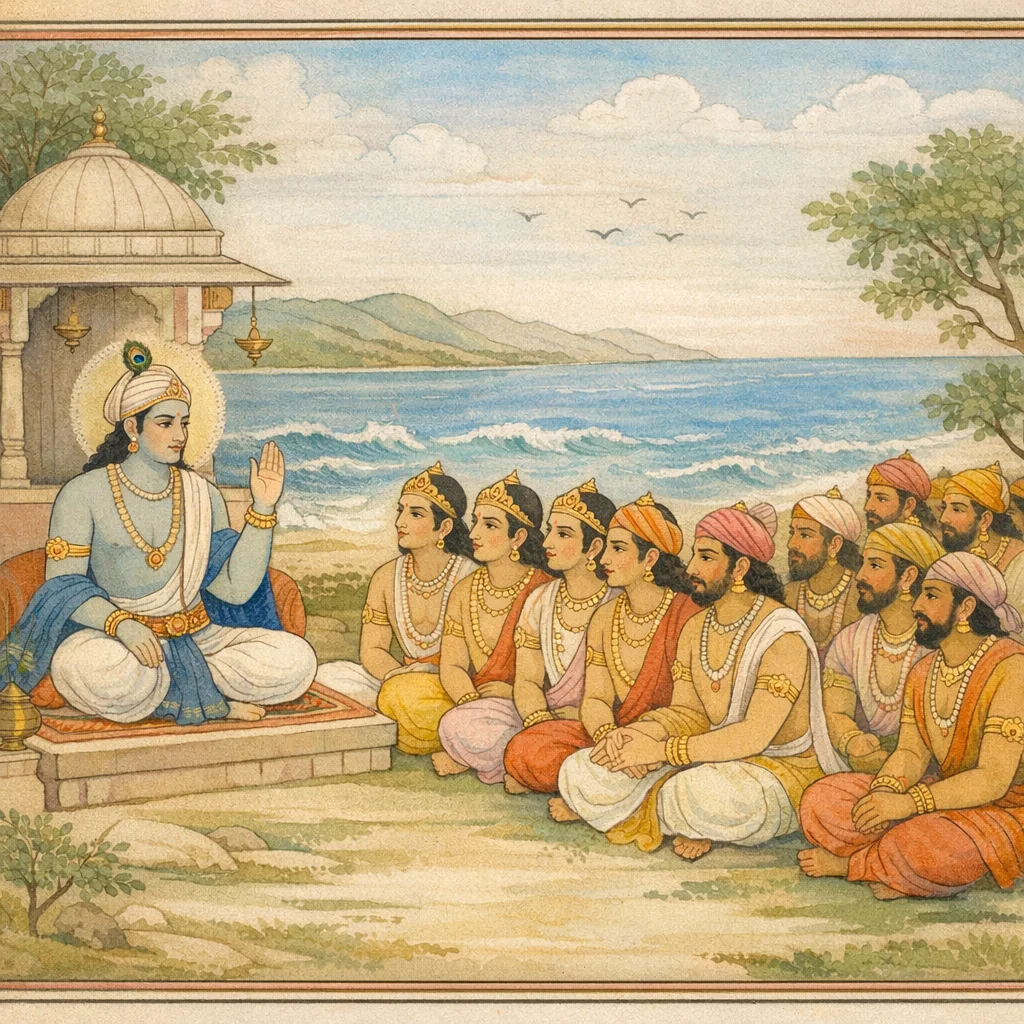
Janamejaya asks what the Vṛṣṇis and the Pandavas did and discussed upon reaching Prabhāsa. Vaiśaṃpāyana describes the arrival at the sacred ocean-side tīrtha and the Vṛṣṇis surrounding the Pandava heroes. Balarāma, portrayed with luminous imagery, addresses Kṛṣṇa and laments the ethical inversion whereby Yudhiṣṭhira—devoted to dharma—endures ascetic hardship while Duryodhana governs without apparent instability. He articulates a civic dilemma: when adharma seems to succeed, people become uncertain about proper action. He questions how respected elders and teachers could accept the Pandavas’ expulsion, intensifying the theme of institutional complicity. The speech highlights the martial capacities and past achievements of Bhīma, Sahadeva, and Arjuna, contrasting their former victories with their current austere condition, and extends sympathy to Draupadī’s suffering. The chapter closes with a cosmological-political anxiety: if dharma’s son (Yudhiṣṭhira) is defeated while Duryodhana prospers, even the earth itself appears to ‘sink’ under moral disorder.
Chapter Arc: प्रभास के समुद्र-समीप पुण्यतीर्थ में पाण्डवों का आगमन—जहाँ तीर्थ की शान्ति के भीतर ही राजवंशों की पुरानी आग और भविष्य की छाया दोनों धड़कती हैं। → वृष्णिवीर (यादव) पाण्डवों को घेरकर आदर-सत्कार करते हैं; पर सत्कार के बीच बलराम के वचन और स्मृतियाँ—परशुराम द्वारा सहस्रार्जुन-वध, प्रभास की पुराकथा, और पाण्डवों के वनवास-यथार्थ—सभा-पराजय, दुर्योधन का उत्कर्ष, और राज्य-हरण की टीस को उभार देती हैं। → बलराम का तीखा, धर्म-आधारित कथन—राज्य से वंचित, शस्त्रधारी, दीर्घभुज पाण्डवों का अन्याय सहना असह्य है; भीम के नाम-मात्र से शत्रु-सेना काँपती है—ऐसे वीरों का वन में भटकना पृथ्वी के लिए भी लज्जा है। → यादव-पाण्डव मैत्री की पुष्टि होती है; तीर्थ-यात्रा का बाह्य प्रयोजन भीतर के संकल्प में बदलता है—वनवास की अवधि पूरी कर न्यायोचित पुनर्प्राप्ति की दिशा में मन स्थिर होता है। → बलराम के वचनों से भविष्य का संकेत—क्या यह मिलन केवल सांत्वना है, या आने वाले महासंग्राम की भूमिका, जहाँ वृष्णि-पाण्डव संबंध निर्णायक बनेंगे?
Shlokas
Verse 1
हि >> आय न [हुक माप्टआ अप्ा८् - पाँच अप्सराओं के तीर्थ। भगवान् परशुरामद्वारा सहस्रार्जुनका वध प्रभास क्षेत्रमें पाण्डवोंकी यादवोंसे भेंट एकोनविशर्त्याधिकशततमो< ध्याय: प्रभासतीर्थमें बलरामजीके पाण्डवोंके प्रति सहानुभूतिसूचक दु:खपूर्ण उद्बार जनमेजय उवाच प्रभासतीर्थमासाद्य पाण्डवा वृष्णयस्तथा । किमकुर्वन् कथाश्रैषां कास्तत्रासंस्तपोधन,जनमेजयने पूछा--तपोधन! प्रभासतीर्थमें पहुँचकर पाण्डवों तथा वृष्णिवंशियोंने क्या किया? वहाँ उनमें कैसी बातचीत हुई? वे सब महात्मा यादव और पाण्डव सम्पूर्ण शास्त्रोंके विद्वान और एक-दूसरेका हित चाहनेवाले थे, (अतः उनमें क्या बात हुई? यह मैं जानना चाहता हूँ)
Janamejaya said: “O ascetic rich in austerity, when the Pāṇḍavas and the Vṛṣṇis arrived at the sacred ford of Prabhāsa, what did they do? What conversations took place there?”
Verse 2
ते हि सर्वे महात्मान: सर्वशास्त्रविशारदा: । वृष्णय: पाण्डवाश्रैव सुहृदश्च॒ परस्परम्,जनमेजयने पूछा--तपोधन! प्रभासतीर्थमें पहुँचकर पाण्डवों तथा वृष्णिवंशियोंने क्या किया? वहाँ उनमें कैसी बातचीत हुई? वे सब महात्मा यादव और पाण्डव सम्पूर्ण शास्त्रोंके विद्वान और एक-दूसरेका हित चाहनेवाले थे, (अतः उनमें क्या बात हुई? यह मैं जानना चाहता हूँ)
Janamejaya said: “For all of them—the Vṛṣṇis and the Pāṇḍavas—are great-souled, thoroughly learned in every branch of sacred and practical knowledge, and mutually devoted as well-wishers. After reaching the sacred ford of Prabhāsa, what did they do there, and what kind of conversation took place among them? This I wish to hear.”
Verse 3
वैशम्पायन उवाच प्रभासतीर्थ सम्प्राप्य पुण्यं तीर्थ महोदथे: । वृष्णय: पाण्डवान् वीरा: परिवार्योपतस्थिरे,वैशम्पायनजीने कहा--राजन्! प्रभासक्षेत्र समुद्र-तटवर्ती एक पुण्यमय तीर्थ है। वहाँ जाकर वृष्णिवंशी वीर पाण्डवोंको चारों ओरसे घेरकर बैठ गये
Vaiśampāyana said: Having reached Prabhāsa-tīrtha, a sacred ford on the shore of the great ocean, the heroic Vṛṣṇis surrounded the Pāṇḍavas on all sides and stood (attended) around them—signaling fellowship, protection, and respectful companionship at a holy place.
Verse 4
ततो गोक्षीरकुन्देन्दुमूणालरजतप्रभ: । वनमाली हली रामो बभाषे पुष्करेक्षणम्,तदनन्तर गोदुग्ध, कुन्दकुसुम, चन्द्रमा, मृणाल (कमलनाल) तथा चाँदीकी-सी कान्तिवाले वनमाला-विभूषित हलधर बलरामने कमलनयन भगवान् श्रीकृष्णसे कहा
Then Balarāma—bearing the plough, adorned with a forest-garland, and radiant with a lustre like cow’s milk, jasmine, the moon, lotus-fibre, and silver—addressed lotus-eyed Kṛṣṇa. The narration highlights Balarāma’s serene, auspicious presence as he prepares to speak, setting a tone of restraint and moral gravity before counsel or dialogue unfolds.
Verse 5
बलदेव उवाच न कृष्ण धर्मश्चरितो भवाय जन्तोरधर्मश्षु पराभवाय । युधिष्छिरो यत्र जटी महात्मा वनाश्रय: क्लिश्यति चीरवासा:,बलदेवजी बोले--श्रीकृष्ण! जान पड़ता है आचरणमें लाया हुआ धर्म भी प्राणियोंके अभ्युदयका कारण नहीं होता; और उनका किया हुआ अधर्म भी पराजयकी प्राप्ति करानेवाला नहीं होता, क्योंकि महात्मा युधिष्ठिरको (जो सदा धर्मका ही पालन करते हैं) जटाधारी होकर वल्कल वस्त्र पहने वनमें रहते हुए महान् क्लेश भोगना पड़ रहा है
Baladeva said: “O Kṛṣṇa, it seems that dharma, even when practiced, does not necessarily bring welfare to a person, nor does adharma necessarily lead to defeat. For here is the great-souled Yudhiṣṭhira—ever devoted to righteousness—wearing matted locks and bark garments, living in the forest and yet enduring severe hardship.”
Verse 6
दुर्योधनश्नापि महीं प्रशास्ति न चास्य भूमिर्विवरं ददाति । धर्मादधर्मश्षरितो वरीया- नितीव मन्येत नरोडल्पबुद्धि:,उधर, दुर्योधन (अधर्मपरायण होनेपर भी) पृथ्वीका शासन कर रहा है। उसके लिये यह पृथ्वी भी नहीं फटती है। इससे तो मन्द बुद्धिवाले मनुष्य यही समझेंगे कि धर्माचरणकी अपेक्षा अधर्मका आचरण ही श्रेष्ठ है। दुर्योधन निरन्तर उन्नति कर रहा है और युधिष्छिर छलसे राज्य छिन जानेके कारण दुःख उठा रहे हैं। (युधिष्ठिर और दुर्योधनके दृष्टान्तको सामने रखकर) मनुष्योंमें परस्पर महान् संदेह खड़ा हो गया है। प्रजा यह सोचने लगी है कि हमें क्या करना चाहिये--हमें धर्मका आश्रय लेना चाहिये या अधर्मका?
Baladeva said: “Duryodhana, though, rules the earth, and yet the ground does not split open for him. Seeing this, a man of little understanding might conclude that unrighteousness is better than righteousness. For Duryodhana keeps prospering, while Yudhiṣṭhira suffers after his kingdom was taken by deceit. With these examples before them, people are thrown into grave doubt—wondering whether they should take refuge in dharma or in adharma.”
Verse 7
दुर्योधने चापि विवर्धमाने युधिष्ठिरे चासुखमात्तराज्ये । किं त्वत्र कर्तव्यमिति प्रजाभि: शड़्का मिथ: संजनिता नराणाम्,उधर, दुर्योधन (अधर्मपरायण होनेपर भी) पृथ्वीका शासन कर रहा है। उसके लिये यह पृथ्वी भी नहीं फटती है। इससे तो मन्द बुद्धिवाले मनुष्य यही समझेंगे कि धर्माचरणकी अपेक्षा अधर्मका आचरण ही श्रेष्ठ है। दुर्योधन निरन्तर उन्नति कर रहा है और युधिष्छिर छलसे राज्य छिन जानेके कारण दुःख उठा रहे हैं। (युधिष्ठिर और दुर्योधनके दृष्टान्तको सामने रखकर) मनुष्योंमें परस्पर महान् संदेह खड़ा हो गया है। प्रजा यह सोचने लगी है कि हमें क्या करना चाहिये--हमें धर्मका आश्रय लेना चाहिये या अधर्मका?
Balarāma said: “When Duryodhana is seen to be prospering, and Yudhiṣṭhira—deprived of his kingdom—endures misery, people are thrown into doubt. ‘What, then, should be done here?’ the subjects ask one another, uncertain whether to take refuge in dharma or to follow adharma.”
Verse 8
अयं स धर्मप्रभवो नरेन्द्रो धर्मे धृत: सत्यधृति: प्रदाता । चलेद्धि राज्याच्च सुखाच्च पार्थो धर्मादपेतस्तु कथं विवर्धेत्,ये राजा युधिष्ठिर साक्षात् धर्मके पुत्र हैं। धर्म ही इनका आधार है। ये सदा सत्यका आश्रय लेते और दान देते रहते हैं। कुन्तीकुमार युधिष्ठिर राज्य और सुख छोड़ सकते हैं, (परंतु धर्मका त्याग नहीं कर सकते) भला, धर्मसे दूर होकर कोई कैसे अभ्युदयका भागी हो सकता है?
Baladeva said: “This king is born of Dharma itself; he is upheld by Dharma. Steadfast in truth, he is a giver of gifts. The son of Kuntī—Yudhiṣṭhira—may indeed abandon kingdom and pleasures, but he cannot abandon Dharma. For how could anyone who has turned away from Dharma ever truly prosper?”
Verse 9
कथं नु भीष्मश्न कृपश्च विप्रो द्रोणश्न॒ राजा च कुलस्य वृद्धः । प्रव्राज्य पार्थान् सुखमाप्रुवन्ति धिक् पापबुद्धीन् भरतप्रधानान्,पितामह भीष्म, ब्राह्मण कृपाचार्य, द्रोण तथा कुलके बड़े-बूढ़े राजा धृतराष्ट्र--ये कुन्तीके पुत्रोंको राज्यसे निकालकर कैसे सुख पाते हैं? भरतकुलके इन प्रधान व्यक्तियोंको धिक्कार है! क्योंकि इनकी बुद्धि पापमें लगी हुई है
Balarāma said: “How can Bhīṣma, the brāhmaṇa Kṛpa, Droṇa, and the aged king—elders of the Kuru line—find any happiness after driving the Pāṇḍavas (the sons of Pṛthā) out of their rightful place? Shame on these leading men of the Bharata race, whose minds have turned toward sin.”
Verse 10
कि नाम वक्ष्यत्यवनिप्रधान: पितृन् समागम्य परत्र पाप: । पुत्रेषु सम्यक् चरितं मयेति पुत्रानपापान् व्यपरोप्य राज्यात्,पापी राजा धृतराष्ट्र परलोकमें पितरोंसे मिलनेपर उनके सामने कैसे यह कह सकेगा कि “मैंने अपने और भाई पाण्डुके पुत्रोंके साथ न्याययुक्त बर्ताव किया है।” जबकि उसने इन निर्दोष पुत्रोंको राज्यसे वज्चित कर दिया है
Balarāma said: “When that sinful king meets the Fathers in the world beyond, what will he possibly say before them? How can he claim, ‘I acted rightly toward the sons,’ when he has stripped those blameless sons of their rightful kingdom?”
Verse 11
नासौ धिया सम्प्रति पश्यति सम कि नाम कृत्वाहमचक्षुरेवम् । जात: पृथिव्यामिति पार्थिवेषु प्रत्राज्य कौन्तेयमिति सम राज्यात्,वह अब भी अपने बुद्धिरूप नेत्रोंसे यह नहीं देख पाता कि कौन-सा पाप करनेके कारण मुझे इस प्रकार अन्धा होना पड़ा है और आगे कुन्तीपुत्र युधिष्ठिरको राज्यसे निकालकर जब मैं भूतलके राजाओंमें फिरसे जन्म लूँगा, तब मेरी दशा कैसी होगी?
Balarāma said: “Even now, with the eye of understanding, I cannot clearly discern what sin I committed that I should become blind in this way. And when, after driving Kuntī’s son (Yudhiṣṭhira) out of his kingdom, I am born again upon the earth among kings—what sort of condition will be mine then?”
Verse 12
नूनं समृद्धान् पितृलोक भूमौ चामीकराभान् क्षितिजान् प्रफुल्लान् | विचित्रवीर्यस्य सुतः सपुत्र: कृत्वा नृशंसं बत पश्यति सम,विचित्रवीर्यका पुत्र धृतराष्ट्र और उसके पुत्र दुर्योधन आदि यह क्रूर कर्म करके (स्वप्नमें) निश्चय ही पितृलोककी भूमिमें सुवर्णके समान चमकनेवाले समृद्धिशाली एवं पुष्पित वृक्षोंको देख रहे हैं.
Baladeva said: “Surely, after committing this cruel deed, the son of Vicitravīrya—together with his sons—now sees in a dream the flourishing, radiant trees of the ancestral world, gleaming like gold and standing upon the ground of Pitṛloka.”
Verse 13
व्यूढोत्तरांसान् पृथुलोहिताक्षान् नेमान् सम पृच्छन् स शूणोति नूनम् । प्रास्थापयद् यत् सवनं सशड्को युधिष्ठिरं सानुजमात्तशस्त्रम्,धृतराष्ट्र सुदृढ़ कंधे तथा विशाल एवं लाल नेत्रोंवाले इन भीष्म आदिसे कोई बात पूछता तो है, परंतु निश्चय ही उनकी बात सुनकर मानता नहीं है, तभी तो भाइयोंसहित शस्त्रधारी युधिष्ठिरके प्रति भी मनमें शंका रखकर इन्हें उसने वनमें भेज दिया है
Baladeva said: “These men—broad-shouldered and large, reddish-eyed—seem to ask questions as if seeking counsel, yet surely they do not truly listen or accept what they hear. That is why, harboring suspicion even toward Yudhiṣṭhira, who was armed and accompanied by his younger brothers, he sent him away to the forest.”
Verse 14
यो<यं परेषां पृतनां समृद्धां निरायुधो दीर्घभुजो निहन्यात् | श्रुत्वैव शब्दं हि वृकोदरस्य मुछ्चन्ति सैन्यानि शकृत् समूत्रम्,(भला! वे कौरव इन पाण्डवोंका सामना कैसे कर सकते हैं?) ये बड़ी-बड़ी भुजाओंवाले भीमसेन बिना अस्त्र-शस्त्रोंके ही शत्रुओंकी शक्तिशाली सेनाका संहार कर सकते हैं। भीमका तो सिंहनाद सुनकर ही विरोधी दलके सैनिक मल-मूत्र करने लगते हैं
Baladeva said: “This long-armed Bhīma—though unarmed—could still cut down the enemy’s well-equipped and flourishing host. Indeed, merely hearing the roar of Vṛkodara, the opposing soldiers lose control of themselves, voiding stool and urine. How, then, could the Kauravas hope to stand against the Pāṇḍavas?”
Verse 15
स क्षुत्पिपासाध्वकृशस्तरस्वी समेत्य नानायुधबाणपाणि: । वने स्मरन् वासमिमं सुघोरं शेषं न कुर्यादिति निश्चितं मे,वे ही वेगशाली भीम इन दिनों भूख-प्यास और रास्ता चलनेकी थकावटसे दुर्बल हो गये हैं। इस भयंकर वनवासका स्मरण करते हुए जब ये हाथोंमें अनेक प्रकारके अस्त्र-शस्त्र एवं धनुष-बाण लिये शत्रुओंपर आक्रमण करेंगे, उस समय किसीको भी जीता न छोड़ेंगे--यह मेरा निश्चय है
“Though weakened by hunger, thirst, and the exhaustion of the road, that mighty and impetuous Bhīma—once he comes upon the foe with many kinds of weapons and arrows in hand—will remember this dreadful life of exile in the forest and, in his wrath, will be resolved to leave no enemy alive. This, to me, is certain.”
Verse 16
न हास्य वीर्येण बलेन कश्रित् सम: पृथिव्यामपि विद्यतेडन्य: । स शीतवातातपकर्शिताड्रो न शेषमाजावसुद्वत्सु कुर्यात्,इनके समान पराक्रमी और बलवान् वीर इस पृथ्वीपर कोई नहीं है। इस समय सर्दी- गरमी और वायुके कष्टसे यद्यपि इनका शरीर दुबला हो गया है तो भी समरमें शत्रुओंमेंसे किसीको भी ये शेष नहीं रहने देंगे
Balarāma said: “No one else on this earth is equal to him in valor and strength. Though his body has been made lean by the hardships of cold, wind, and heat, in battle he will leave none of his foes remaining.”
Verse 17
प्राच्यां नृूपानेकरथेन जित्वा वृकोदर: सानुचरान् रणेषु । स्वस्त्यागमद् योडतिरथस्तरस्वी सो<यं वने क्लिश्यति चीरवासा:,जो पूर्वदिशामें (दिग्विजयकी यात्राके समय) केवल एक रथ लेकर युद्धमें बहुत-से राजाओंको सेवकोंसहित परास्त करके सकुशल लौट आये थे, वे ही अतिरथी और वेगशाली वीर वृकोदर आज वनमें वल्कल वस्त्र पहनकर कष्ट भोग रहे हैं। जिसने समुद्र- तटपर सामना करनेके लिये आये हुए दक्षिण दिशाके सम्पूर्ण राजाओंपर विजय पायी थी, उसी वेगवान् वीर इस सहदेवको देखो--यह आज तपस्वीकी-सी वेषभूषा धारण किये हुए दुःख पा रहा है
Baladeva said: “In the eastern quarter, Bhīma (Vṛkodara) defeated many kings—along with their attendants—in battles, and returned safely, though he fought with only a single chariot. That same mighty ‘atiratha’, swift and formidable, now suffers in the forest, clothed in bark-garments. The verse laments the reversal of fortune: a hero who once upheld royal duty through conquest is now compelled by circumstance to endure hardship, highlighting the tension between worldly power and the demands of dharma under exile.”
Verse 18
यः सिन्धुकूले व्यजयन्नूदेवान् समागतान् दाक्षिणात्यान् महीपान् | तं पश्यतेमं सहदेवमद्य तरस्विनं तापसवेषरूपम्,जो पूर्वदिशामें (दिग्विजयकी यात्राके समय) केवल एक रथ लेकर युद्धमें बहुत-से राजाओंको सेवकोंसहित परास्त करके सकुशल लौट आये थे, वे ही अतिरथी और वेगशाली वीर वृकोदर आज वनमें वल्कल वस्त्र पहनकर कष्ट भोग रहे हैं। जिसने समुद्र- तटपर सामना करनेके लिये आये हुए दक्षिण दिशाके सम्पूर्ण राजाओंपर विजय पायी थी, उसी वेगवान् वीर इस सहदेवको देखो--यह आज तपस्वीकी-सी वेषभूषा धारण किये हुए दुःख पा रहा है
Baladeva said: “He who, on the bank of the Sindhu, defeated the assembled kings of the southern quarter who had come forth to oppose him—look at that very Sahadeva today: swift in prowess, yet wearing the guise of an ascetic. Such is the reversal of fortune that even a conqueror of kings now endures hardship in the forest.”
Verse 19
यः पार्थिवानेकरथेन जिग्ये दिशं प्रतीचीं प्रति युद्धशौण्ड: । सो<यं वने मूलफलेन जीव- उ्जटी चरत्यद्य मलाचिताड्र:,जिस युद्धकुशल नकुलने एकमात्र रथकी सहायतासे पश्चिम दिशाके समस्त भूपालोंको जीत लिया था, वही आज वनमें फल-मूलसे जीवन-निर्वाह करता हुआ सिरपर जटा धारण किये मलिन शरीरसे विचर रहा है
Baladeva said: “He who, a master of battle, once conquered the kings of the western quarter with but a single chariot—he now wanders in the forest, living on roots and fruits, wearing matted locks, his body begrimed. Such is the reversal that exile brings even upon the mighty.”
Verse 20
सत्रे समृद्धेडतिरथस्य राज्ञो वेदीतलादुत्पतिता सुता या । सेयं वने वासमिमं सुदुःखं कथं सहत्यद्य सती सुखाहा,जो अतिरथी राजा द्रुपदके समृद्धिशाली यज्ञमें वेदीसे प्रकट हुई थी, वही यह सुख भोगनेके योग्य सती-साध्वी द्रौपदी वनवासके इस महान् दुःखको कैसे सहन करती है?
Verse 21
त्रिवर्गमुख्यस्थ समीरणस्य देवेश्वरस्याप्यथवाश्रिनोश्र । एषां सुराणां तनया: कथं नु वने5चरन् हास्तसुखा: सुखाहा:,धर्म, वायु, इन्द्र और अश्विनीकुमारों-जैसे देवताओंके ये पुत्र सुख भोगनेके योग्य होते हुए भी आज सब प्रकारके सुखोंसे वज्चित हो वनमें कैसे विचरण कर रहे हैं?
Verse 22
जिते हि धर्मस्य सुते सभार्ये सभ्रातृके सानुचरे निरस्ते । दुर्योधने चापि विवर्धमाने कथं न सीदत्यवनि: सशैला,पत्नीसहित धर्मराज युधिष्ठिर जूएमें हार गये और भाइयों एवं सेवकोंसहित राज्यसे बाहर कर दिये गये, उधर दुर्योधन (अनीतिपरायण होकर भी दिनोदिन) बढ़ रहा है, ऐसी दशामें पर्वतोंसहित यह पृथ्वी क्यों नहीं फट जाती?
When Dharma’s son has been defeated—along with his wife, his brothers, and his attendants—and driven out, while Duryodhana, for all his unrighteousness, continues to prosper and grow, how does the earth, with all her mountains, not sink or split in shame? This is a lament that the moral order seems overturned: the righteous are cast down and the unjust rise.
Verse 118
इस प्रकार श्रीमह्याभारत वनपर्वके अन्तर्गत तीर्थयात्रापर्वमें लोमशतीर्थयात्राके प्रसंगमें प्रभासक्षेत्रके भीतर यादव-पाण्डव-समायगमविषयक एक सौ अठारहवाँ अध्याय पूरा हुआ
Thus ends the one hundred and eighteenth chapter of the Mahābhārata’s Vana Parva, within the Tīrthayātrā Parva, in the context of Lomasha’s pilgrimage narrative—describing the meeting of the Yādavas and the Pāṇḍavas in the sacred region of Prabhāsa. The closing formula signals a completed unit of narration, framing pilgrimage as a moral and spiritual setting where alliances, kinship, and dharma-oriented reflection are foregrounded.
Verse 119
इति श्रीमहाभारते वनपर्वणि तीर्थयात्रापर्वणि लोमशतीर्थयात्रायां बलरामवाक्ये एकोनविंशत्यधिकशततमो<ध्याय:
Thus, in the Śrī Mahābhārata, within the Vana Parva—specifically the section on the pilgrimage to sacred fords (Tīrthayātrā Parva), in the account of Lomasa’s pilgrimage—ends the one-hundred-and-nineteenth chapter, containing the words of Balarāma.
Frequently Asked Questions
The dilemma is interpretive and civic: when a dharmic ruler suffers exile and an ethically compromised ruler prospers, communities struggle to determine what conduct is truly ‘effective’ or ‘right,’ risking confusion between outcome and righteousness.
The chapter underscores that dharma is not validated solely by immediate political outcomes; ethical legitimacy persists beyond short-term success, and public order depends on recognizing the difference between power and moral authority.
No explicit phalaśruti is stated here; the meta-level function is indirect—using lament and critique to position exile as a test of dharma and to sharpen the epic’s evaluation of legitimacy, complicity, and moral causality.