Adhyaya 4
Svargārohaṇa-parva, Adhyāya 4 — Yudhiṣṭhira’s Vision of the Celestial Assembly (Recognition and Explanation)
Upa-parva: Svargārohaṇa (Heaven-Ascent Episode) — Recognition of the Transfigured Kin
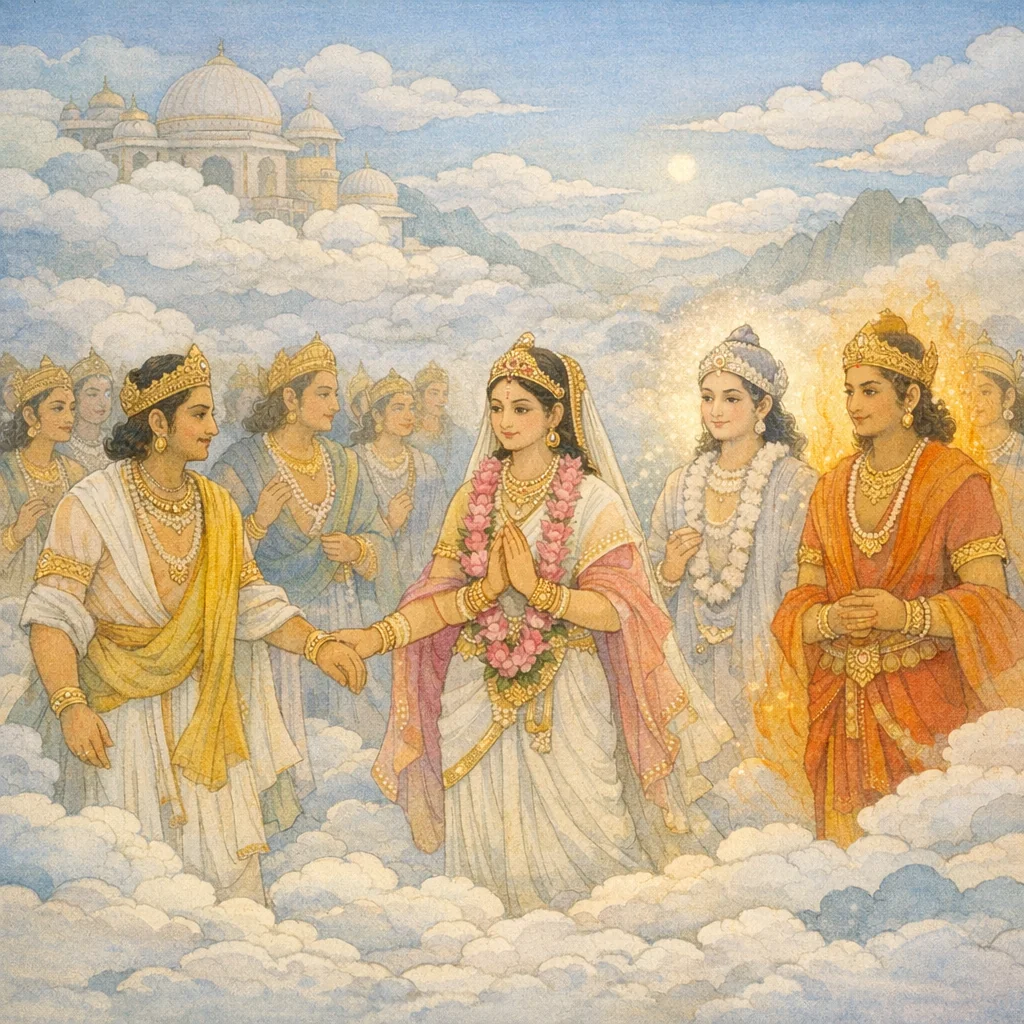
Vaiśaṃpāyana reports that Yudhiṣṭhira proceeds, honored by devas with ṛṣis and Maruts, to the place where eminent Kurus are present (1). He beholds Govinda (Kṛṣṇa) in a brāhma-like form, recognizable by resemblance to the known deity (2), radiant and attended by personified divine weapons such as the cakra; Arjuna (Phalguna) is depicted as reverentially attending him (3). In other regions Yudhiṣṭhira sees Karṇa, foremost among weapon-bearers, associated with the twelve Ādityas (4); Bhīmasena encircled by the Marut hosts (5); and Nakula and Sahadeva shining in the station of the Aśvins (6). He also sees Draupadī adorned with lotus-garlands, standing in a solar brilliance (7). When Yudhiṣṭhira wishes to question her, Indra explains that she is Śrī in Draupadī-form, who entered human life for his sake, described as non-womb-born and auspicious (8–9), and further notes her creation by Śūlapāṇi (10). Indra identifies Draupadī’s five sons as gandharvas of fire-like splendor (11), points out Dhṛtarāṣṭra as a gandharva-king and an elder kin (12), and clarifies Karṇa as Yudhiṣṭhira’s elder brother, the Sun’s son (13). He then gestures to further assemblies: Vṛṣṇi–Andhaka heroes (including Sātyaki) among divine groups (14), Abhimanyu with Soma (15), Pāṇḍu with Kuntī and Mādrī arriving by vimāna (16), Bhīṣma with the Vasus and Droṇa near Bṛhaspati (17), and other kings and warriors moving with gandharvas, yakṣas, and puṇyajanas; some attain guhyaka destinies through meritorious speech, thought, and action (18–19).
Chapter Arc: देव, ऋषि और मरुद्गणों के मुख से अपनी स्तुति सुनते हुए युधिष्ठिर दिव्य लोक में आगे बढ़ते हैं—जहाँ पृथ्वी के सारे शोक का उत्तर स्वर्ग के दृश्य देने वाले हैं। → स्वर्ग के तेज से दीप्त, दिव्यास्त्रों से युक्त और देवोपम रूपों में अपने प्रियजनों को क्रमशः देखते हुए भी युधिष्ठिर के भीतर प्रश्न उठता है—क्या यह वही सत्य है जिसे उन्होंने पृथ्वी पर दुःख, अपमान और युद्ध के बीच जिया था? → युधिष्ठिर दिव्य रूपों में अपने बंधुओं और सहचरों का साक्षात् दर्शन करते हैं—भीम, द्रौपदी, सात्यकि आदि वृष्णि-अन्धक वीर, चन्द्र-सम द्युति वाले अभिमन्यु, और अंततः अग्नितुल्य तेज से प्रकाशित बड़े भाई कर्ण का भी—जिससे उनके मन में बंधुत्व, न्याय और नियति का चरम बोध एक साथ उमड़ पड़ता है। → स्वर्ग में पुण्यकर्मों के फलस्वरूप प्राप्त विविध गतियों (देव-गति, गन्धर्व-यक्ष-पुण्यजन संगति, गुह्यक-गति आदि) का संकेत मिलता है; युधिष्ठिर को यह प्रत्यक्ष होने लगता है कि पृथ्वी पर जिन संबंधों को कलंक, भ्रम या शाप ने ढका था, वे यहाँ अपने सत्य रूप में प्रकाशित हैं। → युधिष्ठिर के सामने स्वर्गीय व्यवस्था का यह उजला चित्र उनके शेष संशयों को पूरी तरह शांत करेगा या किसी नए नैतिक प्रश्न को जन्म देगा—यह आगे के प्रसंग पर टिकता है।
Shlokas
Verse 1
ऑपन--माज बछ। अकाल चतुथों5 ध्याय: युधिष्ठटिरका दिव्यलोकमें श्रीकृष्ण, अर्जुन आदिका दर्शन करना वैशम्पायन उवाच ततो युधिष्छिरो राजा देवै: सर्षिमरुद्गणै: । स्तूयमानो ययौ तत्र यत्र ते कुरुपुड्रवा:
Vaiśampāyana said: Then King Yudhiṣṭhira, praised by the gods along with the seers and the hosts of the Maruts, proceeded to that place where those foremost of the Kurus were. The scene underscores the moral culmination of Yudhiṣṭhira’s life: steadfast dharma is honored not merely by humans but by the divine order itself, and the righteous are led toward reunion with the noble ones who have gone before.
Verse 2
वैशम्पायनजी कहते हैं--जनमेजय! तदनन्तर देवताओं, ऋषियों और मरुद्गणोंके मुँहसे अपनी प्रशंसा सुनते हुए राजा युधिष्ठिर क्रमश: उस स्थानपर जा पहुँचे जहाँ वे कुरुश्रेष्ठ भीमसेन और अर्जुन आदि विराजमान थे ।। ददर्श तत्र गोविन्द ब्राह्ेण वपुषान्वितम् तेनैव दृष्टपूर्वेण सादृश्येनिव सूचितम्,वहाँ जाकर उन्होंने देखा कि भगवान् श्रीकृष्ण अपने ब्राह्मविग्रहसे सम्पन्न हैं। पहलेके देखे गये सादृश्यसे ही वे पहचाने जाते हैं
Vaiśampāyana said: “O Janamejaya, thereafter King Yudhiṣṭhira—hearing his own praises spoken by the gods, the seers, and the hosts of the Maruts—advanced step by step to the place where the foremost Kurus, Bhīmasena, Arjuna, and the others were seated in splendor. There he beheld Govinda (Śrī Kṛṣṇa), endowed with a brāhmaṇa-form; and by the resemblance to what he had seen before, he recognized Him.”
Verse 3
इस प्रकार श्रीमह्याभारत स्वर्गायेहरणपर्वमें युधिष्ठिरका देहत्यागविषयक तीसरा अध्याय पूरा हुआ,दीप्यमानं स्ववपुषा दिव्यैरस्त्रैरुपस्थितम् । चक्रप्रभृतिभिषघरिर्दिव्यै: पुरुषविग्रहै: उनके श्रीविग्रहसे अद्भुत दीप्ति छिटक रही है। चक्र आदि दिव्य एवं भयंकर अस्त्र- शस्त्र दिव्य पुरुषविग्रह धारण करके उनकी सेवामें उपस्थित हैं
Vaiśampāyana said: He shone with the radiance of his own celestial form. Around him stood the divine weapons—terrible in power—beginning with the discus, each assuming a personified shape, as if attending upon him in service. The scene underscores that true sovereignty is grounded not in violence but in dharma: even instruments of war become restrained, ordered, and reverential when aligned with righteous authority and divine purpose.
Verse 4
उपास्यमानं वीरेण फाल्गुनेन सुवर्चसा । तथास्वरूपं कौन्तेयो ददर्श मधुसूदनम,अत्यन्त तेजस्वी वीरवर अर्जुन भगवानकी आराधनामें लगे हुए हैं। कुन्तीकुमार युधिष्ठिरने भगवान् मधुसूदनका उसी स्वरूपमें दर्शन किया इति श्रीमहाभारते स्वर्गारोहणपर्वणि द्रौपद्यादिस्वस्वस्थानगमने चतुर्थो5ध्याय: ।। ४ || इस प्रकार श्रीमहाभारत स्वगरिहणपर्वमें द्रौपदी आदिका अपने-अपने स्थानमें गमनविषयक चौथा अध्याय पूरा हुआ
Vaiśampāyana said: While the radiant hero Phālguna (Arjuna) was engaged in worship, the son of Kuntī (Yudhiṣṭhira) beheld Madhusūdana (Kṛṣṇa) in that very form. The scene underscores that steadfast devotion and purity of purpose culminate in direct vision of the divine, affirming the ethical arc of the Pāṇḍavas’ journey from suffering and renunciation toward spiritual fulfillment.
Verse 5
तावुभौ पुरुषव्याप्रौ समुद्री क्ष्य युधिष्ठिरम् । यथावत् प्रतिपेदाते पूजया देवपूजिती,पुरुषसिंह अर्जुन और श्रीकृष्ण देवताओंद्वारा पूजित थे। इन दोनोंने युधिष्ठिरको उपस्थित देख उनका यथावत् सम्मान किया
Vaiśampāyana said: Those two tiger-like heroes, Arjuna and Śrī Kṛṣṇa—both honored even by the gods—seeing Yudhiṣṭhira present, approached him in the proper manner and paid him due respect. The scene underscores the ethic of honoring rightful authority and dharma through correct conduct, even among the greatest of the great.
Verse 6
अपरस्मिन्नथोद्देशे कर्ण शस्त्रभृतां वरम् द्वादशादित्यसहितं ददर्श कुरुनन्दन:,इसके बाद दूसरी ओर दृष्टि डालनेपर कुरुनन्दन युधिष्ठिरने शस्त्रधारियोंमें श्रेष्ठ कर्णको देखा जो बारह आदित्योंके साथ (तेजोमय स्वरूप धारण किये) विराजमान थे
Vaiśampāyana said: Then, looking toward another region, Kuru’s delight Yudhiṣṭhira beheld Karṇa—foremost among weapon-bearers—radiant and enthroned in splendor, accompanied by the twelve Ādityas. The vision reframes Karṇa not merely as a fallen rival of war, but as one restored to a cosmic order, suggesting that valor, lineage, and one’s allotted destiny can be acknowledged beyond the battlefield’s moral injuries.
Verse 7
अथापरमस्मिन्नुद्देशे मरुद्गणवृतं विभुम् । भीमसेनमथापश्यत् तेनैव वपुषान्वितम्,फिर दूसरे स्थानमें उन्होंने दिव्यरूपधारी भीमसेनको देखा जो पहलेहीके समान शरीर धारण किये मूर्तिमान् वायुदेवताके पास बैठे थे। उन्हें सब ओरसे मरुद्गणोंने घेर रखा था। वे उत्तम कान्तिसे सुशोभित एवं उत्कृष्ट सिद्धिको प्राप्त थे
Then, in another region of that celestial realm, he saw the mighty Bhīmasena, surrounded by the hosts of the Maruts, still bearing the same recognizable bodily form as before. Radiant with excellent splendor and endowed with supreme attainment, Bhīma appeared in the company of the Wind-god’s retinue—signaling the fruit of steadfast strength and righteous conduct carried through to its final reward.
Verse 8
वायोर्मूर्तिमतः पाश्वें दिव्यमूर्तिसमन्वितम् । श्रिया परमया युक्त सिद्धिं परमिकां गतम्,फिर दूसरे स्थानमें उन्होंने दिव्यरूपधारी भीमसेनको देखा जो पहलेहीके समान शरीर धारण किये मूर्तिमान् वायुदेवताके पास बैठे थे। उन्हें सब ओरसे मरुद्गणोंने घेर रखा था। वे उत्तम कान्तिसे सुशोभित एवं उत्कृष्ट सिद्धिको प्राप्त थे
Vaiśampāyana said: Then they beheld Bhīmasena, endowed with a divine form, seated beside Vāyu who was present in embodied form. Radiant with supreme splendor and having attained the highest perfection, he appeared in his exalted state—signifying the fruition of his life’s strength and steadfastness when aligned with dharma.
Verse 9
अश्रिनोस्तु तथा स्थाने दीप्यमानौ स्वतेजसा । नकुलं सहदेवं च ददर्श कुरुनन्दन:,कुरुनन्दन युधिष्ठिरने नकुल और सहदेवको अभश्विनीकुमारोंके स्थानमें विराजमान देखा जो अपने तेजसे उद्दीप्त हो रहे थे
Vaiśampāyana said: Then, in the station belonging to the Aśvinīkumāras, the Kuru prince (Yudhiṣṭhira) beheld Nakula and Sahadeva, radiant there, blazing with their own innate splendor. The scene affirms that each brother attains the divine source aligned with his origin and virtues, suggesting a moral order in which one’s true nature and rightful merit are ultimately recognized.
Verse 10
तथा ददर्श पाज्चालीं कमलोत्पलमालिनीम् | वपुषा स्वर्गमाक्रम्य तिष्ठन्तीमर्कवर्चसम्,तदनन्तर उन्होंने कमलोंकी मालासे अलंकृत पाज्चालराजकुमारी द्रौपदीको देखा जो अपने तेजस्वी स्वरूपसे स्वर्गलोकको अभिभूत करके विराज रही थीं। उनकी दिव्य कान्ति सूर्यदेवकी भाँति प्रकाशित हो रही थी
Then he beheld Draupadī, the Pāñcāla princess, adorned with garlands of lotuses and water-lilies. By the radiance of her own divine form she seemed to pervade and outshine the very realm of heaven, standing there with a splendor like that of the Sun—signaling the fruition of her steadfastness and the moral order that honors endurance and integrity after suffering.
Verse 11
अखिल सहसा राजा प्रष्टमैच्छद् युधिष्ठिर: । ततो<स्य भगवानिन्द्र: कथयामास देवराट्,राजा युधिष्ठिरने इन सबके विषयमें सहसा प्रश्न करनेका विचार किया। तब देवराज भगवान् इन्द्र स्वयं ही उन्हें सबका परिचय देने लगे--
Yudhiṣṭhira, the king, suddenly wished to ask about everything in full. Then the blessed Indra, the sovereign of the gods, began to explain it all to him—introducing and clarifying each matter before the questions were even put, as a compassionate guide to one seeking moral understanding.
Verse 12
श्रीरेषा द्रौपदीरूपा त्वदर्थे मानुषं गता । अयोनिजा लोककान्ता पुण्यगन्धा युधिछ्टिर
Vaiśampāyana said: “This very Śrī (Fortune/Prosperity), taking the form of Draupadī, came into human life for your sake, O Yudhiṣṭhira. Unborn from a womb, beloved of the worlds, and fragrant with sanctity, she was (indeed) a manifestation of auspicious power.”
Verse 13
'युधिष्ठिर! ये जो लोककमनीय विग्रहसे युक्त पवित्र गन्धवाली देवी दिखायी दे रही हैं, साक्षात् भगवती लक्ष्मी हैं। ये ही तुम्हारे लिये मनुष्यलोकमें जाकर अयोनिसम्भूता द्रौपदीके रूपमें अवतीर्ण हुई थीं ।। रत्यर्थ भवतां होषा निर्मिता शूलपाणिना । द्रुपदस्य कुले जाता भवद्धिश्वोपजीविता
Vaiśampāyana said: “O Yudhiṣṭhira, the radiant goddess you see—of a form delightful to the worlds and fragrant with purity—is none other than Bhagavatī Lakṣmī herself. For your sake she descended to the human realm, appearing as Draupadī, born not from a womb. Indeed, for your companionship she was fashioned by Śiva, and, taking birth in Drupada’s lineage, she became the very support of your welfare.”
Verse 14
“स्वयं भगवान् शंकरने तुमलोगोंकी प्रसन्नताके लिये इन्हें प्रकट किया था और ये ही द्रपदके कुलमें जन्म धारणकर तुम सब भाइयोंके द्वारा अनुगृहीत हुई थीं ।। एते पठ्च महाभागा गन्धर्वा: पावकप्रभा: । द्रौपद्यास्तनया राजन् युष्माकममितौजस:,“राजन! ये जो अग्निके समान तेजस्वी और महान् सौभाग्यशाली पाँच गन्धर्व दिखायी देते हैं, ये ही तुमलोगोंके वीर्यसे उत्पन्न हुए द्रौधदीके अनन्त बलशाली पुत्र हुए थे
Vaiśaṃpāyana said: “O King, these five radiant and greatly fortunate Gandharvas, blazing like fire, are in truth the mighty sons of Draupadī—born from your own heroic potency, endowed with immeasurable strength.”
Verse 15
पश्य गन्धर्वराजानं धृतराष्ट्र मनीषिणम् । एनं च त्वं विजानीहि भ्रातरं पूर्वजं पितु:,“इन मनीषी गन्धर्वराज धृतराष्ट्रका दर्शन करो और इन्हींको अपने पिताका बड़ा भाई समझो
Vaiśampāyana said: “Behold this wise king of the Gandharvas, O Dhṛtarāṣṭra. Recognize him as your father’s elder brother.”
Verse 16
अयं ते पूर्वजो भ्राता कौन्तेय: पावकद्युति: । सूतपुत्राग्रज: श्रेष्ठो राधेय इति विश्रुत:
Vaiśampāyana said: “This is your elder brother, O son of Kuntī—radiant like fire. He is famed as Rādheya, the foremost among the sons of a charioteer and the eldest of them.”
Verse 17
साध्यानामथ देवानां विश्वेषां मरुतामपि,'राजेन्द्र! उधर वृष्णि और अन्धककुलके सात्यकि आदि वीर महारथियों और महान् बलशाली भोजोंको देखो। वे साध्यों, विश्वेदेवों तथा मरुदगणोंमें विराजमान हैं
Vaiśampāyana said: “O best of kings, look there—upon the heroic great chariot-warriors such as Sātyaki, belonging to the Vṛṣṇi and Andhaka clans, and upon the mighty Bhojas. They are resplendent among the Sādhyas, the Viśvedevas, and the hosts of the Maruts.”
Verse 18
गणेषु पश्य राजेन्द्र वृष्ण्यन्धकमहारथान् । सात्यकिप्रमुखान् वीरान् भोजांश्वैव महाबलान्,'राजेन्द्र! उधर वृष्णि और अन्धककुलके सात्यकि आदि वीर महारथियों और महान् बलशाली भोजोंको देखो। वे साध्यों, विश्वेदेवों तथा मरुदगणोंमें विराजमान हैं
Verse 19
सोमेन सहितं पश्य सौभद्रमपराजितम् । अभिमन्युं महेष्वासं निशाकरसमद्युतिम्,“इधर किसीसे परास्त न होनेवाले महाधनुर्थर सुभद्राकुमार अभिमन्युकी ओर दृष्टि डालो। यह चन्द्रमाके साथ इन्हींके समान कान्ति धारण किये बैठा है
Vaiśaṃpāyana said: “Behold Abhimanyu, the son of Subhadrā—unconquered, a great archer—seated in the company of Soma (the Moon), shining with a radiance equal to the moon itself.”
Verse 20
एष पाण्डु्महेष्वास: कुन्त्या माद्रया च संगत: । विमानेन सदाभ्येति पिता तव ममान्तिकम्,'ये महाधनुर्धर राजा पाण्डु हैं जो कुन्ती और माद्री दोनोंके साथ हैं। ये तुम्हारे पिता पाण्डु विमानद्वारा सदा मेरे पास आया करते हैं
Vaiśaṃpāyana said: “This is Pāṇḍu, the great archer, accompanied by Kuntī and Mādrī. Your father Pāṇḍu comes to me here again and again, arriving in a celestial chariot.”
Verse 21
वसुभि: सहित पश्य भीष्मं शान्तनवं नृपम् । द्रोणं बृहस्पते: पार्श्वे गुरुमेने निशामय,'शान्तनुनन्दन राजा भीष्मका दर्शन करो, ये वसुओंके साथ विराज रहे हैं। द्रोणाचार्य बृहस्पतिके साथ हैं। अपने इन गुरुदेवको अच्छी तरह देख लो
Vaiśaṃpāyana said: “Behold King Bhīṣma, the son of Śāntanu, seated in glory together with the Vasus. And see Droṇa standing beside Bṛhaspati—look well upon that revered teacher.” In this vision of the afterlife, the epic underscores that those who upheld their ordained roles and disciplines are shown in their fitting celestial associations, inviting the listener to reflect on duty, reverence for teachers, and the moral weight of one’s life-work.
Verse 22
एते चान्ये महीपाला योधास्तव च पाण्डव । गन्धर्वसहिता यान्ति यक्षपुण्यजनैस्तथा,'पाण्डुनन्दन! ये तुम्हारे पक्षके दूसरे भूपाल योद्धा गन्धर्वों, यक्षों तथा पुण्यजनोंके साथ जा रहे हैं
Vaiśampāyana said: “And these other kings and warriors of your side as well, O Pāṇḍava, are proceeding onward in the company of the Gandharvas, and likewise with the Yakṣas and the Puṇyajanas.” The verse underscores that the fallen or departed allies are being gathered into ordered celestial communities, suggesting a moral recompense and a divinely governed transition rather than mere annihilation in war.
Verse 23
गुहाकानां गतिं चापि केचित् प्राप्ता नराधिपा: । त्यक्त्वा देहं जितः स्वर्ग: पुण्यवाग्बुद्धिकर्मभि:,किन्हीं-किन्हीं राजाओंको गुह्म॒कोंकी गति प्राप्त हुई है। ये सब युद्धमें शरीर त्यागकर अपनी पवित्र वाणी, बुद्धि और करमोके द्वारा स्वर्गलोकपर अधिकार प्राप्त कर चुके हैं'
Vaiśampāyana said: Some kings attained even the destiny associated with the Guhyakas. Having laid down their bodies in battle, they won the heavenly world through the purity of their speech, their understanding, and their deeds—suggesting that moral and disciplined conduct, not mere power, secures exalted posthumous states.
Verse 163
“ये रहे तुम्हारे बड़े भाई कुन्तीकुमार कर्ण जो अग्नितुल्य तेजसे प्रकाशित हो रहे हैं। ये ही सूतपुत्रोंके श्रेष्ठ अग्रज थे और ये ही राधापुत्रके नामसे विख्यात हुए थे ।। आदित्यसहितो याति पश्यैनं पुरुषर्षभम् । “इन पुरुषप्रवर कर्णका दर्शन करो, ये आदित्योंके साथ जा रहे हैं
Vaiśampāyana said: “Behold your elder brother Karṇa, Kuntī’s son, blazing with fire-like splendour. He was the foremost elder among the sons of the charioteer, and he was famed by the name ‘Rādhā’s son’. See that bull among men—he goes in the company of the Ādityas. Look upon that best of men, Karṇa, as he proceeds with the solar deities.”
Frequently Asked Questions
The dilemma is how to correctly interpret transfigured appearances in heaven—why familiar persons are seen in unexpected forms and grouped with specific divine collectives—requiring authoritative explanation rather than inference from earthly narrative alone.
The chapter teaches that epic identity is multi-layered (human role and cosmic affiliation) and that karmic outcomes operate within a structured celestial taxonomy; therefore, ethical evaluation must account for intention, function, and divine order, not only visible historical outcomes.
No explicit phalaśruti formula appears in this unit; its meta-function is inferential—positioning Indra’s clarifications as a closing interpretive key for the epic’s moral accounting and the reader’s understanding of posthumous destinies.