Adhyaya 9
स्त्रीपर्व — नवमोऽध्यायः | Dhṛtarāṣṭra summons the Kuru women; the city departs in collective lamentation
Upa-parva: Strī-parva: Nagarānirgama and Kuru-strīṇāṃ śokaprakāśa (Departure from the city and public lamentation)
Janamejaya asks what Dhṛtarāṣṭra did after Vyāsa departed. Vaiśaṃpāyana reports that Dhṛtarāṣṭra, after prolonged contemplation and in a grief-impaired state, instructs that Saṃjaya be readied and commands Vidura to quickly bring Gāndhārī, Kuntī, and the other Bharata women. Vidura attempts to console the women even as he is himself more distressed, and the group exits the city. A widespread cry rises across Kuru residences; the entire city, including youths, becomes afflicted by sorrow. Women previously unseen in public appear, with loosened hair and ornaments cast aside, many wearing a single garment, moving as if without protection. Groups of women run about, raising their arms and calling out to sons, brothers, and fathers, likened to a world-ending dissolution. Citizens—artisans, merchants, and other workers—also follow the king out of the city. The collective wailing produces a great sound, described as unsettling the world, with observers comparing the moment to an apocalyptic time of destruction.
Chapter Arc: व्यास के चले जाने पर शोक से टूटे धृतराष्ट्र पृथ्वी पर गिरकर पड़े हैं; संजय भी बुद्धि-भ्रमित-सा उनके पास उपस्थित है, और जनमेजय पूछते हैं—युधिष्ठिर तथा कृप-आदि शेष बचे महारथी अब क्या कर रहे हैं। → दुर्योधन और समस्त सेना के विनाश के बाद राजसभा का आधार ही ढह गया है; धृतराष्ट्र मृतकों की स्मृति में डूबते जाते हैं, और शोक उन्हें कर्तव्य-शून्य कर देने को उद्यत है। → विदुर, सर्वधर्मज्ञ, धृतराष्ट्र के पास आकर कठोर-करुण उपदेश देते हैं—जिन्हें तुम युद्ध में मरा मानकर रोते हो वे ‘अशोच्य’ हैं; वे वीर, वेदविद्, सुचरित-व्रती, अभिमुख होकर गिरे और स्वर्ग-पथ को प्राप्त हुए; क्षत्रिय के लिए युद्ध से बढ़कर स्वर्ग्य मार्ग नहीं। → विदुर धृतराष्ट्र को आत्म-आश्वासन का आदेश देते हैं—‘पुरुषर्षभ, शोक त्यागो; शोकाभिभूत होकर आज कर्तव्य का परित्याग मत करो’; शोक को धर्म-चिन्तन और राज-कर्तव्य की ओर मोड़ने का प्रयत्न होता है। → युधिष्ठिर, कृप, कृतवर्मा और अश्वत्थामा के संदर्भ में आगे क्या निर्णय और क्या अनिष्ट घटेगा—यह प्रश्न अगले प्रसंग की ओर कथा को धकेल देता है।
Shlokas
Verse 1
भीकम (2 अमान नवमो<्ध्याय: धृतराष्ट्रका शोकातुर हो जाना और विदुरजीका उन्हें पुनः शोकनिवारणके लिये उपदेश जनमेजय उवाच गते भगवति व्यासे धृतराष्ट्रो महीपति: । किमचेष्टत विप्रर्षे तन््मे व्याख्यातुमरहसि,जनमेजयने पूछा--विप्रर्ष! भगवान् व्यासके चले जानेपर राजा धुृतराष्ट्रने क्या किया? यह मुझे विस्तारपूर्वक बतानेकी कृपा करें
Janamejaya said: “O best of Brahmins, after the revered Vyāsa had departed, what did King Dhṛtarāṣṭra do? Please explain it to me in detail.”
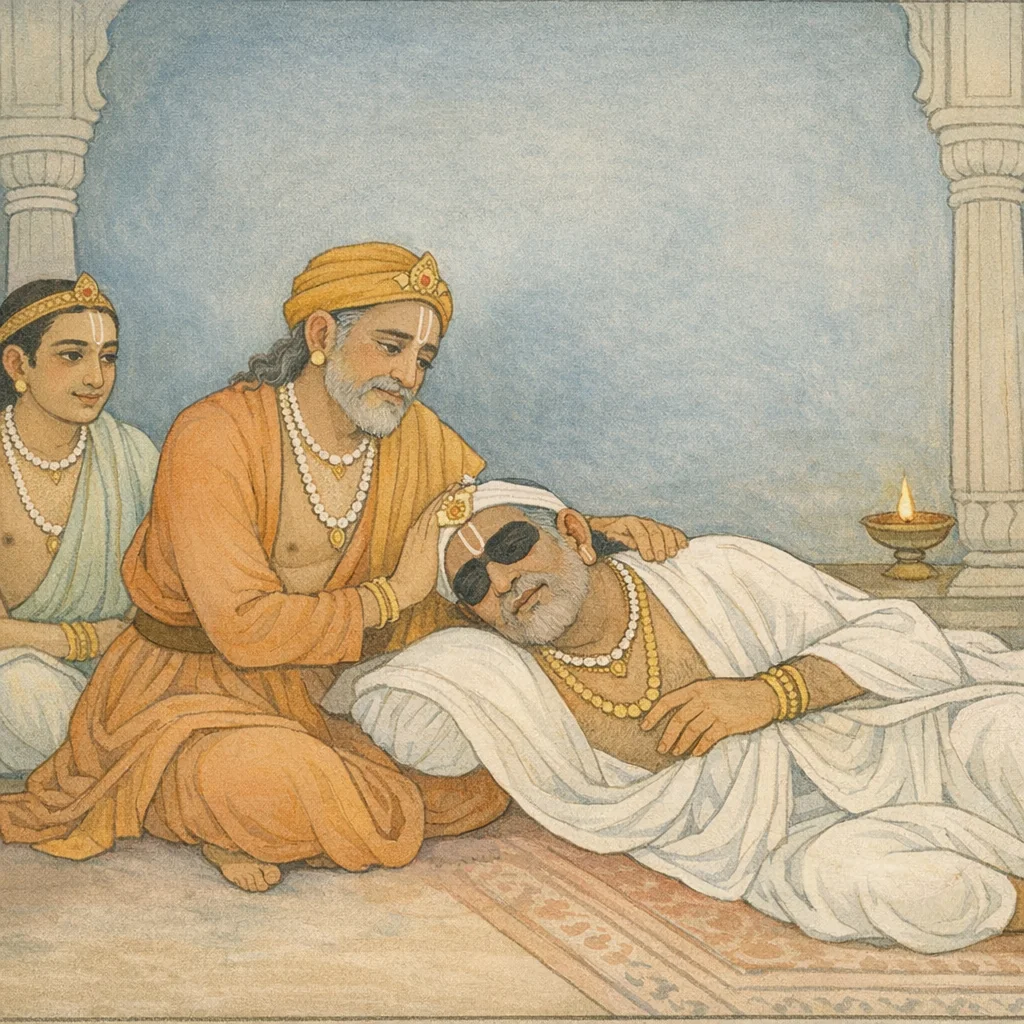
Verse 2
तथैव कौरवो राजा धर्मपुत्रो महामना: । कृपप्रभृतयश्चैव किमकुर्वत ते त्रय:
Janamejaya asked: “Likewise, what did the Kuru king Yudhiṣṭhira—Dharmaputra, the great-souled one—and those beginning with Kṛpa do then? What actions did those three undertake?”
Verse 3
इसी प्रकार कुरुवंशी राजा महामनस्वी धर्मपुत्र युधिष्ठिने तथा कृप आदि तीनों महारथियोंने क्या किया? ।। अश्वत्थाम्न: श्रुतं कर्म शापश्चान्योन्यकारित: । वृत्तान्तमुत्तरं ब्रूहि यदभाषत संजय:,अश्वत्थामाका कर्म तो मैंने सुन लिया, परस्पर जो शाप दिये गये, उनका हाल भी मालूम हो गया। अब आगेका वृत्तान्त बताइये, जिसे संजयने धृतराष्ट्रको सुनाया हो
Janamejaya said: “I have heard of Aśvatthāman’s deed, and I also know how the curses were exchanged between them. Now tell me what happened next—the further account that Sañjaya related to Dhṛtarāṣṭra.”
Verse 4
वैशम्पायन उवाच हते दुर्योधने चैव हते सैन्ये च सर्वशः । संजयो विगतप्रज्ञो धृतराष्ट्रमुपस्थित:,वैशम्पायनजीने कहा--राजन! दुर्योधन तथा उसकी सारी सेनाओंके मारे जानेपर संजयकी दिव्य दृष्टि चली गयी और वह धृतराष्ट्रकी सभामें उपस्थित हुआ
Vaiśampāyana said: When Duryodhana had been slain, and when the entire host had been destroyed, Saṃjaya—his extraordinary vision now withdrawn and his mind shaken by grief—came into the presence of Dhṛtarāṣṭra. The verse marks the moral collapse that follows adharma-driven war: with the fall of the Kaurava cause, even the divine aid that enabled witnessing the battle ceases, and the blind king must face the truth through the messenger who returns empty of that gift.
Verse 5
संजय उवाच आगम्य नानादेशेभ्यो नानाजनपदेश्वरा: । पितृलोकं गता राजन् सर्वे तव सुतैः सह,संजय बोला--राजन्! नाना जनपदोंके स्वामी विभिन्न देशोंसे आकर सब-के-सब आपके पुत्रोंक साथ पितृलोकके पथिक बन गये
Sanjaya said: O King, the rulers of many provinces, having come from various lands, have all departed to the world of the ancestors—together with your sons. The verse underscores the sweeping, impartial finality of death in war: status and sovereignty do not shield anyone from the consequences of adharma and the devastation of fratricidal conflict.
Verse 6
याच्यमानेन सततं तव पुत्रेण भारत | घातिता पृथिवी सर्वा वैरस्यान्तं विधित्सता,भारत! आपके पुत्रसे सब लोगोंने सदा शान्तिके लिये याचना की, तो भी उसने वैरका अन्त करनेकी इच्छासे सारे भूमण्डलका विनाश करा दिया
Sañjaya said: O Bhārata, though your son was continually entreated for peace, he—intent on bringing the feud to its ‘end’—caused the destruction of the whole earth. The verse underscores the moral tragedy of refusing reconciliation: when pride and vengeance override counsel, the cost is borne not only by rivals but by the entire world.
Verse 7
पुत्राणामथ पौत्राणां पितृणां च महीपते | आनुपूर्व्येण सर्वेषां प्रेतकार्याणि कारय,महाराज! अब आप क्रमश: अपने ताऊ, चाचा, पुत्र और पौत्रोंका मृतकसम्बन्धी कर्म करवाइये
Sañjaya said: “O king, have the funerary rites performed—one after another in proper order—for all: for your sons, your grandsons, and your elders (fathers/forefathers).” The verse underscores the ethical urgency of completing the duties owed to the dead after the devastation of war, restoring order through prescribed rites.
Verse 8
वैशम्पायन उवाच तच्छुत्वा वचन घोरं संजयस्य महीपति: । गतासुरिव निश्रेष्टो न्यपतत् पृथिवीतले,वैशम्पायनजी कहते हैं--राजन! संजयका यह घोर वचन सुनकर राजा धुृतराष्ट्र प्राणशून्यकी भाँति निश्वेष्ट हो पृथ्वीपर गिर पड़े
Vaiśampāyana said: Hearing Sañjaya’s dreadful report, the king Dhṛtarāṣṭra collapsed to the ground, motionless as if bereft of life. The scene underscores how the truth of war’s outcome—when finally faced without denial—can shatter even royal composure, revealing the moral weight of attachment and the consequences of long-ignored counsel.
Verse 9
त॑ं शयानमुपागम्य पृथिव्यां पृथिवीपतिम् । विदुर: सर्वधर्मज्ञ इदं वचनमत्रवीत्,पृथ्वीपति धृतराष्ट्रको पृथ्वीपर सोया देख सब धर्मोके ज्ञाता विदुरजी उनके पास आये और इस प्रकार बोले-- इति श्रीमहाभारते स्त्रीपर्वणि जलप्रदानिकपर्वणि विदुरवाक्ये नवमो<ध्याय:
Verse 10
उत्तिष्ठ राजन् कि शेषे मा शुचो भरतर्षभ | एषा वै सर्वसत्त्वानां लोकेश्वर परा गति:,“राजन्! उठिये, क्यों सो रहे हैं? भरतश्रेष्ठ] शोक न कीजिये। लोकनाथ! समस्त प्राणियोंकी यही अन्तिम गति है
Vaiśampāyana said: “Rise, O King—why do you lie thus? Do not grieve, O bull among the Bharatas. O Lord of the world, this indeed is the final course appointed for all living beings.”
Verse 11
अभावादीनि भूतानि भावमध्यानि भारत । अभावनिधनान्येव तत्र का परिदेवना,“भरतनन्दन! सभी प्राणी जन्मसे पहले अव्यक्त थे, बीचमें व्यक्त हुए और अन्तमें मृत्युके बाद फिर अव्यक्त ही हो जायँगे, ऐसी दशामें उनोके लिये शोक करनेकी क्या बात है?
Vaiśampāyana said: “O Bhārata, all beings begin in unmanifest non-being, appear in the middle as manifest existence, and end again in the unmanifest. Since this is their fixed course, what ground is there for lamentation?”
Verse 12
न शोचन् मृतमन्वेति न शोचन् ग्रियते नरः । एवं सांसिद्धिके लोके किमर्थमनुशोचसि,“शोक करनेवाला मनुष्य न तो मरे हुएके साथ जाता है और न स्वयं ही मरता है। जब लोककी यही स्वाभाविक स्थिति है, तब आप किसलिये बारंबार शोक कर रहे हैं?
A man who grieves does not follow the dead, nor does he himself die by grieving. Since this is the natural order of the world as it stands, why do you continue to lament again and again?
Verse 13
अयुध्यमानो ग्रियते युद्धयमानस्तु जीवति । काल प्राप्प महाराज न कश्चिदतिवर्तते,“महाराज! जो युद्ध नहीं करता, वह भी मरता है और युद्ध करनेवाला भी जीवित बच जाता है। कालको पाकर कोई भी उसका उल्लंघन नहीं कर सकता
Vaiśampāyana said: “O King, one who does not fight still dies, while one who fights may yet survive. When Time has arrived, no one can overstep it.”
Verse 14
काल: कर्षति भूतानि सर्वाणि विविधानि च । न कालस्य प्रिय: वक्रिन्न द्वेष्प: कुरुसत्तम,“काल सभी विविध प्राणियोंको खींचता है। कुरुश्रेष्ठ कालके लिये न तो कोई प्रिय है और न कोई द्वेषका पात्र ही
Vaiśampāyana said: Time draws all beings along—of every kind and condition. For Time, O best of the Kurus, none is a favorite and none is an object of hatred. In this grief-stricken aftermath, the teaching points to an impartial cosmic order: loss and change are not personal vendettas but the inevitable movement of Time, urging steadiness and discernment amid sorrow.
Verse 15
यथा वायुस्तृणाग्राणि संवर्तयति सर्वत: । तथा कालवशं यान्ति भूतानि भरतर्षभ,“भरतश्रेष्ठ) जैसे वायु तिनकोंको सब ओर उड़ाती और गिराती रहती है, उसी प्रकार सारे प्राणी कालके अधीन होकर आते-जाते रहते हैं
Vaiśampāyana said: “As the wind whirls and scatters the tips of grass in every direction, so too all beings, overpowered by Time, are driven along—coming and going without mastery over their course.”
Verse 16
एकसर्थप्रयातानां सर्वेषां तत्र गामिनाम् । यस्य काल: प्रयात्यग्रे तत्र का परिदेवना,“एक साथ आये हुए सभी प्राणियोंको एक दिन वहीं जाना है। जिसका काल आ गया, वह पहले चला जाता है; फिर उसके लिये व्यर्थ शोक क्यों?
All beings who have set out together on this journey must, one day, reach the same end. When a person’s appointed time arrives, he departs first; therefore, what purpose is served by lamentation for him?
Verse 17
यांश्वापि निहतान् युद्धे राज॑स्त्वमनुशोचसि । न शोच्या हि महात्मान: सर्वे ते त्रिदिवं गता:,“राजन! जो लोग युद्धमें मारे गये हैं और जिनके लिये आप बारंबार शोक कर रहे हैं, वे महामनस्वी वीर शोक करनेके योग्य नहीं हैं, वे सब-के-सब स्वर्गलोकमें चले गये
Vaiśampāyana said: “O King, those who were slain in battle—whom you repeatedly lament—are not fit objects of grief. They were great-souled warriors; all of them have gone to the heavenly world.”
Verse 18
न यज्ञैर्दक्षिणावद्धिर्न तपोभिरनन विद्यया । तथा स्वर्गमुपायान्ति यथा शूरास्तनुत्यज:,“अपने शरीरका त्याग करनेवाले शूरवीर जिस तरह स्वर्गमें जाते हैं, उस तरह दक्षिणावाले यज्ञों, तपस्याओं तथा विद्यासे भी कोई नहीं जा सकता
Vaiśampāyana said: Not by sacrifices endowed with rich priestly fees, nor by austerities, nor by learning do people reach heaven in the same manner as those heroes who renounce their bodies on the battlefield. The verse elevates the moral weight of courageous self-offering in a righteous cause, presenting it as a path to heavenly reward that surpasses even revered religious and intellectual disciplines.
Verse 19
सर्वे वेदविद: शूरा: सर्वे सुचरितव्रता: । सर्वे चाभिमुखा: क्षीणास्तत्र का परिदेवना,'वे सभी वीर वेदवेत्ता और अच्छी तरह ब्रह्मचर्यव्रतका पालन करनेवाले थे। वे सब-के- सब शत्रुओंका सामना करते हुए मारे गये थे; अतः उनके लिये शोक करनेकी क्या आवश्यकता है?
Vaiśaṃpāyana said: “All of them were knowers of the Vedas and valiant heroes; all were men of well-observed vows and disciplined conduct. All of them fell while facing the foe in the forefront; therefore, what cause is there here for lamentation?”
Verse 20
शरीराग्निषु शूराणां जुह॒ुवुस्ते शराहुती: । हूयमानान् शरांश्वैव सेहुरुत्तमपूरुषा:,'जन श्रेष्ठ पुरुषोंने शूरवीरोंके शरीररूपी अग्नियोंमें बाणरूपी हविष्यकी आहुतियाँ दी थीं और अपने शरीरमें जिनका हवन किया गया था, उन बाणोंका आघात सहन किया था
Vaiśaṃpāyana said: Those foremost men, the heroes, poured oblations of arrows into the body-fires of warriors; and even as those arrows were being ‘offered’ into them, they endured their impact—bearing wounds with the steadfastness expected of the best of men. The verse frames battlefield suffering as a sacrificial act, highlighting disciplined courage and the ethic of endurance amid war’s devastation.
Verse 21
एवं राजंस्तवाचक्षे स्वर्ग्य पन््थानमुत्तमम् । न युद्धादधिकं किंचित् क्षत्रियस्येह विद्यते,“राजन! मैं तुम्हें स्वर्गप्राप्तिका सबसे उत्तम मार्ग बता रहा हूँ। इस जगतमें क्षत्रियके लिये युद्धसे बढ़कर स्वर्गसाधक दूसरा कोई उपाय नहीं है
Vaiśampāyana said: “O King, I declare to you the most excellent path that leads to heaven. In this world, for a kṣatriya there is nothing superior to battle as a means of attaining heaven.”
Verse 22
क्षत्रियास्ते महात्मान: शूरा: समितिशो भना: । आशिषं परमां प्राप्ता न शोच्या: सर्व एव हि,“वे सभी महामनस्वी क्षत्रिय वीर युद्धमें शोभा पानेवाले थे। वे उत्तम भोगोंसे सम्पन्न पुण्यलोकोंमें जा पहुँचे हैं, अतः उन सबके लिये शोक नहीं करना चाहिये
Vaiśampāyana said: “Those kṣatriyas were great-souled—heroes who shone in the clash of battle. Having attained the highest blessed state, all of them are not to be mourned.” In the ethical frame of the Strī-parvan, the verse redirects grief toward a dharmic appraisal of death in righteous combat, even while the surrounding narrative remains saturated with human sorrow.
Verse 23
आत्मना55त्मानमाश्चवास्य मा शुच: पुरुषर्षभ । नाद्य शोकाभि भूतस्त्वं कार्यमुत्स्रष्टमहसि,'पुरुषप्रवर! आप स्वयं ही अपने मनको आश्वासन देकर शोकको त्याग दीजिये। आज शोकसे व्याकुल होकर आपको अपने कर्तव्य कर्मका त्याग नहीं करना चाहिये”
Vaiśaṃpāyana said: “O bull among men, steady your own heart by your own resolve—do not grieve. Overcome by sorrow today, you must not abandon the duty that is to be done.”
Frequently Asked Questions
The chapter presents the ethical problem of leadership amid trauma: how a ruler and counselors act responsibly when judgment is impaired by grief, yet public duty requires coordinated action and communal acknowledgment of loss.
It teaches that consequences of action reverberate beyond the battlefield into households and civic life; grief becomes a social fact that demands witnessing, restraint, and a reorientation of duty from victory to restoration and accountability.
No explicit phalaśruti is stated here; the chapter’s meta-function is descriptive and transitional—establishing the emotional and social conditions that frame subsequent post-war deliberations.