Adhyaya 14
स्त्रीपर्व — गान्धारीभीमसेनसंवादः (Strī-parva — Gāndhārī–Bhīmasena Dialogue on Wartime Conduct)
Upa-parva: Gāndhārī–Bhīmasena Saṃvāda (Confrontation and Apologia Episode)
Vaiśaṃpāyana reports that Bhīmasena, responding with deference to Gāndhārī, seeks forgiveness if any adharma occurred under fear and self-protection. He argues that Duryodhana’s exceptional strength could not be overcome by ordinary means and claims strategic necessity: preventing a scenario where, after killing Bhīma, Duryodhana would retain sovereignty. Bhīma recalls prior provocations—especially the public humiliation of Draupadī—and asserts that without neutralizing Suyodhana, the Pāṇḍavas could not securely enjoy the earth. Gāndhārī rejects the praise implicit in Bhīma’s rationale and interrogates a particularly stigmatized act: Bhīma’s drinking of blood in battle (linked to the Duḥśāsana episode), labeling it socially condemned and cruel. Bhīma responds that blood should not be consumed at all, yet emphasizes fraternal identity and vow-constraint; he asserts he did not transgress beyond the mouth and invokes Yama (Vaivasvata) as witness to his blood-stained hands. He admits enduring inner remembrance of words spoken in anger during Draupadī’s humiliation and claims he acted to fulfill a vow to avoid deviation from kṣatriya duty. He further argues that Gāndhārī should not suspect him alone when her sons were previously left unchecked. Gāndhārī then presses a dynastic-ethical question: why, after killing a hundred sons, Bhīma left no remnant lineage for the blind royal couple, implying that sparing even one would have mitigated grief if dharma were truly upheld.
Chapter Arc: धृतराष्ट्र की अनुमति पाकर पाण्डव शोकाकुल हस्तिनापुर-प्रांगण में आते हैं; उधर पुत्रशोक से दग्ध गान्धारी यह जानकर कि युधिष्ठिर उपस्थित है, उसे शाप देने को उद्यत होती है। → गान्धारी के भीतर का क्रोध ‘धर्म’ के आवरण में उबलता है—विशेषतः भीम द्वारा गदा-युद्ध में नाभि के नीचे प्रहार (कृष्ण के देखते हुए) उसे असह्य लगता है। व्यास, सत्यवती-पुत्र, पहले ही उसके ‘पापमभिप्राय’ को भाँप लेते हैं और बीच में आकर रोकते हैं। → व्यास गान्धारी की सत्यनिष्ठा का स्मरण कराते हैं—‘तुम्हारी वाणी कभी असत्य नहीं हुई’; उसी क्षण गान्धारी का शाप-उद्यम और मातृ-शोक आमने-सामने खड़े हो जाते हैं, और वह स्वीकार करती है कि दुर्भाव नहीं, पर शोक से मन विह्वल है। → गान्धारी अपने क्रोध को संयम में लाती है और संरक्षण-धर्म की बात कहती है—जैसे कुन्ती अपने पुत्रों की रक्षक है, वैसे ही वह भी; और धृतराष्ट्र को भी वैसा ही रक्षण करना चाहिए। वह पाण्डवों को सर्वथा अपराधी नहीं ठहराती, पर भीम के अधर्म-प्रहार को अपने कोप का कारण बताती है। → गान्धारी का प्रश्न हवा में लटकता है—‘महात्माओं द्वारा निर्दिष्ट धर्म को शूरवीर प्राण-हेतु कैसे त्यागें?’ यह संकेत देता है कि धर्म-निर्णय अभी शेष है और शाप/प्रतिशोध की छाया पूरी तरह टली नहीं।
Shlokas
Verse 1
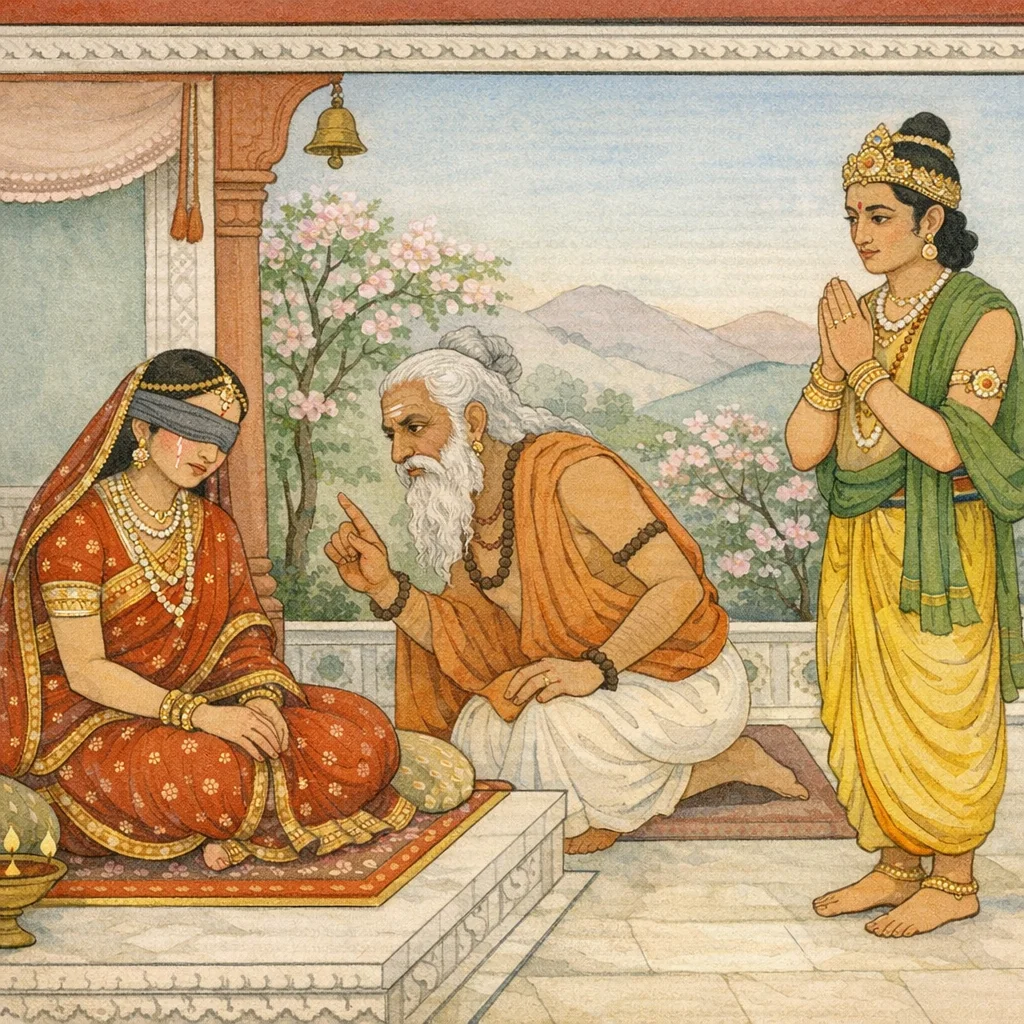
ऑपन--माजल बछ। अकाल चतुर्दशो 5 ध्याय: पाण्डवोंको शाप देनेके लिये उद्यत हुई गान्धारीको व्यासजीका समझाना वैशम्पायन उवाच धृतराष्ट्रा भ्यनुज्ञातास्ततस्ते कुरुपाण्डवा: । अभ्ययुर्भ्नातर: सर्वे गान्धारीं सह केशवा:,वैशम्पायनजी कहते हैं--राजन्! तदनन्तर धुृतराष्ट्रकी आज्ञा लेकर वे कुरुवंशी पाण्डव सभी भाई भगवान् श्रीकृष्णके साथ गान्धारीके पास गये
Vaiśampāyana said: Then, having obtained Dhṛtarāṣṭra’s permission, those Kuru-born Pāṇḍava brothers—all of them—went to Gāndhārī, accompanied by Keśava (Kṛṣṇa). In the aftermath of devastation, the victors do not move as triumphant conquerors but as accountable kin, approaching the grieving queen whose moral authority and anguish can become a force of judgment.
Verse 2
ततो ज्ञात्वा हतामित्र॑ युधिष्ठिरमुपागतम् । गान्धारी पुत्रशोकार्ता शप्तुमैच्छदनिन्दिता,पुत्रशोकसे पीड़ित हुई, गान्धारीको जब यह मालूम हुआ कि युधिष्छिर अपने शत्रुओंका संहार करके मेरे पास आये हैं, तब उन सती-साध्वी देवीने उन्हें शाप देनेकी इच्छा की
Then, learning that Yudhiṣṭhira had arrived after slaying his foes, Gāndhārī—overwhelmed by grief for her sons—though herself blameless and revered, desired to curse him. The verse frames the moral tension between a mother’s unbearable sorrow and the ethical aftermath of a war fought under claims of righteousness.
Verse 3
तस्या: पापमभिप्रायं विदित्वा पाण्डवान् प्रति । ऋषि: सत्यवतीपुत्र: प्रागेव समबुध्यत
Knowing her sinful intention directed against the Pāṇḍavas, the sage—Satyavatī’s son—had already perceived it beforehand.
Verse 4
स गज्जायामुपस्पृश्य पुण्यगन्धि पय:ः शुचि । त॑ देशमुपसम्पेदे परमर्षिमनोजव:
Having performed ritual purification at Gajjā with clean water fragrant with sanctity, he—swift as thought—proceeded to that place where the supreme seer was. The verse underscores the ethical tone of approaching a revered sage: inner intent is supported by outer purity and reverent preparation.
Verse 5
पाण्डवोंके प्रति गान्धारीके मनमें पापपूर्ण संकल्प है, इस बातको सत्यवतीनन्दन महर्षि व्यास पहले ही जान गये थे। उनके उस अभिप्रायको जानकर वे मनके समान वेगशाली महर्षि गंगाजीके पवित्र एवं सुगन्धित जलसे आचमन करके शीघ्र ही उस स्थानपर आ पहुँचे ।। दिव्येन चक्षुषा पश्यन् मनसा तद्गतेन च । सर्वप्राणभूतां भावं स तत्र समबुध्यत,वे दिव्य दृष्टिसे तथा अपने मनको समस्त प्राणियोंके साथ एकाग्र करके उनके आन्तरिक भावको समझ लेते थे
Vaiśampāyana said: Gandhārī had formed a sinful resolve against the Pāṇḍavas; the sage Vyāsa, son of Satyavatī, already knew it. Understanding her intention, the swift-minded seer sipped the pure, fragrant water of the Gaṅgā for purification and quickly arrived at that place. Seeing with divine sight and fixing his mind upon the matter, he discerned there the inner dispositions of all living beings. The passage underscores how hidden motives—especially those driven by grief and vengeance—are ethically weighty and are not beyond the reach of higher insight.
Verse 6
स स्नुषामब्रवीत् काले कल्यवादी महातपा: । शापकालमवाक्षिप्प शमकालमुदीरयन्,अतः हितकी बात बतानेवाले वे महातपस्वी व्यास समयपर अपनी पुत्रवधूके पास जा पहुँचे और शापका अवसर हटाकर शान्तिका अवसर उपस्थित करते हुए इस प्रकार बोले --
At the proper time, the great ascetic—one who spoke for the good—addressed his daughter-in-law. Setting aside the moment for curses and bringing forward the moment for pacification, the sage Vyāsa approached her and spoke in this manner, aiming to turn grief and anger toward restraint and welfare.
Verse 7
न कोप: पाण्डवे कार्यो गान्धारि शममाप्रुहि । वचो निगृह्मातामेतच्छूणु चेदं वचो मम,“गान्धारराजकुमारी! शान्त हो जाओ। तुम्हें पाण्डुपुत्र युधिष्ठिरपर क्रोध नहीं करना चाहिये। अभी-अभी जो बात मुहसे निकालना चाहती हो, उसे रोक लो और मेरी यह बात सुनो
Vaiśampāyana said: “Gāndhārī, you must not direct anger toward the Pāṇḍava. Attain calmness. Restrain the words that are rising to your lips, and listen to what I have to say.”
Verse 8
उक्तास्यष्टादशाहानि पुत्रेण जयमिच्छता । शिवमाशास्व मे मातर्युध्यमानस्य शत्रुभि:,“गत अठारह दिनोंमें विजयकी अभिलाषा रखनेवाला तुम्हारा पुत्र प्रतिदिन तुमसे जाकर कहता था कि “माँ! मैं शत्रुओंके साथ युद्ध करने जा रहा हूँ। तुम मेरे कल्याणके लिये आशीर्वाद दो”
Verse 9
सा तथा याच्यमाना त्वं काले काले जयैषिणा । उक्तवत्यसि गान्धारि यतो धर्मस्ततो जय:,“इस प्रकार जब विजयाभिलाषी दुर्योधन समय-समयपर तुमसे प्रार्थना करता था, तब तुम सदा यही उत्तर देती थी कि “जहाँ धर्म है, वहीं विजय है”
Vaiśampāyana said: “Thus, when the victory-seeking Duryodhana would repeatedly entreat you at various times, you, O Gāndhārī, would always give the same reply: ‘Where dharma is, there indeed is victory.’”
Verse 10
न चाप्यतीतां गान्धारि वाचं ते वितथामहम् । स्मरामि भाषमाणायास्तथा प्राणिहिता ह्सि,'गान्धारी! तुमने बातचीतके प्रसंगमें भी पहले कभी झूठ कहा हो, ऐसा मुझे स्मरण नहीं है तथा तुम सदा प्राणियोंके हितमें तत्पर रहती आयी हो
Vaiśampāyana said: “O Gāndhārī, I do not recall that you have ever spoken falsely in the past, even in ordinary conversation. Indeed, you have always been intent on the welfare of living beings.”
Verse 11
विग्रहे तुमुले राज्ञां गत्वा पारमसंशयम् । जितं पाण्डुसुतैर्युद्धे नूनं धर्मस्ततोडधिक:,“राजाओंके इस घोर संग्रामसे पार होकर पाण्डवोंने जो युद्धमें विजय पायी है, इससे नि:संदेह यह बात सिद्ध हो गयी कि 'धर्मका बल सबसे अधिक है'
Vaiśaṃpāyana said: Having crossed beyond doubt the dreadful clash of kings, the sons of Pāṇḍu have won the battle; from this it is surely established that the power of dharma is greater than all else.
Verse 12
क्षमाशीला पुरा भूत्वा साद्य न क्षमसे कथम् | अधर्म जहि धर्मज्ञे यतो धर्मस्ततो जय:,“धर्मज्ञे! तुम तो पहले बड़ी क्षमाशील थी। अब क्यों नहीं क्षमा करती हो? अधर्म छोड़ो क्योंकि जहाँ धर्म है, वहीं विजय है
Vaiśampāyana said: “O knower of dharma, you were once patient and forgiving—how is it that now you do not forgive? Cast off unrighteousness; for where dharma stands, there alone is victory.”
Verse 13
स्वं च धर्म परिस्मृत्य वाचं चोक्तां मनस्विनि । कोपं संयच्छ गान्धारि मैवं भू: सत्यवादिनि,“मनस्विनी गान्धारी! अपने धर्म तथा कही हुई बातका स्मरण करके क्रोधको रोको। सत्यवादिनी! अब फिर तुम्हारा ऐसा बर्ताव नहीं होना चाहिये”
Vaiśampāyana said: “O resolute Gāndhārī, recalling both your own dharma and the words you have already spoken, restrain your anger. O truthful one, do not behave in this way again.”
Verse 14
गान्धायुवाच भगवजन्नाभ्यसूयामि नैतानिच्छामि नश्यत: । पुत्रशोकेन तु बलान्मनो विह्नलतीव मे,गान्धारी बोली-- भगवन! मैं पाण्डवोंके प्रति कोई दुर्भाव नहीं रखती और न इनका विनाश ही चाहती हूँ; परंतु क्या करूँ? पुत्रोंके शोकसे मेरा मन हठात् व्याकुल-सा हो जाता है धर्मज्ञ महात्माओंने गदायुद्धके लिये जिस धर्मका प्रतिपादन किया है, उसे शूरवीर योद्धा रणभूमिमें किसी तरह अपने प्राण बचानेके लिये कैसे त्याग सकते हैं? ।। इति श्रीमहाभारते स्त्रीपर्वणि जलप्रदानिकपर्वणि गान्धारीसान्त्वनायां चतुर्दशो5ध्याय:
Gāndhārī said: “O revered one, I bear no malice toward the Pāṇḍavas, nor do I wish for their destruction. Yet what can I do? Overpowered by grief for my sons, my mind suddenly becomes as if shaken and confused.”
Verse 15
यथैव कुन्त्या कौन्तेया रक्षितव्यास्तथा मया । तथैव धृतराष्ट्रेण रक्षितव्या यथा त्वया,कुन्तीके ये बेटे जिस प्रकार कुन्तीके द्वारा रक्षणीय हैं, उसी प्रकार मुझे भी इनकी रक्षा करनी चाहिये। जैसे आप इनकी रक्षा चाहते हैं, उसी प्रकार महाराज धृतराष्ट्रका भी कर्तव्य है कि इनकी रक्षा करें
Vaiśampāyana said: “Just as these Kaurava princes are to be protected for Kuntī’s sake, so too must I protect them. And in the very manner you desire their protection, King Dhṛtarāṣṭra also bears the duty to protect them.”
Verse 16
दुर्योधनापराधेन शकुने: सौबलस्य च । कर्णदु:शासनाभ्यां च कृतो<यं कुरुसंक्षय:,कुरुकुलका यह संहार तो दुर्योधन, मेरे भाई शकुनि, कर्ण तथा दुःशासनके अपराधसे ही हुआ है
Vaiśampāyana said: “This destruction of the Kuru line has been brought about by the wrongdoing of Duryodhana, and also of Śakuni the son of Subala, and likewise by Karṇa and Duḥśāsana.” The statement fixes moral responsibility for the catastrophe on deliberate choices—offences against dharma that ripened into the annihilation of an entire dynasty.
Verse 17
नापराध्यति बीभत्सुर्न च पार्थो वृकोदर: । नकुल: सहदेवश्न नैव जातु युधिछ्िर:,इसमें न तो अर्जुनका अपराध है और न कुन्तीपुत्र भीमसेनका। नकुल-सहदेव और युधिष्ठिरको भी कभी इसके लिये दोष नहीं दिया जा सकता
Vaiśampāyana said: “In this matter, neither Bībhatsu (Arjuna) nor Vṛkodara (Bhīmasena), the son of Pṛthā (Kuntī), has committed any fault. Nor can Nakula and Sahadeva, and never Yudhiṣṭhira, be blamed for it.”
Verse 18
युध्यमाना हि कौरव्या: कृन्तमाना: परस्परम् | निहता: सहिताश्षान्यैस्तच्च नास्त्यप्रियं मम,कौरव आपसमें ही जूझकर मारकाट मचाते हुए अपने दूसरे साथियोंके साथ मारे गये हैं; अत: इसमें मुझे अप्रिय लगनेवाली कोई बात नहीं है
Vaiśampāyana said: “The Kaurava women’s own men, locked in combat and cutting one another down, have been slain together with their companions. Therefore, in this there is nothing that is painful or unwelcome to me.”
Verse 19
कि तु कर्माकरोद् भीमो वासुदेवस्य पश्यत: । दुर्योधनं समाहूय गदायुद्धे महामना:,परंतु महामना भीमसेनने गदायुद्धके लिये दुर्योधनको बुलाकर श्रीकृष्णके देखते-देखते उसके प्रति जो बर्ताव किया है, वह मुझे अच्छा नहीं लगा। वह रणभूमिमें अनेक प्रकारके पैंतरे दिखाता हुआ विचर रहा था; अतः शिक्षामें उसे अपनेसे अधिक जान भीमने जो उसकी नाभिसे नीचे प्रहार किया, इनके इसी बर्तावने मेरे क्रोधको बढ़ा दिया है
Vaiśampāyana said: “Yet the deed that Bhīma performed—right before Vāsudeva’s eyes—by calling Duryodhana into a mace-duel, does not sit well with me. For Duryodhana was moving about on the battlefield displaying many kinds of feints and maneuvers; and though Bhīma knew him to be superior in this discipline, he struck him below the navel. It is precisely this conduct that has inflamed my anger.”
Verse 20
शिक्षयाभ्यधिकं ज्ञात्वा चरन्तं बहुधा रणे । अधो नाभ्या: प्रह्चतवांस्तन्मे कोपमवर्धयत्,परंतु महामना भीमसेनने गदायुद्धके लिये दुर्योधनको बुलाकर श्रीकृष्णके देखते-देखते उसके प्रति जो बर्ताव किया है, वह मुझे अच्छा नहीं लगा। वह रणभूमिमें अनेक प्रकारके पैंतरे दिखाता हुआ विचर रहा था; अतः शिक्षामें उसे अपनेसे अधिक जान भीमने जो उसकी नाभिसे नीचे प्रहार किया, इनके इसी बर्तावने मेरे क्रोधको बढ़ा दिया है
Vaiśampāyana said: “Seeing him moving about on the battlefield in many ways, and knowing him to be superior in training, Bhīma struck him below the navel. That act has increased my anger.”
Verse 21
कथं नु धर्म धर्मज्ै: समुद्दिष्ट महात्मभि: । त्यजेयुराहवे शूरा: प्राणहेतो: कथंचन
Vaiśaṃpāyana said: How could those heroic men ever abandon, in the midst of battle, the dharma that has been clearly enjoined by great-souled sages who know what dharma is—merely for the sake of preserving their lives?
Frequently Asked Questions
Whether actions justified as necessary strategy and vow-fulfillment remain ethically permissible when they violate social norms of restraint, and how victors should be judged when prior provocations and existential threat are invoked as defenses.
The chapter models post-event ethical review: intent and duty do not erase consequence, and remorse, explanation, and public accountability are integral to restoring legitimacy after systemic violence.
No explicit phalaśruti appears in this unit; its meta-function is archival and juridical—preserving contested testimony so later teachings on governance and expiation are grounded in an acknowledged record of harm.