Adhyaya 39
अभिमन्युना दुःशासनस्य ताडनम् (Abhimanyu’s Rebuke and Wounding of Duḥśāsana; Karṇa’s Counter-volley)
Upa-parva: Abhimanyu–Duḥśāsana–Karṇa Saṅgrāma (Strategic Engagement Episode)
Saṃjaya reports that Abhimanyu, bearing arrow-wounds yet composed, addresses Duḥśāsana with a pointed recollection of earlier assembly insults delivered before Dhṛtarāṣṭra. Abhimanyu frames the present encounter as the ripening consequence of cruelty, anger without restraint, greed, betrayal, and the seizure of rightful sovereignty, asserting that immediate recompense will be delivered through martial means in full view of the armies. He then releases a decisive arrow, strikes Duḥśāsana in the chest/neck region, and follows with multiple additional shafts, leaving him incapacitated and removed from the battlefield by his charioteer. Pāṇḍava-aligned forces respond with acclamation and martial music, rallying toward Droṇa’s formation. Observing Duḥśāsana’s condition, Duryodhana directs Karṇa’s attention; Karṇa advances with sharp missiles to check Abhimanyu, targets his followers, and attempts to overwhelm him with extensive weapon-display. Abhimanyu withstands the barrage, counters by cutting down Karṇa’s bow and standard, and prompts renewed acclaim among allies as the engagement continues.
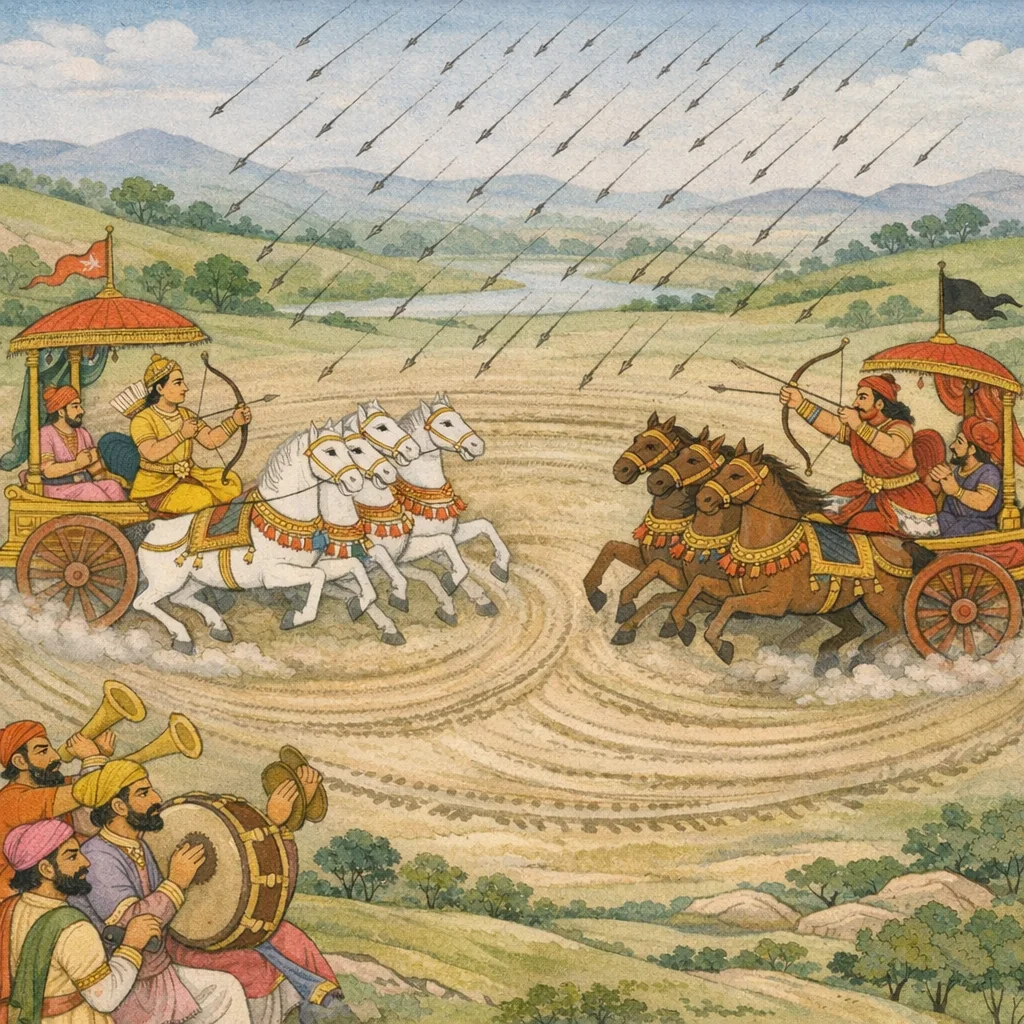
Chapter Arc: धृतराष्ट्र के प्रश्न पर संजय गावल्गणनन्दन से कहते हैं—‘कार्तिकेय ने जैसे असुरों के साथ रणक्रीड़ा की थी, वैसे ही अभिमन्यु ने जो युद्ध-खेल खेला, उसे विस्तार से सुनाओ।’ → द्रोणाचार्य अभिमन्यु के पराक्रम की मुक्तकंठ से प्रशंसा करते हैं—उसे किसी भी धनुर्धर के समकक्ष नहीं मानते और संकेत देते हैं कि यदि वह सचमुच संहार पर उतर आए तो पूरी सेना को हिला दे। यह प्रशंसा कौरव-पक्ष में चिंता और प्रतिस्पर्धा दोनों जगाती है। → दुर्योधन द्रोण के वचनों से उत्तेजित होकर कर्ण, बाह्लिक, मद्रराज शल्य, दुःशासन आदि महारथियों को आदेश देता है; और स्वयं दुःशासन क्रोध से गर्जना करता हुआ शरवर्षा बरसाते हुए सौभद्र अभिमन्यु पर टूट पड़ता है। → अभिमन्यु और दुःशासन—दोनों रथयुद्ध-शिक्षा में निपुण—दायें-बायें घूमते हुए चित्र-विचित्र मण्डल बनाकर युद्ध करते हैं; रणवाद्यों का घोर निनाद युद्धभूमि को भर देता है। → दुःशासन-अभिमन्यु का रथयुद्ध पूरी तीव्रता से आरम्भ हो चुका है—अगले प्रसंग में इस द्वंद्व का निर्णायक मोड़ आने को है।
Shlokas
Verse 1
अपना बा | अफड-#-कात जा एकोनचत्वारिशोड ध्याय: द्रोणाचार्यके द्वारा अभिमन्युके पराक्रमकी प्रशंसा तथा दुर्योधनके आदेशसे दुःशासनका अभिमन्युके साथ युद्ध आरम्भ करना धृतराष्ट उवाच द्वैधीभवति मे चित्तं द्विया तुष्ट्या च संजय । मम पुत्रस्य यत् सैन्यं सौभद्र: समवारयत्,धृतराष्ट्र बोले--संजय! सुभद्राकुमारने मेरे पुत्रकी सेनाको जो आगे बढ़नेसे रोक दिया, इसे सुनकर लज्जा और प्रसन्नतासे मेरे चित्तकी दो अवस्थाएँ हो रही हैं
Dhṛtarāṣṭra said: “Sañjaya, my mind is split in two—between shame and satisfaction—on hearing that the son of Subhadrā checked and held back the army of my sons.”
Verse 2
विस्तरेणैव मे शंस सर्व गावल्गणे पुन: । विक्रीडितं कुमारस्य स्कन्दस्येवासुरै: सह
Dhṛtarāṣṭra said: “O Gāvalgaṇa, tell me again—fully and in detail—everything about the youthful prince’s exploits, like Skanda sporting in battle together with the Asuras.”
Verse 3
गवल्गणनन्दन! जैसे कुमार कार्तिकेयने असुरोंके साथ रणक्रीड़ा की थी, उसी प्रकार कुमार अभिमन्युने जो युद्धका खेल किया था, वह सब मुझसे विस्तारपूर्वक कहो ।। संजय उवाच हन्त ते सम्प्रवक्ष्यामि विमर्दमतिदारुणम् । एकस्य च बहूनां च यथा5<सीत् तुमुलो रण:,संजयने कहा--महाराज! मैं अत्यन्त खेदके साथ आपको उस अत्यन्त भयंकर नरसंहारका वृत्तान्त बता रहा हूँ, जिसके लिये एक वीरका बहुत-से महारथियोंके साथ तुमुल युद्ध हुआ था
Sañjaya said: “Alas, I shall now recount to you that exceedingly dreadful carnage—how there arose a tumultuous battle of the one hero against the many.”
Verse 4
अभिमन्यु: कृतोत्साह: कृतोत्साहानरिंदमान् | रथस्थो रथिन: सर्वास्तावकानभ्यवर्षयत्,अभिमन्यु युद्धके लिये उत्साहसे भरा था। वह रथपर बैठकर आपके उत्साहभरे शत्रुदमन समस्त रथारोहियोंपर बाणोंकी वर्षा करने लगा
Sañjaya said: Abhimanyu, filled with ardour, from his chariot showered arrows upon all your chariot-warriors—those spirited, foe-subduing fighters—pressing them hard in the clash of arms. The scene underscores the warrior’s duty to meet force with disciplined courage, even amid the moral weight of fratricidal war.
Verse 5
द्रोणं कर्ण कृपं शल्यं द्रौ्णिं भोजं बृहदूबलम् । दुर्योधनं सौमदत्ति शकुनिं च महाबलम्,द्रोण, कर्ण, कृप, शल्य, अश्वत्थामा, भोजवंशी कृतवर्मा, बृहद्बल, दुर्योधन, भूरिश्रवा, महाबली शकुनि, अनेकानेक नरेश, राजकुमार तथा उनकी विविध प्रकारकी सेनाओंपर अभिमन्यु अलातचक्रकी भाँति चारों ओर घूमकर बाणोंका प्रहार कर रहा था
Sañjaya said: Abhimanyu, whirling on every side like a blazing firebrand forming a circle, kept striking with his arrows at Droṇa, Karṇa, Kṛpa, Śalya, Droṇa’s son Aśvatthāmā, the Bhoja warrior Kṛtavarmā, Bṛhadbala, Duryodhana, Saumadatti (Bhūriśravas), and the mighty Śakuni—indeed at many kings and princes and their varied divisions of troops. The scene underscores a stark ethical tension of war: a single youthful hero, hemmed in by renowned elders and commanders, fights with extraordinary valor amid an increasingly unequal and ruthless battlefield.
Verse 6
नानानूपान् नृपसुतान् सैन्यानि विविधानि च । अलातचक्रवत् सर्वाश्वरन् बाणै: समार्पयत्,द्रोण, कर्ण, कृप, शल्य, अश्वत्थामा, भोजवंशी कृतवर्मा, बृहद्बल, दुर्योधन, भूरिश्रवा, महाबली शकुनि, अनेकानेक नरेश, राजकुमार तथा उनकी विविध प्रकारकी सेनाओंपर अभिमन्यु अलातचक्रकी भाँति चारों ओर घूमकर बाणोंका प्रहार कर रहा था
Sanjaya said: Abhimanyu, whirling on every side like a blazing firebrand spun in a circle, showered arrows upon princes of many lands, upon royal sons, and upon their various divisions of troops. He struck even the foremost Kaurava champions—Drona, Karna, Kripa, Shalya, Ashvatthama, Kritavarma of the Bhoja line, Brihadbala, Duryodhana, Bhurishravas, the mighty Shakuni—along with many other kings and princes and their assorted forces. The scene underscores both the ferocity of war and the solitary valor of a youth who, though surrounded, refuses to abandon his warrior-duty.
Verse 7
निध्नन्नमित्रान् सौभद्र: परमास्त्रै: प्रतापवान् | अदर्शयत तेजस्वी दिक्षु सर्वासु भारत,भारत! प्रतापी एवं तेजस्वी वीर सुभद्राकुमार अपने दिव्यास्त्रोंद्वारा शत्रुओंका नाश करता हुआ सम्पूर्ण दिशाओंमें दृष्टिगोचर हो रहा था
Sañjaya said: Mighty Saubhadra, striking down his foes with supreme celestial weapons, blazed with prowess. O Bhārata—O descendant of Bharata—his radiant form was visible in every direction as he destroyed the enemy ranks, a display of heroic power within the grim duty of war.
Verse 8
तद् दृष्टवा चरितं तस्य सौभद्रस्यामितौजस: । समकम्पन्त सैन्यानि त्वदीयानि सहस्रश:,अमिततेजस्वी अभिमन्युका वह चरित्र देखकर आपके सहस्रों सैनिक भयसे काँपने लगे
Sañjaya said: Seeing the deeds of that Abhimanyu—the son of Subhadrā, of immeasurable prowess—your troops, by the thousands, began to tremble. The report underscores how a single warrior’s righteous valor can shake an entire host and alter the moral and psychological balance of the battlefield.
Verse 9
अथाब्रवीन्महाप्राज्ञो भारद्वाज: प्रतापवान् | हर्षेणोत्फुल्लनयन: कृपमाभाष्य सत्वरम्,तदनन्तर परम बुद्धिमान् और प्रतापी वीर द्रोणाचार्यके नेत्र हर्षसे खिल उठे। भारत! उन्होंने युद्धविशारद अभिमन्युको युद्धमें स्थित देखकर आपके पुत्रके मर्मस्थलपर चोट करते हुए-से उस समय तुरंत ही कृपाचार्यको सम्बोधित करके कहा--
Sañjaya said: Then the mighty and profoundly wise Bhāradvāja (Droṇa), his eyes blossoming with exhilaration, quickly addressed Kṛpa. Seeing Abhimanyu standing firm and fighting with expert skill, Droṇa spoke in a way that struck at the vulnerable point of your son’s cause—pressing the battle toward a decisive advantage.
Verse 10
घट्टयन्निव मर्माणि पुत्रस्य तव भारत । अभिमन्युं रणे दृष्टवा तदा रणविशारदम्,तदनन्तर परम बुद्धिमान् और प्रतापी वीर द्रोणाचार्यके नेत्र हर्षसे खिल उठे। भारत! उन्होंने युद्धविशारद अभिमन्युको युद्धमें स्थित देखकर आपके पुत्रके मर्मस्थलपर चोट करते हुए-से उस समय तुरंत ही कृपाचार्यको सम्बोधित करके कहा--
Sañjaya said: “O Bhārata, as though striking at the vital points of your son, when Droṇa saw Abhimanyu—skilled in battle—standing firm in the fight, the supremely intelligent and mighty hero’s eyes brightened with delight. Seeing the young warrior established in combat, Droṇa at once addressed Kṛpa, speaking in a way that seemed to press upon the vulnerable nerve-centres of your son’s cause.”
Verse 11
एष गच्छति सौभद्र: पार्थानां प्रथितो युवा । नन्दयन् सुहृदः सर्वान् राजानं च युधिष्ठिरम्,“यह पार्थकुलका प्रसिद्ध तरुण वीर सुभद्राकुमार अभिमन्यु अपने समस्त सुहृदोंको, राजा युधिष्ठिर, नकुल, सहदेव तथा पाण्डुपुत्र भीमसेनको, अन्यान्य भाई-बन्धुओं सम्बन्धियों तथा मध्यस्थ सुहृदोंको भी आनन्द प्रदान करता हुआ जा रहा है
Sañjaya said: “Behold, the son of Subhadrā—Abhimanyu—renowned among the Pārthas as a youthful hero, is moving forth, gladdening all his well-wishers, and also King Yudhiṣṭhira.”
Verse 12
नकुलं सहदेवं च भीमसेनं च पाण्डवम् | बन्धून् सम्बन्धिनश्चान्यान् मध्यस्थान् सुहृदस्तथा,“यह पार्थकुलका प्रसिद्ध तरुण वीर सुभद्राकुमार अभिमन्यु अपने समस्त सुहृदोंको, राजा युधिष्ठिर, नकुल, सहदेव तथा पाण्डुपुत्र भीमसेनको, अन्यान्य भाई-बन्धुओं सम्बन्धियों तथा मध्यस्थ सुहृदोंको भी आनन्द प्रदान करता हुआ जा रहा है
Sañjaya said: “(He gladdens) Nakula and Sahadeva, and Bhīmasena the son of Pāṇḍu; and also other kinsmen and relations, as well as neutral well-wishers.” In context, the verse highlights how Abhimanyu’s presence and valor hearten not only his closest allies but even those who stand in-between—suggesting the moral force of courage that inspires a wider circle amid the pressures of war.
Verse 13
नास्य युद्धे सम॑ मन्ये कंचिदन्यं धनुर्थरम् । इच्छन् हन्यादिमां सेनां किमर्थमपि नेच्छति,“मैं दूसरे किसी धनुर्धर वीरको युद्धभूमिमें इसके समान नहीं मानता। यदि यह चाहे तो इस सारी सेनाको नष्ट कर सकता है; परंतु न जाने यह क्यों ऐसा चाहता नहीं है”
Sañjaya said: “In this battle I do not regard any other bowman as equal to him. If he truly wished, he could destroy this entire army; yet, for some reason, he does not choose to do so.”
Verse 14
द्रोणस्य प्रीतिसंयुक्तं श्रुत्वा वाक््यं तवात्मज: । आर्जुनिं प्रति संक्रुद्धो द्रोणं दृष्टवा स्मयन्निव,अभिमन्युके सम्बन्धमें ट्रोणाचार्यका यह प्रीतियुक्त वचन सुनकर आपका पुत्र राजा दुर्योधन क्रोधमें भर गया और द्रोणाचार्यक्री ओर देखकर मुसकराता हुआ-सा कर्ण, बाह्लिक, दुःशासन, मद्रराज शल्य तथा अन्य महारथियोंसे बोला--
Sanjaya said: Hearing Droṇa’s words, spoken with evident affection, your son (Duryodhana) became enraged toward Arjuna. Glancing at Droṇa with a faint, almost derisive smile, he then addressed Karṇa, Bāhlīka, Duḥśāsana, the king of Madra Śalya, and the other great chariot-warriors—signaling a shift from respectful reception to strategic, pride-driven reaction amid the moral tensions of the war.
Verse 15
अथ दुर्योधन: कर्णमत्रवीद् बाह्लिकं नृप: । दुःशासन मद्रराजं तांस्तथान्यान् महारथान्,अभिमन्युके सम्बन्धमें ट्रोणाचार्यका यह प्रीतियुक्त वचन सुनकर आपका पुत्र राजा दुर्योधन क्रोधमें भर गया और द्रोणाचार्यक्री ओर देखकर मुसकराता हुआ-सा कर्ण, बाह्लिक, दुःशासन, मद्रराज शल्य तथा अन्य महारथियोंसे बोला--
Sañjaya said: Then King Duryodhana addressed Karṇa, Bāhlika, Duḥśāsana, the king of Madra (Śalya), and other great chariot-warriors. Having heard Droṇa’s affectionate words spoken in connection with Abhimanyu, Duryodhana was filled with anger; and, looking toward Droṇācārya with a faint, forced smile, he spoke to them—signaling a turn from counsel to hard resolve in the conduct of war.
Verse 16
सर्वमूर्धाभिषिक्तानामाचार्यों ब्रह्म॒वित्तम: । अर्जुनस्य सुतं मूढं नायं हन्तुमिहेच्छति,ये सम्पूर्ण मूर्धाभिषिक्त राजाओंके आचार्य तथा सर्वश्रेष्ठ ब्रह्मवेत्ता द्रोण अर्जुनके इस मूढ़ पुत्रको मारना नहीं चाहते हैं
Sañjaya said: Droṇa—preceptor of all the consecrated kings and the foremost knower of Brahman—does not wish to slay here Arjuna’s deluded son. The statement underscores a moral hesitation in the midst of battle: even a warrior-teacher, though engaged in war, may restrain himself from killing a misguided youth, especially when bound by the ethics of the guru’s role and the weight of spiritual knowledge.
Verse 17
न हास्य समरे युद्धोेदन्तको5प्याततायिन: । किमज़् पुनरेवान्यो मर्त्य: सत्यं ब्रवीमि व:
Sañjaya said: “In battle, even a murderous assailant does not become the ‘end’ of his foe merely by fighting; how much less can any other mortal do so. I tell you this as the truth.”
Verse 18
'प्रिय सैनिको! मैं आपलोगोंसे सच्ची बात कहता हूँ। यदि ये युद्धमें मारनेके लिये उद्यत हो जायूँ तो इनके सामने यमराज भी युद्ध नहीं कर सकता; फिर दूसरा कोई मनुष्य तो इनके सामने टिक ही कैसे सकता है? ।। अर्जुनस्य सुतं त्वेष शिष्यत्वादभिरक्षति । शिष्या: पुत्राश्न दयितास्तदपत्यं च धर्मिणाम्,'परंतु ये अर्जुनके पुत्रकी रक्षा करते हैं; क्योंकि अर्जुन इनके शिष्य हैं। शिष्य और पुत्र तो प्रिय होते ही हैं। उनकी संतानें भी धर्मात्मा पुरुषोंको प्रिय जान पड़ती हैं
Sanjaya said: “Dear soldiers, I tell you the truth. If they were to set themselves fully to killing in this war, then even Yama, the Lord of Death, could not withstand them in battle—how then could any other man stand before them? Yet they are protecting Arjuna’s son, because Arjuna is their disciple. Disciples and sons are naturally dear; and to righteous men, even the children of those dear ones are cherished.”
Verse 19
संरक्ष्यमाणो द्रोणेन मन्यते वीर्यमात्मन: । आत्मसम्भावितो मूढस्तं प्रमथ्नीत मा चिरम्,“यह द्रोणाचार्यसे रक्षित होनेके कारण अपने बल और पराक्रमपर अभिमान कर रहा है। यह मूर्ख अभिमन्यु आत्मश्लाघा करनेवाला है। तुम सब लोग मिलकर इसे शीघ्र ही मथ डालो”
Sañjaya said: “Protected by Droṇa, he imagines his own prowess to be supreme. That deluded Abhimanyu, swollen with self-regard—crush him quickly, without delay.” The line conveys the war-counsel of the Kaurava side: confidence born of protection is framed as arrogance, and the response urged is collective, immediate violence rather than fair contest.
Verse 20
एवमुक्तास्तु ते राज्ञा सात्वतीपुत्रमभ्ययु: । संरब्धास्ते जिघांसन्तो भारद्वाजस्य पश्यत:,राजा दुर्योधनके ऐसा कहनेपर सब वीर अत्यन्त कुपित हो सुभद्राकुमार अभिमन्युको मार डालनेकी इच्छासे द्रोणाचार्यके देखते-देखते उसपर टूट पड़े
Sañjaya said: Thus addressed by the king, those warriors rushed upon the son of Sātvati. Enraged and intent on killing him, they fell upon him even as Bhāradvāja (Droṇa) looked on—revealing how, in the heat of war, wrath and obedience to a ruler can eclipse restraint and righteous conduct.
Verse 21
दुःशासनस्तु तच्छूत्वा दुर्योधनवचस्तदा । अब्रवीत् कुरुशार्दूल दुर्योधनमिदं वच:,कुरुश्रेष्ठ उस समय दुर्योधनके उपर्युक्त वचनको सुनकर दुःशासनने उससे यह बात कही--
Sañjaya said: Hearing Duryodhana’s words at that moment, Duḥśāsana addressed him again, speaking in a tone meant to stir resolve. In the midst of war, the exchange underscores how counsel among the Kauravas often aims less at ethical restraint and more at hardening determination and loyalty to their chosen course.
Verse 22
अहमेनं हनिष्यामि महाराज ब्रवीमि ते । मिषतां पाण्डुपुत्राणां पजचालानां च पश्यताम्,“महाराज! मैं आपसे (प्रतिज्ञापूर्वक) कहता हूँ। मैं पांचालों और पाण्डवोंके देखते- देखते इस अभिमन्युको मार डालूँगा
Sañjaya said: “O King, I declare this to you as a firm resolve: I shall slay this Abhimanyu while the sons of Pāṇḍu and the Pāñcālas look on—before their very eyes.” The line underscores a vow made in the heat of battle, emphasizing not only the intent to kill but also the desire to do so publicly, as a blow to the enemy’s morale and honor.
Verse 23
ग्रसिष्याम्यद्य सौभद्रं यथा राहुर्दिवाकरम् । उत्क्कुश्य चाब्रवीद् वाक््यं कुरुराजमिदं पुन:,'जैसे राहु सूर्यपर ग्रहण लगाता है, उसी प्रकार आज मैं सुभद्राकुमार अभिमन्युको ग्रस लूँगा।। इतना कहकर उसने जोर-जोरसे गर्जना करके पुनः कुरुराज दुर्योधनसे इस प्रकार कहा--
Verse 24
श्रुत्वा कृष्णौ मया ग्रस्तं सौभद्रमतिमानिनौ । गमिष्यत: प्रेतलोक॑ जीवलोकान्न संशय:,“सुभद्राकुमार अभिमन्युको मेरे द्वारा कालकवलित हुआ सुनकर अत्यन्त अभिमानी श्रीकृष्ण और अर्जुन इस जीवलोकसे प्रेतलोकको चले जायँगे--इसमें संशय नहीं है
Sañjaya said: “On hearing that the son of Subhadrā (Abhimanyu) has been swallowed up by me (i.e., slain), the two Kṛṣṇas—Arjuna and Kṛṣṇa—proud in their prowess, will surely depart from the world of the living to the world of the dead; of this there is no doubt.”
Verse 25
तौ च श्रुत्वा मृतौ व्यक्त पाण्डो: क्षेत्रोद्भवा: सुता: । एकाह्वा ससुद्॒द्वर्गा: क्लैब्याद्धास्यन्ति जीवितम्,“उन दोनोंको मरा हुआ सुनकर पाण्डुके क्षेत्रमें उत्पन्न हुए ये चारों पाण्डव कायरतावश अपने सुहृदवर्गके साथ एक ही दिन प्राण त्याग देंगे
Sañjaya said: Hearing that those two have certainly been slain, the sons born in Pāṇḍu’s field—those four Pāṇḍavas—together with their circle of well-wishers, will, out of cowardice, abandon their lives within a single day. The remark underscores how decisive news in war can shatter morale and how fear, rather than dharma-guided resolve, can drive ruinous choices.
Verse 26
तस्मादस्मिन् हते शत्रौ हता: सर्वेडहितास्तव । शिवेन मां ध्याहि राजन्नेष हन्मि रिपूंस्तव,“अतः इस अपने शत्रु अभिमन्युके मारे जानेपर आपके सारे दुश्मन स्वतः नष्ट हो जायँगे। राजन्! आप मेरा कल्याण मनाइये। मैं अभी आपके शत्रुओंका नाश किये देता हूँ!
Sañjaya said: “Therefore, when this enemy is slain, all those who oppose you will be as good as destroyed. O King, think of my welfare and auspiciousness; even now I shall strike down your foes.”
Verse 27
एवमुक्क्त्वानदद् राजन पुत्रो दुःशासनस्तव । सौभद्रमभ्ययात् क्रुद्ध: शरवर्षरवाकिरन्,महाराज! ऐसा कहकर आपका पुत्र दुःशासन जोर-जोरसे गर्जना करने लगा। वह क्रोधमें भरकर सुभद्राकुमारपर बाणोंकी वर्षा करता हुआ उसके सामने गया
Sañjaya said: “Having spoken thus, O King, your son Duḥśāsana roared aloud. Inflamed with anger, he advanced straight toward Saubhadra (Abhimanyu), showering him with a clamorous rain of arrows.” The verse highlights how wrath and pride drive a warrior into reckless escalation, intensifying the moral darkness of the battle even as martial prowess is displayed.
Verse 28
तमतिक्ुद्धमायान्तं तव पुत्रमरिंदम: । अभिमन्यु: शरैस्तीक्ष्णै: षड्विंशत्या समार्पयत्,आपके पुत्रको अत्यन्त कुपित हो आते देख शत्रुसूदून अभिमन्युने छब्बीस पैने बाणोंद्वारा उसे घायल कर दिया
Sañjaya said: Seeing your son advancing in extreme fury, the foe-subduing Abhimanyu struck him with twenty-six sharp arrows, wounding him as he charged—an instance of swift, measured martial response amid the escalating violence of battle.
Verse 29
दुःशासनस्तु संक्रुद्धः प्रभिन्न इव कुड्जर: । अयोधयत सौभद्रमभिमन्युश्न तं रणे,मदकी धारा बहानेवाले गजराजके समान क्रोधमें भरा हुआ दुःशासन उस रफक्षेत्रमें अभिमन्युसे और अभिमन्यु दुःशासनसे युद्ध करने लगे
Sañjaya said: Duḥśāsana, inflamed with rage like a rut-maddened elephant, engaged Saubhadra (Abhimanyu) in battle; and there on the field Abhimanyu and Duḥśāsana fought one another. The verse underscores how wrath (krodha) drives warriors into violent confrontation, intensifying the moral darkness of the war even as personal valor is displayed.
Verse 30
तौ मण्डलानि चित्राणि रथाभ्यां सव्यदक्षिणम् । चरमाणावयुध्येतां रथशिक्षाविशारदौ,रथयुद्धकी शिक्षामें निपुण वे दोनों योद्धा अपने रथोंद्वारा दायें-बायें विचित्र मण्डलाकार गतिसे विचरते हुए युद्ध करने लगे
Sañjaya said: The two expert charioteers, thoroughly trained in the discipline of chariot-warfare, began to fight while circling in wondrous, wheel-like patterns—now veering to the left, now to the right—each displaying mastery of controlled movement amid the violence of battle.
Verse 31
अथ पणवमृदड्डदुन्दुभीनां क्रकचमहानकभेरिझर्झराणाम् । निनदमतिभूृशं नराः प्रचक्रु- लवणजलोद्धवर्सिहनादमिश्रम्,उस समय बाजे बजानेवाले लोग ढोल, मृदंग, दुन्दुभि, क्रकच, बड़ी ढोल, भेरी और झाँझके अत्यन्त भयंकर शब्द करने लगे। उसमें शंख और सिंहनादकी भी ध्वनि मिली हुई थी
Verse 39
इति श्रीमहाभारते द्रोणपर्वणि अभिमन्युवधपर्वणि दु:ःशासनयुद्धे एकोनचत्वारिंशो5ध्याय:
Thus ends the thirty-ninth chapter in the Droṇa Parva of the Śrī Mahābhārata, within the section on the slaying of Abhimanyu, specifically the episode describing the battle involving Duḥśāsana. This colophon marks a narrative transition, reminding the listener that the unfolding war is being organized into moral and thematic units—here, the aftermath and surrounding violence of Abhimanyu’s death and the continuing escalation of adharma on the battlefield.
Frequently Asked Questions
The dilemma concerns whether retribution for prior public wrongdoing should be pursued as immediate battlefield justice: Abhimanyu treats earlier assembly misconduct as a moral debt requiring direct repayment, raising the tension between righteous accountability and escalation through anger.
Actions and speech generate durable ethical consequences; when anger, greed, and betrayal shape conduct, their results return under pressure. The chapter also suggests that composure under injury and clarity of intention are strategic and moral assets.
No explicit phalaśruti is stated in the provided verses; the meta-commentary is embedded narratively through Saṃjaya’s framing of cause-and-effect (prior assembly conduct → present consequence) and the public witnessing of outcomes as a moral ledger.