Adhyaya 203
Adhyāya 203 — Tilottamā-sṛṣṭiḥ (Creation and Commissioning of Tilottamā)
Upa-parva: Sundopasunda-Upākhyāna (Tilottamā Episode) — Ādi Parva
Nārada reports that devas, siddhas, and great ṛṣis—having witnessed severe disruption—approach Pitāmaha (Brahmā) in his assembly, where major deities and ascetic lineages are present. The gathered beings formally recount the full sequence of Sunda and Upasunda’s conduct and urge a decisive remedy. After reflection, Brahmā summons Viśvakarmā and orders the creation of a supremely desirable woman as an instrument for the brothers’ neutralization. Viśvakarmā composes Tilottamā by assembling the finest elements across the three worlds and embedding innumerable jewels, producing an unparalleled form that irresistibly draws attention. Brahmā names her Tilottamā and instructs her to approach the two asuras so that, through their perception of her beauty, mutual hostility arises between them. Tilottamā circumambulates the divine assembly; the text explains how observers’ faces and eyes turn to follow her—etiologically accounting for Śiva’s four faces and Indra’s thousand eyes—while Brahmā remains unaffected. With Tilottamā dispatched, Brahmā dismisses the assembled devas and ṛṣis, indicating the administrative completion of this phase of the intervention.
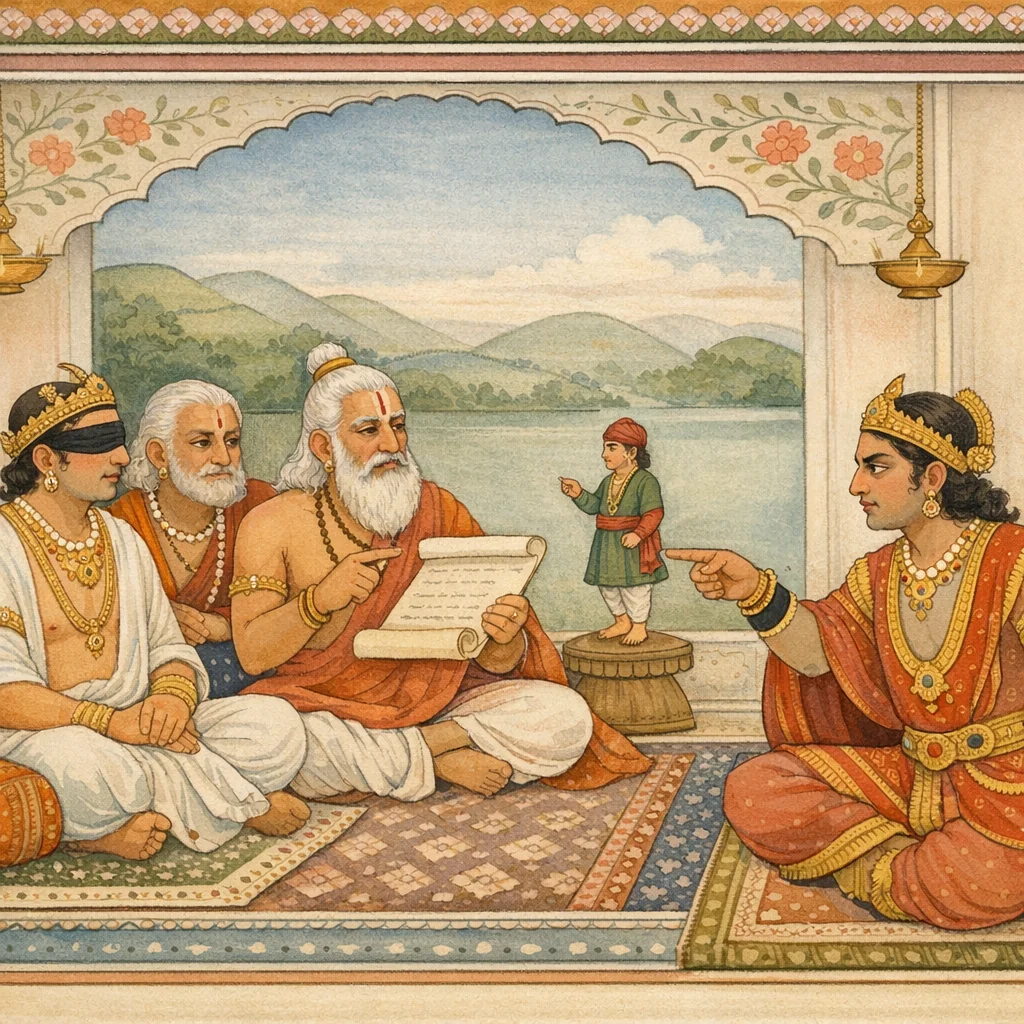
Chapter Arc: हस्तिनापुर की सभा में भीष्म की नीति के बाद द्रोणाचार्य भी वही सम्मति रखते हुए धृतराष्ट्र के सामने एक ‘मधुर’ उपाय रखते हैं—पाण्डवों को उपहार भेजकर बुलाया जाए। → द्रोण द्रुपद के पास प्रियभाषी दूत भेजने, बहुमूल्य रत्न-आभूषण (विशेषतः द्रौपदी हेतु) देने और कौन्तेयों के प्रति ‘सनातन धर्म’ के अनुरूप व्यवहार करने की बात रखते हैं; यह सलाह बाहर से मेल-मिलाप की लगती है, पर भीतर सत्ता-संतुलन और भय की राजनीति धड़कती रहती है। → कर्ण तीखा विरोध करता है—वह भीष्म-द्रोण को ‘राजा के निकट, हर कार्य में अग्रणी’ बताकर उनकी सलाह पर अविश्वास जगाता है और कहता है कि छिपे हुए दुर्भाव से कोई ‘निःश्रेयस’ की बात कैसे कर सकता है; यहीं सभा का स्वर मेल से संदेह की ओर पलट जाता है। → सभा में दो ध्रुव स्पष्ट हो जाते हैं—एक ओर भीष्म-द्रोण की नीति (उपहार, बुलावा, शिष्टाचार), दूसरी ओर कर्ण का आरोप (छल, गुप्त मनोवृत्ति, अविश्वास); धृतराष्ट्र के लिए निर्णय और भी कठिन हो जाता है। → लोभ से लोभ बढ़ता है—राज्य-हड़प की आकांक्षा भीतर ही भीतर तीव्र होती जाती है, और ‘उपहार’ का प्रस्ताव कहीं आगामी षड्यंत्र का द्वार तो नहीं—यह प्रश्न अगले प्रसंग पर छोड़ दिया जाता है।
Shlokas
Verse 1
ऑपन--माज बछ। *: तर्याधिकद्विशततमो< ध्याय: द्रोणाचार्यकी पाण्डवोंको उपहार भेजने और बुलानेकी सम्मति तथा कर्णके द्वारा उनकी सम्मतिका विरोध करनेपर द्रोणाचार्यकी फटकार द्रोण उदाच मन्त्राय समुपानीतैर्धतराष्ट्र हितैर्नप । धर्म्यमर्थ्य यशस्यं च वाच्यमित्यनुशुश्रुम,द्रोणाचार्यने कहा--राजा धृतराष्ट्र! सलाह लेनेके लिये बुलाये हुए हितैषियोंको उचित है कि वे ऐसी बात कहें, जो धर्म, अर्थ और यशकी प्राप्ति करानेवाली हो--यह हम परम्परासे सुनते आये हैं
Droṇa said: “O King Dhṛtarāṣṭra, when well-wishers are summoned for counsel, it is proper that they speak words that lead to dharma, to sound advantage, and to lasting good repute—so we have heard from tradition.”
Verse 2
ममाप्येषा मतिस्तात या भीष्मस्य महात्मन: । संविभज्यास्तु कौन्तेया धर्म एब सनातन:,तात! मेरी भी वही सम्मति है, जो महात्मा भीष्मकी है। कुन्तीके पुत्रोंकोी आधा राज्य बाँट देना चाहिये, यही परम्परासे चला आनेवाला धर्म है
Bhishma said: “My view too, dear one, is the same as that of the noble Bhishma. Let the sons of Kunti be granted their rightful share by division; this is the eternal dharma upheld by tradition.”
Verse 3
प्रेष्यतां द्रपदायाशु नर: कश्षित् प्रियंवद: । बहुल॑ रत्नमादाय तेषामर्थाय भारत,भारत! ट्रपदके पास शीघ्र ही कोई प्रिय वचन बोलनेवाला मनुष्य भेजा जाय और वह पाण्डवोंके लिये बहुत-से रत्नोंकी भेंट लेकर जाय
Bhīṣma said: “Let some pleasant-speaking man be dispatched at once to Drupada, O Bhārata, carrying abundant jewels as a gift on their behalf—so that the Pāṇḍavas’ purpose may be accomplished.”
Verse 4
मिथ: कृत्यं च तस्मै स आदाय वसु गच्छतु । वृद्धिं च परमां ब्रूयात् त्वत्संयोगोद्धवां तथा,राजा ट्रुपदके पास बहूके लिये वरपक्षकी ओरसे उसे धन और रत्न लेकर जाना चाहिये। भारत! उस पुरुषको राजा ट्रुपद और धृष्टद्युम्नके सामने बार-बार यह कहना चाहिये कि आपके साथ सम्बन्ध हो जानेसे राजा धृतराष्ट्र और दुर्योधन अपना बड़ा अभ्युदय मान रहे हैं और उन्हें इस वैवाहिक सम्बन्धसे बड़ी प्रसन्नता हुई है
Bhishma said: “Let him go to King Drupada carrying wealth and gifts appropriate to the occasion. And in Drupada’s presence he should repeatedly declare this: that through alliance with you a very great prosperity has arisen, and that Dhritarashtra and Duryodhana regard this marital connection as their highest good and are greatly pleased by it.”
Verse 5
सम्प्रीयमाणं त्वां ब्रूयाद राजन् दुर्योधनं तथा । असकृद् ट्रुपदे चैव धृष्टद्युम्ने च भारत,राजा ट्रुपदके पास बहूके लिये वरपक्षकी ओरसे उसे धन और रत्न लेकर जाना चाहिये। भारत! उस पुरुषको राजा ट्रुपद और धृष्टद्युम्नके सामने बार-बार यह कहना चाहिये कि आपके साथ सम्बन्ध हो जानेसे राजा धृतराष्ट्र और दुर्योधन अपना बड़ा अभ्युदय मान रहे हैं और उन्हें इस वैवाहिक सम्बन्धसे बड़ी प्रसन्नता हुई है
Bhishma said: “O King, he should convey to you Duryodhana’s friendly and conciliatory message. And, O Bharata, he should say repeatedly in the presence of King Drupada and Dhrishtadyumna that Dhritarashtra and Duryodhana regard this alliance with you as a great rise in their fortunes and are deeply pleased by this proposed marriage-connection.”
Verse 6
उचितत्वं प्रियत्वं च योगस्यथापि च वर्णयेत् । पुनः पुनश्न कौन्तेयान् माद्रीपुत्री च सान्त्वयन्,इसी प्रकार वह कुन्ती और माद्रीके पुत्रोंको सान्त्वना देते हुए बार-बार इस सम्बन्धके उचित और प्रिय होनेकी चर्चा करे
Bhīṣma said: “He should describe again and again how this alliance is both proper and pleasing, and, while consoling the sons of Kuntī and the son of Mādrī, reassure them repeatedly.”
Verse 7
हिरण्मयानि शुभ्राणि बहून्याभरणानि च । वचनात् तव राजेन्द्र द्रौपद्या: सम्प्रयच्छतु,राजेन्द्र! वह आपकी आज्ञासे द्रौपदीके लिये बहुत-से सुन्दर सुवर्णमय आभूषण अर्पित करे
Bhīṣma said: “O king, at your command let him present to Draupadī many splendid ornaments of gold.” The statement frames royal authority as a means to restore propriety and honor through rightful gifting, rather than coercion or insult.
Verse 8
तथा द्रुपदपुत्राणां सर्वेषां भरतर्षभ । पाण्डवानां च सर्वेषां कुन्त्या युक्तानि यानि च,भरतश्रेष्ठ! ट्रपदके सभी पुत्रों, समस्त पाण्डवों और कुन्तीके लिये भी जो उपयुक्त आभूषण आदि हों, उन्हें भी वह अर्पित करे
Bhīṣma said: “Likewise, O bull among the Bharatas, let him also present whatever suitable ornaments and such items are appropriate for all the sons of Drupada, for all the Pāṇḍavas, and for Kuntī as well.”
Verse 9
एवं सान्त्वसमायुक्त द्रुपदं पाण्डवै: सह । उक्त्वा सो$नन्तरं ब्रूयात् तेषामागमनं प्रति,इस प्रकार (उपहार देनेके पश्चात्) पाण्डवोंसहित द्रुपदसे सान्त्वनापूर्ण वचन कहकर अन्तमें वह पाण्डवोंके हस्तिनापुरमें आनेके विषयमें प्रस्ताव करे
Having addressed Drupada—together with the Pāṇḍavas—in words filled with reassurance and conciliation, he should then, at the end, propose the matter of their coming to Hastināpura.
Verse 10
अनुज्ञातेषु वीरेषु बलं गच्छतु शोभनम् | दुःशासनों विकर्णश्चाप्यानेतुं पाण्डवानिह,जब द्रुपदकी ओरसे पाण्डववीरोंको यहाँ आनेकी अनुमति मिल जाय, तब एक अच्छी- सी सेना साथ ले दुःशासन और विकर्ण पाण्डवोंको यहाँ ले आनेके लिये जायँ
Bhīṣma said: “When permission has been granted regarding those heroes, let a fine force set out. Let Duḥśāsana and Vikarṇa, too, go to bring the Pāṇḍavas here.” In context, Bhīṣma frames the action as procedurally sanctioned—seeking consent first—yet the instruction also signals the Kuru court’s intent to control the Pāṇḍavas’ movements through an armed escort.
Verse 11
ततस्ते पाण्डवा: श्रेष्ठा: पूज्यमाना: सदा त्वया । प्रकृतीनामनुमते पदे स्थास्यन्ति पैतृके,यहाँ आनेके पश्चात् वे श्रेष्ठ पाण्डव आपके द्वारा सदा आदर-सत्कार प्राप्त करते हुए प्रजाकी इच्छाके अनुसार वे अपने पैतृक राज्यपर प्रतिष्ठित होंगे
Then those excellent Pāṇḍavas, continually honored and received with respect by you, will—by the consent of the people—be established in their ancestral seat of rule. The statement frames rightful kingship as resting not merely on lineage, but on public assent and proper conduct toward the heirs.
Verse 12
एतत् तव महाराज पुत्रेषु तेषु चैव हि । वृत्तमौपयिकं मन्ये भीष्मेण सह भारत,भरतवंशी महाराज! आपको अपने पुत्रों और पाण्डवोंके प्रति उपर्युक्त व्यवहार ही करना चाहिये--भीष्मजीके साथ मैं भी यही उचित समझता हूँ
Bhīṣma said: “O great king, regarding those sons of yours and also the Pāṇḍavas, I consider the course of conduct just described to be the most fitting and practical. O Bhārata, I too—together with Bhīṣma—judge this to be the proper way.”
Verse 13
कर्ण उवाच योजितावर्थमानाभ्यां सर्वकार्येष्वनन्तरौ । न मन्त्रयेतां त्वच्छेय: किमद्भुततरं तत:,कर्ण बोला--महाराज! भीष्मजी और द्रोणाचार्यकों आपकी ओरसे सदा धन और सम्मान प्राप्त होता रहता है। इन्हें आप अपना अन्तरंग सुहृद् समझकर सभी कार्योंमें इनकी सलाह लेते हैं। फिर भी यदि ये आपके भलेकी सलाह न दें तो इससे बढ़कर आश्चर्यकी बात और क्या हो सकती है?
Karna said: “O King, Bhishma and Drona are constantly sustained by your wealth and honors, and they stand close to you in every undertaking. If, despite being treated as your intimate well-wishers, they do not counsel you for your true good—what could be more astonishing than that?”
Verse 14
दुष्टेन मनसा यो वै प्रच्छन्नेनान्तरात्मना । ब्रूयान्नि:श्रेयसं नाम कथं कुर्यात् सतां मतम्,जो अपने अन्तःकरणके दुर्भावको छिपाकर, दोषयुक्त हृदयसे कोई सलाह देता है, वह अपने ऊपर विश्वास करनेवाले साधुपुरुषोंके अभीष्ट कल्याणकी सिद्धि कैसे कर सकता है?
Karna said: “How could a man, whose mind is wicked and whose inner self is concealed, offer counsel in the name of ‘the highest good’ and actually accomplish the welfare desired by the righteous—those who place their trust in him?”
Verse 15
न मित्राण्यर्थकृच्छेषु श्रेयसे चेतराय वा । विधिपूर्व हि सर्वस्य दु:खं वा यदि वा सुखम्,मित्र भी अर्थसंकटके समय अथवा किसी कामकी कठिनाई आ पड़नेपर न तो कल्याण कर सकते हैं और न अकल्याण ही। सभीके लिये दुःख या सुखकी प्राप्ति भाग्यके अनुसार ही होती है
Karna said: “In times of financial distress, friends are not truly able to bring about either one’s welfare or one’s harm. For everyone, suffering or happiness comes in accordance with what is ordained by fate.”
Verse 16
कृतप्रज्ञो5कृतप्रज्ञो बालो वृद्धश्ष मानव: । ससहायो<5सहायश्च् सर्व सर्वत्र विन्द्ति,मनुष्य बुद्धिमान् हो या मूर्ख, बालक हो या वृद्ध तथा सहायकोंके साथ हो या असहाय, वह दैवयोगसे सर्वत्र सब कुछ पा लेता है
Karna said: Whether a man is wise or unwise, a child or an old man, supported by allies or left without support—by the conjunction of fate he can obtain everything, everywhere. The saying underscores Karna’s hard-edged realism: human effort and social advantage matter, yet outcomes often turn on daiva (destiny), which can raise the lowly and frustrate the capable, challenging pride and urging humility in judgment.
Verse 17
श्रूयते हि पुरा कश्चिदम्बुवीच इतीश्वर: । आसीदू राजगृहे राजा मागधानां महीक्षिताम्,सुना है, पहले राजगृहमें अम्बुवीच नामसे प्रसिद्ध एक राजा राज्य करते थे। वे मागध राजाओंमेंसे एक थे
It is heard from ancient tradition that there once was a certain sovereign named Ambuvīca. He ruled as king in Rājagṛha and was counted among the kings of Magadha—an exemplar of established royal authority invoked here to ground the ensuing account in remembered history.
Verse 18
स हीन: करणै: सर्वैरुच्छवासपरमो नृप: । अमात्यसंस्थ: सर्वेषु कार्येष्वेवाभवत् तदा,उनकी कोई भी इन्द्रिय कार्य करनेमें समर्थ नहीं थी, वे (श्वासके रोगसे पीड़ित हो) एक स्थानपर पड़े-पड़े लंबी साँसें खींचा करते थे; अतः प्रत्येक कार्यमें उन्हें मनन््त्रीके ही अधीन रहना पड़ता था
Karna said: “That king, bereft of the use of all his faculties, lay dominated by laboured breathing. Therefore, at that time, in every matter of state he was compelled to depend upon his ministers.”
Verse 19
तस्यामात्यो महाकर्णिरब॑ भूवैके श्वरस्तदा । स लब्धबलमात्मानं मन्यमानो5वमन्यते,उनके मन्त्रीका नाम था महाकर्णि। उन दिनों वही वहाँका एकमात्र राजा बन बैठा था। उसे सैनिक बल प्राप्त था, अतः अपनेको सबल मानकर राजाकी अवहेलना करता था
There, his minister Mahākarṇi became, at that time, the sole ruler. Having obtained military strength, he considered himself powerful and, in his arrogance, treated the king with contempt—showing how power without restraint leads to the erosion of rightful authority and ethical conduct.
Verse 20
स राज्ञ उपभोग्यानि स्त्रियो रत्नधनानि च । आददे सर्वशो मूढ ऐश्वर्य च स्वयं तदा,वह मूढ मन्त्री राजाके उपभोगमें आनेयोग्य स्त्री, रत्न, धन तथा ऐश्वर्यको भी स्वयं ही भोगता था
Karna said: “That deluded man then seized for himself, in every way, even those things meant for the king’s enjoyment—women, jewels, wealth, and royal prerogatives—consuming the very sovereignty as though it were his own.”
Verse 21
वह सब पाकर उस लोभीका लोभ उत्तरोत्तर बढ़ता गया। इस प्रकार सारी चीजें लेकर वह उनके राज्यको भी हड़प लेनेकी इच्छा करने लगा
Having obtained all that, the greedy man’s craving only grew more and more. After taking every possession, he even began to desire seizing their very kingdom—showing how unchecked acquisitiveness escalates from taking gifts to violating rightful sovereignty.
Verse 22
हीनस्य करणै: सर्वैरुच्छवासपरमस्य च । यतमानो<पि तदू राज्यं न शशाकेति न: श्रुतम्,यद्यपि राजा सम्पूर्ण इन्द्रियोंकी शक्तिसे रहित होनेके कारण केवल ऊपरको साँस ही खींचा करता था, तथापि अत्यन्त प्रयत्न करनेपर भी वह दुष्ट मन्त्री उनका राज्य न ले सका >-यह बात हमने सुन रखी है
Verse 23
किमन्यद् विहिता नूनं तस्य सा पुरुषेन्द्रता । यदि ते विहितं राज्यं भविष्यति विशाम्पते,राजाका राजत्व भाग्यसे ही सुरक्षित था (उनके प्रयत्नसे नहीं;) (अतः) भाग्यसे बढ़कर दूसरा सहारा क्या हो सकता है? महाराज! यदि आपके भाग्यमें राज्य बदा होगा तो सब लोगोंके देखते-देखते वह निश्चय ही आपके पास रहेगा और यदि भाग्यमें राज्यका विधान नहीं है, तो आप यत्न करके भी उसे नहीं पा सकेंगे
Karna said: “What other support can there be beyond destiny? Surely, that very kingship of his has been ordained. O lord of the people, if sovereignty has been allotted to you by fate, it will certainly come to you before everyone’s eyes; but if kingship is not decreed in your fortune, then even with strenuous effort you will not obtain it.”
Verse 24
मिषत: सर्वलोकस्य स्थास्यते त्वयि तद् ध्रुवम् । अतोडन्यथा चेद् विहितं यतमानो न लप्स्यसे,राजाका राजत्व भाग्यसे ही सुरक्षित था (उनके प्रयत्नसे नहीं;) (अतः) भाग्यसे बढ़कर दूसरा सहारा क्या हो सकता है? महाराज! यदि आपके भाग्यमें राज्य बदा होगा तो सब लोगोंके देखते-देखते वह निश्चय ही आपके पास रहेगा और यदि भाग्यमें राज्यका विधान नहीं है, तो आप यत्न करके भी उसे नहीं पा सकेंगे
Karna said: “In full view of all people, that kingdom will surely remain with you, without doubt. But if destiny has ordained otherwise, then even with strenuous effort you will not obtain it. Therefore, what support can be greater than one’s allotted fortune? O King, if sovereignty is written in your fate, it will stand by you before everyone’s eyes; if it is not so ordained, then despite all striving you will not gain it.”
Verse 25
एवं विद्वन्नुपादत्स्व मन्त्रिणां साध्वसाधुताम् । दुष्टानां चैव बोद्धव्यमदुष्टानां च भाषितम्,राजन्! आप समझदार हैं, अतः इसी प्रकार विचार करके अपने मन्सत्रियोंकी साधुता और असाधुताको समझ लीजिये। किसने दूषित हृदयसे सलाह दी है और किसने दोषशून्य हृदयसे, इसे भी जान लेना चाहिये
O King, since you are discerning, examine in this very way the goodness and the unworthiness of your ministers. You must recognize which counsel has been spoken from a corrupted heart and which has been spoken from a blameless heart—so that your decisions rest on pure advice rather than on deceit.
Verse 26
द्रोण उवाच विद्य ते भावदोषेण यदर्थमिदमुच्यते | दुष्ट पाण्डवहेतोस्त्वं दोषमाख्यापयस्युत,द्रोणाचार्यने कहा--ओ दुष्ट! तू क्यों ऐसी बात कहता है, यह हम जानते हैं। पाण्डवोंके लिये तेरे हृदयमें जो द्वेष संचित है, उसीसे प्रेरित होकर तू मेरी बातोंमें दोष बता रहा है
Droṇa said: “We know well why you speak in this way—your words arise from a fault in your inner disposition. O wicked one, driven by hostility toward the Pāṇḍavas, you are merely trying to point out defects in what I have said.”
Verse 27
हितं तु परमं कर्ण ब्रवीमि कुलवर्धनम् । अथ वत्वं मन्यसे दुष्ट ब्रूहि यत् परमं हितम्,कर्ण! मैं अपनी समझसे कुरुकुलकी वृद्धि करनेवाली परम हितकी बात कहता हूँ। यदि तू इसे दोषयुक्त मानता है तो बता, क्या करनेसे कौरवोंका परम हित होगा?
Drona said: “Karna, I am speaking what I understand to be the highest good—what will strengthen and uphold the Kuru lineage. But if you judge my counsel to be flawed, then tell me yourself: what course of action would truly bring the Kauravas their supreme welfare?”
Verse 28
अतोडन्यथा चेत् क्रियते यद् ब्रवीमि परं हितम् । कुरवो वै विनड्क्षयक्ष्यन्ति नचिरेणैव मे मतिः:,मैं अत्यन्त हितकी बात बता रहा हूँ। यदि उसके विपरीत कुछ किया जायगा तो कौरवोंका शीघ्र ही नाश हो जायगा--ऐसा मेरा मत है
Droṇa said: “I am declaring what is supremely beneficial. If, instead, something contrary is done, then the Kurus will surely perish before long—such is my considered judgment.”
Verse 202
इस प्रकार श्रीमहाभारत आदिपर्वके अन्तर्गत विदुरागमन-राज्यलम्भपर्वमें भीष्मवाक्यविषयक दी सौ दूसरा अध्याय पूरा हुआ
Thus ends the two-hundred-and-second chapter, concerning Bhīṣma’s discourse, within the Vidura’s Arrival and the Attainment of Kingship section of the Ādi Parva of the Śrī Mahābhārata. The colophon signals a transition: Bhīṣma’s words are treated as authoritative guidance, framing the narrative in terms of rightful conduct and legitimate rule.
Verse 203
इति श्रीमहाभारते आदिपर्वणि विदुरागमनराज्यलम्भपर्वणि द्रोणवाक्ये त्यधिकद्धिशततमो<ध्याय:
Thus, in the Śrī Mahābhārata, within the Ādi Parva—specifically in the section concerning Vidura’s arrival and the attainment of the kingdom—ends the two-hundred-and-third chapter, marked as the words of Droṇa. This is a colophon-style closing that situates the narrative within its ethical frame: rightful governance and counsel are foregrounded as the story transitions through Vidura’s role and the political restoration of rule.
Verse 231
तदादाय च लुब्धस्य लोभाल्लोभोप्यवर्धत । तथा हि सर्वमादाय राज्यमस्य जिहीषति
Having taken that, the greedy man’s craving only grew greater through greed itself; for, after seizing everything, he now seeks to appropriate this man’s very kingdom as well. The verse underscores how unchecked acquisitiveness escalates—from taking a share, to taking all, to desiring even what remains as another’s rightful sovereignty.
Frequently Asked Questions
The chapter frames a governance dilemma: whether destabilizing power should be addressed through direct force or through an indirect intervention that leverages psychological and social dynamics to prevent broader escalation.
Order is maintained through discernment and proportionate means: authority consults, reflects, and deploys specialized capacities (craft, counsel, strategy) to restore balance while minimizing systemic harm.
No explicit phalaśruti appears here; the meta-function is etiological and instructional—explaining iconic divine attributes (Śiva’s caturmukhatva, Indra’s sahasranetratva) and illustrating how narrative causality encodes ethical and cosmological reasoning.