Devīkṛta-praśna-varṇana (Description of the Goddess’s Questions) / देवीकृतप्रश्नवर्णनम्
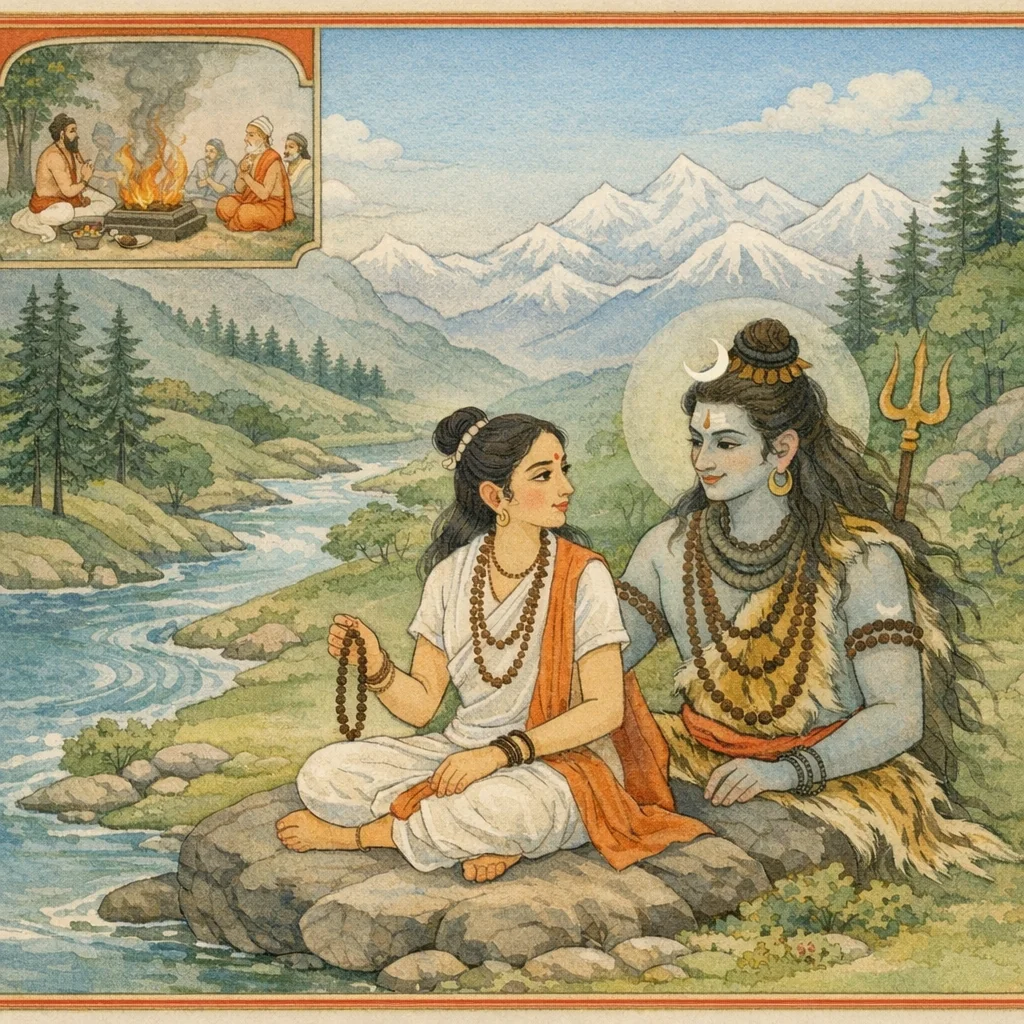
This chapter sets a framework for transmitting esoteric Shaiva knowledge through inquiry and divine grace. Vyāsa tells the assembled brāhmaṇas that śiva-jñāna is rare (durlabha) and that it illumines the meaning of the praṇava (Oṁ). Such understanding arises only by Śiva’s prasāda: only those who please the trident-bearing Lord truly attain this revelatory insight, and bhakti is marked as the necessary condition distinguishing devotees from non-devotees. Vyāsa then introduces an ancient itihāsa cast as a dialogue between Umā and Maheśa, shifting into a mythic-historical narration. Pārvatī’s course is recalled: Satī’s self-abandonment after Śiva is insulted at Dakṣa’s rite, her rebirth as Himavat’s daughter, her tapas for Śiva under Nārada’s guidance, and her eventual marriage through svayaṃvara arrangements. The chapter ends (in the given portion) with Gaurī seated with Śiva on a great mountain, beginning to speak and preparing the doctrinal questions to follow.
Shlokas
Verse 1
व्यास उवाच । साधु पृष्टमिदं विप्रा भवद्भिर्भाग्यवत्तमैः । दुर्लभं हि शिवज्ञानं प्रणवार्थप्रकाशकम्
Vyāsa said: “O brāhmaṇas, most fortunate among men, you have asked well. For the knowledge of Śiva is indeed rare—and it is that which illumines the true meaning of the Praṇava (Oṃ).”
Verse 2
इति श्रीशिवमहापुराणे षष्ठ्यां कैलास संहितायां देवीदेवसंवादे देवीकृतप्रश्नवर्णनं नाम द्वितीयोऽध्यायः
Thus ends the Second Chapter, called “The Description of the Questions Asked by the Goddess,” in the Kailāsa Saṃhitā of the revered Śrī Śiva Mahāpurāṇa, in the dialogue between Devī and Deva (Pārvatī and Lord Śiva).
Verse 3
जायते न हि सन्देहो नेतरेषामिति श्रुतिः । शिवभक्तिविहीनानामिति तत्त्वार्थनिश्चयः
Indeed, about this no doubt arises—so declares the śruti; for others it is not so. This is the settled truth: those devoid of devotion to Śiva do not attain certainty of the true meaning, nor the intended spiritual fruit.
Verse 4
दीर्घसत्रेण युष्माभिर्भगवानम्बिकापतिः । उपासित इतीदं मे दृष्टमद्य विनिश्चितम्
By your long sacrificial session, the Blessed Lord—the Consort of Ambikā—has indeed been worshipped. This, today, I have clearly perceived and have ascertained with certainty.
Verse 5
तस्माद्वक्ष्यामि युष्माकमितिहासम्पुरातनम् । उमामहेशसम्वादरूपमद्भुतमास्तिकाः
Therefore, O faithful ones, I shall narrate to you an ancient sacred account—marvelous in nature—presented in the form of the dialogue between Umā (Pārvatī) and Maheśa (Śiva).
Verse 6
पुराखिलजगन्माता सती दाक्षायणी तनुम् । शिवनिन्दाप्रसङ्गेन त्यक्त्वा च जनकाध्वरे
Formerly, Satī Dākṣāyaṇī—the Mother of the entire universe—abandoned her body at her father Dakṣa’s sacrifice, because of the occasion of Śiva’s condemnation.
Verse 7
ततः प्रभावात्सा देवी सुताऽभूद्धिमवद्गिरेः । शिवार्थमतपत्सा वै नारदस्योपदेशतः
Thereafter, by that divine influence, the Goddess was born as the daughter of Himavān (the Lord of the Himalayas). Following Nārada’s instruction, she undertook austerities for the sake of attaining Śiva.
Verse 8
तस्मिन्भूधरवर्य्ये तु स्वयंवरविधानतः । देवेशे च कृतोद्वाहे पार्वती सुखमाप सा
There, upon that most excellent mountain, according to the ordained rite of svayaṃvara, when her marriage with Deveśa (Lord Śiva) had been duly solemnized, Pārvatī attained great happiness.
Verse 9
तथैकस्मिन्महादेवी समये पतिना सह । सूपविष्टा महाशैले गौरी देवमभाषत
Thus, at one time, the Great Goddess—seated at ease with her Lord upon the great mountain—Gaurī spoke to the Deva, Śiva.
Verse 10
महादेव्युवाच । भगवन्परमेशान पञ्चकृत्यविधायक । सर्वज्ञ भक्तिसुलभ परमामृतविग्रह
Mahādevī said: “O Blessed Lord, O Supreme Īśāna—ordainer of the five divine acts—O all-knowing One, easily attained through devotion, whose very form is the highest nectar of immortality.”
Verse 12
दाक्षायणीन्तनुं त्यक्त्वा तव निन्दाप्रसंगतः । आसमद्य महेशान पुत्री हिमवतो गिरेः । कृपया परमेशान मंत्रदीक्षाविधानतः । मां विशुद्धात्मतत्त्वस्थां कुरु नित्यं महेश्वर
Having cast off the body of Dakṣāyaṇī because of the occasion of Your disparagement, I have now come to You, O Maheśāna, as the daughter of Himavat, the Mountain. Out of compassion, O Parameśāna, according to the proper ordinance of mantra‑initiation, make me ever established in the pure reality of the Self, O Maheśvara.
Verse 13
इति सम्प्रार्थितो देव्या देवः शीतांशु भूषणः । प्रत्युवाच ततो देवीं प्रहृष्टेनान्तरात्मना
Thus earnestly entreated by the Goddess, the Lord—adorned with the moon—then replied to Devī, his inner being filled with delight.
Verse 14
महादेव उवाच । धन्या त्वं देवदेवशि यदि जातेदृशी मतिः । कैलास शिखरं गत्वा करिष्ये त्वां च तादृशीम्
Mahādeva said: “Blessed are you, O Devī, if such understanding has arisen in you. Having gone to the summit of Kailāsa, I shall bring you too into that very state.”
Verse 15
ततो हिमवतो गत्वा कैलासम्भूधरेश्वरम् । जगौ दीक्षाविधानेन प्रणवादीन्मनून् क्रमात्
Then, going from Himavat to the Lord of the Kailāsa mountain, he recited—according to the rite of initiation—the sacred mantras beginning with the Praṇava (Oṁ), in due order.
Verse 16
उक्त्वा मंत्रांश्च तान्देवीं कृत्वा शुद्धात्मनि स्थिताम् । सार्द्धं देव्या महादेवो देवोद्यानं गतोऽभवत्
Having uttered those mantras, Mahādeva established the Devī in the state of the purified Self; then, accompanied by the Devī, the Great God proceeded to the divine garden.
Verse 17
ततः सुमालिनीमुख्यैर्दैव्याः प्रियसखीजनैः । समाहृतैः प्रफुल्लैस्तैः पुष्पैः कल्पतरूद्भवैः
Then the divine beloved companions—chief among them Sumālinī—gathered fully blossomed flowers born of the wish-fulfilling celestial Kalpataru trees, to be offered with reverence.
Verse 18
अलंकृत्य महादेवीं स्वांकमारोप्य शंकरः । प्रहृष्टवदनस्तस्थौ विलोक्य च तदाननम्
After adorning Mahādevī, Śaṅkara placed her upon His own lap. With a face radiant with joy, He remained there, gazing upon her countenance—revealing the auspicious, saguṇa tenderness of the Lord, the Pati who ever liberates all souls.
Verse 19
ततः प्रियकथा जाताः पार्वतीपरमेशयोः । हिताय सर्वलोकानां साक्षाच्छ्रुत्यर्थं सम्मिता
Thereafter, delightful and intimate discourses arose between Pārvatī and Parameśvara (Lord Śiva)—teachings composed in harmony with the very purport of the Vedas, for the direct welfare of all the worlds.
Verse 20
तदा सर्वजगन्माता भर्तुरंकं समाश्रिता । विलोक्य वदनं भर्तुरिदमाहः तपोधनाः
Then the Mother of the entire universe, resting upon her husband’s lap, gazed upon her lord’s face and spoke these words—O sages rich in austerity.
Verse 22
कथम्प्रणव उत्पन्नः कथं प्रणव उच्यते । मात्राः कति समाख्याताः कथं वेदादिरुच्यते
“How did the Praṇava arise, and why is it called ‘Praṇava’? How many mātrās (phonetic measures) are declared for it? And in what way is it said to be the very beginning of the Veda?”
Verse 23
देवताः कति च प्रोक्ताः कथं वेदादिभावना । क्रियाः कतिविधाः प्रोक्ता व्याप्यव्यापकता कथम्
“How many deities are declared in the tradition? How is contemplation of the Vedas and related scriptures to be understood? How many kinds of ritual actions are taught? And how is the doctrine of the pervaded and the all-pervading to be explained?”
Verse 24
ब्रह्माणि पंच मंत्रेऽस्मिन्कथं तिष्ठंत्यनुक्रमात् । कलाः कति समाख्याताः प्रपंचात्मकता कथम्
“In this mantra, how do the five ‘Brahmas’ abide, in due order? How many kalās (divine aspects/powers) are declared, and in what way does this mantra become the very form of the manifested universe (prapañca)?”
Verse 25
वाच्यवाचकसम्बन्धस्थानानि च कथं शिव । कोऽत्राधिकारी विज्ञेयो विषयः क उदाहृतः
O Śiva, how are the loci (modes) of the relationship between the expressed meaning (vācya) and the expressing word (vācaka) to be understood? In this teaching, who should be known as the qualified aspirant, and what subject is being set forth?
Verse 26
सम्बन्धः कोत्र विज्ञेयः किंप्रयोजनमुच्यते । उपासकस्तु किंरूपः किं वा स्थानमुपासनम्
“What is the true relationship (between the soul and Śiva) that should be understood here? What is said to be its purpose? What is the nature of the worshipper? And what is the proper place and method of worship?”
Verse 27
उपास्यं वस्तु किंरूपं किं वा फलमुपासितुः । अनुष्ठान विधिः कोवा पूजास्थानं च किं प्रभो
O Lord, what is the nature of the Reality to be worshipped? What fruit does the worshipper obtain? What is the proper method of observance, and what is the appropriate place for performing worship?
Verse 28
पूजायां मण्डलं किं वा किं वा ऋष्यादिकं हर । न्यासजातविधिः को वा को वा पूजाविधिक्रमः
O Hara, in the worship, what is the maṇḍala (ritual diagram), and what are the preliminaries beginning with the ṛṣi (seer and allied details)? What is the procedure for the various nyāsas (ritual placements), and what is the proper sequence of the method of worship?
Verse 29
एतत्सर्वं महेशान समाचक्ष्व विशेषतः । श्रोतुमिच्छामि तत्त्वेन यद्यस्ति मयि ते कृपा
O Maheśāna, please explain all this to me in detail. I wish to hear it in its true principles—if indeed your grace rests upon me.
Verse 30
इति देव्या समापृष्टो भगवानिन्दुभूषणः । सम्प्रशस्य महेशानीं वक्तुं समुपचक्रमे
Thus questioned by the Goddess, the Blessed Lord—adorned with the moon—after duly praising Maheshani (Parvati), began to speak.
Frequently Asked Questions
It argues that śiva-jñāna—knowledge that clarifies the meaning of praṇava—is attainable only through Śiva’s favor, and it introduces the mythic chain from Satī’s departure at Dakṣa’s rite to Pārvatī’s rebirth, tapas under Nārada, and marital union with Śiva as the narrative preface to Umā–Maheśa instruction.
Praṇava (Oṃ) is presented not merely as a mantra but as a semantic gateway (praṇavārtha-prakāśaka) to Śiva-tattva; the trident-bearing form underscores sovereign agency in granting prasāda, implying that mantra-meaning becomes effective when authorized by divine grace and sustained by bhakti.
Śiva is highlighted as the immediate, weapon-bearing Lord (sākṣāt śūlavarāyudhaḥ) whose pleasure determines access to śiva-jñāna, while the Goddess is traced as Satī (Dākṣāyaṇī) reborn as Pārvatī/Gaurī, culminating in her seated presence with Śiva on the great mountain as the questioning interlocutor.