Sukta 98
Sukta 8.98
Unknown/uncertain (Anukramaṇī attribution not provided in input)
Indra
Likely Anuṣṭubh or a short meter (verse is compact; confirm by scan)
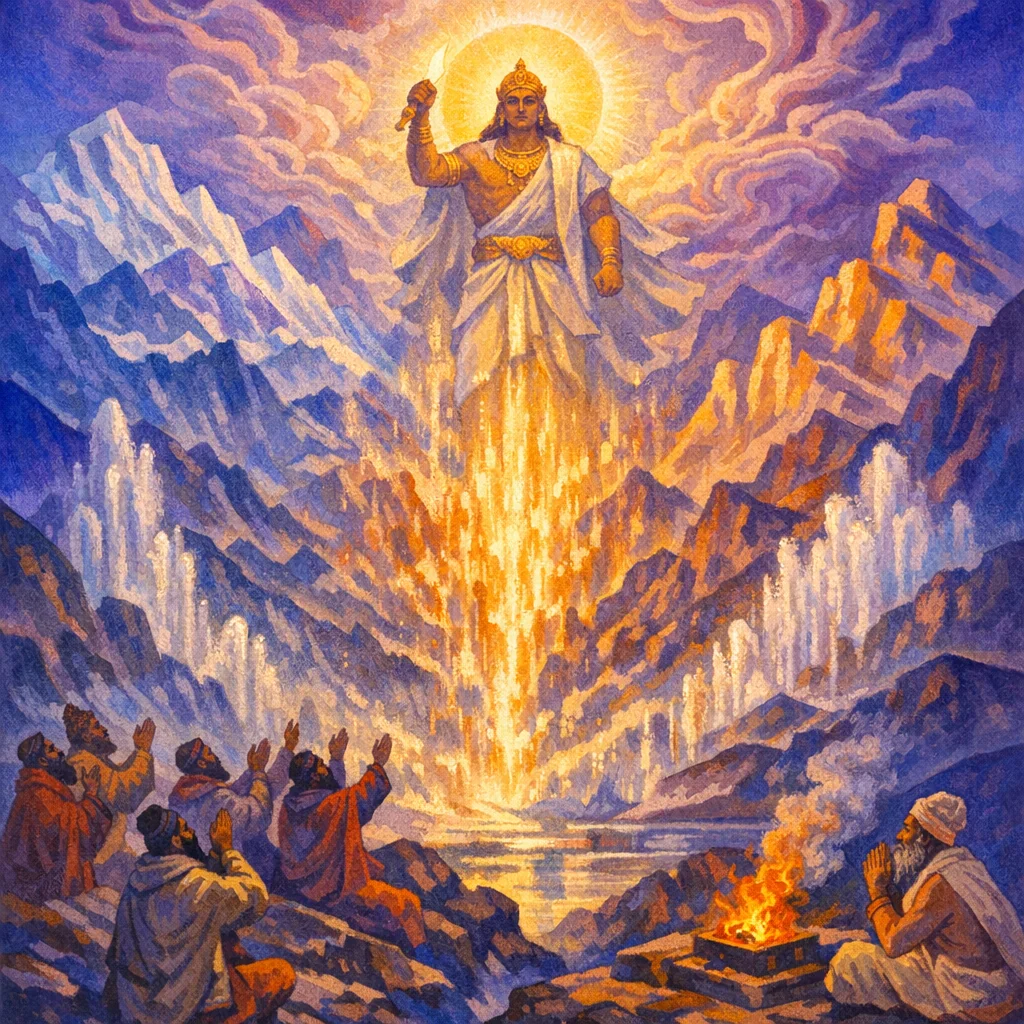
This compact Indra-hymn is a call to sing the Sāman for the Vast seer Indra, praised as the establisher of dharma and the giver of victorious strength. The poets “set in motion” their great aspirations toward him like surging waters and end by asking for suvīrya—noble, effective heroism and power for right action.
Mantras
Mantra 1
इन्द्राय साम गायत विप्राय बृहते बृहत् । धर्मकृते विपश्चिते पनस्यवे ॥
Sing the Sāman to Indra—the seer, the Vast, the Vastness—who establishes the law of the being; the clear-discerning, the one worthy to be sought and cherished.
Mantra 2
त्वमिन्द्राभिभूरसि त्वं सूर्यमरोचयः । विश्वकर्मा विश्वदेवो महाँ असि ॥
You, Indra, are the overcomer; you made the Sun shine forth. You are the universal Shaper of works, the all-divine power, the Great within us.
Mantra 3
विभ्राजञ्ज्योतिषा स्वरगच्छो रोचनं दिवः । देवास्त इन्द्र सख्याय येमिरे ॥
Shining forth with light, you have gone to the luminous world of heaven; the gods, O Indra, have bound themselves to you in comradeship—powers consenting to the victorious leader.
Mantra 4
एन्द्र नो गधि प्रियः सत्राजिदगोह्यः । गिरिर्न विश्वतस्पृथुः पतिर्दिवः ॥
Come, Indra, be with us as the beloved—victor in all battles, not to be hidden away. Like a mountain broad on every side, be the lord of heaven who supports and shelters our ascent.
Mantra 5
अभि हि सत्य सोमपा उभे बभूथ रोदसी । इन्द्रासि सुन्वतो वृधः पतिर्दिवः ॥
For indeed, O true Soma-drinker, thou hast become master over both the worlds, Heaven and Earth. O Indra, thou art the increaser of him who presses the Soma; a lord of the luminous heights.
Mantra 6
त्वं हि शश्वतीनामिन्द्र दर्ता पुरामसि । हन्ता दस्योर्मनोर्वृधः पतिर्दिवः ॥
Thou indeed, O Indra, art the cleaver of the enduring strongholds; thou art the slayer of the Dasyu and the enlarger of Man; a lord of the luminous heights.
Mantra 7
अधा हीन्द्र गिर्वण उप त्वा कामान्महः ससृज्महे । उदेव यन्त उदभिः ॥
Therefore, O Indra, lord of the hymn, we set in motion towards thee the great desires (of the soul), rising upward as if with the surging waters.
Mantra 8
वार्ण त्वा यव्याभिर्वर्धन्ति शूर ब्रह्माणि । वावृध्वांसं चिदद्रिवो दिवेदिवे ॥
By the fresh and youthful forces, O hero, the mantras increase thee; even thee who art ever-growing, O wielder of the stone, day by day in the luminous realm.
Mantra 9
युञ्जन्ति हरी इषिरस्य गाथयोरौ रथ उरुयुगे । इन्द्रवाहा वचोयुजा ॥
They yoke the two tawny steeds for the impetuous one, for the two chants, on the wide car with the wide yoke—those that bring Indra, yoked by the word.
Mantra 10
त्वं न इन्द्रा भरँ ओजो नृम्णं शतक्रतो विचर्षणे । आ वीरं पृतनाषहम् ॥
Bring to us, O Indra, force and the plenitude of manly power, O hundred-skilled, O seer among men; bring a hero who overcomes the battles.
Mantra 11
त्वं हि नः पिता वसो त्वं माता शतक्रतो बभूविथ । अधा ते सुम्नमीमहे ॥
For thou hast become for us a father, O good one, and thou a mother, O hundred-skilled; therefore we seek thy grace and happy beneficence.
Mantra 12
त्वां शुष्मिन्पुरुहूत वाजयन्तमुप ब्रुवे शतक्रतो । स नो रास्व सुवीर्यम् ॥
Thee, O mighty one, O much-invoked, advancing the plenitude of force, I approach with my word, O hundred-skilled. Do thou give to us the good heroism.
Frequently Asked Questions
It calls the singers to praise Indra with Sāman-like song, recognize him as the establisher of right order, and ask him for strength, victory, and noble heroism (suvīrya).
The image suggests that sincere desires and prayers should surge upward with force and clarity, moving toward Indra who releases and directs vital energies—like waters set free to flow.
Suvīrya is ‘good heroism’—effective courage, strength, and capacity to act rightly and win obstacles, both outwardly (success, protection) and inwardly (resolve and mastery).